Wissenschaftlicher Überblick

Aktuelle wissenschaftliche Veröffentlichungen nach Forschungsgebiet

Greifen Sie auf aktuelle wissenschaftliche Veröffentlichungen nach Disziplin zu, um für Ihre Analyse, Beobachtung oder Forschung relevante Arbeiten zu identifizieren.

Aktuelle Veröffentlichungen anzeigen Aktualisiert am Sonntag, 19. Juli 2026
Forschungsgebiete

Abgedeckte Gebiete aufrufen

Gehen Sie direkt zu den abgedeckten Forschungsgebieten und identifizieren Sie die relevantesten Veröffentlichungen für Ihr Fachgebiet.

Aktuelle Veröffentlichungen

Alzheimer

25 wissenschaftliche Veröffentlichungen im Bereich Alzheimer, für einen schnellen Zugang zur entsprechenden Fachliteratur.

MINT: Multimodal Imaging-to-Speech Knowledge Transfer for Early Alzheimer's Screening
Computer Science Ahire, Vrushank

MINT: Multimodal Imaging-to-Speech Knowledge Transfer for Early Alzheimer's Screening

arXiv Februar 2026 Alzheimer

Alzheimer's disease is a progressive neurodegenerative disorder in which mild cognitive impairment (MCI) marks a critical transition between aging and dementia. Neuroimaging modalities, such as structural MRI, provide biomarkers of this transition; however, their high costs and infrastructure needs limit their deployment at a population scale. Speech analysis offers a non-invasive alternative, but speech-only classifiers are developed independently of neuroimaging, leaving decision boundaries biologically ungrounded and limiting reliability on the subtle CN-versus-MCI distinction. We propose MINT (Multimodal Imaging-to-Speech Knowledge Transfer), a three-stage cross-modal framework that transfers biomarker structure from MRI into a speech encoder at training time. An MRI teacher, trained on 1,228 subjects, defines a compact neuroimaging embedding space for CN-versus-MCI classification. A residual projection head aligns speech representations to this frozen imaging manifold via a combined geometric loss, adapting speech to the learned biomarker space while preserving imaging encoder fidelity. The frozen MRI classifier, which is never exposed to speech, is applied to aligned embeddings at inference and requires no scanner. Evaluation on ADNI-4 shows aligned speech achieves performance comparable to speech-only baselines (AUC 0.720 vs 0.711) while requiring no imaging at inference, demonstrating that MRI-derived decision boundaries can ground speech representations. Multimodal fusion improves over MRI alone (0.973 vs 0.958). Ablation studies identify dropout regularization and self-supervised pretraining as critical design decisions. To our knowledge, this is the first demonstration of MRI-to-speech knowledge transfer for early Alzheimer's screening, establishing a biologically grounded pathway for population-level cognitive triage without neuroimaging at inference.

Potential link of high fat diet and mRNA expression of Alzheimer's disease-related genes in the enteric mucosa of a rat model of Alzheimer's disease
Journal of Alzheimer's Di... Gokulan, Kuppan

Potential link of high fat diet and mRNA expression of Alzheimer's disease-related genes in the enteric mucosa of a rat model of Alzheimer's disease

SAGE Publications August 2025 Alzheimer

BACKGROUND: High-fat diet (HFD) consumption is linked to Alzheimer's disease (AD). Identifying changes in the mRNA expression due to the ingestion of HFD in the intestine—often called the second brain due to its dense enteric neurons—could offer insights into AD development and progression. OBJECTIVE: This study assesses whether the introduction of HFD at adult-age influence expression of AD-related genes in the intestines of Wild-type (WT) or the amyloid precursor protein/presenilin1 (APP/PS1)-overexpressing Transgenic (TG) rats. METHODS: Twelve-month-old WT and TG rats (male and female) were fed a control diet (CD; 8% energy from fat), or HFD (45% energy from fat) for six months. Ileal tissues were assessed for the mRNA expression of genes responsible for development/progression of AD. RESULTS: The WT HFD-fed rats (compared to CD-fed rats) showed increased mRNA expression of genes involved in the development of AD. In contrast, the TG HFD-fed female group, showed a higher number of upregulated genes compared to their respective CD-fed TG group. In TG HFD-fed rats there was higher mRNA expression of genes crucial for synaptic transmission such as Brain-derived neurotrophic factor in females and Choline acetyltransferase in males. Expression of Plasminogen was higher in HFD-fed TG female rats and HFD-fed WT male rats. Overall, the HFD-fed WT male showed mRNA expression of genes involved in the development of AD. However, HFD-fed TG females were more vulnerable for the progression of AD. It is likely that the enteric Plasminogen plays a major role in gut-brain axis for the development of AD in WT male, and progression of AD in TG female during the consumption of HFD. CONCLUSIONS: The consumption of HFD perturbed the expression of enteric genes known to be involved in amyloid-β generation, clearance, and degradation, in a sex-dependent manner.

Leveraging LLMs for Early Alzheimer's Prediction
Computer Science Songdechakraiwut, Tananun

Leveraging LLMs for Early Alzheimer's Prediction

arXiv Oktober 2025 Alzheimer

We present a connectome-informed LLM framework that encodes dynamic fMRI connectivity as temporal sequences, applies robust normalization, and maps these data into a representation suitable for a frozen pre-trained LLM for clinical prediction. Applied to early Alzheimer's detection, our method achieves sensitive prediction with error rates well below clinically recognized margins, with implications for timely Alzheimer's intervention.

Alzheimer's disease detection based on large language model prompt
  engineering
Computer Science Zheng, Tian

Alzheimer's disease detection based on large language model prompt engineering

arXiv Januar 2025 Alzheimer

In light of the growing proportion of older individuals in our society, the timely diagnosis of Alzheimer's disease has become a crucial aspect of healthcare. In this paper, we propose a non-invasive and cost-effective detection method based on speech technology. The method employs a pre-trained language model in conjunction with techniques such as prompt fine-tuning and conditional learning, thereby enhancing the accuracy and efficiency of the detection process. To address the issue of limited computational resources, this study employs the efficient LORA fine-tuning method to construct the classification model. Following multiple rounds of training and rigorous 10-fold cross-validation, the prompt fine-tuning strategy based on the LLAMA2 model demonstrated an accuracy of 81.31\%, representing a 4.46\% improvement over the control group employing the BERT model. This study offers a novel technical approach for the early diagnosis of Alzheimer's disease and provides valuable insights into model optimization and resource utilization under similar conditions. It is anticipated that this method will prove beneficial in clinical practice and applied research, facilitating more accurate and efficient screening and diagnosis of Alzheimer's disease.

Prediction of Alzheimer's Disease Risk Factors from Retinal Images via Deep Learning: Development and Validation of Biologically Relevant Morphological Associations in the UK Biobank
Computer Science Leem, Seowung

Prediction of Alzheimer's Disease Risk Factors from Retinal Images via Deep Learning: Development and Validation of Biologically Relevant Morphological Associations in the UK Biobank

arXiv Mai 2026 Alzheimer

The systemic, metabolic, lifestyle factors have established associations with Alzheimer's Disease (AD) through epidemiologic and AD-specific biomarker studies. Whether colored fundus photography (CFP) contains retinal structural signatures corresponding to these AD-related risk domains remains unclear. To determine whether deep learning (DL) models can predict 12 AD-related risk factors from CFP and to characterize the retinal structures underlying these predictions, thereby assessing whether CFP reflects pathways to AD vulnerability. Using 62,876 CFPs from 44,501 unique participants from the UK Biobank, DL models were trained to predict 12 factors linked to AD incidence: 6 categorical (sex, smoking, sleeplessness, economic status, alcohol use, depression) and 6 continuous (age, age at completing education, BMI, systolic, diastolic blood pressure, HbA1c). Model performance, model saliency, and saliency-derived scores (CAM-Score) were evaluated and compared to retinal morphometry. The scores were also compared between incident-AD cases (average 8.55 years before onset) and matched controls. Performance of DL ranged from AUROC= 0.5654-0.9480 for categorical and R2=-0.0291-0.7620 for continuous factors, outperforming most of the morphometry-machine learning models. Saliency-based score consistently highlighted biologically meaningful regions, particularly the optic nerve head and retinal vasculature. It also aligned with present morphometric variations. Several saliency-based scores differed significantly between incident AD and matched controls, suggesting potential overlap between retinal correlates of risk factors and preclinical AD-associated changes. CFP encodes retinal signatures linked to AD risk factors. Although not diagnostic, DL-derived retinal representations may uncover biologically meaningful risk-related structural changes mirroring the potential AD vulnerability. ;Accepted to the "Journal of Alzheimer's Disease" for publication

A whole-brain model of amyloid beta accumulation and cerebral hypoperfusion in Alzheimer's disease
Computer Science Corti, Mattia

A whole-brain model of amyloid beta accumulation and cerebral hypoperfusion in Alzheimer's disease

arXiv Januar 2026 Alzheimer

Accumulation of amyloid beta proteins is a defining feature of Alzheimer's disease, and is usually accompanied by cerebrovascular pathology. Evidence suggests that amyloid beta and cerebrovascular pathology are mutually reinforcing; in particular, amyloid beta suppresses perfusion by constricting capillaries, and hypoperfusion promotes the production of amyloid beta. Here, we propose a whole-brain model coupling amyloid beta and blood vessel through a hybrid model consisting of a reaction-diffusion system for the protein dynamics and porous-medium model of blood flow within and between vascular networks: arterial, capillary and venous. We discretize the resulting parabolic--elliptic system of PDEs by means of a high-order discontinuous Galerkin method in space and an implicit Euler scheme in time. Simulations in realistic brain geometries demonstrate the emergence of multistability, implying that a sufficiently large pathogenic protein seeds is necessary to trigger disease outbreak. Motivated by the "two-hit vascular hypothesis" of Alzheimer's disease that hypoperfusive vascular damage triggers amyloid beta pathology, we also demonstrate that localized hypoperfusion, in response to injury, can destabilize the healthy steady state and trigger brain-wide disease outbreak.

Four-Stage Alzheimer's Disease Classification from MRI Using Topological Feature Extraction, Feature Selection, and Ensemble Learning
Computer Science Ahmed, Faisal

Four-Stage Alzheimer's Disease Classification from MRI Using Topological Feature Extraction, Feature Selection, and Ensemble Learning

arXiv Januar 2026 Alzheimer

Accurate and efficient classification of Alzheimer's disease (AD) severity from brain magnetic resonance imaging (MRI) remains a critical challenge, particularly when limited data and model interpretability are of concern. In this work, we propose TDA-Alz, a novel framework for four-stage Alzheimer's disease severity classification (non-demented, moderate dementia, mild, and very mild) using topological data analysis (TDA) and ensemble learning. Instead of relying on deep convolutional architectures or extensive data augmentation, our approach extracts topological descriptors that capture intrinsic structural patterns of brain MRI, followed by feature selection to retain the most discriminative topological features. These features are then classified using an ensemble learning strategy to achieve robust multiclass discrimination. Experiments conducted on the OASIS-1 MRI dataset demonstrate that the proposed method achieves an accuracy of 98.19% and an AUC of 99.75%, outperforming or matching state-of-the-art deep learning--based methods reported on OASIS and OASIS-derived datasets. Notably, the proposed framework does not require data augmentation, pretrained networks, or large-scale computational resources, making it computationally efficient and fast compared to deep neural network approaches. Furthermore, the use of topological descriptors provides greater interpretability, as the extracted features are directly linked to the underlying structural characteristics of brain MRI rather than opaque latent representations. These results indicate that TDA-Alz offers a powerful, lightweight, and interpretable alternative to deep learning models for MRI-based Alzheimer's disease severity classification, with strong potential for real-world clinical decision-support systems. ;15 pages, 7 figures

3D MRI-Based Alzheimer's Disease Classification Using Multi-Modal 3D CNN with Leakage-Aware Subject-Level Evaluation
Computer Science Sifat, Md

3D MRI-Based Alzheimer's Disease Classification Using Multi-Modal 3D CNN with Leakage-Aware Subject-Level Evaluation

arXiv März 2026 Alzheimer

Deep learning has become an important tool for Alzheimer's disease (AD) classification from structural MRI. Many existing studies analyze individual 2D slices extracted from MRI volumes, while clinical neuroimaging practice typically relies on the full three dimensional structure of the brain. From this perspective, volumetric analysis may better capture spatial relationships among brain regions that are relevant to disease progression. Motivated by this idea, this work proposes a multimodal 3D convolutional neural network for AD classification using raw OASIS 1 MRI volumes. The model combines structural T1 information with gray matter, white matter, and cerebrospinal fluid probability maps obtained through FSL FAST segmentation in order to capture complementary neuroanatomical information. The proposed approach is evaluated on the clinically labelled OASIS 1 cohort using 5 fold subject level cross validation, achieving a mean accuracy of 72.34% plus or minus 4.66% and a ROC AUC of 0.7781 plus or minus 0.0365. GradCAM visualizations further indicate that the model focuses on anatomically meaningful regions, including the medial temporal lobe and ventricular areas that are known to be associated with Alzheimer's related structural changes. To better understand how data representation and evaluation strategies may influence reported performance, additional diagnostic experiments were conducted on a slice based version of the dataset under both slice level and subject level protocols. These observations help provide context for the volumetric results. Overall, the proposed multimodal 3D framework establishes a reproducible subject level benchmark and highlights the potential benefits of volumetric MRI analysis for Alzheimer's disease classification. ;5 tables, 6 figures, Submitted to International Conference on Power, Electronics, Communications, Computing, and Intelligent Infrastructure 2026

Addressing accuracy and hallucination of LLMs in Alzheimer's disease research through knowledge graphs
Computer Science Xu, Tingxuan

Addressing accuracy and hallucination of LLMs in Alzheimer's disease research through knowledge graphs

arXiv August 2025 Alzheimer

In the past two years, large language model (LLM)-based chatbots, such as ChatGPT, have revolutionized various domains by enabling diverse task completion and question-answering capabilities. However, their application in scientific research remains constrained by challenges such as hallucinations, limited domain-specific knowledge, and lack of explainability or traceability for the response. Graph-based Retrieval-Augmented Generation (GraphRAG) has emerged as a promising approach to improving chatbot reliability by integrating domain-specific contextual information before response generation, addressing some limitations of standard LLMs. Despite its potential, there are only limited studies that evaluate GraphRAG on specific domains that require intensive knowledge, like Alzheimer's disease or other biomedical domains. In this paper, we assess the quality and traceability of two popular GraphRAG systems. We compile a database of 50 papers and 70 expert questions related to Alzheimer's disease, construct a GraphRAG knowledge base, and employ GPT-4o as the LLM for answering queries. We then compare the quality of responses generated by GraphRAG with those from a standard GPT-4o model. Additionally, we discuss and evaluate the traceability of several Retrieval-Augmented Generation (RAG) and GraphRAG systems. Finally, we provide an easy-to-use interface with a pre-built Alzheimer's disease database for researchers to test the performance of both standard RAG and GraphRAG.

Leveraging Video Vision Transformer for Alzheimer's Disease Diagnosis
  from 3D Brain MRI
Computer Science Akan, Taymaz

Leveraging Video Vision Transformer for Alzheimer's Disease Diagnosis from 3D Brain MRI

arXiv Januar 2025 Alzheimer

Alzheimer's disease (AD) is a neurodegenerative disorder affecting millions worldwide, necessitating early and accurate diagnosis for optimal patient management. In recent years, advancements in deep learning have shown remarkable potential in medical image analysis. Methods In this study, we present "ViTranZheimer," an AD diagnosis approach which leverages video vision transformers to analyze 3D brain MRI data. By treating the 3D MRI volumes as videos, we exploit the temporal dependencies between slices to capture intricate structural relationships. The video vision transformer's self-attention mechanisms enable the model to learn long-range dependencies and identify subtle patterns that may indicate AD progression. Our proposed deep learning framework seeks to enhance the accuracy and sensitivity of AD diagnosis, empowering clinicians with a tool for early detection and intervention. We validate the performance of the video vision transformer using the ADNI dataset and conduct comparative analyses with other relevant models. Results The proposed ViTranZheimer model is compared with two hybrid models, CNN-BiLSTM and ViT-BiLSTM. CNN-BiLSTM is the combination of a convolutional neural network (CNN) and a bidirectional long-short-term memory network (BiLSTM), while ViT-BiLSTM is the combination of a vision transformer (ViT) with BiLSTM. The accuracy levels achieved in the ViTranZheimer, CNN-BiLSTM, and ViT-BiLSTM models are 98.6%, 96.479%, and 97.465%, respectively. ViTranZheimer demonstrated the highest accuracy at 98.6%, outperforming other models in this evaluation metric, indicating its superior performance in this specific evaluation metric. Conclusion This research advances the understanding of applying deep learning techniques in neuroimaging and Alzheimer's disease research, paving the way for earlier and less invasive clinical diagnosis.

Transcript-Free Lightweight Detection of Alzheimer's Disease from Spontaneous Speech Using Handcrafted MFCC-Dominant Acoustic Biomarkers
Computer Science Farahani, Rashin Gholijani

Transcript-Free Lightweight Detection of Alzheimer's Disease from Spontaneous Speech Using Handcrafted MFCC-Dominant Acoustic Biomarkers

arXiv Juli 2026 Alzheimer

It is still hard to find Alzheimer's disease (AD) early, especially when neuroimaging is expensive or tools that depend on language are not available. Spontaneous speech provides a non-invasive signal; however, numerous current methodologies depend on transcripts/ASR or computationally intensive deep models. We offer a simple, audio-only baseline for detecting AD using 176 Cookie Theft recordings from the DementiaBank Pitt corpus (88 AD, 88 controls). WebRTC voice activity detection (VAD) is used to separate speech from non-speech. We take out 99 hand-crafted acoustic-temporal features, including pause and fluency statistics, spectral/prosodic descriptors, and MFCC summaries with Δ and ΔΔ. Evaluation is performed using a stringent speaker-independent GroupShuffleSplit,documenting performance across 30 iterations. A lightweight SVM with an RBF kernel gets an average AUC of 0.674 across runs. For example, a single split has an AUC of 0.742 and an accuracy of 0.657. We also present an exploratory compact-feature analysis utilizing a Top-20 subset ranked by Random Forest importance; since selection is not nested within training splits, these results may be overly optimistic and are not employed for primary conclusions (AUC 0.719). The results indicate that transcript-free spectro-temporal and fluency-related cues can facilitate speaker-independent Alzheimer's disease screening from raw audio, establishing a practical foundation for deployment-oriented research. ;10 pages, 5 figures, 40 references. Submitted for peer review

Neuropsychological and clinical indicators of Lewy body and Alzheimer's pathology
Journal of Alzheimer's Di... Simpson, Austin J

Neuropsychological and clinical indicators of Lewy body and Alzheimer's pathology

SAGE Publications Januar 2025 Alzheimer

BACKGROUND: Clinical distinction between Alzheimer's disease (AD) and dementia with Lewy bodies (DLB) poses significant challenges due to pathological comorbidity. Similar ages of onset and overlapping cognitive and psychiatric symptoms can lead to diagnostic inaccuracy and inappropriate treatment recommendations. OBJECTIVE: Identify the best combination of clinical and neuropsychological predictors of AD, DLB, and mixed DLB/AD neuropathology in dementia patients. METHODS: Using the National Alzheimer's Coordinating Center dataset, we selected either pure AD (n = 189), DLB (n = 21), or mixed DLB/AD (n = 42) patients on autopsy. Neuropsychological and clinical predictors, including core clinical features of DLB, were entered into multivariable logistic regressions. RESULTS: Gait disturbances (odds ratio (OR) = 19.32; p = 0.01), visual-spatial complaints (OR = 6.06; p = 0.03), and visual hallucinations (OR = 31.06; p = 0.002) predicted DLB compared to AD, along with better memory (OR = 3.42; p = 0.003), naming (OR = 3.35; p = 0.002), and worse processing speed (OR = 0.51; p = 0.01). When comparing DLB to DLB/AD, gait disturbances (OR = 6.33; p = 0.01), increased depressive symptoms (OR = 1.44; p = 0.03), and better memory (OR = 3.01; p = 0.004) predicted DLB. Finally, rapid eye movement sleep behavior disorder (RBD) (OR = 6.44; p = 0.004), parkinsonism severity (OR = 1.07; p = 0.02), and lower depressive symptoms (OR = 0.70; p = 0.006) and memory impairment (OR = 0.57; p = 0.02) distinguished DLB/AD from AD. CONCLUSIONS: Our study converges with prior research suggesting specific neuropsychological and clinical features can help distinguish DLB from AD. Neuropsychological differentiation becomes more challenging among mixed pathologies and in advanced cognitive impairment, although the presence of RBD and parkinsonism distinguished DLB. Earlier clinical assessment and incorporation of in vivo and postmortem biomarkers should enhance diagnostic accuracy and understanding of disease characteristics, offering significant relevance for disease-modifying treatments.

Efficient Handwriting-Based Alzheimer,s Disease Diagnosis Using a Low-Rank Mixture of Experts Deep Learning Framework
Computer Science Wang, Wu

Efficient Handwriting-Based Alzheimer,s Disease Diagnosis Using a Low-Rank Mixture of Experts Deep Learning Framework

arXiv April 2026 Alzheimer

Early and reliable detection of Alzheimer's disease (AD) is crucial for timely clinical intervention and improved patient management. It also supports the evaluation of emerging therapeutic strategies. In this paper, we propose a Low-Rank Mixture of Experts (LoRA-MoE) deep learning framework for Alzheimer's disease diagnosis based on handwriting analysis. Handwriting signals provide a non-invasive and scalable digital biomarker that captures subtle cognitive-motor impairments associated with early AD progression. The proposed architecture allows multiple experts to specialize in different handwriting patterns while sharing a common base network. This design enables efficient learning of general representations while reducing interference between experts. Each expert is equipped with lightweight low-rank adapters. This mechanism significantly reduces the number of trainable parameters compared with standard Mixture of Experts (MoE) models and improves training stability. The proposed framework is evaluated on the Diagnosis AlzheimeR WIth haNdwriting (DARWIN) dataset. Extensive experiments are conducted, including ablation studies on key architectural parameters such as hidden dimension size, number of experts, and LoRA rank. The method is compared with multilayer perceptron (MLP) and conventional MoE architectures. In addition, stacking ensemble strategies (StackMean and StackMax) are investigated to improve robustness and predictive performance. Experimental results show that the LoRA-MoE framework achieves powerful diagnostic performance while activating significantly fewer parameters during inference. These results highlight the potential of the proposed approach as an accurate and computationally efficient solution for handwriting-based Alzheimer's disease screening and digital health applications. ;26 pages, 6 figures, and 17 tables
Executive functioning and processing speed as predictors of global cognitive decline in Alzheimer's disease
Journal of Alzheimer's Di... Haran, John P

Executive functioning and processing speed as predictors of global cognitive decline in Alzheimer's disease

SAGE Publications August 2025 Alzheimer

BACKGROUND: Better cognitive tools to predict disease progression in mild cognitive impairment (MCI) and Alzheimer's disease (AD) are needed. OBJECTIVE: In this prospective longitudinal cohort, we are testing if changes in the cognitive domains of executive functioning and processing speed can predict global cognitive decline. METHODS: We assessed patients with MCI, AD, and cognitively healthy controls (cHC) using NIH toolbox assessments for processing speed and executive functioning and overall cognitive decline by the Alzheimer's Disease Assessment Scale-Cognitive (ADAS-Cog). RESULTS: Among 184 participants over a median follow-up of 540 days, both between- and within-subjects variance in NIH toolbox and ADAS-Cog assessments increased from cHC to MCI to AD patients. Among patients with AD (n = 24), pattern comparison processing speed (PCPS) and dimensional change card sort tests (DCCS) declined at 3 and 6 months prior to global cognitive decline (p = 0.008 and 0.0012). A 5-point decrease in either PCPS or DCCS increased risk of global cognitive decline (HR 1.32 (1.08–1.60) and 1.62 (1.16–2.26)). CONCLUSIONS: Testing for cognitive domains of processing speed and executive functioning may predict subsequent global cognitive.

Uncertainty-Aware Longitudinal Forecasting of Alzheimer's Disease Progression Using Deep Learning
Computer Science Hariharan, Arya

Uncertainty-Aware Longitudinal Forecasting of Alzheimer's Disease Progression Using Deep Learning

arXiv Juni 2026 Alzheimer

Longitudinal modelling of Alzheimer's disease progression is clinically useful only if it can describe not just the most likely next diagnosis, but how a patient may evolve over time and how reliable that forecast is. Most deep learning approaches reduce this problem to single-step classification, treating cognitively normal, mild cognitive impairment, and dementia as flat categories while providing limited insight into how uncertainty accumulates across future visits. We propose a probabilistic framework that combines ordinal diagnosis prediction, multi-horizon trajectory generation, and decomposed uncertainty estimation. A Temporal Fusion Transformer encoder is adapted with a CORAL ordinal output layer, asymmetric loss weighting, and converter oversampling to respect disease-stage ordering and improve sensitivity to MCI-to-dementia transitions. Conditioned on the learned patient-context representation, an autoregressive Mixture Density Network generates five-year probabilistic trajectories for diagnosis state, CDR Sum of Boxes, MMSE orientation, and hippocampal volume. On ADNI, the model outperforms linear, recurrent, and transformer baselines for next-visit diagnosis prediction, with the strongest gains on MCI-versus-dementia discrimination. Generated trajectories achieve near-nominal 90% credible interval coverage, widening uncertainty across the forecast horizon, and biomarker dynamics consistent with expected Alzheimer's disease progression. We further separate aleatoric from epistemic uncertainty using analytic mixture variance and a five-member bootstrap ensemble, which provides the strongest encoder diversity and output-level epistemic signal. Epistemic uncertainty is higher for rare progression archetypes, MCI and dementia patients, and under external evaluation on OASIS-3, where it increases alongside prediction error.

AD-CDO: A Lightweight Ontology for Representing Eligibility Criteria in Alzheimer's Disease Clinical Trials
Computer Science Sun, Zenan

AD-CDO: A Lightweight Ontology for Representing Eligibility Criteria in Alzheimer's Disease Clinical Trials

arXiv November 2025 Alzheimer

Objective This study introduces the Alzheimer's Disease Common Data Element Ontology for Clinical Trials (AD-CDO), a lightweight, semantically enriched ontology designed to represent and standardize key eligibility criteria concepts in Alzheimer's disease (AD) clinical trials. Materials and Methods We extracted high-frequency concepts from more than 1,500 AD clinical trials on ClinicalTrials.gov and organized them into seven semantic categories: Disease, Medication, Diagnostic Test, Procedure, Social Determinants of Health, Rating Criteria, and Fertility. Each concept was annotated with standard biomedical vocabularies, including the UMLS, OMOP Standardized Vocabularies, DrugBank, NDC, and NLM VSAC value sets. To balance coverage and manageability, we applied the Jenks Natural Breaks method to identify an optimal set of representative concepts. Results The optimized AD-CDO achieved over 63% coverage of extracted trial concepts while maintaining interpretability and compactness. The ontology effectively captured the most frequent and clinically meaningful entities used in AD eligibility criteria. We demonstrated AD-CDO's practical utility through two use cases: (a) an ontology-driven trial simulation system for formal modeling and virtual execution of clinical trials, and (b) an entity normalization task mapping raw clinical text to ontology-aligned terms, enabling consistency and integration with EHR data. Discussion AD-CDO bridges the gap between broad biomedical ontologies and task-specific trial modeling needs. It supports multiple downstream applications, including phenotyping algorithm development, cohort identification, and structured data integration. Conclusion By harmonizing essential eligibility entities and aligning them with standardized vocabularies, AD-CDO provides a versatile foundation for ontology-driven AD clinical trial research.

ADAM: An AI Reasoning and Bioinformatics Model for Alzheimer's Disease Detection and Microbiome-Clinical Data Integration
Computer Science Huang, Ziyuan

ADAM: An AI Reasoning and Bioinformatics Model for Alzheimer's Disease Detection and Microbiome-Clinical Data Integration

arXiv Januar 2025 Alzheimer

Alzheimer's Disease Analysis Model (ADAM) is a multi-agent reasoning large language model (LLM) framework designed to integrate and analyze multimodal data, including microbiome profiles, clinical datasets, and external knowledge bases, to enhance the understanding and classification of Alzheimer's disease (AD). By leveraging the agentic system with LLM, ADAM produces insights from diverse data sources and contextualizes the findings with literature-driven evidence. A comparative evaluation with XGBoost revealed a significantly improved mean F1 score and significantly reduced variance for ADAM, highlighting its robustness and consistency, particularly when utilizing human biological data. Although currently tailored for binary classification tasks with two data modalities, future iterations will aim to incorporate additional data types, such as neuroimaging and peripheral biomarkers, and expand them to predict disease progression, thereby broadening ADAM's scalability and applicability in AD research and diagnostic applications. ;12 pages, 7 figures

Multimodal Visual Surrogate Compression for Alzheimer's Disease Classification
Computer Science Ding, Dexuan

Multimodal Visual Surrogate Compression for Alzheimer's Disease Classification

arXiv Januar 2026 Alzheimer

High-dimensional structural MRI (sMRI) images are widely used for Alzheimer's Disease (AD) diagnosis. Most existing methods for sMRI representation learning rely on 3D architectures (e.g., 3D CNNs), slice-wise feature extraction with late aggregation, or apply training-free feature extractions using 2D foundation models (e.g., DINO). However, these three paradigms suffer from high computational cost, loss of cross-slice relations, and limited ability to extract discriminative features, respectively. To address these challenges, we propose Multimodal Visual Surrogate Compression (MVSC). It learns to compress and adapt large 3D sMRI volumes into compact 2D features, termed as visual surrogates, which are better aligned with frozen 2D foundation models to extract powerful representations for final AD classification. MVSC has two key components: a Volume Context Encoder that captures global cross-slice context under textual guidance, and an Adaptive Slice Fusion module that aggregates slice-level information in a text-enhanced, patch-wise manner. Extensive experiments on three large-scale Alzheimer's disease benchmarks demonstrate our MVSC performs favourably on both binary and multi-class classification tasks compared against state-of-the-art methods.

Radiogenomic Bipartite Graph Representation Learning for Alzheimer's
  Disease Detection
Computer Science Raj, Aditya

Radiogenomic Bipartite Graph Representation Learning for Alzheimer's Disease Detection

arXiv Mai 2025 Alzheimer

Imaging and genomic data offer distinct and rich features, and their integration can unveil new insights into the complex landscape of diseases. In this study, we present a novel approach utilizing radiogenomic data including structural MRI images and gene expression data, for Alzheimer's disease detection. Our framework introduces a novel heterogeneous bipartite graph representation learning featuring two distinct node types: genes and images. The network can effectively classify Alzheimer's disease (AD) into three distinct stages:AD, Mild Cognitive Impairment (MCI), and Cognitive Normal (CN) classes, utilizing a small dataset. Additionally, it identified which genes play a significant role in each of these classification groups. We evaluate the performance of our approach using metrics including classification accuracy, recall, precision, and F1 score. The proposed technique holds potential for extending to radiogenomic-based classification to other diseases. ;Comment: 11 pages

Deep Learning-Based Regional White Matter Hyperintensity Mapping as a Robust Biomarker for Alzheimer's Disease
Computer Science Machnio, Julia

Deep Learning-Based Regional White Matter Hyperintensity Mapping as a Robust Biomarker for Alzheimer's Disease

arXiv November 2025 Alzheimer

White matter hyperintensities (WMH) are key imaging markers in cognitive aging, Alzheimer's disease (AD), and related dementias. Although automated methods for WMH segmentation have advanced, most provide only global lesion load and overlook their spatial distribution across distinct white matter regions. We propose a deep learning framework for robust WMH segmentation and localization, evaluated across public datasets and an independent Alzheimer's Disease Neuroimaging Initiative (ADNI) cohort. Our results show that the predicted lesion loads are in line with the reference WMH estimates, confirming the robustness to variations in lesion load, acquisition, and demographics. Beyond accurate segmentation, we quantify WMH load within anatomically defined regions and combine these measures with brain structure volumes to assess diagnostic value. Regional WMH volumes consistently outperform global lesion burden for disease classification, and integration with brain atrophy metrics further improves performance, reaching area under the curve (AUC) values up to 0.97. Several spatially distinct regions, particularly within anterior white matter tracts, are reproducibly associated with diagnostic status, indicating localized vulnerability in AD. These results highlight the added value of regional WMH quantification. Incorporating localized lesion metrics alongside atrophy markers may enhance early diagnosis and stratification in neurodegenerative disorders. ;Accepted at SPIE - Medical Imaging Conference 2026

PromptDx: Differentiable Prompt Tuning for Multimodal In-Context Alzheimer's Diagnosis
Computer Science Zhong, Lujia

PromptDx: Differentiable Prompt Tuning for Multimodal In-Context Alzheimer's Diagnosis

arXiv Mai 2026 Alzheimer

Deep learning models in medical imaging typically operate as parametric memory, diagnosing patients by recalling fixed knowledge learned during training. This contrasts sharply with clinical practice, where physicians employ analogical reasoning to diagnose new cases by referencing similar records from past exemplars. While In-Context Learning (ICL) frameworks such as Tabular Prior-Fitted Networks (TabPFN) offer a promising diagnosis-by-reference paradigm, they are designed with tabular-specific inductive priors and rely on non-differentiable preprocessing pipelines, leading to manifold mismatch and gradient fracture when applied to heterogeneous multimodal data. To address these limitations, we propose PromptDx, a novel diagnosis-by-reference framework that leverages a pre-trained TabPFN as an ICL engine while enabling seamless integration with multimodal representations. Our core contribution is a Differentiable Prompt Tuning (DPT) mechanism that aligns a Masked Multimodal Modeling module with the pre-trained ICL engine. By training a lightweight adapter as a differentiable surrogate for the engine's non-differentiable preprocessors, we enable an end-to-end optimization of multimodal prompts within the ICL paradigm. We validate our method on the Alzheimer's Disease Neuroimaging Initiative (ADNI) dataset using 3D MRI and tabular biomarkers. Experiments demonstrate that our approach outperforms traditional parametric baselines. Notably, our method achieves superior performance using only 1% context samples compared to 30% in standard ICL, demonstrating exceptional manifold condensation ability. We further validate the generalizability of our DPT framework across six tabular datasets with diverse scales. Overall, our method offers a more data-efficient and clinically aligned paradigm for Alzheimer's Disease diagnosis.

Skull-stripping induces shortcut learning in MRI-based Alzheimer's disease classification
Computer Science Tinauer, Christian

Skull-stripping induces shortcut learning in MRI-based Alzheimer's disease classification

arXiv Januar 2025 Alzheimer

Objectives: High classification accuracy of Alzheimer's disease (AD) from structural MRI has been achieved using deep neural networks, yet the specific image features contributing to these decisions remain unclear. In this study, the contributions of T1-weighted (T1w) gray-white matter texture, volumetric information, and preprocessing -- particularly skull-stripping -- were systematically assessed. Methods: A dataset of 990 matched T1w MRIs from AD patients and cognitively normal controls from the ADNI database were used. Preprocessing was varied through skull-stripping and intensity binarization to isolate texture and shape contributions. A 3D convolutional neural network was trained on each configuration, and classification performance was compared using exact McNemar tests with discrete Bonferroni-Holm correction. Feature relevance was analyzed using Layer-wise Relevance Propagation, image similarity metrics, and spectral clustering of relevance maps. Results: Despite substantial differences in image content, classification accuracy, sensitivity, and specificity remained stable across preprocessing conditions. Models trained on binarized images preserved performance, indicating minimal reliance on gray-white matter texture. Instead, volumetric features -- particularly brain contours introduced through skull-stripping -- were consistently used by the models. Conclusions: This behavior reflects a shortcut learning phenomenon, where preprocessing artifacts act as potentially unintended cues. The resulting Clever Hans effect emphasizes the critical importance of interpretability tools to reveal hidden biases and to ensure robust and trustworthy deep learning in medical imaging.

Individualized multi-horizon MRI trajectory prediction for Alzheimer's
  Disease
Computer Science He, Rosemary

Individualized multi-horizon MRI trajectory prediction for Alzheimer's Disease

arXiv August 2024 Alzheimer

Neurodegeneration as measured through magnetic resonance imaging (MRI) is recognized as a potential biomarker for diagnosing Alzheimer's disease (AD), but is generally considered less specific than amyloid or tau based biomarkers. Due to a large amount of variability in brain anatomy between different individuals, we hypothesize that leveraging MRI time series can help improve specificity, by treating each patient as their own baseline. Here we turn to conditional variational autoencoders to generate individualized MRI predictions given the subject's age, disease status and one previous scan. Using serial imaging data from the Alzheimer's Disease Neuroimaging Initiative, we train a novel architecture to build a latent space distribution which can be sampled from to generate future predictions of changing anatomy. This enables us to extrapolate beyond the dataset and predict MRIs up to 10 years. We evaluated the model on a held-out set from ADNI and an independent dataset (from Open Access Series of Imaging Studies). By comparing to several alternatives, we show that our model produces more individualized images with higher resolution. Further, if an individual already has a follow-up MRI, we demonstrate a usage of our model to compute a likelihood ratio classifier for disease status. In practice, the model may be able to assist in early diagnosis of AD and provide a counterfactual baseline trajectory for treatment effect estimation. Furthermore, it generates a synthetic dataset that can potentially be used for downstream tasks such as anomaly detection and classification. ;Comment: MICCAI 2024 LDTM workshop

Benchmarking Foundation Speech and Language Models for Alzheimer's Disease and Related Dementia Detection from Spontaneous Speech
Computer Science Li, Jingyu

Benchmarking Foundation Speech and Language Models for Alzheimer's Disease and Related Dementia Detection from Spontaneous Speech

arXiv Juni 2025 Alzheimer

Background: Alzheimer's disease and related dementias (ADRD) are progressive neurodegenerative conditions where early detection is vital for timely intervention and care. Spontaneous speech contains rich acoustic and linguistic markers that may serve as non-invasive biomarkers for cognitive decline. Foundation models, pre-trained on large-scale audio or text data, produce high-dimensional embeddings encoding contextual and acoustic features. Methods: We used the PREPARE Challenge dataset, which includes audio recordings from over 1,600 participants with three cognitive statuses: healthy control (HC), mild cognitive impairment (MCI), and Alzheimer's Disease (AD). We excluded non-English, non-spontaneous, or poor-quality recordings. The final dataset included 703 (59.13%) HC, 81 (6.81%) MCI, and 405 (34.06%) AD cases. We benchmarked a range of open-source foundation speech and language models to classify cognitive status into the three categories. Results: The Whisper-medium model achieved the highest performance among speech models (accuracy = 0.731, AUC = 0.802). Among language models, BERT with pause annotation performed best (accuracy = 0.662, AUC = 0.744). ADRD detection using state-of-the-art automatic speech recognition (ASR) model-generated audio embeddings outperformed others. Including non-semantic features like pause patterns consistently improved text-based classification. Conclusion: This study introduces a benchmarking framework using foundation models and a clinically relevant dataset. Acoustic-based approaches -- particularly ASR-derived embeddings -- demonstrate strong potential for scalable, non-invasive, and cost-effective early detection of ADRD.

Longitudinal Progression Prediction of Alzheimer's Disease with Tabular Foundation Model
Computer Science Ding, Yilang

Longitudinal Progression Prediction of Alzheimer's Disease with Tabular Foundation Model

arXiv August 2025 Alzheimer

Alzheimer's disease is a progressive neurodegenerative disorder that remains challenging to predict due to its multifactorial etiology and the complexity of multimodal clinical data. Accurate forecasting of clinically relevant biomarkers, including diagnostic and quantitative measures, is essential for effective monitoring of disease progression. This work introduces L2C-TabPFN, a method that integrates a longitudinal-to-cross-sectional (L2C) transformation with a pre-trained Tabular Foundation Model (TabPFN) to predict Alzheimer's disease outcomes using the TADPOLE dataset. L2C-TabPFN converts sequential patient records into fixed-length feature vectors, enabling robust prediction of diagnosis, cognitive scores, and ventricular volume. Experimental results demonstrate that, while L2C-TabPFN achieves competitive performance on diagnostic and cognitive outcomes, it provides state-of-the-art results in ventricular volume prediction. This key imaging biomarker reflects neurodegeneration and progression in Alzheimer's disease. These findings highlight the potential of tabular foundational models for advancing longitudinal prediction of clinically relevant imaging markers in Alzheimer's disease. ;preprint

Aktuelle Veröffentlichungen

Amyotrophe Lateralsklerose

25 wissenschaftliche Veröffentlichungen im Bereich Amyotrophe Lateralsklerose , für einen schnellen Zugang zur entsprechenden Fachliteratur.

Nonpharmacological intervention therapies for dementia: potential break-even intervention price and savings for selected risk factors in the European healthcare system
Epidemiology Maresova, Petra

Nonpharmacological intervention therapies for dementia: potential break-even intervention price and savings for selected risk factors in the European healthcare system

BioMed Central Mai 2024 Amyotrophe Lateralsklerose

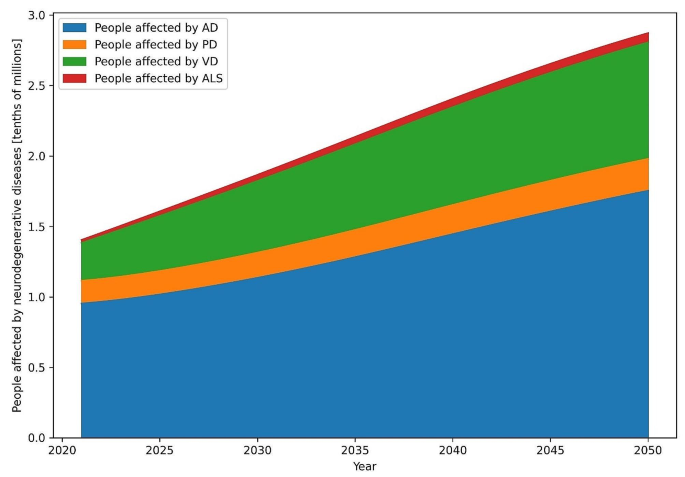
Background New effective treatments for dementia are lacking, and early prevention focusing on risk factors of dementia is important. Non-pharmacological intervention therapies aimed at these factors may provide a valuable tool for reducing the incidence of dementia. This study focused on the development of a mathematical model to predict the number of individuals with neurodegenerative diseases, specifically Alzheimer’s disease, Parkinson’s disease, vascular dementia, and amyotrophic lateral sclerosis. Scenarios for non-pharmacological intervention therapies based on risk factor reduction were also assessed. The estimated total costs and potential cost savings from societal were included. Methods Based on demographic and financial data from the EU, a mathematical model was developed to predict the prevalence and resulting care costs of neurodegenerative diseases in the population. Each disease (Alzheimer’s disease, Parkinson’s disease, vascular dementia, and amyotrophic lateral sclerosis) used parameters that included prevalence, incidence, and death risk ratio, and the simulation is related to the age of the cohort and the disease stage. Results A replicable simulation for predicting the prevalence and resulting cost of care for neurodegenerative diseases in the population exhibited an increase in treatment costs from 267 billion EUR in 2021 to 528 billion EUR by 2050 in the EU alone. Scenarios related to the reduction of the prevalence of dementia by up to 20% per decade led to total discounted treatment cost savings of up to 558 billion EUR. Conclusion The model indicates the magnitude of the financial burden placed on EU healthcare systems due to the growth in the population prevalence of neurodegenerative diseases in the coming decades. Lifestyle interventions based on reducing the most common risk factors could serve as a prevention strategy to reduce the incidence of dementia with substantial cost-savings potential. These findings could support the implementation of public health approaches throughout life to ultimately prevent premature mortality and promote a healthier and more active lifestyle in older individuals.

Genetic factors for survival in amyotrophic lateral sclerosis: an integrated approach combining a systematic review, pairwise and network meta-analysis
Medicine & Public Health Su, Wei-Ming

Genetic factors for survival in amyotrophic lateral sclerosis: an integrated approach combining a systematic review, pairwise and network meta-analysis

BioMed Central Juni 2022 Amyotrophe Lateralsklerose

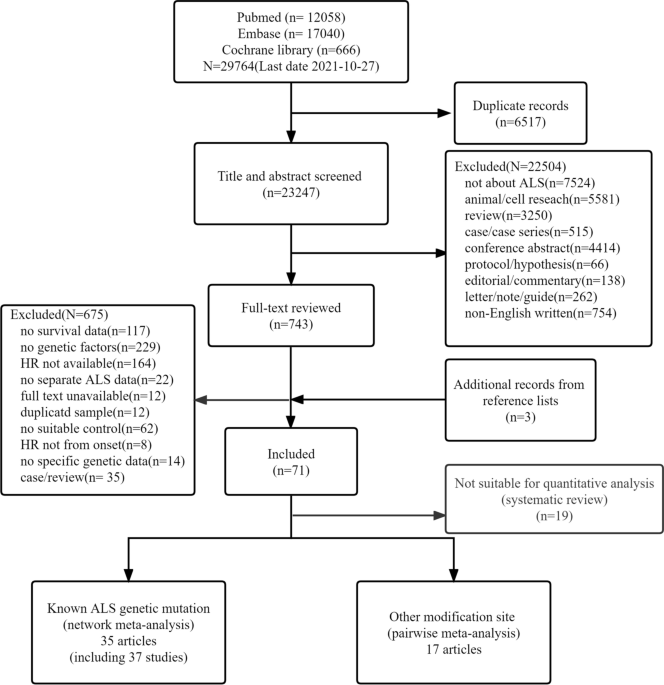
Background The time of survival in patients with amyotrophic lateral sclerosis (ALS) varies greatly, and the genetic factors that contribute to the survival of ALS are not well studied. There is a lack of a comprehensive study to elucidate the role of genetic factors in the survival of ALS. Methods The published studies were systematically searched and obtained from PubMed, EMBASE, and the Cochrane Library without any language restrictions from inception to Oct 27, 2021. A network meta-analysis for ALS causative/risk genes and a systematic review and pairwise meta-analysis for other genetic modifiers were conducted. The PROSPERO registration number: CRD42022311646. Results A total of 29,764 potentially relevant references were identified, and 71 papers were eligible for analysis based on pre-decided criteria, including 35 articles in network meta-analysis for 9 ALS causative/risk genes, 17 articles in pairwise meta-analysis for four genetic modifiers, and 19 articles described in the systematic review. Variants in three genes, including ATXN2 (HR: 3.6), C9orf72 (HR: 1.6), and FUS (HR:1.8), were associated with short survival of ALS, but such association was not identified in SOD1 , TARDBP , TBK1 , NEK1 , UBQLN2 , and CCNF . In addition, UNC13A rs12608932 CC genotype and ZNF521B rs2275294 C allele also caused a shorter survival of ALS; however, APOE ε4 allele and KIFAP3 rs1541160 did not be found to have any effect on the survival of ALS. Conclusions Our study summarized and contrasted evidence for prognostic genetic factors in ALS and would help to understand ALS pathogenesis and guide clinical trials and drug development.

Eye movement alterations in presymptomatic C9orf72 expansion gene carriers
Neurology Behler, Anna

Eye movement alterations in presymptomatic C9orf72 expansion gene carriers

Springer September 2021 Amyotrophe Lateralsklerose

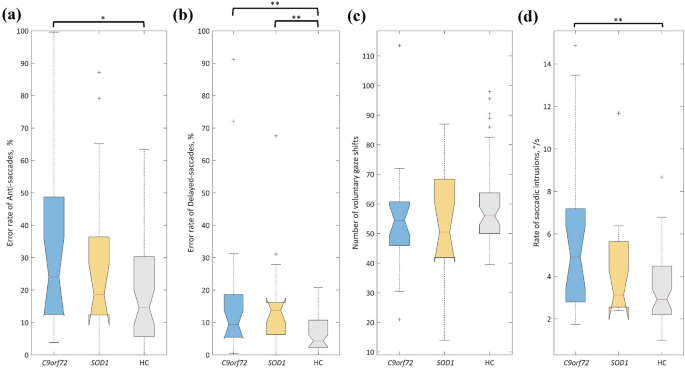
Objective The clinical manifestation of amyotrophic lateral sclerosis (ALS) is characterized by motor neuron degeneration, whereas frontotemporal dementia (FTD) patients show alterations of behavior and cognition. Both share repeat expansions in C9orf72 as the most prevalent genetic cause. Before disease-defining symptoms onset, structural and functional changes at cortical level may emerge in C9orf72 carriers. Here, we characterized oculomotor parameters and their association to neuropsychological domains in apparently asymptomatic individuals with mutations in ALS/FTD genes. Patients and methods Forty-eight carriers of ALS genes, without any clinical symptoms underwent video-oculographic examination, including 22 subjects with C9orf72 mutation, 17 with SOD1 , and 9 with other ALS associated gene mutations ( n  = 3 KIF5A ; n  = 3 FUS/FUS  +  TBK1 ; n  = 1 NEK1 ; n  = 1 SETX ; n  = 1 TDP43 ). A total of 17 subjects underwent a follow-up measurement. Data were compared to 54 age- and gender-matched healthy controls. Additionally, mutation carriers performed a neuropsychological assessment. Results In comparison to controls, the presymptomatic subjects performed significantly worse in executive oculomotor tasks such as the ability to perform correct anti-saccades. A gene mutation subgroup analysis showed that dysfunctions in C9orf72 carriers were much more pronounced than in SOD1 carriers. The anti-saccade error rate of ALS mutation carriers was associated with cognitive deficits: this correlation was increased in subjects with C9orf72 mutation, whereas SOD1 carriers showed no associations. Conclusion In C9orf72 carriers, executive eye movement dysfunctions, especially the increased anti-saccade error rate, were associated with cognitive impairment and unrelated to time. These oculomotor impairments are in support of developmental deficits in these mutations, especially in prefrontal areas.

Cognitive and behavioral involvement in ALS has been known for more than a century
Medicine & Public Health Zago, Stefano

Cognitive and behavioral involvement in ALS has been known for more than a century

Springer September 2022 Amyotrophe Lateralsklerose

Background Among clinicians and researchers, it is common knowledge that, in ALS, cognitive and behavioral involvement within the spectrum of frontotemporal degenerations (FTDs) begun to be regarded as a fact in the late 1990s of the twentieth century. By contrast, a considerable body of evidence on cognitive/behavioral changes in ALS can be traced in the literature dating from the late nineteenth century. Methods Worldwide reports on cognitive/behavioral involvement in ALS dating from 1886 to 1981 were retrieved thanks to Biblioteca di Area Medica “Adolfo Ferrate,” Sistema Bibliotecario di Ateneo, University of Pavia, Pavia, Italy and qualitatively synthetized. Results One-hundred and seventy-four cases of ALS with co-occurring FTD-like cognitive/behavioral changes, described in Europe, America, and Asia, were detected. Neuropsychological phenotypes were consistent with the revised Strong et al.’s consensus criteria. Clinical observations were not infrequently supported by histopathological, post-mortem verifications of extra-motor, cortical/sub-cortical alterations, as well as by in vivo instrumental exams—i.e., assessments of brain morphology/physiology and psychometric testing. In this regard, as earlier as 1907, the notion of motor and cognitive/behavioral features in ALS yielding from the same underlying pathology was acknowledged. Hereditary occurrences of ALS with cognitive/behavioral dysfunctions were reported, as well as familial associations with ALS-unrelated brain disorders. Neuropsychological symptoms often occurred before motor ones. Bulbar involvement was at times acknowledged as a risk factor for cognitive/behavioral changes in ALS. Discussion Historical observations herewith delivered can be regarded as the antecedents of current knowledge on cognitive/behavioral impairment in the ALS-FTD spectrum.

Disease duration of progression is helpful in identifying isolated bulbar palsy of amyotrophic lateral sclerosis
Neurology Zhang, Huagang

Disease duration of progression is helpful in identifying isolated bulbar palsy of amyotrophic lateral sclerosis

BioMed Central Oktober 2021 Amyotrophe Lateralsklerose

Background Compared with typical bulbar onset amyotrophic lateral sclerosis (ALS), isolated bulbar palsy (IBP), an often under-understood variant of ALS, is characterized by symptoms confined to bulbar region for extended periods and relative preservation of limb and ventilation function. To find a cutoff value of disease duration that can distinguish IBP from typical bulbar onset ALS well, the association of survival with disease progression in bulbar onset ALS patients was analyzed. Methods Clinical data of bulbar onset ALS patients were collected from January 2009 to December 2013. The duration from bulbar onset to first significant limb involvement was analyzed by a cutoff point analysis with maximally selected log-rank statistics and dichotomized to categorize patient outcomes. The patients were divided into two groups, the IBP and typical bulbar onset ALS groups, according to the cutoff value. Clinical features were compared. Results 115 bulbar onset ALS patients were recruited, and the duration from bulbar onset to first significant limb involvement was associated with survival ( P  < 0.001). The cutoff duration was 20 months. 19 patients were identified as IBP and 96 patients as typical bulbar onset ALS using 20 months as the cutoff duration. Female was more common, limb weakness was less frequent and pure upper motor neuron (UMN) bulbar signs were more frequent in the IBP group than in the typical bulbar onset ALS group ( P  = 0.047; P  = 0.004; P  = 0.031). The median survival time of the IBP group was significantly longer than that of the typical bulbar onset ALS group (64 months and 26 months, respectively; P  < 0.001). Conclusions A cutoff duration of 20 months from bulbar onset to first significant limb involvement may be used to specifically distinguish IBP from typical bulbar onset ALS. IBP was characterized by female predominance, relative preservation of limb function, more pure UMN bulbar signs and a relatively benign prognosis.

Monocarboxylate transporter functions and neuroprotective effects of valproic acid in experimental models of amyotrophic lateral sclerosis
Biomedicine Gyawali, Asmita

Monocarboxylate transporter functions and neuroprotective effects of valproic acid in experimental models of amyotrophic lateral sclerosis

BioMed Central Januar 2022 Amyotrophe Lateralsklerose

Background Amyotrophic lateral sclerosis (ALS) is a devasting neurodegenerative disorder for which no successful therapeutics are available. Valproic acid (VPA), a monocarboxylate derivative, is a known antiepileptic drug and a histone deacetylase inhibitor. Methods To investigate whether monocarboxylate transporter 1 (MCT1) and sodium-coupled MCT1 (SMCT1) are altered in ALS cell and mouse models, a cellular uptake study, quantitative real time polymerase chain reaction and western blot parameters were used. Similarly, whether VPA provides a neuroprotective effect in the wild-type (WT; hSOD1WT) and ALS mutant-type (MT; hSOD1G93A) NSC-34 motor neuron-like cell lines was determined through the cell viability assay. Results [^3H]VPA uptake was dependent on time, pH, sodium and concentration, and the uptake rate was significantly lower in the MT cell line than the WT cell line. Interestingly, two VPA transport systems were expressed, and the VPA uptake was modulated by SMCT substrates/inhibitors in both cell lines. Furthermore, MCT1 and SMCT1 expression was significantly lower in motor neurons of ALS (G93A) model mice than in those of WT mice. Notably, VPA ameliorated glutamate- and hydrogen peroxide-induced neurotoxicity in both the WT and MT ALS cell lines. Conclusions Together, the current findings demonstrate that VPA exhibits a neuroprotective effect regardless of the dysfunction of an MCT in ALS, which could help develop useful therapeutic strategies for ALS.

The spectrum of behavioral disorders in amyotrophic lateral sclerosis: current view
Epidemiology Jellinger, Kurt A.

The spectrum of behavioral disorders in amyotrophic lateral sclerosis: current view

Springer Oktober 2024 Amyotrophe Lateralsklerose

Behavioral disorders, with an average prevalence of 30–60% are important non-motor symptoms in amyotrophic lateral sclerosis (ALS) that have a negative impact on prognosis, management and quality of life, yet the underlying neurobiology is poorly understood. Among people with ALS, apathy, fatigue, anxiety, irritability and other behavioral symptoms are the most prominent, although less frequent than cognitive impairment. The present review explores the current understanding of behavioral changes in ALS with particular emphasis on our current knowledge about their structural and functional brain correlates, substantiating a multisystem degeneration with particular dysfunction of frontal-subcortical circuits and dysfunction of fronto-striatal, frontotemporal and other essential brain systems. The natural history of behavioral dysfunctions in ALS and their relationship to frontotemporal lobe degeneration (FTLD) are not fully understood, although they form a clinical continuum, suggesting a differential vulnerability of non-motor brain networks, ALS being considered a brain network disorder. An assessment of risks or the early detection of brain connectivity signatures before structural changes may be helpful in investigating the pathophysiological mechanisms of behavioral impairment in ALS. Treatment of both ALS and co-morbid behavioral disorders is a multidisciplinary task, but whereas no causal or disease-modifying therapies for ALS are available, symptomatic treatment of a variety of behavioral symptoms plays a pivotal role in patient care, although the management of behavioral symptoms in clinical care still remains limited.

Deciphering lipid dysregulation in ALS: from mechanisms to translational medicine
Neurology Agrawal, Ira

Deciphering lipid dysregulation in ALS: from mechanisms to translational medicine

BioMed Central November 2022 Amyotrophe Lateralsklerose

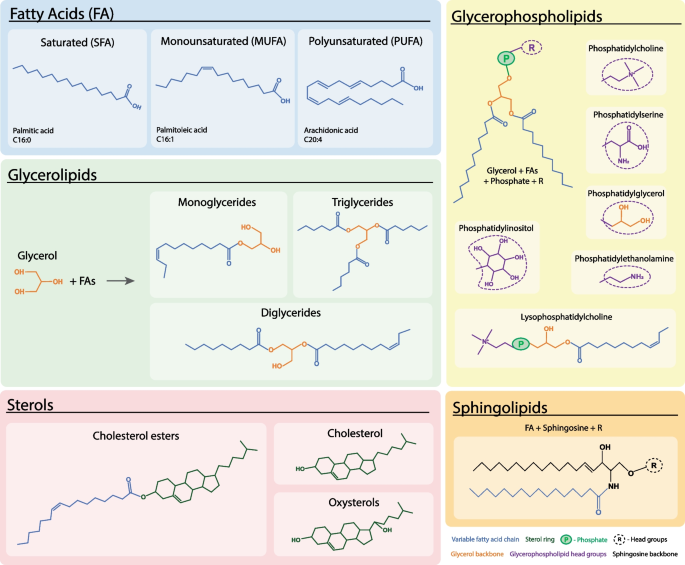
Lipids, defined by low solubility in water and high solubility in nonpolar solvents, can be classified into fatty acids, glycerolipids, glycerophospholipids, sphingolipids, and sterols. Lipids not only regulate integrity and fluidity of biological membranes, but also serve as energy storage and bioactive molecules for signaling. Causal mutations in SPTLC1 (serine palmitoyltransferase long chain subunit 1) gene within the lipogenic pathway have been identified in amyotrophic lateral sclerosis (ALS), a paralytic and fatal motor neuron disease. Furthermore, lipid dysmetabolism within the central nervous system and circulation is associated with ALS. Here, we aim to delineate the diverse roles of different lipid classes and understand how lipid dysmetabolism may contribute to ALS pathogenesis. Among the different lipids, accumulation of ceramides, arachidonic acid, and lysophosphatidylcholine is commonly emerging  as detrimental to motor neurons. We end with exploring the potential ALS therapeutics by reducing these toxic lipids.

Quality of life and depression in patients with amyotrophic lateral sclerosis – does the country of origin matter?
Medicine & Public Health Ciećwierska, Katarzyna

Quality of life and depression in patients with amyotrophic lateral sclerosis – does the country of origin matter?

BioMed Central Juni 2023 Amyotrophe Lateralsklerose

Background Given the inevitable relentless progressing nature of amyotrophic lateral sclerosis (ALS), it is essential to identify factors influencing patients’ wellbeing. The study aimed to prospectively assess factors influencing the quality of life (QoL) and depression in ALS patients compared to healthy controls (HCs) from Poland, Germany and Sweden and their relationship to socio-demographic and clinical factors. Methods 314 ALS patients (120 from Poland, 140 from Germany, 54 from Sweden) and 311 age-, sex- and education-level-matched HCs underwent standardized interviews for quality of life, depression, functional status and pain. Results Patients from all three countries showed similar levels of functional impairment (ALSFRS-R). Overall, ALS patients assessed their quality of life as lower compared to HCs (p < 0.001 for the anamnestic comparative self-assessment (ACSA), p = 0.002 for the Schedule for the evaluation of the subjective quality of life - SEIQoL- direct weighting (SEIQoL-DW). Also, the German and Swedish patients, but not the Polish, reported higher depression levels than the corresponding HCs (p < 0.001). Analysis of ALS groups revealed that functional impairment was related to a lower quality of life (ACSA) and higher depression levels among German ALS patients. Longer time since diagnosis predicted lower depression and (in male subjects) higher quality of life. Conclusions ALS patients assess their quality of life and mood lower than healthy individuals within the studied countries. The relationships between clinical and demographic factors are moderated by country of provenance, which bears implications for the design and interpretation of scientific and clinical studies, which should reflect the complexity and heterogeneity of mechanisms determining QoL.

The Gold Coast criteria increases the diagnostic sensitivity for amyotrophic lateral sclerosis in a Chinese population
Neurology Shen, Dongchao

The Gold Coast criteria increases the diagnostic sensitivity for amyotrophic lateral sclerosis in a Chinese population

BioMed Central August 2021 Amyotrophe Lateralsklerose

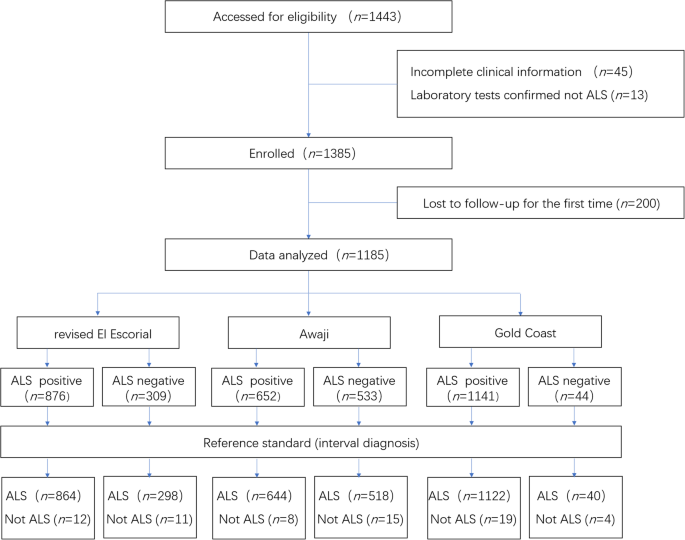
Objectives The aim of this study was to assess and compare the diagnostic utility of a new diagnostic criteria for amyotrophic lateral sclerosis (ALS), abbreviated as the ‘Gold Coast Criteria’, with the revised El Escorial (rEEC) and Awaji criteria. Methods Clinical and electrophysiological data of 1185 patients from January 2014 to December 2019 in the Peking Union Medical College Hospital ALS database were reviewed. The sensitivity of the Gold Coast criteria was compared to that of the possible rEEC and Awaji criteria (defined by the proportion of patients categorized as definite, probable, or possible ALS). Results A final diagnosis of ALS was recorded in 1162 patients. The sensitivity of the Gold Coast criteria (96.6%, 95% confidence interval [CI] = 95.3%–97.5%) was greater than that of the rEEC (85.1%, 95%CI = 82.9%–87.1%) and Awaji (85.3%, 95%CI = 83.2%–87.3%). In addition, the sensitivity of the novel criteria maintained robust across subgroups, and the advantage was more prominent in limb-onset ALS patients and those who completed electromyographic tests. In those who did not achieve any of the rEEC diagnostic categories, the sensitivity of Gold Coast criteria was 84.4%. Conclusions The current study demonstrated that the Gold Coast criteria exhibited greater diagnostic sensitivity than the rEEC and Awaji criteria in a Chinese ALS population. The application of the Gold Coast criteria should be considered in clinical practice and future therapeutic trials.

Towards clinical application of implantable brain–computer interfaces for people with late-stage ALS: medical and ethical considerations
Medicine & Public Health Vansteensel, Mariska J.

Towards clinical application of implantable brain–computer interfaces for people with late-stage ALS: medical and ethical considerations

Springer November 2022 Amyotrophe Lateralsklerose

Individuals with amyotrophic lateral sclerosis (ALS) frequently develop speech and communication problems in the course of their disease. Currently available augmentative and alternative communication technologies do not present a solution for many people with advanced ALS, because these devices depend on residual and reliable motor activity. Brain–computer interfaces (BCIs) use neural signals for computer control and may allow people with late-stage ALS to communicate even when conventional technology falls short. Recent years have witnessed fast progression in the development and validation of implanted BCIs, which place neural signal recording electrodes in or on the cortex. Eventual widespread clinical application of implanted BCIs as an assistive communication technology for people with ALS will have significant consequences for their daily life, as well as for the clinical management of the disease, among others because of the potential interaction between the BCI and other procedures people with ALS undergo, such as tracheostomy. This article aims to facilitate responsible real-world implementation of implanted BCIs. We review the state of the art of research on implanted BCIs for communication, as well as the medical and ethical implications of the clinical application of this technology. We conclude that the contribution of all BCI stakeholders, including clinicians of the various ALS-related disciplines, will be needed to develop procedures for, and shape the process of, the responsible clinical application of implanted BCIs.

Assessing the role of blood pressure in amyotrophic lateral sclerosis: a Mendelian randomization study
Medicine & Public Health Xia, Kailin

Assessing the role of blood pressure in amyotrophic lateral sclerosis: a Mendelian randomization study

BioMed Central Februar 2022 Amyotrophe Lateralsklerose

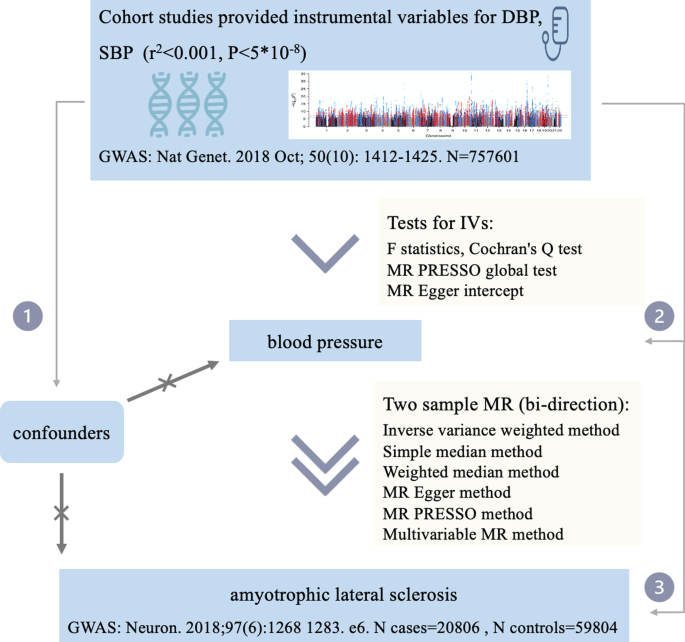
Background Observational studies have suggested a close but controversial relationship between blood pressure (BP) and amyotrophic lateral sclerosis (ALS). It remains unclear whether this association is causal. The authors employed a bidirectional two-sample Mendelian randomization (MR) approach to evaluate the causal relationship between BP and ALS. Genetic proxies for systolic blood pressure (SBP), diastolic blood pressure (DBP), antihypertensive drugs (AHDs), ALS, and their corresponding genome-wide association study (GWAS) summary datasets were obtained from the most recent studies with the largest sample sizes. The inverse variance weighted (IVW) method was adopted as the main approach to examine the effect of BP on ALS and four other MR methods were used for sensitivity analyses. To exclude the interference between SBP and DBP, a multivariable MR approach was used. Results We found that genetically determined increased DBP was a protective factor for ALS (OR = 0.978, 95% CI 0.960–0.996, P  = 0.017) and that increased SBP was an independent risk factor for ALS (OR = 1.014, 95% CI 1.003–1.025, P  = 0.015), which is supported by sensitivity analyses. The use of calcium channel blocker (CCB) showed a causal relationship with ALS (OR = 0.985, 95% CI 0.971–1.000, P  = 0.049). No evidence was revealed that ALS caused changes in BP. Conclusions This study provides genetic support for a causal effect of BP and ALS that increased DBP has a protective effect on ALS, and increased SBP is a risk factor for ALS, which may be related to sympathetic excitability. Blood pressure management is essential in ALS, and CCB may be a promising candidate.

Pathological neural networks and artificial neural networks in ALS: diagnostic classification based on pathognomonic neuroimaging features
Neurology Bede, Peter

Pathological neural networks and artificial neural networks in ALS: diagnostic classification based on pathognomonic neuroimaging features

Springer Mai 2022 Amyotrophe Lateralsklerose

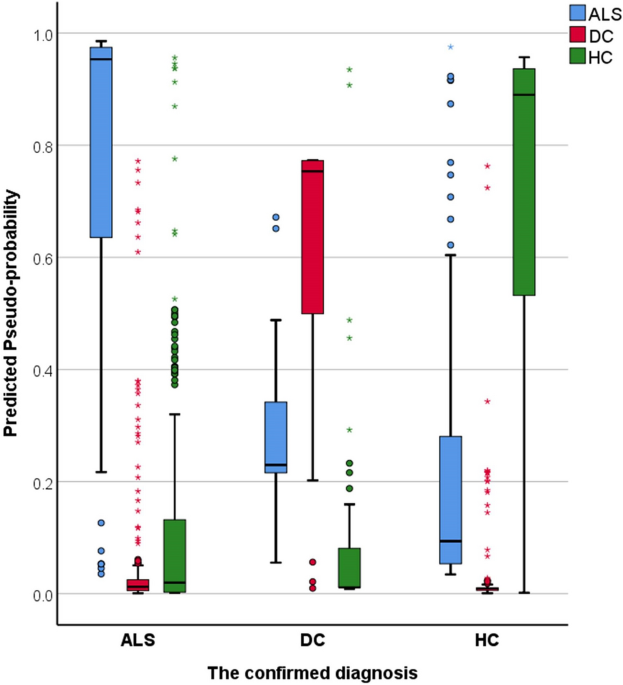
The description of group-level, genotype- and phenotype-associated imaging traits is academically important, but the practical demands of clinical neurology centre on the accurate classification of individual patients into clinically relevant diagnostic, prognostic and phenotypic categories. Similarly, pharmaceutical trials require the precision stratification of participants based on quantitative measures. A single-centre study was conducted with a uniform imaging protocol to test the accuracy of an artificial neural network classification scheme on a cohort of 378 participants composed of patients with ALS, healthy subjects and disease controls. A comprehensive panel of cerebral volumetric measures, cortical indices and white matter integrity values were systematically retrieved from each participant and fed into a multilayer perceptron model. Data were partitioned into training and testing and receiver-operating characteristic curves were generated for the three study-groups. Area under the curve values were 0.930 for patients with ALS, 0.958 for disease controls, and 0.931 for healthy controls relying on all input imaging variables. The ranking of variables by classification importance revealed that white matter metrics were far more relevant than grey matter indices to classify single subjects. The model was further tested in a subset of patients scanned within 6 weeks of their diagnosis and an AUC of 0.915 was achieved. Our study indicates that individual subjects may be accurately categorised into diagnostic groups in an observer-independent classification framework based on multiparametric, spatially registered radiology data. The development and validation of viable computational models to interpret single imaging datasets are urgently required for a variety of clinical and clinical trial applications.

PP2A and GSK3 act as modifiers of FUS-ALS by modulating mitochondrial transport
Medicine & Public Health Tziortzouda, Paraskevi

PP2A and GSK3 act as modifiers of FUS-ALS by modulating mitochondrial transport

Springer Februar 2024 Amyotrophe Lateralsklerose

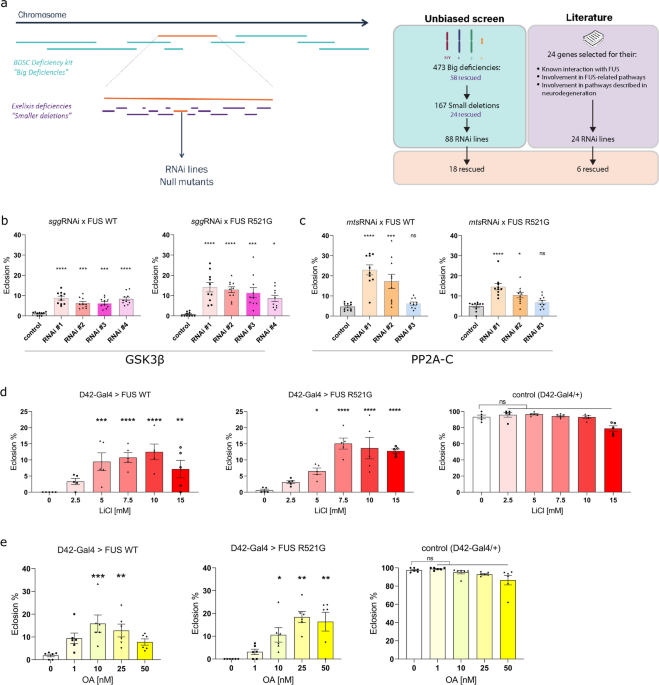
Amyotrophic lateral sclerosis (ALS) is a fatal neurodegenerative disease which currently lacks effective treatments. Mutations in the RNA-binding protein FUS are a common cause of familial ALS, accounting for around 4% of the cases. Understanding the mechanisms by which mutant FUS becomes toxic to neurons can provide insight into the pathogenesis of both familial and sporadic ALS. We have previously observed that overexpression of wild-type or ALS-mutant FUS in Drosophila motor neurons is toxic, which allowed us to screen for novel genetic modifiers of the disease. Using a genome-wide screening approach, we identified Protein Phosphatase 2A (PP2A) and Glycogen Synthase Kinase 3 (GSK3) as novel modifiers of FUS-ALS. Loss of function or pharmacological inhibition of either protein rescued FUS-associated lethality in Drosophila . Consistent with a conserved role in disease pathogenesis, pharmacological inhibition of both proteins rescued disease-relevant phenotypes, including mitochondrial trafficking defects and neuromuscular junction failure, in patient iPSC-derived spinal motor neurons (iPSC-sMNs). In FUS-ALS flies, mice, and human iPSC-sMNs, we observed reduced GSK3 inhibitory phosphorylation, suggesting that FUS dysfunction results in GSK3 hyperactivity. Furthermore, we found that PP2A acts upstream of GSK3, affecting its inhibitory phosphorylation. GSK3 has previously been linked to kinesin-1 hyperphosphorylation. We observed this in both flies and iPSC-sMNs, and we rescued this hyperphosphorylation by inhibiting GSK3 or PP2A. Moreover, increasing the level of kinesin-1 expression in our Drosophila model strongly rescued toxicity, confirming the relevance of kinesin-1 hyperphosphorylation. Our data provide in vivo evidence that PP2A and GSK3 are disease modifiers, and reveal an unexplored mechanistic link between PP2A, GSK3, and kinesin-1, that may be central to the pathogenesis of FUS-ALS and sporadic forms of the disease.

Plasma exchange with albumin replacement and disease progression in amyotrophic lateral sclerosis: a pilot study
Neurology Povedano, Mónica

Plasma exchange with albumin replacement and disease progression in amyotrophic lateral sclerosis: a pilot study

Springer Mai 2022 Amyotrophe Lateralsklerose

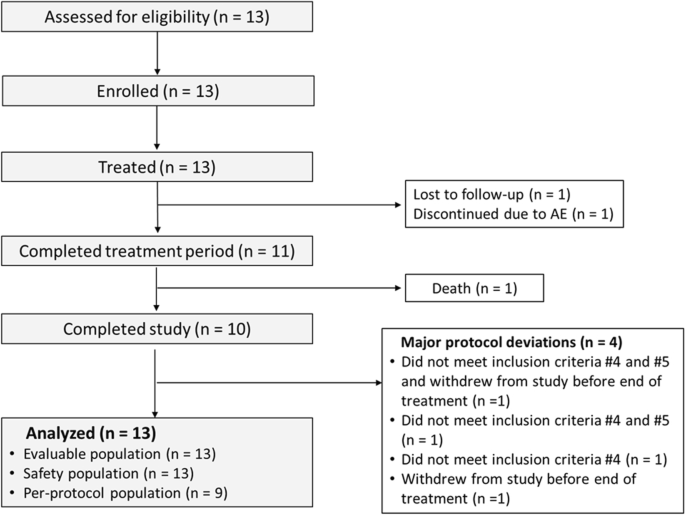
Background Plasma exchange (PE) is used to treat a range of neurological disorders. Based on results demonstrated in Alzheimer’s disease, we theorized that PE with albumin replacement (PE-A) might alter the metabolic profile of plasma and cerebrospinal fluid in patients with amyotrophic lateral sclerosis (ALS) by removing disease-inducing molecules. The aim of this study was to evaluate the effect of PE-A on disease progression in ALS. Methods In this open-label, non-controlled, single-arm, prospective pilot study, 13 adults with ALS had 6 months’ treatment with PE-A 5% and 6 months’ follow-up. Primary endpoints were changes from baseline in the Amyotrophic Lateral Sclerosis Functional Rating Scale-Revised (ALSFRS-R) score and forced vital capacity (FVC) through 48 weeks. A post hoc analysis compared individual patient data with the expected ALSFRS-R progression slope. Results The median ALSFRS-R score declined throughout the study, although the rate of decline was slower than expected in seven patients at treatment end and in five patients at study end. Six patients remained in the same baseline slope progression category, and four patients improved their slope category at treatment end. Median FVC decreased significantly during the study. Treatment was well tolerated. Of 330 PE-A procedures, 0.9% were associated with potentially related adverse events. Conclusion Although functional impairment progressed, about two-thirds of patients showed a slower than expected rate of decline at treatment end. Most patients had unaltered (54.5%) or reduced (36.4%) ALSFRS-R slope progression at treatment end. Further evaluation of PE-A in controlled studies involving more patients is warranted. EudraCT number 2013-004842-40. Trial registration ClinicalTrials.gov identifier: NCT02479802.

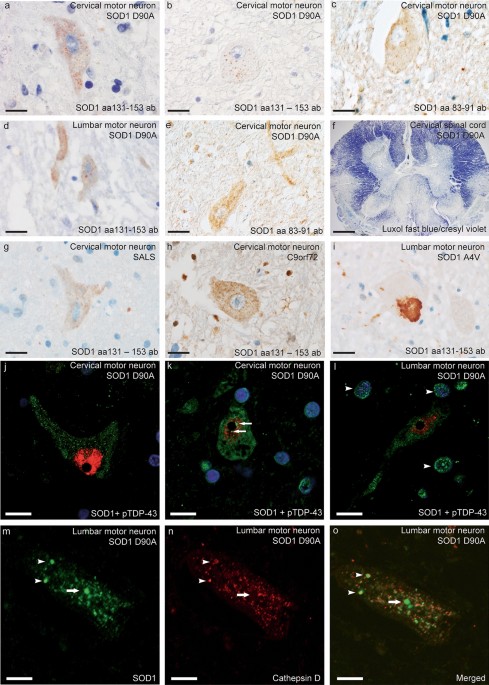
Widespread CNS pathology in amyotrophic lateral sclerosis homozygous for the D90A SOD1 mutation
Medicine & Public Health Forsberg, Karin M.

Widespread CNS pathology in amyotrophic lateral sclerosis homozygous for the D90A SOD1 mutation

Springer November 2022 Amyotrophe Lateralsklerose

Mutations in the gene encoding the ubiquitously expressed free radical scavenging enzyme superoxide dismutase-1 ( SOD1 ) are found in 2–6% of amyotrophic lateral sclerosis patients. The most frequent SOD1 mutation worldwide is D90A. Amyotrophic lateral sclerosis caused by this mutation has some unusual features: the heredity is usually recessive, the phenotype is stereotypic with slowly evolving motor symptoms beginning in the legs and may also include sensory, autonomic, and urinary bladder involvement. Furthermore, the mutant protein resembles the wild type, with normal content and enzymatic activity in the central nervous system. Here, we report neuropathological findings in nine patients homozygous for the D90A mutation. All nine had numerous small granular inclusions immunoreactive for misfolded SOD1 in motor neurons and glial nuclei in the spinal cord and brainstem. In addition to degeneration of the corticospinal tracts, all patients had degeneration of the dorsal columns. We also found intense gliosis in circumscribed cortical areas of the frontal and temporal lobes and in the insula. In these areas and in adjacent white matter, there were SOD1 staining neuropil threads. A few SOD1-immunopositive cytoplasmic neuronal inclusions were observed in cortical areas, as were glial nuclear inclusions. As suggested by the symptoms and signs and earlier neurophysiological and imaging investigations, the histopathology in patients homozygous for the D90A SOD1 extends beyond the motor system to include cognitive and sensory cortical areas. However, even in the patients that had a symptomatic disease duration of more than 2 or 3 decades and lived into their 70s or 80s, there were no SOD1-inclusion pathology and no typical dysfunction (apart from the musculature) in non-nervous organs. Thus, only specific parts of the CNS seem to be vulnerable to toxicity provoked by homozygously expressed mutant SOD1.

Targeted sequencing panels in Italian ALS patients support different etiologies in the ALS/FTD continuum
Neurology Bartoletti-Stella, Anna

Targeted sequencing panels in Italian ALS patients support different etiologies in the ALS/FTD continuum

Springer Oktober 2021 Amyotrophe Lateralsklerose

Background 5–10% of amyotrophic lateral sclerosis (ALS) patients presented a positive family history (fALS). More than 30 genes have been identified in association with ALS/frontotemporal dementia (FTD) spectrum, with four major genes accounting for 60–70% of fALS. In this paper, we aimed to assess the contribution to the pathogenesis of major and rare ALS/FTD genes in ALS patients. Methods We analyzed ALS and ALS/FTD associated genes by direct sequencing or next-generation sequencing multigene panels in ALS patients. Results Genetic abnormalities in ALS major genes included repeated expansions of hexanucleotide in C9orf72 gene (7.3%), mutations in SOD1 (4.9%), FUS (2.1%), and TARDBP (2.4%), whereas variants in rare ALS/FTD genes affected 15.5% of subjects overall, most frequently involving SQSTM1 (3.4%), and CHMP2B (1.9%). We found clustering of variants in ALS major genes in patients with a family history for “pure” ALS, while ALS/FTD related genes mainly occurred in patients with a family history for other neurodegenerative diseases (dementia and/or parkinsonism). Conclusions Our data support the presence of two different genetic components underlying ALS pathogenesis, related to the presence of a family history for ALS or other neurodegenerative diseases. Thus, family history may help in optimizing the genetic screening protocol to be applied.

Racial Disparities in the Diagnosis and Prognosis of ALS Patients in the United States
Epidemiology Raymond, Jaime

Racial Disparities in the Diagnosis and Prognosis of ALS Patients in the United States

Springer Juli 2024 Amyotrophe Lateralsklerose

Background Amyotrophic lateral sclerosis (ALS) is a progressive, fatal disease with largely unknown etiology. This study compares racial differences in clinical characteristics of ALS patients enrolled in the National ALS Registry (Registry). Methods Data from ALS patients who completed the Registry’s online clinical survey during 2013–2022 were analyzed to determine characteristics such as site of onset, associated symptoms, time of symptom onset to diagnosis, and pharmacological and non-pharmacological interventions for White, Black, and other race patients. Results Surveys were completed by 4242 participants. Findings revealed that Black ALS patients were more likely to be diagnosed at a younger age, to have arm or hand initial site of onset, and to experience pneumonia than were White ALS patients. ALS patients of other races were more likely than White ALS patients to be diagnosed at a younger age and to experience twitching. The mean interval between the first sign of weakness and an ALS diagnosis for Black patients was almost 24 months, statistically greater than that of White ( p  = 0.0374; 16 months) and other race patients ( p  = 0.0518; 15.8 months). The mean interval between problems with speech until diagnosis was shorter for White patients (6.3 months) than for Black patients (17.7 months) and other race patients (14.8 months). Conclusions and Relevance Registry data shows racial disparities still exist in the diagnosis and clinical characteristics of ALS patients. Increased recruitment of non-White ALS patients and better characterization of symptom onset between races might aid clinicians in diagnosing ALS sooner, leading to earlier therapeutic interventions.

Accuracy of a machine learning method based on structural and locational information from AlphaFold2 for predicting the pathogenicity of TARDBP and FUS gene variants in ALS
Life Sciences Hatano, Yuya

Accuracy of a machine learning method based on structural and locational information from AlphaFold2 for predicting the pathogenicity of TARDBP and FUS gene variants in ALS

BioMed Central Mai 2023 Amyotrophe Lateralsklerose

Background In the sporadic form of amyotrophic lateral sclerosis (ALS), the pathogenicity of rare variants in the causative genes characterizing the familial form remains largely unknown. To predict the pathogenicity of such variants, in silico analysis is commonly used. In some ALS causative genes, the pathogenic variants are concentrated in specific regions, and the resulting alterations in protein structure are thought to significantly affect pathogenicity. However, existing methods have not taken this issue into account. To address this, we have developed a technique termed MOVA (method for evaluating the pathogenicity of missense variants using AlphaFold2), which applies positional information for structural variants predicted by AlphaFold2. Here we examined the utility of MOVA for analysis of several causative genes of ALS. Methods We analyzed variants of 12 ALS-related genes ( TARDBP , FUS , SETX , TBK1 , OPTN , SOD1 , VCP , SQSTM1 , ANG , UBQLN2 , DCTN1 , and CCNF ) and classified them as pathogenic or neutral. For each gene, the features of the variants, consisting of their positions in the 3D structure predicted by AlphaFold2, pLDDT score, and BLOSUM62 were trained into a random forest and evaluated by the stratified fivefold cross validation method. We compared how accurately MOVA predicted mutant pathogenicity with other in silico prediction methods and evaluated the prediction accuracy at TARDBP and FUS hotspots. We also examined which of the MOVA features had the greatest impact on pathogenicity discrimination. Results MOVA yielded useful results (AUC ≥ 0.70) for TARDBP , FUS , SOD1 , VCP , and UBQLN2 of 12 ALS causative genes. In addition, when comparing the prediction accuracy with other in silico prediction methods, MOVA obtained the best results among those compared for TARDBP , VCP , UBQLN2 , and CCNF . MOVA demonstrated superior predictive accuracy for the pathogenicity of mutations at hotspots of TARDBP and FUS . Moreover, higher accuracy was achieved by combining MOVA with REVEL or CADD. Among the features of MOVA, the x, y, and z coordinates performed the best and were highly correlated with MOVA. Conclusions MOVA is useful for predicting the virulence of rare variants in which they are concentrated at specific structural sites, and for use in combination with other prediction methods.

Analysis of brain and spinal MRI measures in a common domain to investigate directional neurodegeneration in motor neuron disease
Medicine & Public Health Toh, C.

Analysis of brain and spinal MRI measures in a common domain to investigate directional neurodegeneration in motor neuron disease

Springer Dezember 2022 Amyotrophe Lateralsklerose

Background Magnetic resonance imaging (MRI) of the brain and cervical spinal cord is often performed in diagnostic evaluation of suspected motor neuron disease/amyotrophic lateral sclerosis (MND/ALS). Analysis of MRI-derived tissue damage metrics in a common domain facilitates group-level inferences on pathophysiology. This approach was applied to address competing hypotheses of directionality of neurodegeneration, whether anterograde, cranio-caudal dying-forward from precentral gyrus or retrograde, dying-back. Methods In this cross-sectional study, MRI was performed on 75 MND patients and 13 healthy controls. Precentral gyral thickness was estimated from volumetric T1-weighted images using FreeSurfer, corticospinal tract fractional anisotropy (FA) from diffusion tensor imaging using FSL, and cross-sectional cervical cord area between C1-C8 levels using Spinal Cord Toolbox. To analyse these multimodal data within a common domain, individual parameter estimates representing tissue damage at each corticospinal tract level were first converted to z -scores, referenced to healthy control norms. Mixed-effects linear regression models were then fitted to these z -scores, with gradients hypothesised to represent directionality of neurodegeneration. Results At group-level, z -scores did not differ significantly between precentral gyral and intracranial corticospinal tract tissue damage estimates (regression coefficient − 0.24, [95% CI − 0.62, 0.14], p  = 0.222), but step-changes were evident between intracranial corticospinal tract and C1 (1.14, [95% CI 0.74, 1.53], p  < 0.001), and between C5 and C6 cord levels (0.98, [95% CI 0.58, 1.38], p  < 0.001). Discussion Analysis of brain and cervical spinal MRI data in a common domain enabled investigation of pathophysiological hypotheses in vivo. A cranio-caudal step-change in MND patients was observed, and requires further investigation in larger cohorts.

Increased incidence of motor neuron disease in Sweden: a population-based study during 2002–2021
Medicine & Public Health Imrell, Sofia

Increased incidence of motor neuron disease in Sweden: a population-based study during 2002–2021

Springer Februar 2024 Amyotrophe Lateralsklerose

Background Motor neuron diseases (MND), with amyotrophic lateral sclerosis constituting most cases, are rare conditions of unknown etiology. There have been reports of an increase in incidence during the latter half of the twentieth century in various Western countries, including Sweden. This study provides updated data on the incidence of MND in Sweden during the last 20 years. Methods Data was obtained from the Swedish National Patient Register on individuals diagnosed with MND from 2002 to 2021 and analysed in relation to group level data for the entire Swedish population. Incidence rates were calculated and presented in relation to year, age, sex, and region. Results In the early 2000s, there was a crude incidence rate of 3.5–3.7 per 100,000 person-years, which then increased to 4.0–4.6 from 2008 onward. Age standardization to the starting year (2002) partially mitigated this increase. The incidence rate was greater among men compared to women and was highest within the age range of 70 to 84 years. There were indications of a higher incidence rate in the northernmost parts of the country, although the difference was not statistically significant. Conclusions The incidence rate of MND in Sweden now seems to have surpassed 4 cases per 100,000 person-years. This is higher when compared to both other European countries and previous Swedish studies. It remains to be determined if this increase reflects an actual increasing incidence of MND in Sweden or is due to other factors such as better registry coverage.

Peak expiratory flow is a reliably household pulmonary function parameter correlates with disease severity and survival of patients with amyotrophic lateral sclerosis
Medicine & Public Health Zhang, Qi-Jie

Peak expiratory flow is a reliably household pulmonary function parameter correlates with disease severity and survival of patients with amyotrophic lateral sclerosis

BioMed Central März 2022 Amyotrophe Lateralsklerose

Background Amyotrophic lateral sclerosis (ALS) is an incurable and fatal neurodegenerative disease; most ALS patients die within 3 to 5 years after symptom onset, usually as a consequence of respiratory failure. In the present study, we aim to screen the survival-related pulmonary function parameters, and to explore the predictive value of peak expiratory flow (PEF) in disease severity and prognosis in patients with ALS. Methods The discovery cohort included 202 ALS patients, and the demographic and clinical characteristics of eligible patients were collected and pulmonary function tests were performed using MS-PFT spirometer. In the validation cohort, 62 newly diagnosed ALS patients performed the pulmonary function test by MS-PFT spirometer and household peak flow meter (KOKA) simultaneously. Results Among 12 pulmonary function parameters, FVC, FEV1, PEF, MEF75%, and MVV were identified to be independent predictive factors for survival. PEF was highly correlated with FVC ( r  = 0.797), MVV ( r  = 0.877), FEV1 ( r  = 0.847), and MEF75% ( r  = 0.963). Besides, the values of PEF were positively associated with disease severity (ALSFRS-R score, r_s = 0.539, P  < 0.0001), and negatively associated with progression rate (ΔALSFRS-R, r_s = -0.316, P  < 0.0001). Finally, we also confirmed that the values of KOKA-measured PEF were highly correlated with the ones measured using MS-PFT spirometer ( r  = 0.9644, p  < 0.0001). Conclusions Our work emphasizes the critical role of PFTs in predicting prognosis of ALS patients. PEF is an easily available pulmonary function index, which is also a promising indicator in predicting disease severity and survival for ALS patients.

Optimizing breathlessness management in amyotrophic lateral sclerosis: insights from a comprehensive systematic review
Medicine & Public Health Filipe, Catarina Bico

Optimizing breathlessness management in amyotrophic lateral sclerosis: insights from a comprehensive systematic review

BioMed Central April 2024 Amyotrophe Lateralsklerose

Background Breathlessness is a prevalent symptom affecting the quality of life (QOL) of Amyotrophic Lateral Sclerosis (ALS) patients. This systematic review explored the interventions for controlling breathlessness in ALS patients, emphasizing palliative care (PALC), non-invasive ventilation (NIV), opioids, and non-pharmacological strategies. Methods A comprehensive search of PubMed, Cochrane Library, and Web of Science databases was conducted. Eligibility criteria encompassed adults with ALS or motor neuron disease experiencing breathlessness. Outcomes included QOL and symptom control. Study designs comprised qualitative studies, cohort studies, and randomized controlled trials. Results Eight studies were included, most exhibiting low bias risk, comprising one randomized controlled trial, three cohort studies, two comparative retrospective studies, and two qualitative studies (interviews). Most studies originated from Europe, with one from the United States of America. The participants totaled 3423, with ALS patients constituting 95.6%. PALC consultations significantly improved symptom assessment, advance care planning, and discussions about goals of care. NIV demonstrated efficacy in managing breathlessness, with considerations for device limitations. Opioids were effective, though predominantly studied in non-ALS patients. Non-pharmacological strategies varied in efficacy among patients. Conclusion The findings underscore the need for individualized approaches in managing breathlessness in ALS. PALC, NIV, opioids, and non-pharmacological strategies each play a role, with unique considerations. Further research, especially ALS-specific self-management studies, is warranted.

‘A lightbulb moment’: carers’ experiences of behavioural symptoms in motor neurone disease before and after MiNDToolkit
Medicine & Public Health Mioshi, Eneida

‘A lightbulb moment’: carers’ experiences of behavioural symptoms in motor neurone disease before and after MiNDToolkit

BioMed Central Juli 2024 Amyotrophe Lateralsklerose

Background To explore carers’ experiences of behavioural symptoms in Motor Neurone Disease (MND), before and after using the MiNDToolkit, a novel internet-based psychoeducational intervention to support management of behavioural symptoms (BehSymp) in MND. The study also investigated carers’ views and acceptability of MiNDToolkit. Methods A qualitative process evaluation of carers engagement with, and acceptability of, the MiNDToolkit conducted using semi-structured interviews with carers ( n  = 11). All interviews were audio-recorded, professionally transcribed verbatim and analysed thematically. Results Five themes were identified: (1) In the dark: carers’ experiences and reactions to BehSymp; (2) Others can see: the role of HCPs in identifying symptoms – and perceived opportunities for carers to receive support; (3) Shedding light: carers implementation and perceived impact of the MiNDToolkit content; (4) Acceptability and carers’ engagement with MiNDToolkit; (5) Future implementation. Carers’ experience of BehSymp was particularly distressing when symptoms were apparently out of context. MiNDToolkit appeared to support learning that BehSymp were part of MND. Content resonated with carers, who reported learning about the full picture of MND, which led to acceptance and use of newly learned strategies. Engagement with the platform was good, with varied input from HCPs. Greater and nuanced involvement from HCPs seem important to support management of BehSymp. Recommendations for a full-scale trial emerged, including adding a paper booklet to accompany the intervention and creation of new modules on emotional lability, changes in relationships, and transitioning to a care home. Conclusions MiNDToolkit was acceptable to carers overall. Recommended improvements should be actioned in a full-scale trial.

Bisperoxovanadium promotes motor neuron survival and neuromuscular innervation in amyotrophic lateral sclerosis
Neurology Wang, Junmei

Bisperoxovanadium promotes motor neuron survival and neuromuscular innervation in amyotrophic lateral sclerosis

BioMed Central Oktober 2021 Amyotrophe Lateralsklerose

Amyotrophic lateral sclerosis (ALS) is the most common motor neuron (MN) disease, with no present cure. The progressive loss of MNs is the hallmark of ALS. We have previously shown the therapeutic effects of the phosphatase and tensin homolog (PTEN) inhibitor, potassium bisperoxo (picolinato) vanadium (bpV[pic]), in models of neurological injury and demonstrated significant neuroprotective effects on MN survival. However, accumulating evidence suggests PTEN is detrimental for MN survival in ALS. Therefore, we hypothesized that treating the mutant superoxide dismutase 1 G93A (mSOD1^G93A) mouse model of ALS during motor neuron degeneration and an in vitro model of mSOD1^G93A motor neuron injury with bpV(pic) would prevent motor neuron loss. To test our hypothesis, we treated mSOD1^G93A mice intraperitoneally daily with 400 μg/kg bpV(pic) from 70 to 90 days of age. Immunolabeled MNs and microglial reactivity were analyzed in lumbar spinal cord tissue, and bpV(pic) treatment significantly ameliorated ventral horn motor neuron loss in mSOD1^G93A mice ( p  = 0.003) while not significantly altering microglial reactivity ( p  = 0.701). Treatment with bpV(pic) also significantly increased neuromuscular innervation ( p  = 0.018) but did not affect muscle atrophy. We also cultured motor neuron-like NSC-34 cells transfected with a plasmid to overexpress mutant SOD1^G93A and starved them in serum-free medium for 24 h with and without bpV(pic) and downstream inhibitor of Akt signaling, LY294002. In vitro, bpV(pic) improved neuronal viability, and Akt inhibition reversed this protective effect ( p  < 0.05). In conclusion, our study indicates systemic bpV(pic) treatment could be a valuable neuroprotective therapy for ALS.

Aktuelle Veröffentlichungen

Krebs

25 wissenschaftliche Veröffentlichungen im Bereich Krebs, für einen schnellen Zugang zur entsprechenden Fachliteratur.

Gallbladder Cancer
Oncology Heard, Jessica C.

Gallbladder Cancer

Springer Januar 2025 Krebs

Gallbladder cancer is often described as extremely aggressive with a poor prognosis. Most patients with early-stage gallbladder cancer are asymptomatic and will not be diagnosed until late in the disease course, contributing to gallbladder cancer’s generally poor 5-year survival. While gallbladder cancer is the most common biliary cancer, it is relatively rare in developed countries, and few prospective studies on its management exist. At this time, surgery remains the mainstay of treatment, followed by adjuvant chemoradiation. The operative procedure of choice depends on the patient’s presentation and tumor stage. For early-stage tumors (Tis and T1a), simple cholecystectomy can be curative. In more advanced disease, radical cholecystectomy must be performed. Surveillance includes an evaluation and updated cross-sectional imaging every 3–6 months for 2 years and 6–12 months for an additional 3 years after surgery. Despite ideal surgical management, disease recurrence within 24 months is common. The majority of recurrences have a metastatic component with or without local recurrence.

Significant drop in serum C-reactive protein in patients with solid neoplasia and bacterial infection is associated with a better prognosis and identifies candidates for short-course antibiotic therapy
Oncology Barros, Guilherme Monteiro

Significant drop in serum C-reactive protein in patients with solid neoplasia and bacterial infection is associated with a better prognosis and identifies candidates for short-course antibiotic therapy

BioMed Central September 2024 Krebs

Introduction The greater predisposition to infections, as well as the possibility of a worse response to treatment, can lead to the excessive use of antimicrobials among cancer patients. C-reactive protein (CRP) has gained prominence as a tool for monitoring therapeutic responses and reducing the duration of antibiotic therapy; however, few studies have analyzed this protein in cancer patient populations. We hypothesize that cancer patients with a good response to antibiotic therapy show a faster decline in serum CRP levels, which would allow us to identify candidates for short-course treatments. Objective To evaluate the behavior of serum CRP levels among adult cancer patients using antibiotic therapy, and its association with the duration of this treatment, therapeutic response, and clinical recurrence. Methods This work consisted of a retrospective study with cancer patients admitted to a university hospital between September 2018 and December 2019. Adults (age ≥ 18 years) who underwent at least one course of antibiotic therapy were included. CRP behavior over the first 7 days of treatment was classified as: i) good response: when the CRP value on the fifth day of therapy reached 50% or less of the peak value detected in the first 48 h of treatment, and ii) poor response: Maintenance, within the same interval, of a CRP value > 50% of the peak value in the first 48 h. The duration of antibiotic therapy was categorized as up to seven full days or more. Outcomes were assessed by events that occurred during the 30 days of hospitalization or until hospital discharge. Primary outcome: Clinical recurrence of the index infection. Secondary outcomes: i) Death from any cause; ii) microbiological recurrence; iii) therapeutic response; iv) colitis associated with Clostridioides difficile ; and v) isolation of multi-resistant bacteria, whether in clinical or surveillance samples. Results The final analysis consisted of 212 patients, with a median age (IQ) of 59.2 (48 – 67) years old and a predominance of females (65%), who were hypertensive (35%), smokers (21%), and diabetics (17.8%). There was no difference in clinical recurrence between the two groups (8.1% vs. 12.2%; p  = 0.364), with a lower 30-day mortality in the good CRP response group (32.2% vs. 14.5%; p  = 0.002). Despite the tendency towards a lower occurrence of other secondary outcomes in the good response group, these differences were not statistically significant. In the poor CRP response group, outcomes like clinical recurrence, mortality, and therapeutic response were significantly worse, regardless of the duration of antibiotic treatment. Conclusion In this study, cancer patients with a good CRP response during antibiotic therapy presented lower mortality and a higher proportion of satisfactory therapeutic responses. CRP can be a useful tool when combined with other clinical information in optimizing the duration of antimicrobial treatment in a hospitalized cancer population.

Optimizing the integration of family physicians into cancer survivorship care in the BC Interior: a mixed methods study of physicians’ opinions and experiences
Oncology Hayes, Brian D.

Optimizing the integration of family physicians into cancer survivorship care in the BC Interior: a mixed methods study of physicians’ opinions and experiences

Springer Februar 2025 Krebs

Purpose With cancer diagnoses increasing worldwide and the number of cancer survivors rising, family physicians are being increasingly relied upon to provide post-cancer treatment care and/or survivorship care. This mixed-method study explores and evaluates barriers and facilitators to optimizing family physician-led survivorship care in the largely rural Interior of British Columbia (BC), Canada. Methods A mixed-method approach consisting of quantitative surveys and qualitative interviews was utilized to explore family physician and oncologist perspectives on the current state of survivorship care for breast, lung, prostate, and colorectal cancers within the BC Interior. Results Concerns about family physician knowledge in some aspects of survivorship care were identified by both groups, with mixed responses regarding geographical factors, resources, and communication networks. Success was dependent on information from oncologists with more common cancer sites fitting the model better. There was significant concern for individuals with no family physician. Five frequently discussed facilitators were identified: (1) providing accessible survivorship guidelines, (2) standardized discharge summaries (i.e., survivorship care plans), (3) clear points-of-contact at cancer care centers, (4) more educational opportunities, and (5) compatible electronic supports between care providers. Conclusions Overall, the model of family physician–led survivorship care was supported by family physicians and oncologists within the BC Interior, although success was dependent on several factors. Identifying the perspectives of physicians directly involved in the survivorship care pathway will be instrumental in developing and implementing solutions that will succeed within the BC Interior and similar regions. Implication to for Cancer Survivors We hope that the improvements to interprofessional cooperation driven by our research may improve the quality and continuity of care received by cancer survivors in British Columbia and beyond.  Implication to Cancer Survivors We hope that the improvements to interprofessional cooperation driven by our research may improve the quality and continuity of care received by cancer survivors in British Columbia and beyond.

Radiotherapy in Triple Negative Breast Cancer – Current Standards and Future Directions
Oncology Hopkins, Benjamin

Radiotherapy in Triple Negative Breast Cancer – Current Standards and Future Directions

Springer Oktober 2024 Krebs

Purpose of Review Triple negative breast cancer remains a diagnosis that strikes fear into patients and providers alike due to its associated treatment challenges and natural history. The recent decades have seen significant advances in the field of breast cancer radiation oncology, and in this review we seek to highlight current standards of care, the historic basis for current recommendations, and future directions. Recent Findings Advances in the field of breast radiation oncology have been numerous in the recent decades and include various hypofractionated regimens, new data and nuances in the administration of regional nodal radiation, new systemic agents and combinations with radiotherapy, and novel strategies that radically change current treatment paradigms. In this review, we will navigate the applicability of these data and approaches to the management of triple negative breast cancer. Summary Triple negative breast cancer remains a challenging disease process, but one that we have seen considerable advancement in the management of in the recent decades. We are optimistic that patients will continue to benefit from treatment approaches that improve disease control and quality of life.

Personalizing cancer therapy: the role of pharmacogenetics in overcoming drug resistance and toxicity
Oncology Nafchi, Hossein Mardani

Personalizing cancer therapy: the role of pharmacogenetics in overcoming drug resistance and toxicity

Springer August 2025 Krebs

Cancer pharmacogenetics has become a cornerstone of precision oncology. It offers the potential to optimize therapeutic outcomes by tailoring treatments to individual genetic profiles. This review explores the central role of pharmacogenomics in addressing key challenges in cancer therapy, including drug resistance, variability in drug response between patients and chemotherapy-induced toxicity. We highlight key pharmacogenetic markers — such as DPYD, TPMT, UGT1A1, CYP2D6, ERCC1 and XRCC1 — that influence the metabolism, efficacy and toxicity of widely used chemotherapeutic agents. In addition, we discuss the role of ATP-binding cassette transporters (ABC transporters), including ABCB1, ABCG2 and ABCC2, in mediating drug resistance and their importance for personalized treatment strategies. Despite significant progress, the clinical translation of pharmacogenomics still faces several challenges. These include the need for large-scale validation of biomarkers in different populations, the integration of gene-environment interactions and the clarification of ethical and privacy concerns related to genetic testing. New technologies such as next-generation sequencing (NGS), liquid biopsies and artificial intelligence (AI)-based predictive models can overcome these obstacles by enabling real-time monitoring of tumor dynamics and refining personalized treatment protocols. The future of cancer pharmacogenetics lies in the integration of multi-omics data encompassing genomics, epigenomics, transcriptomics and proteomics to provide a comprehensive understanding of tumor biology and drug response. Collaboration between academic institutions, pharmaceutical companies and regulatory authorities is essential to establish standardized protocols for biomarker validation and expand pharmacogenomic databases. In addition, the development of ethical frameworks and patient-centered approaches will ensure the responsible integration of pharmacogenomics into clinical practice. By addressing current challenges and utilizing new technologies, cancer pharmacogenetics holds great promise for advancing precision oncology. This review highlights the importance of personalized medicine in improving therapeutic efficacy, minimizing adverse effects and ultimately improving patient outcomes in the fight against cancer.

Prevalence and Outcomes of Emergency Presentations of Colorectal Cancer in Veterans Affairs Health Care System
Epidemiology Khalaf, Natalia

Prevalence and Outcomes of Emergency Presentations of Colorectal Cancer in Veterans Affairs Health Care System

Springer Dezember 2024 Krebs

Background Colorectal cancer (CRC) diagnoses are frequently made through emergency presentations (EPs), a new cancer diagnosis following an emergency care episode or unplanned inpatient admission. The extent and implications of EPs are not well known in the Veterans Affairs (VA) health system, where robust CRC screening protocols exist. The impact of the COVID-19 pandemic on the route of CRC diagnosis also remains unclear. Methods We conducted a retrospective cohort study of all incident CRC cases diagnosed nationally in the VA health care system from 2017 to 2021. We applied a previously validated algorithm to identify CRC EPs and used multivariable logistic regression and Cox proportional hazards models to examine the associations between EPs and CRC stage, treatment, and mortality. Results We identified 9,096 patients with CRC, 28.1% of whom had EPs, with the proportion of EPs increasing over the study period from 26.4% in 2017–2019 to 31.4% in 2020–2021. Patients with EPs were more likely to have advanced stage disease (adjusted OR 1.70; 95% CI 1.53–1.88) and less likely to receive cancer treatment (adjusted OR 0.65; 95% CI 0.56–0.75) than patients without EPs. Patients with EPs also had significantly higher mortality risk (adjusted HR 1.70; 95% CI 1.56–1.84). Conclusion In a large cohort of patients diagnosed with CRC, we found EPs to be common and independently associated with worse cancer outcomes. EPs also increased during the COVID-19 pandemic. Interventions are needed to reduce potentially avoidable EPs and improve outcomes of patients with CRC diagnosis. Graphical Abstract

Novel MRI-based Hyper-Fused Radiomics for Predicting Pathologic Complete Response to Neoadjuvant Therapy in Breast Cancer
Institut National des Sci... Cui, Quan-Xiang

Novel MRI-based Hyper-Fused Radiomics for Predicting Pathologic Complete Response to Neoadjuvant Therapy in Breast Cancer

CCSD;Elsevier Mai 2025 Krebs

International audience; Rationale and Objectives: To propose a novel MRI-based hyper-fused radiomic approach to predict pathologic complete response (pCR) to neoadjuvant therapy (NAT) in breast cancer (BC). Materials and Methods: Pretreatment dynamic contrast-enhanced (DCE) MRI and ultra-multi-b-value (UMB) diffusion-weighted imaging (DWI) data were acquired in BC patients who received NAT followed by surgery at two centers. Hyper-fused radiomic features (RFs) and conventional RFs were extracted from DCE-MRI or UMB-DWI. After feature selection, the following models were built using logistic regression and the retained RFs: hyper-fused model, conventional model, and compound model that integrates the hyper-fused and conventional RFs. The output probability of each model was used to generate a radiomic signature. The model's performance was quantified by the area under the receiver-operating characteristic curve (AUC). Multivariable logistic regression was used to identify variables (clinicopathological variables and the generated radiomic signatures) associated with pCR. Results: The training/external test set (center 1/2) included 547/295 women. The hyper-fused models (AUCs=0.81~0.85) outperformed (p&lt;0.05) the conventional models (AUCs=0.74~0.80) in predicting pCR. The compound models (AUCs=0.88~0.93) outperformed (p&lt;0.05) the hyper-fused models and conventional models for pCR prediction. The hyper-fused radiomic signatures (odds ratios=5.70~12.98; p&lt;0.05) and compound radiomic signatures (odds ratios=1.57~7.71; p&lt;0.05) were independently associated with pCR. These are true for the training and external test sets. Conclusion: The hyper-fused radiomic approach had significantly better performance for predicting pCR to NAT than the conventional radiomic approach, and the hyperfused RFs provided incremental discrimination of pCR beyond the conventional RFs. The generated hyper-fused radiomic signatures were independent predictors of pCR.</p></div>

Impact of Radiotherapy on Surgery in Pediatric Cancer Management
Oncology Unal, Aydin

Impact of Radiotherapy on Surgery in Pediatric Cancer Management

Springer Januar 2025 Krebs

This chapter examines the intricate relationship between radiotherapy (RT) and surgery in the management of pediatric cancer, emphasizing the significant role that RT plays in both curative and palliative treatment strategies. Pediatric cancers present unique challenges due to the biological differences between pediatric and adult malignancies, and the impact of RT on long-term development and health. The chapter explores key concepts in radiation oncology that are essential for surgeons, such as clinical target volume, gross tumor volume, and advanced RT techniques like intensity-modulated radiation therapy and proton beam therapy. Additionally, the chapter discusses how RT affects surgical decision-making, timing, and techniques, highlighting the complexities of integrating RT with surgery, particularly in areas such as tissue fibrosis, vascular damage, and delayed wound healing. The impact of RT on the surgical resection of tumors, especially in previously irradiated tissues, is also considered, along with the importance of accurate staging and the surgeon’s role in radiation planning. Further, the chapter addresses the timing of RT relative to surgery, exploring the benefits and challenges of preoperative and postoperative RT, and the optimal sequencing for various pediatric cancers. Finally, the long-term effects of RT on surgical outcomes are reviewed, underscoring the importance of minimizing radiation-induced toxicities to improve the quality of life and overall survival of pediatric cancer patients. This chapter emphasizes the need for a multidisciplinary approach, where careful planning, coordination, and timing between surgery and RT are crucial for optimizing treatment outcomes and minimizing risks.

Oncologic outcomes of surgically treated colorectal cancer in octogenarians: a comparative study using inverse probability of treatment weighting (IPTW)
BMC Gastroenterology Oh, Soo Young

Oncologic outcomes of surgically treated colorectal cancer in octogenarians: a comparative study using inverse probability of treatment weighting (IPTW)

BioMed Central April 2025 Krebs

PURPOSE: Octogenarians constitute a growing number of diagnoses for colorectal cancer. However, the optimal treatment for these increasingly vulnerable octogenarians with colorectal cancer remains a challenging issue. The aim of this study was to evaluate the oncologic outcomes of colorectal cancer, comparing octogenarians (> 80 years) and younger age (60–79 years). METHODS: A total of 657 patients underwent surgery for colorectal cancer between January 2015 and December 2019 at Gangneung asan hospital. Among them, 444 patients over the age of 60 were enrolled. The exclusion criteria were as follows: only local resection, R1 and R2 resection, Stage IV, absence of data in follow-up, concurrent inflammatory bowel disease, concurrent malignancy, and prior history of malignancy. The patients were divided into two groups according to their age: Octogenarian group (OG, aged > 80 years, n = 83), and younger group (YG, aged 60 to 79 years, n = 361). Inverse probability of treatment weight (IPTW) was used to control for confounding factors. RESULTS: We used Inverse Probability of Treatment Weighting (IPTW) to control confounding factors and ensure a balanced comparison between octogenarians (OG) and younger patients (YG). Before IPTW adjustment, the OG had significantly worse 3-year overall survival (90.0% vs. 78.6%, p = 0.045), while 3-year disease-free survival (DFS) was similar between YG and OG (87.8% vs. 83.6%, p = 0.349). Additionally, the OG had a higher rate of emergency surgery (21.7% vs. 11.4%, p = 0.020), higher ASA classification (≥ III in 66.3% vs. 48.8%, p = 0.006), higher overall mortality (43.4% vs. 21.9%, p < 0.001), and less frequent use of adjuvant chemotherapy (17.2% vs. 57.6%, p < 0.001). Multivariate analysis showed that older age (hazard ratio [HR] = 2.177, 95% confidence interval [CI]: 1.452–3.264, p < 0.001), emergency surgery (HR = 1.831, 95% CI: 1.157–2.897, p = 0.010), severe postoperative complications (Clavien-Dindo III-V. HR = 1.357, 95% CI: 1.035–1.779, p = 0.027), higher TNM stage (stage III, HR = 5.143, 95% CI: 2.009–13.167, p < 0.001), and presence of perineural invasion (HR = 1.588, 95% CI: 1.058–2.385, p = 0.026) were significant predictors of worse survival. Similarly, independent factors associated with recurrence included emergency surgery (HR = 2.653, 95% CI: 1.550–4.542, p < 0.001), poor tumor differentiation (HR = 2.842, 95% CI: 1.198–6.743, p = 0.018), higher TNM stage (stage III, HR = 7.826, 95% CI: 2.355–26.016, p < 0.001), and presence of perineural invasion (HR = 1.876, 95% CI: 1.152–3.055, p = 0.011). However, age was not an independent factor associated with recurrence. In the subgroup analysis, the OG group with no or mild complications (Clavien-Dindo classification I-II) had a significantly better 3-year OS compared to those with severe complications (87.7% vs. 37.5%, p = 0.002). After IPTW adjustment, there were no significant differences in OS (73.2% vs. 77.5%, p = 0.120) or DFS (87.2% vs. 87.5%, p = 0.863) between the two groups. These findings suggest that age alone is not a critical determinant of oncologic outcomes once confounding variables are controlled. CONCLUSION: After IPTW adjustment, age was not an independent factor affecting oncologic outcomes. Instead, emergency surgery, severe complications, advanced stage, tumor differentiation, and perineural invasion were significant predictors of survival and recurrence. In the subgroup analysis, octogenarians with no or mild complications had significantly better 3-year OS than those with severe complications. These findings suggest that perioperative management and disease severity, rather than age alone, should guide treatment decisions. SUPPLEMENTARY INFORMATION: The online version contains supplementary material available at 10.1186/s12876-025-03882-3.

Epidemiology and Clinical Features of Breast Cancer in Cotonou (2014-2019): Insights from a Population-Based Registry Study
Epidemiology Gnangnon, Freddy Houéhanou Rodrigue

Epidemiology and Clinical Features of Breast Cancer in Cotonou (2014-2019): Insights from a Population-Based Registry Study

Springer Januar 2026 Krebs

Introduction Breast cancer is the most frequently diagnosed cancer worldwide and a leading cause of cancer-related mortality in women. This study aimed to describe the epidemiological profile and clinical characteristics of breast cancer cases diagnosed between 2014 and 2019 among women residing in Cotonou, Benin. Patients and Method This retrospective cohort study included 277 women with breast cancer registered in the Cotonou Population-Based Cancer Registry between 1 January 2014 and 31 December 2019. Qualitative variables were expressed as frequencies and percentages, whereas continuous variables were summarized as means with standard deviations. Overall survival was estimated using the Kaplan–Meier method. Data analyses were performed using R software (version 3.6.1) and SPSS. Results The crude incidence of breast cancer increased from 16.8 cases per 100,000 population in 2014 to 24.7 in 2019, with a peak of 38.9 in 2018. The mean age at diagnosis was 49.6 ± 11.9 years. Most patients were diagnosed at advanced stages (III and IV), with T4 tumors being the most frequent presentation. Triple-negative breast cancer was the most prevalent molecular subtype. Overall survival was 57% at 1 year and 37% at 5 years. Conclusions Breast cancer in Cotonou predominantly affects relatively young women and is often diagnosed at advanced stages, contributing to poor survival outcomes compared with high-income countries. Strengthening early detection and prevention strategies should be a public health priority.

Cost-effectiveness of Pembrolizumab in Combination with Chemotherapy as Neoadjuvant Treatment and Continued as a Single Agent Adjuvant Treatment for High-Risk Early-Stage Triple-Negative Breast Cancer in Hong Kong
Medicine & Public Health Kwong, Ava

Cost-effectiveness of Pembrolizumab in Combination with Chemotherapy as Neoadjuvant Treatment and Continued as a Single Agent Adjuvant Treatment for High-Risk Early-Stage Triple-Negative Breast Cancer in Hong Kong

Springer Juli 2024 Krebs

Introduction The phase III randomized KEYNOTE-522 trial demonstrated that pembrolizumab in combination with chemotherapy as neoadjuvant treatment followed by adjuvant pembrolizumab (pembrolizumab + chemotherapy) provided significant improvements in event-free survival (EFS) and overall survival (OS) for patients with high-risk early-stage triple-negative breast cancer (eTNBC). The objective was to assess the cost-effectiveness of pembrolizumab + chemotherapy compared to neoadjuvant chemotherapy alone (chemotherapy) in patients with high-risk eTNBC from a Hong Kong third-party payer perspective. Methods A multistate transition model with four health states (event-free), locoregional recurrence, distant metastases, and death) was developed to assess the lifetime medical costs and health outcomes (3% annual discount), along with incremental cost-effectiveness ratios (ICERs) using efficacy and safety data from the KEYNOTE-522 trial. The health state utilities were derived from KEYNOTE-522 Euro-QoL-five-dimension five-level questionnaire (EQ-5D-5L) data. Costs were expressed in 2022 Hong Kong dollars (HKD). Scenario and sensitivity analyses were performed to assess the robustness of results. Results Over a 32-year time horizon, base case results showed that pembrolizumab + chemotherapy was associated with a 3.42 year longer EFS and expected gains of 3.05 life years (LYs) and 2.45 quality-adjusted life years (QALYs) compared to chemotherapy. The resultant ICERs were HKD 135,200 per QALY gained and HKD 108,463 per LY gained, which were lower than the World Health Organization (WHO) cost-effectiveness threshold of three times gross domestic product (GDP) per capita for Hong Kong of HKD 1,171,308 per QALY. The one-way sensitivity analyses (OWSA) and probabilistic sensitivity analysis (PSA) showed the results were robust across various inputs and alternative scenarios. Conclusion On the basis of the analysis conducted for a 56-year-old cohort with high-risk eTNBC and assumptions in the model, pembrolizumab + chemotherapy represents a cost-effective proposition (as the ICER is approximately 35% of the GDP per capita in Hong Kong) for patients with high-risk eTNBC in Hong Kong. The manuscript outlines the methods and results of a health economic model to estimate the cost-effectiveness of pembrolizumab + chemotherapy compared to neoadjuvant chemotherapy alone (chemotherapy) in patients with high-risk early-stage triple-negative breast cancer in the Hong Kong setting. The results of the manuscript show that the combination of pembrolizumab and chemotherapy provides an additional 3.05 life years and 2.45 quality-adjusted life years. Despite the potential drawbacks of employing gross domestic product (GDP) as a proxy for cost-effectiveness thresholds, the incremental cost-effectiveness ratio was less than three times GDP per capita in Hong Kong. Therefore, the new intervention was cost-effective. However, like any similar study, the results rely substantially on extrapolation of trial outcomes and thus sensitivity analysis has also been performed to handle the uncertainty associated with results. The one-way sensitivity analyses and probabilistic sensitivity analysis showed the results were robust. The manuscript provides economic evidence of the new intervention and provides new clinical insights.

Multiparametric MRI Radiomics for the Prediction of Histologic Grade in Bladder Cancer
Oncology Selvaraju, Anup

Multiparametric MRI Radiomics for the Prediction of Histologic Grade in Bladder Cancer

Springer August 2025 Krebs

Histological grade holds great clinical significance in the management and prognosis of bladder cancer; therefore, timely and accurate prediction through non-invasive techniques such as MRI may improve health outcomes. Our objective was to create an MRI-based radiomics model that can predict the histological grade of cancer pre-operatively. In a prospective study, we gathered data from 45 bladder cancer patients who had an mpMRI scan from December 2018 to December 2022 prior to their operative procedure. Radiomics features were extracted from T2-weighted (T2W), diffusion-weighted imaging (DWI), and dynamic DCE-MRI-enhanced (DCE) MR images obtained from a 1.5 T MRI scanner. A standard 5-point VI-RADS scoring system was also assessed for each scan. The variable clustering algorithm was applied to these features, and all cluster features were univariably assessed using receiver operating characteristic (ROC) curves. Multiple predictive models were created and cross-validated based on multivariable analysis to minimize overfitting and predict the grade of the tumor. Among 45 eligible patients, 28 (62.2%) patients had high-grade tumors and the rest 17 (37.8%) were low grade. In the adjusted analysis, only DCE-MRI based (Gray Level Co-occurrence Matrix (Gray Level Co-occurrence Matrix (GLCM))-inverse variance (OR = 1.42, p  = 0.028), Major Axis Length (OR = 1.04, p  = 0.03)), and age (OR = 1.08, p  = 0.039) were associated with the high-grade bladder cancer. Our radiomics models comprising DCE-MRI-based parameters, a T2W parameter, and age yielded the highest performance for predicting grades of bladder cancer (AUC = 0.91; 95% CI 0.82–1.00). These models demonstrated reasonably high predictive performance in bootstrap validation analysis as well. An mpMRI radiomics approach based on MRI has the potential to serve as a non-invasive imaging tool for preoperative grading of bladder cancer.

Multimodal Survival Modeling and Fairness-Aware Clinical Machine Learning for 5-Year Breast Cancer Risk Prediction
Computer Science Khatibi, Toktam

Multimodal Survival Modeling and Fairness-Aware Clinical Machine Learning for 5-Year Breast Cancer Risk Prediction

arXiv Februar 2026 Krebs

Clinical risk prediction models often underperform in real-world settings due to poor calibration, limited transportability, and subgroup disparities. These challenges are amplified in high-dimensional multimodal cancer datasets characterized by complex feature interactions and a p >> n structure. We present a fully reproducible multimodal machine learning framework for 5-year overall survival prediction in breast cancer, integrating clinical variables with high-dimensional transcriptomic and copy-number alteration (CNA) features from the METABRIC cohort. After variance- and sparsity-based filtering and dimensionality reduction, models were trained using stratified train/validation/test splits with validation-based hyperparameter tuning. Two survival approaches were compared: an elastic-net regularized Cox model (CoxNet) and a gradient-boosted survival tree model implemented using XGBoost. CoxNet provides embedded feature selection and stable estimation, whereas XGBoost captures nonlinear effects and higher-order interactions. Performance was assessed using time-dependent area under the ROC curve (AUC), average precision (AP), calibration curves, Brier score, and bootstrapped 95 percent confidence intervals. CoxNet achieved validation and test AUCs of 98.3 and 96.6, with AP values of 90.1 and 80.4. XGBoost achieved validation and test AUCs of 98.6 and 92.5, with AP values of 92.5 and 79.9. Fairness diagnostics showed stable discrimination across age groups, estrogen receptor status, molecular subtypes, and menopausal state. This work introduces a governance-oriented multimodal survival framework emphasizing calibration, fairness auditing, robustness, and reproducibility for high-dimensional clinical machine learning.

Nutritional status and barriers to optimal nutrition among pediatric patients with cancer in tanzania: a quantitative analysis
Oncology Katabalo, Deogratias M.

Nutritional status and barriers to optimal nutrition among pediatric patients with cancer in tanzania: a quantitative analysis

Springer Juni 2025 Krebs

Background Childhood cancer is a growing public health concern in low- and middle-income countries (LMICs), where over two-thirds of global pediatric cancer cases occur. Despite advances in diagnosis and treatment, malnutrition remains a major barrier to achieving better outcomes. This study aimed to assess the magnitude of undernutrition and identify barriers to optimal nutrition among pediatric patients with cancer receiving treatment at a major referral hospital in Tanzania. Methods Two study populations were recruited: pediatric patients with cancer and their primary caregivers. Children were assessed for undernutrition using anthropometric indicators, including mid-upper arm circumference, weight-for-age, height-for-age, body mass index-for-age Z-score, and triceps skinfold thickness. Nutritional biomarkers, including serum albumin, total protein, hemoglobin, and mean corpuscular volume, were also evaluated. Caregivers completed structured questionnaires adapted from the Hunger Vital Sign™ and the United Nations Food and Agriculture Organization Nutrition-related Knowledge, Attitude, and Practices Questionnaire to assess the risk of food insecurity and caregiver nutrition knowledge and perceptions. Binary logistic regression was used to explore predictors of undernutrition. Results A total of 65 pediatric patients were enrolled, of whom 41.54% were classified as undernourished based on at least one anthropometric indicator below age-specific thresholds. Although 44.62% had low serum albumin and 30.77% had low total protein, these biomarkers may reflect overall illness rather than nutritional deficiency alone. Anemia was observed in 53.85% of children under 5 and 38.46% of those aged 5 and older. Logistic regression showed that undernutrition was more likely among children aged 5–10 and > 10 years compared to those < 5 years (OR: 1.80; 95% CI: 0.88–3.68; p  = 0.109), while anemia showed an inverse and unexpected association (OR: 0.15; 95% CI: 0.02–1.44; p  = 0.100); however, neither was statistically significant. The risk of food insecurity was identified in 78.4% of households. Caregivers not at risk demonstrated significantly better nutrition knowledge and more positive perceptions than those at risk. Conclusion Undernutrition is common among pediatric patients with cancer and may be influenced by clinical and socioeconomic factors, including anemia, caregiver knowledge, and household food insecurity. Trial Registration This study is not a clinical trial and does not require registration. Clinical trial number: not applicable.

Integrated Approach to Precision Oncology
Oncology Mohtar, M. Aiman

Integrated Approach to Precision Oncology

Springer Januar 2026 Krebs

Oncology is shifting from the traditional one-size-fits-all cancer treatment model to a multifaceted model that takes into account the complexity and heterogeneity of the disease. This shift, termed precision oncology, is enabled by advances in genetics, genomics, proteomics, advanced data analytics, and modern molecular biology techniques such as the CRISPR/Cas9 technology. This chapter provides an overview of how these different areas have contributed to the advancement of precision oncology. Besides, it is also important to acknowledge that in isolation, the contribution of these different areas to precision oncology is limited. There is therefore a need for an integrated approach to be truly game-changing. Hence, this chapter also emphasizes the necessity for an integrated approach and interdisciplinary collaboration to advance the field of precision oncology. We also propose a few future directions, such as a stronger focus on single-cell analysis and AI-assisted research, which collectively have the potential to personalize cancer treatment to an unprecedented level. It is hoped that these integrated strategies will prevail and transform cancer care into a model characterized by precision, personalization, and compassion.


Statin-dye conjugates for selective targeting of
KRAS
mutant cancer cells
biorxiv Moon, Hye-ran

Statin-dye conjugates for selective targeting of KRAS mutant cancer cells

Cold Spring Harbor Laboratory Juni 2025 Krebs

Over 90% of pancreatic ductal adenocarcinoma (PDAC) patients involve KRAS mutations ( KRAS (MUT) ), for which current treatment options are limited. Statins, commonly used to lower cholesterol, have demonstrated certain selective toxicity towards KRAS -transformed cells, prompting the question of whether statins could achieve selective uptake specifically in KRAS (MUT) cells. To investigate this, we synthesized statin-dye conjugates by attaching a fluorescent dye (Cy5.5) to two statins: simvastatin and pravastatin, aiming to assess whether selective uptake indeed occurs. Our findings revealed that these conjugates exhibited markedly enhanced uptake in KRAS (MUT) cells compared to KRAS wild-type ( KRAS (WT) ) cells. Given the magnitude of the selective uptake, we realized that the uptake of these conjugates itself is of considerable intrinsic interests. We evaluated the uptake of these conjugates in both KRAS (MUT) and KRAS (WT) cells and examined their potential to selectively target KRAS (MUT) pancreatic cancer cells (PCCs) using an engineered PDAC tumor model co-cultured with PCCs and cancer-associated fibroblasts (CAFs). Our findings indicate that KRAS (MUT) cancer cells exhibited higher uptake of statin-Cy5.5 conjugates via enhanced macropinocytosis compared to KRAS (WT) cancer cells and CAFs. We also found enhanced uptake of the statin-Cy5.5 conjugate in MCF10A cells with PTEN deficiency, a condition known to elevate macropinocytosis, compared to control MCF10A cells with wild-type PTEN . Notably, in the PCC and CAF co-culture model, the pravastatin-Cy5.5 conjugate selectively killed KRAS (MUT) PCCs without affecting the KRAS (WT) CAFs. These findings highlight the potential of stain-drug conjugates as targeted delivery vehicles for KRAS (MUT) cancer therapy.

MechanoAge, a machine learning platform to identify individuals susceptible to breast cancer based on mechanical properties of single cells
biorxiv Hinz, Stefan

MechanoAge, a machine learning platform to identify individuals susceptible to breast cancer based on mechanical properties of single cells

Cold Spring Harbor Laboratory August 2025 Krebs

BACKGROUND: Existing breast cancer risk models inadequately identify individuals at latent risk, particularly among women without known genetic mutations or family history. Risk is often underestimated or overestimated due to reliance on population-level data and neglect of cellular aging and mechanobiological alterations. METHODS: We profiled primary human mammary epithelial cells (HMECs) from women of varying ages and risk backgrounds using mechano-node-pore sensing (mechano-NPS), a high-throughput microfluidic platform that captures single-cell mechanical properties. Using machine learning, we developed a classifier, MechanoAge, to predict age-related mechanical phenotypes and introduce a novel index, mechano-RISQ, to quantify deviations linked to breast cancer risk. We further assessed the cytoskeletal protein keratin 14 (KRT14) as a molecular mediator of these mechanical states through overexpression and knockdown experiments. FINDINGS: Cells from younger women carrying BRCA1/2 mutations or with a family history of breast cancer exhibited accelerated mechanical aging compared to age-matched controls. Elevated mechano-RISQ scores reflected an increased proportion of cells with “older” mechanical profiles. KRT14 overexpression induced an aged mechanical phenotype in younger cells, while knockdown partially reversed this state in older cells. CyTOF profiling and modeling showed KRT14 modulation impacted protein expression signatures associated with aging and risk, particularly in luminal cells. INTERPRETATION: Mechanical properties of breast epithelial cells reflect biologic aging and cancer susceptibility. Mechano-RISQ offers a new approach for identifying individuals at elevated risk, especially among average-risk populations, and may complement existing risk models by incorporating biophysical measures of epithelial aging.

Integrative Geriatric Oncology: A Review of Current Practices
Oncology Fine, Hannah

Integrative Geriatric Oncology: A Review of Current Practices

Springer Oktober 2024 Krebs

Purpose of Review This article aims to offer a comprehensive review of optimal integrative medicine practices for geriatric oncology patients. Given the aging population and the global rise in cancer incidence, it is crucial to identify evidence-based modalities and employ an integrated approach to enhance cancer outcomes and quality of life in older adults. Recent Findings It has been predicted that 20.5% (6.9 million) of new cancer cases in 2050 will occur in adults over 80 years old.^1 The increasing focus on lifestyle factors in healthy aging has shed light on various overlooked areas of significance. Notably, anti-inflammatory diets and the promotion of a healthy gut microbiome have demonstrated significant impacts on overall health outcomes, bolstering the body's innate capacity to combat disease. This review delves into further evidence and extrapolation concerning integrative approaches and their influence on cancer outcomes and older adults quality of life. Summary The complexity and unique nature of cancer in older adults requires a wide range of support from medical providers. Incorporating various integrative techniques as part of cancer treatment and side effect support can improve health outcomes and patient’s quality of life. Familiarity with the lifestyle interventions and other topics explored in this review equips healthcare providers to offer tailored and holistic care to geriatric patients navigating cancer.

CmirC update 2024: a multi-omics database for clustered miRNAs
Life Sciences Ware, Akshay Pramod

CmirC update 2024: a multi-omics database for clustered miRNAs

Springer August 2024 Krebs

Clustered miRNAs consist of two or more miRNAs transcribed together and may coordinately regulate gene expression. Differential expression of clustered miRNAs is found to be controlled by crosstalk of genetic or epigenetic mechanisms. It has been demonstrated that clustered miRNA expression patterns greatly impact cancer cell progression. With the CmirC initiative, we initially developed a comprehensive database to identify copy number variation (CNV) driven clustered miRNAs in cancer. Now, we extended the analysis and identified three miRNAs, mir-96, mir-183, and mir-21, were found to be significantly upregulated in 17 cancer types. Further, CmirC is now upgraded to determine the impact of changes in the DNA methylation status at clustered miRNAs by utilizing The Cancer Genomic Atlas (TCGA) cancer datasets. We examined specific methylation datasets from 9,639 samples, pinpointing 215,435 methylation sites and 27,949 CpG islands with miRNA cluster information. The integrated analysis identified 34 clusters exhibiting differentially methylated CpG sites across 14 cancer types. Furthermore, we determined that CpG islands in the promoter region of 20 miRNA clusters could play a regulatory role. Along with ensuring a straightforward and convenient user experience, CmirC has been updated with improved data browsing and analysis functionalities, as well as enabled hyperlinks to literature and miR-cancer databases. The enhanced version of CmirC is anticipated to play an important role in providing information on the regulation of clustered miRNA expression, and their targeted oncogenes and tumor suppressors. The newly updated version of CmirC is available at https://slsdb.manipal.edu/cmirclust/ .

Cardiotoxicity Induced by Targeted Cancer Therapies: Understanding the Risks and Developing Solutions
Oncology Chhabra, Anchal

Cardiotoxicity Induced by Targeted Cancer Therapies: Understanding the Risks and Developing Solutions

Springer Oktober 2025 Krebs

Background Cardiotoxicity has emerged as a major clinical concern associated with targeted cancer therapies. While these agents, including tyrosine kinase inhibitors (TKIs), HER2 inhibitors, angiogenesis inhibitors, and immune checkpoint inhibitors, revolutionize cancer treatment by selectively modulating tumor-associated molecular pathways, they inadvertently disrupt cardiovascular homeostasis due to the overlap of signaling mechanisms between tumorigenesis and cardiac physiology. Objectives This review aims to elucidate the mechanisms underlying cardiotoxicity induced by targeted cancer therapies, outline diagnostic and preventive strategies, and highlight emerging approaches in cardio-oncology for optimizing patient outcomes. Methods An integrative review of preclinical and clinical studies was conducted to analyze the cardiovascular effects of major targeted therapeutic classes. Mechanistic insights, diagnostic modalities, monitoring protocols, and ongoing clinical trials were critically examined to establish a translational perspective. Results Targeted therapies induce cardiotoxicity through multiple pathways, including mitochondrial dysfunction, oxidative stress, endothelial injury, and immune-mediated inflammation. Clinically, these effects manifest as hypertension, arrhythmias, heart failure, and myocardial ischemia. Diagnostic evaluation relies on echocardiography, cardiac biomarkers (e.g., troponin, BNP), and electrocardiography. Preventive and management strategies encompass baseline cardiovascular assessment, dose adjustment, use of cardioprotective agents, and continuous cardiac monitoring. Advances in cardio-oncology have promoted multidisciplinary management and integration of cardiovascular surveillance into cancer care protocols. Conclusion The growing prevalence of cardiotoxicity among cancer survivors underscores the need for collaborative, multidisciplinary care involving oncologists, cardiologists, and researchers. Individualized therapy guided by predictive biomarkers and novel imaging tools holds promise for balancing therapeutic efficacy with cardiovascular safety, thereby improving long-term survivorship and quality of life. Graphical Abstract

Transfer Learning from One Cancer to Another via Deep Learning Domain Adaptation
Computer Science Cheung, Justin

Transfer Learning from One Cancer to Another via Deep Learning Domain Adaptation

arXiv Januar 2026 Krebs

Supervised deep learning models often achieve excellent performance within their training distribution but struggle to generalize beyond it. In cancer histopathology, for example, a convolutional neural network (CNN) may classify cancer severity accurately for cancer types represented in its training data, yet fail on related but unseen types. Although adenocarcinomas from different organs share morphological features that might support limited cross-domain generalization, addressing domain shift directly is necessary for robust performance. Domain adaptation offers a way to transfer knowledge from labeled data in one cancer type to unlabeled data in another, helping mitigate the scarcity of annotated medical images. This work evaluates cross-domain classification performance among lung, colon, breast, and kidney adenocarcinomas. A ResNet50 trained on any single adenocarcinoma achieves over 98% accuracy on its own domain but shows minimal generalization to others. Ensembling multiple supervised models does not resolve this limitation. In contrast, converting the ResNet50 into a domain adversarial neural network (DANN) substantially improves performance on unlabeled target domains. A DANN trained on labeled breast and colon data and adapted to unlabeled lung data reaches 95.56% accuracy. We also examine the impact of stain normalization on domain adaptation. Its effects vary by target domain: for lung, accuracy drops from 95.56% to 66.60%, while for breast and colon targets, stain normalization boosts accuracy from 49.22% to 81.29% and from 78.48% to 83.36%, respectively. Finally, using Integrated Gradients reveals that DANNs consistently attribute importance to biologically meaningful regions such as densely packed nuclei, indicating that the model learns clinically relevant features and can apply them to unlabeled cancer types. ;8 pages, 6 figures, 3 table

Cervical Cancer Detection Using Multi-Branch Deep Learning Model
Computer Science Baba, Tatsuhiro

Cervical Cancer Detection Using Multi-Branch Deep Learning Model

arXiv August 2024 Krebs

Cervical cancer is a crucial global health concern for women, and the persistent infection of High-risk HPV mainly triggers this remains a global health challenge, with young women diagnosis rates soaring from 10\% to 40\% over three decades. While Pap smear screening is a prevalent diagnostic method, visual image analysis can be lengthy and often leads to mistakes. Early detection of the disease can contribute significantly to improving patient outcomes. In recent decades, many researchers have employed machine learning techniques that achieved promise in cervical cancer detection processes based on medical images. In recent years, many researchers have employed various deep-learning techniques to achieve high-performance accuracy in detecting cervical cancer but are still facing various challenges. This research proposes an innovative and novel approach to automate cervical cancer image classification using Multi-Head Self-Attention (MHSA) and convolutional neural networks (CNNs). The proposed method leverages the strengths of both MHSA mechanisms and CNN to effectively capture both local and global features within cervical images in two streams. MHSA facilitates the model's ability to focus on relevant regions of interest, while CNN extracts hierarchical features that contribute to accurate classification. Finally, we combined the two stream features and fed them into the classification module to refine the feature and the classification. To evaluate the performance of the proposed approach, we used the SIPaKMeD dataset, which classifies cervical cells into five categories. Our model achieved a remarkable accuracy of 98.522\%. This performance has high recognition accuracy of medical image classification and holds promise for its applicability in other medical image recognition tasks.

Hierarchical Lineage Tracing Reveals Diverse Pathways of AML Treatment Resistance
biorxiv Saxe, Rachel

Hierarchical Lineage Tracing Reveals Diverse Pathways of AML Treatment Resistance

Cold Spring Harbor Laboratory März 2025 Krebs

Cancer cells adapt to treatment, leading to the emergence of clones that are more aggressive and resistant to anti-cancer therapies. We have a limited understanding of the development of treatment resistance as we lack technologies to map the evolution of cancer under the selective pressure of treatment. To address this, we developed a hierarchical, dynamic lineage tracing method called FLARE (Following Lineage Adaptation and Resistance Evolution). We use this technique to track the progression of acute myeloid leukemia (AML) cell lines through exposure to Cytarabine (AraC), a front-line treatment in AML, in vitro and in vivo. We map distinct cellular lineages in murine and human AML cell lines predisposed to AraC persistence and/or resistance via the upregulation of cell adhesion and motility pathways. Additionally, we highlight the heritable expression of immunoproteasome 11S regulatory cap subunits as a potential mechanism aiding AML cell survival, proliferation, and immune escape in vivo. Finally, we validate the clinical relevance of these signatures in the TARGET-AML cohort, with a bisected response in blood and bone marrow. Our findings reveal a broad spectrum of resistance signatures attributed to significant cell transcriptional changes. To our knowledge, this is the first application of dynamic lineage tracing to unravel treatment response and resistance in cancer, and we expect FLARE to be a valuable tool in dissecting the evolution of resistance in a wide range of tumor types.

In Silico Pharmacokinetic and Molecular Docking Studies of Natural
  Plants against Essential Protein KRAS for Treatment of Pancreatic Cancer
Computer Science Kappan, Marsha Mariya

In Silico Pharmacokinetic and Molecular Docking Studies of Natural Plants against Essential Protein KRAS for Treatment of Pancreatic Cancer

arXiv Dezember 2024 Krebs

A kind of pancreatic cancer called Pancreatic Ductal Adenocarcinoma (PDAC) is anticipated to be one of the main causes of mortality during past years. Evidence from several researches supported the concept that the oncogenic KRAS (Ki-ras2 Kirsten rat sarcoma viral oncogene) mutation is the major cause of pancreatic cancer. KRAS acts as an on-off switch that promotes cell growth. But when the KRAS gene is mutated, it will be in one position, allowing the cell growth uncontrollably. This uncontrollable multiplication of cells causes cancer growth. Therefore, KRAS was selected as the target protein in the study. Fifty plant-derived compounds are selected for the study. To determine whether the examined drugs could bind to the KRAS complex's binding pocket, molecular docking was performed. Computational analyses were used to assess the possible ability of tested substances to pass the Blood Brain Barrier (BBB). To predict the bioactivity of ligands a machine learning model was created. Five machine learning models were created and have chosen the best one among them for analyzing the bioactivity of each ligand. From the fifty plant-derived compounds the compounds with the least binding energies are selected. Then bioactivity of these six compounds is analyzed using Random Forest Regression model. Adsorption, Distribution, Metabolism, Excretion (ADME) properties of compounds are analyzed. The results showed that borneol has powerful effects and acts as a promising agent for the treatment of pancreatic cancer. This suggests that borneol found in plants like mint, ginger, rosemary, etc., is a successful compound for the treatment of pancreatic cancer.

Folate receptor alpha in platinum-resistant ovarian cancer: prevalence in a multicenter Polish cohort and review of the evidence
Epidemiology Borowczak, Jędrzej

Folate receptor alpha in platinum-resistant ovarian cancer: prevalence in a multicenter Polish cohort and review of the evidence

Springer Dezember 2025 Krebs

Background Folate receptor alpha (FRα, FOLR1) is the required biomarker for mirvetuximab soravtansine, a treatment option for patients with platinum-resistant ovarian cancer. Since its approval, the drug has been introduced into national drug programs, but prevalence data from the Polish population are lacking. This study provides the first multicenter assessment of FOLR1 expression in Polish ovarian cancer in the context of treatment eligibility. Methods We retrospectively analyzed two institutional cohorts comprising 229 epithelial ovarian cancer cases from the Oncology Center in Bydgoszcz and the National Institute of Oncology in Warsaw. Immunohistochemistry was performed on formalin-fixed, paraffin-embedded tissue using the VENTANA FOLR1 (FOLR1-2.1) RxDx Assay on the BenchMark ULTRA platform. Membranous staining of moderate or strong intensity in ≥ 75% of viable tumor cells was considered positive, in accordance with criteria for FOLR1-targeted therapy. Results Positive FOLR1 expression was observed in 116 of 229 (50.7%, 95% CI 44.2–57.2) analyzed tumors, with 40% showing high expression. In most of these cases, staining intensity was moderate to strong, meeting the established threshold for therapeutic eligibility. In ~ 18% of tumors, FOLR1 expression fell into the borderline range (65–85%). Conclusion Approximately half of the ovarian cancer patients in this multicenter Polish cohort demonstrated FOLR1 positivity. Although this prevalence is lower than that reported in high-grade serous carcinoma cohorts, it likely reflects histological heterogeneity and methodological differences between studies. These findings provide the first population-based evidence from Poland and support the implementation of FOLR1 testing to guide access to mirvetuximab soravtansine. Further research integrating clinical and molecular data is warranted to validate these results and assess implications for cost-effectiveness and patient outcomes.

Aktuelle Veröffentlichungen

Informatik

25 wissenschaftliche Veröffentlichungen im Bereich Informatik , für einen schnellen Zugang zur entsprechenden Fachliteratur.

Time series forecasting with Hahn Kolmogorov-Arnold networks
Computer Science Hasan, Md Zahidul

Time series forecasting with Hahn Kolmogorov-Arnold networks

arXiv Januar 2026 Informatik

Recent Transformer- and MLP-based models have demonstrated strong performance in long-term time series forecasting, yet Transformers remain limited by their quadratic complexity and permutation-equivariant attention, while MLPs exhibit spectral bias. We propose HaKAN, a versatile model based on Kolmogorov-Arnold Networks (KANs), leveraging Hahn polynomial-based learnable activation functions and providing a lightweight and interpretable alternative for multivariate time series forecasting. Our model integrates channel independence, patching, a stack of Hahn-KAN blocks with residual connections, and a bottleneck structure comprised of two fully connected layers. The Hahn-KAN block consists of inter- and intra-patch KAN layers to effectively capture both global and local temporal patterns. Extensive experiments on various forecasting benchmarks demonstrate that our model consistently outperforms recent state-of-the-art methods, with ablation studies validating the effectiveness of its core components.

Federated Proximal Optimization for Privacy-Preserving Heart Disease Prediction: A Controlled Simulation Study on Non-IID Clinical Data
Computer Science Asad, Farzam

Federated Proximal Optimization for Privacy-Preserving Heart Disease Prediction: A Controlled Simulation Study on Non-IID Clinical Data

arXiv Januar 2026 Informatik

Healthcare institutions have access to valuable patient data that could be of great help in the development of improved diagnostic models, but privacy regulations like HIPAA and GDPR prevent hospitals from directly sharing data with one another. Federated Learning offers a way out to this problem by facilitating collaborative model training without having the raw patient data centralized. However, clinical datasets intrinsically have non-IID (non-independent and identically distributed) features brought about by demographic disparity and diversity in disease prevalence and institutional practices. This paper presents a comprehensive simulation research of Federated Proximal Optimization (FedProx) for Heart Disease prediction based on UCI Heart Disease dataset. We generate realistic non-IID data partitions by simulating four heterogeneous hospital clients from the Cleveland Clinic dataset (303 patients), by inducing statistical heterogeneity by demographic-based stratification. Our experimental results show that FedProx with proximal parameter mu=0.05 achieves 85.00% accuracy, which is better than both centralized learning (83.33%) and isolated local models (78.45% average) without revealing patient privacy. Through generous sheer ablation studies with statistical validation on 50 independent runs we demonstrate that proximal regularization is effective in curbing client drift in heterogeneous environments. This proof-of-concept research offers algorithmic insights and practical deployment guidelines for real-world federated healthcare systems, and thus, our results are directly transferable to hospital IT-administrators, implementing privacy-preserving collaborative learning. ;27 pages, 7 figures, 4 tables

Trajectory-Driven Multi-Product Influence Maximization in Billboard Advertising
Computer Science Ali, Dildar

Trajectory-Driven Multi-Product Influence Maximization in Billboard Advertising

arXiv Januar 2026 Informatik

Billboard Advertising has emerged as an effective out-of-home advertising technique, where the goal is to select a limited number of slots and play advertisement content there, with the hope that it will be observed by many people and, effectively, a significant number of them will be influenced towards the brand. Given a trajectory and a billboard database and a positive integer $k$, how can we select $k$ highly influential slots to maximize influence? In this paper, we study a variant of this problem where a commercial house wants to make a promotion of multiple products, and there is an influence demand for each product. We have studied two variants of the problem. In the first variant, our goal is to select $k$ slots such that the respective influence demand of each product is satisfied. In the other variant of the problem, we are given with $\ell$ integers $k_1,k_2, \ldots, k_{\ell}$, the goal here is to search for $\ell$ many set of slots $S_1, S_2, \ldots, S_{\ell}$ such that for all $i \in [\ell]$, $|S_{i}| \leq k_i$ and for all $i \neq j$, $S_i \cap S_j=\emptyset$ and the influence demand of each of the products gets satisfied. We model the first variant of the problem as a multi-submodular cover problem and the second variant as its generalization. To solve the common-slot variant, we formulate the problem as a multi-submodular cover problem and design a bi-criteria approximation algorithm based on the continuous greedy framework and randomized rounding. For the disjoint-slot variant, we proposed a sampling-based approximation approach along with an efficient primal-dual greedy algorithm that enforces disjointness naturally. Extensive experiments with real-world trajectory and billboard datasets highlight the effectiveness and efficiency of the proposed solution approaches. ;31 Pages. arXiv admin note: text overlap with arXiv:2510.09050

Attention-Based Neural-Augmented Kalman Filter for Legged Robot State Estimation
Computer Science Lee, Seokju

Attention-Based Neural-Augmented Kalman Filter for Legged Robot State Estimation

arXiv Januar 2026 Informatik

In this letter, we propose an Attention-Based Neural-Augmented Kalman Filter (AttenNKF) for state estimation in legged robots. Foot slip is a major source of estimation error: when slip occurs, kinematic measurements violate the no-slip assumption and inject bias during the update step. Our objective is to estimate this slip-induced error and compensate for it. To this end, we augment an Invariant Extended Kalman Filter (InEKF) with a neural compensator that uses an attention mechanism to infer error conditioned on foot-slip severity and then applies this estimate as a post-update compensation to the InEKF state (i.e., after the filter update). The compensator is trained in a latent space, which aims to reduce sensitivity to raw input scales and encourages structured slip-conditioned compensations, while preserving the InEKF recursion. Experiments demonstrate improved performance compared to existing legged-robot state estimators, particularly under slip-prone conditions. ;8 pages, 6 figures, Published in IEEE Robotics and Automation Letters (RA-L)

M-SGWR: Multiscale Similarity and Geographically Weighted Regression
Computer Science Lessani, M. Naser

M-SGWR: Multiscale Similarity and Geographically Weighted Regression

arXiv Januar 2026 Informatik

The first law of geography is a cornerstone of spatial analysis, emphasizing that nearby and related locations tend to be more similar, however, defining what constitutes "near" and "related" remains challenging, as different phenomena exhibit distinct spatial patterns. Traditional local regression models, such as Geographically Weighted Regression (GWR) and Multiscale GWR (MGWR), quantify spatial relationships solely through geographic proximity. In an era of globalization and digital connectivity, however, geographic proximity alone may be insufficient to capture how locations are interconnected. To address this limitation, we propose a new multiscale local regression framework, termed M-SGWR, which characterizes spatial interaction across two dimensions: geographic proximity and attribute (variable) similarity. For each predictor, geographic and attribute-based weight matrices are constructed separately and then combined using an optimized parameter, alpha, which governs their relative contribution to local model fitting. Analogous to variable-specific bandwidths in MGWR, the optimal alpha varies by predictor, allowing the model to flexibly account for geographic, mixed, or non-spatial (remote similarity) effects. Results from two simulation experiments and one empirical application demonstrate that M-SGWR consistently outperforms GWR, SGWR, and MGWR across all goodness-of-fit metrics.

Large Language Models as Automatic Annotators and Annotation Adjudicators for Fine-Grained Opinion Analysis
Computer Science Negi, Gaurav

Large Language Models as Automatic Annotators and Annotation Adjudicators for Fine-Grained Opinion Analysis

arXiv Januar 2026 Informatik

Fine-grained opinion analysis of text provides a detailed understanding of expressed sentiments, including the addressed entity. Although this level of detail is valuable, annotating opinions in datasets for model training requires considerable human effort and substantial cost, especially across diverse domains and real-world applications. To address this shortage of domain-specific labelled datasets, we explore the feasibility of LLMs as automatic annotators for fine-grained opinion analysis. We use a declarative annotation pipeline, an approach that reduces the variability of manual prompt engineering when using LLMs to identify fine-grained opinion spans in text. We also present a dedicated methodology for an LLM to adjudicate multiple labels and produce final annotations. We trial the pipeline with models of different sizes for the Aspect Sentiment Triplet Extraction (ASTE) and Aspect-Category-Opinion-Sentiment (ACOS) analysis tasks. In this work, we attempt to develop fully autonomous LLM-based annotators, but our results reveal an uneven picture characterised by a critical performance bifurcation: LLMs are reliable at the span level yet struggle to faithfully reproduce the relational structures that connect those spans. This suggests that LLMs are better positioned as high-fidelity annotation assistants and data augmentation tools to expand fine-grained opinion-annotated datasets, rather than replacing human annotators entirely.

Demystifying Prediction Powered Inference
Computer Science Song, Yilin

Demystifying Prediction Powered Inference

arXiv Januar 2026 Informatik

Machine learning predictions are increasingly used to supplement incomplete or costly-to-measure outcomes in fields such as biomedical research, environmental science, and social science. However, treating predictions as ground truth introduces bias while ignoring them wastes valuable information. Prediction-Powered Inference (PPI) offers a principled framework that leverages predictions from large unlabeled datasets to improve statistical efficiency while maintaining valid inference through explicit bias correction using a smaller labeled subset. Despite its potential, the growing PPI variants and the subtle distinctions between them have made it challenging for practitioners to determine when and how to apply these methods responsibly. This paper demystifies PPI by synthesizing its theoretical foundations, methodological extensions, connections to existing statistics literature, and diagnostic tools into a unified practical workflow. Using the Mosaiks housing price data, we show that PPI variants produce tighter confidence intervals than complete-case analysis, but that double-dipping, i.e. reusing training data for inference, leads to anti-conservative confidence intervals and coverages. Under missing-not-at-random mechanisms, all methods, including classical inference using only labeled data, yield biased estimates. We provide a decision flowchart linking assumption violations to appropriate PPI variants, a summary table of selective methods, and practical diagnostic strategies for evaluating core assumptions. By framing PPI as a general recipe rather than a single estimator, this work bridges methodological innovation and applied practice, helping researchers responsibly integrate predictions into valid inference.

Teaching Machine Learning Fundamentals with LEGO Robotics
Computer Science Sydora, Viacheslav

Teaching Machine Learning Fundamentals with LEGO Robotics

arXiv Januar 2026 Informatik

This paper presents the web-based platform Machine Learning with Bricks and an accompanying two-day course designed to teach machine learning concepts to students aged 12 to 17 through programming-free robotics activities. Machine Learning with Bricks is an open source platform and combines interactive visualizations with LEGO robotics to teach three core algorithms: KNN, linear regression, and Q-learning. Students learn by collecting data, training models, and interacting with robots via a web-based interface. Pre- and post-surveys with 14 students indicate statistically significant improvements in self-reported understanding of machine learning algorithms, changes in AI-related terminology toward more technical language, high platform usability, and increased motivation for continued learning. This work suggests that tangible, visualization-based approaches can make machine learning concepts accessible and engaging for young learners while maintaining technical depth. The platform is freely available at https://learning-and-dynamics.github.io/ml-with-bricks/, with video tutorials guiding students through the experiments at https://youtube.com/playlist?list=PLx1grFu4zAcwfKKJZ1Ux4LwRqaePCOA2J. ;10 pages, 8 figures

Autonomous Business System via Neuro-symbolic AI
Computer Science Pang, Cecil

Autonomous Business System via Neuro-symbolic AI

arXiv Januar 2026 Informatik

Modern business environments demand continuous reconfiguration of cross-functional processes, yet most enterprise systems remain organized around siloed departments, rigid workflows, and hard-coded automation. Meanwhile, large language models (LLMs) demonstrate strong capabilities in interpreting natural language and synthesizing unstructured information, but they lack deterministic, auditable execution of complex business logic. We introduce Autonomous Business System (AUTOBUS), a system that integrates LLM-based AI agents, predicate-logic programming, and business-semantics-centric enterprise data into a unified neuro-symbolic architecture for executing end-to-end business initiatives. AUTOBUS models a business initiative as a network of interrelated tasks with explicit pre- and post-conditions, required data, evaluation rules, and API-level actions. Enterprise data is organized as a knowledge graph, whose entities, relationships, and constraints are translated into logic facts and foundational rules that ground reasoning and ensure semantic consistency. Core AI agents synthesize task instructions, enterprise semantics, and available tools into task-specific logic programs, which are executed by a logic engine that enforces constraints, coordinates auxiliary tools, and produces deterministic outcomes. Humans specify task instructions, define and maintain business semantics and policies, curate tools, and supervise high-impact or ambiguous decisions, ensuring accountability and adaptability. We detail the AUTOBUS architecture, the structure of AI-generated logic programs, and the human-AI collaboration model and present a case study that demonstrates accelerated time to market in a data-rich organization. A reference implementation of the case study is available at https://github.com/cecilpang/autobus-paper. ;IEEE SysCon 2026

Degradation-Aware Frequency Regulation of a Heterogeneous Battery Fleet via Reinforcement Learning
Computer Science Srinivasa, Tanay Raghunandan

Degradation-Aware Frequency Regulation of a Heterogeneous Battery Fleet via Reinforcement Learning

arXiv Januar 2026 Informatik

Battery energy storage systems are increasingly deployed as fast-responding resources for grid balancing services such as frequency regulation and for mitigating renewable generation uncertainty. However, repeated charging and discharging induces cycling degradation and reduces battery lifetime. This paper studies the real-time scheduling of a heterogeneous battery fleet that collectively tracks a stochastic balancing signal subject to per-battery ramp-rate and capacity constraints, while minimizing long-term cycling degradation. Cycling degradation is fundamentally path-dependent: it is determined by charge-discharge cycles formed by the state-of-charge (SoC) trajectory and is commonly quantified via rainflow cycle counting. This non-Markovian structure makes it difficult to express degradation as an additive per-time-step cost, complicating classical dynamic programming approaches. We address this challenge by formulating the fleet scheduling problem as a Markov decision process (MDP) with constrained action space and designing a dense proxy reward that provides informative feedback at each time step while remaining aligned with long-term cycle-depth reduction. To scale learning to large state-action spaces induced by fine-grained SoC discretization and asymmetric per-battery constraints, we develop a function-approximation reinforcement learning method using an Extreme Learning Machine (ELM) as a random nonlinear feature map combined with linear temporal-difference learning. We evaluate the proposed approach on a toy Markovian signal model and on a Markovian model trained from real-world regulation signal traces obtained from the University of Delaware, and demonstrate consistent reductions in cycle-depth occurrence and degradation metrics compared to baseline scheduling policies. ;11 pages, 2 figures

ROIDS: Robust Outlier-Aware Informed Down-Sampling
Computer Science Geiger, Alina

ROIDS: Robust Outlier-Aware Informed Down-Sampling

arXiv Januar 2026 Informatik

Informed down-sampling (IDS) is known to improve performance in symbolic regression when combined with various selection strategies, especially tournament selection. However, recent work found that IDS's gains are not consistent across all problems. Our analysis reveals that IDS performance is worse for problems containing outliers. IDS systematically favors including outliers in subsets which pushes GP towards finding solutions that overfit to outliers. To address this, we introduce ROIDS (Robust Outlier-Aware Informed Down-Sampling), which excludes potential outliers from the sampling process of IDS. With ROIDS it is possible to keep the advantages of IDS without overfitting to outliers and to compete on a wide range of benchmark problems. This is also reflected in our experiments in which ROIDS shows the desired behavior on all studied benchmark problems. ROIDS consistently outperforms IDS on synthetic problems with added outliers as well as on a wide range of complex real-world problems, surpassing IDS on over 80% of the real-world benchmark problems. Moreover, compared to all studied baseline approaches, ROIDS achieves the best average rank across all tested benchmark problems. This robust behavior makes ROIDS a reliable down-sampling method for selection in symbolic regression, especially when outliers may be included in the data set.

Prior-Informed Flow Matching for Graph Reconstruction
Computer Science Chen, Harvey

Prior-Informed Flow Matching for Graph Reconstruction

arXiv Januar 2026 Informatik

We introduce \textit{Prior-Informed Flow Matching (PIFM)}, a conditional flow model for graph reconstruction. Reconstructing graphs from partial observations remains a key challenge; classical embedding methods often lack global consistency, while modern generative models struggle to incorporate structural priors. PIFM bridges this gap by integrating embedding-based priors with continuous-time flow matching. Grounded in a permutation equivariant version of the distortion-perception theory, our method first uses a prior, such as GraphSAGE or node2vec, to form an informed initial estimate of the adjacency matrix based on local information. It then applies rectified flow matching to refine this estimate, transporting it toward the true distribution of clean graphs and learning a global coupling. Experiments on different datasets demonstrate that PIFM consistently enhances classical embeddings, outperforming them and state-of-the-art generative baselines in reconstruction accuracy.

From Observations to States: Latent Time Series Forecasting
Computer Science Yang, Jie

From Observations to States: Latent Time Series Forecasting

arXiv Januar 2026 Informatik

Deep learning has achieved strong performance in Time Series Forecasting (TSF). However, we identify a critical representation paradox, termed Latent Chaos: models with accurate predictions often learn latent representations that are temporally disordered and lack continuity. We attribute this to the dominant observation-space forecasting paradigm, where minimizing point-wise errors on noisy and partially observed data encourages shortcut solutions instead of the recovery of underlying system dynamics. To address this, we propose Latent Time Series Forecasting (LatentTSF), a paradigm that shifts TSF from observation regression to latent state prediction. LatentTSF employs an AutoEncoder to project each observation into a learned latent state space and performs forecasting entirely in this space, allowing the model to focus on learning structured temporal dynamics. We provide an information-theoretic analysis showing that the latent objectives can be motivated as surrogates for maximizing mutual information between predicted and ground-truth latent states and future observations. Extensive experiments on widely-used benchmarks confirm that LatentTSF effectively mitigates latent chaos, yielding consistent improvements in both forecasting accuracy and representation quality. Our code is available at https://github.com/Muyiiiii/LatentTSF. ;Accepted at ICML 2026

Local Language Models for Context-Aware Adaptive Anonymization of Sensitive Text
Computer Science Adeseye, Aisvarya

Local Language Models for Context-Aware Adaptive Anonymization of Sensitive Text

arXiv Januar 2026 Informatik

Qualitative research often contains personal, contextual, and organizational details that pose privacy risks if not handled appropriately. Manual anonymization is time-consuming, inconsistent, and frequently omits critical identifiers. Existing automated tools tend to rely on pattern matching or fixed rules, which fail to capture context and may alter the meaning of the data. This study uses local LLMs to build a reliable, repeatable, and context-aware anonymization process for detecting and anonymizing sensitive data in qualitative transcripts. We introduce a Structured Framework for Adaptive Anonymizer (SFAA) that includes three steps: detection, classification, and adaptive anonymization. The SFAA incorporates four anonymization strategies: rule-based substitution, context-aware rewriting, generalization, and suppression. These strategies are applied based on the identifier type and the risk level. The identifiers handled by the SFAA are guided by major international privacy and research ethics standards, including the GDPR, HIPAA, and OECD guidelines. This study followed a dual-method evaluation that combined manual and LLM-assisted processing. Two case studies were used to support the evaluation. The first includes 82 face-to-face interviews on gamification in organizations. The second involves 93 machine-led interviews using an AI-powered interviewer to test LLM awareness and workplace privacy. Two local models, LLaMA and Phi were used to evaluate the performance of the proposed framework. The results indicate that the LLMs found more sensitive data than a human reviewer. Phi outperformed LLaMA in finding sensitive data, but made slightly more errors. Phi was able to find over 91% of the sensitive data and 94.8% kept the same sentiment as the original text, which means it was very accurate, hence, it does not affect the analysis of the qualitative data. ;Accepted and Waiting to be Published. ICAI'25: 27th International Conference on Artificial Intelligence https://american-cse.org/csce2025/conferences-ICAI

PromptHelper: A Prompt Recommender System for Encouraging Creativity in AI Chatbot Interactions
Computer Science Kim, Jason

PromptHelper: A Prompt Recommender System for Encouraging Creativity in AI Chatbot Interactions

arXiv Januar 2026 Informatik

Prompting is central to interaction with AI systems, yet many users struggle to explore alternative directions, articulate creative intent, or understand how variations in prompts shape model outputs. We introduce prompt recommender systems (PRS) as an interaction approach that supports exploration, suggesting contextually relevant follow-up prompts. We present PromptHelper, a PRS prototype integrated into an AI chatbot that surfaces semantically diverse prompt suggestions while users work on real writing tasks. We evaluate PromptHelper in a 2x2 fully within-subjects study (N=32) across creative and academic writing tasks. Results show that PromptHelper significantly increases users' perceived exploration and expressiveness without increasing cognitive workload. Qualitative findings illustrate how prompt recommendations help users branch into new directions, overcome uncertainty about what to ask next, and better articulate their intent. We discuss implications for designing AI interfaces that scaffold exploratory interaction while preserving user agency, and release open-source resources to support research on prompt recommendation.

Text-Pass Filter: An Efficient Scene Text Detector
Computer Science Yang, Chuang

Text-Pass Filter: An Efficient Scene Text Detector

arXiv Januar 2026 Informatik

To pursue an efficient text assembling process, existing methods detect texts via the shrink-mask expansion strategy. However, the shrinking operation loses the visual features of text margins and confuses the foreground and background difference, which brings intrinsic limitations to recognize text features. We follow this issue and design Text-Pass Filter (TPF) for arbitrary-shaped text detection. It segments the whole text directly, which avoids the intrinsic limitations. It is noteworthy that different from previous whole text region-based methods, TPF can separate adhesive texts naturally without complex decoding or post-processing processes, which makes it possible for real-time text detection. Concretely, we find that the band-pass filter allows through components in a specified band of frequencies, called its passband but blocks components with frequencies above or below this band. It provides a natural idea for extracting whole texts separately. By simulating the band-pass filter, TPF constructs a unique feature-filter pair for each text. In the inference stage, every filter extracts the corresponding matched text by passing its pass-feature and blocking other features. Meanwhile, considering the large aspect ratio problem of ribbon-like texts makes it hard to recognize texts wholly, a Reinforcement Ensemble Unit (REU) is designed to enhance the feature consistency of the same text and to enlarge the filter's recognition field to help recognize whole texts. Furthermore, a Foreground Prior Unit (FPU) is introduced to encourage TPF to discriminate the difference between the foreground and background, which improves the feature-filter pair quality. Experiments demonstrate the effectiveness of REU and FPU while showing the TPF's superiority.

Provable Learning of Random Hierarchy Models and Hierarchical Shallow-to-Deep Chaining
Computer Science Ren, Yunwei

Provable Learning of Random Hierarchy Models and Hierarchical Shallow-to-Deep Chaining

arXiv Januar 2026 Informatik

The empirical success of deep learning is often attributed to deep networks' ability to exploit hierarchical structure in data, constructing increasingly complex features across layers. Yet despite substantial progress in deep learning theory, most optimization results sill focus on networks with only two or three layers, leaving the theoretical understanding of hierarchical learning in genuinely deep models limited. This leads to a natural question: can we prove that deep networks, trained with gradient-based methods and standard input-label pairs, can efficiently exploit hierarchical structure? In this work, we consider Random Hierarchy Models -- a hierarchical context-free grammar introduced by arXiv:2307.02129 and conjectured to separate deep and shallow networks. We prove that, under mild conditions, a deep convolutional network can be efficiently trained to learn this function class. Our proof builds on a general observation: if intermediate layers can receive clean signal from the labels and the relevant features are weakly identifiable, then layerwise training each individual layer suffices to hierarchically learn the target function. ;COLT 2026

Reversible Efficient Diffusion for Image Fusion
Computer Science Xu, Xingxin

Reversible Efficient Diffusion for Image Fusion

arXiv Januar 2026 Informatik

Multi-modal image fusion aims to consolidate complementary information from diverse source images into a unified representation. The fused image is expected to preserve fine details and maintain high visual fidelity. While diffusion models have demonstrated impressive generative capabilities in image generation, they often suffer from detail loss when applied to image fusion tasks. This issue arises from the accumulation of noise errors inherent in the Markov process, leading to inconsistency and degradation in the fused results. However, incorporating explicit supervision into end-to-end training of diffusion-based image fusion introduces challenges related to computational efficiency. To address these limitations, we propose the Reversible Efficient Diffusion (RED) model - an explicitly supervised training framework that inherits the powerful generative capability of diffusion models while avoiding the distribution estimation.

TacUMI: A Multi-Modal Universal Manipulation Interface for Contact-Rich Tasks
Computer Science Cheng, Tailai

TacUMI: A Multi-Modal Universal Manipulation Interface for Contact-Rich Tasks

arXiv Januar 2026 Informatik

Task decomposition is critical for understanding and learning complex long-horizon manipulation tasks. Especially for tasks involving rich physical interactions, relying solely on visual observations and robot proprioceptive information often fails to reveal the underlying event transitions. This raises the requirement for efficient collection of high-quality multi-modal data as well as robust segmentation method to decompose demonstrations into meaningful modules. Building on the idea of the handheld demonstration device Universal Manipulation Interface (UMI), we introduce TacUMI, a multi-modal data collection system that integrates additionally ViTac sensors, force-torque sensor, and pose tracker into a compact, robot-compatible gripper design, which enables synchronized acquisition of all these modalities during human demonstrations. We then propose a multi-modal segmentation framework that leverages temporal models to detect semantically meaningful event boundaries in sequential manipulations. Evaluation on a challenging cable mounting task shows more than 90 percent segmentation accuracy and highlights a remarkable improvement with more modalities, which validates that TacUMI establishes a practical foundation for both scalable collection and segmentation of multi-modal demonstrations in contact-rich tasks.

Principled Fine-tuning of LLMs from User-Edits: A Medley of Preference, Supervision, and Reward
Computer Science Misra, Dipendra

Principled Fine-tuning of LLMs from User-Edits: A Medley of Preference, Supervision, and Reward

arXiv Januar 2026 Informatik

We study how to fine-tune LLMs using user-edit deployment data consisting of a set of context, an agent's response, and user edits. This deployment data is naturally generated by users in applications such as LLMs-based writing assistants and coding agents. The _natural_ origin of user edits makes it a desired source for adapting and personalizing LLMs. In this setup, there emerges a unification of various feedback types namely preferences, supervised labels, and cost that are typically studied separately in the literature. In this paper, we initiate the theoretical investigation of learning from user edits. We first derive bounds for learning algorithms that learn from each of these feedback types. We prove that these algorithms have different trade-offs depending upon the user, data distribution, and model class. We then propose a simple ensembling procedure to jointly learn from these feedback types. On two domains adapted from Gao et al. 2024, we show our ensembling procedure outperforms these methods that learn from individual feedback. Further, we show that our proposed procedure can robustly adapt to different user-edit distributions at test time. ;Accepted at NeurIPS 2025

Larger than memory image processing
Computer Science Sporring, Jon

Larger than memory image processing

arXiv Januar 2026 Informatik

This report addresses larger-than-memory image analysis for petascale datasets such as 1.4 PB electron-microscopy volumes and 150 TB human-organ atlases. We argue that performance is fundamentally I/O-bound. We show that structuring analysis as streaming passes over data is crucial. For 3D volumes, two representations are popular: stacks of 2D slices (e.g., directories or multi-page TIFF) and 3D chunked layouts (e.g., Zarr/HDF5). While for a few algorithms, chunked layout on disk is crucial to keep disk I/O at a minimum, we show how the slice-based streaming architecture can be built on top of either image representation in a manner that minimizes disk I/O. This is in particular advantageous for algorithms relying on neighbouring values, since the slicing streaming architecture is 1D, which implies that there are only 2 possible sweeping orders, both of which are aligned with the order in which images are read from the disk. This is in contrast to 3D chunks, in which any sweep cannot be done without accessing each chunk at least 9 times. We formalize this with sweep-based execution (natural 2D/3D orders), windowed operations, and overlap-aware tiling to minimize redundant access. Building on these principles, we introduce a domain-specific language (DSL) that encodes algorithms with intrinsic knowledge of their optimal streaming and memory use; the DSL performs compile-time and run-time pipeline analyses to automatically select window sizes, fuse stages, tee and zip streams, and schedule passes for limited-RAM machines, yielding near-linear I/O scans and predictable memory footprints. The approach integrates with existing tooling for segmentation and morphology but reframes pre/post-processing as pipelines that privilege sequential read/write patterns, delivering substantial throughput gains for extremely large images without requiring full-volume residency in memory. ;10 pages

Diffusion Model-based Reinforcement Learning for Version Age of Information Scheduling: Average and Tail-Risk-Sensitive Control
Computer Science Pan, Haoyuan

Diffusion Model-based Reinforcement Learning for Version Age of Information Scheduling: Average and Tail-Risk-Sensitive Control

arXiv Januar 2026 Informatik

Ensuring timely and semantically accurate information delivery is critical in real-time wireless systems. While Age of Information (AoI) quantifies temporal freshness, Version Age of Information (VAoI) captures semantic staleness by accounting for version evolution between transmitters and receivers. Existing VAoI scheduling approaches primarily focus on minimizing average VAoI, overlooking rare but severe staleness events that can compromise reliability under stochastic packet arrivals and unreliable channels. This paper investigates both average-oriented and tail-risk-sensitive VAoI scheduling in a multi-user status update system with long-term transmission cost constraints. We first formulate the average VAoI minimization problem as a constrained Markov decision process and introduce a deep diffusion-based Soft Actor-Critic (D2SAC) algorithm. By generating actions through a diffusion-based denoising process, D2SAC enhances policy expressiveness and establishes a strong baseline for mean performance. Building on this foundation, we put forth RS-D3SAC, a risk-sensitive deep distributional diffusion-based Soft Actor-Critic algorithm. RS-D3SAC integrates a diffusion-based actor with a quantile-based distributional critic, explicitly modeling the full VAoI return distribution. This enables principled tail-risk optimization via Conditional Value-at-Risk (CVaR) while satisfying long-term transmission cost constraints. Extensive simulations show that, while D2SAC reduces average VAoI, RS-D3SAC consistently achieves substantial reductions in CVaR without sacrificing mean performance. The dominant gain in tail-risk reduction stems from the distributional critic, with the diffusion-based actor providing complementary refinement to stabilize and enrich policy decisions, highlighting their effectiveness for robust and risk-aware VAoI scheduling in multi-user wireless systems. ;16 pages, 11 figures

Nonparametric LLM Evaluation from Preference Data
Computer Science Frauen, Dennis

Nonparametric LLM Evaluation from Preference Data

arXiv Januar 2026 Informatik

Evaluating the performance of large language models (LLMs) from human preference data is crucial for obtaining LLM leaderboards. However, many existing approaches either rely on restrictive parametric assumptions or lack valid uncertainty quantification when flexible machine learning methods are used. In this paper, we propose a nonparametric statistical framework, called DMLRank, for comparing and ranking LLMs from preference data using debiased machine learning (DML). For this, we introduce generalized average ranking scores (GARS), which generalize commonly used ranking models, including the Bradley-Terry model or PageRank/ Rank centrality, with complex human responses such as ties. DMLRank comes with the following advantages: (i)~It produces statistically efficient estimates of GARS ranking scores. (ii) It naturally allows the incorporation of black-box machine learning methods for estimation. (iii) It can be combined with pre-trained LLM evaluators (e.g., using LLM-as-a-judge). (iv) It suggests optimal policies for collecting preference data under budget constraints. We demonstrate these advantages both theoretically and empirically using both synthetic and real-world preference datasets. In summary, our framework provides practitioners with powerful, state-of-the-art methods for comparing or ranking LLMs for leaderboards. ;Accepted at ICML 2026

RobustDebias: Debiasing Language Models using Distributionally Robust Optimization
Computer Science Gandhi, Deep

RobustDebias: Debiasing Language Models using Distributionally Robust Optimization

arXiv Januar 2026 Informatik

Pretrained language models have been shown to exhibit biases and social stereotypes. Prior work on debiasing these models has largely focused on modifying embedding spaces during pretraining, which is not scalable for large models. Fine-tuning pretrained models on task-specific datasets can both degrade model performance and amplify biases present in the fine-tuning data. We address bias amplification during fine-tuning rather than costly pretraining, focusing on BERT models due to their widespread use in language understanding tasks. While Empirical Risk Minimization effectively optimizes downstream performance, it often amplifies social biases during fine-tuning. To counter this, we propose \textit{RobustDebias}, a novel mechanism which adapts Distributionally Robust Optimization (DRO) to debias language models during fine-tuning. Our approach debiases models across multiple demographics during MLM fine-tuning and generalizes to any dataset or task. Extensive experiments on various language models show significant bias mitigation with minimal performance impact.

Robust Learning of a Group DRO Neuron
Computer Science Cao, Guyang

Robust Learning of a Group DRO Neuron

arXiv Januar 2026 Informatik

We study the problem of learning a single neuron under standard squared loss in the presence of arbitrary label noise and group-level distributional shifts, for a broad family of covariate distributions. Our goal is to identify a ''best-fit'' neuron parameterized by $\mathbf{w}_*$ that performs well under the most challenging reweighting of the groups. Specifically, we address a Group Distributionally Robust Optimization problem: given sample access to $K$ distinct distributions $\mathcal p_{[1]},\dots,\mathcal p_{[K]}$, we seek to approximate $\mathbf{w}_*$ that minimizes the worst-case objective over convex combinations of group distributions $\boldsymbolλ \in Δ_K$, where the objective is $\sum_{i \in [K]}λ_{[i]}\,\mathbb E_{(\mathbf x,y)\sim\mathcal p_{[i]}}(σ(\mathbf w\cdot\mathbf x)-y)^2 - νd_f(\boldsymbolλ,\frac{1}{K}\mathbf1)$ and $d_f$ is an $f$-divergence that imposes (optional) penalty on deviations from uniform group weights, scaled by a parameter $ν\geq 0$. We develop a computationally efficient primal-dual algorithm that outputs a vector $\widehat{\mathbf w}$ that is constant-factor competitive with $\mathbf{w}_*$ under the worst-case group weighting. Our analytical framework directly confronts the inherent nonconvexity of the loss function, providing robust learning guarantees in the face of arbitrary label corruptions and group-specific distributional shifts. The implementation of the dual extrapolation update motivated by our algorithmic framework shows promise on LLM pre-training benchmarks.

Aktuelle Veröffentlichungen

Covid

25 wissenschaftliche Veröffentlichungen im Bereich Covid, für einen schnellen Zugang zur entsprechenden Fachliteratur.

Laryngo pharyngeal affection of COVID-19 during Delta and Omicron variant (Comparative Study)
Medicine & Public Health Anwar, Hanan

Laryngo pharyngeal affection of COVID-19 during Delta and Omicron variant (Comparative Study)

Springer August 2024 Covid

Background Since the declaration of COVID-19 as a pandemic in 2020, its main symptoms have primarily affected the respiratory system. However, it also presents other systemic manifestations, including symptoms related to the larynx and pharynx. COVID-19 has evolved into subsequent variants, starting from the alpha variant and currently dominated by the Omicron variant, with the Delta variant being the most severe. The study aimed to elucidate the laryngo pharyngeal manifestations related to Delta and Omicron variants of COVID-19 as well as the associated risk factors. Results This study adopted a case–control design. The data were collected from patients who attended the phoniatric outpatient clinic at Menoufia University Hospital from January to December 2022. Patients were categorized into three groups (50 patients each). Group I consisted of patients who exhibited COVID-19 Laryngo pharyngeal symptoms during the Delta wave (Group 1) and the Omicron wave (Group 2). The control group included non-COVID-19 participants. The symptoms related to the larynx and pharynx were documented. In addition, laryngoscopic and stroboscopic examinations were done. The age of individuals affected by the Delta variant was higher. Delta cases exhibited a higher rate of smoking, diabetes, hypertension, and COPD compared to Omicron cases. Additionally, Delta cases displayed greater severity. Dysphagia, dysphonia, choking attacks related to swallowing, and stridor had significant higher rate in the Delta variant compared to the Omicron variant. The Delta variant primarily exhibited unilateral vocal fold paralysis in 38% of cases, as well as bilateral vocal fold paresis and paralysis in 20% and 22% of cases, respectively. In contrast, Omicron cases predominantly showed vocal fold congestion (80% of cases). Delta cases were more prone to experiencing abnormalities in amplitude, symmetry, and periodicity. Conclusions The Delta variant is more prone to neurologic affection of the vocal folds manifesting as paresis and paralysis, whereas the Omicron variant, which has maintained its dominance thus far, experiences milder affection, primarily manifesting as congestion. Consequently, laryngeal affection with various degrees of severity is still suspected.

Patient-Made Knowledge Networks: Long COVID Discourse, Epistemic Injustice, and Online Community Formation
Computer Science Ammari, Tawfiq

Patient-Made Knowledge Networks: Long COVID Discourse, Epistemic Injustice, and Online Community Formation

arXiv Februar 2026 Covid

Long COVID represents an unprecedented case of patient-led illness definition, emerging through Twitter in May 2020 when patients began collectively naming, documenting, and legitimizing their condition before medical institutions recognized it. This study examines 2.8 million tweets containing #LongCOVID to understand how contested illness communities construct knowledge networks and respond to epistemic injustice. Through topic modeling, reflexive thematic analysis, and exponential random graph modeling (ERGM), we identify seven discourse themes spanning symptom documentation, medical dismissal, cross-illness solidarity, and policy advocacy. Our analysis reveals a differentiated ecosystem of user roles -- including patient advocates, research coordinators, and citizen scientists -- who collectively challenge medical gatekeeping while building connections to established ME/CFS advocacy networks. ERGM results demonstrate that tie formation centers on epistemic practices: users discussing knowledge sharing and community building formed significantly more network connections than those focused on policy debates, supporting characterization of this space as an epistemic community. Long COVID patients experienced medical gaslighting patterns documented across contested illnesses, yet achieved WHO recognition within months -- contrasting sharply with decades-long struggles of similar conditions. These findings illuminate how social media affordances enable marginalized patient populations to rapidly construct alternative knowledge systems, form cross-illness coalitions, and contest traditional medical authority structures.

“A Mysterious Malaise”
Epidemiology Rudroff, Thorsten

“A Mysterious Malaise”

Springer Januar 2025 Covid

In this chapter provides a comprehensive overview of Long COVID and its most prevalent manifestation, fatigue, tracing the evolution of our understanding from the emergence of COVID-19 in December 2019 through 2024. First, the chapter examines the societal and economic impact of long COVID, affecting an estimated 400 million individuals globally by 2023, with annual economic costs reaching approximately $1 trillion. Through careful analysis of major research milestones and epidemiological studies, the text explores the condition’s prevalence, with fatigue affecting approximately 75% of Long COVID patients. The chapter presents detailed visualizations illustrating the chronological development of COVID-19 and Long COVID research, global cumulative incidence, economic impact across major Western economies, and the distribution of major symptoms. Special attention is given to the complex socioeconomic implications of the condition, including its disproportionate impact on marginalized communities and women and its threat to sustainable development goals. The chapter also examines workforce participation effects, with studies showing affected individuals being 10% less likely to be employed and working 25–50% fewer hours when employed. The text concludes by emphasizing the urgent need for continued research into underlying mechanisms and effective treatment strategies, setting the foundation for the book’s exploration of this significant public health challenge.

COVID-19 induces persistent transcriptional changes in adipose tissue that are not associated with Long COVID
biorxiv DeLine-Caballero, Soneida

COVID-19 induces persistent transcriptional changes in adipose tissue that are not associated with Long COVID

Cold Spring Harbor Laboratory Mai 2025 Covid

Long COVID is a heterogeneous condition characterized by a wide range of symptoms that persist for 90 days or more following SARS-CoV-2 infection. Now more than five years out from the onset of the SARS-CoV-2 pandemic, the mechanisms driving Long COVID are just beginning to be elucidated. Adipose tissue has been proposed as a potential reservoir for viral persistence and tissue dysfunction contributing to symptomology seen in Long COVID. To test this hypothesis, we analyzed subcutaneous adipose tissue (SAT) from two cohorts: participants with subacute COVID-19 (28–89 days post-infection) compared to pre-pandemic controls, and participants with Long COVID compared to those with those classified as “indeterminate” based on the RECOVER-Adult Long COVID Research Index (12-47 months post-infection). We found no evidence of persistent SARS-CoV-2 RNA in adipose tissue in any participant. SAT from participants with subacute COVID-19 displayed significant transcriptional remodeling, including depleted immune activation pathways and upregulated Hox genes and integrin interactions, suggesting resident immune cell exhaustion and perturbations in tissue function. However, no consistent changes in gene expression were observed between Long COVID samples and samples from indeterminant participants. Thus, SAT may contribute to inflammatory dysregulation following COVID-19, but does not appear to play a clear role in Long COVID pathophysiology. Further research is needed to clarify the role of adipose tissue in COVID-19 recovery.

Integrating Zero-Shot Classification to Advance Long COVID Literature: A
  Systematic Social Media-Centered Review
Computer Science Thakur, Nirmalya

Integrating Zero-Shot Classification to Advance Long COVID Literature: A Systematic Social Media-Centered Review

arXiv Dezember 2024 Covid

Long COVID continues to challenge public health by affecting a significant segment of individuals who have recovered from acute SARS-CoV-2 infection yet endure prolonged and often debilitating symptoms. Social media has emerged as a vital resource for those seeking real-time information, peer support, and validating their health concerns related to Long COVID. This paper examines recent works focusing on mining, analyzing, and interpreting user-generated content on social media platforms such as Twitter, Reddit, Facebook, and YouTube to capture the broader discourse on persistent post-COVID conditions. A novel transformer-based zero-shot learning approach serves as the foundation for classifying research papers in this area into four primary categories: Clinical or Symptom Characterization, Advanced NLP or Computational Methods, Policy, Advocacy, or Public Health Communication, and Online Communities and Social Support. This methodology showcases the adaptability of advanced language models in categorizing research papers without predefined training labels, thus enabling a more rapid and scalable assessment of existing literature. This review highlights the multifaceted nature of Long COVID research, where computational techniques applied to social media data reveal insights into narratives of individuals suffering from Long COVID. This review also demonstrates the capacity of social media analytics to inform clinical practice and contribute to policy-making related to Long COVID.

Causal Inference via Electronic Health Records in the National Clinical Cohort Collaborative: Challenges and Solutions in Long COVID Research
medrxiv Butzin-Dozier, Zachary

Causal Inference via Electronic Health Records in the National Clinical Cohort Collaborative: Challenges and Solutions in Long COVID Research

Cold Spring Harbor Laboratory Juni 2025 Covid

Observational analyses of electronic health record (EHR) data using databases such as the National Clinical Cohort Collaborative include unique challenges for researchers seeking causal inferences, particularly when evaluating subjectively-defined outcomes like Long COVID. We explore several challenges and describe potential solutions. 1. Lack of true negatives: Many diagnoses and conditions either have a positive indicator or a missing status, requiring investigators to carefully consider which patients are likely negative for this condition. 2. Differential monitoring: EHR data include nonrandom missingness driven by patients engaging with the healthcare system at different rates, which is often related to both the exposure and outcome of interest. 3. Bias: EHR data sources face many biases, but are particularly vulnerable to informative missingness, differential monitoring, and model misspecification. 4. Large sample size: High precision (i.e., narrow confidence intervals) paired with potential bias leads to a high risk of incorrectly rejecting the null hypothesis. 5. Defining index time: It is important that investigators deliberately define index time (i.e., t ( 0 ) , baseline) to ensure that they only adjust for baseline confounders and do not adjust for (or condition on) factors that are affected by the exposure of interest (i.e., colliders or mediators). 6. Parameter selection: Investigators should only select parameters that are supported by the data distribution. This manuscript provides an overview of these challenges and solutions, using both simulated data and real-world data, with the outcome of Long COVID as the running example.

VEGFA sex-specific signature is associated to long COVID symptom persistence
Epidemiology Farré, Xavier

VEGFA sex-specific signature is associated to long COVID symptom persistence

BioMed Central Oktober 2025 Covid

Background Long COVID involves persistent symptoms after COVID-19 recovery, affecting multiple organ systems for months or years. Risk factors include female sex, prior chronic conditions, severe SARS-CoV-2 infection, reinfections, and lack of vaccination. As a major public health concern, ongoing research continues to investigate its causes, mechanisms, and long-term effects. Methods Proteomic expression analysis of 171 individuals, in two time points, with confirmed SARS-CoV-2 infection, including 133 long COVID patients from the deeply characterized COVICAT cohort, assessed 1395 protein biomarkers using Olink® technology. Statistical analyses with linear mixed models examined protein expression changes, long COVID status, and sex-specific differences. Functional analysis included gene set enrichment analysis and protein–protein interaction networks. Results Findings revealed VEGFA overexpression in long COVID patients (effect size 0.322, SE = 0.098, p  = 0.0013), along with sex-specific expression patterns and the influence of sex-hormonal status in females, with significant overexpression of circulating VEGFA levels specifically in postmenopausal women (Mann–Whitney U test p value = 8.55 × 10^−3). Network analysis identified 109 nodes and 274 edges, with VEGFA ranking highest in centrality. Dysregulated chemokine signaling, complement activation, and viral reactivation were also confirmed, consistent with prior studies. Conclusions Using high-throughput proteomic profiling in a population-based cohort, we observed that vascular dysfunction, particularly involving VEGFA, is a key feature of long COVID, especially in milder cases, with significant overexpression of VEGFA in postmenopausal women. Sex-specific proteomic patterns suggest distinct recovery mechanisms, highlighting the need to consider sex, vascular health, and disease severity in the pathogenesis and management of long COVID.

Post infectious fatigue and circadian rhythm disruption in long-COVID and other infections: a need for further research
EClinicalMedicine Livieratos, Achilleas

Post infectious fatigue and circadian rhythm disruption in long-COVID and other infections: a need for further research

Elsevier Januar 2025 Covid

Chronic fatigue syndrome (CFS) remains a subject of scientific research specifically with regards to its association with infections, including the more recently described Long COVID condition. Chronic fatigue and sleep disturbances in Long COVID are intricately linked to disruptions in circadian rhythms, driven by distinct molecular and cellular mechanisms triggered by SARS-CoV-2 infection. This can be driven by various mechanisms including dysregulation of key clock genes (CLOCK, BMAL1, PER2), mitochondrial dysfunction impairing oxidative phosphorylation, and cytokine-induced neuroinflammation (e.g., interleukin-6, tumor necrosis factor-alpha). Epigenetic changes, including DNA methylation at clock-related loci, particularly in peripheral tissues, further contribute to systemic circadian dysregulation. This work underscores the multifaceted molecular and systemic disruptions to circadian regulation in relation to fatigue and sleep disturbances identified as post-infectious sequelae, focusing on the Long COVID condition.

Statistical and Predictive Analysis to Identify Risk Factors and Effects
  of Post COVID-19 Syndrome
Computer Science Leyli-abadi, Milad

Statistical and Predictive Analysis to Identify Risk Factors and Effects of Post COVID-19 Syndrome

arXiv April 2025 Covid

Based on recent studies, some COVID-19 symptoms can persist for months after infection, leading to what is termed long COVID. Factors such as vaccination timing, patient characteristics, and symptoms during the acute phase of infection may contribute to the prolonged effects and intensity of long COVID. Each patient, based on their unique combination of factors, develops a specific risk or intensity of long COVID. In this work, we aim to achieve two objectives: (1) conduct a statistical analysis to identify relationships between various factors and long COVID, and (2) perform predictive analysis of long COVID intensity using these factors. We benchmark and interpret various data-driven approaches, including linear models, random forests, gradient boosting, and neural networks, using data from the Lifelines COVID-19 cohort. Our results show that Neural Networks (NN) achieve the best performance in terms of MAPE, with predictions averaging 19\% error. Additionally, interpretability analysis reveals key factors such as loss of smell, headache, muscle pain, and vaccination timing as significant predictors, while chronic disease and gender are critical risk factors. These insights provide valuable guidance for understanding long COVID and developing targeted interventions. ;Comment: 8 pages, 9 figures, 2 tables, initially submitted in IJCNN 2025, but rejected because of the high number of contributions (requested to be presented as a poster in the conference without being published in conference proceedings)

Global Prevalence of Long COVID, its Subtypes and Risk factors: An Updated Systematic Review and Meta-Analysis
medrxiv Hou, Yiren

Global Prevalence of Long COVID, its Subtypes and Risk factors: An Updated Systematic Review and Meta-Analysis

Cold Spring Harbor Laboratory Januar 2025 Covid

IMPORTANCE: Updated knowledge regarding the global prevalence of long COVID (or post-COVID-19 condition), its subtypes, risk factors, and variations across different follow-up durations and geographical regions is necessary for informed public health recommendations and healthcare delivery. OBJECTIVE: The primary objective of this systematic review is to evaluate the global prevalence of long COVID and its subtypes and symptoms in individuals with confirmed COVID-19 diagnosis, while the secondary objective is to assess risk factors for long COVID in the same population. DATA SOURCES: Studies on long COVID published from July 5, 2021, to May 29, 2024, searched from PubMed, Embase, and Web of Science were used for this systematic review. Supplemental updates to the original search period were made. STUDY SELECTION: There were four inclusion criteria: (1) human study population with confirmed COVID-19 diagnosis; (2) appropriate index diagnosis date; (3) outcome must include either prevalence, risk factors, duration, or symptoms of long COVID; and (4) follow-up time of at least two months after the index date. The exclusion criteria were: (1) non-human study population; (1) case studies or reviews; (2) studies with imaging, molecular, and/or cellular testing as primary results; (3) studies with specific populations such as healthcare workers, residents of nursing homes, and/or those living in long-term care facilities; and (4) studies that did not meet the sample size threshold needed to estimate overall prevalence with margin of error of 0.05. DATA EXTRACTION AND SYNTHESIS: Two screeners independently performed screenings and data extraction, and decision conflicts were collectively resolved. The data were pooled using a random-effects meta-analysis framework with a DerSimonian-Laird inverse variance weighted estimator. MAIN OUTCOMES AND MEASURES: The primary estimand (target population parameter of interest) was the prevalence of long COVID and its subtypes among individuals with confirmed COVID-19 diagnoses, and the secondary estimand was effect sizes corresponding to ten common risk factors of long COVID in the same population. RESULTS: A total of 442 studies were included in this mega-systematic review, and 429 were meta-analyzed for various endpoints, avoiding duplicate estimates from the same study. Of the 442 studies, 17.9% of the studies have a high risk of bias. Heterogeneity is evident among meta-analyzed studies, where the I (2) statistic is nearly 100% in studies that estimate overall prevalence. Global estimated pooled prevalence of long COVID was 36% among COVID-19 positive individuals (95% confidence interval [CI] 33%-40%) estimated from 144 studies. Geographical variation was observed in the estimated pooled prevalence of long COVID: Asia at 35% (95% CI 25%-46%), Europe at 39% (95% CI 31%-48%), North America at 30% (95% CI 24%-38%), and South America at 51% (95% CI 35%-66%). Stratifying by follow-up duration, the estimated pooled prevalence for individuals with longer follow-up periods of 1 to 2 years (47% [95% CI 37%-57%]) compared to those with follow-up times of less than 1 year (35% [95% CI 31%-39%]) had overlapping CI and were therefore not statistically distinguishable. Top five most prevalent long COVID subtypes among COVID-19 positive cases were respiratory at 20% (95% CI 14%-28%) estimated from 31 studies, general fatigue at 20% (95% CI 18%-23%) estimated from 121 studies, psychological at 18% (95% CI 11%-28%) estimated from 10 studies, neurological at 16% (95% CI 8%-30%) estimated from 23 studies, and dermatological at 12% (95% CI 8%-17%) estimated from 10 studies. The most common symptom based on estimated prevalence was memory problems estimated at 11% (95% CI 7%-19%) meta-analyzed from 12 studies. The three strongest risk factors for long COVID were being unvaccinated for COVID-19, pre-existing comorbidity, and female sex. Individuals with any of these risk factors had higher odds of having long COVID with pooled estimated odds ratios of 2.34 (95% CI 1.49-3.67) meta-analyzed from 6 studies, 1.59 (95% CI 1.28-1.97) from 13 studies, and 1.55 (95% CI 1.25-1.92) from 22 studies, respectively. CONCLUSIONS AND RELEVANCE: This study shows long COVID is globally prevalent in the COVID-19 positive population with highly varying estimates. The prevalence of long COVID persists over extended follow-up, with a high burden of symptoms 1 to 2 years post-infection. Our findings highlight long COVID and its subtypes as a continuing health challenge worldwide. The heterogeneity of the estimates across populations and geographical regions argues for the need for carefully designed follow-up with representative studies across the world. KEY POINTS: QUESTION: What are the prevalence and patterns of long COVID and its subtypes, and what are the risk factors of long COVID? RESULTS: Meta-analysis of 429 studies published from 2021-2024 estimated a pooled global long COVID prevalence of 36% in COVID-19 positive individuals. Variations in geographical regions showed that South America had the highest pooled prevalence of 51% (95% CI: 35%-66%), and the prevalence does not seem to diminish with extended follow-up (less than 1 year: 35%, 95% CI: 31%-39% vs. 1 to 2 years: 47%, 95% CI: 37%-57%). The estimated pooled prevalence of eight major long COVID subtypes in COVID-19 positive individuals were 20% (respiratory), 20% (general fatigue), 18% (psychological), 16% (neurological), 12% (dermatological), 10% (cardiovascular), 9% (musculoskeletal) and 5% (gastrointestinal). MEANING: Quantitative evidence shows a persistent prevalence of long COVID globally, with a significant burden of symptoms 1 to 2 years post-infection, underscoring the need for having accurate and standardized diagnostic tests and biomarkers for long COVID, a better understanding of the physiology of the condition, its treatment, and its potential effect on healthcare needs and workforce participation. The heterogeneity and wide range of the prevalence estimates call for representative samples in well-designed follow-up studies of long COVID across the world.

Prevalence of and factors associated with long COVID among US adults: a nationwide survey
Epidemiology Shi, Juanjuan

Prevalence of and factors associated with long COVID among US adults: a nationwide survey

BioMed Central Mai 2025 Covid

Background People with long COVID report prolonged, multisystem involvement and significant disability. This study aimed to determine long COVID prevalence and factors associated with it among US adults using nationally representative data. Methods This cross-sectional analysis utilized data from 2022 Behavioral Risk Factor Surveillance System survey, a nationally representative telephone survey conducted among noninstitutionalized adults aged ≥ 18 years residing in the United States. Age-adjusted prevalence of long COVID was calculated using weighted survey analysis. Poisson regression was employed to assess adjusted prevalence ratios (aPRs) associated with long COVID across various demographic, socioeconomic and health-related characteristics. Results Among 390,233 participants, 120,178 reported COVID-19, with 25,582 experiencing long COVID. Age-adjusted prevalence of self-reported COVID-19 and long COVID were estimated at 34.1% (95% CI, 33.7–34.4%) and 7.2% (95% CI, 7.0–7.4%) as of 2022, respectively. Among adults reporting COVID-19, 20.9% (95% CI, 20.5–21.4%) had ever experienced long COVID. An inverted U-shaped association was observed between long COVID risk and age, with the highest prevalence (23.5%) in the 45–54 age group. Long COVID was more prevalent among women (aPR, 1.40 [95% CI, 1.34–1.47]), individuals without a spouse (aPR, 1.06 [95% CI, 1.00–1.13]), uninsured (aPR, 1.16 [95% CI, 1.06–1.27]), and those with a high school education (aPR, 1.17 [95% CI, 1.12–1.23]), cardiovascular disease (aPR, 1.17 [95% CI, 1.09–1.25]), depressive disorder (aPR, 1.41 [95% CI, 1.34–1.48]), chronic obstructive pulmonary disease (aPR, 1.33 [95% CI, 1.24–1.43]), asthma (aPR, 1.28 [95% CI, 1.21–1.35]), and kidney disease (aPR, 1.11 [95% CI, 1.01–1.21]). Long COVID was less prevalent among non-Hispanic Black (aPR, 0.87 [95% CI, 0.81–0.95]), students (aPR, 0.87 [95% CI, 0.76–0.99]) or retired individuals (aPR, 0.89 [95% CI, 0.82–0.98]), and those with household incomes ≥$100,000 (aPR, 0.85 [95% CI, 0.79–0.92]). Conclusions Long COVID affects 7.2% of US adults, with higher vulnerability among women, middle-aged individuals, White individuals, socioeconomically disadvantaged groups, and those with chronic conditions. These findings underscore the need for targeted public health strategies to address disparities in long COVID burden and support high-risk populations.

Examining The CoVCues Dataset: Supporting COVID Infodemic Research Through A Novel User Assessment Study
Computer Science Poudel, Shreetika

Examining The CoVCues Dataset: Supporting COVID Infodemic Research Through A Novel User Assessment Study

arXiv Januar 2026 Covid

The public confidence and trust in online healthcare information have been greatly dented following the COVID-19 pandemic, which triggered a significant rise in online health misinformation. Existing literature shows that different datasets have been created to aid with detecting false information associated with this COVID infodemic. However, most of these datasets contain mostly unimodal data, which comprise primarily textual cues, and not visual cues, like images, infographics, and other graphic data components. Prior works point to the fact that there are only a handful of multimodal datasets that support COVID misinformation identification, and they lack an organized, processed and analyzed repository of visual cues. The novel CoVCues dataset, which represents a varied set of image artifacts, addresses this gap and advocates for the use of visual cues towards detecting online health misinformation. As part of validating the contents and utility of our CoVCues dataset, we have conducted a preliminary user assessment study, where different participants have been surveyed through a set of questionnaires to determine how effectively these dataset images contribute to the user perceived information reliability. These survey responses helped provide early insights into how different stakeholder groups interpret visual cues in the context of online health information and communication. The findings from this novel user assessment study offer valuable feedback for refining our CoVCues dataset and for supporting our claim that visual cues are underutilized but useful in combating the COVID infodemic. To our knowledge, this user assessment research study, as described in this paper, is the first of its kind work, involving COVID visual cues, that demonstrates the important role that our CoVCues dataset can potentially play in aiding COVID infodemic related future research work. ;10 pages, To Be Published In Proceedings Of The 1st IEEE Workshop on Healthcare and Medical Device Security, Privacy, Resilience, and Trust (IEEE HMD-SPiRiT), Accepted & Presented At The 7th IEEE International Conference on Trust, Privacy & Security in Intelligent Systems, and Applications (IEEE TPS 2025) on Nov. 11, 2025 in Pittsburgh, PA, USA

Open-science discovery of DNDI-6510, a compound that addresses genotoxic and metabolic liabilities of the COVID Moonshot SARS-CoV-2 Mpro lead inhibitor
biorxiv Griffen, Ed J.

Open-science discovery of DNDI-6510, a compound that addresses genotoxic and metabolic liabilities of the COVID Moonshot SARS-CoV-2 Mpro lead inhibitor

Cold Spring Harbor Laboratory Juni 2025 Covid

The 2020 SARS-CoV-2 coronavirus pandemic highlighted the urgent need for novel small molecule antiviral drugs. (S)- x38 DNDI-6510 is a non-covalent SARS-CoV-2 main protease inhibitor developed by the open science collaboration COVID Moonshot. Here, we report on the metabolic and toxicologic optimization of the lead series previously disclosed by the COVID Moonshot Initiative, leading up to the selection of (S)- x38 DNDI-6510 as the preclinical candidate. We describe the thorough profiling of the series, identifying key risks such as formation of genotoxic metabolites and high clearance, which were successfully addressed during lead optimization. In addition, we disclose the in vitro and in vivo evaluation of (S)- x38 DNDI-6510 in pharmacokinetic and pharmacodynamic models, exploring multiple approaches to ameliorate rodent-specific metabolic clearance, and show that both co-dosing of (S)- x38 DNDI-6510 with an ABT inhibitor and utilizing a metabolically humanized mouse model (8HUM) achieve significant improvements in exposure. Through comparisons of ABT co-dosing and humanized mouse models in efficacy experiments, we demonstrate that continuous exposure over cellular EC (90) is required for SARS-CoV-2 antiviral efficacy in vivo in an antiviral model using a mouse-adapted SARS-CoV-2 strain. Finally, (S)- x38 DNDI-6510 was assessed in maximum tolerated dose experiments in two species, demonstrating significant in vivo PXR-linked auto-induction of metabolism, leading to the discontinuation of this compound. In summary, we report the successful effort to overcome series-specific AMES liabilities in a lead development program. Downstream optimization of existing series will require in-depth optimization of rodent-specific liabilities and metabolic induction profile.

Long COVID risk by pre-infection symptoms and functional status: A retrospective cohort study of data from the All of Us Research Program.
medrxiv Kehl-Floberg, Kristen Emily

Long COVID risk by pre-infection symptoms and functional status: A retrospective cohort study of data from the All of Us Research Program.

Cold Spring Harbor Laboratory August 2025 Covid

ABSTRACT IMPORTANCE: Over seven million U.S. adults experience "long COVID", or persistent health issues after COVID-19. Multiple guidelines recommend the inclusion of functional status in long COVID diagnostic criteria, but more evidence is needed to guide this recommendation. This study explores the adjusted odds of developing long COVID by pre-infection symptoms and functional status, and the feasibility of estimating functional status using health records data. DESIGN: Retrospective cohort study in a multicenter national longitudinal cohort of U.S. adults with history of COVID-19, using health records and survey responses through July 2022 (All of Us CDR 7.0). EXPOSURE(S): Pre-infection (-5 years) incidences of (a) at least one symptom common in long COVID, and (b) functional status, indicated by All of Us baseline survey responses and diagnostic/procedure/billing codes. Disease and demographic data covariates were included in the adjusted models. RESULTS: N = 65,464 met inclusion criteria (n=40,655 had post-infection occurrences of at least one symptom (long COVID group), while n=24,809 had none). Adjusted odds ratios within 99% confidence intervals [99% CI] of developing long COVID increased with lower pre-infection self-reported mental health ("Good" compared to "Excellent" AOR=1.14 [1.04,1.25], P>0.000), and more pre-infection symptoms (compared to the median of four, people with zero had much lower odds (AOR=0.15 [0.04,0.61], P=0.008). Adjusted odds were not significantly affected by any single pre-infection symptom, self-rated physical ability, or clinical documentation of functional impairment. CONCLUSIONS. Greater pre-illness symptom burden and lower self-rated mental health increased the odds of long COVID symptoms, after adjusting for demographics, variant, functional status, and individual symptoms. Long COVID represents a change from baseline functioning and health, even in people with pre-infection incident symptoms and functional impairments. This estimation of pre-infection functional status using harmonized electronic health records data demonstrated the feasibility of these data in developing the diagnostic utility of functional status changes in long COVID.

Post COVID 19 resurgence of diphtheria in Kano, Nigeria: analysis of 18,320 cases
ebiom Abbas, Muhammad Adamu

Post COVID 19 resurgence of diphtheria in Kano, Nigeria: analysis of 18,320 cases

Elsevier Juli 2025 Covid

BACKGROUND: The COVID 19 pandemic led to significant disruptions in health services, including immunisation programs, which contributed to a major post-pandemic diphtheria outbreak in Kano State, Nigeria. This region accounted for 85% of the nation's documented diphtheria cases. METHODS: This study examined the epidemiology, clinical characteristics, and mortality outcomes of cases diagnosed between February 2022 and April 2024. Data were collected through the Surveillance Outbreak Response Management and Analysis System (SORMAS), and case definitions followed WHO guidelines. Case fatality rate (CFR) was calculated, and a logistic regression model was used to assess mortality-related risk factors, reporting adjusted odds ratios (AOR). FINDINGS: A total of 18,320 cases were analysed, with the outbreak showing a bimodal distribution. The primary peak occurred in August 2023, followed by a smaller secondary peak in early 2024. The case fatality rate (CFR) was 4.5%. Patients who were not vaccinated had more than double the likelihood of death compared to fully vaccinated individuals (AOR 2.45; 95% CI: 2.05, 2.94, p < 0.0001; logistic regression). Similarly, patients without vaccination documentation also had greater odds, with more than 87% increase likelihood of mortality compared to fully vaccinated individuals (AOR 1.87, 95% CI: 1.27, 2.68, p < 0.0001; logistic regression). INTERPRETATION: Our study reinforces previous reports of the weakening preventive health delivery systems in resource constrained settings, particularly after the disruptions caused by the COVID 19 pandemic leading to the resurgence of vaccine preventable diseases, such as diphtheria. These highlight the need for improved vaccination coverage and surveillance systems. FUNDINGS: This research did not receive any external funding.

Causal association of long COVID with brain structure changes: Findings from a 2-sample Mendelian randomization study
medrxiv Li, Hui

Causal association of long COVID with brain structure changes: Findings from a 2-sample Mendelian randomization study

Cold Spring Harbor Laboratory Februar 2025 Covid

Nearly 7.5% U.S. adults have long COVID. Recent epidemiological studies indicated that long COVID, is significantly associated with subsequent brain structure changes. However, it remains unknown if long COVID is causally associated with brain structure change. Here we applied two Mendelian Randomization (MR) methods – Inverse Variance Weighting MR method (IVW) for correlated instrument variables and Component analysis-based Generalized Method of Moments (PC-GMM) – to examine the potential causal relationships from long COVID to brain structure changes. The MR study was based on an instrumental variable analysis of data from a recent long COVID genome-wide association study (GWAS) (3,018 cases and 994,582 controls), the Enhancing NeuroImaging Genetics through Meta Analysis (ENIGMA) (Global and regional cortical measures, N = 33,709; combined hemispheric subcortical volumes, N = 38,851), and UK Biobank (left/right subcortical volumes, N = 19,629). We found no significant causal relationship between long COVID and brain structure changes. As we gain more insights into long COVID and its long-term health outcomes, future works are necessary to validate our findings and understand the mechanisms underlying the observed associations, though not causal, of long COVID with subsequent brain structure changes.

Assessing Neuropsychiatric Symptoms in Long COVID: A Retrospective Cohort Study from a South Texas Long COVID Clinic
medrxiv Wells, Anne Marie

Assessing Neuropsychiatric Symptoms in Long COVID: A Retrospective Cohort Study from a South Texas Long COVID Clinic

Cold Spring Harbor Laboratory Juni 2025 Covid

Long COVID, previously known as Post-Acute Sequelae of SARS-CoV-2 (PASC), refers to prolonged symptoms or diagnosable conditions following COVID-19 infection. The neuropsychiatric profile of Long COVID patients remains ambiguous. This study aimed to assess neuropsychiatric symptoms in a retrospective cohort of Long COVID patients (N = 162) at a Rehabilitation Medicine clinic in South Texas. Clinical data from patient records were used to calculate a Symptom Score, and screening tools for stress/PTSD (PCL-5), depression (PHQ-9), anxiety (GAD-7), and quality of life (SWL) were employed to evaluate if Long COVID duration and severity could predict neuropsychiatric outcomes. The majority were female (71%) and Hispanics (53%) who presented for treatment of Long COVID symptoms during the study period, including fatigue (93%), coughing/shortness of breath (81%), fever (67%), anosmia (58%), ageusia (54%), and weight loss (56%). A minority of participants were hospitalized (N = 49) or required ventilator support (N = 5) during acute infection. There was a high burden of neuropsychiatric symptoms, including subjective cognitive impairment (79%), headache (74%), and insomnia (58%). Symptom Score (median = 9, IQR [8,11]) was significantly correlated with increased depression (PHQ-9; p < 0.05), anxiety (GAD-7; p < 0.05) and elevated stress/PTSD (PCL-5; p < 0.05) symptoms. Long COVID patients taking stimulants or mood stabilizers had higher GAD-7 (p < 0.031, p < 0.035) and PHQ-9 (p < 0.034, p < 0.009) scores but not PCL-5 scores. Importantly, duration of Long COVID symptomatology also did not predict PCL-5 scores. No patient factors (e.g., sex, age, BMI, ethnicity) mediated Symptom Score. Nonetheless, historically marginalized groups, such as women and Hispanics, have been disproportionately affected by COVID-19. This study is the first to utilize validated screening tools to determine the presence and severity of neuropsychiatric symptoms in Long COVID patients. These findings may guide clinical management and future research on Long COVID, especially in historically excluded populations. SCOPE STATEMENT: We enthusiastically submit our Original Research article, entitled “ Assessing Neuropsychiatric Symptoms in Long COVID: A Retrospective Cohort Study from a South Texas Long COVID Clinic ” for consideration for publication in the journal Frontiers in Neurology. We believe the scope of our article aligns well with the scope and aim of the journal’s Neurorehabilitation Section. Long COVID is a debilitating neurological disorder with prominent and enduring cognitive and psychological impact. This study sought to characterize Long COVID symptoms from a cohort of patients at a Rehabilitation Medicine/Long COVID clinic in Southwest Texas. We stratified symptoms using validated psychiatric evaluation tools (e.g., PCL-5, GAD-7, PHQ-9, SWL) to determine if and to what extent psychiatric comorbidity exacerbated Long COVID symptoms. Our findings suggest that a Long COVID patient’s depression, anxiety, and stress/post traumatic stress scores are highly correlated with other neurological symptoms. We advance the implementation of a Long COVID “Symptom Score”, as well as the use of validated screening instruments to identify psychiatric features of Long COVID with the goal of maximizing life satisfaction and function over the course of treatment.

"If it has an exclamation point, I step away from it, I need facts, not
  excited feelings": Technologically Mediated Parental COVID Uncertainty
Computer Science Joy, Karen

"If it has an exclamation point, I step away from it, I need facts, not excited feelings": Technologically Mediated Parental COVID Uncertainty

arXiv Dezember 2024 Covid

As a novel virus, COVID introduced considerable uncertainty into the daily lives of people all over the globe since late 2019. Relying on twenty-three semi-structured interviews with parents whose children contracted COVID, we analyzed how the use of social media moderated parental uncertainty about the symptoms, prognosis, long-term potential health ramifications of infection, vaccination, and other issues. We framed our findings using Mishel's Uncertainty in Illness theory. We propose new components to the theory that account for technological mediation in uncertainty. We also propose design recommendations to help parents cope with health uncertainty using social media.

Long-term effects of the COVID-19 pandemic for patients with cancer
Oncology Debie, Yana

Long-term effects of the COVID-19 pandemic for patients with cancer

Springer Oktober 2024 Covid

Since the outbreak in Wuhan (China) at the end of 2019, the Coronavirus Disease 2019 (COVID-19) pandemic has caused instability at various levels of society. While most patients completely recover from their SARS-CoV-2 infection, 10–20% of infected persons and up to 60% of infected patients with cancer develop long COVID. Long COVID is defined as the continuation of symptoms, which cannot be explained by alternative causes, that last longer than four weeks after initial infection. Even though it is generally accepted that patients with cancer are at increased risk of developing severe COVID-19, it is still unclear how long COVID manifests and whether long COVID impacts quality of life in this cohort. Hence, this study observed that patients with cancer reported a negative impact of the enforced COVID-19 restrictions on the emotional and psychological wellbeing. While patients with cancer experience similar long COVID symptoms as healthy controls, the prevalence is remarkably higher possibly due to their compromised immune system and weakened physiological reserve. Introduction: Long COVID is defined as the continuation of symptoms, unexplainable by alternative diagnosis, longer than four weeks after SARS-CoV-2 infection. These symptoms might hinder daily activities and overall well-being, ultimately impacting quality of life (QoL). Several studies have reported fatigue as the most common symptom, followed by dyspnoea, headache and myalgia. Although it is assumed that long COVID affects 10–20% of SARS-CoV-2 infected individuals, recently numbers up to 60% were described for patients with cancer. This study uncovers the impact of the COVID-19 pandemic on QoL of patients with cancer and how long COVID manifests in this cohort. Methods: A group of 96 patients with cancer was followed from March 2022 till March 2023. Online questionnaires assessing symptoms associated with long COVID, anxiety and depression (HADS), quality of life (EORTC-QLQ-C30) and cognitive functioning (CFQ) were sent every three months during this period. Furthermore, a semi-structured focus group was organised for qualitative data collection. Results: Overall, these patients reported a negative impact of the enforced COVID-19 restrictions on the emotional and psychological wellbeing. Forty nine patients with cancer (51.0%) were infected with SARS-CoV-2 over the course of the study, of which 39 (79.6%) reported long COVID symptoms. The most commonly reported symptoms were myalgia (46.2%), fatigue (38.5%) and disturbed sleep (35.9%) and it was observed that male sex is associated with poor long COVID outcomes. Conclusion: While patients with cancer experience similar long COVID symptoms as healthy controls, the prevalence is remarkably higher possibly due to their compromised immune system and weakened physiological reserve.

Risk of developing long COVID based on acute COVID-19 severity
Epidemiology Cleve, Raymond

Risk of developing long COVID based on acute COVID-19 severity

Springer November 2024 Covid

Aim Long-haul COVID-19 poses a profound burden to public health. According to the CDC, approximately one in five people who contract COVID-19 have lingering COVID-related symptoms 3 months after testing positive for COVID-19. This paper examines how overall symptom severity in the acute COVID-19 period is related to the risk of developing long COVID and experiencing severe long COVID-related symptoms within the US Veteran population. Subject and methods This study used the Ipsos KnowledgePanel technique to survey 3340 US Veterans and their experiences with COVID-19. Of those surveyed, 658 Veterans had tested positive for COVID-19 and 302 (46%) had symptoms that lasted more than 4 weeks. Veterans reported the types of symptoms they had, the severity of each symptom, and the duration of each symptom. The survey was conducted in October and November of 2021. Results The most common symptoms experienced 4 weeks after testing positive were fatigue, joint pain, headaches, coughing, and fever. Older patients were more likely to experience long COVID, but age was not statistically associated with severity of symptoms experienced during long COVID. The strongest predictors of whether or not a person would develop long COVID and/or severe long COVID symptoms was the severity of their symptoms during the acute phase. Conclusion Understanding the risk factors associated with developing long COVID and severe long COVID will help identify people who would benefit from an intervention that can either mitigate or at least manage the symptoms to prevent further health problems.

To Explore the Potential Inhibitors against Multitarget Proteins of
  COVID 19 using In Silico Study
Computer Science Aqeel, Imra

To Explore the Potential Inhibitors against Multitarget Proteins of COVID 19 using In Silico Study

arXiv September 2024 Covid

The global pandemic due to emergence of COVID 19 has created the unrivaled public health crisis. It has huge morbidity rate never comprehended in the recent decades. Researchers have made many efforts to find the optimal solution of this pandemic. Progressively, drug repurposing is an emergent and powerful strategy with saving cost, time, and labor. Lacking of identified repurposed drug candidates against COVID 19 demands more efforts to explore the potential inhibitors for effective cure. In this study, we used the combination of molecular docking and machine learning regression approaches to explore the potential inhibitors for the treatment of COVID 19. We calculated the binding affinities of these drugs to multitarget proteins using molecular docking process. We perform the QSAR modeling by employing various machine learning regression approaches to identify the potential inhibitors against COVID 19. Our findings with best scores of R2 and RMSE demonstrated that our proposed Decision Tree Regression (DTR) model is the most appropriate model to explore the potential inhibitors. We proposed five novel promising inhibitors with their respective Zinc IDs ZINC (3873365, 85432544, 8214470, 85536956, and 261494640) within the range of -19.7 kcal/mol to -12.6 kcal/mol. We further analyzed the physiochemical and pharmacokinetic properties of these most potent inhibitors to examine their behavior. The analysis of these properties is the key factor to promote an effective cure for public health. Our work constructs an efficient structure with which to probe the potential inhibitors against COVID-19, creating the combination of molecular docking with machine learning regression approaches. ;Comment: 22 pages

Impact of Preexisting Rare Diseases on COVID-19 Severity, Reinfection, and Long COVID, and the Modifying Effects of Vaccination and Antiviral Therapy: A Retrospective Study from the N3C Data Enclave
medrxiv Yadaw, Arjun S.

Impact of Preexisting Rare Diseases on COVID-19 Severity, Reinfection, and Long COVID, and the Modifying Effects of Vaccination and Antiviral Therapy: A Retrospective Study from the N3C Data Enclave

Cold Spring Harbor Laboratory Juli 2025 Covid

BACKGROUND: Over 10,000 rare diseases (RDs) affect more than 300 million people globally, yet their influence on COVID-19 severity, reinfection risk, and long COVID remains poorly understood. This study evaluates the impact of RDs on these outcomes and examines the effectiveness of vaccination and antiviral treatments among individuals with and without RDs. METHODS: We conducted a retrospective cohort study using harmonized electronic health records (EHRs) from the National COVID Cohort Collaborative (N3C), encompassing 21,704,702 individuals, including 4,825,605 with confirmed SARS-CoV-2 infection between Jan 1, 2020, and Jan 4, 2024. RDs were defined using 12,003 conditions curated from GARD and Orphanet, mapped to OMOP concepts, and classified into 18 RD classes based on medical specialty involvement. Primary outcomes included: (1) COVID-19 severity (hospitalization and life-threatening disease), (2) long COVID, and (3) SARS-CoV-2 reinfection. We applied multivariable logistic regression with inverse probability of treatment weighting and reported adjusted odds ratios with 95% confidence intervals and associated p-values. Models were controlled for demographics, comorbidities, and exposure to vaccination and antiviral treatments. FINDINGS: Of 21,704,702 individuals, we identify 4,825,605 COVID-19 positive individuals, 6.36% had RDs, with markedly higher rates of rare disease (RD) patients that have life-threatening illness (16% vs. 6.1% without life-threatening illness) and that are hospitalized (13% vs. 6.0% without hospitalization). Otorhinolaryngologic diseases showed the highest risk of life-threatening outcomes (OR 4.51; 95% CI 3.81-5.33), followed by developmental defect during embryogenesis (OR 1.84; 95% CI 1.72-1.98) and cardiac conditions (OR 1.79; 95% CI 1.51-2.11). Hospitalization risk was highest for otorhinolaryngologic (OR 2.90; 95% CI 2.61-3.23), developmental defect during embryogenesis (OR 2.06; 95% CI 1.97-2.16), and hematologic and endocrine diseases (OR 1.81; 95% CI 1.75-1.87 and OR 1.81; 95% CI 1.64-1.99, respectively). In patients with RDs, vaccination alone or antiviral treatment alone was associated with reduced odds of life-threatening COVID-19 disease compared to non-vaccinated individuals (OR 0.71; 95% CI 0.66-0.77 and OR 0.33; 95% CI 0.26-0.42, respectively). The combination of both vaccination and antiviral treatment showed the greatest reduction in odds ratio (OR 0.24; 95% CI 0.20-0.27). Similar results were observed in patients without RDs. In contrast, vaccination or antiviral therapy alone, compared to no intervention, did not significantly reduce long COVID risk in RD patients, although these interventions alone did result in a lower odds ratio in patients without RD. However, their combination was protective in both groups. Vaccination alone, compared to no vaccination, also reduced the risk of reinfection across RD and non-RD populations. INTERPRETATION: RD patients face elevated risks of severe COVID-19 outcomes. While vaccination and antivirals significantly reduce the acute severity of illness, their impact on long COVID appears limited in this population. Notably, vaccination was protective against COVID-19 reinfection in both RD and non-RD populations. These findings highlight the need for targeted strategies to protect RD patients beyond current interventions, particularly in preventing long-term complications. FUNDING: This work was supported in part by the intramural and extramural programs at NCATS (ZIA ZICTR000410).

Immunological Density Shapes Recovery Trajectories in Long COVID
Computer Science Wang, Jing

Immunological Density Shapes Recovery Trajectories in Long COVID

arXiv Januar 2026 Covid

Post-acute sequelae of SARS-CoV-2 infection (Long COVID) frequently persists for months, yet drivers of clinical remission remain incompletely defined. Here we analyzed 97,564 longitudinal PASC assessments from 13,511 participants with linked vaccination histories to disentangle passive temporal progression from vaccine-associated change. Using a clinically validated threshold (PASC $\geq 12$), trajectories separated into three phenotypes: Protected (persistently sub-threshold), Refractory (persistently symptomatic), and Responders (transitioning from symptomatic to recovered). Across the full cohort, symptom severity increased modestly with elapsed time ($r=0.0521$, $P=1.26\times10^{-59}$), whereas cumulative vaccination showed an inverse association with severity ($r=-0.0434$, $P=5.95\times10^{-42}$). In summary, baseline Long COVID severity appears clinically deterministic. In the absence of intervention, symptoms typically persist without spontaneous resolution. Recovery is primarily associated with repeated immunization.

COVID-19 Vaccination Timing, Relative to Acute COVID-19, and Subsequent Risk of Long COVID
medrxiv Butzin-Dozier, Zachary

COVID-19 Vaccination Timing, Relative to Acute COVID-19, and Subsequent Risk of Long COVID

Cold Spring Harbor Laboratory April 2025 Covid

OBJECTIVES: Long COVID is a debilitating condition that impacts millions of Americans, but patients and clinicians have little information on how to prevent this disorder. Vaccination is a vital tool in preventing acute COVID-19 and may confer additional protection against Long COVID. There is limited evidence regarding the optimal timing of COVID-19 vaccination (i.e., vaccination schedule) to minimize the risk of Long COVID. METHODS: We applied Longitudinal Targeted Maximum Likelihood Estimation to electronic health record (EHR) data from a retrospective cohort of patients vaccinated against COVID-19 between December 2021 and September 2022. We evaluated the association between binary COVID-19 vaccination status (two or more doses vs. zero doses) and 12-month Long COVID risk among patients diagnosed with acute COVID-19 between December 2021 and September 2022. In addition, we compared the 12-month cumulative risk of Long COVID (ICD-10 code U09.9) among patients diagnosed with acute COVID-19 one to three months after vaccination, three to five months after vaccination, or five to seven months after vaccination while adjusting for relevant high-dimensional baseline and time-dependent covariates. RESULTS: We analyzed EHR data from a retrospective cohort of 1,558,018 patients. In our binary cohort (n = 519,980), we found that vaccinated patients had a lower risk of Long COVID than unvaccinated patients (adjusted marginal risk ratio 0.84 (0.81, 0.88)). In our longitudinal cohort (n = 1,085,291), we did not find a significant difference in Long COVID risk comparing patients who were diagnosed with acute COVID-19 one to three months after vaccination versus patients who were diagnosed with COVID-19 three to five months (adjusted marginal risk ratio 0.93 (95% CI 0.62, 1.41) or 5 to 7 months (adjusted marginal risk ratio 1.06 (95% CI 0.72, 1.56)) after vaccination. CONCLUSIONS: We found that COVID-19 vaccination before SARS-CoV-2 infection was protective against Long COVID, and we did not find that this protection significantly waned within 7 months after vaccination. These findings suggest that COVID-19 vaccination protects against Long COVID.

IMPACT OF COVID-19 PANDEMIC ON THE SURGICAL TREATMENT OF GASTRIC CANCER: A 3-YEAR ANALYSIS
Arquivos Brasileiros de C... ARNEIRO, Amanda Juliani

IMPACT OF COVID-19 PANDEMIC ON THE SURGICAL TREATMENT OF GASTRIC CANCER: A 3-YEAR ANALYSIS

Colégio Brasileiro de Cirurgia Digestiva Januar 2025 Covid

BACKGROUND: The COVID-19 pandemic has overloaded healthcare systems worldwide. Other diseases, such as neoplasms, including gastric cancer, remained prevalent and had their treatment compromised. AIMS: The aim of this study was to evaluate the impact of the COVID-19 pandemic on the treatment of gastric cancer and adherence to the recommended preoperative COVID-19 screening protocol. METHODS: A retrospective study evaluated patients diagnosed with gastric adenocarcinoma who underwent surgical treatment between 2015 and 2023. RESULTS: A total of 769 patients with gastric cancer were evaluated and organized into two groups: (i) pre-COVID group and (ii) COVID group. The pre-COVID group consisted of 527 patients operated on between 2015 and 2019, and the COVID group consisted of 242 patients from 2020 to 2023. The average number of surgical procedures per year in the pre-COVID group was 105 and 81 in the COVID group. There was a statistically significant difference between ASA classification (p=0.002) and clinical staging (p=0.015), which were worse in the COVID group. We observed an increase in diagnostic surgeries (p=0.026), with an increase in the minimally invasive route (p<0.001). In patients undergoing curative surgery, there was a greater indication for postoperative ICU (p=0.022) and neoadjuvant chemotherapy (p<0.001). There was no difference in 30- and 90-day mortality. CONCLUSIONS: The surgical and oncological outcomes for patients operated on during the pandemic remained uncompromised, even though many presented with more advanced initial stages and poorer clinical performance. High adherence to protocols and a low rate of complications related to coronavirus indicate that surgeries were performed safely during this period.

Aktuelle Veröffentlichungen

HIV

25 wissenschaftliche Veröffentlichungen im Bereich HIV, für einen schnellen Zugang zur entsprechenden Fachliteratur.

Restrictive migration policies and their impact on HIV prevention, care and treatment services
Medicine & Public Health Ekerin, Olabode

Restrictive migration policies and their impact on HIV prevention, care and treatment services

BioMed Central August 2024 HIV

Migration policies have a significant impact on population health, particularly for individuals living with human immunodeficiency virus (HIV). These policies not only determine who is allowed to enter a country but also influence which immigrants can access services provided by the government. Some countries continue to impose restrictions on HIV-positive individuals, justifying these measures as necessary to protect public health and mitigate healthcare and economic concerns. However, these restrictions lack a valid public health rationale. Due to social, economic and political constraints, restrictive migration laws hinder access to HIV prevention, care and treatment services for immigrants living with HIV. Immigrants face numerous challenges in accessing medication, adhering to treatment regimens and benefitting from HIV preventive efforts. This situation increases the risk of HIV infection and adverse health outcomes due to limited access to preventive programmes, social stigma and engagement in risky behaviours. Additionally, these restrictive migration rules negatively affect immigrants’ mental health. To improve the health of both immigrants and host communities, inclusive and evidence-based migration policies that address healthcare through public health and human rights lenses are required.

Why some countries but not others? Urbanisation, GDP and endemic disease predict global SARS-CoV-2 excess mortality patterns
Life Sciences Fountain-Jones, Nicholas M.

Why some countries but not others? Urbanisation, GDP and endemic disease predict global SARS-CoV-2 excess mortality patterns

Springer August 2024 HIV

Context The global impact of the SARS-CoV-2 pandemic has been uneven, with some regions experiencing significant excess mortality while others have been relatively unaffected. Yet factors which predict this variation remain enigmatic, particularly at large spatial scales. Objectives We aimed to uncover the key drivers of excess mortality across countries and regions to help understand the factors contributing to the varied impacts of the pandemic worldwide. Methods We used spatially explicit Bayesian models that integrate environmental, socio-demographic and endemic disease data at the country level to provide robust global estimates of excess SARS-CoV-2 mortality (P-scores) for the years 2020 and 2021. Results We find that urbanization, gross domestic product (GDP) and spatial patterns are strong predictors of excess mortality, with countries characterized by low GDP but high urbanization experiencing the highest levels of excess mortality. Intriguingly, we also observed that the prevalence of malaria and human immunodeficiency virus (HIV) are associated with country-level SARS-CoV-2 excess mortality in Africa and the Western Pacific, whereby countries with low HIV prevalence but high malaria prevalence tend to have lower levels of excess mortality. While these associations are correlative in nature at the macro-scale, they emphasize that patterns of endemic disease and socio-demographic factors are needed to understand the global dynamics of SARS-CoV-2. Conclusions Our study identifies factors associated with variation in excess mortality across countries, providing insights into why some were more impacted by the pandemic than others. By understanding these predictors, we can better inform global outbreak management strategies, such as targeting medical resources to highly urban countries with low GDP and high HIV prevalence to reduce mortality during future outbreaks.

High prevalence of late presentation with advanced HIV disease and its predictors among newly diagnosed patients in Kumasi, Ghana
Medicine & Public Health Sakyi, Samuel Asamoah

High prevalence of late presentation with advanced HIV disease and its predictors among newly diagnosed patients in Kumasi, Ghana

BioMed Central Juli 2024 HIV

Background Late presentation with advanced HIV disease (LP-AHD) remains a significant challenge to Human Immunodeficiency Virus (HIV) care, contributing to increased morbidity, mortality, and healthcare costs. Despite global efforts to enhance early diagnosis, a considerable proportion of individuals with HIV infection are unaware of being infected and therefore present late for HIV care. For the first time in Ghana, this study assessed the prevalence of LP-AHD and associated factors among people diagnosed with HIV (PDWH). Method This bi-center retrospective cross-sectional study included 315 PDWH at the Aniniwah Medical Centre and Komfo Anokye Teaching Hospital, both in Kumasi, Ghana. A well-structured questionnaire was used to collect data on sociodemographic, clinical, lifestyle and psychosocial factors from the study participants. Statistical analyses were done in SPSS version 26.0 and GraphPad Prism version 8.0 at significant p -value of < 0.05 and 95% confidence interval. Predictors of LP-AHD were assessed using binary logistic regression models. Results This study observed that, 90 out of the 315 study PDWH (28.6%) reported late with advanced HIV disease (AHD). Participants within the age group of 36–45 years (adjusted Odds Ratio [aOR]: 0.32, 95% CI: 0.14–0.69; p  = 0.004) showed a significantly decreased likelihood of LP-AHD. However, participants who perceived cost of HIV care to be high (aOR: 7.04, 95% CI: 1.31–37.91; p  = 0.023), who were diagnosed based on clinical suspicion (aOR: 13.86, 95 CI: 1.83–104.80; p  = 0.011), and missed opportunities for early diagnosis by clinicians (aOR: 2.47, 95% CI: 1.30–4.74; p  = 0.006) were significantly associated with increased likelihood of LP-AHD. Conclusion The prevalence of LP-AHD among PDWH in Ghana is high. Efforts to improve early initiation of HIV/AIDS care should focus on factors such as the high perceived costs of HIV care, diagnosis based on clinical suspicion, and missed opportunities for early diagnosis by physicians.

Abnormal Vaginal Microbiota Associated with miRNA Targeting the HIV-Host Interactome
biorxiv Fichorova, Raina N.

Abnormal Vaginal Microbiota Associated with miRNA Targeting the HIV-Host Interactome

Cold Spring Harbor Laboratory Juli 2025 HIV

Understanding the molecular mechanisms underlying the ability of vaginal dysbiosis to alter the mucosal barrier to HIV acquisition is an essential step toward prevention. We hypothesized that micro(mi)-RNAs dysregulated by vaginal pathobiont bacteria epigenetically control host pathways exploited by the virus. The impact of these endogenous non-coding short RNAs on the anti-viral mucosal barrier function in the female reproductive tract is largely unknown. This study utilized cervicovaginal specimens collected during the luteal and follicular phase of the menstrual cycle along with data on age, race, ethnicity, education, and body mass index from 141 healthy reproductive-age women confirmed negative for sexually transmitted infections. Vaginal microbiota was classified by Nugent scoring. Shot-gun vaginal microbiome sequencing and metagenome taxonomic classification was performed on a subset of 21 women. Levels of miRNAs in exosomes isolated from cervicovaginal secretions were quantified using the EdgeSeq-NextGen global transcriptome platform. Differential expression (DE) was determined using R. Epigenetic target prediction was performed using MirTarBase. MiRNA profiles varied by both Nugent score categories (0-3 scores = normal, 4-6 = intermediate, and 7-10 = bacterial vaginosis, BV) and by metagenome classification. Higher microbiome diversity was associated with higher number of significantly dysregulated miRNAs (588 in BV compared to Nugent 0-3 versus 42 in Nugent 4-6 compared to Nugent 0-3, false discovery rate FDR<0.01) affecting over 400 experimentally validated genes targeted for post-transcriptional regulation. The miRNAs dysregulated by G. vaginalis -dominated compared to L. crispatus -dominated metagenomes included 24 DE miRNAs (92% overlap with BV by Nugent score) and 112 validated target genes. BV-dysregulated miRNA mediated the immunosuppressive effects of BV on cytokine levels previously associated with HIV acquisition risk. The gene ontology predictions based on BV-dysregulated miRNAs identified enrichment for 445 downregulated and 50 upregulated genes previously validated as part of the HIV-host interactome. miRNAs mediation revealed a mechanism of suppressed immunity by BV predictive of HIV risk. In conclusion, miRNAs dysregulated by vaginal dysbiosis may facilitate immune imbalance and cellular pathways associated with HIV risk.

Social network isolation and cohesion and their association with HIV clustering among Black and Latino sexual minority men: implications for public health strategy
Epidemiology Fang, Chi

Social network isolation and cohesion and their association with HIV clustering among Black and Latino sexual minority men: implications for public health strategy

Nature April 2026 HIV

Evidence shows social networks shape HIV transmission by influencing partner access, behaviors, and health. Molecular cluster analysis offers insight into recent transmission, yet little is known about how network isolation or cohesion relate to clustering. This study examined social networks to identify factors associated with molecular HIV clustering. Data are from a cross-sectional study among Black and Latinx sexual minority men collected 2022–24 in Raleigh-Durham, NC. Participants nominated up to 20 friends and 20 sex partners. Other survey measures included age, gender, and socioeconomic status. Dyadic homophily was calculated using Jaccard similarity for race, STI status, drug use, and ethnicity. Network measures included the number of alters and a constraint score reflecting embeddedness. Molecular clusters were identified using pol sequences and nextHIV2. Ordinal logistic regression assessed associations with HIV status and cluster membership, adjusting for covariates. Among 100 participants (387 contacts), 60% were HIV-negative, 18% were people living with HIV (PWH) not in clusters, and 22% were PWH in clusters. Contact networks were sparse. Older age and more contacts were associated with cluster membership. Racial homophily increased odds of clustering, whereas larger networks, lower constraint, and greater STI negative status similarity reduced odds. Findings indicate that homophily and network structure are associated with HIV clustering and may inform HIV prevention strategies.

Percent of lung involved in disease on chest X-ray predicts unfavorable treatment outcome in pulmonary tuberculosis
medrxiv Ghanem, Marwan

Percent of lung involved in disease on chest X-ray predicts unfavorable treatment outcome in pulmonary tuberculosis

Cold Spring Harbor Laboratory August 2024 HIV

Radiology may better define tuberculosis (TB) severity and guide duration of treatment. We aimed to systematically study baseline chest X-rays (CXR) and their association with TB treatment outcome using real-world data. We used logistic regression to associate TB treatment outcomes with CXR findings, including percent of lung involved in disease (PLI), cavitation, and Timika score, alone or in combination with other clinical characteristics, stratifying by drug resistance status and HIV (n = 2,809). We fine-tuned convolutional neural nets (CNN) to automate PLI measurement from the CXR DICOM images (n = 5,261). PLI is the only CXR finding associated with unfavorable outcome across drug resistance and HIV subgroups [Rifampicin-susceptible disease without HIV, adjusted odds ratio (aOR) 1·11 (1·01, 1·22), P-value 0·025]. The most informed model of baseline characteristics tested predicts outcome with a validation mean area under the curve (AUC) of 0·769. PLI and Timika (AUC 0·656 and 0·655 respectively) predict unfavorable outcomes better than cavitary information (best AUC 0·591). The addition of PLI improves prediction compared to sex and age alone (AUC 0·680 and 0·627, respectively).PLI>25% provides a better separation of favorable and unfavorable outcomes compared to PLI>50%. The best performing ensemble of CNNs has an AUC 0·850 for PLI>25% and mean absolute error of 11·7% for the PLI value. PLI is better than cavitation for predicting unfavorable treatment outcome in pulmonary TB in non-clinical trial settings and it can be accurately and automatically predicted with CNNs. ONE SENTENCE SUMMARY: The percent of lung involved in disease improves prediction of unfavorable outcomes in pulmonary tuberculosis when added to clinical characteristics.

Molecular epidemiology of JC polyomavirus genotypes in PLWH from Turkey
Epidemiology Aydoğan, Okan

Molecular epidemiology of JC polyomavirus genotypes in PLWH from Turkey

Springer Mai 2025 HIV

Background JC polyomavirus (JCPyV) is a globally prevalent human polyomavirus that establishes lifelong latency, primarily in renal tissue. Despite its global importance, molecular epidemiological data on JCPyV still remain limited. Objectives This study aimed to investigate the prevalence, genotype distribution, and genetic variations of JCPyV in urine and plasma samples from people living with HIV (PLWH) in Turkey. Additionally, we explored the correlation between JCPyV presence, immunological parameters, and demographic factors, providing the first molecular epidemiological report of JCPyV in this population. A prospective, multicentre, cross-sectional study was conducted on 107 PLWH and 77 healthy controls. JCPyV DNA was detected and quantified using qPCR, and VP1 gene sequencing was performed to determine viral genotypes. Phylogenetic analysis was conducted using Clustal Omega and the Neighbour-Joining method with a bootstrap value of 1000. Results JCPyV viruria was detected in 46% of PLWH and 18.18% of healthy individuals, with no significant association between viruria frequency and immunodeficiency severity ( p  > 0.05). Genotype IV was the most prevalent (37.5%), followed by Genotype I (31.25%) and Genotype II (31.25%), aligning with European epidemiological data. No Genotype III was detected. No VP1 mutations associated with PML or immune evasion were identified. However, amino acid substitutions were observed at positions 74, 92, 116, 127, and 133, warranting further investigation. Conclusion This study provides the first molecular epidemiological analysis of JCPyV in PLWH from Turkey, demonstrating a genotype distribution consistent with European data. While no significant PML-associated VP1 mutations were detected, the identification of substitutions underscores the need for continued molecular surveillance. Understanding JCPyV genotype dynamics and immune evasion strategies is crucial for developing targeted therapeutics, including VP1-based vaccines and monoclonal antibody treatments for high-risk populations.

Cross-sectional and Longitudinal Association Between Sleep and HIV Prevention and Care Behaviors Among Transgender Women of Color: The TURNNT Cohort Study
Epidemiology Duncan, Dustin T.

Cross-sectional and Longitudinal Association Between Sleep and HIV Prevention and Care Behaviors Among Transgender Women of Color: The TURNNT Cohort Study

Springer Mai 2026 HIV

We investigated the association between sleep health and HIV care and prevention outcomes among transgender women of color (TWOC). We used data from TWOC living in New York City collected from 2020 to 2022. Our exposures of interest were short sleep (sleeping for less than seven hours per night), poor-quality sleep (self-rated quality of sleep as “very bad” or “fairly bad”), and long sleep onset latency (taking at least 30 min to fall asleep). We asked participants about their HIV care and prevention outcomes, including HIV/STI testing, condom use, PrEP use, and HIV viral load suppression. We used Targeted Maximum Likelihood Estimation to estimate the association between sleep and these outcomes and included age, education, income, US-born nativity, and hormone replacement therapy use as potential confounders. Among the 314 participants, 54.5% had short sleep, 35.0% had poor-quality sleep, and 24.8% experienced long sleep onset latency. Among people living with HIV (51.6%), those who had short amounts of sleep were less likely to always use a condom (Adjusted Prevalence Ratio [aPR]: 0.67; 95% CI: 0.51–0.87) and be virally suppressed (aPR: 0.87; 95% CI: 0.79–0.96), and those who had poor-quality sleep were less likely to be virally suppressed (aPR: 0.83; 95% CI: 0.72–0.96). Among people living without HIV (46.2%), experiencing long sleep onset latency decreased the likelihood of always using condoms (aPR: 0.36; 95% CI: 0.15–0.85). Improving sleep health among TWOC could improve HIV care and prevention outcomes and reduce health inequities. Investigamos la asociación entre la salud del sueño y los resultados de atención y prevención del VIH entre mujeres transgénero de color. Utilizamos datos de mujeres transgénero de color residentes en la ciudad de Nueva York recopilados entre 2020 y 2022. Nuestras exposiciones de interés fueron sueño corto (dormir menos de siete horas por noche), sueño de mala calidad (calidad de sueño autoevaluada como “muy mala” o “bastante mala”) y latencia de inicio del sueño prolongada (tardar al menos 30 minutos en conciliar el sueño). Preguntamos a las participantes sobre sus resultados de atención y prevención del VIH, incluyendo pruebas de VIH/ITS, uso de condones, uso de PrEP y supresión de la carga viral del VIH. Utilizamos Targeted Maximum Likelihood Estimation para estimar la asociación el sueño y estos resultados e incluimos la edad, la educación, los ingresos, el lugar de nacimiento y el uso de terapia de reemplazo hormonal como posibles factores de confusión. Entre las 314 participantes, el 54,5% tuvo sueño corto, el 35,0% tuvo sueño de mala calidad y el 24,8% experimentó latencia de inicio del sueño prolongada. Entre las personas con VIH (51,6%), quienes dormían poco tenían menos probabilidades de usar siempre preservativo (razón de prevalencia: 0,67; IC del 95%: 0,51-0,87), y de presentar supresión viral (0,87; IC del 95%: 0,79-0,96); y quienes dormían mal tenían menos probabilidades de presentar supresión viral (0,83; IC del 95%: 0,72-0,96). Entre las personas sin VIH (46,2%), quienes experimentaban una larga latencia del sueño disminuyeron la probabilidad de usar siempre preservativo (0,36; IC del 95%: 0,15-0,85). Mejorar la salud del sueño entre las mujeres con VIH podría mejorar los resultados de la atención y la prevención del VIH y reducir las desigualdades en salud.

Renal and Cardiovascular Complications Following Type 2 Diabetes Mellitus in People With and Without HIV: Data From the Cohort Study on Morbidity and HIV in Sweden (COSMOHS) Between 2010 and 2024
Clinical Infectious Disea... Killander Möller, Isabela

Renal and Cardiovascular Complications Following Type 2 Diabetes Mellitus in People With and Without HIV: Data From the Cohort Study on Morbidity and HIV in Sweden (COSMOHS) Between 2010 and 2024

Oxford University Press April 2026 HIV

BACKGROUND: Type 2 diabetes mellitus (T2DM) is common among people with HIV (PWH), although studies comparing T2DM-related complications in people with and without HIV (PWoH) remain limited. This was assessed using data from the Cohort Study on Morbidity and HIV in Sweden (COSMOHS). METHODS: Nationwide study including Swedish residents born 1930–2006, diagnosed with T2DM between 2010 and 2019, followed until 31 December 2024, using 7 national registers including national HIV and diabetes registers. Follow-up began at T2DM diagnosis. Outcomes included renal events, cardiovascular events, and all-cause mortality. Cox proportional regression estimated hazard ratios (adjHRs) by HIV status, stratified by propensity score quintiles of age, sex, migrant status, comorbidities, and socioeconomics. RESULTS: 350 PWH and 311 668 PWoH were included, with similar median follow-up time (PWH, 7.8 years; PWoH, 8.8 years). PWH had higher renal risk than PWoH (major adverse kidney event: adjHR, 2.04; 95% CI, 1.57-2.65) but no significantly increased cardiovascular risk (major adverse cardiovascular event: adjHR, 1.18; 95% CI, .87–1.60) or all-cause mortality. Findings were consistent across sensitivity analyses, including competing-risk models for death and excluding PWH receiving tenofovir disoproxil fumarate at baseline. Accounting for the benign plasma/serum-creatinine increase associated with bictegravir, cobicistat, dolutegravir, and rilpivirine, the increased renal risk remained, although not statistically significant. The renal risk was most prominent in PWH with BMI ≥30 kg/m(2). CONCLUSIONS: In this nationwide cohort, PWH with T2DM exhibited higher risk of renal complications than PWoH, indicating enhanced renal monitoring may be warranted. Further research should investigate underlying mechanisms, including antiretroviral therapy, to guide clinical management.

Brief communication: The rate of switching from first-line to second-line antiretroviral therapy among people living with HIV in Aden City, Yemen
Medicine & Public Health Al-Haidary, Naif Mohammed

Brief communication: The rate of switching from first-line to second-line antiretroviral therapy among people living with HIV in Aden City, Yemen

BioMed Central Juli 2024 HIV

Background Effective management of antiretroviral therapy (ART) is crucial in combating the global HIV pandemic. This study, the first of its kind in Yemen, investigates the rate and determinants of switching from first-line to second-line ART among people living with HIV (PLWH) in Aden City, Yemen. Methods A retrospective cohort study was conducted using data from PLWH who started first-line ART at Al-Wahda Hospital from 2007 to May 2022. PLWH in prevention of mother-to-child transmission (PMTCT) programs, those already on second-line ART at enrollment, and those with less than 3 months of follow-up were excluded. Cumulative incidence curves and multivariable proportional hazards models were used to identify factors associated with switching, considering death and loss to follow-up as competing risks. Analyses were carried out using IBM SPSS version 26. Results Out of 149 PLWH, 18 (12.1%) switched to second-line ART with a cumulative incidence rate of 1.8 per 100 person-years. Significant factors for switching included being older than 33 years (HR: 1.45, 95% CI: 1.12–1.89), having WHO stage 3 disease (HR: 1.58, 95% CI: 1.21–2.06), and being on a TDF-FTC-EFV-based first-line regimen (HR: 1.35, 95% CI: 1.03–1.77). This switching rate is consistent with rates observed in other resource-limited settings, indicating it is neither exceptionally high nor low compared to similar contexts​. Conclusions The study highlights key factors associated with switching to second-line ART in Yemen, emphasizing the need for targeted interventions and continuous monitoring to enhance treatment outcomes. These findings are consistent with regional data from other resource-limited settings.

Fractal-Fractional HIV Dynamics with Mittag-Leffler Kernel: Analysis, Stability, and Numerical Simulations
Computer Science Shah, Niaz Ali

Fractal-Fractional HIV Dynamics with Mittag-Leffler Kernel: Analysis, Stability, and Numerical Simulations

arXiv Juni 2026 HIV

In this paper, a fractal--fractional HIV model with the Mittag--Leffler kernel is proposed using the Atangana--Baleanu--Caputo operator to capture the memory and hereditary properties of the disease dynamics. The existence and uniqueness of the solutions are investigated using suitable analytical techniques, and the Hyers--Ulam stability analysis is carried out to verify the stability behavior of the proposed system. For the numerical simulations, the Newton polynomial approximation method together with the Atangana--Toufik numerical scheme is employed to obtain approximate solutions for different parameter settings. Furthermore, several visualization techniques, including sensitivity heatmap representation and tornado diagram analysis, are utilized to study the influence of model parameters on the HIV dynamics. The obtained numerical results demonstrate that the proposed fractal--fractional framework provides an effective and reliable approach for analyzing the transient and long-term behavior of HIV transmission dynamics.

Sustaining Rwanda’s HIV response after elimination of PEPFAR funding: a modeling analysis
medrxiv Kimmel, April D.

Sustaining Rwanda’s HIV response after elimination of PEPFAR funding: a modeling analysis

Cold Spring Harbor Laboratory April 2025 HIV

INTRODUCTION: HIV prevention and treatment supported by the United States President’s Emergency Plan for AIDS Relief (PEPFAR) have saved millions of lives. Rwanda is among the most successful countries around the world in achieving global targets with PEPFAR support. However, abrupt funding uncertainty around PEPFAR raises concerns about continued HIV epidemic control. We projected the impact of the Government of Rwanda’s (GoR’s) capacity to offset the elimination of PEPFAR funding on adult HIV epidemic and care continuum outcomes over 10 years. METHODS: Using an HIV policy model calibrated to Rwanda, we assessed: capacity to sustain HIV services at 50% (with no capacity by GoR to cover the PEPFAR funding gap), 75%, 90%, and 100% (with full capacity by GoR to cover the PEPFAR funding gap). Scenarios were operationalized by reducing the number on antiretroviral therapy (ART), with immediate ART discontinuation and proportional decreases in HIV diagnosis, ART initiation, and care re- engagement. We projected HIV epidemic outcomes (HIV prevalence, HIV incidence, number with HIV, new HIV infections, deaths) and care continuum outcomes (percent diagnosed, percent on ART among those diagnosed, percent virally suppressed among those on ART). We calculated differences in projected outcomes for partial or no capacity versus full capacity. Secondary analyses assessed delayed coverage capacity by 1 and 3 years. RESULTS: Compared to full capacity at 10 years, the model projected a 13.9%–38.7% increase in HIV prevalence and 69.0%–246.7% increase in HIV incidence across coverage capacity scenarios. This translated to 29,000–64,000 additional adults with HIV and 20,000–92,000 cumulative new adult HIV infections. Cumulative projected deaths increased by 10,000–51,200. The model projected continual reductions in percent diagnosed at 10 years; percent virally suppressed among those on ART was similar across scenarios. Higher, and more delayed, coverage capacity had projected outcomes similar to lower, and less delayed, coverage capacity. CONCLUSIONS: Even in countries like Rwanda that have achieved epidemic control, abrupt and persistent elimination of PEPFAR funding could drastically reverse critical gains. Evidence quantifying the consequences of different capacities to sustain HIV services underscores the high stakes of rapid and sufficient action.

Brief communication: reasons for non-adherence of co-trimoxazole prophylaxis therapy among people living with HIV in a resource-limited setting, Northern Ethiopia
Medicine & Public Health Teklay, Gebrehiwot

Brief communication: reasons for non-adherence of co-trimoxazole prophylaxis therapy among people living with HIV in a resource-limited setting, Northern Ethiopia

BioMed Central August 2024 HIV

This study aimed to assess the prevalence and reasons for nonadherence to cotrimoxazole prophylaxis therapy. A cross-sectional study was conducted among people living with HIV attending Ayder Comprehensive Specialized Hospital. Data were collected through interviews and reviews of medical records. Binary logistic regression was employed to analyze factors associated with CPT nonadherence. Approximately two-thirds (65.5%) of the participants were non-adherent to co-trimoxazole prophylaxis therapy. The main reasons for non-adherence were side effects, pill fatigue and forgetfulness. Strategies to improve adherence to co-trimoxazole prophylaxis therapy should focus on the combined patient, clinical and medication related issues of people living with HIV.

Probability of vertical HIV transmission: A systematic review and meta-regression
medrxiv Walters, Magdalene K.

Probability of vertical HIV transmission: A systematic review and meta-regression

Cold Spring Harbor Laboratory Dezember 2024 HIV

BACKGROUND: Eliminating HIV vertical transmission (VT) and is a global priority. Estimates of paediatric HIV infections are commonly derived through mathematical models relying on rates of VT stratified by maternal immunological and treatment status from literature, namely the UNAIDS-supported Spectrum AIDS Impact Module (Spectrum-AIM) to assess progress towards eliminating VT. Default VT probabilities were last updated in 2018, since then there have been substantial changes to service delivery and ART regimens. METHODS: We aimed to (1) update the systematic review of VT probabilities by maternal status compatible with Spectrum-AIM, (2) conduct a meta-regression to systematically pool studies to estimate VT probabilities with statistical uncertainty, and (3) assess determinants of VT, including maternal viral load. We searched PubMed, Embase, Global Health Database, WHO Global Index Medicus, CINAHL Complete, and Cochrane CENTRAL for peer-reviewed articles in English from all geographic regions with data on VT from randomized controlled trials, cohort studies, or observational studies. We excluded sources that did not stratify VT by maternal treatment or immunological status. We fit four meta-regression models to produce VT probability estimates compatible with stratifications used in Spectrum-AIM and assessed how updated VT probabilities estimated new paediatric infections compared to default parameters in Spectrum-AIM. We conducted subgroup analyses to assess how study inclusion affected model estimates. Finally, we fit a meta-regression model to assess ART class and initiation timing on viral load suppression at delivery. FINDINGS: The updated systematic review identified 24 new studies published between January 2018 and February 2024. Combined with previous review data, 110 studies were included in the meta-regression analysis. Estimates were broadly consistent with previous reviews. For women not receiving PMTCT, the odds of perinatal transmission decreased by 0.20 (0.16–0.25) for each 100 mm (3) increase in median CD4 of the study population. Among women on ART during pregnancy, each additional week on ART before delivery reduced the odds of VT by 5.6% (4.3%–6.8%). ART regimen class affected VT probability; the odds ratio of perinatal VT among WLHIV who initiated an INSTI-based regimen versus a NNRTI-based regimen 20 weeks before delivery was 0.355 (0.140–0.898). However, this effect was confounded by study region. Viral load suppression at delivery was significantly lower among women who started ART late during pregnancy (p=0.02), but did not significantly differ by ART class (p>0.05). INTERPRETATION: Vertical transmission rates vary substantially according to maternal immunological stage, prophylactic regimen, and timing of treatment initiation. Time of initiation on ART before delivery was strongly associated with viral load suppression at delivery. Our estimates and their uncertainty can be used in Spectrum-AIM to produce estimates of paediatric incidence to inform funding and monitor progress towards eliminating VT. FUNDING: National Institutes of Health, UNAIDS, and the Medical Research Council

Assessment of the impact of HIV infection on the hypothalamic-pituitary-ovarian axis and pubertal development among adolescent girls at a tertiary centre in Zimbabwe: a cross-sectional study
BMC Endocrine Disorders Guzha, Bothwell Takaingofa

Assessment of the impact of HIV infection on the hypothalamic-pituitary-ovarian axis and pubertal development among adolescent girls at a tertiary centre in Zimbabwe: a cross-sectional study

BioMed Central Januar 2025 HIV

BACKGROUND: Proper planning of reproductive health needs for HIV-infected adolescents requires a clear understanding of the effects of HIV infection on adolescents’ pubertal development. OBJECTIVE: To assess the effects of HIV infection on the hypothalamic-pituitary-ovarian (HPO) axis, ovarian reserve and pubertal development in adolescent girls at a tertiary hospital in Zimbabwe. METHODS: This was a cross-sectional survey of HIV-infected adolescent girls aged 10–19 years, with available CD4 + count results at a tertiary hospital in Zimbabwe. Consecutive sampling was used to select study participants. Pubertal milestones were assessed using the age of menarche and Tanner stage for breast and pubic hair development. Growth was assessed using World Health Organisation growth charts. The HPO axis was evaluated by measuring serum follicular stimulating hormone (FSH), luteinising hormone (LH) and estradiol. The ovarian reserve was assessed in adolescents above 18 years of age by measuring the serum anti-mullein hormone (AMH) levels. Data were analysed in STATA version 13.0, and the results are presented as mean (SD) or median (quartiles) and proportions, as appropriate. RESULTS: One hundred and one (101) HIV-infected adolescents were recruited for the study. Menarche, thelarche and pubarche were delayed in 15.9%, 28.6% and 46.8% of the adolescents, respectively. A total of 59.4% had moderate to severe stunting, and 53.5% were either overweight or obese. Most participants had normal serum FSH, LH, and estradiol levels, and there was no association between these hormone levels and growth indicators. The serum AMH levels were reduced in 24.1% of the adolescents. There were no significant differences in the hormonal levels and pubertal development between the WHO CD4 classes. CONCLUSION: HIV infection is associated with stunted growth and delayed sexual maturation with an intact HPO axis in the majority of adolescents. There was no association between growth indicators and FSH and LH levels. The degree of HIV immunosuppression had no significant impact on the HPO axis and pubertal development. A larger study is needed to assess the impact of HIV infection on ovarian reserve. TRIAL REGISTRATION: : This protocol was approved by the Medical Research Council of Zimbabwe (MRCZ) (reference number MRCZ/A/1730).

Unsuccessful Direct Acting Antiviral Hepatitis C Treatment Among People With HIV: Findings From an International Cohort
INRIA - Institut National... Harney, Brendan L

Unsuccessful Direct Acting Antiviral Hepatitis C Treatment Among People With HIV: Findings From an International Cohort

CCSD;Wiley-Blackwell Januar 2025 HIV

International audience; BACKGROUND: Historically, hepatitis C virus (HCV) was difficult to treat among people with HIV. However, treatment with direct-acting antivirals (DAAs) results in 90%-95% of people being cured. There is a need to understand why a proportion of people are not cured. We aimed to examine characteristics that may indicate an increased probability of unsuccessful DAA HCV treatment. METHODS: Data were from the International Collaboration on Hepatitis C Elimination in HIV Cohorts. People who commenced DAA HCV treatment between 2014 and 2019 were included. Unsuccessful treatment was defined as a positive HCV RNA test at a person's first RNA test at least 4 weeks (SVR4+) following the end of treatment. Multivariable mixed-effects logistic regression was used to examine characteristics associated with unsuccessful treatment. RESULTS: Of 4468 people who commenced DAA treatment, 4098 (91.7%) had an SVR test 4+ weeks following the end of treatment, 207 (5%) of whom were unsuccessfully treated. Compared to a CD4+ cell count &gt; 500 cells/mm(3), cell counts &lt; 200 (aOR 1.81, 95%CI 1.00-3.29) and between 200 and 349 (aOR 1.95, 95%CI 1.30-2.93) were associated with increased odds of unsuccessful treatment. Among 1921 people with data on injection drug use in the 12 months prior to treatment, there was some evidence that recent injection drug use was associated with increased odds of unsuccessful treatment; however, this was not statistically significant (aOR 1.67, 95%CI 0.99-2.82). CONCLUSIONS: The overwhelming majority of people were successfully treated for HCV. Overall, 5% of those with an SVR4+ test were unsuccessfully treated; this was more likely among people with evidence of immunodeficiency and those who reported recently injecting drugs.

Linkage of HIV treatment and population-based surveillance records in rural South Africa: the AHRI Unified Data Platform (AUDP)
Epidemiology Gareta, Dickman

Linkage of HIV treatment and population-based surveillance records in rural South Africa: the AHRI Unified Data Platform (AUDP)

Springer Februar 2026 HIV

Background Integrating HIV clinical records with population-based surveillance data allows the study of health care seeking behaviours, access to care, and predictors of patient outcomes. We implemented a graph-based record linkage algorithm to deduplicate and link HIV clinical and population-based surveillance records in an HIV-endemic setting in rural South Africa. Methods We linked four data sources to create the Africa Health Research Institute (AHRI) Unified Data Platform: AHRI’s Health and Demographic Surveillance System (HDSS), AHRI Clinic and Hospital Information System (AHRILink), National Health Laboratory Service (NHLS), and Three Integrated Electronic Registers (TIER.Net) HIV care and treatment records. HDSS data were collected between January 1, 2000, and July 31, 2024, through repeated household surveys of over 140,000 individuals. Clinical and laboratory data were obtained for one hospital and 17 clinics in Hlabisa, KwaZulu-Natal, covering the HDSS surveillance area. We implemented a probabilistic record linkage algorithm trained and validated on a subset of records with national identity numbers. We assessed linkage accuracy, computed descriptive statistics for the linked database, and estimated the HIV care cascade for this population. Results A total of 986,832 records were successfully linked across the four databases, achieving a sensitivity of 92.7% and a positive predictive value of 96.5% (F-score=0.95). The average number of records (standard deviation (SD)) in TIER.Net, HDSS, AHRILink and NHLS were 1.18 (0.44),1.05 (0.23),1.13 (0.40), and 5.21 (4.24), respectively. The linked data indicated that 12,293 HDSS resident adults (≥15 years) were living with HIV at some point during the 2022 and 2024 surveillance rounds. Of these, 10,622 (86.4%) had ever sought HIV care in the public sector, of whom 10,492 (98.8%) had ever started ART and 7,065 (66.5%) were currently on ART, of whom 6,301 (89.2%) were virally suppressed(viral load<200 copies/mL). Conclusion HIV care and population surveillance records from four data sources were deduplicated and linked with high accuracy, revealing persistent gaps in retention in care and viral suppression in an HIV-endemic region in rural South Africa. The AHRI Unified Data Platform offers the potential to deepen our understanding of HIV epidemiology in a well-described population and to improve services for HIV. Trial registration Not applicable.

Single cell multiomic analysis of the impact of Delta-9-tetrahydrocannabinol on HIV infected CD4 T cells
biorxiv Ashokkumar, Manickam

Single cell multiomic analysis of the impact of Delta-9-tetrahydrocannabinol on HIV infected CD4 T cells

Cold Spring Harbor Laboratory Juni 2025 HIV

Cannabis use is prevalent among individuals living with HIV in the United States, but the impact of cannabis exposure on the reservoir of latently infected cells that persists during antiretroviral therapy (ART) remains unclear. To address this gap, we analyzed the effect of Δ−9-tetrahydrocannabinol (THC) on primary CD4 T cells that were latently infected with HIV. We found that THC had no detectable effect on baseline or latency reversing agent (LRA) stimulated HIV expression, or on expression of an activation marker (CD38). However, using an integrated multiomic single-cell analysis of genome-wide chromatin accessibility and gene expression, we observed altered expression of several hundred genes in HIV infected CD4 T cells after THC exposure, including transcriptional downregulation of genes involved in protein translation and antiviral pathways, indicating that THC suppresses innate immune activation in infected cells. Additionally, chromatin accessibility analysis demonstrated upregulated chromatin binding activity for the transcriptional regulator CTCF, and reduced activity for members of the ETS transcription factor family in infected cells after THC exposure. These findings provide insights into the mechanisms by which cannabis use could influence the persistence of HIV within cellular reservoirs and the molecular phenotype of latently infected cells. Further elucidation of the underlying mechanisms involved in THC-mediated changes to HIV infected cells, will lead to an improved understanding of the impact of cannabis use on the HIV reservoir.

Prevalence of hepatitis B, hepatitis C, and tuberculosis among people living with HIV in Iran: a systematic review and meta-analysis
Medicine & Public Health Mostafavi, Ehsan

Prevalence of hepatitis B, hepatitis C, and tuberculosis among people living with HIV in Iran: a systematic review and meta-analysis

BioMed Central August 2024 HIV

The prevalence of HBV, HCV, and TB was high among Iranian PLWH The prevalence was higher among at-risk groups such as PWIDs and homeless people The prevalence of HCV was more than HBV and TB among PLWH Background Up to now several studies estimate the prevalence of HBV, HCV, and TB among people living with HIV (PLWH) in Iran; however, their results are inconsistent. This study aimed to estimate the overall prevalence of HBV, HVC, and TB among Iranian PLWH. Methods In this systematic review and meta-analysis six databases including Medline, Web of Science, Scopus, MagIran, Scientific Information Database (SID), and Barakat Knowledge network system were searched up to October 2023 with no language restriction. All studies estimated the prevalence of HBV, HCV, and TB among PLWH in Iran were included. The random-effects model was used to report the study estimates. Results were reported at a 95% confidence interval (CI). Results Out of 1050 retrieved references, 58 articles met the eligibility criteria. Overall among PLWH, HBV prevalence was 13.0% (95% CI: 11.0, 15.0), HCV prevalence was 54% (95% CI: 45.0, 64.0), and TB prevalence was 19% (95% CI: 13.0, 24.0). The results from multivariate meta-regression analysis showed no statistically significant association between HBV and TB prevalence with the year of study, quality of studies, age, gender, and persons who inject drugs (PWID). HCV prevalence was significantly associated with PWID. Conclusion We found HBV, HCV, and TB infections are common among PLWH in Iran and required to be screened and treated with effective and timely services.

Enhanced Yield and Gentle Purification of HIV for Cryo-Electron Tomography Analysis of Virion Maturation
biorxiv Preece, Benjamin

Enhanced Yield and Gentle Purification of HIV for Cryo-Electron Tomography Analysis of Virion Maturation

Cold Spring Harbor Laboratory Dezember 2024 HIV

HIV is a lentivirus characterized by the formation of its mature core. Visualization and structural examination of HIV requires purification of virions to high concentrations. The yield and integrity of these virions are crucial for ensuring a uniform representation of all viral particles in subsequent analyses. In this study, we present a method for purification of HIV virions which minimizes forces applied to virions while maximizing the efficiency of collection. This method allows us to capture between 1,000 and 5,000 HIV virions released from individual HEK293 cells after transfection with the NL4.3 HIV backbone, a 10 fold advantage over other methods. We utilized this approach to investigate HIV core formation from several constructs: pNL4-3(RT:D (185) A&D (186) A) with an inactive reverse transcriptase, NL4.3(IN: V (165) A&R (166) A) with a type-II integrase mutation, and NL4.3(Ѱ: Δ(105-278)&Δ(301-332)) featuring an edited Ѱ packaging signal. Notably, virions from NL4.3(Ѱ: Δ(105-278)&Δ(301-332)) displayed a mixed population, comprising immature virions, empty cores, and cores with detectable internal density. Conversely, virions derived from NL4.3(IN: V (165) A&R (166) A) exhibited a type II integrase mutant phenotype characterized by empty cores and RNP density localized around the cores, consistent with previous studies. In contrast, virions released from pNL4-3(RT:D (185) A&D (186) A) displayed mature cores containing detectable RNP density. We suggest that the purification methods developed in this study can significantly facilitate the characterization of enveloped viruses.

Seroprevalence and Demographic Distribution of Blood-Borne Viral Infections among Hemodialysis Patients in Sudan: A Multicenter Study from Conflict-Affected Khartoum State
Epidemiology Azhary, Ayman

Seroprevalence and Demographic Distribution of Blood-Borne Viral Infections among Hemodialysis Patients in Sudan: A Multicenter Study from Conflict-Affected Khartoum State

Springer Mai 2026 HIV

Background Blood-borne viral infections pose considerable health challenges to patients undergoing hemodialysis. This multicenter study evaluated the prevalence and demographic distribution of hepatitis B, hepatitis C, and HIV infections among hemodialysis patients. Methods This retrospective cross-sectional study included 940 hemodialysis patients from fifteen facilities in Khartoum State, Sudan from July 2025 to November 2025. The outcomes of the serological tests for hepatitis B surface antigen (HBsAg), anti-hepatitis C virus (anti-HCV) antibodies, and anti-HIV antibodies, conducted via standard enzyme-linked immunosorbent assay (ELISA) test, were acquired from the Public Health Laboratory (PHL), Khartoum State. Data was analyzed with R software (version 4.4.2). Results The overall prevalence rates were 7.1% for HBsAg, 12.2% for anti-HCV, and 0.6% for HIV. The prevalence of hepatitis C virus (HCV) exhibited significant variability across dialysis centers ( p <0.001), with higher rates observed in certain facilities. No notable correlations between infection status and age or gender were detected. Co-infections were rare. Conclusions Blood-borne viral infections persist as a significant issue in Sudanese hemodialysis facilities, emphasizing the imperative for consistent infection control measures such as routine blood screening for transfusion. Targeted interventions at high-prevalence centers are essential for decreasing transmission and enhancing patient outcomes. Trial registration Not applicable.

Uptake and timing of viral load testing and frequency of viraemic episodes during pregnancy in South Africa
medrxiv Jinga, Nelly

Uptake and timing of viral load testing and frequency of viraemic episodes during pregnancy in South Africa

Cold Spring Harbor Laboratory März 2025 HIV

BACKGROUND: Repeated monitoring of viral load (VL) among pregnant women living with HIV (WLWH) is critical in vertical transmission prevention. For women who are newly diagnosed with HIV during pregnancy, a subsequent VL is recommended three months after ART initiation, and for all women living with HIV, follow-up VL is required every six months throughout pregnancy and breastfeeding [2]. Here, we describe the uptake and timing of VL testing and frequency and distribution of viraemic episodes during pregnancy. METHODS: We linked prospective cohort data from WLWH whose infants were born at Rahima Moosa Mother and Child Hospital (RMMCH) in Johannesburg, South Africa (2013-2018) to laboratory data from the National Health Laboratory Services national HIV cohort. We report the uptake and timing of VL testing, and frequency of viremia and viral suppression. We also explore factors associated with having at least one or more VL test. RESULTS: Data from 4,064 women with known dates of entry into antenatal care and delivery during the study period were analysed. Overall, less than half (46%) completed VL testing during pregnancy. Most VL were conducted during the third trimester (67%). Only 5% (n=100) were during the first trimester and 11% within 7 days of delivery. Three-quarters of tests during pregnancy indicated viral suppression (VL <400 copies/mL), 7% viraemic (VL 400-1000 copies/mL), and 19% high grade viraemia (VL >1000 copies/mL). We found that being older (≥35) and being engaged in HIV care prior to pregnancy were significantly associated with VL testing during pregnancy. CONCLUSION: With less than half of pregnant women living with HIV in this study having a VL measure during their pregnancy, and VL testing occurring late in pregnancy, this study highlights critical gaps in providing quality HIV care to women and prevention of vertical transmission.

PSGL-1 excludes HIV Env from virion surface through spatial hindrance involving structural folding of the decameric repeats (DR)
biorxiv Tiwari, Sameer

PSGL-1 excludes HIV Env from virion surface through spatial hindrance involving structural folding of the decameric repeats (DR)

Cold Spring Harbor Laboratory Dezember 2024 HIV

P-selectin glycoprotein ligand-1 (PSGL-1), a mucin-like surface glycoprotein, is primarily expressed on lymphoid and myeloid cells. PSGL-1 has recently been identified as an HIV restriction factor, blocking HIV infectivity mainly through virion incorporation that sterically hinders virion attachment to target cells. PSGL-1 also inhibits HIV Env incorporation into virions. However, the molecular mechanisms of PSGL-1-mediated Env exclusion remained unclear. Here, we investigated the role of PSGL-1’s extracellular (EC) and intracellular (IC) domains in Env exclusion. We demonstrate that both EC and IC are important for Env exclusion; when EC was deleted, PSGL-1 completely lost its ability to inhibit Env incorporation, whereas when IC was deleted, PSGL-1 partially lost this activity. In addition, when the decameric repeats (DR) were deleted from EC, PSGL-1 also lost its ability to inhibit Env incorporation. Sequential DR deletion mutagenesis further demonstrated that a minimum of 9 DRs is necessary for Env exclusion. Molecular modeling of the DR structure revealed that PSGL-1 mutants with 7 or fewer DRs pose as an extended “rod-like” structure, whereas those with 9 or more DRs collapse into a “coil-like” structure that spatially excludes Env. Our studies suggest a model in which Env exclusion involves Gag-mediated PSGL-1 targeting to the virion assembly site where DR-mediated spatial exclusion blocks Env incorporation.

Targeting monocytic Occludin impairs transendothelial migration and HIV neuroinvasion
Life Sciences Brychka, Diana

Targeting monocytic Occludin impairs transendothelial migration and HIV neuroinvasion

Nature Juli 2024 HIV

Transmigration of circulating monocytes from the bloodstream to tissues represents an early hallmark of inflammation. This process plays a pivotal role during viral neuroinvasion, encephalitis, and HIV-associated neurocognitive disorders. How monocytes locally unzip endothelial tight junction-associated proteins (TJAPs), without perturbing impermeability, to reach the central nervous system remains poorly understood. Here, we show that human circulating monocytes express the TJAP Occludin (OCLN) to promote transmigration through endothelial cells. We found that human monocytic OCLN (hmOCLN) clusters at monocyte-endothelium interface, while modulation of hmOCLN expression significantly impacts monocyte transmigration. Furthermore, we designed OCLN-derived peptides targeting its extracellular loops (EL) and show that transmigration of treated monocytes is inhibited in vitro and in zebrafish embryos, while preserving vascular integrity. Monocyte transmigration toward the brain is an important process for HIV neuroinvasion and we found that the OCLN-derived peptides significantly inhibit HIV dissemination to cerebral organoids. In conclusion, our study identifies an important role for monocytic OCLN during transmigration and provides a proof-of-concept for the development of mitigation strategies to prevent monocyte infiltration and viral neuroinvasion. This study highlights the contribution of Occludin (OCLN) expressed by monocytes during transmigration. Targeting monocytic Occludin prevents monocyte transmigration, which is sufficient for potent inhibition of HIV neuroinvasion. Silencing monocytic OCLN decreases transmigration through endothelial cells, while its re-expression increases transmigration. Using a short peptide from the extracellular loop 2 of OCLN prevents transmigration of monocytes in vitro and in zebrafish. HIV-carrying monocyte transmigration is critical for HIV neuroinvasion of cerebral organoids. HIV neuroinvasion is abrogated by OCLN-derived peptides. This study highlights the contribution of Occludin (OCLN) expressed by monocytes during transmigration. Targeting monocytic Occludin prevents monocyte transmigration, which is sufficient for potent inhibition of HIV neuroinvasion.

The impact of western versus agrarian diet consumption on gut microbiome composition and immune dysfunction in people living with HIV in rural and urban Zimbabwe
biorxiv Burkhart Colorado, Angela Sofia

The impact of western versus agrarian diet consumption on gut microbiome composition and immune dysfunction in people living with HIV in rural and urban Zimbabwe

Cold Spring Harbor Laboratory Juli 2025 HIV

BACKGROUND: People living with HIV (PLWH) suffer from chronic inflammation even with effective antiretroviral therapy (ART). A high-fat, low-fiber western-type diet has been linked with inflammation, in part through gut microbiome changes. In sub-Saharan Africa (SSA), a region with high HIV burden, urbanization has been linked with a shift from traditional agrarian towards westernized diets, and with changes in food security. To explore the relationship between diet, inflammation, and the gut microbiome in PLWH, we enrolled 1) ART Naïve PLWH who provided samples before and after 24 weeks of ART, 2) PLWH on ART at both timepoints and 3) HIV-seronegative controls. Individuals were evenly recruited from rural and urban Zimbabwe (locations were 145 kilometers/90 miles apart). Using a food frequency survey designed to measure intake of agrarian versus western-type food items in Zimbabwe, we determined how diet differs with urbanization, HIV-infection and treatment, and is related to inflammation and the gut microbiome. RESULTS: Individuals residing in a rural area of Zimbabwe less frequently consumed high-fat, low-fiber western type food items and had lower consumption of diverse food items overall, except for sadza-a subsistence staple-processed from home-grown grains. Consumption of a more western-type diet correlated with lower CD4+ T cell percentage in untreated and treated PLWH and with increased T cell exhaustion in PLWH on ART. PLWH on ART at time of enrollment also consumed diverse food items at a lower frequency and more often were underweight. Low food consumption correlated with muted improvements in T cell exhaustion after 24 weeks of ART. Individuals residing in the rural area had more Prevotella -rich/ Bacteroides -poor microbiomes, but this did was not significantly mediated by diet. western diet consumption reduced the diversity of carbohydrate substrate degradation capabilities in the microbiome, based on predictions made using metagenomic polysaccharide utilization loci. CONCLUSIONS: Taken together, this work supports that consumption of more high-fat/low-fiber type food items has the potential to exacerbate HIV pathogenesis in a sub-Saharan setting where HIV burden is high and reinforces the importance of nutritional support for promoting immunologic response to ART in PLWH in SSA.

Aktuelle Veröffentlichungen

Influenza

25 wissenschaftliche Veröffentlichungen im Bereich Influenza , für einen schnellen Zugang zur entsprechenden Fachliteratur.

Late diagnosis of respiratory syncytial virus and influenza co-infection during coronavirus disease 2019 pandemic: a case report
Medicine & Public Health Barahimi, Elham

Late diagnosis of respiratory syncytial virus and influenza co-infection during coronavirus disease 2019 pandemic: a case report

BioMed Central Oktober 2023 Influenza

Background Respiratory syncytial virus (RSV)-induced disease is one of the important causes of flu-like illness in older adults and can cause serious disease in those who are at high-risk medical conditions. During coronavirus disease 2019 (COVID-19) pandemic, because of overlapping symptoms of severe acute respiratory syndrome coronavirus 2 (SARS-COV-2) infection with other respiratory infections, diagnosing diseases based on clinical and radiological findings was challenging and could cause misdiagnosis. Case presentation An 87-year-old Persian man was admitted to the hospital due to loss of consciousness, respiratory distress, tachypnea, and oliguria. He had previously hospitalized because of cough, fever, loss of appetite, and fatigue. Severe acute respiratory syndrome coronavirus 2 (SARS-CoV-2) polymerase chain reaction (PCR) test was performed which was negative; however, based on ground glass opacity on his chest computed tomography (CT) scan and being on the outbreak of COVID-19, he fulfilled case definition of COVID-19; therefore, he received protocol’s treatment (remdesivir) for COVID-19 and relatively recovered and discharged. In our center, we requested brain and chest CT scans, blood tests, and multiplex PCR. Multiplex PCR revealed co-infection of influenza virus and RSV. Although we had started pneumonia and sepsis treatment, old age, weak immune system and the delay in initiation of right antibiotic and antivirus therapy altogether led him to die. Conclusion As a takeaway lesson of this case report, it is necessary to pay attention to viruses that show similar symptoms during future specific virus pandemics, especially in patients with old age and weak immune systems.

Facile, Rapid, and Low-Cost Detection for Influenza
Viruses and Respiratory Syncytial Virus Based on a Catalytic DNA Assembly
Circuit
ACS Omega Wu, Huina

Facile, Rapid, and Low-Cost Detection for Influenza Viruses and Respiratory Syncytial Virus Based on a Catalytic DNA Assembly Circuit

American Chemical Society April 2022 Influenza

[Image: see text] Influenza viruses and respiratory syncytial virus (RSV) have contributed to severe respiratory infections, causing huge economic and healthcare burdens. To achieve rapid and precise detection of influenza viruses and RSV, we proposed a catalytic hairpin assembly (CHA) combined with the lateral flow immunoassay (CHA–LFIA) detection method. The presence of the target RNA triggers the initiation of CHA circuits. H1/H2 complexes, the amplified signal products, which were labeled with digoxin and biotin, were detected with a highly sensitive lateral flow immunoassay system. The sensitivity of the CHA–LFIA system to influenza A and B viruses and RSV reached up to 1, 1, and 5 pM, respectively. In addition, this method exhibited excellent capability for differentiating between target RNA and base-mismatched RNA. The results demonstrated that an enzyme-free, rapid, highly sensitive, and specific method had been developed to detect influenza A and B viruses and RSV.

Parental preference for influenza vaccine for children in China: a discrete choice experiment
BMJ Open Li, Shunping

Parental preference for influenza vaccine for children in China: a discrete choice experiment

BMJ Publishing Group Juni 2022 Influenza

OBJECTIVES: To investigate what factors affect parents’ influenza vaccination preference for their children and whether there exists preference heterogeneity among respondents in China. DESIGN: Cross-sectional study. A discrete choice experiment was conducted. Five attributes were identified based on literature review and qualitative interviews, including protection rate, duration of vaccine-induced protection, risk of serious side effects, location of manufacturer and out-of-pocket cost. SETTING: Multistage sampling design was used. According to geographical location and the level of economic development, 10 provinces in China were selected, and the survey was conducted at community healthcare centres or stations. PARTICIPANTS: Parents with at least one child aged between 6 months and 5 years old were recruited and the survey was conducted via a face-to-face interview in 2019. In total, 600 parents completed the survey, and 449 who passed the internal consistency test were included in the main analysis. MAIN OUTCOMES AND MEASURES: A mixed logit model was used to estimate factors affecting parents’ preference to vaccinate their children. In addition, sociodemographic characteristics were included to explore the preference heterogeneity. RESULTS: In general, respondents preferred to vaccinate their children. All attributes were statistically significant and among them, the risk of severe side effects was the most important attribute, followed by the protection rate and duration of vaccine-induced protection. Contrary to our initial expectation, respondents have a stronger preference for the domestic than the imported vaccine. Some preference heterogeneity among parents was also found and in particular, parents who were older, or highly educated placed a higher weight on a higher protection rate. CONCLUSION: Vaccination safety and vaccine effectiveness are the two most important characteristics that influenced parents’ decision to vaccinate against influenza for their children in China. Results from this study will facilitate future policy implementations to improve vaccination uptake rates.

Stabilization of H5 highly pathogenic avian influenza hemagglutinin improves vaccine-elicited neutralizing antibody responses
biorxiv Dosey, Annie

Stabilization of H5 highly pathogenic avian influenza hemagglutinin improves vaccine-elicited neutralizing antibody responses

Cold Spring Harbor Laboratory August 2025 Influenza

Transmission of highly pathogenic avian influenza from H5 clade 2.3.4.4b has expanded in recent years to infect large populations of birds and mammals, heightening the risk of a human pandemic. Influenza viruses adapted to transmission in birds and some other animals tend to have a less stable hemagglutinin (HA) than seasonal influenza viruses, enabling membrane fusion at comparatively high pH levels. Here, we combine five mutations within H5 HA that dramatically increase its melting temperature and promote stable closure of the HA trimer. Structural analysis by cryo-electron microscopy revealed that the stabilizing mutations create several new hydrophobic interactions, while maintaining local HA structure. We found that vaccinating mice with stabilized H5 HA immunogens resulted in higher hemagglutination inhibition and neutralization titers than non-stabilized comparators. Epitope mapping of vaccine-elicited polyclonal antibody responses using negative stain electron microscopy and deep mutational scanning showed that site E on the side of the HA receptor binding domain was immunodominant across all groups; however, the stabilized immunogens shifted responses toward the receptor binding site (RBS), eliciting a higher proportion of neutralizing antibodies. These findings highlight that H5 HA-stabilizing mutations enhance the quality of antibody responses across different vaccine formats, underscoring their potential to improve pandemic preparedness vaccines targeting viruses from this widely circulating clade. ONE SENTENCE SUMMARY: Vaccinating with stabilized H5 HA increases the proportion of humoral responses against neutralizing RBS epitopes.


Estradiol Mediates Greater Germinal Center Responses to Influenza Vaccination in Female than Male Mice
biorxiv Dhakal, Santosh

Estradiol Mediates Greater Germinal Center Responses to Influenza Vaccination in Female than Male Mice

Cold Spring Harbor Laboratory November 2023 Influenza

Adult females of reproductive ages develop greater antibody responses to inactivated influenza vaccine (IIV) than males. How sex, age, and sex steroid changes impact B cells and durability of IIV-induced immunity and protection over 4-months post-vaccination (mpv) was analyzed. Vaccinated adult females had greater germinal center (GC) B cell and plasmablast frequencies in lymphoid tissues, higher neutralizing antibody responses 1-4 mpv, and better protection against live H1N1 challenge than adult males. Aged mice, regardless of sex, had reduced B cell frequencies, less durable antibody responses, and inferior protection after challenge than adult mice, which correlated with diminished estradiol among aged females. To confirm that greater IIV-induced immunity was caused by sex hormones, four core genotype (FCG) mice were used, in which the testes determining gene, Sry , was deleted from ChrY and transferred to Chr3, to separate gonadal sex (i.e., ovaries or testes) from sex chromosome complement (i.e., XX or XY complement). Vaccinated, gonadal female FCG mice (XXF and XYF) had greater numbers of B cells, higher antiviral antibody titers, and reduced pulmonary virus titers following live H1N1 challenge than gonadal FCG males (XYM and XXM). To establish that lower estradiol concentrations cause diminished immunity, adult and aged females received either a placebo or estradiol replacement therapy prior to IIV. Estradiol replacement significantly increased IIV-induced antibody responses and reduced morbidity after the H1N1 challenge among aged females. These data highlight that estradiol is a targetable mechanism mediating greater humoral immunity following vaccination among adult females. IMPORTANCE: Females of reproductive ages develop greater antibody responses to influenza vaccines than males. We hypothesized that female-biased immunity and protection against influenza was mediated by estradiol signaling in B cells. Using diverse mouse models ranging from advanced age mice to transgenic mice that separate sex steroids from sex chromosome complement, those mice with greater concentrations of estradiol consistently had greater numbers of antibody producing B cells in lymphoid tissue, higher antiviral antibody titers, and greater protection against live influenza virus challenge. Treatment of aged female mice with estradiol enhanced vaccine-induced immunity and protection against disease, suggesting that estradiol signaling in B cells is critical for improved vaccine outcomes in females.

Translational Modeling of Chloroquine and Hydroxychloroquine Dosimetry in Human Airways for Treating Viral Respiratory Infections
Biomedicine Kolli, Aditya R.

Translational Modeling of Chloroquine and Hydroxychloroquine Dosimetry in Human Airways for Treating Viral Respiratory Infections

Springer Januar 2022 Influenza

Purpose Chloroquine and hydroxychloroquine are effective against respiratory viruses in vitro . However, they lack antiviral efficacy upon oral administration. Translation of in vitro to in vivo exposure is necessary for understanding the disconnect between the two to develop effective therapeutic strategies. Methods We employed an in vitro ion-trapping kinetic model to predict the changes in the cytosolic and lysosomal concentrations of chloroquine and hydroxychloroquine in cell lines and primary human airway cultures. A physiologically based pharmacokinetic model with detailed respiratory physiology was used to predict regional airway exposure and optimize dosing regimens. Results At their reported in vitro effective concentrations in cell lines, chloroquine and hydroxychloroquine cause a significant increase in their cytosolic and lysosomal concentrations by altering the lysosomal pH. Higher concentrations of the compounds are required to achieve similar levels of cytosolic and lysosomal changes in primary human airway cells in vitro . The predicted cellular and lysosomal concentrations in the respiratory tract for in vivo oral doses are lower than the in vitro effective levels. Pulmonary administration of aerosolized chloroquine or hydroxychloroquine is predicted to achieve high bound in vitro -effective concentrations in the respiratory tract, with low systemic exposure. Achieving effective cytosolic concentrations for activating immunomodulatory effects and adequate lysosomal levels for inhibiting viral replication could be key drivers for treating viral respiratory infections. Conclusion Our analysis provides a framework for extrapolating in vitro effective concentrations of chloroquine and hydroxychloroquine to in vivo dosing regimens for treating viral respiratory infections. Graphical abstract

Enhanced passive safety surveillance of a quadrivalent inactivated split virion influenza vaccine in Finland during the influenza season 2020/21
Epidemiology Syrkina, Olga

Enhanced passive safety surveillance of a quadrivalent inactivated split virion influenza vaccine in Finland during the influenza season 2020/21

BioMed Central August 2022 Influenza

Background The European Medicines Agency (EMA) requires enhanced safety surveillance to be conducted for annual seasonal influenza vaccines with the aim of rapidly detecting any potential new safety concerns before the peak immunisation period of the vaccine in any given year. The aim of this study was to detect any clinically significant change in the frequency or severity of expected reactogenicity of the quadrivalent inactivated split-virion influenza vaccine (IIV4) during routine immunisation in Finland for the 2020/21 season. The primary objective was to investigate the frequency of suspected adverse drug reactions (ADRs) occurring within 7 days following vaccination. Methods Enhanced passive safety surveillance of individuals vaccinated with IIV4 was conducted from October 9, 2020 to November 30, 2020 across seven sites in Finland. The vaccinee reporting rate and ADR reporting rate were calculated and compared with known or expected safety data in order to identify any clinically significant changes. Results Data were collected from 1008 individuals with 29 vaccinees reporting 82 suspected ADRs. Of these, 28 people reported 79 suspected ADRs within 7 days following vaccination, corresponding to a vaccinee reporting rate of 2.78% (95% CI: 1.85, 3.99) (ADR reporting rate, 7.84% [95% CI: 6.25, 9.67%]). The most frequently reported ADRs were injection site reactions (vaccination site pain, vaccination site erythema and vaccination site swelling) ( n  = 46, 2.28%), myalgia ( n  = 9, 0.89%) and headache ( n  = 8, 0.79%). No serious suspected adverse events were reported at any point post-vaccination and ADR reporting rates were in general lower compared to those reported for IIV4 in the 2019/20 surveillance study. Conclusion No clinically significant changes in what is known or expected for IIV4 were reported for the 2020/21 season which supports the safety profile of this vaccine and will help maintain public confidence in influenza vaccination.

Structural and functional analysis of physicochemical interactions of the hemagglutinin of influenza A viruses : evolutionary constraints and perspectives for the development of broad-spectrum therapeutic antivirals and universal vaccines;Analyse structurale et fonctionnelle des interactions physico-chimiques de l'hémagglutinine des virus de la grippe de type A : contraintes évolutives et perspectives pour le développement d'antiviraux thérapeutiques à large spectre et de vaccins universels
CNRS - Centre national de... Ozeel, Valentin

Structural and functional analysis of physicochemical interactions of the hemagglutinin of influenza A viruses : evolutionary constraints and perspectives for the development of broad-spectrum therapeutic antivirals and universal vaccines;Analyse structurale et fonctionnelle des interactions physico-chimiques de l'hémagglutinine des virus de la grippe de type A : contraintes évolutives et perspectives pour le développement d'antiviraux thérapeutiques à large spectre et de vaccins universels

CCSD Dezember 2022 Influenza

Influenza A viruses (IAVs) cause yearly epidemics and occasional pandemics that represent a global health threat of major concern. Virus entry within cells is carried out by the hemagglutinin (HA), a trimeric surface glycoprotein of which each protomer is constituted of two sub-units (HA1, HA2). The HA binds its receptor at the cell surface and induces the endocytosis of the particle. The exposure of the HA to acidic pH upon maturation of the endosome triggers a drastic conformational change (CC), which enables the fusion between endosomal and viral membranes. The HA is intrinsically extremely variable, it has been classified in subtypes, clades and groups. Based on 269 trimeric prefusion structures, we computed six interaction types, including electrostatic interactions, along with their distribution intra- and inter-protomer (ITA-p/ITR-p) and intra- and inter-sub-unit. We revealed distinct clade-dependent physicochemical profiles of interaction networks. These different profiles of networks enable the folding of highly similar trimeric metastable structures carrying identical function and thus suggested that HA evolution is constrained accordingly and that the function may be carried out by different CC molecular drivers. We then computed the conserved interactions across HA classifications. We characterized a buried complex consisting of two connected ITR-p salt-bridges, located at a crucial area for the CC. The first is the ITR-p HA2-HA2 (E742-R762) salt-bridge, strictly conserved among all HAs except clade 7 HAs and H17. The second is the ITR-p HA1-HA2 (E1041-R762) salt-bridge, conserved among almost every subtype of group 1 HAs, whereas the ITR-p HA2-HA2 (R762-E812) salt-bridge is strictly conserved among clade 3 HAs. The functional importance of the complex was analyzed through mutagenesis, fusion assays and reverse genetics in two viruses from clade 1 (H1) and 3 (H3), which displayed distinct physicochemical profiles. Mutations were tolerated in the H3 context, in vitro, whereas in the H1 context any mutation disrupting the complex resulted in a loss of function and unviable mutant viruses. The results therefore indicated that HA evolution is constrained according to the underlying physicochemical profile of interaction networks. The strict conservation of the complex in structures sharing the H1 physicochemical profile and several other factors, that include the identical geometric arrangement of the complex in space, suggested that the essential nature of the complex in H1 is likely to be extrapolated to other HAs sharing the same physicochemical profile. Finally, we tracked the modulation of interactions during the CC based of structures of fusion intermediates (H3). We revealed various molecular drivers, especially the disruption of highly conserved ITR-p HA2-HA2 salt-bridges located at the membrane-proximal domain, which might be key in the context of the clade 3 physicochemical profile. Overall, assessments of the functional importance of the conserved ITR-p salt-bridges complex in different environments highlighted that underlying clade-dependent physicochemical profile of interaction networks influences CC molecular drivers and how function is performed. These profiles influence the mutational tolerance of specific residues and thereby limit HA evolution. Our results demonstrated that comprehensive analysis of interaction networks in the context of HA variability enables to better understand its evolution as well as to take advantage of the variability to identify crucial conserved interactions. Most importantly, we highlighted the value of combining interaction conservation assessments and functional validation to provide insightful data for the research of broad and non-escapable therapeutic targets and vaccine epitopes. ; Les virus de la grippe provoquent chaque année des épidémies et parfois des pandémies qui représentent une menace mondiale. L'entrée du virus dans les cellules est assurée par l'hémagglutinine (HA), une glycoprotéine trimérique de surface dont chaque protomère est constitué de deux sous-unités (HA1, HA2). La HA se lie à son récepteur à la surface de la cellule, ce qui induit l'endocytose de la particule. L'exposition de la HA au pH acide lors de la maturation de l'endosome déclenche un changement conformationnel (CC) drastique, qui permet la fusion entre les membranes endosomale et virale. La HA est extrêmement variable, et a été classée en sous-types, clades et groupes. Sur la base de 269 structures trimériques pré-fusion, nous avons calculé six types d'interactions ainsi que leur distribution intra- et inter-protomères (ITA-p/ITR-p) et intra- et inter-sous-unités. Nous avons révélé des profils physico-chimiques de réseaux d'interactions distincts en fonction des clades. Ces réseaux permettent le repliement de structures métastables trimériques très similaires, ayant une fonction identique, ce qui suggère que l'évolution des HA est limitée en conséquence. Nous avons ensuite calculé les interactions conservées en fonction des classifications et caractérisé un complexe composé de deux ponts salins ITR-p connectés, situé dans une zone cruciale pour le CC. Le premier est le pont salin ITR-p HA2-HA2 (E742-R762), strictement conservé parmi toutes les HA sauf celles du clade 7 et H17. Le second est le pont salin ITR-p HA1-HA2 (E1041-R762), conservé parmi presque tous les sous-types de HA du groupe 1, tandis que le pont salin ITR-p HA2-HA2 (R762-E812) est strictement conservé au sein du clade 3. L'importance fonctionnelle du complexe a été caractérisée par mutagenèse, test de fusion et génétique inverse dans deux virus du clade 1 (H1) et 3 (H3), qui présentent des profils physico-chimiques distincts. Les mutations ont été tolérées dans le contexte H3, in vitro, tandis que dans le contexte H1, toute mutation perturbant le complexe a donné lieu à une perte de fonction et des virus mutants non viables. Les résultats indiquent donc que l'évolution de la HA est limitée par le profil physico-chimique des réseaux d'interactions et suggèrent différents moteurs moléculaires du CC. La conservation du complexe au sein des structures partageant le profil physico-chimique H1, et plusieurs autres facteurs dont l'arrangement géométrique identique du complexe dans l'espace, suggèrent que la nature essentielle du complexe est susceptible d'être extrapolée aux HA partageant le même profil physico-chimique. Enfin, nous avons suivi la modulation des interactions au cours du CC à partir des structures des intermédiaires de fusion (H3). Nous avons révélé divers moteurs moléculaires, notamment la rupture de nombreux ponts salins ITR-p HA2-HA2 très conservés, à la base du trimère. Dans l'ensemble, l'évaluation de l'importance fonctionnelle, dans différents contextes, du complexe de ponts salins ITR-p largement conservé a mis en évidence que le profil physico-chimique des réseaux d'interactions influence les moteurs moléculaires du CC et la façon dont la fonction est réalisée. Les profils physico-chimiques des réseaux d'interactions influencent la tolérance mutationnelle de résidus spécifiques, contraignant ainsi l'évolution de la HA. Nos résultats ont démontré que l'analyse des réseaux d'interactions dans le contexte hypervariable de la HA permet de mieux comprendre son évolution et de tirer parti de la variabilité pour identifier des interactions conservées essentielles. Enfin, nous avons souligné l'intérêt de combiner l'évaluation de la conservation des interactions et leur validation fonctionnelle afin de fournir des données bénéfiques pour la recherche de cibles thérapeutiques et d'épitopes vaccinaux larges ne pouvant muter.

Multiple independent introductions of highly pathogenic avian influenza H5 viruses during the 2020–2021 epizootic in France
sciences : sciences du vi... Briand, François‐xavier

Multiple independent introductions of highly pathogenic avian influenza H5 viruses during the 2020–2021 epizootic in France

HAL CCSD;Wiley-Blackwell September 2022 Influenza

International audience; During winter 2020-2021, France and other European countries were severely affected by highly pathogenic avian influenza H5 viruses of the Gs/GD/96 lineage, clade 2.3.4.4b. In total, 519 cases occurred, mainly in domestic waterfowl farms in Southwestern France. Analysis of viral genomic sequences indicated that 3 subtypes of HPAI H5 viruses were detected (H5N1, H5N3, H5N8), but most French viruses belonged to the H5N8 subtype genotype A, as Europe. Phylogenetic analyses of HPAI H5N8 viruses revealed that the French sequences were distributed in 9 genogroups, suggesting 9 independent introductions of H5N8 from wild birds, in addition to the 2 introductions of H5N1 and H5N3.

Vaccination against influenza among Lebanese health care workers in the era of coronavirus disease 2019
Epidemiology Youssef, Dalal

Vaccination against influenza among Lebanese health care workers in the era of coronavirus disease 2019

BioMed Central Januar 2022 Influenza

Background Health-care workers (HCWs) are at a higher occupational risk of contracting and transmitting influenza. Annual vaccination is an essential tool to prevent seasonal influenza infection. However, HCWs vaccine hesitancy remains a leading global health threat. This study aims to evaluate the flu vaccination coverage rates among Lebanese HCWs and to assess their knowledge, attitudes, practices, perceived barriers, and benefits toward the flu vaccine during the COVID-19 pandemic. In addition, we sought to identify the factors associated with flu vaccine uptake. Methods A cross-sectional study using an online survey was conducted in Lebanon among HCWs between 14 and 28 October 2020. Multivariable logistic regression was carried out to identify the factors associated with influenza vaccine uptake. Results A total of 560 HCWs participated in the survey of whom 72.9% were females, and 53.9% were aged between 30-49 years. Regarding Flu vaccination uptake, the rate has risen from 32.1% in 2019-2020 to 80.2% in 2020-2021 flu season. The majority of HCWs had a good knowledge level and a positive attitude toward flu vaccination. Regarding their practices, less than 50% of HCW were currently promoting the importance of getting the flu vaccine. The majority (83.3%) ranked the availability of a sufficient quantity of vaccines as the most significant barrier to flu vaccination. The main perceived flu vaccination benefits were enhancing patient safety, minimizing the viral reservoir in the population, decreasing hospital admission, and avoiding influenza and COVID-19 co-infection. The odds of influenza vaccine uptake was lower in unmarried compared to married HCWs (OR = 0.527, CI (0.284-0.978). However, HCWs having received the influenza vaccine in the previous season (OR = 6.812, CI (3.045-15.239)), those with good knowledge level (OR = 3.305, CI (1.155-9.457)), low perceived barriers (OR = 4.130, CI (1.827-9.334)) and high perceived level of the benefits (OR = 6.264, CI (2.919-13.442)) of the flu vaccination were found more prone to get the flu vaccine. Conclusion Flu vaccination uptake has increased among HCWs during the 2020-2021 flu season compared with the previous one. Continuing education as well as ensuring free, equitable, and convenient access to vaccination are still required to increase the annual flu vaccination uptake among HCWs.

IL-7 as an adjuvant in mucosal vaccination against viral respiratory infections;Utilisation de l'IL-7 comme adjuvant de vaccination muqueuse contre les infections virales respiratoires
CNRS - Centre national de... Sandouk, Abdelkader

IL-7 as an adjuvant in mucosal vaccination against viral respiratory infections;Utilisation de l'IL-7 comme adjuvant de vaccination muqueuse contre les infections virales respiratoires

CCSD Juni 2022 Influenza

Mucosae are a prime site for infections, since they are the gateway to many pathogens. However, few vaccines have been developed to specifically target mucosal immunity. Recent data from our laboratory evidenced a local expression of IL-7 in intestinal mucosa during the acute phase of SIV infection in macaques. Acting as a danger signal, this overexpression of IL-7 led to chemokine production and immune cell infiltration to this mucosa. In addition, systemic injection of IL-7 to macaques rapidly stimulated both the production of chemokines and immune cells homing toward various mucosae (lung, intestine, skin). These results altogether suggest that IL-7 could be used as a mucosal vaccine adjuvant. At first, I confirmed that IL-7 was a danger signal, but this time for the lung mucosa. Indeed, during the acute phase of influenza virus (IAV) infection, an overproduction of IL-7 was observed in the lung mucosa. In line with data from our laboratory, this overexpression is followed by the production of different chemokines. Then, we wanted to understand in more detail the mechanisms of action of IL-7 on the pulmonary mucosa. To do this, mice received an intratracheal administration of IL-7, then they were sacrificed at different post administration time points. The results showed that IL-7 rapidly induced the production of various proinflammatory chemokines and cytokines in the lung mucosa. The local inflammation was transient, since at D10 post administration, the expression level of the chemokines was close to the steady state. Chemokines are involved in the infiltration of different populations of immune cells into the lung. Within the lung mucosa, some immune cells, in particular T-cells and B-cells organized themselves into lymphoid aggregates homogeneously distributed in the lung. Finally, I studied the adjuvant potential of IL-7 in pulmonary immunization protocols. To do this, mice were pre-treated with an intratracheal administration of IL-7, then immunized by the same route, two days later. Analysis of the immune response at D14 showed that mice treated with IL-7 developed a significantly higher humoral response (IgA and IgG) compared to mice untreated mice. Moreover, in an influenza virus vaccination protocol chosen as a model, we showed that only IL-7-treated immunized mice were protected against influenza pathology. This protection seems to be related to the high level of IAV-specific antibodies, the development of lymphoid aggregate and the large number of IgA-plasma cells observed in the lung mucosa. IL-7 changes the pulmonary physiology by attracting immune cells into mucosae. Indeed, local administration of IL-7 prepares the mucosal immune system, gathering conditions that result in enhanced antigen-specific pulmonary immune responses upon antigenic stimulation. These data show that IL-7 can be used as a mucosal adjuvant and provide a promising tool for the development of mucosal vaccination strategies against respiratory infections. ; Les muqueuses sont la porte d'entrée de plusieurs pathogènes dans l'organisme, de ce fait, elles constituent un site privilégié d'infections. Cependant, très peu de vaccins ont été développés pour cibler de manière spécifique l'immunité muqueuse. Des données récentes publiées par notre laboratoire montrent que lors de la phase aiguë d'infection par le SIV chez le macaque, une surexpression d'IL-7 est observée dans la muqueuse intestinale. Cette cytokine agit comme un signal de danger, puisqu'elle conduit à la production de chimiokines et à l'infiltration de cellules immunitaires dans la muqueuse intestinale. De plus, l'injection systémique d'IL-7 à des macaques induit la production de chimiokines et le recrutement de cellules immunitaires vers les muqueuses (poumon, intestin, peau). Dans l'ensemble, ces résultats suggèrent que l'IL-7 possède un fort potentiel pour être utilisée comme adjuvant vaccinal muqueux. Tout d'abord, j'ai confirmé que l'IL-7 était un signal de danger, mais cette fois au niveau de la muqueuse pulmonaire. En effet, lors de la phase aiguë de l'infection par le virus de la grippe (IAV), une surproduction d'IL-7 est aussi observée dans la muqueuse pulmonaire. En concordance avec les données obtenues par notre laboratoire, cette surexpression est suivie par la production de différentes chimiokines. Afin de comprendre plus en détail les effets de l'IL-7 sur la muqueuse pulmonaire, des souris ont reçu une administration intratrachéale d'IL-7, puis elles ont été sacrifiées à différents temps. Les résultats montrent que l'IL-7 induit rapidement la production de diverses chimiokines et cytokines proinflammatoires dans la muqueuse pulmonaire. L'inflammation observée localement est transitoire, puisqu'à J10 post administration, le niveau d'expression des chimiokines tend à retourner vers l'état basal. Ces chimiokines sont impliquées dans l'infiltration de différentes populations de cellules immunitaires dans les poumons. Au sein de la muqueuse pulmonaire, certaines cellules immunitaires, en particulier les lymphocytes T et les lymphocytes B, s'organisent sous forme d'agrégats lymphoïdes répartis de manière homogène dans le poumon. Enfin, j'ai étudié le potentiel adjuvant de l'IL-7 dans des protocoles d'immunisation pulmonaire. Pour ce faire, des souris ont été prétraitées par une administration intratrachéale d'IL-7, puis immunisées par la même voie, deux jours plus tard. L'analyse de la réponse immunitaire à J14, montre que les souris traitées à l'IL-7 développent une réponse humorale significativement plus élevée (IgA et IgG) par rapport aux souris non traitées. De plus, dans un protocole de vaccination contre le virus de la grippe (IAV), choisi comme modèle, nous constatons que seules les souris traitées à l'IL-7 avant l'immunisation sont protégées contre la maladie grippale. Cette protection semble être liée au taux élevé d'anticorps spécifiques de l'IAV, au développement d'agrégats lymphoïdes et au grand nombre de plasmocytes à IgA observés dans la muqueuse pulmonaire. L'IL-7 modifie la physiologie pulmonaire ce qui permet une prise en charge antigénique efficace ainsi que la stimulation d'une réponse immunitaire muqueuse spécifique. Ces données montrent que l'IL-7 peut être utilisée comme adjuvant muqueux et constitue un outil prometteur pour le développement de stratégies vaccinales muqueuses contre les infections respiratoires.

Matrix-Encoding Gene Diversity of 624 Influenza A/H3N2 Genomes Does Not Show Association with Impaired Viral Detection by Commercialized qPCR Assays
CNRS - Centre national de... Le Targa, Lorlane

Matrix-Encoding Gene Diversity of 624 Influenza A/H3N2 Genomes Does Not Show Association with Impaired Viral Detection by Commercialized qPCR Assays

HAL CCSD;MDPI Dezember 2022 Influenza

As for the case of SARS-CoV-2, genome sequencing of influenza viruses is of potential interest to raise and address virological issues. Recently, false-negativity of real-time reverse transcription-PCR (qPCR) assays that detect influenza A/H3N2 virus RNA were reported and associated with two mutations (A37T and C161T) in the Matrix-encoding (M1) gene located on viral segment 7. This triggered a national alert in France. The present study sought to assess the association between the presence of these mutations and potential false negative results of influenza A/H3N2 virus RNA detection by commercialized qPCR assays at the clinical virology laboratory of our university hospitals in southern France. This study focused on the genetic diversity in the M1 gene and segment 7 of 624 influenza A/H3N2 virus genomes obtained from respiratory samples having tested qPCR-positive with M1 gene-targeting assays in our clinical virology laboratory. A total of 585 among the 624 influenza A/H3N2 virus genomes (93.7%) were of clade 3C.2a1b.2a.2, and 39 (6.3%) were of clade 3C.2a1b.1a. M1 gene substitutions A37T and C161T were both present in 582 (93.3%) genomes, only of clade 3C.2a1b.2a.2. Substitution A37T was present in 621 (99.5%) genomes. Substitution C161T was present in 585 genomes (93.8%), all of clade 3C.2a1b.2a.2. Moreover, 21 other nucleotide positions were mutated in ≥90% of the genomes. The present study shows that A37T/C and C161T mutations, and other mutations in the M1 gene and segment 7, were widely present in influenza A/H3N2 virus genomes recovered from respiratory samples diagnosed qPCR-positive with commercialized assays.

Spatiotemporal variations of “triple-demic” outbreaks of respiratory infections in the United States in the post-COVID-19 era
Epidemiology Luo, Wei

Spatiotemporal variations of “triple-demic” outbreaks of respiratory infections in the United States in the post-COVID-19 era

BioMed Central Dezember 2023 Influenza

Background The US confronted a “triple-demic” of influenza, respiratory syncytial virus (RSV), and COVID-19 in the winter of 2022, leading to increased respiratory infections and a higher demand for medical supplies. It is urgent to analyze these epidemics and their spatial-temporal co-occurrence, identifying hotspots and informing public health strategies. Methods We employed retrospective and prospective space-time scan statistics to assess the situations of COVID-19, influenza, and RSV in 51 US states from October 2021 to February 2022, and from October 2022 to February 2023, respectively. This enabled monitoring of spatiotemporal variations for each epidemic individually and collectively. Results Compared to winter 2021, COVID-19 cases decreased while influenza and RSV infections significantly increased in winter 2022. We found a high-risk cluster of influenza and COVID-19 (not all three) in winter 2021. In late November 2022, a large high-risk cluster of triple-demic emerged in the central US. The number of states at high risk for multiple epidemics increased from 15 in October 2022 to 21 in January 2023. Conclusions Our study offers a novel spatiotemporal approach that combines both univariate and multivariate surveillance, as well as retrospective and prospective analyses. This approach offers a more comprehensive and timely understanding of how the co-occurrence of COVID-19, influenza, and RSV impacts various regions within the United States. Our findings assist in tailor-made strategies to mitigate the effects of these respiratory infections.


COVID-19 is associated with higher risk of venous thrombosis, but not arterial thrombosis, compared with influenza: Insights from a large US cohort
medrxiv Ward, Andrew

COVID-19 is associated with higher risk of venous thrombosis, but not arterial thrombosis, compared with influenza: Insights from a large US cohort

Cold Spring Harbor Laboratory Oktober 2021 Influenza

INTRODUCTION: Infection with SARS-CoV-2 is typically compared with influenza to contextualize its health risks. SARS-CoV-2 has been linked with coagulation disturbances including arterial thrombosis, leading to considerable interest in antithrombotic therapy for Coronavirus Disease 2019 (COVID-19). However, the independent thromboembolic risk of SARS-CoV-2 infection compared with influenza remains incompletely understood. We evaluated the adjusted risks of thromboembolic events after a diagnosis of COVID-19 compared with influenza in a large retrospective cohort. METHODS: We used a US-based electronic health record (EHR) dataset linked with insurance claims to identify adults diagnosed with COVID-19 between April 1, 2020 and October 31, 2020. We identified influenza patients diagnosed between October 1, 2018 and April 31, 2019. Primary outcomes [venous composite of pulmonary embolism (PE) and acute deep vein thrombosis (DVT); arterial composite of ischemic stroke and myocardial infarction (MI)] and secondary outcomes were assessed 90 days post-diagnosis. Propensity scores (PS) were calculated using demographic, clinical, and medication variables. PS-adjusted hazard ratios (HRs) were calculated using Cox proportional hazards regression. RESULTS: There were 417,975 COVID-19 patients (median age 57y, 61% women), and 345,934 influenza patients (median age 47y, 66% women). Compared with influenza, patients with COVID-19 had higher venous thromboembolic risk (HR 1.53, 95% CI 1.38–1.70), but not arterial thromboembolic risk (HR 1.02, 95% CI 0.95–1.10). Secondary analyses demonstrated similar risk for ischemic stroke (HR 1.11, 95% CI 0.98–1.25) and MI (HR 0.93, 95% CI 0.85–1.03) and higher risk for DVT (HR 1.36, 95% CI 1.19–1.56) and PE (HR 1.82, 95% CI 1.57–2.10) in patients with COVID-19. CONCLUSION: In a large retrospective US cohort, COVID-19 was independently associated with higher 90-day risk for venous thrombosis, but not arterial thrombosis, as compared with influenza. These findings may inform crucial knowledge gaps regarding the specific thromboembolic risks of COVID-19.

Bias in control selection associated with the use of rapid tests in influenza vaccine effectiveness studies
medrxiv Poukka, Eero

Bias in control selection associated with the use of rapid tests in influenza vaccine effectiveness studies

Cold Spring Harbor Laboratory November 2024 Influenza

In test-negative design studies that use rapid tests to estimate influenza vaccine effectiveness (VE) a common concern is case/control misclassification due to imperfect test sensitivity and specificity. However, an imperfect test can also fail to exclude from the control group people that do not represent the source population, including people infected with other influenza types or other vaccine-preventable respiratory viruses for which vaccination status is correlated. We investigated these biases by comparing the effectiveness of seasonal 2023/24 influenza vaccination against influenza A and B based on PCR versus rapid test results, excluding controls who tested positive for SARS-CoV-2 or the other type of influenza. By PCR, VE against influenza A was 49% (95%CI 26–65%) after exclusion of PCR-confirmed influenza B and SARS-CoV-2 controls. Corresponding VE against influenza B was 65% (95%CI 35–81%). VE estimated by adjusting for COVID-19 vaccination status yielded similar estimates to the scenario that excluded SARS-CoV-2-positive controls. When case/control status and exclusions from test-negative controls were determined by rapid test, VE was reduced by 5–15 percentage points. Bias correction methods were able to reduce these discrepancies. When estimating VE from a test-negative study using rapid test results, methods to correct misclassification bias are recommended.

Relationship between ventilator-associated pneumonia and mortality in COVID-19 patients: a planned ancillary analysis of the coVAPid cohort
CNRS - Centre national de... Nseir, Saad

Relationship between ventilator-associated pneumonia and mortality in COVID-19 patients: a planned ancillary analysis of the coVAPid cohort

HAL CCSD;BioMed Central Dezember 2021 Influenza

International audience; Background Patients with SARS-CoV-2 infection are at higher risk for ventilator-associated pneumonia (VAP). No study has evaluated the relationship between VAP and mortality in this population, or compared this relationship between SARS-CoV-2 patients and other populations. The main objective of our study was to determine the relationship between VAP and mortality in SARS-CoV-2 patients. Methods Planned ancillary analysis of a multicenter retrospective European cohort. VAP was diagnosed using clinical, radiological and quantitative microbiological criteria. Univariable and multivariable marginal Cox’s regression models, with cause-specific hazard for duration of mechanical ventilation and ICU stay, were used to compare outcomes between study groups. Extubation, and ICU discharge alive were considered as events of interest, and mortality as competing event. Findings Of 1576 included patients, 568 were SARS-CoV-2 pneumonia, 482 influenza pneumonia, and 526 no evidence of viral infection at ICU admission. VAP was associated with significantly higher risk for 28-day mortality in SARS-CoV-2 group (adjusted HR 1.65 (95% CI 1.11–2.46), p = 0.013), but not in influenza (1.74 (0.99–3.06), p = 0.052), or no viral infection groups (1.13 (0.68–1.86), p = 0.63). VAP was associated with significantly longer duration of mechanical ventilation in the SARS-CoV-2 group, but not in the influenza or no viral infection groups. VAP was associated with significantly longer duration of ICU stay in the 3 study groups. No significant difference was found in heterogeneity of outcomes related to VAP between the 3 groups, suggesting that the impact of VAP on mortality was not different between study groups. Interpretation VAP was associated with significantly increased 28-day mortality rate in SARS-CoV-2 patients. However, SARS-CoV-2 pneumonia, as compared to influenza pneumonia or no viral infection, did not significantly modify the relationship between VAP and 28-day mortality. Clinical trial registration The study was registered at ClinicalTrials.gov, number NCT04359693.

Influenza Vaccination and Risk of Lung Cancer in Patients with Chronic Kidney Disease: A Nationwide, Population-Based Cohort Study
Cancers Chen, Chun-Chao

Influenza Vaccination and Risk of Lung Cancer in Patients with Chronic Kidney Disease: A Nationwide, Population-Based Cohort Study

MDPI Juni 2022 Influenza

SIMPLE SUMMARY: The risk of lung cancer occurrence among patients with chronic kidney disease (CKD) is significantly higher than patients with normal renal function. Moreover, the long-term outcomes of CKD patients with lung cancer are poor. We conducted the present nationwide population based study to assess the association between the risk of lung cancer and influenza vaccination. The results showed that among CKD patients, potentially risk reduction of lung cancer was observed after influenza vaccination. In addition, the potentially protective effect of influenza vaccination on lung cancer risk reduction appeared to be dose dependent. The findings of present study provided the additional effect of influenza vaccination among patients with CKD. ABSTRACT: Chronic kidney disease (CKD) is significantly associated with lung cancer incidence. The aim of this study was to elucidate whether influenza vaccination reduces the incidence of lung cancer in patients with CKD. This cohort study enrolled patients with a record of CKD diagnosis from 2000 to 2012 in Taiwan’s National Health Insurance Research Database. Included patients were divided into vaccinated and unvaccinated groups. In total 12,985 patients with CKD were enrolled. Among these patients, 5495 were vaccinated and 7490 were unvaccinated. The risk of lung cancer was significantly lower in the influenza vaccination group after adjusting for age, sex, dialysis status, lung diseases, comorbidities, level of urbanization, and monthly income (adjusted hazard ratio (HR): 0.50, 95% confidence interval (CI; 0.38–0.65), p < 0.05). Lower risk of lung cancer was observed in both sexes, all age groups, dialysis status and co-existed lung diseases. The association between the risk of lung cancer and vaccination appeared to be dose-dependent (adjusted HRs: 0.91 (0.66–1.25), 0.49 (0.34–0.71), and 0.25 (0.17–0.38) for patients who received 1, 2 or 3, and ≥4 vaccinations during the follow-up period, respectively). In conclusion, Influenza vaccination decreased the risk of lung cancer in patients diagnosed with CKD. This potentially protective effect against lung cancer appeared to be dose dependent.

Altered gene expression in human brain microvascular endothelial cells in response to the infection of influenza H1N1 virus
Medicine & Public Health Higazy, Doaa

Altered gene expression in human brain microvascular endothelial cells in response to the infection of influenza H1N1 virus

Springer November 2022 Influenza

Influenza viruses not only cause respiratory illness, but also have been reported to elicit neurological manifestations following acute viral infection. The central nervous system (CNS) has a specific defense mechanism against pathogens structured by cerebral microvasculature lined with brain endothelial cells to form the blood–brain barrier (BBB). To investigate the response of human brain microvascular endothelial cells (hBMECs) to the Influenza A virus (IAV), we inoculated the cells with the A/WSN/33 (H1N1) virus. We then conducted an RNAseq experiment to determine the changes in gene expression levels and the activated disease pathways following infection. The analysis revealed an effective activation of the innate immune defense by inducing the pattern recognition receptors (PRRs). Along with the production of proinflammatory cytokines, we detected an upregulation of interferons and interferon-stimulated genes, such as IFN-β/λ, ISG15, CXCL11, CXCL3 and IL-6, etc. Moreover, infected hBMECs exhibited a disruption in the cytoskeletal structure both on the transcriptomic and cytological levels. The RNAseq analysis showed different pathways and candidate genes associated with the neuroactive ligand-receptor interaction, neuroinflammation, and neurodegenerative diseases, together with a predicted activation of the neuroglia. Likewise, some genes linked with the mitochondrial structure and function displayed a significantly altered expression. En masse, this data supports that hBMECs could be infected by the IAV, which induces the innate and inflammatory immune response. The results suggest that the influenza virus infection could potentially induce a subsequent aggravation of neurological disorders.

Gasdermin D promotes hyperinflammation and immunopathology during severe influenza A virus infection
Life Sciences Rosli, Sarah

Gasdermin D promotes hyperinflammation and immunopathology during severe influenza A virus infection

Nature November 2023 Influenza

Excessive inflammation and tissue damage during severe influenza A virus (IAV) infection can lead to the development of fatal pulmonary disease. Pyroptosis is a lytic and pro-inflammatory form of cell death executed by the pore-forming protein gasdermin D (GSDMD). In this study, we investigated a potential role for GSDMD in promoting the development of severe IAV disease. IAV infection resulted in cleavage of GSDMD in vivo and in vitro in lung epithelial cells. Mice genetically deficient in GSDMD ( Gsdmd ^−/−) developed less severe IAV disease than wildtype mice and displayed improved survival outcomes. GSDMD deficiency significantly reduced neutrophil infiltration into the airways as well as the levels of pro-inflammatory cytokines TNF, IL-6, MCP-1, and IL-1α and neutrophil-attracting chemokines CXCL1 and CXCL2. In contrast, IL-1β and IL-18 responses were not largely impacted by GSDMD deficiency. In addition, Gsdmd ^−/− mice displayed significantly improved influenza disease resistance with reduced viral burden and less severe pulmonary pathology, including decreased epithelial damage and cell death. These findings indicate a major role for GSDMD in promoting damaging inflammation and the development of severe IAV disease.

Breathing and tilting: mesoscale simulations illuminate influenza glycoprotein vulnerabilities
biorxiv Casalino, Lorenzo

Breathing and tilting: mesoscale simulations illuminate influenza glycoprotein vulnerabilities

Cold Spring Harbor Laboratory August 2022 Influenza

Influenza virus has resurfaced recently from inactivity during the early stages of the COVID-19 pandemic, raising serious concerns about the nature and magnitude of future epidemics. The main antigenic targets of influenza virus are two surface glycoproteins, hemagglutinin (HA) and neuraminidase (NA). Whereas the structural and dynamical properties of both glycoproteins have been studied previously, the understanding of their plasticity in the whole-virion context is fragmented. Here, we investigate the dynamics of influenza glycoproteins in a crowded protein environment through mesoscale all-atom molecular dynamics simulations of two evolutionary-linked glycosylated influenza A whole-virion models. Our simulations reveal and kinetically characterize three main molecular motions of influenza glycoproteins: NA head tilting, HA ectodomain tilting, and HA head breathing. The flexibility of HA and NA highlights antigenically relevant conformational states, as well as facilitates the characterization of a novel monoclonal antibody, derived from human convalescent plasma, that binds to the underside of the NA head. Our work provides previously unappreciated views on the dynamics of HA and NA, advancing the understanding of their interplay and suggesting possible strategies for the design of future vaccines and antivirals against influenza.

Reconstructed influenza A/H3N2 infection histories reveal variation in incidence and antibody dynamics over the life course
medrxiv Hay, James A.

Reconstructed influenza A/H3N2 infection histories reveal variation in incidence and antibody dynamics over the life course

Cold Spring Harbor Laboratory März 2024 Influenza

Humans experience many influenza infections over their lives, resulting in complex and varied immunological histories. Although experimental and quantitative analyses have improved our understanding of the immunological processes defining an individual’s antibody repertoire, how these within-host processes are linked to population-level influenza epidemiology remains unclear. Here, we used a multi-level mathematical model to jointly infer antibody dynamics and individual-level lifetime influenza A/H3N2 infection histories for 1,130 individuals in Guangzhou, China, using 67,683 haemagglutination inhibition (HI) assay measurements against 20 A/H3N2 strains from repeat serum samples collected between 2009 and 2015. These estimated infection histories allowed us to reconstruct historical seasonal influenza patterns and to investigate how influenza incidence varies over time, space and age in this population. We estimated median annual influenza infection rates to be approximately 18% from 1968 to 2015, but with substantial variation between years. 88% of individuals were estimated to have been infected at least once during the study period (2009-2015), and 20% were estimated to have three or more infections in that time. We inferred decreasing infection rates with increasing age, and found that annual attack rates were highly correlated across all locations, regardless of their distance, suggesting that age has a stronger impact than fine-scale spatial effects in determining an individual’s antibody profile. Finally, we reconstructed each individual’s expected antibody profile over their lifetime and inferred an age-stratified relationship between probability of infection and HI titre. Our analyses show how multi-strain serological panels provide rich information on long term, epidemiological trends, within-host processes and immunity when analyzed using appropriate inference methods, and adds to our understanding of the life course epidemiology of influenza A/H3N2.

A systematic review of mechanistic models used to study avian influenza virus transmission and control
sciences : sciences du vi... Lambert, Sébastien

A systematic review of mechanistic models used to study avian influenza virus transmission and control

HAL CCSD;BioMed Central Oktober 2023 Influenza

All data generated or analyzed during this study are included in this published article and its Additional files.;International audience; The global spread of avian influenza A viruses in domestic birds is causing dramatic economic and social losses. Various mechanistic models have been developed in an attempt to better understand avian influenza transmission and to evaluate the effectiveness of control measures. However, no comprehensive review of the mechanistic approaches used currently exists. To help fill this gap, we conducted a systematic review of mechanistic models applied to real-world epidemics to (1) describe the type of models and their epidemiological context, (2) synthetise estimated values of AIV transmission parameters and (3) review the control strategies most frequently evaluated and their outcome. Fourty-five articles qualified for inclusion, that fitted the model to data and estimated parameter values (n = 42) and/or evaluated the effectiveness of control strategies (n = 21). The majority were population-based models (n = 26), followed by individual-based models (n = 15) and a few metapopulation models (n = 4). Estimated values for the transmission rate varied substantially according to epidemiological settings, virus subtypes and epidemiological units. Other parameters such as the durations of the latent and infectious periods were more frequently assumed, limiting the insights brought by mechanistic models on these. Concerning control strategies, many models evaluated culling (n = 15), while vaccination received less attention (n = 7). According to the reviewed articles, optimal control strategies varied between virus subtypes and local conditions, and also depended on the objective. For instance, vaccination was optimal when the objective was to limit the overall number of culled flocks, while pre-emptive culling was preferred for reducing the epidemic size and duration. Earlier implementation of interventions consistently improved the efficacy of control strategies, highlighting the need for effective surveillance and epidemic preparedness. Potential improvements of mechanistic models include explicitly accounting for various transmission routes, and distinguishing poultry populations according to species and farm type. To provide insights to policy makers in a timely manner, aspects about the evaluation of control strategies that could deserve further attention include: economic evaluation, combination of strategies including vaccination, the use of optimization algorithm instead of comparing a limited set of scenarios, and real-time evaluation.

Prevalence and predictors of influenza vaccination in long-term care homes: a cross-national retrospective observational study
BMJ Open Mulla, Reem T

Prevalence and predictors of influenza vaccination in long-term care homes: a cross-national retrospective observational study

BMJ Publishing Group April 2022 Influenza

OBJECTIVE: To compare facility-level influenza vaccination rates in long-term care (LTC) homes from four countries and to identify factors associated with influenza vaccination among residents. DESIGN AND SETTING: Retrospective cross-sectional study of individuals residing in LTC homes in New Brunswick (Canada), New Zealand, Switzerland, and the Netherlands between 2017 and 2020. PARTICIPANTS: LTC home residents assessed with interRAI assessment system instruments as part of routine practice in New Brunswick (n=7006) and New Zealand (n=34 518), and national pilot studies in Switzerland (n=2760) and the Netherlands (n=1508). End-of-life residents were excluded from all country cohorts. OUTCOMES: Influenza vaccination within the past year. RESULTS: Influenza vaccination rates among LTC home residents were highest in New Brunswick (84.9%) and lowest in Switzerland (63.5%). For all jurisdictions where facility-level data were available, substantial interfacility variance was observed. There was approximately a fourfold difference in the coefficient of variation for facility-level vaccination rates with the highest in Switzerland at 37.8 and lowest in New Brunswick at 9.7. Resident-level factors associated with vaccine receipt included older age, severe cognitive impairment, medical instability, health conditions affecting a greater number of organ systems and social engagement. Residents who displayed aggressive behaviours and smoke tobacco were less likely to be vaccinated. CONCLUSION: There are opportunities to increase influenza vaccine uptake at both overall country and individual facility levels. Enhanced vaccine administration monitoring programmes in LTC homes that leverage interRAI assessment systems should be widely adopted.

Fractures and fall injuries after hospitalization for seasonal influenza—a national retrospective cohort study
Medicine & Public Health Axelsson, K. F.

Fractures and fall injuries after hospitalization for seasonal influenza—a national retrospective cohort study

Springer Januar 2022 Influenza

Summary In this retrospective cohort study of 6604 adults, 65 years or older, admitted with seasonal influenza at Swedish hospitals, and 330,200 age- and sex-matched controls from the general population admitted for other reasons, were included. Patients with influenza had increased risk of fall injuries and fractures compared to controls. Introduction Fractures and fall injuries often lead to disability, increased morbidity, and mortality. Older adults are at higher risk of influenza-related complications such as pneumonia, cardiovascular events, and deaths, but the risk of fractures and fall injuries is unclear. The primary objective of this study was to investigate the risk of fractures and fall injuries in older patients after admission with seasonal influenza. Methods In this retrospective cohort study of 6604 adults, 65 years or older, admitted with seasonal influenza at Swedish hospitals (from December 1, 2015, to December 31, 2017) and 330,200 age- and sex-matched controls from the general population and admitted for other reasons, the risk of fracture or fall injury was investigated. Results The mean (SD) age of the 6604 influenza patients was 80.9 (8.1) years and 50.1% were women. During the first year after hospital discharge, there were 680 (10.3%) patients suffering from a fracture or fall injury among the patients with influenza, and 25,807 (7.8%) among the controls, corresponding to incident rates of 141 (95% CI, 131–152) and 111 (95% CI, 110–112) fractures or fall injuries per 1000 person-years respectively, translating to a significantly increased risk of fracture or fall injury in a Cox regression model (hazard ratio (HR) 1.28 (95% CI, 1.19–1.38)), a risk that was maintained after multivariable adjustment (HR 1.22 (95% CI 1.13–1.31)). Conclusions Older adults admitted with influenza diagnosis have an increased risk of fracture or fall injury during the first year after discharge.

A multidisciplinary journey to approach public health challenges
CNRS - Centre national de... Nunes, Marta

A multidisciplinary journey to approach public health challenges

CCSD September 2024 Influenza

The focus of my research has been on the epidemiology of vaccine preventable diseases. This included the evaluation of pneumococcal conjugate vaccines in a high HIV-burden setting, epidemiology of respiratory viral associated-pneumonia, and the impact of vaccination during pregnancy on the foetus and newborn. Included in my research portfolio are two pivotal randomized placebo-controlled trials of influenza vaccination during pregnancy and a third trial, using different vaccination regimens among HIV-infected women. These trials demonstrated the effect of vaccinating pregnant women on the prevention of influenza illness in the vaccinated mothers and their infants. The findings from the studies were pivotal in the Scientific Advisory Group of Experts (SAGE) formulating World Health Organization (WHO) recommendations for the prioritisation of influenza vaccination of pregnant women in low-middle income countries, and for the change in indication and labelling of influenza vaccines in Europe to include pregnancy. I conducted large epidemiological studies on the burden of COVID-19 among pregnant women, hospitalized adults and healthcare workers. Furthermore, in a prospective hospital-based surveillance I investigated the burden of Influenza, Respiratory Syncytial Virus (RSV), and Pertussis infections in children. With the rollout of COVID-19 vaccines, I was involved in vaccine effectiveness evaluation studies in South Africa, Eswatini, Botswana and Mozambique.The COVID-19 pandemic has raised the attention on the substantial health burden respiratory viruses can cause to humans worldwide, emphasizing more than ever the importance to continue producing reliable burden of disease estimates. For the next steps of my research I will develop projects that investigate respiratory viruses’ seasonality and viral evolution, as this is extremely relevant and will allow the identification of the populations most at-risk. I will perform post-registration evaluation for new vaccines and other preventive measures aiming to establish the optimal use of vaccines in France and globally. I will leverage on data, infrastructures, and expertise available from several existing partners at local, national, and global levels to achieve the following objectives:1.Understand the burden and epidemiology of respiratory viruses that cause disease in very young and/or older age groups, which could lead to the development of improved or new vaccines.Justification: traditionally the burden of respiratory infections displays a U shape curve relative to age groups, protecting these groups will be most effective to prevent illness and transmission. Additionally, robust science and evidence-based information are needed to support policy decisions and industrial investment in new vaccines. 2.Monitor the genetic evolution of respiratory viruses and associated mutations.Justification: information on viruses’ genetic evolution dynamics will guide research and development for future vaccine targets and formulations. Moreover, viral genetic information can be used by sentinel systems to identify new viral threads (e.g., changes in phenotype representation of viruses that could lead to more severe diseases) or interpret why certain vaccines are not performing well.3.Evaluate the real-life performance of vaccines against different outcomes.Justification: real-world evidence can be used for post-registration evaluation.I will integrate and analyse large longitudinal data routinely collected by the Hospices Civils de Lyon (HCL). For the projects focused on French national information, I will use French National Health Insurance (SNDS) data. I will also use the Global Initiative on Sharing All Influenza Data (GISAID) platform to obtain genetic sequences and related clinical and epidemiological data from different geographical areas. This project is a multi-disciplinary applied research program that will use information from surveillance platforms, clinical records, viral phenotypic and genomic data to better understand the circulation of respiratory viruses, their clinical impact and inform future changes in epidemiology that might occur.

Aktuelle Veröffentlichungen

Mykologie

25 wissenschaftliche Veröffentlichungen im Bereich Mykologie , für einen schnellen Zugang zur entsprechenden Fachliteratur.

Distribution and functional perspective analysis of epiphytic and endophytic bacterial communities associated with marine seaweeds, Alexandria shores, Egypt
Mycology Abdelrazek, Hanan M.

Distribution and functional perspective analysis of epiphytic and endophytic bacterial communities associated with marine seaweeds, Alexandria shores, Egypt

BioMed Central August 2024 Mykologie

There is an enormous diversity of life forms present in the extremely intricate marine environment. The growth and development of seaweeds in this particular environment are controlled by the bacteria that settle on their surfaces and generate a diverse range of inorganic and organic chemicals. The purpose of this work was to identify epiphytic and endophytic bacterial populations associated with ten common marine macroalgae from various areas along the Mediterranean Sea coast in Alexandria. This was done to target their distribution and possible functional aspects. Examine the effects of the algal habitat on the counting and phenotypic characterization of bacteria, which involves grouping bacteria based on characteristics such as shape, colour, mucoid nature, type of Gram stain, and their ability to generate spores. Furthermore, studying the physiological traits of the isolates under exploration provides insight into the optimum environmental circumstances for bacteria associated with the formation of algae. The majority of the bacterial isolates exhibited a wide range of enzyme activities, with cellulase, alginase, and caseinase being the most prevalent, according to the data. Nevertheless, 26% of the isolates displayed amylolytic activity, while certain isolates from Miami, Eastern Harbor, and Montaza lacked catalase activity. Geographical variations with the addition of algal extract may impact on the enumeration of the bacterial population, and this might have a relationship with host phylogeny. The most significant observation was that endophytic bacteria associated with green algae increased in all sites, while those associated with red algae increased in Abu Qir and Miami sites and decreased in Eastern Harbor. At the species level, the addition of algal extract led to a ninefold increase in the estimated number of epiphytic bacteria for Cladophora pellucida in Montaza. Notably, after adding algal extract, the number of presented endophytic bacteria associated with Codium sp. increased in Abu Qir while decreasing with the same species in Montaza. In addition to having the most different varieties of algae, Abu Qir has the most different bacterial isolates.

Optimization of fermentation parameters to improve the biosynthesis of selenium nanoparticles by Bacillus licheniformis F1 and its comprehensive application
Mycology Wang, Zhangqian

Optimization of fermentation parameters to improve the biosynthesis of selenium nanoparticles by Bacillus licheniformis F1 and its comprehensive application

BioMed Central Juli 2024 Mykologie

Background Selenium nanoparticles (SeNPs) are increasingly gaining attention due to its characteristics of low toxicity, high activity, and stability. Additionally, Bacillus licheniformis , as a probiotic, has achieved remarkable research outcomes in diverse fields such as medicine, feed processing, and pesticides, attracting widespread attention. Consequently, evaluating the activity of probiotics and SeNPs is paramount. The utilization of probiotics to synthesize SeNPs, achieving large-scale industrialization, is a current hotspot in the field of SeNPs synthesis and is currently the most promising synthetic method. To minimize production costs and maximize yield of SeNPs, this study selected agricultural by-products that are nutrient-rich, cost-effective, and readily available as culture medium components. This approach not only fulfills industrial production requirements but also mitigates the impact on downstream processes. Results The experimental findings revealed that SeNPs synthesized by B. licheniformis F1 exhibited a spherical morphology with diameters ranging from 110 to 170 nm and demonstrating high stability. Both the secondary metabolites of B. licheniformis F1 and the synthesized SeNPs possessed significant free radical scavenging ability. To provide a more robust foundation for acquiring large quantities of SeNPs via fermentation with B. licheniformis F1, key factors were identified through single-factor experiments and response surface methodology (RSM) include a 2% seed liquid inoculum, a temperature of 37 ℃, and agitation at 180 rpm. Additionally, critical factors during the optimization process were corn powder (11.18 g/L), soybean meal (10.34 g/L), and NaCl (10.68 g/L). Upon validating the optimized conditions and culture medium, B. licheniformis F1 can synthesize nearly 100.00% SeNPs from 5 mmol/L sodium selenite. Subsequently, pilot-scale verification in a 5 L fermentor using the optimized medium resulted in a shortened fermentation time, significantly reducing production costs. Conclusion In this study, the efficient production of SeNPs by the probiotic B. licheniformis F1 was successfully achieved, leading to a significant reduction in fermentation costs. The exploration of the practical applications of this strain holds significant potential and provides valuable guidance for facilitating the industrial-scale implementation of microbial synthesis of SeNPs.

Revealing the microbial composition changes and relationship with Fusarium caused by rot disease in the Crocus sativus L.
Mycology Song, Jia

Revealing the microbial composition changes and relationship with Fusarium caused by rot disease in the Crocus sativus L.

BioMed Central Juli 2024 Mykologie

Purpose Rot disease caused by Fusarium poses a formidable threat to the growth of saffron ( Crocus sativus L.), resulting in substantial damage to both yield and quality. It is paramount to delve into the root causes of rot disease in saffron to optimize both yield and quality. Existing preventive and treatment modalities have exerted deleterious effects on corms and the natural environment. Consequently, the quest for efficacious and eco-friendly methods such as biological control agents has become an urgent imperative. Methods The disparate distribution of microbial communities between rhizospheric microorganisms and saffron serves as the foundational exploration for uncovering the underlying causes of rot disease. Samples from various saffron organs and rhizosphere soil were gathered, and the sequencing data from the microbial communities were interpreted using 16S rRNA and ITS gene sequencing methods. This facilitated an in-depth examination of the composition and changes of microorganisms in both healthy and diseased saffron plants. Results The findings indicated rot disease reduced the abundance and diversity of microorganisms in saffron, and the fungal co-occurrence networks were less stable and their communities were more sensitive to rot disease than the bacterial community. Fusarium was the predominant genus in diseased samples, accounting for 99.19% and 89.77% of the communities in diseased leaves and corms. With corms and leaves displaying heightened susceptibility to infection compared to other plant organs. Some of the beneficial bacterial taxa enriched in the diseased plants were also identified in networks, they showed an antagonistic relationship with Fusarium , suggesting a potential for these bacteria to be used in biologically based control strategies against rot disease. These insights could prove invaluable for the development of biocontrol agents aimed at combating this plant ailment. Conclusion These findings significantly advance our understanding of saffron-microbiome interactions and could provide fundamental and important data for improving saffron yield and quality in the process of sustainable development.

Fungi
Mycology Petruch, Markus

Fungi

Springer Januar 2025 Mykologie

Fungi still represent a largely unexplored biological frontier with extraordinary potential for the bioeconomy. This chapter reveals fungi as decomposers of matter, biochemical agents, or even manufacturing platforms whose unique capabilities are increasingly central to sustainable development. Through their exceptional enzymatic systems, mycelial networks, and metabolic versatility, fungi transform agricultural residues, forestry byproducts, and industrial waste streams into valuable new products, ranging from novel biomaterials and pharmaceuticals to biofuels. As we deepen our understanding of fungal biology and cultivation techniques, these organisms emerge as indispensable allies in creating truly circular systems that mimic nature’s waste-free paradigm.

Techniques in Detecting Fungal Elements in Biopsy Samples: Perspectives from Local Practices in Southeast Asia
Mycology Masalunga, Marvin C.

Techniques in Detecting Fungal Elements in Biopsy Samples: Perspectives from Local Practices in Southeast Asia

Springer Januar 2026 Mykologie

Opportunistic infections, including mycotic diseases, are increasingly being recognized as a major public health concern in Southeast Asia. The diagnosis of fungal infections from clinical specimens relies mainly on culture and, at select institutions, molecular methods. In certain instances, it is possible to detect fungal elements, such as hyphae and yeast forms, in tissue samples submitted to the histopathology laboratory. Routine examination with hematoxylin and eosin (H and E) staining is sufficient to detect the presence of organisms in most cases. On occasion, special stains such as periodic acid-Schiff (PAS) and Gomori methenamine silver (GMS) may be utilized to highlight fungal structures. Definite species identification of fungi detected on routine histology still relies on correlation with clinical findings and ancillary tests. Among the challenges encountered in the region are the lack of facilities, equipment, and supplies in regular diagnostic laboratories; overreliance on referral laboratories; lack of skilled laboratory personnel; and few opportunities for training and subspecialization in diagnostic mycology. The introduction of newer techniques, such as MALDI-TOF and nucleic acid-based tests, may augment the services related to fungal diagnosis on biopsy specimens. Furthermore, international linkages in the region, especially in tropical medicine, may pave the way toward enhancing mycology services in the region.

A Rare Case of Non-Invasive Fungal Sinusitis Caused by Scedosporium Apiospermum in an Immunocompetent Patient
Mycology Krishnan, Anand

A Rare Case of Non-Invasive Fungal Sinusitis Caused by Scedosporium Apiospermum in an Immunocompetent Patient

Springer November 2024 Mykologie

Fungal sinusitis are very often caused by Aspergillus spp. Dematiaceae spp. and mucomycoses. Sinusitis with Scedosporium spp is very rare, especially in immunocompetent humans. A 42-year-old female presented with long history of facial pain and headache. Isolated opacification of maxillary sinus with double density sign was noted on left side in the CT scan. Diagnosed as fungal rhino sinusitis and endoscopic sinus surgery was carried out to clear the disease of the sinus and further mycological evaluation proved the organism to be Scedosporium apiospermum. We report the rare case of a non-invasive isolated fungal sinusitis caused by fungi Scedosporium apiospermum.

Bio-digital feedback loop systems: a synergistic integration of predictive genomics, genome editing, and AI-driven phenomic synthesis for next-generation edible and medicinal mushroom breeding
Mycology Das, Ankan

Bio-digital feedback loop systems: a synergistic integration of predictive genomics, genome editing, and AI-driven phenomic synthesis for next-generation edible and medicinal mushroom breeding

Springer Oktober 2025 Mykologie

Edible mushrooms face persistent challenges in yield optimization, bioactive compound production, and climate resilience that conventional breeding methods struggle to address. Traditional approaches such as cross-breeding, protoplast fusion, and mutagenesis are limited by genetic noise, laborious screening, and unstable trait inheritance. This review proposes a transformative paradigm built upon converging advances in molecular biology and data science: the bio-digital feedback loop (BDFL) framework, integrating multi-omics, CRISPR-engineered chassis strains, and predictive phenomics for precision mushroom breeding. Our framework employs multi-omics to decipher gene networks governing critical traits, such as substrate degradation enzymes, developmental synchrony regulators, and secondary metabolite pathways. CRISPR-Cas9 and synthetic biology tools then deploy these insights to verify and design modular gene circuits in pre-engineered "plug-and-play" chassis strains, enabling conflict-free stacking of desirable traits. Artificial intelligence serves as the linchpin, not only automating high-throughput phenotyping through advanced imaging but also accelerating the entire breeding cycle by predicting trait heritability from omics data and optimizing the design of CRISPR guide RNAs and genetic constructs for efficient editing. The BDFL we describe iteratively refines strains by feeding phenomics data back into AI algorithms, enabling rapid trait optimization cycles. This transcends the trial-and-error limitations of classical methods, accelerating development of climate-smart mushrooms for circular bioeconomies including strains engineered to thrive on agricultural waste, overproduce immunomodulatory compounds, or resist emerging pathogens. The integration of predictive genomics, AI-driven phenomics, and CRISPR-edited chassis strains heralds a new era of precision mycology, where mushrooms are computationally designed as sustainable solutions for global food security, pharmaceutical innovation, and ecological resilience, ultimately transforming fungi into programmable biological factories tailored to address pressing agricultural and ecological challenges.

Prevalence of onychomycosis among psoriasis patients: a clinico-mycological and dermoscopic comparative cross sectional study
Mycology Abdo, Hamed M.

Prevalence of onychomycosis among psoriasis patients: a clinico-mycological and dermoscopic comparative cross sectional study

Nature September 2024 Mykologie

Onychomycosis, a nail infection caused by dermatophytes, yeast, and molds makes up roughly half of all onychopathies and is the most prevalent nail condition in the world. Clinically, nail psoriasis and onychomycosis can frequently be difficult to distinguish from one another. To assess the prevalence of onychomycosis in patients with psoriasis. Fifty patients with psoriasis associated with nail disease were included in this study. After taking clinical history, nail samples were gathered for dermoscopic inspection, culture, direct microscopy with 20% KOH solution, and nail clipping with PAS stain. Of the 50 patients recruited, 43 were males and 7 were females, with mean age 6–71 years (mean ± SD 44.06 ± 16.2). Eleven patients (22%) tested positive for onychomycosis. Dermatophytes were isolated from 2% of patients, yeast from 14% of patients, and non-dermatophytic mold from 38% of patients. Histopathological results revealed fungal hyphae and spores in 18% of patients. The most prevalent dermoscopic sign in psoriatic patients with onychomycosis was spikes (81.8%) with statistical significance (P-value < 0.001), while nail pitting was the most prevalent dermoscopic feature in nail psoriasis. This study lays the way for an accurate diagnosis of nail lesions by highlighting the significance of cooperation between mycology, histology, and dermoscopy in the diagnosis of onychomycosis in patients with nail psoriasis.

Rhizosphere microbial community construction during the latitudinal spread of the invader Chromolaena odorata
Mycology Zhang, Ming-zhu

Rhizosphere microbial community construction during the latitudinal spread of the invader Chromolaena odorata

BioMed Central August 2024 Mykologie

The colonization of alien plants in new habitats is typically facilitated by microorganisms present in the soil environment. However, the diversity and structure of the archaeal, bacterial, and fungal communities in the latitudinal spread of alien plants remain unclear. In this study, the rhizosphere and bulk soil of Chromolaena odorata were collected from five latitudes in Pu’ er city, Yunnan Province, followed by amplicon sequencing of the soil archaeal, bacterial, and fungal communities. Alpha and beta diversity results revealed that the richness indices and the structures of the archaeal, bacterial, and fungal communities significantly differed along the latitudinal gradient. Additionally, significant differences were observed in the bacterial Shannon index, as well as in the structures of the bacterial and fungal communities between the rhizosphere and bulk soils. Due to the small spatial scale, trends of latitudinal variation in the archaeal, bacterial, and fungal communities were not pronounced. Total potassium, total phosphorus, available nitrogen, available potassium and total nitrogen were the important driving factors affecting the soil microbial community structure. Compared with those in bulk soil, co-occurrence networks in rhizosphere microbial networks presented lower complexity but greater modularity and positive connections. Among the main functional fungi, arbuscular mycorrhizae and soil saprotrophs were more abundant in the bulk soil. The significant differences in the soil microbes between rhizosphere and bulk soils further underscore the impact of C. odorata invasion on soil environments. The significant differences in the soil microbiota along latitudinal gradients, along with specific driving factors, demonstrate distinct nutrient preferences among archaea, bacteria, and fungi and indicate complex microbial responses to soil nutrient elements following the invasion of C. odorata .

Characterization of nuvita biosearch center (NBC) isolated lactic acid bacteria strains from human origin and determination of growth kinetic profiles of selected cultures under bioreactor
Mycology Kavak, Akif Emre

Characterization of nuvita biosearch center (NBC) isolated lactic acid bacteria strains from human origin and determination of growth kinetic profiles of selected cultures under bioreactor

BioMed Central Juli 2024 Mykologie

Backgorund In recent years, there has been an increasing interest in the field of research into the isolation and characterization of probiotics in the prevention of diseases and the need to maintain the continuity of healthy microbiota. Therefore, the aim of this study is to isolate and identify bacteria found in maternal colostrum, breast milk, adult and infant feces, analyze possible probiotic potential, and reveal the developmental kinetics of selected strains. Results We isolated 40 bacterial species from 4 different sources and identified 19 bacteria in the form of bacilli through molecular biology and carried out studies with 11 of them. Five of the selected strains showed the better results considering bile salt resistance and ability to survive at different pH and antimicrobial effect. When the adhesion capacity in cell culture is examined, the better 2 strains are; Lactobacillus pontis ZZ6780 and Lactobacillus reuteri NBC2680 were selected and the growth kinetics of these strains were demonstrated at the 3 L bioreactor scale. Finally, the growth kinetics of selected strains were determined and the maximum specific growth rate of selected Lactobacillus pontis ZZ6780 and Lactobacillus reuteri NBC2680 was calculated as 0.412 h^− 1 and 0.481 h^− 1, respectively. In addition, the dry cell matter amounts were found to be and 4.45 g/L and 5.23 g/L, respectively. Conclusion This study established the groundwork for the selection of safety probiotics for the development and application of LAB. It is thought that the two strains obtained as a result of this study can be considered as potential probiotic strains in the food, pharmaceutical and cosmetic industries.

Dry gel spinning of fungal hydrogels for the development of renewable yarns from food waste
Mycology Lindh, Alice

Dry gel spinning of fungal hydrogels for the development of renewable yarns from food waste

BioMed Central August 2024 Mykologie

Background Renewable materials made using environmentally friendly processes are in high demand as a solution to reduce the pollution created by the fashion industry. In recent years, there has been a growing trend in research on renewable materials focused on bio-based materials derived from fungi. Results Recently, fungal cell wall material of a chitosan producing fungus has been wet spun to monofilaments. This paper presents a modification for the fungal monofilament spinning process, by the development of a benign method, dry gel spinning, to produce continuous monofilaments and twisted multifilament yarns, from fungal cell wall, that can be used in textile applications. The fungal biomass of Rhizopus delemar , grown using bread waste as a substrate, was subjected to alkali treatment with a dilute sodium hydroxide solution to isolate alkali-insoluble material (AIM), which mainly consists of the fungal cell wall. The treatment of AIM with dilute lactic acid resulted in hydrogel formation. The morphology of the hydrogels was pH dependent, and they exhibited shear thinning viscoelastic behavior. Dry gel spinning of the fungal hydrogels was first conducted using a simple lab-scale syringe pump to inject the hydrogels through a needle to form a monofilament, which was directly placed on a rotating receiver and left to dry at room temperature. The resulting monofilament was used to make twisted multifilament yarns. The process was then improved by incorporating a heated chamber for the quicker drying of the monofilaments (at 30⁰C). Finally, the spinning process was scaled up using a twin-screw microcompounder instead of the syringe pump. The monofilaments were several meters long and reached a tensile strength of 63 MPa with a % elongation at break of 14. When spinning was performed in the heated chamber, the tensile strength increased to 80 MPa and further increased to 103 MPa when a micro-compounder was used for spinning. Conclusion The developed dry gel spinning method shows promising results in scalability and demonstrates the potential for renewable material production using fungi. This novel approach produces materials with mechanical properties comparable to those of conventional textile fibers.

Report of the Special-purpose Committee on Names of Fungi with the Same Epithet, established at the XIX International Botanical Congress in Shenzhen, China
Mycology Mitchell, James K.

Report of the Special-purpose Committee on Names of Fungi with the Same Epithet, established at the XIX International Botanical Congress in Shenzhen, China

BioMed Central Juli 2024 Mykologie

A Special-purpose Committee on Fungal Names with the Same Epithet was established at the XIX International Botanical Congress (IBC) in Shenzhen, China in 2017, with a mandate to report to the 12th International Mycological Congress (IMC) with recommendations on a preferred course of action with respect to names of pleomorphic fungi sharing the same epithet under the International Code of Nomenclature for algae, fungi, and plants . This report provides a synthesis of the deliberations from the Special-purpose Committee. We discuss the arguments for and against the proposed solution to the problems that have arisen regarding the nomenclature of fungi described in multiple morphs using the same epithet. We also propose a gentler method of addressing the problem using existing procedures.

The Systematics and Phylogeny of Myxomycetes: Yesterday, Today, and Tomorrow
Mycology Moroz, E. L.

The Systematics and Phylogeny of Myxomycetes: Yesterday, Today, and Tomorrow

Springer Oktober 2024 Mykologie

Abstract —Myxomycetes are amoeboid fungus-like organisms ( Amoebozoa ) with a unique life cycle characterized by a great morphological diversity of fruiting bodies. Due to the similarity of these structures to the fruiting bodies of some representatives of Ascomycota and Basidiomycota, myxomycetes have been classified as fungi since the first known scientific description in 1654. Only in the 19th century, when their life cycle was studied, did the difference of this group from fungi become clear. During the same period, microscopic structures of fruiting bodies, as well as ornamentation of the spore surface, began to be considered as diagnostic features. Due to this, in the period from the end of the 19th to the middle of the 20th century, a rather stable system was formed. However, as further studies have shown, both macro- and micromorphological characters are often quite variable, depend on environmental conditions, and often result from convergent evolution, which causes difficulties in defining species and taxonomic units of higher ranks. Since the first decade of the 21st century, due to the development of molecular genetic methods and the accumulation of data on nucleotide sequences of marker genes together with the improvement of microscopic studies, it has been possible to obtain data on the evolutionary relationships of different groups of myxomycetes. A milestone in this process was the publication of the first phylogenetic system of myxomycetes in 2019. This work was the starting point for a number of studies on the relationships between different groups of myxomycetes at a lower taxonomic level. Thus, there has been a surge in the number of studies that bring us closer to constructing a natural system.

Large-scale genetic correlation studies explore the causal relationship and potential mechanism between gut microbiota and COVID-19-associated risks
Mycology Li, He

Large-scale genetic correlation studies explore the causal relationship and potential mechanism between gut microbiota and COVID-19-associated risks

BioMed Central August 2024 Mykologie

Recent observational studies suggest that gut microorganisms are involved in the onset and development of coronavirus disease 2019 (COVID-19), but the potential causal relationship behind them remains unclear. Exposure data were derived from the MiBioGen consortium, encompassing 211 gut microbiota ( n  = 18,340). The outcome data were sourced from the COVID-19 host genetics initiative (round 7), including COVID-19 severity ( n  = 1,086,211), hospitalization ( n  = 2,095,324), and susceptibility ( n  = 2,597,856). First, a two-sample Mendelian randomization (TSMR) was performed to investigate the causal effect between gut microbiota and COVID-19 outcomes. Second, a two-step MR was used to explore the potential mediators and underlying mechanisms. Third, several sensitivity analyses were performed to verify the robustness of the results. Five gut microbes were found to have a potential causality with COVID-19 severity, namely Betaproteobacteria (beta = 0.096, p  = 0.034), Christensenellaceae (beta = -0.092, p  = 0.023), Adlercreutzia (beta = 0.072, p  = 0.048), Coprococcus 1 (beta = 0.089, p  = 0.032), Eisenbergiella (beta = 0.064, p  = 0.024). Seven gut microbes were found to have a potential causality with COVID-19 hospitalization, namely Victivallaceae (beta = 0.037, p  = 0.028), Actinomyces (beta = 0.047, p  = 0.046), Coprococcus 2 (beta = -0.061, p  = 0.031), Dorea (beta = 0.067, p  = 0.016), Peptococcus (beta = -0.035, p  = 0.049), Rikenellaceae RC9 gut group (beta = 0.034, p  = 0.018), and Proteobacteria (beta = -0.069, p  = 0.035). Two gut microbes were found to have a potential causality with COVID-19 susceptibility, namely Holdemanella (beta = -0.024, p  = 0.023) and Lachnospiraceae FCS020 group (beta = 0.026, p  = 0.027). Multi-omics mediation analyses indicate that numerous plasma proteins, metabolites, and immune factors are critical mediators linking gut microbiota with COVID-19 outcomes. Sensitivity analysis suggested no significant heterogeneity or pleiotropy. These findings revealed the causal correlation and potential mechanism between gut microbiota and COVID-19 outcomes, which may improve our understanding of the gut-lung axis in the etiology and pathology of COVID-19 in the future.

The Asexual Morph of Seriascoma acutisporum (Occultibambusaceae, Pleosporales)
Mycology Calabon, M. S.

The Asexual Morph of Seriascoma acutisporum (Occultibambusaceae, Pleosporales)

Springer Oktober 2024 Mykologie

Abstract An investigation of freshwater fungi in Thailand resulted in the collection and isolation of a coelomycetous Seriascoma from submerged wood. The combined ITS and LSU sequence data placed the taxon within the sexual morphic Seriascoma acutisporum strains, ZHKUCC 22-0273 and ZHKUCC 22-0274, with high bootstrap support and confirmed the asexual morphic stage of the taxon. Seriascoma acutisporum MFLUCC 24-0091 shares the generic characteristics of having an immersed, eustromatic conidiomata and phialidic, cylindrical to ampulliform, hyaline, aseptate conidiogenous cells bearing hyaline conidia, but with smaller conidiomata and locules compared to other coelomycetous Seriascoma species.

Immunomodulatory and Antiviral Properties of Mushroom-Derived Compounds
Mycology Malak, Shahzad

Immunomodulatory and Antiviral Properties of Mushroom-Derived Compounds

Springer Januar 2025 Mykologie

Mushrooms, long recognized for their nutritional and medicinal value, are emerging as a critical resource in the development of next-generation immunomodulators and antiviral agents. This chapter synthesizes recent advances in understanding the bioactive potential of fungal metabolites, particularly β-glucans, terpenoids, and glycoproteins, which exhibit dual immunoenhancing and direct antiviral properties. These compounds orchestrate immune responses by activating macrophages, modulating cytokine networks, and enhancing natural killer (NK) cell cytotoxicity, while concurrently disrupting viral replication through mechanisms such as envelope protein inhibition and viral protease suppression. Notably, their efficacy against RNA viruses, including influenza, SARS-CoV-2, and HIV, highlights their relevance in combating pandemic threats and drug-resistant pathogens. Breakthroughs in biotechnological and nanotechnological approaches are revolutionizing the application of these compounds. Advances in nanoencapsulation (such as exosome-based delivery systems) address bioavailability challenges, enabling targeted immune cell engagement and sustained release of hydrophobic metabolites like ergosterol derivatives. Meanwhile, CRISPR-based metabolic engineering and fungal heterologous expression systems are overcoming barriers to the sustainable production of rare bioactives. This convergence of disciplines is accelerating the translation of mushroom-derived molecules into functional foods, adjuvants, and standalone therapeutics. Despite progress, challenges persist in standardization, pharmacokinetic optimization, and clinical validation. Future research must prioritize mechanistic elucidation of host–pathogen–bioactive interactions, coupled with robust clinical trials to establish efficacy and safety. By integrating mycological biodiversity with modern biotechnological tools, this field holds promise for delivering scalable, eco-conscious solutions to global health crises, bridging traditional medicine with twenty-first-century innovation.

Characterization of Bipolaris bicolor germination: effects of a physical factor on fungal adaptability
Mycology Muniz, Paulo Henrique Pereira Costa

Characterization of Bipolaris bicolor germination: effects of a physical factor on fungal adaptability

Springer September 2024 Mykologie

Studies on physiological responses to stimuli from physical factors are essential for understanding the dynamics of the microorganisms and higly important for the management of plant diseases. Besides, the development of an epidemiological model for pathogen populations requires studying their physiological responses to physical stimuli. The objective of this study was to evaluate the germination dynamics of spores from six isolates of Bipolaris bicolor under effects of light at 25 °C. Suspensions of 1.6 × 10^5 conidia mL^− 1 from the B. bicolor isolates were inoculated onto Petri dishes containing agar-water culture medium and incubated in a BOD chamber under two physical conditions: (a) constant darkness and (b) constant light for five hours. The study was conducted in a completely randomized design, with a 6 × 2 factorial arrangement (six B. bicolor isolates and two physical conditions) and five replications. The length of the germ tube was measured hourly. The constant darkness resulted in higher mean germ tube growth for the pathogen; however, differences in the final germination percentage were found among the isolates. The isolate F-24-02 exhibited the highest germination adaptability to constant darkness, presenting the longest germ tube length.

Gut microbiota in preterm infants with late-onset sepsis and pneumonia: a pilot case-control study
Mycology Ma, Ye

Gut microbiota in preterm infants with late-onset sepsis and pneumonia: a pilot case-control study

BioMed Central Juli 2024 Mykologie

Background Late-onset sepsis (LOS) and pneumonia are common infectious diseases, with high morbidity and mortality in neonates. This study aimed to investigate the differences in the gut microbiota among preterm infants with LOS, or pneumonia, and full-term infants. Furthermore, this study aimed to determine whether there is a correlation between intestinal pathogenic colonization and LOS. Methods In a single-center case‒control study, 16 S rRNA gene sequencing technology was used to compare gut microbiota characteristics and differences among the LOS group, pneumonia group, and control group. Results Our study revealed that the gut microbiota in the control group was more diverse than that in the LOS group and pneumonia group ( P  < 0.05). No significant differences in diversity were detected between the LOS and pneumonia groups ( P >  0.05). Compared with the control group, the abundances of Akkermansia , Escherichia/Shigella , and Enterococcus increased, while the abundances of Bacteroides and Stenotrophomonas decreased in the LOS and pneumonia groups. The pathogenic bacteria in infants with LOS were consistent with the distribution of the main bacteria in the intestinal microbiota. An increase in Escherichia/Shigella abundance may predict a high risk of LOS occurrence, with an area under the curve (AUC) of 0.773. Conclusion Changes in the gut microbiota composition were associated with an increased risk of LOS and pneumonia. The dominant bacteria in the gut microbiota of the LOS group were found to be associated with the causative pathogen of LOS. Moreover, preterm infants exhibiting an elevated abundance of Escherichia/Shigella may be considered potential candidates for predicting the onset of LOS.

Inside-out, antimicrobial resistance mediated by efflux pumps in clinical strains of Acinetobacter baumannii isolated from burn wound infections
Mycology Hernández-Durán, Melissa

Inside-out, antimicrobial resistance mediated by efflux pumps in clinical strains of Acinetobacter baumannii isolated from burn wound infections

Springer Juli 2024 Mykologie

Abstract Acinetobacter baumannii belongs to the ESKAPE group. It is classified as a critical priority group by the World Health Organization and a global concern on account of its capacity to acquire and develop resistance mechanisms to multiple antibiotics. Data from the United States indicates 500 deaths annually. Resistance mechanisms of this bacterium include enzymatic pathways such as ß-lactamases, carbapenemases, and aminoglycoside-modifying enzymes, decreased permeability, and overexpression of efflux pumps. A. baumannii has been demonstrated to possess efflux pumps, which are classified as members of the MATE family, RND and MFS superfamilies, and SMR transporters. The aim of our work was to assess the distribution of efflux pumps and their regulatory gene expression in clinical strains of A. baumannii isolated from burned patients. Methods From the Clinical Microbiology Laboratory at the Instituto Nacional de Rehabilitación Luis Guillermo Ibarra Ibarra collection in Mexico, 199 strains were selected. Antibiotics susceptibilities were performed by broth microdilutions to determine minimal inhibitory concentrations. Phenotypic assays with efflux pump inhibitors were conducted using carbonyl cyanide 3-chlorophenylhydrazone (CCCP) and phenylalanine-arginine ß-naphthylamide (PAßN) in conjunction with amikacin, ceftazidime, imipenem, meropenem and levofloxacin. A search was conducted for structural genes that are linked to efflux pumps, and the relative expression of the adeR , adeS , and adeL genes was analyzed. Results Among a total of 199 strains, 186 exhibited multidrug resistance (MDR). Fluoroquinolones demonstrated the highest resistance rates, while minocycline and amikacin displayed comparatively reduced resistance rates (1.5 and 28.1, respectively). The efflux activity of fluorquinolones exhibited the highest phenotypic detection (from 85 to 100%), while IMP demonstrated the lowest activity of 27% with PAßN and 43.3% with CCCP. Overexpression was observed in adeS and adeL , with adeR exhibiting overexpression. Concluding that clinical strains of A. baumannii from our institution exhibited efflux pumps as one of the resistance mechanisms.

Genetic diversity and antifungal susceptibilities of environmental Cryptococcus neoformans and Cryptococcus gattii species complexes
Mycology Taha, Mohamed

Genetic diversity and antifungal susceptibilities of environmental Cryptococcus neoformans and Cryptococcus gattii species complexes

BioMed Central Juli 2024 Mykologie

Cryptococcosis is an opportunistic systemic mycosis caused by Cryptococcus neoformans and C. gattii species complexes and is of increasing global importance. Maintaining continued surveillance of the antifungal susceptibility of environmental C. neoformans and C. gattii isolates is desirable for better managing cryptococcosis by identifying resistant isolates and revealing the emergence of intrinsically resistant species. Relevant research data from Egypt are scarce. Thus, this study aimed to report the genetic diversity of C. neoformans and C. gattii species complexes originating from different environmental sources in Egypt, antifungal susceptibility profiles, antifungal combinations, and correlations of susceptibility with genotypes. A total of 400 environmental samples were collected, 220 from birds and 180 from trees. Cryptococcus spp. were found in 58 (14.5%) of the samples, 44 (75.9%) of the isolates were recovered from birds and 14 (24.1%) from trees. These isolates were genotyped using M13 polymerase chain reaction-fingerprinting and URA 5 gene restriction fragment length polymorphism analysis. Of the 31 C. neoformans isolates, 24 (77.4%), 6 (19.4%) and one (4.4%) belonged to VNI, VNII, and VNIII genotypes, respectively. The 27 C. gattii isolates belonged to VGI (70.4%), VGII (18.5%), and VGIII (11.1%) genotypes. Non-wild type C. neoformans and C. gattii isolates that may have acquired resistance to azoles, amphotericin B (AMB), and terbinafine (TRB) were observed. C. gattii VGIII was less susceptible to fluconazole (FCZ) and itraconazole (ITZ) than VGI and VGII. C. neoformans isolates showed higher minimum inhibitory concentrations (MICs) to FCZ, ITZ, and voriconazole (VRZ) than those of C. gattii VGI and VGII. Significant ( P  < 0.001) correlations were found between the MICs of VRZ and ITZ ( r  = 0.64) in both C . neoformans and C. gattii isolates, FCZ and TRB in C. neoformans isolates, and FCZ and TRB ( r  = 0.52) in C. gattii isolates. There is no significant differences in the MICs of TRB in combination with FCZ ( P  = 0.064) or in combination with AMB ( P  = 0.543) and that of TRB alone against C. gattii genotypes. By calculating the fractional inhibitory concentration (FIC) index, the combination of FCZ + AMB was synergistic against all tested genotypes. These findings expand our knowledge of ecological niches, genetic diversity, and resistance traits of C. neoformans and C. gattii genotypes in Egypt. Further investigations into how they are related to clinical isolates in the region are warranted.

Growth Curve Preparation for the Calculation of Fungal Cell Count Over Time
Mycology Pasrija, Ritu

Growth Curve Preparation for the Calculation of Fungal Cell Count Over Time

Springer Januar 2025 Mykologie

Establishing a growth curve to calculate fungal cell count is a systematic approach in which a fungal culture is inoculated into a fresh medium and its growth is monitored over a period of time. This process begins with the selection of a suitable fungal strain and the preparation of a liquid medium that provides optimal growth conditions (Meletiadis et al, J Clin Microbiol 39:478–484, 2001). After inoculation, samples are taken at regular intervals, e.g. every few hours or days, depending on the expected growth rate of the fungus. Once the samples are collected, they are serially diluted to ensure that the resulting colonies are countable when plated on agar. This step is crucial as it allows for a more accurate determination of colony forming units (CFU/mL). After plating, the samples are incubated under controlled conditions and the colonies are counted as soon as they are visible. The CFU/mL is then calculated taking into account the dilution factor (DF) and the volume of the plated samples. To analyze the growth dynamics, the collected data is logarithmically transformed and displayed graphically. This helps to visualize the different growth phases: the lag, exponential, stationary and dying phases. Each of these phases provides valuable insights into the growth behavior of the fungus. For example, the delayed lag phase indicates adaptation to new conditions, while the exponential phase reflects rapid cell division. Statistical analysis allows you to evaluate differences in growth under different experimental conditions, such as changes in temperature, pH or nutrient availability. This rigorous method provides an accurate and comprehensive understanding of fungal growth dynamics over time, allowing researchers to draw meaningful conclusions about the physiology and ecology of fungi, as well as potential applications in biotechnology or medicine. Ultimately, growth curve analysis is an important tool in mycology that facilitates the study of fungal behavior in different environments (Salari, Salari, Electron Physician 9:3592–3597, 2017).

Anticandidal activity of a wild Bacillus subtilis NAM against clinical isolates of pathogenic Candida albicans
Mycology Gharieb, Mohamed M.

Anticandidal activity of a wild Bacillus subtilis NAM against clinical isolates of pathogenic Candida albicans

BioMed Central Juli 2024 Mykologie

Background Resistance to antifungal medications poses a significant obstacle in combating fungal infections. The development of novel therapeutics for Candida albicans is necessary due to the increasing resistance of candidiasis to the existing medications. The utilization of biological control is seen as a more advantageous and less hazardous strategy therefore the objective of this study is to identify the antifungal properties of Bacillus subtilis against pathogenic C. albicans. Results We conducted a study to evaluate the antifungal properties of three bacterial isolates against the human pathogen Candida albicans . One of the bacterial isolates exhibited a potent antifungal activity against this fungal pathogen. This bacterium was identified as Bacillus subtilis based on the 16Sr RNA gene sequence. It exhibited inhibitory efficacy ranging from 33.5 to 44.4% against 15 Candida isolates. The optimal incubation duration for achieving the maximum antifungal activity was determined to be 48 h, resulting in a mean inhibition zone diameter of 29 ± 0.39 mm. The Potato Dextrose agar (PDA) medium was the best medium for the most effective antifungal activity. Incubation temperature of 25^oC and medium pH value of 8.0 were the most favorable conditions for maximum antagonistic activity that resulted fungal growth inhibition of 40 ± 0.16 and 36 ± 0.94 mm respectively. Furthermore, the addition of 10.5 mg/ml of bacterial filtrate to C. albicans colonies resulted in 86.51%. decrease in the number of germinated cells. The fungal cell ultrastructural responses due to exposure to B. subtilis filtrate after 48 h were investigated using transmission electron microscopy (TEM). It revealed primary a drastic abnormality that lead to cellular disintegration including folding and lysis of the cell wall, total collapse of the yeast cells, and malformed germ tube following the exposure to the filtrate. However, the control culture treatment had a characteristic morphology of the normal fungal cells featuring a consistently dense central region, a well-organized nucleus, and a cytoplasm containing several components of the endomembrane system. The cells were surrounded by a uniform and intact cell wall. Conclusion The current study demonstrates a notable antifungal properties of B. subtilis against C. albicans as a result of production of bioactive components of the bacterial exudate. This finding could be a promising natural antifungal agent that could be utilized to combat C. albicans .

Addressing Critical Fungal Pathogens Under a One Health Perspective: Key Insights from the Portuguese Association of Medical Mycology
Mycology Sabino, R.

Addressing Critical Fungal Pathogens Under a One Health Perspective: Key Insights from the Portuguese Association of Medical Mycology

Springer August 2025 Mykologie

Fungal infections have emerged as a significant public health concern, especially with the increasing incidence of severe mycoses caused by pathogens such as Aspergillus fumigatus , Candida auris , Candida albicans , and Cryptococcus neoformans . These fungi, listed as critical priorities by the World Health Organization, pose a heightened risk due to rising antifungal resistance and their severe impact on immunocompromised individuals. This article, coordinated by the Portuguese Association of Medical Mycology, highlights the importance of adopting a One Health perspective to address fungal threats comprehensively. Drawing on interdisciplinary collaboration, the association aims to foster greater awareness, improve diagnostic capabilities, and stimulate research and public health policies in Portugal but also at global level. The paper outlines key strategies for surveillance, prevention, and innovation in fungal diagnostics and therapeutics. Moreover, it emphasizes the urgent need for national coordination and international cooperation in managing fungal infections, advocating for integrative approaches that link human, animal, and environmental health. By presenting a consolidated overview of current challenges and future priorities, this work seeks to enhance preparedness and response mechanisms in the face of escalating fungal threats.

Investigation of cross-opsonic effect leads to the discovery of PPIase-domain containing protein vaccine candidate to prevent infections by Gram-positive ESKAPE pathogens
Mycology Sadones, Océane

Investigation of cross-opsonic effect leads to the discovery of PPIase-domain containing protein vaccine candidate to prevent infections by Gram-positive ESKAPE pathogens

BioMed Central Juli 2024 Mykologie

Background Enterococcus faecium and Staphylococcus aureus are the Gram-positive pathogens of the ESKAPE group, known to represent a great threat to human health due to their high virulence and multiple resistances to antibiotics. Combined, enterococci and S. aureus account for 26% of healthcare-associated infections and are the most common organisms responsible for blood stream infections. We previously showed that the peptidyl-prolyl cis/trans isomerase (PPIase) PpiC of E. faecium elicits the production of specific, opsonic, and protective antibodies that are effective against several strains of E. faecium and E. faecalis . Due to the ubiquitous characteristics of PPIases and their essential function within Gram-positive cells, we hypothesized a potential cross-reactive effect of anti-PpiC antibodies. Results Opsonophagocytic assays combined with bioinformatics led to the identification of the foldase protein PrsA as a new potential vaccine antigen in S. aureus . We show that PrsA is a stable dimeric protein able to elicit opsonic antibodies against the S. aureus strain MW2, as well as cross-binding and cross-opsonic in several S. aureus , E. faecium and E. faecalis strains. Conclusions Given the multiple antibiotic resistances S. aureus and enterococci present, finding preventive strategies is essential to fight those two nosocomial pathogens. The study shows the potential of PrsA as an antigen to use in vaccine formulation against the two dangerous Gram-positive ESKAPE bacteria. Our findings support the idea that PPIases should be further investigated as vaccine targets in the frame of pan-vaccinomics strategy.

Epiphytic lichens in old castle parks in Southwest Germany: A case study
Mycology Zibold, Max

Epiphytic lichens in old castle parks in Southwest Germany: A case study

Springer September 2025 Mykologie

Old cultural landscapes, such as old parks and gardens, can be expected to be rich lichen habitats, as they offer otherwise rare microstructures and a high habitat continuity. Yet, old parks are not well studied with regard to their lichen flora. In this study, we investigated three old castle parks in southwest Germany and recorded the epiphytic (bark-inhabiting) lichen flora on 205 native and non-native trees, belonging to 63 tree species. We surveyed lichens on tree stems and assessed tree diameter, bark furrow depth, bark type, and bark pH. We investigated species diversity patterns using a rarefaction/extrapolation approach and community composition using non-metric multidimensional scaling (NMDS). Then, we analysed patterns in species richness and community composition using generalized linear mixed effect models (GLMMs) and a permutation-based, multivariate ANOVA. Species richness was mainly affected by tree species identity and tree functional group, with highest species numbers recorded for Tilia spp., and deciduous trees hosting significantly more species than evergreen trees. Community composition was mainly affected by tree species identity and marginally by bark pH and bark furrow depth. Most lichen species were generally common epiphytes, with many species being indicative for eutrophication or high temperatures. In contrast to our expectation, rare or red-listed species were only rarely encountered. In summary, our results show that the epiphytic lichen communities in old parks are shaped by internal factors (i.e. tree species identity, tree microhabitats) and external factors (i.e. eutrophication, macroclimate). Based on our study results, we recommend maintaining a high (deciduous) tree species diversity, as different tree species hosted different lichen communities.

Aktuelle Veröffentlichungen

Neurowissenschaften

25 wissenschaftliche Veröffentlichungen im Bereich Neurowissenschaften , für einen schnellen Zugang zur entsprechenden Fachliteratur.

Fast Inhibition Slows and Desynchronizes Mouse Auditory Efferent Neuron Activity
The Journal of Neuroscience Fischl, Matthew

Fast Inhibition Slows and Desynchronizes Mouse Auditory Efferent Neuron Activity

Society for Neuroscience August 2024 Neurowissenschaften

The encoding of acoustic stimuli requires precise neuron timing. Auditory neurons in the cochlear nucleus (CN) and brainstem are well suited for accurate analysis of fast acoustic signals, given their physiological specializations of fast membrane time constants, fast axonal conduction, and reliable synaptic transmission. The medial olivocochlear (MOC) neurons that provide efferent inhibition of the cochlea reside in the ventral brainstem and participate in these fast neural circuits. However, their modulation of cochlear function occurs over time scales of a slower nature. This suggests the presence of mechanisms that reduce MOC inhibition of cochlear function. To determine how monaural excitatory and inhibitory synaptic inputs integrate to affect the timing of MOC neuron activity, we developed a novel in vitro slice preparation (“wedge-slice”). The wedge-slice maintains the ascending auditory nerve root, the entire CN and projecting axons, while preserving the ability to perform visually guided patch-clamp electrophysiology recordings from genetically identified MOC neurons. The “in vivo-like” timing of the wedge-slice demonstrates that the inhibitory pathway accelerates relative to the excitatory pathway when the ascending circuit is intact, and the CN portion of the inhibitory circuit is precise enough to compensate for reduced precision in later synapses. When combined with machine learning PSC analysis and computational modeling, we demonstrate a larger suppression of MOC neuron activity when the inhibition occurs with in vivo-like timing. This delay of MOC activity may ensure that the MOC system is only engaged by sustained background sounds, preventing a maladaptive hypersuppression of cochlear activity.

Brain Biopsies and Cerebrospinal Fluid Collection in Preclinical Rodent Models
Neurosciences Mathon, Bertrand

Brain Biopsies and Cerebrospinal Fluid Collection in Preclinical Rodent Models

Springer Januar 2025 Neurowissenschaften

Brain biopsies and cerebrospinal fluid collection are frequently used in neuroscience research and require precise execution. The objective of this chapter was to provide updated protocols for brain biopsies and other stereotactic procedures in adult mice. The described technique employing a stereotactic arm enables greater precision than freehand techniques. Stereotactic procedures in adult mice can be performed expeditiously and demonstrate high efficacy in reaching the target site. Efficacy is contingent upon the complexity of precisely targeting the biopsy site, owing to the diminutive size of the animal. This chapter describes an innovative, efficient, and reproducible surgical protocol for brain biopsy and cerebrospinal fluid collection in adult mice.

Saussure, Bergson, and the Future of Literary Theory
Neurosciences Lehner, David

Saussure, Bergson, and the Future of Literary Theory

Springer Januar 2025 Neurowissenschaften

Suppose twentieth-century literary theory had been based on the works of Henri Bergson rather than Ferdinand de Saussure. Would structuralist and poststructuralist theories of language have withstood a Bergsonian critique? Would the institution of literary study be radically different from what it is today? What does this suggest about the future of literary theory?

Quantitative Systems Pharmacology Development and Application in Neuroscience
Neurosciences Geerts, Hugo

Quantitative Systems Pharmacology Development and Application in Neuroscience

Springer Januar 2025 Neurowissenschaften

Successful clinical development of therapeutics in neurology and psychiatry is challenging due to the complexity of the brain, the lack of validated surrogate markers and the nature of clinical assessments. On the other hand, tremendous advances have been made in unraveling the neurophysiology of the human brain thanks to technical developments in noninvasive biomarkers in both healthy and pathological conditions. Quantitative systems pharmacology (QSP) aims to integrate this increasing knowledge into a mechanistic model of key biological processes that drive clinical phenotypes with the objective to support research and development of successful therapies. This chapter describes both modeling of molecular pathways resulting in measurable biomarker changes, similar to modeling in other indications, as well as extrapolating in a mechanistic way these biomarker outcomes to predict changes in relevant functional clinical scales. Simulating the effect of therapeutic interventions on clinical scales uses the modeling methodology of computational neurosciences, which is based on the premise that human behavior is driven by firing activity of specific neuronal networks. While driven by pathology, the clinical behavior can also be influenced by various medications and common genotype variants. To address this occurrence, computational neuropharmacology QSP models can be developed and, in principle, applied as virtual twins, which are in silico clones of real patients. Overall, central nervous system (CNS) QSP is an important additional tool for supporting research and development from the preclinical stage to post-marketing studies and clinical practice. Overall, CNS QSP is an important additional tool for supporting research and development from the preclinical stage to post-marketing studies and clinical practice.

The Promise and Pitfalls of Studying the Neurophysiological Correlates of Automatic Imitation
Neurosciences Darda, Kohinoor M.

The Promise and Pitfalls of Studying the Neurophysiological Correlates of Automatic Imitation

Springer Januar 2025 Neurowissenschaften

The automatic copying of other people—automatic imitation—is one of the most widely studied topics in psychology. In this chapter, we review current evidence for the neurophysiological correlates of automatic imitation. To do so, we focus on one heavily used and influential paradigm that manipulates stimulus-response compatibility and is conducive to investigation using neuroscientific methods. We distinguish between two distinct mental processes that occur during imitation: action representation and action selection. Observed actions are perceived and represented and a particular action needs to be selected to be executed. Neuroscientific evidence concerning action representation appears relatively robust and engages a widespread and distributed network of visual and motor regions that span the ventral visual stream, as well as frontoparietal cortex. In contrast, the neurophysiological correlates of action selection during imitation are far from clear. The dominant view in the literature is that this particular task indexes processes relating to the control of automatic imitative tendencies, which rely on a self-other distinction mechanism that is uniquely tied to human social interaction and engages the theory-of-mind network. However, our analysis shows that this claim lacks essential evidence for four forms of validity (construct, internal, external, and statistical-conclusion validities). Instead, given current evidence, the best estimate is that this task engages domain-general forms of control that are underpinned by the multiple-demand network. For claims to be supported regarding socially specific forms of control when using this task, there is a burden of proof on researchers to show robust evidence for each of the four validities that we have outlined. Fortunately, with the emergence of the meta-science movement over the past 10 years, there are more resources than ever to help achieve this aim. More generally, even though we focus on one imitation task to provide a thorough test-case example, given the widespread and well-established lack of validity in psychology in general, we fully expect our analysis to be relevant across the full range of imitation tasks covered in this book, including imitation of speech, gestures, and emotions.

Constitutive and Conditional Epitope Tagging of Endogenous G-Protein–Coupled Receptors in Drosophila
The Journal of Neuroscience Bonanno, Shivan L.

Constitutive and Conditional Epitope Tagging of Endogenous G-Protein–Coupled Receptors in Drosophila

Society for Neuroscience August 2024 Neurowissenschaften

To visualize the cellular and subcellular localization of neuromodulatory G-protein–coupled receptors in Drosophila, we implement a molecular strategy recently used to add epitope tags to ionotropic receptors at their endogenous loci. Leveraging evolutionary conservation to identify sites more likely to permit insertion of a tag, we generated constitutive and conditional tagged alleles for Drosophila 5-HT1A, 5-HT2A, 5-HT2B, Octβ1R, Octβ2R, two isoforms of OAMB, and mGluR. The conditional alleles allow for the restricted expression of tagged receptor in specific cell types, an option not available for any previous reagents to label these proteins. We show expression patterns for these receptors in female brains and that 5-HT1A and 5-HT2B localize to the mushroom bodies (MBs) and central complex, respectively, as predicted by their roles in sleep. By contrast, the unexpected enrichment of Octβ1R in the central complex and of 5-HT1A and 5-HT2A to nerve terminals in lobular columnar cells in the visual system suggest new hypotheses about their functions at these sites. Using an additional tagged allele of the serotonin transporter, a marker of serotonergic tracts, we demonstrate diverse spatial relationships between postsynaptic 5-HT receptors and presynaptic 5-HT neurons, consistent with the importance of both synaptic and volume transmission. Finally, we use the conditional allele of 5-HT1A to show that it localizes to distinct sites within the MBs as both a postsynaptic receptor in Kenyon cells and a presynaptic autoreceptor.

Neuropredictive Models of Personality Pathology
Neurosciences Grecucci, Alessandro

Neuropredictive Models of Personality Pathology

Springer Januar 2025 Neurowissenschaften

Personality disorders are characterized by persistent deviations in inner experience and behavior that do not align with societal norms, according to the American Psychiatric Association (2013). These conditions significantly affect the quality of life and give rise to problems in emotion regulation, strong impulsivity, identity disturbances, and other severe symptoms. The aim of this chapter is to present recent advancements in the understanding of the neural bases of personality pathology and the possibility to extract neuropredictive models of such disorders. To begin with, the reader will be introduced to some of the available machine learning methods used inside the field of personality neuroscience. Then specific personality pathologies will be presented: borderline, narcissistic, and antisocial in the form of a dark triad of personality. Finally, trait anxiety defined as a stable personality condition will be discussed. By integrating findings from neuroimaging methods and artificial intelligence techniques, this chapter aims to highlight the potential of neuropredictive models to revolutionize the diagnosis, treatment, and theoretical conceptualization of personality disorders.

Arterial Drug Delivery in the Future: Addressing Complex Problems as Acute Ischemic Stroke
Neurosciences Joshi, Shailendra

Arterial Drug Delivery in the Future: Addressing Complex Problems as Acute Ischemic Stroke

Springer Januar 2025 Neurowissenschaften

We’ve long viewed neurological injuries as a black box. Our treatment outcome assessments are often binary, overlooking the many pathogenic mechanisms and their modulators that influence results, such as genetic factors, age, and comorbidities. Even for a given drug, there are numerous variables to consider, including pharmacodynamic specificity, dose, timing, and the effectiveness of the delivery method. This complexity creates a “complex problem mess” that is daunting and intriguing for research. It’s time to develop strategies to track the evolution of neuropathology, ensure drug delivery, and assess the treatment’s impact on the specific injury pathway rather than the net outcome of injury. This chapter describes how we could treat complex neurological diseases by delving into the black box of pathology by using specific injury-guided arterial interventions.

Inhibition of the cGAS‑STING Pathway Reduces Cisplatin-Induced Inner Ear Hair Cell Damage
Neuroscience Bulletin Sun, Ying

Inhibition of the cGAS‑STING Pathway Reduces Cisplatin-Induced Inner Ear Hair Cell Damage

Springer Nature Singapore Dezember 2024 Neurowissenschaften

Although cisplatin is a widely used chemotherapeutic agent, it is severely toxic and causes irreversible hearing loss, restricting its application in clinical settings. This study aimed to determine the molecular mechanism underlying cisplatin-induced ototoxicity. Here, we established in vitro and in vivo ototoxicity models of cisplatin-induced hair cell loss, and our results showed that reducing STING levels decreased inflammatory factor expression and hair cell death. In addition, we found that cisplatin-induced mitochondrial dysfunction was accompanied by cytosolic DNA, which may act as a critical linker between the cyclic GMP-AMP synthesis−stimulator of interferon genes (cGAS-STING) pathway and the pathogenesis of cisplatin-induced hearing loss. H-151, a specific inhibitor of STING, reduced hair cell damage and ameliorated the hearing loss caused by cisplatin in vivo. This study underscores the role of cGAS-STING in cisplatin ototoxicity and presents H-151 as a promising therapeutic for hearing loss. SUPPLEMENTARY INFORMATION: The online version contains supplementary material available at 10.1007/s12264-024-01334-8.

Pain Catastrophizing: Features and Profiles in Chronic Migraine
Neurosciences Grazzi, Licia

Pain Catastrophizing: Features and Profiles in Chronic Migraine

Springer Januar 2025 Neurowissenschaften

Migraine is a prevalent neurological disorder which encompasses severe headaches accompanied by various sensory sensitivities. When it becomes chronic, characterized by frequent attacks, it can be a very disabling disease with significant social and economic burdens. The typical treatment options for chronic migraine are pharmacological and non-pharmacological, with mixed and unsatisfying outcomes. Indeed, the effective management involves identifying triggers, modifying risk factors, and balancing pharmacological and non-pharmacological treatments to minimize medication overuse and address other possible associated factors, included mental health issues. In this chapter, we will analyze the topic of catastrophizing in migraine. Catastrophizing is a psychological characteristic of migraineurs. It consists of a disadaptive mindset made of irrational beliefs where negative events are exaggerated leading to heightened emotional distress and a belief in worst-case scenarios, while doubting one’s ability to cope. Catastrophic thinking can result in feelings of helplessness, depression, and anxiety, representing an extreme form of worrying that extends into pathological symptoms. Many literature studies documented catastrophizing in migraine, in both clinical and experimental settings, and some studies also revealed that some social variables, such as stigma for chronic illness, can mediate the relationship between migraine symptoms and catastrophizing. This negative mindset impacts not only adults but also children with migraines, with consequences on their overall quality of life, and parental catastrophizing can worsen their tendency toward catastrophic thoughts. Recently, also neuroscience investigated the relation between migraine and catastrophizing, finding changes in brain connectivity and central sensitization mechanisms as possible contributors. Nevertheless, the exact underlying mechanisms remain incompletely understood. To date, pharmacological treatments such as erenumab and OnabotulinumtoxinA and non-pharmacological treatments such as neurostimulation or behavioral approaches showed efficacy in relieving both migraine symptoms and catastrophizing, sometimes revealing some placebo effects. In this case as well, further studies delving into techniques such as mindfulness, psychoeducational interventions, and cognitive-behavioral therapy will be useful in determining the effectiveness of these treatments. To conclude, migraine is not the only chronic pain disease characterized by the catastrophic thinking. Indeed, many studies documented the presence of this cognitive feature in rheumatic diseases such as fibromyalgia, or in painful neuropathies. Also in this case, neuroimaging helped in revealing some cortical abnormalities which may contribute to the relation between catastrophizing and chronic pain symptoms. Further studies are needed to explore this relation while psychological intervention aimed at this cognitive schema would be helpful for patients in getting out from the negative loop of catastrophizing and awfulizing, possibly developing a more optimistic outlook, or at least acceptance, toward debilitating conditions such as those characterized by chronic pain.

Neurotransmitters: Foundations of Cognition
Neurosciences Garg, Muskan

Neurotransmitters: Foundations of Cognition

Springer Januar 2025 Neurowissenschaften

This chapter delves into the foundational aspects of neuroscience, focusing on the neurological correlates of consciousness and their relevance to spiritual wellness. It explores how the quantification of mindfulness and consciousness can contribute to overall well-being through integrative healthcare approaches. The chapter further examines the role of neurotransmitters in influencing cognitive abilities and mental health, highlighting the methods used in the literature to detect and measure low levels of neurotransmitters. This discussion underscores the intersection of neuroscience and spirituality, emphasizing the importance of understanding these biological processes to enhance mental and spiritual health.

Effects of Breast Cancer Treatment on Neural Noise: a Longitudinal Design
Archives of Clinical Neur... Melara, Robert D

Effects of Breast Cancer Treatment on Neural Noise: a Longitudinal Design

Oxford University Press August 2024 Neurowissenschaften

OBJECTIVE: Cognitive dysfunction has been observed consistently in a subset of breast cancer survivors. Yet the precise neurophysiological origins of cancer-related cognitive decline remain unknown. The current study assessed neural noise (1/f activity in electroencephalogram [EEG]) in breast cancer survivors as a potential contributor to observed cognitive dysfunction from pre- to post-treatment. METHODS: We measured EEG in a longitudinal design during performance of the paired-click task and the revised Attention Network Test (ANT-R) to investigate pre- versus post-treatment effects of neural noise in breast cancer patients (n = 20 in paired click; n = 19 in ANT-R) compared with healthy controls (n = 32 in paired click; n = 29 in ANT-R). RESULTS: In both paradigms, one sensory (paired click) and one cognitive (ANT-R), we found that neural noise was significantly elevated after treatment in patients, remaining constant from pretest to posttest in controls. In the ANT-R, patients responded more slowly than controls on invalid cuing trials. Increased neural noise was associated with poorer alerting and poorer inhibitory control of attention (as measured by behavioral network scores), particularly for patients after treatment. CONCLUSIONS: The current study is the first to show a deleterious effect of breast cancer and/or cancer treatment on neural noise, pointing to alterations in the relative balance of excitatory and inhibitory synaptic inputs, while also suggesting promising approaches for cognitive rehabilitation.

Electrical Synapses Mediate Embryonic Hyperactivity in a Zebrafish Model of Fragile X Syndrome
The Journal of Neuroscience Miles, Kaleb D.

Electrical Synapses Mediate Embryonic Hyperactivity in a Zebrafish Model of Fragile X Syndrome

Society for Neuroscience Juli 2024 Neurowissenschaften

Although hyperactivity is associated with a wide variety of neurodevelopmental disorders, the early embryonic origins of locomotion have hindered investigation of pathogenesis of these debilitating behaviors. The earliest motor output in vertebrate animals is generated by clusters of early-born motor neurons (MNs) that occupy distinct regions of the spinal cord, innervating stereotyped muscle groups. Gap junction electrical synapses drive early spontaneous behavior in zebrafish, prior to the emergence of chemical neurotransmitter networks. We use a genetic model of hyperactivity to gain critical insight into the consequences of errors in motor circuit formation and function, finding that Fragile X syndrome model mutant zebrafish are hyperexcitable from the earliest phases of spontaneous behavior, show altered sensitivity to blockade of electrical gap junctions, and have increased expression of the gap junction protein Connexin 34/35. We further show that this hyperexcitable behavior can be rescued by pharmacological inhibition of electrical synapses. We also use functional imaging to examine MN and interneuron (IN) activity in early embryogenesis, finding genetic disruption of electrical gap junctions uncouples activity between mnx1(+) MNs and INs. Taken together, our work highlights the importance of electrical synapses in motor development and suggests that the origins of hyperactivity in neurodevelopmental disorders may be established during the initial formation of locomotive circuits.

Dissociable Representations of Decision Variables within Subdivisions of the Macaque Orbital and Ventrolateral Frontal Cortex
The Journal of Neuroscience Stoll, Frederic M.

Dissociable Representations of Decision Variables within Subdivisions of the Macaque Orbital and Ventrolateral Frontal Cortex

Society for Neuroscience August 2024 Neurowissenschaften

The ventral frontal cortex (VFC) in macaques is involved in many affective and cognitive processes and has a key role in flexibly guiding reward-based decision-making. VFC is composed of a set of anatomically distinct subdivisions that are within the orbitofrontal cortex, ventrolateral prefrontal cortex, and anterior insula. In part, because prior studies have lacked the resolution to test for differences, it is unclear if neural representations related to decision-making are dissociable across these subdivisions. Here we recorded the activity of thousands of neurons within eight anatomically defined subdivisions of VFC in male macaque monkeys performing a two-choice probabilistic task for different fruit juice outcomes. We found substantial variation in the encoding of decision variables across these eight subdivisions. Notably, ventrolateral Area 12l was unique relative to the other areas that we recorded from as the activity of single neurons integrated multiple attributes when monkeys evaluated the different choice options. Activity within Area 12o, in contrast, more closely represented reward probability and whether reward was received on a given trial. Orbitofrontal Area 11m/l contained more specific representations of the quality of the outcome that could be earned later on. We also found that reward delivery encoding was highly distributed across all VFC subdivisions, while the properties of the reward, such as its flavor, were more strongly represented in Areas 11m/l and 13m. Taken together, our work reveals the diversity of encoding within the various anatomically distinct subdivisions of VFC in primates.

Acute Ongoing Nociception Delays Recovery of Consciousness from Sevoflurane Anesthesia via a Midbrain Circuit
The Journal of Neuroscience Zhong, Chao-Chao

Acute Ongoing Nociception Delays Recovery of Consciousness from Sevoflurane Anesthesia via a Midbrain Circuit

Society for Neuroscience August 2024 Neurowissenschaften

Although anesthesia provides favorable conditions for surgical procedures, recent studies have revealed that the brain remains active in processing noxious signals even during anesthesia. However, whether and how these responses affect the anesthesia effect remains unclear. The ventrolateral periaqueductal gray (vlPAG), a crucial hub for pain regulation, also plays an essential role in controlling general anesthesia. Hence, it was hypothesized that the vlPAG may be involved in the regulation of general anesthesia by noxious stimuli. Here, we found that acute noxious stimuli, including capsaicin-induced inflammatory pain, acetic acid-induced visceral pain, and incision-induced surgical pain, significantly delayed recovery from sevoflurane anesthesia in male mice, whereas this effect was absent in the spared nerve injury-induced chronic pain. Pretreatment with peripheral analgesics could prevent the delayed recovery induced by acute nociception. Furthermore, we found that acute noxious stimuli, induced by the injection of capsaicin under sevoflurane anesthesia, increased c-Fos expression and activity in the GABAergic neurons of the ventrolateral periaqueductal gray. Specific reactivation of capsaicin-activated vlPAG(GABA) neurons mimicked the effect of capsaicin and its chemogenetic inhibition prevented the delayed recovery from anesthesia induced by capsaicin. Finally, we revealed that the vlPAG(GABA) neurons regulated the recovery from anesthesia through the inhibition of ventral tegmental area dopaminergic neuronal activity, thus decreasing dopamine (DA) release and activation of DA D(1)-like receptors in the brain. These findings reveal a novel, cell- and circuit-based mechanism for regulating anesthesia recovery by nociception, and it is important to provide new insights for guiding the management of the anesthesia recovery period.

The Vestibulospinal Nucleus Is a Locus of Balance Development
The Journal of Neuroscience Hamling, Kyla R.

The Vestibulospinal Nucleus Is a Locus of Balance Development

Society for Neuroscience Juli 2024 Neurowissenschaften

Mature vertebrates maintain posture using vestibulospinal neurons that transform sensed instability into reflexive commands to spinal motor circuits. Postural stability improves across development. However, due to the complexity of terrestrial locomotion, vestibulospinal contributions to postural refinement in early life remain unexplored. Here we leveraged the relative simplicity of underwater locomotion to quantify the postural consequences of losing vestibulospinal neurons during development in larval zebrafish of undifferentiated sex. By comparing posture at two timepoints, we discovered that later lesions of vestibulospinal neurons led to greater instability. Analysis of thousands of individual swim bouts revealed that lesions disrupted movement timing and corrective reflexes without impacting swim kinematics, and that this effect was particularly strong in older larvae. Using a generative model of swimming, we showed how these disruptions could account for the increased postural variability at both timepoints. Finally, late lesions disrupted the fin/trunk coordination observed in older larvae, linking vestibulospinal neurons to postural control schemes used to navigate in depth. Since later lesions were considerably more disruptive to postural stability, we conclude that vestibulospinal contributions to balance increase as larvae mature. Vestibulospinal neurons are highly conserved across vertebrates; we therefore propose that they are a substrate for developmental improvements to postural control.

Cerebral Gray Matter May Not Explain Sleep Slow-Wave Characteristics after Severe Brain Injury
The Journal of Neuroscience Kalantari, Narges

Cerebral Gray Matter May Not Explain Sleep Slow-Wave Characteristics after Severe Brain Injury

Society for Neuroscience August 2024 Neurowissenschaften

Sleep slow waves are the hallmark of deeper non-rapid eye movement sleep. It is generally assumed that gray matter properties predict slow-wave density, morphology, and spectral power in healthy adults. Here, we tested the association between gray matter volume (GMV) and slow-wave characteristics in 27 patients with moderate-to-severe traumatic brain injury (TBI, 32.0 ± 12.2 years old, eight women) and compared that with 32 healthy controls (29.2 ± 11.5 years old, nine women). Participants underwent overnight polysomnography and cerebral MRI with a 3 Tesla scanner. A whole-brain voxel–wise analysis was performed to compare GMV between groups. Slow-wave density, morphology, and spectral power (0.4–6 Hz) were computed, and GMV was extracted from the thalamus, cingulate, insula, precuneus, and orbitofrontal cortex to test the relationship between slow waves and gray matter in regions implicated in the generation and/or propagation of slow waves. Compared with controls, TBI patients had significantly lower frontal and temporal GMV and exhibited a subtle decrease in slow-wave frequency. Moreover, higher GMV in the orbitofrontal cortex, insula, cingulate cortex, and precuneus was associated with higher slow-wave frequency and slope, but only in healthy controls. Higher orbitofrontal GMV was also associated with higher slow-wave density in healthy participants. While we observed the expected associations between GMV and slow-wave characteristics in healthy controls, no such associations were observed in the TBI group despite lower GMV. This finding challenges the presumed role of GMV in slow-wave generation and morphology.

Dorsoventral Heterogeneity of Synaptic Connectivity in Hippocampal CA3 Pyramidal Neurons
The Journal of Neuroscience Li, Minghua

Dorsoventral Heterogeneity of Synaptic Connectivity in Hippocampal CA3 Pyramidal Neurons

Society for Neuroscience August 2024 Neurowissenschaften

The hippocampal CA3 region plays an important role in learning and memory. CA3 pyramidal neurons (PNs) receive two prominent excitatory inputs—mossy fibers (MFs) from dentate gyrus (DG) and recurrent collaterals (RCs) from CA3 PNs—that play opposing roles in pattern separation and pattern completion, respectively. Although the dorsoventral heterogeneity of the hippocampal anatomy, physiology, and behavior has been well established, nothing is known about the dorsoventral heterogeneity of synaptic connectivity in CA3 PNs. In this study, we performed Timm's sulfide silver staining, dendritic and spine morphological analyses, and ex vivo electrophysiology in mice of both sexes to investigate the heterogeneity of MF and RC pathways along the CA3 dorsoventral axis. Our morphological analyses demonstrate that ventral CA3 (vCA3) PNs possess greater dendritic lengths and more complex dendritic arborization, compared with dorsal CA3 (dCA3) PNs. Moreover, using ChannelRhodopsin2 (ChR2)-assisted patch-clamp recording, we found that the ratio of the RC-to-MF excitatory drive onto CA3 PNs increases substantially from dCA3 to vCA3, with vCA3 PNs receiving significantly weaker MFs, but stronger RCs, excitation than dCA3 PNs. Given the distinct roles of MF versus RC inputs in pattern separation versus completion, our findings of the significant dorsoventral variations of MF and RC excitation in CA3 PNs may have important functional implications for the contribution of CA3 circuit to the dorsoventral difference in hippocampal function.

Small Differences and Big Changes: The Many Variables of MicroRNA Expression and Function in the Brain
The Journal of Neuroscience Parkins, Emma V.

Small Differences and Big Changes: The Many Variables of MicroRNA Expression and Function in the Brain

Society for Neuroscience August 2024 Neurowissenschaften

MicroRNAs are emerging as crucial regulators within the complex, dynamic environment of the synapse, and they offer a promising new avenue for the treatment of neurological disease. These small noncoding RNAs modify gene expression in several ways, including posttranscriptional modulation via binding to complementary and semicomplementary sites on target mRNAs. This rapid, finely tuned regulation of gene expression is essential to meet the dynamic demands of the synapse. Here, we provide a detailed review of the multifaceted world of synaptic microRNA regulation. We discuss the many mechanisms by which microRNAs regulate gene expression at the synapse, particularly in the context of neuronal plasticity. We also describe the various factors, such as age, sex, and neurological disease, that can influence microRNA expression and activity in neurons. In summary, microRNAs play a crucial role in the intricate and quickly changing functional requirements of the synapse, and context is essential in the study of microRNAs and their potential therapeutic applications.

Characterization of Mice Carrying a Neurodevelopmental Disease-Associated GluN2B(L825V) Variant
The Journal of Neuroscience Candelas Serra, Miriam

Characterization of Mice Carrying a Neurodevelopmental Disease-Associated GluN2B(L825V) Variant

Society for Neuroscience Juli 2024 Neurowissenschaften

N-Methyl-d-aspartate receptors (NMDARs), encoded by GRIN genes, are ionotropic glutamate receptors playing a critical role in synaptic transmission, plasticity, and synapse development. Genome sequence analyses have identified variants in GRIN genes in patients with neurodevelopmental disorders, but the underlying disease mechanisms are not well understood. Here, we have created and evaluated a transgenic mouse line carrying a missense variant Grin2b(L825V), corresponding to a de novo GRIN2B variant encoding GluN2B(L825V) found in a patient with intellectual disability (ID) and autism spectrum disorder (ASD). We used HEK293T cells expressing recombinant receptors and primary hippocampal neurons prepared from heterozygous Grin2b(L825V/+) (L825V/+) and wild-type (WT) Grin2b(+/+) (+/+) male and female mice to assess the functional impact of the variant. Whole-cell NMDAR currents were reduced in neurons from L825V/+ compared with +/+ mice. The peak amplitude of NMDAR-mediated evoked excitatory postsynaptic currents (NMDAR-eEPSCs) was unchanged, but NMDAR-eEPSCs in L825V/+ neurons had faster deactivation compared with +/+ neurons and were less sensitive to a GluN2B-selective antagonist ifenprodil. Together, these results suggest a decreased functional contribution of GluN2B subunits to synaptic NMDAR currents in hippocampal neurons from L825V/+ mice. The analysis of the GluN2B(L825V) subunit surface expression and synaptic localization revealed no differences compared with WT GluN2B. Behavioral testing of mice of both sexes demonstrated hypoactivity, anxiety, and impaired sensorimotor gating in the L825V/+ strain, particularly affecting males, as well as cognitive symptoms. The heterozygous L825V/+ mouse offers a clinically relevant model of GRIN2B-related ID/ASD, and our results suggest synaptic-level functional changes that may contribute to neurodevelopmental pathology.

Cognitive Load and Online Customer Decisions: The Role of Visual Perception, Memory, and Brain Activity
Neurosciences Mateja, Adrianna

Cognitive Load and Online Customer Decisions: The Role of Visual Perception, Memory, and Brain Activity

Springer Januar 2025 Neurowissenschaften

Due to the use of new technologies and ongoing digitization, there is a significant increase in the popularity of online stores. More and more, consumers appreciate the ease of online shopping, enjoying the ability to explore a diverse array of products from the comfort of their own homes. The wide range of products available in online stores allows consumers to precisely tailor their purchases to their individual preferences and needs. However, too much information on a page can lead to cognitive load, affecting visual attention and purchasing decisions. The article focuses on an innovative approach to measuring the impact of cognitive load on the purchasing decision-making process in online stores. The authors focus on psychological aspects, including reducing the influence of external factors, to obtain more reliable results. Understanding how cognitive load affects online shopping decisions is crucial for designing effective, user-friendly e-commerce platforms.

Endoplasmic Reticulum and Mitochondrial Calcium Handling Dynamically Shape Slow Afterhyperpolarizations in Vasopressin Magnocellular Neurons
The Journal of Neuroscience Kirchner, Matthew K.

Endoplasmic Reticulum and Mitochondrial Calcium Handling Dynamically Shape Slow Afterhyperpolarizations in Vasopressin Magnocellular Neurons

Society for Neuroscience Juli 2024 Neurowissenschaften

Many neurons including vasopressin (VP) magnocellular neurosecretory cells (MNCs) of the hypothalamic supraoptic nucleus (SON) generate afterhyperpolarizations (AHPs) during spiking to slow firing, a phenomenon known as spike frequency adaptation. The AHP is underlain by Ca(2+)-activated K(+) currents, and while slow component (sAHP) features are well described, its mechanism remains poorly understood. Previous work demonstrated that Ca(2+) influx through N-type Ca(2+) channels is a primary source of sAHP activation in SON oxytocin neurons, but no obvious channel coupling was described for VP neurons. Given this, we tested the possibility of an intracellular source of sAHP activation, namely, the Ca(2+)-handling organelles endoplasmic reticulum (ER) and mitochondria in male and female Wistar rats. We demonstrate that ER Ca(2+) depletion greatly inhibits sAHPs without a corresponding decrease in Ca(2+) signal. Caffeine sensitized AHP activation by Ca(2+). In contrast to ER, disabling mitochondria with CCCP or blocking mitochondria Ca(2+) uniporters (MCUs) enhanced sAHP amplitude and duration, implicating mitochondria as a vital buffer for sAHP-activating Ca(2+). Block of mitochondria Na(+)-dependent Ca(2+) release via triphenylphosphonium (TPP(+)) failed to affect sAHPs, indicating that mitochondria Ca(2+) does not contribute to sAHP activation. Together, our results suggests that ER Ca(2+)-induced Ca(2+) release activates sAHPs and mitochondria shape the spatiotemporal trajectory of the sAHP via Ca(2+) buffering in VP neurons. Overall, this implicates organelle Ca(2+), and specifically ER–mitochondria-associated membrane contacts, as an important site of Ca(2+) microdomain activity that regulates sAHP signaling pathways. Thus, this site plays a major role in influencing VP firing activity and systemic hormonal release.

Hierarchical Gradients of Encoded Spatial and Sensory Information in the Neocortex Are Attenuated by Dorsal Hippocampal Lesions
The Journal of Neuroscience Demchuk, Aubrey M.

Hierarchical Gradients of Encoded Spatial and Sensory Information in the Neocortex Are Attenuated by Dorsal Hippocampal Lesions

Society for Neuroscience Juli 2024 Neurowissenschaften

During navigation, the neocortex actively integrates learned spatial context with current sensory experience to guide behaviors. However, the relative encoding of spatial and sensorimotor information among cortical cells, and whether hippocampal feedback continues to modify these properties after learning, remains poorly understood. Thus, two-photon microscopy of male and female Thy1-GCaMP6s mice was used to longitudinally image neurons spanning superficial retrosplenial cortex and layers II–Va of primary and secondary motor cortices before and after bilateral dorsal hippocampal lesions. During behavior on a familiar cued treadmill, the locations of two obstacles were interchanged to decouple place-tuning from cue-tuning among position-correlated cells with fields at those locations. Subpopulations of place and cue cells each formed interareal gradients such that higher-level cortical regions exhibited higher fractions of place cells, whereas lower-level regions exhibited higher fractions of cue cells. Position-correlated cells in the motor cortex also formed translaminar gradients; more superficial cells were more likely to exhibit fields and were more sparsely and precisely tuned than deeper cells. After dorsal hippocampal lesions, a neural representation of the learned environment persisted, but retrosplenial cortex exhibited significantly increased cue-tuning, and, in motor cortices, both position-correlated cell recruitment and population activity at the unstable obstacle locations became more homogeneously elevated across laminae. Altogether, these results support that the hippocampus continues to modulate cortical responses in familiar environments, and the relative impact of descending feedback obeys hierarchical interareal and interlaminar gradients opposite to the flow of ascending sensory inputs.

Deciphering the Role of Shank3 in Dendritic Morphology and Synaptic Function Across Postnatal Developmental Stages in the Shank3B KO Mouse
Neuroscience Bulletin Yang, Jing

Deciphering the Role of Shank3 in Dendritic Morphology and Synaptic Function Across Postnatal Developmental Stages in the Shank3B KO Mouse

Springer Nature Singapore Dezember 2024 Neurowissenschaften

Autism Spectrum Disorder (ASD) is marked by early-onset neurodevelopmental anomalies, yet the temporal dynamics of genetic contributions to these processes remain insufficiently understood. This study aimed to elucidate the role of the Shank3 gene, known to be associated with monogenic causes of autism, in early developmental processes to inform the timing and mechanisms for potential interventions for ASD. Utilizing the Shank3B knockout (KO) mouse model, we examined Shank3 expression and its impact on neuronal maturation through Golgi staining for dendritic morphology and electrophysiological recordings to measure synaptic function in the anterior cingulate cortex (ACC) across different postnatal stages. Our longitudinal analysis revealed that, while Shank3B KO mice displayed normal neuronal morphology at one week postnatal, significant impairments in dendritic growth and synaptic activity emerged by two to three weeks. These findings highlight the critical developmental window during which Shank3 is essential for neuronal and synaptic maturation in the ACC. SUPPLEMENTARY INFORMATION: The online version contains supplementary material available at 10.1007/s12264-024-01330-y.

A Historical and Global Overview of Neuropsychology
Neurosciences Knop-Máximo, Caetano Schmidt Gundlach

A Historical and Global Overview of Neuropsychology

Springer Januar 2025 Neurowissenschaften

Neuropsychology had its semi-structured foundations in the eighteenth century with phrenology, a pseudoscience that proposed a relationship between facial characteristics and cognitive abilities. In the nineteenth century, neuropsychology established itself as a scientific discipline, with the work of Franz Joseph Gall and others. The localizationist perspective sought, during this period, to address brain areas responsible for specific functions, such as language and memory, through postmortem identification and correlation of individuals who clinically exhibited motor and language deficits associated with acquired brain lesions. In the twentieth century, advances in neuroimaging, such as computed tomography (CT) and magnetic resonance imaging (MRI), allowed for the visualization of the living brain and the study of real-time brain activity. Standardized neuropsychological tests were developed to assess specific cognitive functions, and new theoretical approaches, such as cognitive neuropsychology and social neuropsychology, emerged. In the twenty-first century, neuropsychology integrated with other disciplines, such as neuroscience, cognitive psychology, and neurology. The understanding of brain plasticity and the role of neuropsychological rehabilitation advanced significantly. Advanced neuroimaging techniques, such as functional magnetic resonance imaging (fMRI) and electroencephalography (EEG), are used to study brain activity during cognitive tasks. Ongoing developments include integration with artificial intelligence (AI) and machine learning, the development of new evidence-based therapeutic interventions for neuropsychological disorders, and the use of neuropsychology to enhance understanding and treatment of mental health conditions, such as depression and anxiety. This chapter aims to outline the historical development of neuropsychology, explore the main theoretical and methodological contributions that have shaped the discipline, and discuss contemporary and future advances in the field, highlighting the importance of neuroimaging techniques and integrated approaches for the study of the brain and cognition.

Aktuelle Veröffentlichungen

Parkinson

25 wissenschaftliche Veröffentlichungen im Bereich Parkinson, für einen schnellen Zugang zur entsprechenden Fachliteratur.

Electroacupuncture for motor dysfunction and constipation in patients with Parkinson's disease: a randomised controlled multi-centre trial
EClinicalMedicine Li, Kunshan

Electroacupuncture for motor dysfunction and constipation in patients with Parkinson's disease: a randomised controlled multi-centre trial

Elsevier Januar 2023 Parkinson

BACKGROUND: Motor disturbances and non-motor disturbances such as constipation are the main factors affecting the quality of life in patients with Parkinson's disease (PD). We investigated the efficacy and safety of electroacupuncture combined with conventional pharmacological treatment on motor dysfunction and constipation in PD. METHODS: In this multi-centre randomised controlled trial, we enrolled 166 eligible participants between September 19, 2018 and September 25, 2019 in four hospitals in China. Participants were randomly assigned (1:1) to the electroacupuncture (EA) group and the waitlist control group. Each participant in both groups received the conventional pharmacological treatment, EA group received 3 sessions of electroacupuncture per week for 12 weeks. The primary outcome was the change in the Unified Parkinson's Disease Rating Scale (UPDRS) score from baseline to week 12. The secondary outcomes included the evaluation of functional disability in motor symptoms and constipation, the adherence and adverse events were also recorded. Registered with Chictr.org.cn, ChiCTR1800019517. FINDINGS: At week 12, the change in the UPDRS score of the EA group was significantly higher than that of the control group, with a difference of −9.1 points (95% CI, −11.8 to −6.4), and this difference continued into weeks 16 and 24. From baseline to week 12, the 39-item Parkinson Disease Question (PDQ-39) decreased by 10 points (interquartile range, IQR −26.0 to 0.0) in the EA group and 2.5 points (IQR: −11.0 to 4.0) in the control group, the difference was statistically significant. The time and steps for the 20-m walk at week 12, as well as the changes from baseline in the EA group, were comparable with that in the control group. But the EA group had a greater decrease than the control group from baseline in the times for 20-m walks at weeks 16 and 24. From week 4 to week 24, the median values of spontaneous bowel movements (SBMs) per week in the EA group were higher than that in the control group, the differences were all statistically significant. The incidence of EA-related adverse events during treatment was low, and they are mild and transient. INTERPRETATION: The findings of our study suggested that compared with conventional pharmacological treatment, conventional pharmacological treatment combined with electroacupuncture significantly enhances motor function and increased bowel movements in patients with PD, electroacupuncture is a safe and effective treatment for PD. FUNDING: Shanghai “Science and Technology Innovation Action Plan” Clinical Medicine Field Project (18401970700), Shanghai Special Project on Aging and Women's and Children's Health Research (020YJZX0134), Shanghai Clinical Research Centre for Acupuncture and Moxibustion (20MC1920500).

Gastrointestinal Symptoms and Dopamine Transporter Asymmetry in Early Parkinson's Disease
Wiley-Blackwell Online Open Murtomäki, Kirsi

Gastrointestinal Symptoms and Dopamine Transporter Asymmetry in Early Parkinson's Disease

John Wiley & Sons, Inc. März 2022 Parkinson

BACKGROUND: The neurophysiological correlates of gastrointestinal symptoms (GISs) in Parkinson's disease (PD) are not well understood. It has been proposed that in patients with a gastrointestinal origin of PD dopaminergic neurodegeneration would be more symmetric. OBJECTIVES: The aim is to assess the associations between GISs and asymmetry of nigrostriatal dopaminergic neurodegeneration in PD. METHODS: Ninety PD patients were assessed using motor and GIS scales and (123)I‐FP‐CIT SPECT. We calculated the asymmetry index and the predominant side of motor symptoms and dopamine transporter (DAT) imaging defect and assessed their association with GISs. RESULTS: There were no significant differences in GISs between symmetric and asymmetric dopaminergic defect. Left predominant defect was related to more GIS and higher constipation scores. CONCLUSIONS: GISs were associated with left predominant reduction in putaminal DAT binding but not asymmetry per se. It remains open whether left‐sided DAT deficit is related to more pronounced GI involvement or symptom perception in PD. © 2022 The Authors. Movement Disorders published by Wiley Periodicals LLC on behalf of International Parkinson Movement Disorder Society.

Sphingolipid changes in Parkinson L444P GBA mutation fibroblasts promote α-synuclein aggregation
Brain Galvagnion, Céline

Sphingolipid changes in Parkinson L444P GBA mutation fibroblasts promote α-synuclein aggregation

Oxford University Press April 2022 Parkinson

Intraneuronal accumulation of aggregated α-synuclein is a pathological hallmark of Parkinson’s disease. Therefore, mechanisms capable of promoting α-synuclein deposition bear important pathogenetic implications. Mutations of the glucocerebrosidase 1 (GBA) gene represent a prevalent Parkinson’s disease risk factor. They are associated with loss of activity of a key enzyme involved in lipid metabolism, glucocerebrosidase, supporting a mechanistic relationship between abnormal α-synuclein–lipid interactions and the development of Parkinson pathology. In this study, the lipid membrane composition of fibroblasts isolated from control subjects, patients with idiopathic Parkinson’s disease and Parkinson's disease patients carrying the L444P GBA mutation (PD-GBA) was assayed using shotgun lipidomics. The lipid profile of PD-GBA fibroblasts differed significantly from that of control and idiopathic Parkinson’s disease cells. It was characterized by an overall increase in sphingolipid levels. It also featured a significant increase in the proportion of ceramide, sphingomyelin and hexosylceramide molecules with shorter chain length and a decrease in the percentage of longer-chain sphingolipids. The extent of this shift was correlated to the degree of reduction of fibroblast glucocerebrosidase activity. Lipid extracts from control and PD-GBA fibroblasts were added to recombinant α-synuclein solutions. The kinetics of α-synuclein aggregation were significantly accelerated after addition of PD-GBA extracts as compared to control samples. Amyloid fibrils collected at the end of these incubations contained lipids, indicating α-synuclein–lipid co-assembly. Lipids extracted from α-synuclein fibrils were also analysed by shotgun lipidomics. Data revealed that the lipid content of these fibrils was significantly enriched by shorter-chain sphingolipids. In a final set of experiments, control and PD-GBA fibroblasts were incubated in the presence of the small molecule chaperone ambroxol. This treatment restored glucocerebrosidase activity and sphingolipid levels and composition of PD-GBA cells. It also reversed the pro-aggregation effect that lipid extracts from PD-GBA fibroblasts had on α-synuclein. Taken together, the findings of this study indicate that the L444P GBA mutation and consequent enzymatic loss are associated with a distinctly altered membrane lipid profile that provides a biological fingerprint of this mutation in Parkinson fibroblasts. This altered lipid profile could also be an indicator of increased risk for α-synuclein aggregate pathology.

α-Synuclein Pathology and Reduced Neurogenesis in the Olfactory System Affect Olfaction in a Mouse Model of Parkinson's Disease
The Journal of Neuroscience Martin-Lopez, Eduardo

α-Synuclein Pathology and Reduced Neurogenesis in the Olfactory System Affect Olfaction in a Mouse Model of Parkinson's Disease

Society for Neuroscience Februar 2023 Parkinson

Parkinson's disease (PD) is characterized by multiple symptoms including olfactory dysfunction, whose underlying mechanisms remain unclear. Here, we explored pathologic changes in the olfactory pathway of transgenic (Tg) mice of both sexes expressing the human A30P mutant α-synuclein (α-syn; α-syn-Tg mice) at 6–7 and 12–14 months of age, representing early and late-stages of motor progression, respectively. α-Syn-Tg mice at late stages exhibited olfactory behavioral deficits, which correlated with severe α-syn pathology in projection neurons (PNs) of the olfactory pathway. In parallel, olfactory bulb (OB) neurogenesis in α-syn-Tg mice was reduced in the OB granule cells at six to seven months and OB periglomerular cells at 12–14 months, respectively, both of which could contribute to olfactory dysfunction. Proteomic analyses showed a disruption in endocytic and exocytic pathways in the OB during the early stages which appeared exacerbated at the synaptic terminals when the mice developed olfactory deficits at 12–14 months. Our data suggest that (1) the α-syn-Tg mice recapitulate the olfactory functional deficits seen in PD; (2) olfactory structures exhibit spatiotemporal disparities for vulnerability to α-syn pathology; (3) α-syn pathology is restricted to projection neurons in the olfactory pathway; (4) neurogenesis in adult α-syn-Tg mice is reduced in the OB; and (5) synaptic endocytosis and exocytosis defects in the OB may further explain olfactory deficits. SIGNIFICANCE STATEMENT Olfactory dysfunction is a characteristic symptom of Parkinson's disease (PD). Using the human A30P mutant α-synuclein (α-syn)-expressing mouse model, we demonstrated the appearance of olfactory deficits at late stages of the disease, which was accompanied by the accumulation of α-syn pathology in projection neurons (PNs) of the olfactory system. This dysfunction included a reduction in olfactory bulb (OB) neurogenesis as well as changes in synaptic vesicular transport affecting synaptic function, both of which are likely contributing to olfactory behavioral deficits.

Decision making under uncertainty in Parkinson's disease with Rem sleep behavior disorder
sciences : sciences du vi... Marques, Ana, Luísa

Decision making under uncertainty in Parkinson's disease with Rem sleep behavior disorder

HAL CCSD;Elsevier Januar 2022 Parkinson

International audience; Background; REM sleep behavior disorder (RBD) is associated with an increased risk to develop Impulse control disorders (ICDs) in Parkinson's disease (PD), however the mechanisms underlying this putative association are still poorly understood. Decision-making impairment, one major neuro-psychological dimension that may lead to ICDs, has been reported in idiopathic RBD, but has never been assessed in RBD associated with PD.Objective: We aimed to assess decision-making abilities under ambiguous situations associated with the presence of RBD in PD patients.Methods: In this cross-sectional study, 60 non-demented PD patients with (PD-RBD, n = 40) and without (PD-nRBD, n = 20) video polysomnography-confirmed RBD, and 20 healthy controls matched for gender and age were included. All subjects underwent neurological and neuropsychological examination, including Iowa Gambling task designed to asses decision-making under uncertainty.Results: IGT total score did not differ between groups (p = 0.851), however PD-RBD presented, more disadvantageous choices for the last blocks of IGT compared to PD-nRBD (p = 0.001) and to HC (p = 0.012). Progression of scores did not differ between HC and PD-nRBD. Multivariate analyses taking into account the value of scores at baseline, as well as the duration of PD, the duration of treatment, the presence of ICDs and MMSE confirmed those results.Conclusion: Decision making under uncertainty is impaired in PD-RBD compared to PD-nRBD and healthy controls, regardless to the duration of disease, treatment, cognitive status and the presence of ICDs. This could reflect an inability to learn from punishment or reward in PD-RBD, and could explain the increased risk to develop ICDs reported in those patients..

Patient-Specific Game-Based Transfer Method for Parkinson's Disease
  Severity Prediction
Computer Science Xue, Zaifa

Patient-Specific Game-Based Transfer Method for Parkinson's Disease Severity Prediction

arXiv August 2022 Parkinson

Dysphonia is one of the early symptoms of Parkinson's disease (PD). Most existing methods use feature selection methods to find the optimal subset of voice features for all PD patients. Few have considered the heterogeneity between patients, which implies the need to provide specific prediction models for different patients. However, building the specific model faces the challenge of small sample size, which makes it lack generalization ability. Instance transfer is an effective way to solve this problem. Therefore, this paper proposes a patient-specific game-based transfer (PSGT) method for PD severity prediction. First, a selection mechanism is used to select PD patients with similar disease trends to the target patient from the source domain, which greatly reduces the risk of negative transfer. Then, the contribution of the transferred subjects and their instances to the disease estimation of the target subject is fairly evaluated by the Shapley value, which improves the interpretability of the method. Next, the proportion of valid instances in the transferred subjects is determined, and the instances with higher contribution are transferred to further reduce the difference between the transferred instance subset and the target subject. Finally, the selected subset of instances is added to the training set of the target subject, and the extended data is fed into the random forest to improve the performance of the method. Parkinson's telemonitoring dataset is used to evaluate the feasibility and effectiveness. Experiment results show that the PSGT has better performance in both prediction error and stability over compared methods.

Eight‐year follow‐up outcome of subthalamic deep brain stimulation for Parkinson’s disease: Maintenance of therapeutic efficacy with a relatively low levodopa dosage and stimulation intensity
CNS Neuroscience & Therap... Jiang, Lulu

Eight‐year follow‐up outcome of subthalamic deep brain stimulation for Parkinson’s disease: Maintenance of therapeutic efficacy with a relatively low levodopa dosage and stimulation intensity

John Wiley and Sons Inc. August 2021 Parkinson

AIMS: This follow‐up study aimed to examine the 8‐year efficacy and safety of subthalamic nucleus (STN) deep brain stimulation (DBS) for patients with Parkinson's disease (PD) in southern China. METHODS: The follow‐up data of 10 patients with PD undergoing STN‐DBS were analyzed. Motor symptoms were assessed before and 1, 3, 5, and 8 years after the surgery with stimulation‐on in both off‐medication (off‐med) and on‐medication (on‐med) status using the Unified Parkinson's disease Rating Scale Part III. The quality of life was assessed using the 39‐item Parkinson's Disease Questionnaire. The sleep, cognition, and emotion were evaluated using a series of nonmotor scales. Levodopa equivalent daily dose (LEDD) and stimulation parameters were recorded at each follow‐up. RESULTS: The motor symptoms were improved by 50.9%, 37.7%, 36.7%, and 37.3% in 1, 3, 5, and 8 years, respectively, in the off‐med / stimulation‐on status compared with the baseline. The quality of life improved by 39.7% and 56.1% in 1 and 3 years, respectively, but declined to the preoperative level thereafter. The sleep, cognition, and emotion were mostly unchanged. LEDD reduced from 708.1 ± 172.5 mg to 330 ± 207.8 mg in 8 years. The stimulation parameters, including amplitude, pulse width, and frequency, were 2.77 ± 0.49 V, 71.3 ± 12.8 μs, and 121.5 ± 21 Hz, respectively, in 8 years. CONCLUSION: Long‐term therapeutic efficacy of STN‐DBS could be achieved even with relatively low stimulation intensity and medication dosage for PD patients in southern China. Motor improvement and medication reduction were maintained through the 8‐year follow‐up, but improvement in quality of life lasted for only 3 years. No definite changes was found in nonmotor symptoms after STN‐DBS.

Functional Analyses of Two Novel LRRK2 Pathogenic Variants in Familial Parkinson's Disease.
CNRS - Centre national de... Coku, Ilda

Functional Analyses of Two Novel LRRK2 Pathogenic Variants in Familial Parkinson's Disease.

HAL CCSD;Wiley Januar 2022 Parkinson

International audience; BACKGROUND: Pathogenic variants in the LRRK2 gene are a common monogenic cause of Parkinson's disease. However, only seven variants have been confirmed to be pathogenic. OBJECTIVES: We identified two novel LRRK2 variants (H230R and A1440P) and performed functional testing. METHODS: We transiently expressed wild-type, the two new variants, or two known pathogenic mutants (G2019S and R1441G) in HEK-293\,T cells, with or without LRRK2 kinase inhibitor treatment. We characterized the phosphorylation and kinase activity of the mutants by western blotting. Thermal shift assays were performed to determine the folding and stability of the LRRK2 proteins. RESULTS: The two variants were found in two large families and segregate with the disease. They display altered LRRK2 phosphorylation and kinase activity. CONCLUSIONS: We identified two novel LRRK2 variants which segregate with the disease. The results of functional testing lead us to propose these two variants as novel causative mutations for familial Parkinson's disease. \textcopyright 2022 The Authors. Movement Disorders published by Wiley Periodicals LLC on behalf of International Parkinson and Movement Disorder Society.

Electroglottography for the assessment of dysphonia in Parkinson's disease and multiple system atrophy
INRIA - Institut National... Daoudi, Khalid

Electroglottography for the assessment of dysphonia in Parkinson's disease and multiple system atrophy

CCSD;ISCA September 2024 Parkinson

International audience; Electroglottography (EGG) is a noninvasive technique which allows accurate measurements of vocal folds dynamics and perturbations during speech. It has been widely used in medical diagnosis and monitoring of several laryngeal pathologies, but its use in neurological disorders has been very limited. This paper presents the first study on EGG in early stages of Parkinson's disease (PD) and an atypical parkinsonian disorder, multiple system atrophy (MSA). Our first objective was to investigate whether EGG can reveal distinctive dysphonia features that could help in the challenging early differential diagnosis between PD and MSA-P, the parkinsonian variant of MSA. The second objective was to verify some hypothesis on early markers of PD drawn from speech-alone acoustic analysis. For MSA-P patients, our analysis revealed a reduced open quotient and confirmed excessive pitch variation. The analysis also mitigated some hypothesis on dysphonia in early stages of PD

Review of the recruitment process for a large investigator-initiated trial in early Parkinson’s disease
Medicine & Public Health Verschuur, C. V. M.

Review of the recruitment process for a large investigator-initiated trial in early Parkinson’s disease

BioMed Central Februar 2022 Parkinson

Introduction Organizing and executing a large clinical trial is a complex process, and often recruitment targets are not met. We describe the organization of the Levodopa in the Early Parkinson’s disease (LEAP) trial and the results of an external assessment of the recruitment process. Methods Several strategies were used to ensure that recruitment for the trial was effective and efficient. We analyzed the patterns in referrals, inclusions, and non-inclusions to investigate whether there were bottlenecks in the referral and inclusion process. For the external assessment of the recruitment process, the QuinteT Recruitment Intervention (QRI-Two) was used retrospectively, focusing on finding possible issues impeding recruitment that are less easily recognized. Results Recruitment took 57 months, which was 27 months longer than initially expected. 6.8% of the estimated eligible patients in the Netherlands were included. The number of referrals differed widely between participating centers and regions in the Netherlands, with the region of the principal study center having the most referrals. Reasons of exclusion varied across regions, as in some regions more patients already started, wanted to start, or did not want to start with Parkinson medication compared to other regions. Discussion Executing a large, investigator-initiated clinical trial on a limited budget still remains possible by focusing on minimizing administrative and organizational procedures. Our study suggests that centers with closer institutional ties to a principal study center tend to have a higher referral rate. The review of the LEAP trial recruitment strategies and data using the QRI-Two suggested that the variations in referrals and reasons of non-inclusion could indicate the presence of issues related to clinical equipoise, patient eligibility, or study presentation. Integrating a recruitment intervention could have explored issues with study presentation and equipoise that might have increased recruitment efficiency. Trial registration ISRCTN ISRCTN30518857 . The registration was initiated on 02/08/2011 and finalized on 25/08/2011. Recruitment started on 17/08/2011, after the initiation of public registration.

Arm swing asymmetry in people with Parkinson's disease and its relationship with gait: A systematic review and meta-analysis
Brazilian Journal of Phys... Espinoza-Araneda, Jessica

Arm swing asymmetry in people with Parkinson's disease and its relationship with gait: A systematic review and meta-analysis

Associação Brasileira de Pesquisa e Pós-Graduação em Fisioterapia Januar 2023 Parkinson

BACKGROUND: Individuals with Parkinson's disease present arm swing alterations that can adversely affect their locomotion. OBJECTIVE: To identify differences in arm swing asymmetry (ASA) between individuals with Parkinson's disease (PD) and healthy individuals and to investigate the relationship between ASA, temporal-spatial gait parameters, and disease progression. METHODS: A literature search was conducted in PubMed, Scopus, ProQuest, Web of Science, and EBSCOhost up to February 2023. Cross-sectional studies evaluating parameters of arm swing (AS) and ASA were included. Methodological quality was assessed using the Critical Appraisal Checklist, and the quality of the evidence was measured with a modified Grading of Recommendations Assessment, Development, and Evaluation. RESULTS: Fourteen studies were included in the systematic review (1130 participants). Irrespective of the medication phase (ON or OFF) and the type of walk test employed, the meta-analysis showed moderate-quality evidence that individuals with PD have increased ASA amplitude (SMD = 0.84; 95% CI: 0.69, 0.99; I²= 0%).Very low-quality evidence suggests higher ASA velocity (SMD=0.64; 95% CI: 0.24, 1.05; I²=59%) and lower AS amplitude on both the most affected (ES = -1.99, 95% CI: -3.04, -0.94, I(2): 91%) and the least affected sides (ES = -0.75, 95% CI: -1.05, -0.44; I²=66%). Meta-regression indicated that ASA is inversely related to disease duration (Z: -2.4892, P< 0.05) and motor symptoms progression (Z: -2.1336, P< 0.05). CONCLUSIONS: Regardless of the medication phase and the type of walk test employed, individuals with PD exhibited greater ASA and decreased AS amplitude than healthy individuals. ASA decreases as the disease progresses and symptoms worsen.

Glucocerebrosidase Activity is not Associated with Parkinson's Disease Risk or Severity
Wiley-Blackwell Online Open Omer, Nurit

Glucocerebrosidase Activity is not Associated with Parkinson's Disease Risk or Severity

John Wiley & Sons, Inc. September 2021 Parkinson

BACKGROUND: Mutations in the GBA gene, which encodes the lysosomal enzyme glucocerebrosidase (GCase), are risk factors for Parkinson's disease (PD). OBJECTIVE: To explore the association between GCase activity, PD phenotype, and probability for prodromal PD among carriers of mutations in the GBA and LRRK2 genes. METHODS: Participants were genotyped for the G2019S‐LRRK2 and nine GBA mutations common in Ashkenazi Jews. Performance‐based measures enabling the calculation of the Movement Disorder Society (MDS) prodromal probability score were collected. RESULTS: One hundred and seventy PD patients (102 GBA‐PD, 38 LRRK2‐PD, and 30 idiopathic PD) and 221 non‐manifesting carriers (NMC) (129 GBA‐NMC, 45 LRRK2‐NMC, 15 GBA‐LRRK2‐NMC, and 32 healthy controls) participated in this study. GCase activity was lower among GBA‐PD (3.15 ± 0.85 μmol/L/h), GBA‐NMC (3.23 ± 0.91 μmol/L/h), and GBA‐LRRK2‐NMC (3.20 ± 0.93 μmol/L/h) compared to the other groups of participants, with no correlation to clinical phenotype. CONCLUSIONS: Low GCase activity does not explain the clinical phenotype or risk for prodromal PD in this cohort. © 2021 The Authors. Movement Disorders published by Wiley Periodicals LLC on behalf of International Parkinson and Movement Disorder Society

S-Nitrosylation of p62 Inhibits Autophagic Flux to Promote α-Synuclein Secretion and Spread in Parkinson's Disease and Lewy Body Dementia
The Journal of Neuroscience Oh, Chang-ki

S-Nitrosylation of p62 Inhibits Autophagic Flux to Promote α-Synuclein Secretion and Spread in Parkinson's Disease and Lewy Body Dementia

Society for Neuroscience April 2022 Parkinson

Dysregulation of autophagic pathways leads to accumulation of abnormal proteins and damaged organelles in many neurodegenerative disorders, including Parkinson's disease (PD) and Lewy body dementia (LBD). Autophagy-related dysfunction may also trigger secretion and spread of misfolded proteins, such as α-synuclein (α-syn), the major misfolded protein found in PD/LBD. However, the mechanism underlying these phenomena remains largely unknown. Here, we used cell-based models, including human induced pluripotent stem cell-derived neurons, CRISPR/Cas9 technology, and male transgenic PD/LBD mice, plus vetting in human postmortem brains (both male and female). We provide mechanistic insight into this pathologic pathway. We find that aberrant S-nitrosylation of the autophagic adaptor protein p62 causes inhibition of autophagic flux and intracellular buildup of misfolded proteins, with consequent secretion resulting in cell-to-cell spread. Thus, our data show that pathologic protein S-nitrosylation of p62 represents a critical factor not only for autophagic inhibition and demise of individual neurons, but also for α-syn release and spread of disease throughout the nervous system. SIGNIFICANCE STATEMENT In Parkinson's disease and Lewy body dementia, dysfunctional autophagy contributes to accumulation and spread of aggregated α-synuclein. Here, we provide evidence that protein S-nitrosylation of p62 inhibits autophagic flux, contributing to α-synuclein aggregation and spread.

Results of a Randomized Clinical Trial of Speech after Early Neurostimulation in Parkinson's Disease
CNRS - Centre national de... Pinto, Serge

Results of a Randomized Clinical Trial of Speech after Early Neurostimulation in Parkinson's Disease

CCSD;Wiley Februar 2023 Parkinson

International audience; Background: The EARLYSTIM trial demonstrated for Parkinson ’ s disease patients with early motor complications that deep brain stimulation of the subthalamic nucleus (STN-DBS) and best medical treatment (BMT) was superior to BMT alone.Objective: This prospective, ancillary study on EARLYSTIM compared changes in blinded speech intelligibility assessment between STN-DBS and BMT over 2 years, and secondary outcomes included non-speech oral movements (maximum phonation time [MPT], oral diadochokinesis), physician- and patient-reported assessments.Methods: STN-DBS (n = 102) and BMT (n = 99) groups underwent assessments on/off medication at baseline and 24 months (in four conditions: on/off medication, ON/OFF stimulation — for STN-DBS). Words and sentences were randomly presented to blinded listeners, and speech intelligibility rate was measured. Statistical analyses compared changes between the STN-DBS andBMT groups from baseline to 24 months.Results: Over the 2-year period, changes in speech intelligibility and MPT, as well as patient-reported outcomes, were not different between groups, either off or on medication or OFF or ON stimulation, but most outcomes showed a nonsignificant trend toward worsening in both groups. Change in oral diadochokinesis was significantly different between STN-DBS and BMT groups, on medi-cation and OFF STN-DBS, with patients in the STN-DBS group performing slightly worse than patients under BMT only. A signal for clinical worsening with STN-DBS was found for the individual speech item of the Unified Parkinson’ s Disease Rating Scale, Part III.Conclusion: At this early stage of the patients ’ disease, STN-DBS did not result in a consistent deterioration in blinded speech intelligibility assessment and patient-reported communication, as observed in studies of advanced Parkinson’ s Disease.

Comparison of One- Two- and Three- Dimensional CNN models for
  Drawing-Test-Based Diagnostics of the Parkinson's Disease
sciences : mathématiques 2 Wang, Xuechao

Comparison of One- Two- and Three- Dimensional CNN models for Drawing-Test-Based Diagnostics of the Parkinson's Disease

arXiv September 2023 Parkinson

Subject: In this article, convolutional networks of one, two, and three dimensions are compared with respect to their ability to distinguish between the drawing tests produced by Parkinson's disease patients and healthy control subjects. Motivation: The application of deep learning techniques for the analysis of drawing tests to support the diagnosis of Parkinson's disease has become a growing trend in the area of Artificial Intelligence. Method: The dynamic features of the handwriting signal are embedded in the static test data to generate one-dimensional time series, two-dimensional RGB images and three-dimensional voxelized point clouds, and then one-, two-, and three-dimensional CNN can be used to automatically extract features for effective diagnosis. Novelty: While there are many results that describe the application of two-dimensional convolutional models to the problem, to the best knowledge of the authors, there are no results based on the application of three-dimensional models and very few using one-dimensional models. Main result: The accuracy of the one-, two- and three-dimensional CNN models was 62.50%, 77.78% and 83.34% in the DraWritePD dataset (acquired by the authors) and 73.33%, 80.00% and 86.67% in the PaHaW dataset (well known from the literature), respectively. For these two data sets, the proposed three-dimensional convolutional classification method exhibits the best diagnostic performance.

Voluntary Exercise Boosts Striatal Dopamine Release: Evidence for the Necessary and Sufficient Role of BDNF
The Journal of Neuroscience Bastioli, Guendalina

Voluntary Exercise Boosts Striatal Dopamine Release: Evidence for the Necessary and Sufficient Role of BDNF

Society for Neuroscience Juni 2022 Parkinson

Physical exercise improves motor performance in individuals with Parkinson's disease and elevates mood in those with depression. Although underlying factors have not been identified, clues arise from previous studies showing a link between cognitive benefits of exercise and increases in brain-derived neurotrophic factor (BDNF). Here, we investigated the influence of voluntary wheel-running exercise on BDNF levels in the striatum of young male wild-type (WT) mice, and on the striatal release of a key motor-system transmitter, dopamine (DA). Mice were allowed unlimited access to a freely rotating wheel (runners) or a locked wheel (controls) for 30 d. Electrically evoked DA release was quantified in ex vivo corticostriatal slices from these animals using fast-scan cyclic voltammetry. We found that exercise increased BDNF levels in dorsal striatum (dStr) and increased DA release in dStr and in nucleus accumbens core and shell. Increased DA release was independent of striatal acetylcholine (ACh), and persisted after a week of rest. We tested a role for BDNF in the influence of exercise on DA release using mice that were heterozygous for BDNF deletion (BDNF(+/−)). In contrast to WT mice, evoked DA release did not differ between BDNF(+/−) runners and controls. Complementary pharmacological studies using a tropomyosin receptor kinase B (TrkB) agonist in WT mouse slices showed that TrkB receptor activation also increased evoked DA release throughout striatum in an ACh-independent manner. Together, these data support a causal role for BDNF in exercise-enhanced striatal DA release and provide mechanistic insight into the beneficial effects of exercise in neuropsychiatric disorders, including Parkinson's, depression, and anxiety. SIGNIFICANCE STATEMENT Exercise has been shown to improve movement and cognition in humans and rodents. Here, we report that voluntary exercise for 30 d leads to an increase in evoked DA release throughout the striatum and an increase in BDNF in the dorsal (motor) striatum. The increase in DA release appears to require BDNF, indicated by the absence of DA release enhancement with running in BDNF(+/−) mice. Activation of BDNF receptors using a pharmacological agonist was also shown to boost DA release. Together, these data support a necessary and sufficient role for BDNF in exercise-enhanced DA release and provide mechanistic insight into the reported benefits of exercise in individuals with dopamine-linked neuropsychiatric disorders, including Parkinson's disease and depression.

A Novel Method for Parkinson's Disease Diagnosis Utilizing Treatment Protocols
BioMed Research Internati... Al-Otaibi, Shaha

A Novel Method for Parkinson's Disease Diagnosis Utilizing Treatment Protocols

Hindawi August 2022 Parkinson

It makes no difference whether a person is male or female when it comes to neurodegenerative disorders; both sexes are equally susceptible to their devastating effects. Sometimes, it is unclear why a person in their life got a condition that is well-known in the world, such as Parkinson's disease. Other times, it is evident why the individual obtained the ailment (PD). In modern times, a variety of cutting-edge algorithms that are based on treatment protocols have been developed for the purpose of diagnosing Parkinson's disease. The approach that is presented in this article is the most current one; it was created using deep learning, and it can predict how severely Parkinson's disease would affect a patient. In order to diagnose this condition, it is necessary to conduct a comprehensive medical history, a history of any past treatments, physical exams, and certain blood tests and brain films. Because they are less time-consuming and costly, diagnoses are becoming an increasingly important part of medical practice. The diagnosis of Parkinson's disease by the physician is supported by the findings of the present research, which analyzed the voices of 253 participants. Preprocessing is done in order to get the most accurate results possible from the data. In order to carry out the technique of balancing, a methodical sampling approach was used to choose the data that would afterwards be evaluated. Using a feature selection approach that was determined by the magnitude of the label's influence, many data groups were created and organized. DT, SVM, and kNN are three methods that are used in classification algorithms and performance assessment criteria. The model was developed as a result of selecting the classification method and data group that had the greatest performance value. This decision led to the creation of the model. During the process of building the model, the SVM technique was used, and data comprising 45% of the original data set were utilized. The information was arranged in descending order of significance, beginning with the most pertinent. In addition to achieving exceptional outcomes in every other aspect of the project, the performance accuracy target was successfully met at 86 percent. As a consequence of this, it has been decided that the physician will be provided with medical decision support with the assistance of the data set obtained from the speech recordings of the individual who may have Parkinson's disease and the model that has been developed. This has led to the conclusion that medical decision support will be offered to the physician.

Abnormal accumulation of lipid droplets in neurons induces the conversion of alpha-Synuclein to proteolytic resistant forms in a Drosophila model of Parkinson’s disease
CNRS - Centre national de... Girard, Victor

Abnormal accumulation of lipid droplets in neurons induces the conversion of alpha-Synuclein to proteolytic resistant forms in a Drosophila model of Parkinson’s disease

CCSD;Public Library of Science November 2021 Parkinson

International audience; Parkinson's disease (PD) is a neurodegenerative disorder characterized by alpha-synuclein (αSyn) aggregation and associated with abnormalities in lipid metabolism. The accumulation of lipids in cytoplasmic organelles called lipid droplets (LDs) was observed in cellular models of PD. To investigate the pathophysiological consequences of interactions between αSyn and proteins that regulate the homeostasis of LDs, we used a transgenic Drosophila model of PD, in which human αSyn is specifically expressed in photoreceptor neurons. We first found that overexpression of the LD-coating proteins Perilipin 1 or 2 (dPlin1/2), which limit the access of lipases to LDs, markedly increased triacylglyclerol (TG) loaded LDs in neurons. However, dPlin-induced-LDs in neurons are independent of lipid anabolic (diacylglycerol acyltransferase 1/midway, fatty acid transport protein/dFatp) and catabolic (brummer TG lipase) enzymes, indicating that alternative mechanisms regulate neuronal LD homeostasis. Interestingly, the accumulation of LDs induced by various LD proteins (dPlin1, dPlin2, CG7900 or Klarsicht LD-BD) was synergistically amplified by the co-expression of αSyn, which localized to LDs in both Drosophila photoreceptor neurons and in human neuroblastoma cells. Finally, the accumulation of LDs increased the resistance of αSyn to proteolytic digestion, a characteristic of αSyn aggregation in human neurons. We propose that αSyn cooperates with LD proteins to inhibit lipolysis and that binding of αSyn to LDs contributes to the pathogenic misfolding and aggregation of αSyn in neurons.

Integrative Brain States Facilitate the Expression of Parkinson's Tremor
Wiley-Blackwell Online Open Dirkx, Michiel F.

Integrative Brain States Facilitate the Expression of Parkinson's Tremor

John Wiley & Sons, Inc. Juni 2023 Parkinson

BACKGROUND: Parkinson's disease (PD) rest tremor emerges from pathological activity in the basal ganglia and cerebello‐thalamo‐cortical circuits. A well‐known clinical feature is the waxing and waning of PD tremor amplitude, but the mechanisms that drive this variability are unclear. Previous work has shown that arousal amplifies PD tremor by increasing between‐network connectivity. Furthermore, brain states in PD are biased toward integration rather than segregation, a pattern that is also associated with increased arousal. OBJECTIVE: The aim was to test the hypothesis that fluctuations in integrative brain states and/or arousal drive spontaneous fluctuations in PD rest tremor. METHODS: We compared the temporal relationship between cerebral integration, the ascending arousal system, and tremor, both during cognitive load and in the resting state. In 40 tremor‐dominant PD patients, we performed functional magnetic resonance imaging using concurrent tremor recordings and proxy measures of the ascending arousal system (pupil diameter, heart rate). We calculated whole‐brain dynamic functional connectivity and used graph theory to determine a scan‐by‐scan measure of cerebral integration, which we related to the onset of tremor episodes. RESULTS: Fluctuations in cerebral integration were time locked to spontaneous changes in tremor amplitude: cerebral integration increased 13 seconds before tremor onset and predicted the amplitude of subsequent increases in tremor amplitude. During but not before tremor episodes, pupil diameter and heart rate increased and correlated with tremor amplitude. CONCLUSIONS: Integrative brain states are an important cerebral environment in which tremor‐related activity emerges, which is then amplified by the ascending arousal system. New treatments focused on attenuating enhanced cerebral integration in PD may reduce tremor. © 2023 The Authors. Movement Disorders published by Wiley Periodicals LLC on behalf of International Parkinson and Movement Disorder Society.

An experimental study for early diagnosing Parkinson's disease using
  machine learning
Computer Science Tusar, Md. Taufiqul Haque Khan

An experimental study for early diagnosing Parkinson's disease using machine learning

arXiv Oktober 2023 Parkinson

One of the most catastrophic neurological disorders worldwide is Parkinson's Disease. Along with it, the treatment is complicated and abundantly expensive. The only effective action to control the progression is diagnosing it in the early stage. However, this is challenging because early detection necessitates a large and complex clinical study. This experimental work used Machine Learning techniques to automate the early detection of Parkinson's Disease from clinical characteristics, voice features and motor examination. In this study, we develop ML models utilizing a public dataset of 130 individuals, 30 of whom are untreated Parkinson's Disease patients, 50 of whom are Rapid Eye Movement Sleep Behaviour Disorder patients who are at a greater risk of contracting Parkinson's Disease, and 50 of whom are Healthy Controls. We use MinMax Scaler to rescale the data points, Local Outlier Factor to remove outliers, and SMOTE to balance existing class frequency. Afterwards, apply a number of Machine Learning techniques. We implement the approaches in such a way that data leaking and overfitting are not possible. Finally, obtained 100% accuracy in classifying PD and RBD patients, as well as 92% accuracy in classifying PD and HC individuals. ;Comment: 12 pages, 9 figures, 5 tables

Modeling Parkinson's Disease Progression Using Longitudinal Voice Biomarkers: A Comparative Study of Statistical and Neural Mixed-Effects Models
Computer Science Tong, Ran

Modeling Parkinson's Disease Progression Using Longitudinal Voice Biomarkers: A Comparative Study of Statistical and Neural Mixed-Effects Models

arXiv Juli 2025 Parkinson

Longitudinal voice biomarkers provide a non-invasive source of information for monitoring Parkinson's disease progression, but their statistical analysis is difficult because repeated measurements from the same subject are correlated, clinical cohorts are often small, and disease trajectories can vary substantially across individuals. This study evaluates statistical and neural mixed-effects approaches for modeling Parkinson's disease progression from telemonitoring voice data. Using the Oxford Parkinson's telemonitoring dataset (N=42), we compare Neural Mixed Effects (NME) models, Generalized Neural Network Mixed Models (GNMMs), and semi-parametric Generalized Additive Mixed Models (GAMMs) under the same longitudinal prediction setting. The results show that neural mixed-effects models provide flexible nonlinear representations but can overfit severely in this small-sample setting, whereas GAMMs achieve stronger predictive performance and retain interpretable smooth effects and subject-level structure. In particular, the GAMM-based approach attains the lowest prediction error (MSE 6.56), while the neural baselines have substantially larger errors (MSE > 90). These findings support the use of interpretable statistical mixed-effects models for small longitudinal telemonitoring studies and suggest that larger and more diverse cohorts are needed before highly flexible neural mixed-effects models can be reliably assessed in this application. ;Published version: Computer Methods and Programs in Biomedicine Update, DOI: 10.1016/j.cmpbup.2026.100242. Version note: https://doi.org/10.5281/zenodo.19804672

T‐type calcium channels as therapeutic targets in essential tremor and Parkinson's disease
Annals of Clinical and Tr... Matthews, Lillian G.

T‐type calcium channels as therapeutic targets in essential tremor and Parkinson's disease

John Wiley and Sons Inc. Februar 2023 Parkinson

Neuronal action potential firing patterns are key components of healthy brain function. Importantly, restoring dysregulated neuronal firing patterns has the potential to be a promising strategy in the development of novel therapeutics for disorders of the central nervous system. Here, we review the pathophysiology of essential tremor and Parkinson's disease, the two most common movement disorders, with a focus on mechanisms underlying the genesis of abnormal firing patterns in the implicated neural circuits. Aberrant burst firing of neurons in the cerebello‐thalamo‐cortical and basal ganglia‐thalamo‐cortical circuits contribute to the clinical symptoms of essential tremor and Parkinson's disease, respectively, and T‐type calcium channels play a key role in regulating this activity in both the disorders. Accordingly, modulating T‐type calcium channel activity has received attention as a potentially promising therapeutic approach to normalize abnormal burst firing in these diseases. In this review, we explore the evidence supporting the theory that T‐type calcium channel blockers can ameliorate the pathophysiologic mechanisms underlying essential tremor and Parkinson's disease, furthering the case for clinical investigation of these compounds. We conclude with key considerations for future investigational efforts, providing a critical framework for the development of much needed agents capable of targeting the dysfunctional circuitry underlying movement disorders such as essential tremor, Parkinson's disease, and beyond.

Classifying Idiopathic Rapid Eye Movement Sleep Behavior Disorder, Controls, and Mild Parkinson's Disease Using Gait Parameters
technologies : sciences i... Cochen de Cock, Valérie

Classifying Idiopathic Rapid Eye Movement Sleep Behavior Disorder, Controls, and Mild Parkinson's Disease Using Gait Parameters

HAL CCSD;Wiley Januar 2022 Parkinson

International audience; BackgroundSubtle gait changes associated with idiopathic rapid eye movement sleep behavior disorder (iRBD) could allow early detection of subjects with future synucleinopathies.ObjectiveThe aim of this study was to create a multiclass model, using statistical learning from probability distribution of gait parameters, to distinguish between patients with iRBD, healthy control subjects (HCs), and patients with Parkinson's disease (PD).MethodsGait parameters were collected in 21 participants with iRBD, 21 with PD, and 21 HCs, matched for age, sex, and education level. Lasso sparse linear regression explored gait features able to classify the three groups.ResultsThe final model classified iRBD from HCs and from patients with PD equally well, with 95% accuracy, 100% sensitivity, and 90% specificity.ConclusionsGait parameters and a pretrained statistical model can robustly distinguish participants with iRBD from HCs and patients with PD. This could be used to screen subjects with future synucleinopathies in the general population and to identify a conversion threshold to PD.

A Comparison Between Early Presentation of Dementia with Lewy Bodies, Alzheimer's Disease, and Parkinson's Disease: Evidence from Routine Primary Care and UK Biobank Data
INRIA - Institut National... Nedelec, Thomas

A Comparison Between Early Presentation of Dementia with Lewy Bodies, Alzheimer's Disease, and Parkinson's Disease: Evidence from Routine Primary Care and UK Biobank Data

CCSD;Wiley August 2023 Parkinson

International audience; Objective The purpose of this study was to simultaneously contrast prediagnostic clinical characteristics of individuals with a final diagnosis of dementia with Lewy Bodies (DLB), Parkinson's disease (PD), and Alzheimer's disease (AD) compared with controls without neurodegenerative disorders. Methods Using the longitudinal THIN database in the United Kingdom, we tested the association of each neurodegenerative disorder with a selected list of symptoms and broad families of treatments, and compared the associations between disorders to detect disease‐specific effects. We replicated the main findings in the UK Biobank. Results We used data of 28,222 patients with PD, 20,214 with AD, 4,682 with DLB, and 20,214 healthy controls. All neurodegenerative disorders were significantly associated with the presence of multiple clinical characteristics before their diagnosis, including sleep disorders, falls, psychiatric symptoms, and autonomic dysfunctions. When comparing patients with DLB with patients with PD and patients with AD patients, falls, psychiatric symptoms, and autonomic dysfunction were all more strongly associated with DLB in the 5 years preceding the first neurodegenerative diagnosis. The use of statins was lower in patients who developed PD and higher in patients who developed DLB compared to patients with AD. In patients with PD, the use of statins was associated with the development of dementia in the 5 years following PD diagnosis. Interpretation Prediagnostic presentations of falls, psychiatric symptoms, and autonomic dysfunctions were more strongly associated with DLB than PD and AD. This study also suggests that although several associations with medications are similar in neurodegenerative disorders, statin usage is negatively associated with PD but positively with DLB and AD as well as development of dementia in PD.

PRKN/parkin-mediated mitophagy is induced by the probiotics Saccharomyces boulardii and Lactococcus lactis
Autophagy Hawrysh, Peter John

PRKN/parkin-mediated mitophagy is induced by the probiotics Saccharomyces boulardii and Lactococcus lactis

Taylor & Francis Februar 2023 Parkinson

Mitochondrial impairment is a hallmark feature of neurodegenerative disorders, such as Parkinson disease, and PRKN/parkin-mediated mitophagy serves to remove unhealthy mitochondria from cells. Notably, probiotics are used to alleviate several symptoms of Parkinson disease including impaired locomotion and neurodegeneration in preclinical studies and constipation in clinical trials. There is some evidence to suggest that probiotics can modulate mitochondrial quality control pathways. In this study, we screened 49 probiotic strains and tested distinct stages of mitophagy to determine whether probiotic treatment could upregulate mitophagy in cells undergoing mitochondrial stress. We found two probiotics, Saccharomyces boulardii and Lactococcus lactis, that upregulated mitochondrial PRKN recruitment, phospho-ubiquitination, and MFN degradation in our cellular assays. Administration of these strains to Drosophila that were exposed to paraquat, a mitochondrial toxin, resulted in improved longevity and motor function. Further, we directly observed increased lysosomal degradation of dysfunctional mitochondria in the treated Drosophila brains. These effects were replicated in vitro and in vivo with supra-physiological concentrations of exogenous soluble factors that are released by probiotics in cultures grown under laboratory conditions. We identified methyl-isoquinoline-6-carboxylate as one candidate molecule, which upregulates mitochondrial PRKN recruitment, phospho-ubiquitination, MFN degradation, and lysosomal degradation of damaged mitochondria. Addition of methyl-isoquinoline-6-carboxylate to the fly food restored motor function to paraquat-treated Drosophila. These data suggest a novel mechanism that is facilitated by probiotics to stimulate mitophagy through a PRKN-dependent pathway, which could explain the potential therapeutic benefit of probiotic administration to patients with Parkinson disease.

Aktuelle Veröffentlichungen

Wissenschaften Universum

25 wissenschaftliche Veröffentlichungen im Bereich Wissenschaften Universum , für einen schnellen Zugang zur entsprechenden Fachliteratur.

The velocity field of our Milky Way outer stellar halo based on DESI DR2
sciences : astrophysique Li, Songting

The velocity field of our Milky Way outer stellar halo based on DESI DR2

arXiv April 2026 Wissenschaften Universum

Using 64,000 halo K giants from Dark Energy Spectroscopic Instrument (DESI) second Data Release (DR2), we decompose the Milky Way (MW) stellar halo between 3 and 160 kpc into metal-rich (MR) and metal-poor (MP) components via a Gaussian mixture model (GMM). The two populations are nearly equal in number but chemically and kinematically distinct: MR stars occupy highly radial orbits with velocity anisotropy of beta ~0.94 and metallicity dispersion sigma([Fe/H]) ~0.17 dex, without obvious dependence on distance, and are mainly contributed by Gaia-Sausage/Enceladus (GSE) debris. MR component dominates the inner 30 kpc and re-emerges beyond 50 kpc, implying GSE debris can extend to ~70-80 kpc. MP stars exhibit a weaker radial bias of beta ~0.46, decreasing to -0.5 beyond 80 kpc, and with a larger metallicity dispersion of sigma([Fe/H]) ~0.46 dex, showing signatures of multiple minor mergers. Both components exhibit net prograde rotation at ~10-30 kpc with a stronger azimuthal signal in the MP population. The non-equilibrium motions of the outer halo (>50 kpc) are quantified with a dipole-plus-contraction velocity field. We find that the outer halo is simultaneously contracting (~-19 km/s, distance-independent) and subject to reflex motions (increases from -19 to -44 km/s with radius), reflecting the perturbation from the Large Magellanic Cloud (LMC). We also confirm a linear dependence of mean polar velocity for the outer stellar halo on the dipole velocity field, a direct consequence of the LMC and MW interaction. Our results provide a quantitative distance-resolved description of the MW's last major accretion event and its ongoing response to the first infall of the LMC. ;27pages,10figures,submitted to ApJ

The Structure and Evolution of LRDs: Insights from JWST NIRSpec Medium and High Resolution Spectroscopy at $z\sim4$
sciences : astrophysique Pang, Yuxuan

The Structure and Evolution of LRDs: Insights from JWST NIRSpec Medium and High Resolution Spectroscopy at $z\sim4$

arXiv Februar 2026 Wissenschaften Universum

We present an analysis of medium/high-resolution JWST/NIRSpec spectra for 11 LRDs at $z \sim 4$. By decomposing the broad and narrow components of the Balmer emission lines, we investigate the connection between line emission and UV/optical continua for the LRD population. We find that the broad H$α$ luminosity strongly correlates with the optical continuum (but not with the UV), indicating a common AGN origin for both. In contrast, the [O III] line strength is correlated with the UV continuum rather than the optical. Using the width and luminosity of the broad H$α$ line, we estimate central black hole masses of $10^6-10^8 M_{\odot}$ accreting at high Eddington ratios, consistent with an early ($λ_{\rm Edd} \sim 0.6$), rapid-growth phase of AGN evolution. Assuming a constant mass accretion rate in the framework of slim-disk models, we infer growth timescales of $\sim 10^5-10^7\rm yr$, and suggest LRDs may evolve into narrow-line Seyfert 1 galaxies. Upper limits from our spectra indicate that LRDs exhibit intrinsically weak optical Fe II emission compared to typical AGN. To simultaneously account for the inferred broad-line region size and observed luminosity, we propose a "Clumpy Envelope" model in which the optical emission arises from an extended, clumpy gas with a characteristic radius of tens of light-days. The diversity in observed optical continuum shapes can be explained by radial temperature gradients and self-absorption effects within this structure. Our results demonstrate the power of JWST high-resolution spectroscopy in probing the central engines and physical nature of the LRD population. ;20 pages, 8 figures, accepted by ApJ

HD 164604 c: a second giant planet on a 15-yr orbit and the constraint of the planet-planet mutual inclination
sciences : astrophysique Xiao, Guang-Yao

HD 164604 c: a second giant planet on a 15-yr orbit and the constraint of the planet-planet mutual inclination

arXiv Februar 2026 Wissenschaften Universum

We report the discovery of a new massive giant planet, HD 164604 c ($a_c = 5.556_{-0.10}^{+0.093}$ au, $e_c = 0.196_{-0.078}^{+0.078}$ and $m_c = 9.5_{-1.25}^{+1.2}$ or $7.6_{-1.0}^{+1.0}\,M_{\rm Jup}$), orbiting a K3.5 dwarf, The result is based on the combined analysis of high-precision radial-velocity data, Hipparcos, and Gaia DR2 and DR3 astrometry. We refine the orbital parameters of the inner planet HD 164604 b to $a_b = 1.362_{-0.012}^{+0.012}$ au, $e_b = 0.479_{-0.021}^{+0.027}$, and $m_b = 13.2_{-1.5}^{+1.8}\,M_{\rm Jup}$ (or $8.8_{-1.5}^{+1.9}\,M_{\rm Jup}$). Depending on the two possible orbital orientations of HD 164604 c, the true mutual inclination between the two planets is $ψ_{bc}=5.0^{+3.7}_{-2.2}$$^\circ$ (prograde) or $162.1^{+7.1}_{-4.7}$$^\circ$ (retrograde). Long-term N-body integrations show that most orbits with the retrograde configuration remain dynamically stable for at least 10 Myr, while orbits with the prograde motion might rapidly evolve into chaos or lead to ejection. The retrograde architecture points to a violent dynamical history, possibly involving von Zeipel-Lidov-Kozai cycles or three-body scattering, while the prograde scenario might be consistent with coplanar and mild disk migration. Future Gaia DR4 astrometry will break the inclination degeneracy and distinguish between prograde and retrograde orbits for HD 164604 c. ;21 pages, 17 figures, accepted for publication in The Astronomical Journal. Data and code are available on https://doi.org/10.5281/zenodo.18172547

Searches for Continuous Gravitational Waves from Supernova Remnants in the first part of the LIGO-Virgo-KAGRA Fourth Observing run
sciences : astrophysique The LIGO Scientific Collaboration

Searches for Continuous Gravitational Waves from Supernova Remnants in the first part of the LIGO-Virgo-KAGRA Fourth Observing run

arXiv März 2026 Wissenschaften Universum

We present results from directed searches for continuous gravitational waves from a sample of 15 nearby supernova remnants, likely hosting young neutron star candidates, using data from the first eight months of the fourth observing run (O4) of the LIGO-Virgo-KAGRA Collaboration. The analysis employs five pipelines: four semi-coherent methods -- the Band-Sampled-Data directed pipeline, Weave and two Viterbi pipelines (single- and dual-harmonic) -- and PyStoch, a cross-correlation-based pipeline. These searches cover wide frequency bands and do not assume prior knowledge of the targets' ephemerides. No evidence of a signal is found from any of the 15 sources. We set 95\% confidence-level upper limits on the intrinsic strain amplitude, with the most stringent constraints reaching $\sim 4 \times 10^{-26}$ near 300 Hz for the nearby source G266.2$-$1.2 (Vela Jr.). We also derive limits on neutron star ellipticity and $r$-mode amplitudes for the same source, with the best constraints reaching $\lesssim 10^{-7}$ and $\lesssim 10^{-5}$, respectively, at frequencies above 400 Hz. These results represent the most sensitive wide-band directed searches for continuous gravitational waves from supernova remnants to date.

The read-out electronics for the FLASH experiment
sciences : astrophysique Calligaris, Luigi

The read-out electronics for the FLASH experiment

arXiv März 2026 Wissenschaften Universum

We introduce the FLASH haloscope experiment and present its electronic read-out system, currently under development. FLASH searches for Dark Matter (DM) particles and High-Frequency Gravitational Waves (HFGWs) using two cryogenic resonant cavities to scan the radio frequency spectrum between 117 and 360 MHz, looking for signals as weak as 10-22 W. The signal read-out uses Microstrip Superconducting Quantum Interference Amplifiers (MSAs) as low-noise amplifiers and Software-Defined Radio (SDR) techniques to acquire, preprocess and reduce the physics signal to a format suitable for permanent storage and offline analysis. ;Proceedings of the 2025 Topical Workshop on Electronics for Particle Physics (TWEPP2025), Rethymno, Greece, 6-10 October 2025

A multi-technique search for year-scale $γ$-ray quasi-periodic modulation in the high-redshift FSRQ PKS~2052$-$47
sciences : astrophysique Akbar, Sikandar

A multi-technique search for year-scale $γ$-ray quasi-periodic modulation in the high-redshift FSRQ PKS~2052$-$47

arXiv Januar 2026 Wissenschaften Universum

We investigate year-scale quasi-periodic oscillations in the $γ$-ray emission of the high-redshift flat-spectrum radio quasar PKS~2052$-$47 using monthly binned \emph{Fermi}-LAT data spanning MJD~54727.99--58507.99. To assess the statistical significance of periodic features embedded in red-noise-dominated variability, we apply several complementary timing techniques, including the Lomb--Scargle periodogram, weighted wavelet $Z$-transform, date-compensated discrete Fourier transform, REDFIT assuming an AR(1) process, and damped random walk modelling. The analyses reveal a dominant quasi-periodic modulation on a timescale of $\sim600$--630~d, together with a secondary longer-timescale feature near $\sim1050$--1110~d. Monte Carlo simulations show that the shorter-period signal exceeds the highest local confidence levels, while the longer modulation reaches $\gtrsim99$ per cent local significance in several tests; independent DRW-based simulations place both peaks above the $4σ$ envelope in the Lomb--Scargle analysis. Spectral-window diagnostics indicate that the detected periodicities are not artefacts of uneven sampling, and a sliding-window analysis shows that the QPO power is episodic across the $\sim11$~yr baseline. We discuss possible physical interpretations in terms of geometric Doppler modulation associated with jet precession or helical motion, accretion-driven instabilities, and SMBBH-induced dynamics. ;Submitted to JHEAP

Exploring the surface of HD 189733 via Doppler shadow analysis of planetary transits
sciences : astrophysique Gonçalves, E. C.

Exploring the surface of HD 189733 via Doppler shadow analysis of planetary transits

arXiv März 2026 Wissenschaften Universum

Transmission spectroscopy has greatly advanced the study of exoplanet atmospheres, but stellar surface heterogeneities can contaminate transit spectra. Characterising how stellar spectra vary across the stellar disc is therefore essential to disentangle stellar and planetary contributions. Transit observations can probe the local stellar spectra along the planet's transit chord. We study centre-to-limb variations of line profiles across the surface of HD 189733 using the ESPRESSO spectrograph. Building on previous work, we assess the feasibility of applying the Doppler shadow technique with ESPRESSO and compare the results with solar observations and numerical simulations. We analyse spectra obtained during two transits of HD 189733 b. Each spectrum was cross-correlated with two masks of selected Fe I lines, producing four sets of cross-correlation functions (CCFs). Using a Doppler shadow methodology, we retrieved local stellar profiles along the transit chord. These were compared with previous studies, with disc-resolved solar spectra from IAG ATLAS and with transit simulations generated using SOAPv4 and synthetic spectra from Turbospectrum based on MARCS stellar atmosphere models under LTE and NLTE conditions. For three Fe I CCF sets we detect a statistically significant increase in line depth from stellar limb to centre, consistent with Turbospectrum predictions, although solar data show a weaker gradient. For one CCF set we also find that line widths decrease from limb to centre, consistent with solar observations but not reproduced by the simulations. These results demonstrate the capability of ESPRESSO to measure centre-to-limb variations of spectral line profiles on other stars. While the local CCF profiles of HD 189733 agree with solar data, discrepancies in line widths suggest that additional physical processes are required to reproduce the observed profiles.

Primordial black holes as cosmic accelerators of light dark matter: Novel direct detection constraints
sciences : astrophysique Jeesun, Sk

Primordial black holes as cosmic accelerators of light dark matter: Novel direct detection constraints

arXiv Februar 2026 Wissenschaften Universum

Current multi-tonne-scale dark matter (DM) detectors are largely incapable of detecting light dark matter from the Galactic halo due to the energy threshold limitations of their recoil measurements. However, primordial black holes (PBHs) can evaporate via Hawking radiation to particles whose energies are set by the black hole temperature. Consequently, weakly interacting light dark matter (or dark radiation) particles produced in this manner can reach the Earth with sufficient flux and kinetic energy above the experimental thresholds. This opens up a novel avenue to probe the light dark sector in terrestrial experiments. In this work, we explore this possibility by considering fermionic DM produced through PBH evaporation and investigating its electron recoil signatures in direct detection experiments. We analyze both energy independent (constant) and energy dependent (scalar and vector mediated) DM-electron interactions, highlighting the strong dependence of the recoil spectra on the underlying Lorentz structure of the interaction. In addition, we also account for the attenuation effects due to the loss of kinetic energy while DM traverses through Earth's crust, which can significantly modify the incoming DM flux. Incorporating these effects carefully, we place constraints on light DM using the electron recoil data from XENONnT, LZ, and PandaX-4T. Finally, we also discuss the detection prospects of such dark matter in current and future generation neutrino detectors, such as Super-Kamiokande and Hyper-Kamiokande. ;35 pages, 17 figures, v3: matches with published version in JCAP

The PLUTO Code on GPUs: Offloading Lagrangian Particle Methods
sciences : astrophysique Suriano, Alessio

The PLUTO Code on GPUs: Offloading Lagrangian Particle Methods

arXiv Februar 2026 Wissenschaften Universum

The Lagrangian Particles (LP) module of the PLUTO code offers a powerful simulation tool to predict the non-thermal emission produced by shock accelerated particles in large-scale relativistic magnetized astrophysics flows. The LPs represent ensembles of relativistic particles with a given energy distribution which is updated by solving the relativistic cosmic ray transport equation. The approach consistently includes the effects of adiabatic expansion, synchrotron and inverse Compton emission. The large scale nature of such systems creates boundless computational demand which can only be satisfied by targeting modern computing hardware such as Graphic Processing Units (GPUs). In this work we presents the GPU-compatible C++ re-design of the LP module, that, by means of the programming model OpenACC and the Message Passing Interface library, is capable of targeting both single commercial GPUs as well as multi-node (pre-)exascale computing facilities. The code has been benchmarked up to 28672 parallel CPUs cores and 1024 parallel GPUs demonstrating $\sim(80-90)\%$ weak scaling parallel efficiency and good strong scaling capabilities. Our results demonstrated a speedup of $6$ times when solving that same benchmark test with 128 full GPU nodes (4GPUs per node) against the same amount of full high-end CPU nodes (112 cores per node). Furthermore, we conducted a code verification by comparing its prediction to corresponding analytical solutions for two test cases. We note that this work is part of broader project that aims at developing gPLUTO, the novel and revised GPU-ready implementation of its legacy. ;Published in Astronomy and Computing. Special issue: Advancing Cosmology and Astrophysics through High-Performance Computing and Machine Learning

Population synthesis predictions of the Galactic compact binary gravitational wave foreground detectable by LISA
sciences : astrophysique McMillan, Jake

Population synthesis predictions of the Galactic compact binary gravitational wave foreground detectable by LISA

arXiv Februar 2026 Wissenschaften Universum

We use population synthesis modelling to predict the gravitational wave (GW) signal that the Laser Interferometer Space Antenna (LISA) will detect from the Galactic population of compact binary systems. We implement a realistic star formation history with time and position-dependent metallicity, and account for the effect of supernova kicks on present-day positions. We consider all binaries that have a white dwarf (WD), neutron star (NS), or black hole primary in the present-day. We predict that the summed GW signal from all Galactic binaries will already be detectable 3 months into the LISA mission, by measuring the power spectrum of the total GW strain. We provide a simple publicly available code to calculate such a power spectrum from a user-defined binary population. In the full 4 year baseline mission lifetime, we conservatively predict that $>2000$ binaries could be individually detectable as GW sources. We vary the assumed common envelope (CE) efficiency $α$, and find that it influences both the shape of the power spectrum and the relative number of detectable systems with WD and NS progenitors. In particular, the ratio of individually detectable binaries with chirp mass $\mathcal{M} < M_\odot$ to those with $\mathcal{M} \geqslant M_\odot$ increases with $α$. We therefore conclude that LISA may be able to diagnose the CE efficiency, which is currently poorly constrained. ;14 pages, 10 figures

Effects of Symmetron on growth and RSD multipoles
sciences : astrophysique Morales-Navarrete, Gerardo

Effects of Symmetron on growth and RSD multipoles

arXiv Februar 2026 Wissenschaften Universum

In this work, we investigate the effects of the growth rate scale dependence in the Symmetron modified gravity (MG) model on cosmic structure formation and we analyze the redshift-space distortion (RSD) multipoles, comparing with the Hu-Sawicki $f(R)$ model (specifically the F6) and the standard $Λ$CDM model. The analysis employs a scale-dependent growth equation and utilizes the fk-PT perturbation theory approach, implemented in the FOLPS-nu code, to compute the full 1-loop power spectrum multipoles, in particular, the monopole and quadrupole ($\ell=0,2$, respectively). The results show that at redshift $z=0$, the monopole of both MG models is suppressed compared to $Λ$CDM, with the Symmetron being closer to the standard model, while the quadrupole presents the opposite behavior. To validate the pipeline, we use General Relativity (GR) mock catalogs (EZMocks), since suitable Symmetron simulations are not available. The main result is that the Markov Chain Monte Carlo (MCMC) analysis successfully recovers the expected GR limit (i.e., $β_0 \approx 0$) from the Symmetron model when applied to this mock data, confirming the viability of our methodology for cosmological inference. Then, we conclude that the pipeline is prepared to test MG models against current and near-future galaxy surveys. ;Contribution to: 24th International Conference on General Relativity and Gravitation (GR24) and 16th Edoardo Amaldi Conference on Gravitational (Amaldi16) Waves

Digging into the chemical complexity in the outer Galaxy: A hot molecular core in Sharpless 2-283
sciences : astrophysique Ikeda, Toki

Digging into the chemical complexity in the outer Galaxy: A hot molecular core in Sharpless 2-283

arXiv Februar 2026 Wissenschaften Universum

The outer Galaxy (galactocentric distance $\gtrsim$13.5 kpc) serves as an excellent laboratory for investigating the chemical complexity in low-metallicity environments. Here, we present the chemical analyses for the outer Galactic hot core Sh 2-283-1a SMM1 ($D_\mathrm{GC}$ = 15.7 kpc and $Z$ $\sim$0.3 $Z_\odot$), recently detected by Ikeda et al. (2025) using ALMA. Toward this source, a variety of molecular species, including complex organic molecules (COMs: CH$_3$OH, $^{13}$CH$_3$OH, CH$_2$DOH, and CH$_3$OCH$_3$) are detected. The molecular abundances relative to CH$_3$OH are similar to those of another outer Galactic hot core, demonstrating that chemically rich hot cores exist in different regions of the outer Galaxy. We also compared molecular abundances among hot cores in the inner Galaxy, outer Galaxy, and Magellanic Clouds. This comparison revealed that the metallicity-corrected $N$(SO$_2$)/$N$(H$_2$) ratios of outer Galactic hot cores are significantly lower than those of the inner Galactic ones, while their $N$(CH$_3$OH)/$N$(H$_2$) ratios are similar. The Magellanic hot cores show different trends despite having metallicities similar to those of the outer Galaxy, indicating that the chemical complexity of hot cores is governed by environmental conditions (e.g., cosmic ray intensity and dust temperature) rather than simple metallicity scaling. These environmental differences would also affect the production efficiency of COMs derived from CH$_3$OH, as the $N$(CH$_3$OCH$_3$)/$N$(CH$_3$OH) and $N$(C$_2$H$_5$OH)/$N$(CH$_3$OH) ratios in the outer Galactic sources are moderately lower than those of inner Galactic sources. The $N$(CH$_2$DOH)/$N$(CH$_3$OH) ratio of Sh 2-283-1a SMM1 is 1.5$^{+3.9}_{-1.2}$$\%$, comparable to that of inner Galactic high-mass sources. ;19 pages, 10 figures, and 2 tables, accepted for publication in The Astrophysical Journal

Mapping of the Cold Neutral Medium via HI Phase Separation in an Atomic Cloud Undergoing Molecular Cloud Formation
sciences : astrophysique Matsuzuki, Yamato

Mapping of the Cold Neutral Medium via HI Phase Separation in an Atomic Cloud Undergoing Molecular Cloud Formation

arXiv März 2026 Wissenschaften Universum

We investigate the atomic-to-molecular gas transition in the molecular formation cloud HLCG 92-35. Using the ROHSA algorithm to decompose GALFA-H I data, we find the Lukewarm Neutral Medium (LNM) to be the dominant mass component, indicating a state driven out of thermal equilibrium by turbulence or past shocks. Spatial analysis reveals an inverse correlation between the phase distributions, with small-scale Cold Neutral Medium (CNM) structures embedded within an extended LNM envelope.Using Astrodendro, we identified 2,214 CNM clumps with sub-parsec scales. While the CNM mass spectrum steepens at high masses, its intermediate-mass slope matches that of CO clumps, suggesting that molecular clouds inherit the hierarchical structure of the CNM. Significant non-thermal linewidths and localized CNM-CO velocity offsets imply that the CNM consists of subsonic cloudlets moving collectively as aggregates. Our results show that these sub-parsec CNM structures are the fundamental building blocks of the cold interstellar medium, driven by thermal instability and turbulent compression.

Probing Dynamical Dark Energy with Late-Time Data: Evidence, Tensions, and the Limits of the $w_0w_a$CDM Framework
sciences : astrophysique Xu, Tengpeng

Probing Dynamical Dark Energy with Late-Time Data: Evidence, Tensions, and the Limits of the $w_0w_a$CDM Framework

arXiv Februar 2026 Wissenschaften Universum

We test the dynamical dark-energy $w_0w_a$CDM (CPL) framework against $Λ$CDM using CMB anisotropies and lensing together with DESI DR2, SDSS-IV, transverse/angular BAO (BAOtr), and Cepheid-calibrated PantheonPlus SN~Ia data. CPL inferences are strongly dataset-dependent. CMB data alone leave a broad geometric degeneracy, while DESI DR2 BAO pulls the reconstruction toward weak present-day acceleration. In contrast, CMB combined with PP\&SH0ES and BAOtr favors a moderately accelerating expansion and substantially reduces the Hubble tension. The origin of this behavior can be traced to low-redshift distance information: BAOtr and DESI/SDSS prefer different BAO distance ratios at $z\lesssim0.5$, which drives divergent CPL expansion histories. We quantify this mismatch directly at the data level by comparing angular BAO scales, including the common $z=0.510$ point and a conservative local interpolation of BAOtr with no extrapolation. Within CPL, where pre-recombination physics is fixed, $r_{\rm d}$ remains nearly unchanged, so shifts in $H_0$ are absorbed by late-time expansion freedom rather than by a change in the sound horizon. Bayesian evidence is likewise contingent on the low-redshift data: it favors CPL mainly when PP\&SH0ES and/or BAOtr are included, is inconclusive for CMB-only and CMB+DESI, and moderately favors $Λ$CDM for CMB+SDSS. These results show that apparent support for CPL and its ability to ease the Hubble tension are not universal, motivating more flexible late-time models and closer scrutiny of BAO systematics. ;21 pages, 10 figures

Ashes of FIRE: Modeling Dust Grain Size Evolution in the Local Group with FIRE
sciences : astrophysique Choban, Caleb R.

Ashes of FIRE: Modeling Dust Grain Size Evolution in the Local Group with FIRE

arXiv März 2026 Wissenschaften Universum

We introduce a new, discretized grain size evolution model, incorporated into the GIZMO code and coupled with FIRE-3 stellar feedback and ISM physics, to investigate variations in dust abundance, chemical composition, and grain sizes observed in the Local Group. This model tracks the size evolution of specific dust species, and includes stellar production of dust, dust growth through gas-phase metal accretion, dust destruction by sputtering, SNe shocks, and astration, grain-grain collisional shattering and coagulation, and turbulent dust diffusion. Using idealized galaxy simulations, we test the dependence of MW dust properties on variations in each dust process and find that our model uniquely predicts a bimodal grain size distribution. This bimodality is due to our simulation's ability to resolve each dust process and where they occur in the ISM, unlike other works. We find that Local Group dust abundances are determined by dust growth and destruction, with little dependence on coagulation or shattering, explaining why models that do not include these processes can match abundance observations. We also find that variations in Local Group extinction curve slopes are determined by coagulation, with inefficient coagulation leading to steeper slopes. However, inefficient coagulation also results in stronger extinction curve bumps, which are not observed. We also do not predict a population of very small (${<}1$ nm) carbonaceous grains, required for MIR emission features, due to their rapid growth by accretion. These results highlight the possible necessity of ``top-down'' PAH formation from preexisting grains as a means to inhibit carbonaceous dust growth. ;29 pages, 17 figures, submitted to MNRAS. Comments welcomed

Origin and characterization of super-Earths and sub-Neptunes
sciences : astrophysique Parc, Léna

Origin and characterization of super-Earths and sub-Neptunes

arXiv April 2026 Wissenschaften Universum

Super-Earths and sub-Neptunes represent the most common class of exoplanets discovered to date in our galaxy, yet they have no direct analogues in the Solar System. Since 2014, researchers within the NCCR PlanetS have made significant contributions to understanding the origin and nature of these small planets. This chapter provides an overview of the progress made in their detection, characterization, and theoretical interpretation during the 2014-2025 period. The combined data from space-based photometric missions such as Kepler and TESS, together with ground-based radial velocity campaigns using state-of-the-art spectrographs (e.g., HARPS, ESPRESSO, NIRPS), have enabled detailed demographic analyses of these planets. These observational efforts are complemented by theoretical work exploring their internal structures, bulk compositions, formation and evolution, shedding light on the physical processes responsible for the observed diversity. As high-precision observations from facilities like JWST begin to probe the atmospheric composition of individual planets, a more complete picture of super-Earth and sub-Neptune origins is emerging, one that continues to challenge and refine current planet formation theories. ;Chapter accepted for publication in the NCCR PlanetS Legacy Book: Benz, W. et al. (Eds), The National Center for Competence in Research, PlanetS: A Swiss-wide network expanding planetary sciences. Springer (2026). 32 pages, 6 figures

H.E.S.S. observations of composite Seyfert-starburst galaxies
sciences : astrophysique Collaboration, H. E. S. S.

H.E.S.S. observations of composite Seyfert-starburst galaxies

arXiv März 2026 Wissenschaften Universum

Context: Composite galaxies that contain both Seyfert and starburst components may produce very high-energy (VHE; >100 GeV) gamma-ray emission at a wide range of spatial scales, from a few Schwarzschild radii of a supermassive black hole to dimensions of kiloparsec-size jet-driven outflows. In addition to supernova remnants, various sources have been suggested to explain data collected on composite galaxies, including multi-messenger neutrino and ultra-high-energy cosmic-ray data. Aims: The closest composite Seyfert-starburst galaxies (NGC 1068, the Circinus galaxy, and NGC 4945) are observed with the High Energy Stereoscopic System (H.E.S.S.) to provide constraints on cosmic-ray populations in these systems. Methods: Data obtained in H.E.S.S. observations have been analyzed to search for VHE gamma-ray counterparts to the GeV gamma-ray signals detected with Fermi-LAT and for potential spectral components in the VHE range. Results: No significant signals have been found in these H.E.S.S. data. Upper limits on the VHE gamma-ray fluxes were applied to constrain theoretical models involving different spectral components. ;Accepted for publication in Astronomy and Astrophysics

Robustness of cosmic void statistics: insights from SDSS DR7 and the ELUCID simulation
sciences : astrophysique Zhang, Youcai

Robustness of cosmic void statistics: insights from SDSS DR7 and the ELUCID simulation

arXiv März 2026 Wissenschaften Universum

We present a systematic analysis of the statistical properties of cosmic voids using galaxies from the Sloan Digital Sky Survey Data Release 7 (SDSS DR7) and subhaloes from the ELUCID constrained simulation. By comparing voids identified in redshift space, real space, and reconstructed volumes, we assess the impact of redshift-space distortions (RSD) and tracer bias. Using the \texttt{VAST} toolkit, we apply both the geometry-based \texttt{VoidFinder} algorithm and watershed-based methods. We find that void properties are not equally robust. The three-dimensional morphology of voids, quantified by their sphericity and triaxiality, remains stable across different reconstructions and tracer selections. In contrast, void size distributions and radial density profiles depend strongly on the identification algorithm, with watershed-based methods systematically producing larger voids and higher compensation walls than \texttt{VoidFinder}. Using the full ELUCID simulation box, we show that tracer bias mainly affects void density profiles, with noticeable changes only for the most massive subhaloes ($>10^{11.5}\,h^{-1}{\rm M}_\odot$). The agreement between SDSS observations, the ELUCID reconstruction, and the full simulation box demonstrates the high fidelity of constrained simulations and reveals a clear hierarchy in the robustness of void statistics. ;15 pages, 10 figures, Accepted for publication in MNRAS

A Salpeter IMF and an NFW halo: Disentangling the dark and stellar mass of an elliptical galaxy through precise lens modelling of a double-source-plane system
sciences : astrophysique Li, Tian

A Salpeter IMF and an NFW halo: Disentangling the dark and stellar mass of an elliptical galaxy through precise lens modelling of a double-source-plane system

arXiv Februar 2026 Wissenschaften Universum

We present a strong lensing analysis of the double source plane lens J0946+1006 (colloquially "Jackpot" lens) to measure the inner dark matter density profile, the stellar-to-halo mass ratio, and the stellar initial mass function normalisation using a two component stellar plus dark matter mass model. The stellar mass follows a multi-Gaussian expansion light model with a free global mass-to-light ratio and an allowed radial $M/L$ gradient, while the dark matter is described by an elliptical generalised NFW halo. The double-source-plane geometry provides additional leverage against the mass-sheet transformation and helps constrain the radial mass profile. Despite allowing both a radial stellar $M/L$ gradient and a generalised NFW halo, the data prefer the canonical picture: an approximately constant stellar mass-to-light ratio with a Salpeter-like IMF normalisation, and a dark matter halo consistent with NFW. We infer $M_{\star} = 4.4^{+0.25}_{-0.39}\times 10^{11}\,M_{\odot}$ and an inner halo slope $γ_{\rm in}^{\rm halo} = 1.04^{+0.10}_{-0.14}$. The halo mass is $M_{200}^{\rm halo} = 1.11^{+0.37}_{-0.32}\times 10^{13}\,M_{\odot}$, implying $\log_{10}(M_{200}/M_{\star})=1.41^{+0.13}_{-0.14}$. At fixed halo mass, the inferred stellar mass lies $\sim0.1$ dex above typical literature stellar halo mass relations at similar redshift, which is comparable to the intrinsic scatter of these relations. We expect this approach to provide a practical template for future dark matter studies with the large double-source-plane lens samples from Euclid.

Gas-rich ultra-diffuse galaxies: alleviating the MOND tension with hyperconical modified gravity
sciences : astrophysique Monjo, Robert

Gas-rich ultra-diffuse galaxies: alleviating the MOND tension with hyperconical modified gravity

arXiv März 2026 Wissenschaften Universum

Gas-rich ultra-diffuse galaxies (UDGs) are an unusually sharp test for gravity models tied to the baryonic Tully--Fisher relation because several systems appear to rotate too slowly for their baryonic masses. This study revisits the six isolated gas-rich UDGs analysed by Mancera Piña et al. with the current outer-radius prescription of hyperconical modified gravity (HMG), using the published baryonic masses and circular velocities at the outer radii. The scan over the neighbourhood-scale parameter drives the model towards the asymptotic branch of HMG. For that limit, the HMG velocities are still systematically high for four of the six galaxies. Relative to the observed values, the fixed asymptotic branch gives $χ^2\simeq18.1$ for six objects, whereas Newtonian baryons alone give $χ^2\simeq9.7$, but MOND interpolation is much worse ($χ^2\simeq 615.7$). Using combined uncertainties, the per-galaxy HMG tension ranges from $0.2σ$ to $2.1σ$, very similar to the $0.1σ$ to $1.7σ$ found for Newtonian baryons, and much smaller than the $3.7σ$ to $5.9σ$ obtained for MOND. We conclude that the present outer-radius HMG implementation alleviates the difficulties of MOND, but is still not sufficient to account for the published central values of the UDG sample. Gas-rich UDGs therefore provide a useful discriminant between MOND and HMG. ;5 pages, 1 figure

Investigating the radio emission in the Perseus cluster with LOFAR sub-80 MHz LBA
sciences : astrophysique Groeneveld, C.

Investigating the radio emission in the Perseus cluster with LOFAR sub-80 MHz LBA

arXiv März 2026 Wissenschaften Universum

The Perseus cluster is a nearby cool-core galaxy cluster that hosts an archetypal radio mini-halo. Recent Low Frequency Array (LOFAR) High Band Antenna (HBA) observations at 120 - 168 MHz have revealed the presence of a giant radio halo within the cluster with a size of 1.1 Mpc enveloping the mini-halo. By exploring the spectral properties of the radio emission at low frequencies, we can gain deeper insights into the nature of this emission and improve our understanding of its origin. Here we present LOFAR Low Band Antenna (LBA) images of the cluster between 30.0 - 57.7 MHz, with a resolution of 19.2'' x 15.0'' and a r.m.s. noise of 3.7 mJy/beam . In our images, we detect both the mini-halo and giant radio halo. We measured the spectral indices between 44 and 144 MHz of the mini-halo and giant radio halo to be -1.34 +- 0.10, and -1.01 +- 0.11, respectively. An alternative and more direct measurement of the spectrum of the giant radio halo results in a spectral index of -1.28 +- 0.15. The discrepancy between both values is caused by the poor ionospheric conditions. In addition, we study two X-ray 'ghost cavities' in the cluster. These cavities are thought to have been produced by an older outburst from the central AGN 3C 84. We measure a spectral index between 44 and 144 MHz for the radio plasma in these cavities of -1.86 +- 0.12 and -1.90 +- 0.12 for the northwest and southern ghost cavities, respectively. Furthermore, by including VLA 352 MHz data, we find that the spectrum steepens at higher frequencies. These results are consistent with the ghost cavities being filled with old and aged radio plasma. We also detect the tailed radio galaxies NGC 1265 and IC 310. In our analysis, these sources show signs of spectral steepening along their tails. ;Accepted for publication in A&A. 16 pages, 2 tables, 16 figures

PAC in DESI. II. Galaxy-halo connection into the $10^{6}{\rm M}_{\odot}$ frontier
sciences : astrophysique Xu, Kun

PAC in DESI. II. Galaxy-halo connection into the $10^{6}{\rm M}_{\odot}$ frontier

arXiv März 2026 Wissenschaften Universum

Understanding dwarf galaxy formation is crucial for testing dark matter models and reionization physics. However, constructing stellar-mass complete spectroscopic samples at low masses is increasingly difficult, and the potential existence of a local void complicates studies in an average environment. The Photometric object Around Cosmic webs (PAC) method, which combines deep photometric and spectroscopic data to measure the excess surface density $\bar{n}_2w_{\rm{p}}(r_{\rm{p}})$ of photometric objects around spectroscopic tracers, offers a promising path forward. We model 349 $\bar{n}_2w_{\rm{p}}(r_{\rm{p}})$ measurements from DESI Y1 BGS and DECaLS, reaching $M_*=10^{6.4}\,{\rm M}_{\odot}$, using a stellar mass-halo mass relation (SHMR)-based subhalo abundance matching framework applied to two high-resolution $N$-body simulations from the Jiutian suite. The resulting SHMR is constrained down to $M_{\rm h}\simeq10^{8.0}\,h^{-1}{\rm M}_{\odot}$, revealing a clear upturn at $\sim10^{10.0}\,h^{-1}{\rm M}_{\odot}$ toward lower masses, indicating rising star-formation efficiency (SFE) in small haloes. This feature persists under extensions of the model that allow mass-dependent scatter, reionization-induced suppression of the halo occupation fraction, galaxy assembly bias, and alternative cosmologies. Together with the finding from Paper I, we find that central red galaxies dominate the low-mass regime. Our results motivate a hypothesis in which SFE is significantly higher than previously thought prior to reionization, enabling relatively massive galaxies to form in small haloes. These systems are subsequently quenched by the UV background, producing the central red dwarf galaxies observed. Finally, we obtain $3σ$ and $5σ$ upper mass bounds of $10^{8.38}\,h^{-1}{\rm M}_{\odot}$ and $10^{8.71}\,h^{-1}{\rm M}_{\odot}$ on the smallest haloes required to exist by the data. ;35 pages, 32+10 figures. Main results in Figure 28, 30 and 32. Submitted to MNRAS

H.E.S.S. detection of the PSR J0855-4644 nebula
sciences : astrophysique Aharonian, F.

H.E.S.S. detection of the PSR J0855-4644 nebula

arXiv Februar 2026 Wissenschaften Universum

HESS J0852-463 is a TeV γ-ray source located in the Galactic plane. The region consists of a supernova remnant (SNR, RX J0852.0-4622) with a shell-like morphology, commonly referred to as Vela Junior, and a pulsar denoted PSR J0855-4644. Pulsars are among the most efficient leptonic accelerators in our Galaxy, making this region particularly interesting to study. We utilise the most recent data taken by the High Energy Stereoscopic System (H.E.S.S.), to investigate any γ-ray emission associated with the pulsar in this region, PSR J0855-4644. We applied a full forward folding method on the H.E.S.S. data. Utilising 3D modelling techniques, we evaluated the TeV γ-ray emission towards the various components of this complex system. The distinct energy-dependent morphology observed in our data motivates further investigation of this source. We resolved the emission in the Vela Junior region into various components, several of which correspond to the SNR itself. In particular, we find a new extended component which is coincident with the position of PSR J0855-4644. The spectrum follows a power-law distribution with a best-fit index of ΓE = 1.81 \pm 0.07stat which differs from the properties of the surrounding γ-ray emission of the Vela Junior SNR. A one-zone leptonic joint fit between the X-rays (from XMM-Newton) and γ-rays (from H.E.S.S.) leads to a lower limit on the magnetic field of 1.6μG and a spectral index of α = 1.88 \pm 0.01, in line with expectations of pulsar wind nebulae (PWNe). In this paper, we report the first detection of the PWN of PSR J0855-4644 at TeV energies with the H.E.S.S. experiment at a significance of 12.2σ. This is attributed to the advanced techniques of the 3D analysis. Based on the pulsar's characteristics, its PWN is consistent with the known TeV PWNe population in the Galaxy. ;10 pages, 7 figures. Accepted to A&A; Corresponding authors: K. Feijen, B. Khélifi, R. Terrier, K. Kosack

Fast partial-sky spherical harmonic transforms
sciences : astrophysique Carron, Julien

Fast partial-sky spherical harmonic transforms

arXiv März 2026 Wissenschaften Universum

We discuss in some details a novel algorithm for performing partial-sky spherical harmonic transforms (SHT), building on the Fourier-sphere method of Reinecke et al (2023) handling efficiently high numbers of arbitrary locations on the sphere. Our main motivations are Cosmic Microwave Background lensing from the South Pole Telescope, and the South Pole Observatory program targeting primordial gravitational waves from inflation, requiring high-resolution, numerically intensive work on small sky fractions. We achieve speed-up factors ranging from 3 to 10 on SPT-3G main field and BICEP3 deep footprint, and much more on smaller patches. More generally, the algorithm eliminates in our case study the usual disadvantages of arbitrary pixelisations in comparison to isolatitude pixelisations or flat-sky approximations, making it ideal for ambitious workflows that require repeated SHTs on limited sky regions. ;10 pages, 5 figures

Prediction of Major Solar Flares Using Interpretable Class-dependent Reward Framework with Active Region Magnetograms and Domain Knowledge
sciences : astrophysique Wu, Zixian

Prediction of Major Solar Flares Using Interpretable Class-dependent Reward Framework with Active Region Magnetograms and Domain Knowledge

arXiv Februar 2026 Wissenschaften Universum

In this work, we develop, for the first time, a supervised classification framework with class-dependent rewards (CDR) to predict $\geq$MM flares within 24 hr. We construct multiple datasets, covering knowledge-informed features and line-of sight (LOS) magnetograms. We also apply three deep learning models (CNN, CNN-BiLSTM, and Transformer) and three CDR counterparts (CDR-CNN, CDR-CNN-BiLSTM, and CDR-Transformer). First, we analyze the importance of LOS magnetic field parameters with the Transformer, then compare its performance using LOS-only, vector-only, and combined magnetic field parameters. Second, we compare flare prediction performance based on CDR models versus deep learning counterparts. Third, we perform sensitivity analysis on reward engineering for CDR models. Fourth, we use the SHAP method for model interpretability. Finally, we conduct performance comparison between our models and NASA/CCMC. The main findings are: (1)Among LOS feature combinations, R_VALUE and AREA_ACR consistently yield the best results. (2)Transformer achieves better performance with combined LOS and vector magnetic field data than with either alone. (3)Models using knowledge-informed features outperform those using magnetograms. (4)While CNN and CNN-BiLSTM outperform their CDR counterparts on magnetograms, CDR-Transformer is slightly superior to its deep learning counterpart when using knowledge-informed features. Among all models, CDR-Transformer achieves the best performance. (5)The predictive performance of the CDR models is not overly sensitive to the reward choices.(6)Through SHAP analysis, the CDR model tends to regard TOTUSJH as more important, while the Transformer tends to prioritize R_VALUE more.(7)Under identical prediction time and active region (AR) number, the CDR-Transformer shows superior predictive capabilities compared to NASA/CCMC. ;24 pages,12 figures

Aktuelle Veröffentlichungen

Sport

25 wissenschaftliche Veröffentlichungen im Bereich Sport, für einen schnellen Zugang zur entsprechenden Fachliteratur.

Poster 359: Muscle Performance and Drop Jump Mechanics Associate with Second Injury in a Matched Cohort of Athletes Who Passed Functional Return-to-Sport Criteria after ACL Reconstruction
Orthopaedic Journal of Sp... Weldon, Neal

Poster 359: Muscle Performance and Drop Jump Mechanics Associate with Second Injury in a Matched Cohort of Athletes Who Passed Functional Return-to-Sport Criteria after ACL Reconstruction

SAGE Publications Oktober 2024 Sport

OBJECTIVES: In young athletes who undergo an anterior cruciate ligament reconstruction (ACLR), up to one-third will suffer a second injury. Sport and activity level, quadriceps strength, ability to single-leg hop, biomechanical movement patterns, and time to return-to-sport (RTS) clearance are among the known risk factors associated with ACL reinjury. Passing a battery of RTS testing has shown to reduce second injury rate by up to 84%. However, the feasibility of validated RTS batteries in most orthopedic clinics is poor, though recent steps have been made toward investigating more clinic-friendly testing methods. The purpose of this study is to compare muscle performance and drop vertical jump mechanics in a matched cohort of young athletes who, after passing a clinic-based RTS battery after primary ACLR, returned to sport with or without sustaining a second injury. METHODS: This is a secondary analysis of 22 young athletes (age 16.2 ± 2.4 years, BMI 24.6 ± 4.7 kg/m(2), 16 male, 6 female) selected from part of a prospective cohort study with 69 athletes. All 69 athletes from the original trial underwent RTS testing 5-15 months after primary ACLR, had no prior history of injury or surgery to either knee and were planning to return to >50 hours/year of cutting and pivoting sports. 53 of these athletes passed a clinic-based RTS battery of >90% limb symmetry during isometric quadriceps strength using a Klau crane scale at 90° knee flexion, 1-rep max knee extension (from 90° to 0°), and 4 single-leg hop tests (single, crossover, triple for distance, 6-meter timed), as well as >90% on the Global Rating Scale and International Knee Documentation Committee (IKDC) 2000 Subjective Knee Form. These athletes then underwent formal lab testing within 14 days of passing clinic testing. Lab testing included isometric quadriceps strength (90° knee flexion) and isokinetic concentric quadriceps and hamstring strength (60°/sec) using an electromechanical dynamometer (Biodex System 4 Pro, Shirley, NY). Additionally, biomechanical testing was performed with an 8-camera Qualisys system (240 Hz; Goteborg, Sweden) and 2 embedded Bertec force plates (2160 Hz; Columbus, OH) to measure knee joint angles and external moments normalized to body mass and height during 5 bilateral drop vertical jumps (BDVJ) and 5 unilateral drop vertical jumps (UDVJ). All athletes were followed for 1 year after passing clinic-based RTS testing for reinjury and RTS outcomes. Nine athletes who returned to their preinjury level of sport within the first year after passing RTS testing sustained a second ACL injury to their ipsilateral (N=6) or contralateral (N=3) knee. Two additional athletes sustained a non-ACL second injury to their ipsilateral meniscus. The mean time to reinjury was 15.5 ± 4.9 months after ACLR. These 11 athletes were matched by sex, graft type, age, sport, competition level, and meniscus repair status to 11 athletes who returned to their preinjury level of sport without sustaining a second injury. Muscle performance variables of interest between groups included peak isometric quadriceps torque and rate of torque development (RTD) and peak isokinetic quadriceps and hamstring torque. BDVJ and UDVJ variables of interest during the first landing period included the knee abduction angle (KAA) and moment (KAM) at initial contact, peak knee flexion moment (pKFM) and KFM loading rate during landing, and knee flexion power (KFP) during the propulsion phase. Independent t-tests and chi-squared tests were used to compare demographics and baseline characteristics between groups. Muscle performance and DVJ biomechanics between limb and group were analyzed using 2x2 ANOVAs (a=0.05). RESULTS: Demographics and baseline characteristics did not differ between matched groups (Table 1). Time to pass RTS testing (p=0.810) and return to preinjury sport level (p=0.203) did not differ between groups. There were no significant limb*group interaction effects for isometric peak quadriceps torque (p=0.985), isokinetic peak quadriceps torque (p=0.811) or isokinetic peak hamstring torque (p=0.472) (Table 2). However, athletes who sustained a second injury had a higher and more symmetric isometric quadriceps RTD from 0-100ms (p=0.017) (Table 2, Figure 1) but not from 100-200ms (p=0.096). During DVJ analysis, athletes who sustained a second injury had more asymmetric KAM at initial contact of the BDVJ (p=0.032). However, there were no significant interaction effects for KAA at initial contact (BDVJ: p=0.399; UDVJ: p=0.338), pKFM during landing (BDVJ: p=0.798; UDVJ: p=0.474), KFM loading rate during landing (BDVJ: p=0.345; UDVJ: p=0.726), or KFP during propulsion (BDVJ: p=0.905; UDVJ: p=0.562). CONCLUSIONS: This study found that more asymmetric frontal plane loading at initial contact during BDVJ, as well more symmetric and higher early quadriceps RTD, were associated with second knee injury. Asymmetries in knee frontal kinetics have previously shown to predict primary ACL injury. Our finding of higher early quadriceps RTD symmetry being associated with second injury does not have a clear explanation; however, one possible explanation may be that athletes with a higher early quadriceps RTD placed higher forces and demands through their injured knee upon returning to sport. Future work is needed to identify factors outside of standard clinical and laboratory assessments that contribute to second injury risk after ACLR.

Using Blur for Perceptual Investigation and Training in Sport? A Clear Picture of the Evidence and Implications for Future Research
INRIA - Institut National... Limballe, Annabelle

Using Blur for Perceptual Investigation and Training in Sport? A Clear Picture of the Evidence and Implications for Future Research

CCSD;Frontiers Media März 2022 Sport

International audience; Dynamic, interactive sports require athletes to identify, pick-up and process relevant information in a very limited time, in order to then make an appropriate response. Perceptual-cognitive skills are, therefore, a key determinant of elite sporting performance. Recently, sport scientists have investigated ways to assess and train perceptual-cognitive skills, with one such method involving the use of blurred stimuli. Here, we describe the two main methods used to generate blur (i.e., dioptric and Gaussian) and then review the current findings in a sports context. Overall, it has been shown the use of blur can enhance performance and learning of sporting tasks in novice participants, especially when the blur is applied to peripheral stimuli. However, while intermediate and expert level participants are relatively impervious to the presence of blur, it remains to be determined if they are positive effects on learning. In a final section, we describe some of the methodological issues that limit the application of blur and then discuss the potential use of virtual reality to extend the current research base in sporting contexts.

Empirical Support for the Tenets of Sport Participation and Physical Activity-Based Models: A Scoping Review
Frontiers in Sports and A... Gallant, François

Empirical Support for the Tenets of Sport Participation and Physical Activity-Based Models: A Scoping Review

Frontiers Media S.A. Oktober 2021 Sport

Notwithstanding their wide-spread use, it is unclear what level of empirical evidence exists to support sport participation and physical activity-based models. Sport participation and physical activity-based models characterize different stages of sport involvement based on sport activities (organized and unorganized) individuals take part in throughout their lifespan. The objectives of this scoping review was to explore the nature of empirical support for tenets of sport participation and physical activity-based models describing the evolution of an individuals' sport participation. Seventeen different sport participation models were identified through an iterative literature review, using a snowball search strategy and expert (n = 8) consultation. Of the identified models, three described the evolution of an individual's sport participation based on their participation in different activities at various stages of sport involvement and were retained for the review. A second literature review identified peer-reviewed publications supporting at least one tenet of these three models. Many tenets of retained models received some empirical support from some of the 38 publications identified, but some tenets were not tested. Most of the evidence supporting tenets originated from studies among elite-level athletes. Whereas some evidence exists to support current sport participation and physical activity models, more research is warranted, particularly among the general population of non-elite athletes, for the models to be used in full confidence to guide sport policies, programs, and practices.

Clinical and biomechanical outcomes following patellar tendon repair with suture tape augmentation
Medicine & Public Health Hinz, Maximilian

Clinical and biomechanical outcomes following patellar tendon repair with suture tape augmentation

Springer Mai 2023 Sport

Purpose Patellar tendon ruptures (PTR) occur predominantly in middle-aged patients following indirect trauma. The aim of this study was to quantify the short-term results using a suture tape augmentation technique for the repair of PTR. Methods All consecutive patients with acute (< 6 weeks) PTR who underwent suture tape augmentation between 03/2014 and 11/2019 at a single institution with a minimum follow-up of 12 months were retrospectively evaluated. Outcome measures included Visual Analog Scale (VAS) for pain, Tegner Activity Scale (TAS) and return to sport rates, Lysholm score, International Knee Documentation Committee subjective knee form (IKDC) as well as Knee Injury and Osteoarthritis Outcome Score (KOOS). Additionally, a standardized clinical examination and an isometric strength evaluation of knee extension and flexion were performed. It was hypothesized that high return to sport rates and good functional outcome would be observed and that the majority of patients would not present with a severe (> 20%) knee extension strength deficit when compared to the contralateral side. Results A total of 7 patients (mean age 37.0 ± SD 13.5 years; 6 male/1 female) were available for final assessment at a median follow-up of 17.0 (25–75% IQR 16.0–77.0) months. Three injuries occurred during ball sports, two injuries occurred during winter sports, and one injury each occurred during a motorcycling and skateboarding accident. The average time between trauma and surgery was 4.7 ± 2.6 days. At follow-up, patients reported little pain (VAS: 0 [0–0.4]). Return to sport was possible for all patients 8.9 ± 4.0 months postoperatively at a high level (TAS: 7.0 [6.0–7.0]). Five patients (71.4%) returned to the preinjury level of play, and 2 (28.6%) did not return to the preinjury level of play. Patient-reported outcome measures were moderate to good (Lysholm score: 80.4 ± 14.5; IKDC: 84.2 ± 10.6; KOOS subscales: pain 95.6 ± 6.0, symptoms 81.1 [64.9–89.1], activities of daily living 98.5 [94.1–100], sport and recreation function 82.9 ± 14.1 and knee-related quality of life 75.9 ± 16.3). All patients were very satisfied (57.1%) or satisfied (42.9%) with the postoperative result. No postoperative complications were reported. Strength measurements revealed a severe knee extension deficit in 3 patients (42.9%), but no significant deficit of isometric knee extension or flexion strength in comparison with the contralateral side was observed overall ( p > 0.05). Conclusion Suture tape augmentation in acute PTR repair leads to good functional outcome without major complications. Although a severe knee extension strength deficit may occur in some patients postoperatively, an excellent return to sports rate and high patient satisfaction can be expected nonetheless. Level of evidence Retrospective cohort study; III.

Associations between organised leisure-time activities and mental health problems in children
Medicine & Public Health Boelens, Mirte

Associations between organised leisure-time activities and mental health problems in children

Springer September 2022 Sport

Previous studies conducted mainly among adolescents have found associations between participation in sport organised leisure-time activities (OLTAs) and mental health problems (MHP). Fewer research studies have been performed to primary school-aged children and to organised non-sport OLTAs. Therefore, the objective is to examine whether there is an association between participation in sport and non-sport OLTAs and a high risk of MHP in 4- to 12-year-olds. Data were used on 5010 children from a cross-sectional population-based survey conducted between May and July 2018 in Rotterdam, the Netherlands. Associations between sport OLTAs, non-sport OLTAs and breadth of OLTAs and a high risk of MHP were explored using logistic regression models adjusting for sociodemographic characteristics, stressful life events and physical activity. Of all children, 58% participated in sport OLTAs and 22% in non-sport OLTAs. The proportion of children with high risk of MHP among participants in sport OLTAs is smaller than among non-participants (OR 0.66, 95% CI: 0.53, 0.81). The proportion of children with high risk of MHP among participants in non-sport OLTAs is smaller than among non-participants (OR 0.69, 95% CI: 0.53, 0.91). The proportion of children with a high risk of MHP among participants in 1 category of OLTAs (OR 0.61, 95% CI: 0.49, 0.76) and in 2–5 categories of OLTAs (OR 0.48, 95% CI: 0.32, 0.71) is smaller than among non-participants.   Conclusion : The proportion of children with high risk of MHP among participants in OLTAs is smaller than among non-participants. What is Known: • Around 10–-20% of children and adolescents experiences mental health problems . • Sport organised leisure-time activities have been found to be associated with a lower risk of mental health problems in adolescents . What is New: • The proportion of children with a high risk of mental health problems in participants in organised leisure-time activities is smaller than among non-participants . • The proportion of children with a high risk of mental health problems in participants with a higher breadth of organised leisure-time activities is smaller compared to non-participants .

Objective Assessment of Physical Activity and Associated Contexts During High School Sport Practices
Frontiers in Sports and A... Carlton, Troy

Objective Assessment of Physical Activity and Associated Contexts During High School Sport Practices

Frontiers Media S.A. Juli 2021 Sport

Background: Organized sports provide children and adolescents with opportunities to achieve recommended amounts of moderate to vigorous physical activity (MVPA), and schools are a primary setting for sports programs. The main aims of this study were to examine participant physical activity (PA) levels during the most popular high school sports in the United States and to assess the influences of practice contextual factors on PA levels. Methods: Participant PA and its contexts were assessed during practices for the 10 most popular girls' and boys' high school sports in the United States. Data were obtained during 598 practice sessions in 12 schools in North Carolina using a validated direct observation instrument (System for Observing Fitness Instruction Time (SOFIT). A regression model was applied to understand the association between sport context and athletes' PA. Results: Overall, athletes were observed engaging in MVPA 60% of practice time. MVPA varied among sports and levels were highly influenced by practice contexts. Among girls' sports, cross country and soccer practices provided the highest proportion of MVPA and MVPA percent during boys' practice sessions was highest during cross country and track and field. Practice contexts were associated with MVPA accrual with time allocated for gameplay and fitness activities associated with the highest levels of PA. Conclusions: The results contribute to an understanding of which sports and how their practices are conducted facilitate increased PA. Findings indicate athletes accrue substantial amounts of PA during high school practices, but that it varies from sport to sport. As well, the context that characterizes sport practices is a significant determinant in how much PA occurs. Most sports that emphasized game simulation, fitness, and skill development drills had higher levels of MVPA. Given the length and frequency of practices and how the content is delivered, we can accurately predict how much PA athletes are likely to achieve during a given sport season. The findings from this study demonstrate that sport can make a useful, if not sufficient role in helping high school athletes reach recommended PA levels. PA engagement can be optimized by attending to the management of contexts surrounding the sports.

Young people in Australia discuss strategies for preventing the normalisation of gambling and reducing gambling harm
Epidemiology Pitt, Hannah

Young people in Australia discuss strategies for preventing the normalisation of gambling and reducing gambling harm

BioMed Central Mai 2022 Sport

Background The normalisation of gambling for young people has received considerable recent attention in the public health literature, particularly given the proliferation of gambling marketing aligned with sport. A range of studies and reports into the health and wellbeing of young people have recommended that they should be consulted and engaged in developing public health policy and prevention strategies. There are, however, very few opportunities for young people to have a say about gambling issues, with little consideration of their voices in public health recommendations related to gambling. This study aimed to address this gap by documenting young people’s perceptions about strategies that could be used to counter the normalisation of gambling and prevent gambling related harm. Methods This study took a critical qualitative inquiry approach, which acknowledges the role of power and social injustice in health issues. Qualitative interviews, using a constructivist approach, were conducted with 54 young people (11–17 years) in Australia. Reflexive thematic analysis was used to interpret the data. Results Five overall strategies were constructed from the data. 1) Reducing the accessibility and availability of gambling products; 2) Changing gambling infrastructure to help reduce the risks associated with gambling engagement; 3) Untangling the relationship between gambling and sport; 4) Restrictions on advertising; and 5) Counter-framing in commercial messages about gambling. Conclusions This study demonstrates that young people have important insights and provide recommendations for addressing factors that may contribute to the normalisation of gambling, including strategies to prevent gambling related harm. Young people hold similar views to public health experts about strategies aimed at de-normalising gambling in their local communities and have strong opinions about the need for gambling to be removed from sport.

The Global Business of Sport in a Brave New World: Conceptualising a Framework for Alternative Futures
Frontiers in Sports and A... Jackson, Steven J.

The Global Business of Sport in a Brave New World: Conceptualising a Framework for Alternative Futures

Frontiers Media S.A. September 2021 Sport

In July 1991, Sports Illustrated published a special issue featuring two articles that prognosticated about what sport would look like 10 years later. As the world entered the 21st century, Sports Illustrated writers, Oscar Johnson and Ron Fimrite, offered their visions of sport in the year 2001. Their analysis highlighted how a range of economic, social and technological changes in society would impact on how sport is structured, produced and consumed, but also offered insights into the future of the major professional sport leagues in North America. It has been 30 years since they publicised their views and, while technology continues to impact sport, the Covid-19 pandemic has forced the world to pause and to consider a range of deep, soul-searching questions about the nature of society, including sport. Against this background, we consider the opportunities and challenges for sport in the 21st century. The paper is divided into three sections including: (1) a reflection on the meaning, value and significance of sport including its privileged position in society, or what we refer to as “sporting exceptionalism”; (2) a brief overview of a case study that illustrates the challenges facing the global business of sport; and, (3) a framework for conceptualising alternative futures in the global business of sport, drawing on examples from women's sport.

Growth status and age at peak height velocity among youth participants in several sports: the Cracow longitudinal study
BMC Sports Science, Medic... Kozieł, Sławomir M.

Growth status and age at peak height velocity among youth participants in several sports: the Cracow longitudinal study

BioMed Central Mai 2024 Sport

BACKGROUND: Studies addressing age at peak height velocity (PHV) in longitudinal samples of participants in sports are relatively limited. PURPOSE: To compare the growth status and estimated ages at PHV of longitudinal samples girls and boys active in sport with peers not active in sport, and to compare estimated ages at PHV among longitudinal samples of Polish youth active in sport. METHODS: Records from the Cracow Longitudinal Study, which measured youth annually from 8 to 18 years, were screened to identify individuals regularly active in sport. Participants in athletics (22 girls, 10 boys), soccer (12 boys), and other team (6 girls, 7 boys) and individual (6 girls, 9 boys) sports were identified; 107 girls and 172 boys were not active in sport. Heights and weights of participants in sports and non-involved peers were compared. Longitudinal height records of individuals were fit with the SITAR model to estimate age at PHV. Ages at PHV of boys and girls active in sport and peers not active in sports were compared with sex-specific ANOVAs. RESULTS: Ages at PHV of boys participating in athletics and soccer were similar to age at PHV of boys not active in sport, while ages at PHV of boys in other team sports (basketball, volleyball, handball) and individual sports (skiing, gymnastics, acrobatics) were, respectively, slightly earlier and later. Among girls, age at PHV of participants in team sports (basketball, netball) was earlier, while ages at PHV among participants in athletics and other individual sports (equestrian, acrobatics, shooting) were slightly later compared to non-athlete peers. CONCLUSION: Ages at PHV varied among participants in different sports and were consistent with estimates in other longitudinal samples of Polish youth athletes. SUPPLEMENTARY INFORMATION: The online version contains supplementary material available at 10.1186/s13102-024-00905-6.

Patterns in Patient-Reported Outcome Scores Between Pediatric And Adolescent Athletes Participating in Individual vs Team Sports Undergoing Anterior Cruciate Ligament Reconstruction
Orthopaedic Journal of Sp... Kim, Caroline

Patterns in Patient-Reported Outcome Scores Between Pediatric And Adolescent Athletes Participating in Individual vs Team Sports Undergoing Anterior Cruciate Ligament Reconstruction

SAGE Publications Juni 2026 Sport

BACKGROUND: Patient-athletes visiting the orthopaedic clinic are differentially affected by psychological factors including emotional support and depression. Previous studies have reported that compared to pediatric and adolescent athletes who participate in team sports, athletes who participate in individual sports suffer from increased risk of anxiety, depression, eating disorders, concepts related to exercise addiction, and social and attention issues. The purpose of this study is to compare mental and physical health patient-reported outcome domains among individual and team sport youth athletes recovering from Anterior Cruciate Ligament Reconstruction (ACLR). HYPOTHESIS: Mental and physical health patient-reported outcome domains may differ between individual and team sport youth athletes recovering from ACLR. METHODS: Retrospective review at a single institution identified pediatric (<18yo) patients undergoing ACLR between 1/2019-7/2024 who had patient-reported-outcome-measurement-information-system (PROMIS) scores. We collected demographics, sport participation, and PROMIS Anxiety, Depressive Symptoms, Physical Function Mobility, Fatigue, Peer Relationships, and Pain Interference scores at pre-op, 4-6 weeks, 3 months, 6 months, 9 months, and 12 month post-operatively. PROMIS domain T-Scores were categorically cohorted and bivariate analyses were performed across sport groups at each postoperative timepoint. RESULTS: In our cohort of ACL reconstruction patients with a mean age 15 ± 2 years, 70 individual sport athletes and 556 team sport athletes were identified. No demographic differences were identified between sport groups (p>0.05). At 4-6 weeks, individual sport athletes demonstrated a higher proportion of moderate to severe Anxiety (24% vs. 12%, p=0.015) and Fatigue (34% vs. 21%, p=0.026) scores than team sport athletes. Individual sport athletes also had a higher proportion of moderate to severely impaired Physical Function Mobility scores (44% vs. 25%, p=0.025) at 3 months post-op. No other significant differences in PROMIS scores domains were identified between individual and team sport athletes at later postoperative timepoints (p>0.05). CONCLUSION: Athletes who participate in individual sports report higher anxiety and fatigue scores at the 4-6 week post-operative visit and lower mobility scores at the 3-month post-operative visits following ACL reconstruction compared to athletes who participate in team sports, though no difference was found at later follow-ups. Therefore, individual sport athletes may require more mental and physical guidance during the first 3 months following ACL reconstruction surgery. This finding suggests that some aspects of team sports may increase coping ability in the first few weeks following ACL reconstruction. However, Peer Relationships PROMIS scores did not differ between team sport and individual sport athletes at these timepoints.

Revisiting Early Sport Specialization: What’s the Problem?
Sports Health Mosher, Alexandra

Revisiting Early Sport Specialization: What’s the Problem?

SAGE Publications Oktober 2021 Sport

CONTEXT: The assumed risks of early specialization in sport are well known, with several international consensus statements advising against specialization in early athlete development. However, there have been recent calls for more focused research in this area. EVIDENCE ACQUISITION: Research evidence from several scientific disciplines (eg, sport psychology, sports medicine, human development) were synthesized to develop a framework for practitioners working with adolescent athletes. STUDY DESIGN: Narrative review. LEVEL OF EVIDENCE: Level 4. RESULTS: There appear to be risks associated with a highly specialized approach to athlete training, but the mechanisms driving these effects are largely unknown. Greater attention to understanding these mechanisms would help mitigate risk and develop stronger policy for athlete development. Recommendations for program modifications are provided. CONCLUSION: Early specialization remains an important topic for researchers and practitioners working with youth and adolescent athletes. However, more work needs to be done to provide truly evidence-based recommendations for youth athlete training.

Return to Sport and Performance After Anterior Cruciate Ligament Reconstruction in National Football League Linemen
Orthopaedic Journal of Sp... Cinque, Mark E.

Return to Sport and Performance After Anterior Cruciate Ligament Reconstruction in National Football League Linemen

SAGE Publications Juni 2017 Sport

BACKGROUND: Tears of the anterior cruciate ligament (ACL) are common in the National Football League (NFL). The impact of these injuries on the careers of NFL linemen is unknown. PURPOSE: To define the percentage of NFL linemen who return to sport (RTS) after ACL reconstruction, the mean time to RTS, and the impact on performance compared with matched controls. STUDY DESIGN: Cohort study; Level of evidence, 3. METHODS: Data on NFL offensive and defensive linemen who sustained an ACL tear and underwent ACL reconstruction between 1980 and 2015 were analyzed. Players were identified through NFL team websites, publicly available injury reports, player profiles, and press releases. Demographics and mean in-game performance data preinjury and post–ACL reconstruction were recorded. A player was deemed to have returned to sport if he played in at least 1 NFL game after his ACL reconstruction. A healthy control group was selected to compare in-game performance data and was matched with the study group on several parameters. RESULTS: Overall, 73 NFL linemen met the inclusion criteria; 47 (64.3%) returned to play after ACL reconstruction (62.5% of offensive linemen, 65.9% of defensive linemen). All offensive linemen successfully returned to play the season after injury. No difference existed in number of seasons, total number of games played, mean number of games played, or mean number of games started per season when offensive linemen who RTS after ACL reconstruction were compared with matched controls (all P > .05). Among defensive linemen who RTS, most returned the season after injury (88.9%). There was no difference between defensive linemen who RTS after ACL reconstruction and matched controls in any performance metrics as an average over the remainder of their career (all P > .05). However, NFL defensive linemen who tore their ACL played fewer total seasons than matched controls (P = .020). CONCLUSION: Overall, 64.3% of NFL offensive and defensive linemen who undergo ACL reconstruction returned to play. Linemen who RTS do so at a high level, with no difference in in-game performance or career duration when compared with matched controls.

Effects of Cannabidiol on Exercise Physiology and Bioenergetics: A Randomised Controlled Pilot Trial
Medicine & Public Health Sahinovic, Ayshe

Effects of Cannabidiol on Exercise Physiology and Bioenergetics: A Randomised Controlled Pilot Trial

Springer März 2022 Sport

Background Cannabidiol (CBD) has demonstrated anti-inflammatory, analgesic, anxiolytic and neuroprotective effects that have the potential to benefit athletes. This pilot study investigated the effects of acute, oral CBD treatment on physiological and psychological responses to aerobic exercise to determine its practical utility within the sporting context. Methods On two occasions, nine endurance-trained males (mean ± SD V̇O_2max: 57.4 ± 4.0 mL·min^−1·kg^−1) ran for 60 min at a fixed intensity (70% V̇O_2max) (RUN 1) before completing an incremental run to exhaustion (RUN 2). Participants received CBD (300 mg; oral) or placebo 1.5 h before exercise in a randomised, double-blind design. Respiratory gases (V̇O_2), respiratory exchange ratio (RER), heart rate (HR), blood glucose (BG) and lactate (BL) concentrations, and ratings of perceived exertion (RPE) and pleasure–displeasure were measured at three timepoints (T1–3) during RUN 1. V̇O_2max, RER_max, HR_max and time to exhaustion (TTE) were recorded during RUN 2. Venous blood was drawn at Baseline, Pre- and Post-RUN 1, Post-RUN 2 and 1 h Post-RUN 2. Data were synthesised using Cohen’s d _z effect sizes and 85% confidence intervals (CIs). Effects were considered worthy of further investigation if the 85% CI included ± 0.5 but not zero. Results CBD appeared to increase V̇O_2 (T2: + 38 ± 48 mL·min^−1, d _z: 0.25–1.35), ratings of pleasure (T1: + 0.7 ± 0.9, d _z: 0.22–1.32; T2: + 0.8 ± 1.1, d _z: 0.17–1.25) and BL (T2: + 3.3 ± 6.4 mmol·L^−1, d _z: > 0.00–1.03) during RUN 1 compared to placebo. No differences in HR, RPE, BG or RER were observed between treatments. CBD appeared to increase V̇O_2max (+ 119 ± 206 mL·min^−1, d _z: 0.06–1.10) and RER_max (+ 0.04 ± 0.05 d _z: 0.24–1.34) during RUN 2 compared to placebo. No differences in TTE or HR_max were observed between treatments. Exercise increased serum interleukin (IL)-6, IL-1β, tumour necrosis factor-α, lipopolysaccharide and myoglobin concentrations (i.e. Baseline vs. Post-RUN 1, Post-RUN 2 and/or 1-h Post-RUN 2, p ’s < 0.05). However, the changes were small, making it difficult to reliably evaluate the effect of CBD, where an effect appeared to be present. Plasma concentrations of the endogenous cannabinoid, anandamide (AEA), increased Post-RUN 1 and Post-RUN 2, relative to Baseline and Pre-RUN 1 ( p ’s < 0.05). CBD appeared to reduce AEA concentrations Post-RUN 2, compared to placebo (− 0.95 ± 0.64 pmol·mL^−1, d _z: − 2.19, − 0.79). Conclusion CBD appears to alter some key physiological and psychological responses to aerobic exercise without impairing performance. Larger studies are required to confirm and better understand these preliminary findings. Trial Registration This investigation was approved by the Sydney Local Health District’s Human Research Ethics Committee (2020/ETH00226) and registered with the Australia and New Zealand Clinical Trials Registry (ACTRN12620000941965).

Return to Sport as Outcome Measure for Shoulder Instability: Surprising Findings in Non-Operative Management in a High School Athlete Population
Orthopaedic Journal of Sp... Shanley, Ellen

Return to Sport as Outcome Measure for Shoulder Instability: Surprising Findings in Non-Operative Management in a High School Athlete Population

SAGE Publications Juli 2017 Sport

OBJECTIVES: Recurrence rates have traditionally been used as a proxy for “failure” when comparing conservatively vs. operatively managed patients with anterior shoulder instability. Return to sport has been evaluated as an outcome proxy after surgical intervention, but no study has compared conservative vs. operative management using sustained return to sport as the main outcome measure. The purpose of this study was to compare the results between conservatively and operatively treated patients as to their ability to return a patient to uninterrupted sport in a subsequent season after an anterior instability event. METHODS: We identified and followed 179 scholastic athletes who were treated for a confirmed diagnosis of anterior shoulder instability. 97 were treated initially with conservative management, and 32 were managed surgically. Patients were excluded if they did not have remaining eligibility to play a subsequent season of athletics (high school seniors), or if they were treated with benign neglect (neither conservative nor operative treatment). “Ultimate success” was defined as return and completion of the subsequent season without time loss due to any shoulder related diagnosis. We substratified by age, sport, and type of instability event (subluxation vs. dislocation) using ANOVA and binary logistic regression. RESULTS: In the conservatively managed group, 85% met the definition of ultimate success by returning to play a subsequent season of scholastic athletics in the same sport without any time loss due to a shoulder condition. In the surgical group, 72% were able to achieve this status (p<0.05). Age did not differ between the two groups. Patients were 5x less likely to return to sport if they had sustained a dislocation requiring reduction compared to a subluxation confirmed as an anterior instability event (OR: 4.96, 95%CI= 1.2-9.6). CONCLUSION: Patients who were treated conservatively for an anterior shoulder instability event were far more likely to have a “successful” outcome than published results if the definition of outcome is changed from no recurrence to completion of a subsequent season in their same sport. Patients sustaining a subluxation were nearly uniformly successful in doing so. While surgical success using this definition was quite lower, there was likely a selection bias in the decision making process due to bone loss, surgeon preference or other factor. Nevertheless, this data would suggest that if a patient’s goal is to return to the same level of sport and “next season”, conservative management is highly effective. Further study to determine whether these results hold out with longer term follow up are warranted, but the routine fixation of the first time dislocator based on better outcomes, is called into question depending on what one’s definition of success is.

Resistance training presents beneficial effects on bone development of adolescents engaged in swimming but not in impact sports: ABCD Growth Study
Medicine & Public Health Agostinete, Ricardo R.

Resistance training presents beneficial effects on bone development of adolescents engaged in swimming but not in impact sports: ABCD Growth Study

BioMed Central April 2024 Sport

Background Sports practice during adolescence is important to enhance bone development, although it may provide different effects depending on the mechanical impact present in the sport. Besides, resistance training (RT) may also induce bone changes directly (via muscle contractions) and indirectly (via myokines). However, there have been no studies analyzing the longitudinal influence of engaging in sport with and without added mechanical load. Thus, this study aims to analyze the combined effects of sports participation and resistance training on areal bone mineral density (aBMD) accrual in adolescent athletes participating in swimming and impact sports for 12-months. Methods This was a 12-month longitudinal study. The sample comprised 91 adolescents (21 females) aged 10 to 18 years, engaged in impact sports (basketball, tennis, track & field, baseball and gymnastics, n  = 66) and non-impact sport (swimming, n  = 25). The sample was divided according to resistance training participation: impact sports only ( n  = 45), impact sports + resistance training ( n  = 21), swimming-only ( n  = 17) and swimming + resistance training ( n  = 8). aBMD and soft tissues were measured using dual-energy X-ray absorptiometry. Generalized linear models analysis was used for the resistance training (RT) x type of sport interaction in predicting aBMD changes overtime, adjusting for maturation, sex and baseline aBMD. Results After 12-months, all groups showed a significant increase in aBMD, except for the swimming groups (regardless of resistant training), which showed a significant loss in spine aBMD (-0.045 [-0.085 to -0.004] g/cm^2 in swimming-only and − 0.047 [-0.073 to -0.021] g/cm^2 in swimming + RT). In comparisons between groups, only swimming + RT group, compared with swimming-only group presented higher upper limbs aBMD (0.096 g/cm^2 [0.074 to 0.118] in swimming + RT vs. 0.046 [0.032 to 0.060] g/cm^2 in swimming only; p  < 0.05) and whole body less head (WBLH) aBMD (0.039 [0.024 to 0.054] g/cm2 in swimming + RT vs. 0.017 [0.007 to 0.027] g/cm^2 swimming-only; p  < 0.05). Conclusion Despite the significant gain in aBMD in all groups and body sites after 12-months, except for the spine site of swimmers, the results indicate that participation in RT seems to improve aBMD accrual in swimmers at the upper limbs and WBLH.

Betting on Australian Rules Football: Can Expert Tipsters beat Randomness?
Medicine & Public Health Riley, Ben J.

Betting on Australian Rules Football: Can Expert Tipsters beat Randomness?

Springer August 2023 Sport

Betting on the various codes of football in Australia accounts for the majority of sports betting, with Australian rules football (AFL) by far the most popular sport in Australia. Several studies have revealed the heavy presence of gambling advertising during AFL broadcasts, and a frequently used advertising strategy involves the use of well-known AFL commentators outlining their tips and betting suggestions. To date, no research has examined the hypotheses that skill may help in predicting AFL matches and monetary outcomes from AFL betting. Rather than merely discounting such ideas, it is important to test them empirically. The aims of this study were therefore, to examine if (1) expert AFL tipsters made better predictions than random picks, (2) expert AFL tipsters gained greater monetary reward than random selection, and (3) expert tipsters’ prediction accuracy improved with betting experience. To this end, six seasons of AFL matches, odds data, and expert tipster data were analysed retrospectively, totalling 1141 matches. Random selections were calculated for each match using an inbuilt random number generator within Microsoft Excel and a $2 simulated wager was applied for each AFL match. The results of mixed-effects modelling showed that experts picked more correct outcomes than random selection; experts’ correct predictions were partially mediated by home-game selections; no difference in monetary outcome was observed for experts compared to random selection; experts’ predictions did not improve over time. The results of this study may be used to inform both psychological interventions that target gamblers’ illusions of control, and public health gambling harm prevention messaging.

Training Monitoring in Sports: It Is Time to Embrace Cognitive Demand
sciences : sciences du vi... Perrey, Stéphane

Training Monitoring in Sports: It Is Time to Embrace Cognitive Demand

HAL CCSD;MDPI April 2022 Sport

International audience; Appropriate training burden monitoring is still a challenge for the support staff, athletes, and coaches. Extensive research has been done in recent years that proposes several external and internal indicators. Among all measurements, the importance of cognitive factors has been indicated but has never been really considered in the training monitoring process. While there is strong evidence supporting the use of cognitive demand indicators in cognitive neuroscience, their importance in training monitoring for multiple sports settings must be better emphasized. The aims of this scoping review are to (1) provide an overview of the cognitive demand concept beside the physical demand in training; (2) highlight the current methods for assessing cognitive demand in an applied setting to sports in part through a neuroergonomics approach; (3) show how cognitive demand metrics can be exploited and applied to our better understanding of fatigue, sport injury, overtraining and individual performance capabilities. This review highlights also the potential new ways of brain imaging approaches for monitoring in situ. While assessment of cognitive demand is still in its infancy in sport, it may represent a very fruitful approach if applied with rigorous protocols and deep knowledge of both the neurobehavioral and cognitive aspects. It is time now to consider the cognitive demand to avoid underestimating the total training burden and its management.

Augmentation of Primary ACL Reconstruction With a Modified Ellison Lateral Extra-articular Tenodesis in High-Risk Patients: A Pilot Study
Orthopaedic Journal of Sp... Feller, Julian A.

Augmentation of Primary ACL Reconstruction With a Modified Ellison Lateral Extra-articular Tenodesis in High-Risk Patients: A Pilot Study

SAGE Publications August 2021 Sport

BACKGROUND: Lateral extra-articular tenodesis (LET) has been used to augment primary anterior cruciate ligament (ACL) reconstruction to reduce the risk of reinjury. Most LET procedures result in a construct that is fixed to both the femur and the tibia. In a modified Ellison procedure, the construct is only fixed distally, reducing the risk of inadvertently overconstraining the lateral compartment. PURPOSE: To evaluate the use of the modified Ellison procedure in a cohort of patients deemed to be at a high risk of further ACL injury after primary ACL reconstruction. STUDY DESIGN: Case series; Level of evidence, 4. METHODS: Included were 25 consecutive patients with at least 2 of the following risk factors: age <20 years at the time of surgery, previous contralateral ACL reconstruction, positive family history of ACL rupture (parent or sibling), generalized ligamentous laxity (Beighton ≥4), grade 3 pivot shift in the consulting room, a desire to return to a pivoting sport, and an elite or professional status. All patients underwent primary ACL reconstruction with an additional modified Ellison procedure. Postoperatively, patients completed the IKDC subjective knee evaluation form (International Knee Documentation Committee), KOOS Quality of Life subscale (Knee injury and Osteoarthritis Outcome Score), ACL–Return to Sport After Injury Scale, Marx Activity Rating Scale, and SANE score (Single Assessment Numeric Evaluation). RESULTS: At 12-month follow-up, the mean outcome scores were as follows: SANE, 94/100; IKDC, 92/100; Marx, 13/16; ACL–Return to Sport, 85/100; and KOOS, 77/100. At 24 months, return-to-sport data were available for 23 of 25 patients; 17 (74%) were playing at the same level or higher than preinjury and 2 at a lower level. One patient (4%) sustained a contact mechanism graft rupture at 12 months. There were 2 (9%) contralateral ACL injuries, including 1 ACL graft rupture, at 11 and 22 months postoperatively. There was a further contralateral ACL graft rupture at 26 months. CONCLUSION: The use of the modified Ellison procedure as a LET augmentation of a primary ACL reconstruction to produce a low graft rupture rate appeared to be safe in a cohort considered to be at a high risk of reinjury. The procedure showed promise in terms of reducing further graft injuries.

La source archivistique pour une étude des risques liés à l’aéronautique sportive : les dossiers du Bureau d’Enquêtes et d’Analyses (BEA) conservés aux Archives nationales
Revues - Documentation ho... Berthout, David

La source archivistique pour une étude des risques liés à l’aéronautique sportive : les dossiers du Bureau d’Enquêtes et d’Analyses (BEA) conservés aux Archives nationales

cairn Januar 2018 Sport

La prise de risque est dès l’origine consubstantielle aux activités aériennes. Depuis les essais en ballons de la fin du XVIIIe siècle et la pratique de l’aérostation au XIXe siècle jusqu’à la naissance de l’aviation au début du XXe siècle, l’expérimentation et l’utilisation d’engins peu fiables, en recherche constante d’amélioration, ont rendu la pratique aérienne dangereuse. Tout au long du XXe siècle et malgré les efforts de sécurisation des équipements, le danger ne disparaît pas. Au-delà même des risques liés à la pratique d’un nouveau sport aérien et à l’utilisation de son équipement, le danger provient aussi souvent, en grande partie, des comportements humains. Interroger les pratiques sportives liées à la prise de risque c’est, selon les champs des sciences humaines et sociales dans lesquels on s’inscrit, puiser à la parole des pratiquants, « faire du terrain » ou compiler et analyser des données récupérées directement à la source. Parmi les sources qui s’offrent aux chercheurs, un fonds d’archives en particulier s’avère essentiel pour l’étude des risques liés aux pratiques aériennes, il s’agit des archives du Bureau d’Enquêtes et d’Analyses pour la sécurité de l’aviation civile (BEA).;Risk-taking is from the beginning consubstantial with the aerial activities. From late eighteenth-century ballooning to the birth of aviation in the early twentieth century, experimentation and the use of unreliable constant quest for improvement, have made aerial practice dangerous. Throughout the twentieth century and despite efforts to secure equipment, the danger does not disappear. Beyond the risks associated with the practice of a new aerial sport and the use of its equipment, the danger often comes, in large part, from human behavior.To question sporting practices related to risk taking is, according to the fields of social sciences in which one enrolls, to draw from practitioners’ words, fieldwork studies, or to compile and analyze data retrieved directly from source. Among the sources available to researchers, a particular archive fund is essential for the study of the risks related to the aerial activities : the archives of the Office of Investigations and Analyzes for the security Civil Aviation Authority (Bureau d’Enquêtes et d’Analyses pour la sécurité de l’aviation civile, BEA).;Risikobereitschaft gehört von Anfang an zu Flugaktivitäten. Von den ersten Ballonfahrtversuchen im späten 18. Jahrhundert, den Ballonfahrten im 19. Jahrhundert, bis zur Geburt der Luftfahrt im frühen 20. Jahrhundert haben Experimente und die Verwendung von unzuverlässigen Gerätschaften im beständigen Streben nach Verbesserung die Luftfahrt gefährlich gemacht. Während des gesamten 20. Jahrhunderts und trotz Bemühungen, die Ausrüstung sicherer zu machen, verschwindet die Gefahr nicht. Abgesehen von den Risiken, die mit der Ausübung eines neuen Luftsports und der Verwendung seiner Ausrüstung verbunden sind, liegt die Gefahr oft zu einem großen Teil im menschlichen Verhalten.Mit Risikobereitschaft verbundene sportliche Praktiken zu hinterfragen, bedeutet je nach sozial- oder geistewissenschaftlicher Ausrichtung, Aussagen der Akteure zu sammeln, Feldforschung zu betreiben oder direkt aus Quellen gewonnene Daten zu kompilieren und zu analysieren. Unter den Quellen, die den Forschern zur Verfügung stehen, ist ein bestimmter Archivfonds für die Untersuchung der mit den Luftsportarten verbundenen Risiken von grundlegender Bedeutung. Es handelt sich um die Archive des Amtes für Untersuchungen und Analysen der Sicherheit in der Zivilluftfahrt (BEA).;La toma de riesgos es del principio consustancial a las actividades aéreas. Desde los ensayos en vuelo en globo a fines del siglo XVIII y la práctica de la aeroestación en el siglo XIX hasta el nacimiento de la aviación a principios del siglo XX, la experimentación y la búsqueda constante de mejorar, han hecho peligrosa la práctica aérea. A lo largo del siglo XX y a pesar de los esfuerzos para asegurar el equipo, el peligro no desaparece. Más allá de los riesgos asociados con la práctica de un nuevo deporte aéreo y el uso de su equipo, el peligro a menudo proviene, en gran parte, del comportamiento humano.Estudiar las prácticas deportivas relacionadas con la toma de riesgos en los campos de las humanidades y las ciencias sociales donde se inscribe, entrevistar a los, «a la tierra» o compilar y analizar datos recuperados directamente desde la fuente. Entre las fuentes disponibles para los investigadores, un fondo de archivo particular es esencial para el estudio de los riesgos relacionados con las prácticas aéreas, son los archivos de la Oficina de Investigaciones y Análisis para la seguridad Civil Aviation Authority (BEA).;La presa di rischio è dall’origine consustanziale alle attività aeree. Dalla prova in pallone della fine del XVIII secolo e la pratica dell’aerostazione al XIX secolo fino alla nascita dell’aviazione all’inizio del XX secolo, la sperimentazione e l’utilizzazione di attrezzi poco affidabili, in ricerca costante di miglioramento, hanno reso la pratica aerea pericolosa. Lungo tutto il XX secolo e malgrado gli sforzi di miglioramento della sicurezza degli equipaggiamenti, il pericolo non scomparirà. Aldilà dei rischi legati alla pratica di un nuovo sport aereo e all’utilizzazione del suo equipaggiamento, il pericolo proviene spesso anche, in grande parte, dai comportamenti umani.Interrogare le pratiche sportive legate alla presa di rischio è, secondo i campi delle scienze umane e sociali nelle quali si inscrive, attingere alla parola dei praticanti, «fare dei terreni» o compilare ed analizzare i dati recuperati direttamente alla fonte. Tra le fonti che si offrono ai ricercatori, in particolare un fondo di archivi si avvera essenziale per lo studio dei rischi legati alle pratiche aeree, si tratta degli archivi del Bureau d’Enquêtes et d’Analyses pour la sécurité de l’aviation civile (BEA).

Standardized multi-planar reformation improves the reliability of the assessment of the anterolateral ligament in ACL-deficient knees
Medicine & Public Health Hess, Silvan

Standardized multi-planar reformation improves the reliability of the assessment of the anterolateral ligament in ACL-deficient knees

Springer Februar 2023 Sport

Purpose The anterolateral ligament (ALL) is an important structure for controlling anterolateral rotatory stability of the knee. Its assessment, however, is difficult using standardized MRI images. The goal of this study was to assess the reliability of judging the integrity of the ALL on multi-planar reformatted (MPR) MRI images and on standard coronal reformatted (SCR) MRI images in knees with an anterior cruciate ligament (ACL) rupture. Methods Forty-eight patients (14 females, 34 males, 30 ± 6 years (mean age ± standard deviation)) with acute ACL ruptures (< 2 weeks) and no additional knee injuries (except segond fractures) were included. Images were assessed by two independent raters twice with at least a 2-week interval in between. The assessment was first performed on SCR images and thereafter on MPR images. Images were judged for assessability of the ALL and then the integrity of the ALL was rated. Results Depending on rater and read, the ALL was judged as “torn” in between 5 (10.4%) and 11 (22.9%) patients out of 48 patients on SCR images. On MRP images, the ALL was judged as “torn” in between 5 (10.4%) and 6 (12.5%) patients out of 48 patients, depending on rater and read. Inter- and intra-rater reliability for the assessment of the ALL using MPR images was “substantial” to “almost perfect”. Inter- and intra-rater reliability for the assessment using SCR was “fair” to “substantial”. Conclusion MPR images should be used when assessing the integrity of the ALL. Assessment quality is independent of patient positioning during MRI acquisition and the ALL can be displayed in full length on one image. Level of evidence Level III

Clinical Tests Can Be Used to Screen for Second Anterior Cruciate Ligament Injury in Younger Patients Who Return to Sport
Orthopaedic Journal of Sp... Webster, Kate E.

Clinical Tests Can Be Used to Screen for Second Anterior Cruciate Ligament Injury in Younger Patients Who Return to Sport

SAGE Publications August 2019 Sport

BACKGROUND: Younger athletes have high rates of second anterior cruciate ligament (ACL) injury. Return-to-sport criteria have been proposed to enable athletes to make a safe return, but they frequently lack validation. It is unclear whether commonly recorded clinical measures can help to identify high-risk athletes. PURPOSE: To explore the association between commonly recorded clinical outcome measures and second ACL injury in a young, active patient group. STUDY DESIGN: Cohort study; Level of evidence, 2. METHODS: Included in this study were 329 athletes (200 males, 129 females) younger than 20 years at the time of first primary ACL reconstruction surgery who had subsequently returned to sport participation. Clinical examination included range of knee motion (passive flexion and extension deficits), instrumented anterior knee laxity, and single- and triple-crossover hop for distance. Patients also completed the subjective International Knee Documentation Committee form. All measures were collected prospectively at a 12-month postoperative clinical review. Patients were evaluated for a minimum 3 years to determine the incidence of subsequent ACL injury. RESULTS: A total of 95 patients (29%) sustained a second ACL injury following clinical assessment and return to sport. There were 50 graft ruptures and 45 contralateral ACL injuries. Patients with a flexion deficit of 5° had over 2 times the odds of sustaining a graft rupture (odds ratio, 2.3; P < .05), and patients with a side-to-side difference in anterior knee laxity of 3 mm or greater had over 2 times the odds of sustaining a contralateral ACL injury (odds ratio, 2.4; P < .05). Overall, 29% (94 of 329) of patients met the threshold for satisfactory function on all 6 clinical measures; these patients had a 33% reduction in the risk of sustaining a second ACL injury (P = .05) as compared with those who did not meet all clinical thresholds. CONCLUSION: Clinical measures of knee flexion and stability may have utility to screen for and identify patients who are at greater risk for a second ACL injury in an already high-risk group (ie, age and activity level).

Sport Specialization, Club Sport Participation, Quality of Life, and Injury History Among High School Athletes
Journal of Athletic Training Dahab, Katherine

Sport Specialization, Club Sport Participation, Quality of Life, and Injury History Among High School Athletes

National Athletic Trainers Association Oktober 2019 Sport

CONTEXT: Many factors can affect the injury risk and quality of life among high school athletes. Early sport specialization and club sport participation may be components to consider when assessing the injury risk and quality of life. OBJECTIVE: To investigate patient-reported quality-of-life and injury-history measures among adolescent athletes at different sport-specialization levels and to compare these measures between those who did and those who did not report participating in club sports. DESIGN: Cross-sectional study. SETTING: High school athletic facility. PATIENTS OR OTHER PARTICIPANTS: High school student athletes 13 to 18 years of age were recruited and tested during their annual preseason athletic physical examinations. MAIN OUTCOME MEASURE(S): Our primary grouping variables were sport-specialization level (classified as low, moderate, or high) and club sport participation (organized sport outside of traditional school athletics). Our outcome variables were the Patient-Reported Outcome Measurement Information System Pediatric Profile-37 rating, Severity Measure for Depression–Child score, and injury history. RESULTS: A total of 97 individuals participated (mean age = 15.2 ± 1.1 years; 38% female). Relatively similar proportions of individuals reported participating at each level of sport specialization (low = 34%, moderate = 40%, high = 26%). Forty-six (48%) participants stated they participated in club sports. No differences were evident in quality of life (P values = .15–.92 across domains), depression (P = .60), or injury history (P > .70) among the specialization groups. Those who described participating in club sports had a higher proportion of time-loss musculoskeletal injuries (63% versus 29%; P = .002) and of injuries requiring imaging, injection, a cast, a brace, or crutches (72% versus 46%; P = .013) than those who did not. CONCLUSIONS: Although no injury-history differences were found among the sport-specialization groups, a higher proportion of club sport athletes than nonclub sport athletes reported a history of injury. Club sports are generally seen as more competitive, and the higher number of injuries seen in this setting could be related to a higher level of play among club sport athletes.

Return to sport after conservative versus surgical treatment for pubalgia in athletes: a systematic review
Medicine & Public Health Serafim, Thiago Teixeira

Return to sport after conservative versus surgical treatment for pubalgia in athletes: a systematic review

BioMed Central November 2022 Sport

Background To assess the time required to return to sport (RTS) after conservative versus surgical treatment in athletes for pubalgia. Methods The PRISMA guidelines were followed. Pubmed, SportDiscus and Web of Science were last accessed on September 2022. All the studies investigating the time to RTS after conservative versus surgical treatment in athletes for pubalgia. Results In total, 33 studies were selected for full text assessment, and 10 studies were included in the qualitative analysis. Seven studies reported data on conservative management, two on surgical management and one compared both. A total of 468 subjects were included for analysis. 58.7% (275 of 468) were soccer players, 5.9% (28 of 468) runners, and 3.8% (18 of 468) hockey players. Two studies did not specify the type of sport. The quality of the studies detailing the results of conservative management was higher than surgical procedures. Conclusion This review highlights that individuals undergoing surgery for pubalgia may return to sport earlier than those receiving conservative treatment. However, conservative management should be considered before surgical treatment is indicated.

Incidence of back pain in adolescent athletes: a prospective study
BMC Sports Science, Medic... Mueller, Steffen

Incidence of back pain in adolescent athletes: a prospective study

BioMed Central Dezember 2016 Sport

BACKGROUND: Recently, the incidence rate of back pain (BP) in adolescents has been reported at 21%. However, the development of BP in adolescent athletes is unclear. Hence, the purpose of this study was to examine the incidence of BP in young elite athletes in relation to gender and type of sport practiced. METHODS: Subjective BP was assessed in 321 elite adolescent athletes (m/f 57%/43%; 13.2 ± 1.4 years; 163.4 ± 11.4 cm; 52.6 ± 12.6 kg; 5.0 ± 2.6 training yrs; 7.6 ± 5.3 training h/week). Initially, all athletes were free of pain. The main outcome criterion was the incidence of back pain [%] analyzed in terms of pain development from the first measurement day (M1) to the second measurement day (M2) after 2.0 ± 1.0 year. Participants were classified into athletes who developed back pain (BPD) and athletes who did not develop back pain (nBPD). BP (acute or within the last 7 days) was assessed with a 5-step face scale (face 1–2 = no pain; face 3–5 = pain). BPD included all athletes who reported faces 1 and 2 at M1 and faces 3 to 5 at M2. nBPD were all athletes who reported face 1 or 2 at both M1 and M2. Data was analyzed descriptively. Additionally, a Chi(2) test was used to analyze gender- and sport-specific differences (p = 0.05). RESULTS: Thirty-two athletes were categorized as BPD (10%). The gender difference was 5% (m/f: 12%/7%) but did not show statistical significance (p = 0.15). The incidence of BP ranged between 6 and 15% for the different sport categories. Game sports (15%) showed the highest, and explosive strength sports (6%) the lowest incidence. Anthropometrics or training characteristics did not significantly influence BPD (p = 0.14 gender to p = 0.90 sports; r(2) = 0.0825). CONCLUSIONS: BP incidence was lower in adolescent athletes compared to young non-athletes and even to the general adult population. Consequently, it can be concluded that high-performance sports do not lead to an additional increase in back pain incidence during early adolescence. Nevertheless, back pain prevention programs should be implemented into daily training routines for sport categories identified as showing high incidence rates.

Aktuelle Veröffentlichungen

Schilddrüse

25 wissenschaftliche Veröffentlichungen im Bereich Schilddrüse , für einen schnellen Zugang zur entsprechenden Fachliteratur.

Targetable treatment resistance in thyroid cancer with clonal hematopoiesis
biorxiv Tiedje, Vera

Targetable treatment resistance in thyroid cancer with clonal hematopoiesis

Cold Spring Harbor Laboratory Oktober 2024 Schilddrüse

Anaplastic thyroid cancer (ATC) is a clinically aggressive malignancy with a dismal prognosis. Combined BRAF/MEK inhibition offers significant therapeutic benefit in patients with BRAF (V600E) -mutant ATCs. However, relapses are common and overall survival remains poor. Compared with differentiated thyroid cancer, a hallmark of ATCs is significant infiltration with myeloid cells, particularly macrophages. ATCs are most common in the aging population, which also has an increased incidence of TET2 -mutant clonal hematopoiesis (CH). CH-mutant macrophages have been shown to accelerate CH-associated pathophysiology including atherosclerosis. However, the clinical and mechanistic contribution of CH-mutant clones to solid tumour biology, prognosis and therapeutic response has not been elucidated. Here we show that TET2 -mutant CH is enriched in the tumour microenvironment of patients with solid tumours and associated with adverse prognosis in ATC patients. We find that Tet2 -mutant macrophages selectively infiltrate mouse Braf (V600E) -mutant ATC and that their overexpression of Tgfβ-family ligands mediates resistance to BRAF/MEK inhibition. Importantly, inhibition of Tgfβ signaling restores sensitivity to MAPK pathway inhibition, opening a path for synergistic strategies to improve outcomes of patients with ATCs and concurrent CH.

Accurate Thyroid Cancer Classification using a Novel Binary Pattern Driven Local Discrete Cosine Transform Descriptor
Computer Science Saini, Saurabh

Accurate Thyroid Cancer Classification using a Novel Binary Pattern Driven Local Discrete Cosine Transform Descriptor

arXiv September 2025 Schilddrüse

In this study, we develop a new CAD system for accurate thyroid cancer classification with emphasis on feature extraction. Prior studies have shown that thyroid texture is important for segregating the thyroid ultrasound images into different classes. Based upon our experience with breast cancer classification, we first conjuncture that the Discrete Cosine Transform (DCT) is the best descriptor for capturing textural features. Thyroid ultrasound images are particularly challenging as the gland is surrounded by multiple complex anatomical structures leading to variations in tissue density. Hence, we second conjuncture the importance of localization and propose that the Local DCT (LDCT) descriptor captures the textural features best in this context. Another disadvantage of complex anatomy around the thyroid gland is scattering of ultrasound waves resulting in noisy and unclear textures. Hence, we third conjuncture that one image descriptor is not enough to fully capture the textural features and propose the integration of another popular texture capturing descriptor (Improved Local Binary Pattern, ILBP) with LDCT. ILBP is known to be noise resilient as well. We term our novel descriptor as Binary Pattern Driven Local Discrete Cosine Transform (BPD-LDCT). Final classification is carried out using a non-linear SVM. The proposed CAD system is evaluated on the only two publicly available thyroid cancer datasets, namely TDID and AUITD. The evaluation is conducted in two stages. In Stage I, thyroid nodules are categorized as benign or malignant. In Stage II, the malignant cases are further sub-classified into TI-RADS (4) and TI-RADS (5). For Stage I classification, our proposed model demonstrates exceptional performance of nearly 100% on TDID and 97% on AUITD. In Stage II classification, the proposed model again attains excellent classification of close to 100% on TDID and 99% on AUITD. ;15 Pages, 7 Figures, 5 Tables

The effect of high-dose Levothyroxine on hearing in patients operated for thyroid cancer
Medicine & Public Health Mutlu, Vahit

The effect of high-dose Levothyroxine on hearing in patients operated for thyroid cancer

Springer Juli 2024 Schilddrüse

Objective The aim of this study is to investigate the relationship between the use of high doses of levothyroxine (L-T4) and hearing loss in patients who have undergone surgery for thyroid cancer. Material method After total thyroidectomy for thyroid cancer, patients were divided into two groups according to L-T4 dose below 150 µg and above 150 µg. Demographic characteristics, postoperative duration, radioactive iodine treatment, bone densitometry scans with LDxa and FDxa, and right and left ear hearing levels were statistically compared in both groups. Results The study included 62 patients, 85.5% ( n  = 53) of whom were female, with a mean age of 48.8 ± 11.7 years. While 56.45% ( n  = 35) of the patients were taking L-T4 below 150 µg 43.55% ( n  = 27) were taking L-T4 above 150 µg. The mean postoperative duration of the participants was 4.1 ± 2.7 years, osteopenic 30.7% and osteoporotic 16.13% according to LDxa, osteopenic 29.0% and osteoporotic 1.6% according to FDxa. Hearing loss in both right and left ears was 41.9% and sensorineural hearing loss in both ears was 22.6%. Age, LDxa, FDxa, hearing loss in the right and left ear were found to be significantly different in the two groups above and below 150 µg according to the dose of L-T4 used ( p  < 0.05). However, no differences were found according to sex, height, weight, body mass index, postoperative period, or radioactive iodine treatment ( p  > 0.05). Both osteopenia and osteoporosis, as well as hearing loss in both the right and left ear, were significantly higher in the group taking L-T4 150 µg or more ( p  < 0.05). Conclusion In our study, we found that patients taking 150 µg or more of L-T4 daily were more osteopenic and osteoporotic and had more hearing loss in both ears.

Preliminary analysis of AI-based thyroid nodule evaluation in a non-subspecialist endocrinology setting
Endocrinology Fernández Velasco, Pablo

Preliminary analysis of AI-based thyroid nodule evaluation in a non-subspecialist endocrinology setting

Springer September 2025 Schilddrüse

Purpose Thyroid nodules are commonly evaluated using ultrasound-based risk stratification systems, which rely on subjective descriptors. Artificial intelligence (AI) may improve assessment, but its effectiveness in non-subspecialist settings is unclear. This study evaluated the impact of an AI-based decision support system (AI-DSS) on thyroid nodule ultrasound assessments by general endocrinologists (GE) without subspecialty thyroid imaging training. Methods A prospective cohort study was conducted on 80 patients undergoing thyroid ultrasound in GE outpatient clinics. Thyroid ultrasound was performed based on clinical judgment as part of routine care by GE. Images were retrospectively analyzed using an AI-DSS (Koios DS), independently of clinician assessments. AI-DSS results were compared with initial GE evaluations and, when referred, with expert evaluations at a subspecialized thyroid nodule clinic (TNC). Agreement in ultrasound features, risk classification by the American College of Radiology Thyroid Imaging Reporting and Data System (ACR TI-RADS) and American Thyroid Association guidelines, and referral recommendations was assessed. Results AI-DSS differed notably from GE, particularly assessing nodule composition (solid: 80%vs.36%,p < 0.01), echogenicity (hypoechoic:52%vs.16%,p < 0.01), and echogenic foci (microcalcifications:10.7%vs.1.3%,p < 0.05). AI-DSS classification led to a higher referral rate compared to GE (37.3%vs.30.7%, not statistically significant). Agreement between AI-DSS and GE in ACR TI-RADS scoring was moderate (r = 0.337;p < 0.001), but improved when comparing GE to AI-DSS and TNC subspecialist (r = 0.465;p < 0.05 and r = 0.607;p < 0.05, respectively). Conclusion In a non-subspecialist setting, non-adjunct AI-DSS use did not significantly improve risk stratification or reduce hypothetical referrals. The system tended to overestimate risk, potentially leading to unnecessary procedures. Further optimization is required for AI to function effectively in low-prevalence environment.

Clinical significance of retrograde inferior parathyroid protection technique based on thymus preservation in thyroid surgery
BMC Endocrine Disorders Yan, Shouyi

Clinical significance of retrograde inferior parathyroid protection technique based on thymus preservation in thyroid surgery

BioMed Central Januar 2025 Schilddrüse

BACKGROUND: The importance of parathyroid gland preservation in thyroid surgery has been well recognized; however, the rapid identification of the parathyroid gland, particularly the inferior parathyroid gland (IPG), remains challenging. This study aimed to evaluate the effectiveness of retrograde inferior parathyroid protection technique (RIPPT) based on thymus preservation. METHODS: A total of 236 patients were enrolled in this study between August 2019 and December 2020. RIPPT was employed to identify and protect the inferior parathyroid gland (IPG), and its identification rate and the anatomical variations were analyzed. The parathyroid hormone (PTH) and serum calcium levels were compared between patients who underwent IPG orthotopic retention and those who received IPG auto-transplantation, stratified by the anatomical type of the IPG. RESULTS: In total, the IPG identification rate was 97.88% (231/236), and the auto-transplantation rate was 74.46% (172/231). The anatomical relationship between IPG and thymus was observed in 77.97% of patients (184/236). Additionally, PTH levels were higher in patients with IPG orthotopic retention compared to those with IPG auto-transplantation both on postoperative day 1 (POD1) and at 6 months. PTH levels were also higher in patients with superior parathyroid gland (SPG) and IPG orthotopic retention compared to those who underwent both auto-transplantation procedures. CONCLUSION: Retrograde inferior parathyroid protection technique (RIPPT) underscores the importance of protecting inferior parathyroid gland (IPG) in thyroid surgery and has been demonstrated to be effective in the rapid identification and functional preservation of IPG, based on short-term outcomes. CLINICAL TRIAL NUMBER: Not applicable.

Clinical and serological characteristics of type 3 APS, isolated T1DM and LADY/LADA
BMC Endocrine Disorders Qiu, Yawei

Clinical and serological characteristics of type 3 APS, isolated T1DM and LADY/LADA

BioMed Central Juli 2025 Schilddrüse

BACKGROUND: There are few studies comparing Type 3 autoimmune polyendocrine syndromes (APS) with isolated type 1 diabetes mellitus (T1DM), latent autoimmune diabetes in youth (LADY), and latent autoimmune diabetes in adults (LADA) in the Chinese population. This study aims to report the clinical and serological characteristics of Chinese patients with Type 3 APS, isolated T1DM, LADY and LADA, and to make comparisons. METHODS: This study retrospectively analyzed the clinical and serological characteristics of hospitalized patients with Type 3 APS, T1DM, LADY and LADA who were admitted to our center. RESULTS: A total of 69 patients were included in this study, comprising 18 with Type 3 APS, 20 with T1DM, and 31 with LADY/LADA. The majority of Type 3 APS patients were female, whereas T1DM and LADY/LADA groups had a higher proportion of males. The median age and onset age of diabetes in the Type 3 APS group were 35.50 (31.00, 52.50) years and 30.50 (26.75, 47.25) years, respectively. Diabetes and autoimmune thyroid disease (AITD) in Type 3 APS patients may occur simultaneously or several years apart. The levels of GADAb and thyroid autoantibodies in Type 3 APS patients were often higher. CONCLUSIONS: Type 3 APS exhibits differences when compared to isolated T1DM and LADY/LADA. For patients with TIDM or LADY/LADA, especially female patients, those over 30 years old or with high-titer GADAb, attention should be paid to screening for APS 3, including the detection of thyroid autoantibodies. Patients suspected or confirmed to have Type 3 APS need long-term follow-up. CLINICAL TRIAL NUMBER: Not applicable.

Global multi-ancestry genetic study elucidates genes and biological pathways associated with thyroid cancer and benign thyroid diseases
medrxiv White, Samantha L.

Global multi-ancestry genetic study elucidates genes and biological pathways associated with thyroid cancer and benign thyroid diseases

Cold Spring Harbor Laboratory Mai 2025 Schilddrüse

Thyroid diseases are common and highly heritable. Under the Global Biobank Meta-analysis Initiative, we performed a meta-analysis of genome-wide association studies from 19 biobanks for five thyroid diseases: thyroid cancer, benign nodular goiter, Graves’ disease, lymphocytic thyroiditis, and primary hypothyroidism. We analyzed genetic association data from ∼2.9 million genomes and identified 235 known and 501 novel independent variants significantly linked to thyroid diseases. We discovered genetic correlations between thyroid cancer, benign nodular goiter, and autoimmune thyroid diseases ( r (2) =0.21-0.97). Telomere maintenance genes contribute to benign and malignant thyroid nodular disease risk, whereas cell cycle, DNA repair, and DNA damage response genes are predominantly associated with thyroid cancer. We proposed a paradigm explaining genetic predisposition to benign and malignant thyroid nodules. We evaluated thyroid cancer polygenic risk scores (PRS) for clinical applications in thyroid cancer diagnosis. We found PRS associations with thyroid cancer risk features: multifocality, lymph node metastases, and extranodal extension.

Adversarial Robustness of Deep Learning-Based Thyroid Nodule Segmentation in Ultrasound
Computer Science Dietrich, Nicholas

Adversarial Robustness of Deep Learning-Based Thyroid Nodule Segmentation in Ultrasound

arXiv Februar 2026 Schilddrüse

Introduction: Deep learning-based segmentation models are increasingly integrated into clinical imaging workflows, yet their robustness to adversarial perturbations remains incompletely characterized, particularly for ultrasound images. We evaluated adversarial attacks and inference-time defenses for thyroid nodule segmentation in B-mode ultrasound. Methods: Two black-box adversarial attacks were developed: (1) Structured Speckle Amplification Attack (SSAA), which injects boundary-targeted noise, and (2) Frequency-Domain Ultrasound Attack (FDUA), which applies bandpass-filtered phase perturbations in the Fourier domain. Three inference-time mitigations were evaluated on adversarial images: randomized preprocessing with test-time augmentation, deterministic input denoising, and stochastic ensemble inference with consistency-aware aggregation. Experiments were conducted on a U-Net segmentation model trained on cine-clips from a database of 192 thyroid nodules. Results: The baseline model achieved a mean Dice similarity coefficient (DSC) of 0.76 (SD 0.20) on unperturbed images. SSAA reduced DSC by 0.29 (SD 0.20) while maintaining high visual similarity (SSIM = 0.94). FDUA resulted in a smaller DSC reduction of 0.11 (SD 0.09) with lower visual fidelity (SSIM = 0.82). Against SSAA, all three defenses significantly improved DSC after correction, with deterministic denoising showing the largest recovery (+0.10, p < 0.001), followed by randomized preprocessing (+0.09, p < 0.001), and stochastic ensemble inference (+0.08, p = 0.002). No defense achieved statistically significant improvement against FDUA. Conclusion: Spatial-domain adversarial perturbations in ultrasound segmentation showed partial mitigation with input preprocessing, whereas frequency-domain perturbations were not mitigated by the defenses, highlighting modality-specific challenges in adversarial robustness evaluation. ;14 pages, 3 figures, 3 tables

DualSwinUnet++: An Enhanced Swin-Unet Architecture With Dual Decoders For PTMC Segmentation
Computer Science Dialameh, Maryam

DualSwinUnet++: An Enhanced Swin-Unet Architecture With Dual Decoders For PTMC Segmentation

arXiv Oktober 2024 Schilddrüse

Precise segmentation of papillary thyroid microcarcinoma (PTMC) during ultrasound-guided radiofrequency ablation (RFA) is critical for effective treatment but remains challenging due to acoustic artifacts, small lesion size, and anatomical variability. In this study, we propose DualSwinUnet++, a dual-decoder transformer-based architecture designed to enhance PTMC segmentation by incorporating thyroid gland context. DualSwinUnet++ employs independent linear projection heads for each decoder and a residual information flow mechanism that passes intermediate features from the first (thyroid) decoder to the second (PTMC) decoder via concatenation and transformation. These design choices allow the model to condition tumor prediction explicitly on gland morphology without shared gradient interference. Trained on a clinical ultrasound dataset with 691 annotated RFA images and evaluated against state-of-the-art models, DualSwinUnet++ achieves superior Dice and Jaccard scores while maintaining sub-200ms inference latency. The results demonstrate the model's suitability for near real-time surgical assistance and its effectiveness in improving segmentation accuracy in challenging PTMC cases.

Epidemiology of thyroid cancer in Asia in 2020 and its projection to 2040
Epidemiology Mousavi, Seyed Ehsan

Epidemiology of thyroid cancer in Asia in 2020 and its projection to 2040

BioMed Central September 2025 Schilddrüse

Background Thyroid cancer has incidence continues to rise globally. Understanding the epidemiology of thyroid cancer and the future burden on public health systems is necessary. We aimed to investigate the prevalence, incidence, and mortality of thyroid cancer by age, sex, country in Asia in 2020 and its projection up to 2040. Methods The Global Cancer Observatory provided data on thyroid cancer incidence and mortality for the year 2020. By taking into account the sex, age group, and Asia region, the counts, rates, and mortality-to-incidence ratios (MIRs) were calculated. To estimate the projected number of new cancer cases or mortalities between 2025 and 2040 in a particular nation, the corresponding expected population for the years 2025 to 2040 was multiplied by the age-specific incidence or mortality rates calculated for 2020. Results In 2020, the 5-year prevalence rate, age-standardized incidence rate (ASIR), and age-standardized mortality rate (ASMR) for thyroid cancer were 24.60, 6.40, and 0.44 per 100,000 population in Asia, respectively. By country, the highest thyroid cancer 5-year prevalence rates and ASIRs were found in the Republic of Korea. The highest thyroid cancer ASMRs among both sexes combined were in the United Arab Emirates and Syrian Arab Republic. The highest incidence and mortality crude rates were in the 50–59 and 70 + age groups, respectively. Women had higher incidence and mortality rates than men. There were significant correlations between human development index and MIR and ASIR ( p  < 0.001). The number of newly diagnosed thyroid cancer cases and mortalities are expected to rise by 26.6% and 77.8% up to 2040 in Asia, respectively. Conclusions Asia is experiencing rising rates of thyroid cancer incidence and mortality. It is imperative to prioritize strategies aimed at high-incidence regions, transitioning countries with limited resources, and younger adult populations to alleviate the global burden of thyroid cancer and resolve disparities in cancer management.

Prediction of Endocrine-Disrupting Chemicals Related to Estrogen, Androgen, and Thyroid Hormone (EAT) Modalities Using Transcriptomics Data and Machine Learning
CNRS - Centre national de... Ollitrault, Guillaume

Prediction of Endocrine-Disrupting Chemicals Related to Estrogen, Androgen, and Thyroid Hormone (EAT) Modalities Using Transcriptomics Data and Machine Learning

CCSD;MDPI Juli 2024 Schilddrüse

International audience; Endocrine-disrupting chemicals (EDCs) are chemicals that can interfere with homeostatic processes. They are a major concern for public health, and they can cause adverse long-term effects such as cancer, intellectual impairment, obesity, diabetes, and male infertility. The endocrine system is a complex machinery, with the estrogen (E), androgen (A), and thyroid hormone (T) modes of action being of major importance. In this context, the availability of in silico models for the rapid detection of hazardous chemicals is an effective contribution to toxicological assessments. We developed Qualitative Gene expression Activity Relationship (QGexAR) models to predict the propensities of chemically induced disruption of EAT modalities. We gathered gene expression profiles from the LINCS database tested on two cell lines, i.e., MCF7 (breast cancer) and A549 (adenocarcinomic human alveolar basal epithelial). We optimized our prediction protocol by testing different feature selection methods and classification algorithms, including CATBoost, XGBoost, Random Forest, SVM, Logistic regression, AutoKeras, TPOT, and deep learning models. For each EAT endpoint, the final prediction was made according to a consensus prediction as a function of the best model obtained for each cell line. With the available data, we were able to develop a predictive model for estrogen receptor and androgen receptor binding and thyroid hormone receptor antagonistic effects with a consensus balanced accuracy on a validation set ranging from 0.725 to 0.840. The importance of each predictive feature was further assessed to identify known genes and suggest new genes potentially involved in the mechanisms of action of EAT perturbation.

Association between long-term exposure to environmental carbon monoxide and the prevalence of thyroid disorders in China: a nationwide study
Epidemiology Qiao, Wenmei

Association between long-term exposure to environmental carbon monoxide and the prevalence of thyroid disorders in China: a nationwide study

Springer April 2026 Schilddrüse

Background Thyroid disorders are common endocrine diseases worldwide, with an increasing incidence in recent years. However, the relationship between long-term carbon monoxide (CO) exposure and various types of thyroid disorders remains unclear. This study aimed to explore the association between long-term CO exposure and the odds of thyroid disorders in a Chinese adult population. Methods Data from the Thyroid Disease, Iodine Nutrition, and Diabetes Epidemiology (TIDE) study were used, including 73,900 adult participants from 31 provinces in mainland China. Individual CO exposure levels were assessed using the Space Time Extra Trees model (1 × 1 km high-resolution data). Thyroid disorders were defined according to standard criteria, incorporating serum antibody levels (for thyroid autoimmunity [TA], thyroglobulin antibody [TgAb], and thyroid peroxidase antibody [TPOAb]) and thyroid function tests (for overt and subclinical hyper- and hypothyroidism). Multivariable generalized linear models were used to compute adjusted odds ratios (ORs). Results Higher levels of 5-year average CO exposure were associated with an increased prevalence of TA and TgAb positivity. Participants in the highest CO exposure quartile had 1.19 times the odds of TA and 1.33 times the odds of TgAb positivity compared to those in the lowest quartile. The exposure-response curve revealed a linear positive correlation between CO concentrations and the prevalence of TA and TgAb positivity, independent of iodine status and other confounders. No significant associations were observed for other thyroid disorders. Conclusion In this large cross-sectional study, long-term exposure to higher ambient CO levels was associated with increased odds of TA, particularly TgAb positivity, with evidence of a dose-response relationship. These findings suggest a potential link between ambient CO exposure and TA, though causality cannot be established due to the cross-sectional design. Further longitudinal research is needed to elucidate causal mechanisms and potential interactions with other environmental pollutants.

DEL-Thyroid: deep ensemble learning framework for detection of thyroid cancer progression through genomic mutation
Medicine & Public Health Shah, Asghar Ali

DEL-Thyroid: deep ensemble learning framework for detection of thyroid cancer progression through genomic mutation

BioMed Central Juli 2024 Schilddrüse

Genes, expressed as sequences of nucleotides, are susceptible to mutations, some of which can lead to cancer. Machine learning and deep learning methods have emerged as vital tools in identifying mutations associated with cancer. Thyroid cancer ranks as the 5th most prevalent cancer in the USA, with thousands diagnosed annually. This paper presents an ensemble learning model leveraging deep learning techniques such as Long Short-Term Memory (LSTM), Gated Recurrent Units (GRUs), and Bi-directional LSTM (Bi-LSTM) to detect thyroid cancer mutations early. The model is trained on a dataset sourced from asia.ensembl.org and IntOGen.org, consisting of 633 samples with 969 mutations across 41 genes, collected from individuals of various demographics. Feature extraction encompasses techniques including Hahn moments, central moments, raw moments, and various matrix-based methods. Evaluation employs three testing methods: self-consistency test (SCT), independent set test (IST), and 10-fold cross-validation test (10-FCVT). The proposed ensemble learning model demonstrates promising performance, achieving 96% accuracy in the independent set test (IST). Statistical measures such as training accuracy, testing accuracy, recall, sensitivity, specificity, Mathew's Correlation Coefficient (MCC), loss, training accuracy, F1 Score, and Cohen's kappa are utilized for comprehensive evaluation.

Risk factors and outcomes of thyroid immune-related adverse events following PD-1/PD-L1 inhibitors treatment in a large tertiary Chinese center
BMC Endocrine Disorders Gong, Wenwen

Risk factors and outcomes of thyroid immune-related adverse events following PD-1/PD-L1 inhibitors treatment in a large tertiary Chinese center

BioMed Central Juli 2025 Schilddrüse

OBJECTIVE: To investigate the clinical characteristics, related risk factors and outcomes of thyroid immune-related adverse events (irAEs) in patients with malignant solid tumor treated with programmed cell death-1 (PD-1) or programmed cell death-ligand 1 (PD-L1) inhibitors in a large tertiary Chinese center. METHODS: We retrospectively analyzed the clinical data of 1151 patients with malignant solid tumors who received PD-1 or PD-L1 inhibitors treatment and underwent thyroid function evaluation in a large 3 A hospital of Beijing from September 2019 to December 2023. According to the thyroid status after receiving PD-1/PD-L1 inhibitors treatment, patients were divided into normal thyroid group and thyroid irAEs group. The clinical characteristics, including age, gender, tumor type, previous anti-cancer treatment history and thyroid function status were evaluated. After the occurrence of thyroid irAEs, thyroid function evaluation, onset time, and survival outcomes were analyzed. Risk factors that may contribute to the thyroid irAEs were further explored by logistic regression. RESULTS: Out of 1151 patients treated with a PD-1/PD-L1 inhibitor, 257 (22.3%) developed new thyroid irAEs, with the vast majority (98.0%) being hypothyroidism (193/257, 75.1%) and Grade1-2 (252/257, 98.0%), including 252 Hashimoto’s thyroiditis (98.0%), 3 subacute thyroiditis (1.17%) and 2 Graves’ disease (0.78%). There was a significant difference in the number of treatment cycles of PD-1/PD-L1 inhibitors between the two groups (P = 0.001). In multivariate analysis, gastrointestinal cancer, radiotherapy history, targeted therapy history, positive TgAb and TPOAb at baseline were associated with thyroid irAEs caused by PD-1/PD-L1 inhibitors. Absence of thyroid irAEs predicted increased mortality overall (HR = 2.935, P = 0.024) and particularly in gastrointestinal cancers (HR = 9.453, P = 0.007), despite comparable crude mortality (5.84% vs. 5.82%, P = 0.228). No association was observed in lung/other tumors. Thyroid function recovery occurred in 36.2% of patients, and treatment interruption due to thyroid irAEs was rare (3.5%). CONCLUSION: In our group, 22.3% patients treated with PD-1/PD-L1 inhibitors developed thyroid irAEs. The main subtype of thyroid irAEs was hypothyroidism (75.1%). Patients with gastrointestinal cancer, previous radiotherapy, history of targeted therapy, and baseline TgAb or TPOAb positivity may increase the risk of thyroid irAEs. Thyroid irAEs was associated with a trend for a survival benefit in patients with gastrointestinal cancer.

Relationship of comprehensive dietary antioxidant index and hypothyroidism risk: evidence from the National Health and Nutrition Examination Surveys 2007–2012
BMC Endocrine Disorders Chang, Jie

Relationship of comprehensive dietary antioxidant index and hypothyroidism risk: evidence from the National Health and Nutrition Examination Surveys 2007–2012

BioMed Central Februar 2025 Schilddrüse

BACKGROUND: Hypothyroidism is a common thyroid disease affecting the health of the global population and oxidative stress and inflammation are involved in the pathophysiological process of hypothyroidism. Comprehensive dietary antioxidant index (CDAI), representing the overall dietary antioxidant capacity, has been proved to be associated with a variety of diseases. However, association between CDAI and hypothyroidism risk remains unclear. This study aims to evaluate the association of CDAI and hypothyroidism risk. METHODS: Data of this study were extracted from the National Health and Nutrition Examination Surveys (NHANES) database 2007–2012. CDAI, represents the overall dietary nutrients capacity, was calculated by selenium, zinc, magnesium, vitamin A, C and E. Thyroid stimulating hormone (TSH) > 5.6 mIU/L was defined as hypothyroidism. The weighted multivariate logistic regression models and propensity score matching (PSM) analysis were utilized to evaluate the relationship between CDAI and hypothyroidism, with odds ratio (ORs) and 95% confidence intervals (CIs). Subgroup and sensitivity analysis were further evaluated the relationship between CDAI and hypothyroidism. Moreover, the association between the components of CDAI and hypothyroidism was also explored. RESULTS: Totally, 7,959 subjects with information of complete dietary intake and thyroid function measurement were included. Of whom, 213 (2.68%) subjects had hypothyroidism. After adjusted all covariates, we observed high CDAI was related to low hypothyroidism risk (OR = 0.44, 95%CI: 0.27–0.71). This relationship was prominent in subjects with aged < 65 years old (OR = 0.32, 95%CI: 0.16–0.62), male (OR = 0.39, 95%CI: 0.15–0.99) and BMI ≥ 25 kg/m(2) (OR = 0.38, 95%CI: 0.19–0.76). The association between high CDAI and low hypothyroidism risk remained significant when subjects using thyroid hormones were excluded (OR = 0.47, 95%CI: 0.27–0.81). CONCLUSION: High CDAI was related to low hypothyroidism risk among U.S. adults. Our finding showed that the intake of an antioxidant-rich dietary is a potential method to reduce the risk of hypothyroidism. SUPPLEMENTARY INFORMATION: The online version contains supplementary material available at 10.1186/s12902-024-01806-y.

Importance of iodide sufficiency and normal thyroid function in fertility and during gestation
Endocrinology Feldt-Rasmussen, Ulla

Importance of iodide sufficiency and normal thyroid function in fertility and during gestation

Springer Mai 2025 Schilddrüse

Appropriate management of thyroid dysfunction in pregnancy is challenging in both its primary, secondary and tertiary forms of the disease. Primary hypothyroidism is by far most prevalent globally. Main causes are insufficiency of iodide supplementation in developing countries and autoimmunity in developed countries. However, after a very successful global implementation by World Health Organisation over decades accompanied by specific recommendations for management of the iodide supplementation during pregnancy, recent studies found that women both in USA and EU are again mild to moderately iodide deficient during pregnancy or going through assisted fertility treatment. This poses a disturbing risk in relation to foetal neurological and brain development. The diagnosis and treatment monitoring of the thyroid function during pregnancy are very challenged due to the extensive physiological as well as pathophysiological adaptations of the thyroid axis hormones to encompass a sufficient foetal supply. This is distorting the hormone measurements, since the normal limits are exceeded, and current biochemical methods are not calibrated for the adapted concentrations. Even though clinical guidelines exist there are still gaps in the evidence-based recommendations to guide clinicians to thyroid function management during pregnancy. Debut of hypothyroidism during pregnancy requires immediate diagnosis as it can lead to poor foetal outcome with intrauterine growth restriction and foetal demise on top of the risk for the neurocognition. Hypothyroidism in stable replacement treatment needs careful monitoring during pregnancy to adapt to the physiological changes in the requirement of the thyroid hormone thyroxine, and combination therapy with triiodothyronine is contraindicated. The frequent use of assisted reproduction technology (ART) with controlled ovarian hyperstimulation in these patient groups having disease induced low fertility has created an unrecognised risk of under-replacement due to accelerated oestrogen stimulation with increased risk of severe complications for both the woman and foetus. Longitudinal studies of the thyroid function bridging pre-ART, through ART to pregnancy and postpartum in different clinical settings are recommended. The area needs consensus recommendations between gynaecologists and endocrinologists in specialised centres to alleviate such increased gestational risk. There is a strong need of more research on improvement of thyroid hormone replacement, and biomarkers for treatment optimisation in this field of non-communicable diseases, which suffers from both limited attention from the health authorities and poor funding.

Intranasal dantrolene nanoparticles inhibit inflammatory pyroptosis in 5XFAD mice brains
biorxiv Bhuiyan, Piplu

Intranasal dantrolene nanoparticles inhibit inflammatory pyroptosis in 5XFAD mice brains

Cold Spring Harbor Laboratory November 2024 Schilddrüse

BACKGROUND: This study investigates the effects of intranasal dantrolene nanoparticles on inflammation and programmed cell death by pyroptosis in 5XFAD Alzheimer’s Disease (AD) mice. METHODS: 5XFAD and wild type (WT) B6SJLF1/J mice were treated with intranasal dantrolene nanoparticles (5 mg/kg), daily, Monday to Friday, for 12 weeks continuously, starting at 9 months of age. Blood and brain were harvested at 13 months of age, one month after completion of 12 weeks intranasal dantrolene nanoparticle treatment. Blood biomarkers function of liver (Alanine transaminase, ALT), kidney (Creatinine), and thyroid (TSH: Thyroid-stimulating hormone) were measured using ELISA. The changes of whole brain tissue proteins on Ca (2+) release channels on membrane of endoplasmic reticulum (type 2 ryanodine and type 1 InsP3 receptors, RyR-2 and InsP3R-1), lipid peroxidation byproduct malondialdehyde (MDA)-modified proteins, 4-HNE, pyroptosis regulatory proteins (NLR family pyrin domain containing 3 (NLRP3), cleaved caspase-1, full length or N-terminal of Gasdermin D (GSDMD), cytotoxic (IL-1, IL-18, IL-6, TNF-a) and cytoprotective (IL-10) cytokines, astrogliosis (GFAP), microgliosis (IBA-1) and synapse proteins (PSD-95, Synapsin-1) were determined using immunoblotting. Body weights were monitored regularly. RESULTS: Intranasal dantrolene nanoparticles significantly inhibited the increase of RyR-2 and InsP3R-1 proteins, MDA-modified proteins, 4-NHE, pyroptosis regulatory proteins (NLRP3, cleaved caspase-1, N-terminal GSDMD), cytotoxic cytokine (IL-1β, IL-18, IL-6, TNF-α), biomarkers for astrogliosis (GFAP) and microgliosis (IBA-1), and the decrease of cytoprotective cytokine (IL-10) and synaptic proteins (PSD-95, synpasin-1). Intranasal dantrolene nanoparticles for 12 weeks did not affect blood biomarkers for function of liver, kidney, and thyroid, not did it change body weight significantly. CONCLUSION: Intranasal dantrolene nanoparticles significantly inhibit the increase of RyR-2 and InsP (3) R-1 Ca (2+) channel receptor proteins, ameliorate activation of the pyroptosis pathway and pathological inflammation, and the associated loss of synapse proteins. Intranasal dantrolene nanoparticles for three months did not affect liver, kidney and thyroid functions or cause other side effects.

Thyroid functions and insulin resistance in pregnant Sudanese women
BMC Endocrine Disorders Abbas, Wisal

Thyroid functions and insulin resistance in pregnant Sudanese women

BioMed Central September 2024 Schilddrüse

BACKGROUND: The thyroid function test (free triiodothyronine [FT3], free thyroxine [FT4], and thyroid-stimulating hormone [TSH]) is one of the key determinant of glucose homeostasis by regulating the balance of insulin. Thyroid dysfunction alters glucose metabolism, leading to insulin resistance (IR). This study aimed to assess the association between thyroid function and IR in pregnant Sudanese women. METHOD: A cross-sectional study was conducted in Saad Abuelela Hospital, Khartoum-Sudan, from January to April 2021. Obstetric/sociodemographic characteristics were gathered through questionnaires. Serum TSH, FT3, FT4, fasting plasma glucose (FPG), and fasting insulin levels were measured and evaluated, and IR was estimated using the homeostatic model assessment for insulin resistance (HOMA-IR) equation. RESULTS: In total, the study included 127 pregnant women with a median age of 27.0 years (interquartile range [IQR] 23.0‒31.2) and a median gestational (IQR) age of 25.0 (IQR 25.0‒27.0) weeks. The medians (IQRs) of the TSH, FT3, and FT4 were 1.600 (1.162‒2.092) IU/ml, 2.020(1.772‒2.240) nmol/l, and 10.70 (9.60‒11.90) pmol/l, respectively. The median (IQR) of the FPG and fasting blood insulin level was [69.0 (62.00‒78.00) mg/dl] and [5.68(2.99‒11.66) IU/ml], respectively. The median (IQR) of the HOMA-IR level was 0.9407 (0.4356‒2.1410). There was a positive correlation between HOMA -IR and FT3 levels (r = 0.375; P < 0.001) and a negative correlation with FT4 levels (r= -0.312; P < 0.001). Also, a significant positive correlation was found between fasting insulin levels and FT3 levels (r = 0.438; P < 0.001) and a negative correlation with FT4 levels (r= -0.305; P < 0.001). CONCLUSIONS: This study indicated that FT3 has positive correlation with HOMA-IR, while FT4 has negative correlation among healthy pregnant women without a history of thyroid dysfunction. This may indicate screening of euthyroid pregnant women for thyroid dysfunction and IR. Further studies are needed.

Calibrated Selective Prediction Using Deep Ensembles for ROI-Based Thyroid Nodule Ultrasound Classification Under Dataset Shift: A Retrospective Evaluation
Computer Science Sadib, Md. Sadibul Hasan

Calibrated Selective Prediction Using Deep Ensembles for ROI-Based Thyroid Nodule Ultrasound Classification Under Dataset Shift: A Retrospective Evaluation

arXiv Juli 2026 Schilddrüse

Background: Deep learning models can classify thyroid nodules on ultrasound, but reliable clinical decision support also requires calibrated probabilities, uncertainty estimation, and selective referral, particularly under dataset shift. Methods: We developed a calibrated deterministic five-member deep ensemble for ROI-based thyroid nodule classification and selective image-based triage. TN5000 was used for model development, five-fold cross-validation, member-wise vector-scaling calibration, and fold-specific threshold selection. TN3K served as an independent external dataset-shift evaluation. The framework used ConvNeXt-Tiny with squeeze-and-excitation attention, ensemble-mean malignancy probability, and mutual information (MI) as an ensemble-disagreement score. A three-tier policy assigned images to No-FNA suggestion, FNA recommendation, or radiologist review. Results: On pooled out-of-fold TN5000 predictions, the ensemble achieved AUC-ROC 0.9395, AP 0.9715, ECE 0.0088, and Brier score 0.0813. At 50% nominal MI retention, 7.2% of cases received a No-FNA suggestion, 39.9% an FNA recommendation, and 52.9% radiologist review, with 98.3% No-FNA NPV and 99.83% malignancy capture. On TN3K, AUC-ROC decreased to 0.7870, AP to 0.7254, ECE increased to 0.1899, and Brier score to 0.2281. The frozen TN5000 policy assigned 83.7% to review, 1.0% to No-FNA, and 15.3% to FNA recommendation. No malignant image entered the No-FNA pathway, but FNA-recommendation PPV fell to 76.6%. Conclusion: The framework showed strong internal discrimination and calibration, but limited external threshold transportability. Selective prediction may help identify images unsuitable for automated triage, but local recalibration, threshold validation, and prospective clinical evaluation are required before deployment. ;34 pages, 8 figures, 7 tables, including supplementary material

Role of the ETV5/p38 signaling axis in aggressive thyroid cancer cells
biorxiv Houl, Jerry H

Role of the ETV5/p38 signaling axis in aggressive thyroid cancer cells

Cold Spring Harbor Laboratory März 2025 Schilddrüse

Patients with poorly differentiated thyroid cancer (PDTC) and anaplastic thyroid cancer (ATC) face a much poorer prognosis than those with differentiated thyroid cancers. Around 25% of PDTCs and 35% of ATCs carry the BRAFV600E mutation, which constitutively activates the MAPK pathway, a key driver of cell growth. Although combining BRAF and MEK inhibitors can shrink tumors, resistance often develops. The exact cause of this resistance remains unclear. We previously found that in PDTC and ATC cells the BRAFV600E mutation is strongly linked to the expression of ETV5, a transcription factor downstream of the MAPK pathway. In the current study, we observed a significant association between ETV5 expression and the activation of p38, a central component of the MAPK14 pathway. Upon reduction of ETV5 levels, p38 expression and activation decreased, along with its upstream regulators MKK3/MKK6. This suggests that the MAPK and p38/MAPK14 pathways are interconnected and that p38 has oncogenic properties in these cancers. Using high-throughput screening, we established that combining p38 inhibitors with the BRAF inhibitor dabrafenib showed strong synergy in vitro, including in cells resistant to dabrafenib and trametinib that had acquired a secondary TP53 mutation. We then tested this combination in a genetically engineered mouse model (GEMM) of ATC. Overall, our findings suggest an oncogenic link between the MAPK and p38/MAPK14 pathways and that combining p38 pathway inhibitors with dabrafenib-targeted therapy could improve treatment outcomes for aggressive thyroid cancers. However, more specific and effective p38 inhibitors are required to fully harness this potential.

Medullary Thyroid Carcinoma in the Background of Non-neoplastic Toxic Nodular Goiter
AACE Clinical Case Reports Rizwan, Azra

Medullary Thyroid Carcinoma in the Background of Non-neoplastic Toxic Nodular Goiter

American Association of Clinical Endocrinology September 2024 Schilddrüse

BACKGROUND/OBJECTIVE: Medullary thyroid carcinoma (MTC) is an uncommon thyroid cancer (TC), rarely found in hyperfunctioning goiter. CASE REPORT: We present a case of a woman treated for breast carcinoma (BCA) found to have a benign hyperfunctioning nodular goiter, its likely transformation to MTC, and its treatment. Family history revealed papillary thyroid cancer in her nephew. DISCUSSION: Most TCs in hyperfunctioning nodules are differentiated carcinomas. Familial MTC or MTC in association with multiple endocrine neoplasia 2 is the expected genetic association in this case. CONCLUSION: The association of BCA and MTC may have been coincidental, given the high prevalence of BCA in females. It could have been the result of a common genetic precursor of both tumors and/or treatment modality such as external beam radiation therapy used to treat BCA. This case highlights the importance of considering MTC as a potential diagnosis even in cases of hyperfunctioning nodular goiter. We call for consideration of calcitonin level measurement in the workup of thyroid nodules in select cases. Close follow-up of thyroid nodules, particularly in patients with another primary malignancy, is important because of possible common genotype triggers.

Hashimoto’s thyroiditis– What’s in a name?
Endocrinology Khachaturov, Mikhail

Hashimoto’s thyroiditis– What’s in a name?

Springer Juni 2025 Schilddrüse

Hashimoto’s thyroiditis (HT) is the most common autoimmune endocrine disease worldwide with an annual incidence of 0.3–1.5 per 1000 people and a prevalence of 8% of the general population. At least nine terms appear in the literature denoting HT, which are used as synonyms or are terms describing disorders closely related to HT. Moreover, the definitions of HT vary, and the role of several parameters in making a diagnosis remains unclear. Furthermore, the term “thyroiditis” is often used among experts to describe the triphasic evolution in thyroid status (thyrotoxicosis, hypothyroidism, and euthyroidism) that can occur not only after some forms of HT but also in other causes of thyroid inflammation. The present work proposes novel approaches for the nomenclature problems. Firstly, we should abandon the eponym “Hashimoto” in keeping with recent trends. The void left can be replaced by the terms “autoimmune thyroiditis” or “autoimmune thyroid disease”, which are already in use. In communicating among ourselves and with patients, it is imperative and good practice to provide, whenever possible, context to these terms by specifying whether they apply to thyroid status, presence or absence of goiter, thyroid autoantibodies, imaging, cytology/histology, epidemiology, or etiology. Secondly, the considerable potential harm associated with treating euthyroid people with thyroid hormones could be curtailed by avoiding testing for thyroid autoantibodies or performing thyroid imaging in asymptomatic euthyroid patients following the current guidelines and by discouraging the use of the word “disease” when the evidence is based only on results of investigations, such as positive antibodies, or imaging.

Intelligent Diagnosis Using Dual-Branch Attention Network for Rare Thyroid Carcinoma Recognition with Ultrasound Imaging
Computer Science Li, Peiqi

Intelligent Diagnosis Using Dual-Branch Attention Network for Rare Thyroid Carcinoma Recognition with Ultrasound Imaging

arXiv Mai 2025 Schilddrüse

Heterogeneous morphological features and data imbalance pose significant challenges in rare thyroid carcinoma classification using ultrasound imaging. To address this issue, we propose a novel multitask learning framework, Channel-Spatial Attention Synergy Network (CSASN), which integrates a dual-branch feature extractor - combining EfficientNet for local spatial encoding and ViT for global semantic modeling, with a cascaded channel-spatial attention refinement module. A residual multiscale classifier and dynamically weighted loss function further enhance classification stability and accuracy. Trained on a multicenter dataset comprising more than 2000 patients from four clinical institutions, our framework leverages a residual multiscale classifier and dynamically weighted loss function to enhance classification stability and accuracy. Extensive ablation studies demonstrate that each module contributes significantly to model performance, particularly in recognizing rare subtypes such as FTC and MTC carcinomas. Experimental results show that CSASN outperforms existing single-stream CNN or Transformer-based models, achieving a superior balance between precision and recall under class-imbalanced conditions. This framework provides a promising strategy for AI-assisted thyroid cancer diagnosis.

Hypothyroidism phenotypes, clinical characteristics, and factors associated with nodular thyroid disease in patients with hypothyroidism in Southern Ghana: a 6-year retrospective study
BMC Endocrine Disorders Ametepe, Samuel

Hypothyroidism phenotypes, clinical characteristics, and factors associated with nodular thyroid disease in patients with hypothyroidism in Southern Ghana: a 6-year retrospective study

BioMed Central April 2025 Schilddrüse

BACKGROUND: This study aimed to describe the frequency of hypothyroidism phenotypes, clinical characteristics, and factors associated with nodular thyroid among hypothyroid patients at the University of Ghana Hospital in southern Ghana. METHODS: This study was a 6-year hospital-based retrospective study that extracted data from 221 patients with hypothyroidism from the archival records of the University of Ghana Hospital using a checklist. These include socio-demography (age, gender, marital status, residential status, educational level), lifestyle variables (anthropometry, smoking status, alcohol intake), and co-morbidities, as well as ultrasound imaging findings of the thyroid. Serum thyroid hormone levels were used to classify hypothyroidism phenotypes. Bivariate and multivariate logistic regression analyses were performed to identify factors associated with nodular thyroid disease. RESULT: The frequency of primary, subclinical, and secondary hypothyroidism was 81.4%, 16.3%, and 2.3%, respectively. Fatigue [120(54.3%)], heavy menstrual loss [54/160(33.8%)], and cold intolerance [73(33.0%)], were predominant symptoms while 54/57 (94.7%) were overweight/obese, 23/32 (71.9%) had dyslipidaemia whereas 7/34 (20.6%) had hypertension. The odds of developing nodular thyroid disease were 2.11 times higher (95% CI: 1.07–4.17; p = 0.032) in males than in females. CONCLUSION: Our results provide insight into the frequency of hypothyroidism phenotypes, clinical characteristics, and factors associated with nodular thyroid, emphasizing male gender as an independent predictor of nodular thyroid disease. Our findings also emphasize the need for lifestyle adjustment as a mitigating strategy in the management of hypothyroidism. However, prospective studies are required to confirm the findings or investigate the histological characteristics of thyroid nodules in patients with hypothyroidism.

Do stylet needles improve diagnostic accuracy in thyroid fine-needle aspiration? A retrospective analysis
BMC Endocrine Disorders Luo, Pengfei

Do stylet needles improve diagnostic accuracy in thyroid fine-needle aspiration? A retrospective analysis

BioMed Central Juni 2025 Schilddrüse

BACKGROUND: Compared to syringe needles, stylet needles are hypothesized to enhance the specimen adequacy of thyroid fine needle aspiration (FNA) by potentially minimizing blood contamination. However, this hypothesis lacks robust evidence for substantiation. Additionally, the substantially higher cost of stylet needles (often several orders of magnitude greater than syringe needles) raises concerns about increased procedural expenses. This study aimed to compare the outcomes of thyroid FNA using stylet versus syringe needles in a large cohort. METHODS: This retrospective analysis included 4793 FNA procedures (2088 using stylet needles and 2705 using syringe needles) performed by five operators. The primary outcome was specimen adequacy. Secondary outcomes included sensitivity, specificity, diagnostic accuracy, positive predictive value (PPV), and negative predictive value (NPV). RESULTS: No significant differences were found between stylet and syringe needle FNA for specimen adequacy (85.34% vs. 87.13%), sensitivity (95.24% vs. 96.99%), specificity (78.57% vs. 78.05%), diagnostic accuracy (93.96% vs. 95.07%), PPV (98.16% vs. 97.52%), or NPV (57.89% vs. 74.42%). Performance metrics for both methods were also not significantly different within each operator’s data. CONCLUSION: This study found no significant benefit of stylet needles over syringe needles regarding specimen adequacy or diagnostic yield in thyroid FNA. CLINICAL TRIAL NUMBER: Not applicable.

Aktuelle Veröffentlichungen

Urologie

25 wissenschaftliche Veröffentlichungen im Bereich Urologie , für einen schnellen Zugang zur entsprechenden Fachliteratur.

Perioperative blood loss in robotic urologic surgery: a retrospective evaluation of estimation methods
Urology Aksoy, Tamer

Perioperative blood loss in robotic urologic surgery: a retrospective evaluation of estimation methods

Springer Januar 2026 Urologie

Urology has been a leading field in the adoption of robotic surgery, which offers technical advantages and low complication rates, including notably reduced intraoperative blood loss. In this study, we aimed to examine the relationship between formula-based estimated blood loss and visually estimated intraoperative blood loss in robotic urologic procedures. In this retrospective study, 111 robot-assisted urologic surgery were included. The agreement between the visually estimated intraoperative blood loss and the estimated values calculated using different formulas ( Hb dilution method formula , Hb mass method , Gross Formula , López-Picado Formula ). To determine how consistent each estimation was with the visually estimated intraoperative blood loss and with each other, Bland–Altman analysis , Concordance Correlation Coefficient (CCC) and Intraclass Correlation Coefficient (ICC) were applied. Intraoperative blood loss (visual estimation) indicated a mean blood loss of 220.72 ± 212.61 mL, whereas formula-based calculations consistently yielded higher estimates: López-Picado, 721.64 ± 532 mL; Hb mass method, 667.79 ± 429 mL; Gross formula, 726.97 ± 540 mL; and Hb dilution method, 737.99 ± 545 mL. The analyses revealed that all formulas differed statistically significantly from the visually estimated intraoperative blood loss. Evaluation of agreement and consistency demonstrated that the formulas showed poor agreement both with estimated blood loss and with one another. The strongest concordance was observed between López-Picado and Gross formula. There was a large discrepancy between visually estimated intraoperative blood loss and formula-based estimations. While formula-based methods show strong internal consistency, they differ substantially from the subjective estimates commonly used.

Incidence of urethrocutaneous fistula after distal and midshaft hypospadias repair does not differ among patients treated with or without a protective second-layer: single tertiary centre experience
Urology Zulli, Andrea

Incidence of urethrocutaneous fistula after distal and midshaft hypospadias repair does not differ among patients treated with or without a protective second-layer: single tertiary centre experience

Springer Dezember 2024 Urologie

Introduction Urethrocutaneous fistula (UCF) is the most common complication after hypospadias repair, with an variable incidence of 2–35%, depending on defect type. The interposition of tissue between the neourethra and the skin or glans is considered an important factor to reduce the risk of UCF. Literature has focused on the comparison of different types of second layers, but there is still no consensus regarding the best tissue to adopt. By contrast, literature regarding not-covered urethroplasty is lacking. Our aim is to investigate the value of hypospadias repair without a second-layer and to compare the results with hypospadias repaired with the use of an alternative, easily available second layer of periurethral tissue. Methods All distal and mid-penile hypospadias treated with single-stage urethroplasty at our centre between 2016 and 2020 were reviewed. Cases were divided according to the surgical technique: Group-A (urethroplasty with a second layer of periurethral tissue) and Group-B (single-layer urethroplasty). Anagraphic data and complications such as UCF and meatal stenosis were analysed. Results 425 single-stage urethroplasties were collected. 30 cases of UCF were observed (7%), 11/164 for Group A (6,7%) and 19/261 for Group B (7,3%) at a mean follow-up of 3 years. The difference was not statistically significant ( p  = 0.8). In 11/30 patients (37%) the UCF was associated with meatal stenosis. Conclusions A well-performed urethral suture, more than a second layer, is fundamental to prevent UCFs. Periurethral tissue is a valid second layer, providing good coverage with minimal tissue manipulation. Larger, prospective and randomised studies could be encouraged to confirm our data.

Androgendeprivative Therapie des Prostatakarzinoms aus geriatrischer Sicht
Urology Wiedemann, A.

Androgendeprivative Therapie des Prostatakarzinoms aus geriatrischer Sicht

Springer Juni 2025 Urologie

Androgen deprivation therapy (ADT) for prostate cancer is carried out in a palliative approach in symptomatic geriatric patients. Testosterone synthesis is suppressed using a dual therapy principle with luteinising hormone-releasing hormone (LH-RH) analogues or antagonists of LH-RH, in addition to modern antiandrogens. Additional administration of taxanes is initially possible in cases of high tumor burden and aggressive tumor biology, which is otherwise reserved for castration-resistant prostate cancer. The ADT is a systemic therapy for all testosterone-dependent processes and can lead to hot flushes, gynecomastia, osteoporosis, sarcopenia, anemia, falls, cognitive decline, depression, metabolic syndrome, increased cardiovascular events and many drug interactions. In patients identified as geriatric, ADT should therefore only be used after a thorough risk-benefit analysis. Eine androgendeprivative Therapie (ADT) des Prostatakarzinoms (PCA) erfolgt beim symptomatischen geriatrischen Patienten im palliativen Ansatz. Die Testosteronsynthese wird mithilfe eines dualen Therapieprinzips mit Luteinisierendes-Hormon-Releasing-Hormon(LH-RH)-Analoga oder Antagonisten des LH-RH unterdrückt; zusätzlich wird mit modernen Antiandrogenen therapiert. Prinzipiell ist initial bei hoher Tumorlast und aggressiven Tumoren die additive Gabe von Taxanen möglich; diese bleibt sonst dem kastrationsresistenten Prostatakarzinom vorbehalten. Eine ADT stellt eine Systemtherapie aller testosteronabhängigen Prozesse dar und kann zu Hitzewallungen, Gynäkomastie, Osteoporose, Sarkopenie, Anämie, Stürzen, kognitivem Abbau, Depression, metabolischem Syndrom, vermehrten kardiovaskulären Ereignissen und einer Fülle von Medikamenteninteraktionen führen. Sie sollte bei einem als geriatrisch identifizierten Patienten nur nach sorgfältiger Risiko-Nutzen-Analyse angewendet werden.

Laparoscopy in Urology
Urology Raphael, John E.

Laparoscopy in Urology

Springer Januar 2025 Urologie

Laparoscopy has revolutionized urological surgery, transitioning from a purely diagnostic procedure to a robust therapeutic modality for renal, adrenal, prostatic, bladder, and testicular conditions. The advantages—reduced morbidity, faster recovery, and better cosmesis—continue to drive adoption. While technology (robotics, 3D systems) further refine minimally invasive outcomes, a solid laparoscopic foundation remains crucial. Training programs, simulation labs, and mentorship networks are indispensable for mastering the learning curve. As these techniques evolve, patient outcomes will continue to improve, shaping the future of minimally invasive urology.

Urology in the UAE
Urology Al-Shamsi, Humaid O.

Urology in the UAE

Springer Januar 2026 Urologie

The UAE healthcare sector continues to expand to meet the ever-increasing needs of the UAE’s population and the country’s vision to become a regional medical tourism hub. The nation has recently witnessed significant population growth, which is one of the drivers of this expansion. Prior to the COVID-19 pandemic, there was a projection that the UAE’s population would grow from 9.4 million people in 2017 to 11.055 million by 2030. Despite the pandemic-induced initial exodus of many foreign workers from the UAE, recent months have shown a reversal in this movement in the medium term. The other factor coming into play is the demographic shift driving the growth of the UAE’s healthcare sector, since the UAE’s population is slowly beginning to age, matched with government facilities to improve health, lifestyle, and retirement plans. This has led to many expats choosing to remain in the UAE during their retirement. The projected percentage of the UAE’s population above the age of 65 will, according to the World Bank, increase from 1.1% at present to 4.4% by 2030^1. This will stimulate demand for healthcare and geriatric care in particular. In this chapter, we demonstrate the rate of growth in various aspects of urological healthcare in the UAE and the factors influencing this growth, making it a strong contender among the developed healthcare systems globally.

Bladder neck contracture post-treatment for benign prostatic hyperplasia: a systematic review and meta-analysis of randomized clinical studies
Urology Curtain, Benjamin M.

Bladder neck contracture post-treatment for benign prostatic hyperplasia: a systematic review and meta-analysis of randomized clinical studies

Springer Juli 2025 Urologie

Purpose To systematically evaluate the incidence of bladder neck contracture (BNC) following surgical treatments for benign prostate hyperplasia (BPH). Methods A systematic search of PubMed, Embase, and CENTRAL was conducted to identify randomized, prospective trials reporting BNC following BPH surgery up to October 29, 2024. Eligible studies included adults, compared two surgical methods, and had at least two years of follow-up, to ensure adequate time for BNC development. Proportions were pooled and risk ratios were produced using random effects models. Results Eleven studies comprising 1,536 patients with 2-year follow-up were included. The pooled incidence of BNC following all included BPH surgeries was 3% (95% CI 2–5). The BNC rate was 9% (95% CI 4–15) for photosensitive photo-selective vaporization of the prostate (PVP), 3% (95% CI 2–5) for transurethral resection of the prostate (TURP), and 3% (95% CI 1–5) for holmium laser enucleation of the prostate (HoLEP). TURP and HoLEP were not associated with an increased risk of BNC compared to alternative treatments including transurethral incision of the prostate, HoLEP, PVP, thulium laser resection of the prostate, diode laser vaporization of the prostate or laparoscopic simple prostatectomy for TURP, and TURP, open prostatectomy, and bipolar enucleation of the prostate for HoLEP. We observed log risk ratios, regarding BNC formation, of 0.19 (95% CI − 0.70 to 1.08) and − 0.34 (95% CI − 1.41 to 0.73), for TURP and HoLEP, respectively. Smaller prostate size and anticoagulant use were linked to BNC formation. The preferred treatment for BNC was bladder neck/prostate incision or re-resection. Conclusions BNC is a relatively uncommon complication following surgical treatment for BPH. HoLEP and TURP are not associated with an increased risk of BNC compared to other methods of surgical treatment, while smaller prostate size may be a potential risk factor. Further research is needed to identify modifiable factors and assess outcomes of emerging treatments.

Automated performance metrics and surgical gestures: two methods for assessment of technical skills in robotic surgery
Urology Olsen, Rikke Groth

Automated performance metrics and surgical gestures: two methods for assessment of technical skills in robotic surgery

Springer Juli 2024 Urologie

The objective of this study is to compare automated performance metrics (APM) and surgical gestures for technical skills assessment during simulated robot-assisted radical prostatectomy (RARP). Ten novices and six experienced RARP surgeons performed simulated RARPs on the RobotiX Mentor (Surgical Science, Sweden). Simulator APM were automatically recorded, and surgical videos were manually annotated with five types of surgical gestures. The consequences of the pass/fail levels, which were based on contrasting groups’ methods, were compared for APM and surgical gestures. Intra-class correlation coefficient (ICC) analysis and a Bland–Altman plot were used to explore the correlation between APM and surgical gestures. Pass/fail levels for both APM and surgical gesture could fully distinguish between the skill levels of the surgeons with a specificity and sensitivity of 100%. The overall ICC (one-way, random) was 0.70 (95% CI: 0.34–0.88), showing moderate agreement between the methods. The Bland–Altman plot showed a high agreement between the two methods for assessing experienced surgeons but disagreed on the novice surgeons’ skill level. APM and surgical gestures could both fully distinguish between novices and experienced surgeons in a simulated setting. Both methods of analyzing technical skills have their advantages and disadvantages and, as of now, those are only to a limited extent available in the clinical setting. The development of assessment methods in a simulated setting enables testing before implementing it in a clinical setting.

Evidence-based practice and future development of enhanced recovery after surgery (ERAS) in urology: a multidimensional assessment based on the GRADE system
Urology Long, Xuezhi

Evidence-based practice and future development of enhanced recovery after surgery (ERAS) in urology: a multidimensional assessment based on the GRADE system

Springer Juli 2025 Urologie

Enhanced recovery after surgery (ERAS) pathways in urology harness multidisciplinary, evidence-based interventions to attenuate surgical stress, expedite recovery, and reduce complications. In this PRISMA-guided review of 80 core publications (23 RCTs, 6 meta-analyses, 9 systematic reviews, 15 guidelines/consensus statements, 18 observational studies, 10 narrative reviews) from 1997 to 2025, we applied ROB 2.0 and GRADE methodology to classify 20 perioperative elements. Sixteen elements—such as preoperative education, carbohydrate loading, goal-directed fluid therapy, multimodal analgesia, early mobilisation, and early oral feeding—achieved high-quality evidence with strong recommendations (A1); three elements (preoperative medical optimisation, fasting regimen, sedative use) received moderate-quality, weak recommendations (B2); and one element (audit) was supported by low-quality, weak recommendation (C2). Implementation of A1 elements in radical prostatectomy, cystectomy, and nephrectomy shortened hospital stay by 1–3 days, cut complication rates by up to 30%, and reduced opioid consumption by approximately 30%. Key challenges include standardising fluid management for minimally invasive and outpatient procedures, improving protocol adherence, and integrating patient-reported outcomes. Future work should prioritise multicenter RCTs for moderate-evidence elements, cost-effectiveness analyses, and development of urology-specific ERAS guidelines incorporating digital monitoring and personalised risk stratification.

Retrospective evaluation of acute kidney injury in paediatric COVID-19 patients: a tertiary referral hospital experience
Urology Yazılıtaş, Fatma

Retrospective evaluation of acute kidney injury in paediatric COVID-19 patients: a tertiary referral hospital experience

Springer Juli 2024 Urologie

Background Coronavirus disease 2019 (COVID-19) has been recognised as a risk factor for acute kidney injury (AKI). Our aim was to investigate the risk factors contributing to hospitalised and outpatient paediatric COVID-19-associated AKI. Methods A retrospective observational study was conducted on patients aged 1 month to 18 years with diagnosed COVID-19-associated AKI applied to a tertiary paediatric referral hospital between March 1, 2020 and March 1, 2022. Results A total of 6683 patients were evaluated and 486 patients were included in the study. Acute kidney injury was observed in 3.7% of outpatients and 23.9% of hospitalised patients. Multivariate logistic regression analysis showed that, on admission, a history of contact with a COVID-19 positive person ( p  < 0.001), age below 12 months ( p  = 0.004), presence of comorbidities ( p  < 0.001), abdominal pain ( p  = 0.008), anorexia ( p  = 0.003), dyspnoea ( p  = 0.005), higher lactate dehydrogenase values ( p  = 0.004), neutrophilia ( p  < 0.001), higher neutrophil-to-lymphocyte ratio (NLR) ( p  = 0.003), higher white blood cell counts ( p  = 0.006), elevated C-reactive protein (CRP) levels ( p  = 0.002), anaemia ( p  = 0.015), hypoalbuminaemia ( p  < 0.001), hyperglycaemia ( p  = 0.006), and presence of proteinuria ( p  = 0.003) were independent predictors of AKI. Higher rates of hospitalisation ( p  < 0.001) and admission to the paediatric intensive care unit (PICU) ( p  < 0.001), longer length of hospitalisation ( p  < 0.001), and greater need for mechanical ventilation ( p  < 0.001) were associated with AKI. Conclusions This study reveals that not only hospitalised children, but also paediatric patients are at risk for AKI. The presence of comorbidities, abdominal pain, anorexia, dyspnoea, anaemia, inflammation, hypoalbuminaemia, proteinuria and history of contact with a COVID-19 positive person were the main risk factors for AKI. COVID-19-associated AKI was associated with worse outcomes. Graphical abstract

Current status of single port robotic-assisted reconstructive urology: a systematic review, meta-analysis and structured summary of the available literature
Urology Santarelli, Valerio

Current status of single port robotic-assisted reconstructive urology: a systematic review, meta-analysis and structured summary of the available literature

Springer Juli 2025 Urologie

Single Port (SP) surgery is the most relevant surgical innovation of the past six years. Few data are available on the advantages and disadvantages of SP Robotic-Assisted reconstructive urology. In the present systematic review, we summarize the results of available literature exploring the feasibility of SP reconstructive urological procedures and comparing the SP and Multi Port (MP) approaches. The MEDLINE, EMBASE and Cochrane Library Databases were systematically searched for articles evaluating outcomes of SP robotic-assisted pyeloplasty, ureteral reimplantation, Boari Flap, fistula repair, bladder diverticulectomy and vaginoplasty. After meticulous study selection, we conducted a meta-analysis to compare perioperative and postoperative outcomes of SP and MP robotic-assisted pyeloplasty (SP-RP and MP-RP). Regarding ureteric reimplantation, Boari Flap, bladder diverticulectomy, fistula repair and vaginoplasty, we underwent a structured narrative synthesis, since meta-analysis was not feasible due to heterogeneity or insufficient study numbers. The meta-analysis included a total of six retrospective cohort studies and 202 patients. SP-RP demonstrated significantly lower Estimated Blood Loss (EBL) (SMD − 0.45, 95%CI − 0.80 to  − 0.09, p  = 0.01, I ^2 = 0%) and better cosmetic results (MD 1.83, 95%CI 0.98–2.68, p  < 0.001). The mean length of hospital stay was shorter for patients submitted to SP-RP, but the difference did not reach significance (SMD =  − 0.68, 95%CI − 1.43 to 0.07, p  = 0.08, I ^2 = 80%). There were no significant differences in terms of complication rates, operative times, success rate and renal function increase between the two approaches (p > 0.05). Respectively, a total of four, one, two, one and two articles evaluating robotic-assisted SP ureteral reimplantation, Boari Flap, bladder diverticulectomy, fistula repair, and vaginoplasty, were included for the final structured summary. The included studies consistently suggest the feasibility and safety of the SP approach, however, available evidence predominantly consists of small retrospective series or individual case reports, and statistical validation is not possible. SP-RP has been successfully described, with possible advantages in terms of shorter hospital stays, better pain control and cosmetic results. Although successful cases of other major reconstructive urological procedures are reported in the literature, the available evidence remains limited and of low quality. Hopefully, the encouraging findings regarding SP-RP will increase the popularity of the SP robotic system among reconstructive urologic surgeons and the availability of more robust data.

Spina bifida bij volwassenen
Urology Jansen, Sanne L.

Spina bifida bij volwassenen

Springer Oktober 2024 Urologie

Spina bifida (SB) is a developmental disorder of the central nerve system. Due to incomplete closure of the neural tube, there is a congenital spinal cord lesion, which can be accompanied by cerebral anomalies. Due to folic acid suppletion and antenatal screening, the incidence of SB has decreased. Improvements in urological and specialized health care have led to a longer life expectancy and better quality of life. Lifelong care should take place in a multidisciplinary team, including a urologist experienced in the diagnosis and treatment of neurogenic bladder disorders and concomitant problems, such as urinary tract infections, urolithiasis and malignancies. Spina bifida (SB) is een aanlegstoornis van het centrale zenuwstelsel. Door een sluitingsdefect van de neurale buis is er sprake van een congenitale dwarslaesie, die gepaard kan gaan met afwijkingen aan de hersenen. Door foliumzuursuppletie en antenatale screening tijdens de zwangerschap is de prevalentie van SB afgenomen. Dankzij verbetering van de – ook urologische – zorg is de levensverwachting toegenomen en de levenskwaliteit verbeterd. De zorg voor volwassenen met SB hoort levenslang te zijn en dient plaats te vinden in een multidisciplinair team, met hierin een uroloog met ervaring op het gebied van diagnostiek en behandeling van neurogeen blaaslijden en bijkomende problemen, zoals infecties, incontinentie, urolithiasis en maligniteiten.

Kidney cancer epidemiology in a French Afro-descendant population: high prevalence of papillary renal cell carcinoma
Urology Freymann, Cécile

Kidney cancer epidemiology in a French Afro-descendant population: high prevalence of papillary renal cell carcinoma

Springer Februar 2026 Urologie

Purpose Ethnic disparities in renal cell carcinoma (RCC) subtypes have been well documented in the United States (US), but no comparable data exist for Afro-descendant populations living within a European healthcare system. In the US, several studies have shown a significantly higher incidence of papillary renal cell carcinoma among populations of African descent. The aim of this study is to analyze the epidemiology of kidney cancer in a French Caribbean population, mainly of African descent. Methods This retrospective study included all patients who underwent total or partial nephrectomy, or renal biopsy at the University Hospital of Guadeloupe between January 2016 and October 2022. Data on clinical features, tumor characteristics, biology, histology and survival were collected. Statistical analyses were performed using StatView version 5.0 software. Results A total of 126 patients had been included between January 2016 and October 2022. The median age at diagnosis was 66.0 years [IQR: 57.2–71.8]. Overall, 70% of patients had arterial hypertension, 12% were on dialysis and 5.6% had a history of kidney transplantation. Clear cell renal cell carcinoma accounted for 43% of cases and Papillary renal cell carcinoma for 36% of cases. Conclusion These findings highlight unique epidemiological patterns in a French Afro-descendant populations and emphasize the need for molecular and clinical research focused on papillary RCC. These findings suggest potential environmental and genetic influences in the development of PRCC.

Annual changes of antimicrobial resistance and antibiotic preference in urology inpatient group; a tertiary hospital experience
Urology Cicek, Muhammet

Annual changes of antimicrobial resistance and antibiotic preference in urology inpatient group; a tertiary hospital experience

BioMed Central Dezember 2025 Urologie

Purpose To present changes in our institution’s antibiotic prescription patterns and resistance status over time, as well as the characteristics of the urology inpatient population and and their association with bacterial resistance. Methods Patients who had urinary tract infection and tested positive for blood or urine cultures were included. Patient data and demographics were recorded retrospectively. The study evaluated annual changes in bacterial resistance and first-choice antibiotics, including a linear resistance trend analysis for each antibiotics. We analyzed the frequency of resistant bacterial isolates over time and their correlations with patient characteristics. Results From January 2015 to December 2020, 1,092 unique patients (> 18 years old, 71% male) were included. The predominant causative agent in both urine and blood cultures was Escherichia coli (33.9% in urine and 41% in blood). Enterococcus strains were the second most frequently identified agent in urine cultures (21.4%). Cephalosporins and carbapenems were the most commonly prescribed antibiotics, with a marked increase in carbapenem use, reaching 52% in 2020. Extended Spectrum Beta-Lactamase (ESBL)-producing bacteria accounted for 44% of isolates, multidrug-resistant (MDR) bacteria for 29%, and extensively drug-resistant (XDR) bacteria for 4%. Prior antibiotic use was significantly associated with MDR isolates ( p  = 0.002, OR 1.61, 95% CI 1.18–2.19). Conclusion Urology inpatients demonstrate high rates of antimicrobial resistance. Periodic changes in antibiotic use are strongly associated with resistance patterns. These findings highlight the importance of antimicrobial stewardship programs and regular review of empirical treatment strategies.

The impact of single-port robotic surgery: a survey among urology residents and fellows in the United States
Urology Bologna, Eugenio

The impact of single-port robotic surgery: a survey among urology residents and fellows in the United States

Springer Oktober 2024 Urologie

Our aim was to investigate the perception and future expectations of Single-Port (SP) surgery among urology trainees in the United States. A 34-item online survey was distributed to urological residency and fellowship programs across the US, covering demographic profiles, SP training opportunities, perceived educational impact, and future perspectives. Descriptive analysis and multivariable linear regression were used to assess predictors of SP adoption. 201 surveys were completed (28.6% completion rate). Among institutions with an SP platform, about 50% have used it regularly for over 2 years, though often in less than 50% of procedures. While robotic simulators are commonly available, only 17% offer both multi-port and SP simulators, and structured pre-clinical SP training is limited. Approximately 30% of respondents expressed concerns over limited hands-on experience and a steeper learning curve with SP. Around 40% felt that their robotic surgery exposure was negatively impacted by SP's introduction. SP surgery's benefits are seen mostly in the immediate post-operative period and a significant number of respondents foresee a major role for SP in urology. However, proficiency in SP surgery is not seen as crucial for career advancement or job opportunities. Academic job aspirations, SP platform availability, and SP surgery workload are predictors of future SP implementation. Trainees increasingly recognize the clinical benefits of SP procedures but express concerns about the potential negative impact on hands-on experience. Training programs should more systematically integrate SP technology into curricula. There is a correlation between training in high-volume SP centers and future SP adoption.

Simultaneous Use of Transabdominal Ultrasonography in Endoscopic Procedures: Three Case Series
Urology Hosokawa, Takahiro

Simultaneous Use of Transabdominal Ultrasonography in Endoscopic Procedures: Three Case Series

Springer April 2025 Urologie

A transurethral endoscopic incision is safe for pediatric patients, including neonates and infants; therefore, this procedure has been widely used. Ultrasound guidance during surgery reduces complications; however, reports of transabdominal ultrasonography performed during a transurethral endoscopic incision are lacking. Herein, we report our experience with the simultaneous use of transabdominal ultrasonography in endoscopic procedures such as transurethral and transvaginal endoscopic incision. In case 1, an 11-month-old infant girl was diagnosed with a left renal upper-pole hydronephrosis and left ectopic ureterocele. Ultrasound confirmed the spread of water bubbles from the ureterocele to the bladder through incision site, indicating successful decompression. In case 2, a female neonate was diagnosed at birth with a left duplex ureter, an upper-pole hydronephrosis, and a left ectopic ureterocele. Transabdominal ultrasonography showed that the endoscope was inserted into the distal side of the ureterocele. Subsequently, an endoscopic incision was made at this site. And in case 3, a female neonate with a duplex vagina and uterus was diagnosed with right vaginal atresia and hydrocolpocele. Transabdominal ultrasonography showed that the vaginal septum was endoscopically incised, spreading a water bubble from the left to the right vagina. Although based on a limited small cohort and short follow-up period, simultaneous use of transabdominal ultrasonography in endoscopic procedures is technically safe and effective in visualizing the location of the endoscopic tip and incision site, and can provide real-time feedback on the decompression status of the ureterocele or hydrocolpos, which is important for technical success.

Open-label randomised clinical trial investigating whether robot-assisted kidney transplantation can reduce surgical complications compared to open kidney transplantation (ORAKTx): study protocol for a randomised clinical trial
Urology Ortved, Milla

Open-label randomised clinical trial investigating whether robot-assisted kidney transplantation can reduce surgical complications compared to open kidney transplantation (ORAKTx): study protocol for a randomised clinical trial

BioMed Central Januar 2025 Urologie

Background Kidney transplantation is the ultimate treatment for end-stage kidney disease. Function of the kidney graft is not only dependent on medical factors but also on a complication-free surgical procedure. In the event of major surgical complications, the kidney graft is potentially lost and the patient will return to the waiting list which may be long. To optimise peri-operative care and reduce complications, robot-assisted kidney transplantation (RAKT) has been introduced as an alternative to open kidney transplantation (OKT), but to our knowledge, no randomised clinical trials (RCT) have compared RAKT to OKT. In this study, we will explore whether robot-assisted surgery can reduce 30-day surgical complications compared to open surgery in kidney transplantation. Methods This is a single-site, open-label, randomised clinical trial comparing RAKT to OKT. Participants are adult recipients of kidney transplantation recruited from Copenhagen University Hospital – Rigshospitalet, Denmark. The study plans to include 106 participants who will be randomised in a 1:1 manner between OKT and RAKT. Primary outcomes are vascular- and major surgical complications at 30 days post-operatively. Participants will be followed for 2 years to evaluate secondary outcomes including recovery, late complications and kidney graft function. This is designed as a superiority trial and planned analyses will follow intention-to-treat principles. Discussion Studies indicate RAKT can reduce several surgical complications, but the lack of RCTs limits the extrapolation of these results to justify replacing an open approach with a robot-assisted one. Ultimately, the introduction of new surgical techniques should be as vigorously tested as any other new treatments. However, reducing surgical complications that compromise graft viability could lead to improved patient care and survival. Trial registration The trial was prospectively registered with ClinicalTrials.gov on February 15th, 2023, with the identifier NCT05730257.

Parental perception of male circumcision: a local cross sectional study in a Muslim community
Urology Al-Maghlouth, Abdullatif K.

Parental perception of male circumcision: a local cross sectional study in a Muslim community

Springer Januar 2025 Urologie

Background Male circumcision is regarded as one of the oldest and widely conducted surgical procedures. It entails partial or total removal of the prepuce skin. Recent human rights advocates have a higher dispute as regards circumcision. However, controversy still exists regarding the necessity of the procedure. The opponent considers it against human rights. On the other hand, supporters claim its hygiene and advantages in preventing urinary tract infections, sexually transmitted illnesses, and human immunodeficiency virus. Methods A specially designed anonymous cross-sectional questionnaire was distributed randomly among participants of a local Muslim community. Information such as sociodemographic characteristics, medical history, knowledge about male circumcision, and sources of information were collected. The collected data were statistically analyzed via the Statistical Packages for Software Sciences (SPSS) version 26.0. Results Four hundred and forty participated in the current study. The most commonly agreed upon indication for male circumcision by the participants was religion (88.4%). They considered it as a holy obligation. Circumcision-related hemorrhage was recognized as the most prevalent circumcision complication, followed by adhesions and infections. Overall, the majority of respondents were aware of the procedure itself, although a respectable percentage of participants (85%) supported the male circumcision. Conclusion The majority of the participants supported male circumcision as an obligatory religious deed. Moreover, they do believe in its medical benefits. Extra studies with larger cohort are needed for more reliable and realistic conclusions in the Islamic culture about male circumcision.

Urologic oncologic emergencies: a radiologist’s guide
Urology Elbanna, Ahmed

Urologic oncologic emergencies: a radiologist’s guide

Springer April 2026 Urologie

Urologic oncologic emergencies represent a relatively narrow yet diverse group of critical conditions that require prompt recognition and intervention to prevent potentially life-threatening complications. These oncologic emergencies may arise as direct consequences of a malignancy, including local invasion, or as sequelae of surgical or therapeutic interventions. Common urologic emergencies include malignant obstructive uropathy or ureteral obstruction, which may lead to urosepsis or acute kidney injury; large volume hematuria and hemorrhagic cystitis, which both can result in substantial blood loss; renal hemorrhage, which can lead to hemodynamic instability; fistula formation; and postsurgical urinary leaks. Radiologists play a key role in promptly detecting and evaluating such emergencies and can help differentiate expected post-treatment findings from urgent or potentially life-threatening complications. Imaging not only helps to diagnose these emergencies but can also guide subsequent management strategies and thus is essential for optimizing patient outcomes. This review article aims to highlight the clinical and multi-modality imaging manifestations of urologic oncologic emergencies and their potential management strategies.

Introducing robot-assisted kidney transplantation in a high-volume centre in Denmark: a pilot and feasibility study
Urology Ortved, Milla

Introducing robot-assisted kidney transplantation in a high-volume centre in Denmark: a pilot and feasibility study

Springer Januar 2025 Urologie

Robot-assisted kidney transplantation (RAKT) may reduce surgical complications compared to open kidney transplantation (OKT), but no randomised trials have explored this to date. The aim of the present study is to explore the feasibility of introducing RAKT at our institution, making it available in deceased donor transplantation and evaluate early surgical outcomes prior to performing a randomised trial comparing RAKT to OKT. RAKT was performed at Department of Urology, Copenhagen University Hospital, Rigshospitalet, Denmark. The patients were included from June 2022 until May 2023. The data were collected through the national electronic health records. The data include recipient, donor and intraoperative characteristics, postoperative complications within 90 days graded according to Clavien–Dindo classification and days alive and out of hospital (DAOH). The functional outcomes include eGFR, plasma creatinine, delayed graft function, and rejection episodes. Sixteen RAKTs were performed. Fourteen cases were transplantations with living donors and two cases were with deceased donors. There were no major intra-operative adverse events and no conversions. The median operative time was 223 min and median blood loss 150 ml. The median length of stay was 7 days and median DAOH was 82. Seven complications occurred in five patients at 90 days postoperatively; however, there were no major surgical complications. This study comprehensively assesses patient morbidity following RAKT in a small cohort with results indicating favourable outcomes. This supported our clinical assumption of reduced complications for a randomised trial comparing OKT and RAKT (the ORAKTx trial) which has been initiated (NCT identifier 05730257).

Real-world experience with the new pulsed solid-state Thulium: YAG laser (Thulio) for endoscopic enucleation of the prostate
Urology Bargen, Maximilian Ferry

Real-world experience with the new pulsed solid-state Thulium: YAG laser (Thulio) for endoscopic enucleation of the prostate

Springer August 2024 Urologie

Purpose The solid-state Thulium laser (Tm: YAG) is a novel alternative to the widely used Holmium laser for endoscopic enucleation of the prostate (EEP) due to its relatively high peak power. The aim of this study was to examine the efficacy and safety of a new pulsed Tm: YAG laser in its first application in humans. Methods Data were retrospectively collected for the first 103 patients who underwent EEP with a new pulsed solid-state Tm: YAG laser (Thulio^®, Dornier MedTech Systems GmbH, Weßling, Germany). Peri- and postoperative data were assessed. Procedure-specific complications were graded using Clavien-Dindo Classifications (CDC). Patients were interviewed 15 months after the surgery to evaluate functional and long-term outcomes. Statistical analysis was performed with Statistical Package for the Social Sciences (SPSS^®). Results The mean preoperative prostate volume was 105.6 ± 55.0 ml. Median enucleation speed was 4.1 g per minute (range 1.1–9.7). Short-term postoperative complications occurred in 21 patients (20.4%), but no high-grade complications (CDC ≥ IV) were observed. Five patients suffered gross haematuria and required reintervention (CDC IIIb; 4.9%). After 15 months, 76 patients (73.8%) participated in the follow-up interview, where seven patients (9.2%) reported complications, including two reinterventions for urethral strictures (CDC IIIb; 2.6%). Most patients reported an improvement in continence (54.0%) and urine stream (93.4%), but no difference in erectile function (81.6%). No persistent dysuria was reported. Patient satisfaction with the surgery results was very high (96.1%). Conclusion Endoscopic enucleation of the prostate with the new pulsed solid-state Tm: YAG laser is a safe and effective option for surgical BPH treatment. Trial registration German Clinical Trials Register number: DRKS00031676. Registration date: 10 May 2023, retrospectively registered.

Association between cardiovascular health and overactive bladder
Urology Li, Zehao

Association between cardiovascular health and overactive bladder

Nature Februar 2025 Urologie

Life’s Essential 8 (LE8) is an emerging composite metric of cardiovascular health encompassing diet, physical activity, smoking, sleep, weight, cholesterol, blood glucose, and blood pressure. Mounting evidence suggests lifestyle factors may play an important role in overactive bladder (OAB), however the link between LE8 and OAB remains unexplored. We aimed to examine the correlation between the two. We analyzed data on 23,187 individuals from the 2005–2018 National Health and Nutrition Examination Survey (NHANES). Participants were stratified into low, moderate and high LE8 groups. Logistic regression examined the association between LE8 and OAB. Restricted cubic splines (RCS) and weighted quantile sum (WQS) regression further probed this relationship. Higher LE8 scores were associated with lower OAB risk, independent of covariate adjustment. The inverse correlation between LE8 and OAB was validated by RCS and WQS analyses. Of LE8 components, glycemic control conferred the greatest contribution. Higher LE8 scores may be protective against OAB. Optimization of cardiovascular health metrics could represent a novel OAB prevention strategy.

Development of an Application for Prostate Cancer Prediction Using Artificial Intelligence
Urology Sarasa-Cabezuelo, Antonio

Development of an Application for Prostate Cancer Prediction Using Artificial Intelligence

Springer Januar 2025 Urologie

Urologists store a large amount of data about the patients they treat who suffer from prostate cancer. This data is essential for tracking the tumor and knowing the patient's current status at all times, as well as determining the best treatment to apply. This article describes a web application that allows managing medical records of patients with diseases related to prostate cancer and offers a set of prediction functions. Specifically, it allows predicting the behavior and evolution of prostate cancer, calculating the probability of having prostate cancer, and whether it will be more or less aggressive, and obtaining a tree diagram with the different treatments that may be needed, marking the most appropriate one in each case and recommending possible actions to follow for surveillance. To do this, statistical models of linear regression and AI algorithms are applied to clinical, analytical, radiological parameters, etc., reflected in the medical records of a database of patient medical records.
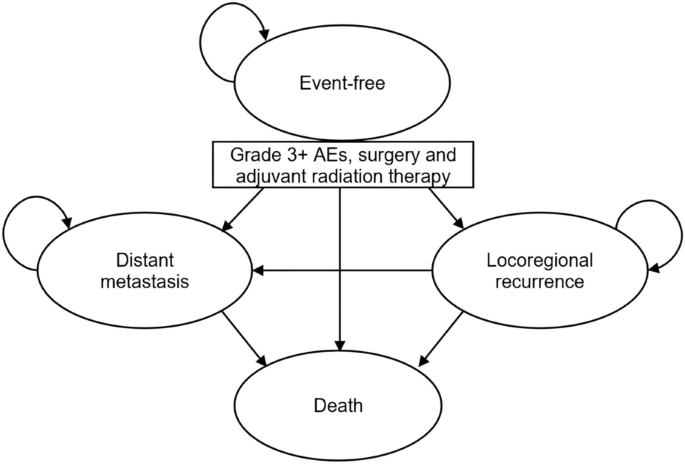
Parental awareness and practices regarding male circumcision timing, setting, and providers: a multicenter cross-sectional survey from Turkey (n = 637)
Urology Keleş, Mevlüt

Parental awareness and practices regarding male circumcision timing, setting, and providers: a multicenter cross-sectional survey from Turkey (n = 637)

Springer Mai 2026 Urologie

Background This study aimed to evaluate Turkish parents’ perceptions and attitudes regarding the appropriate age for circumcision, practice conditions, and procedural indications across different regions of Turkey. Methods This cross-sectional survey study was conducted between March 2023 and March 2025 across urology and pediatric surgery departments in seven distinct regions of Turkey. A total of 637 literate parents (aged ≥ 18) completed a voluntary 16-question online survey via a URL or QR code. Subgroup analysis was performed for parents whose sons had already undergone circumcision ( n  = 404). Data regarding demographics, circumcision preferences, and information sources were analyzed using descriptive statistics and Chi-square tests. Results The majority of parents (95.1%) considered circumcision necessary, primarily citing religious (77.7%) and medical (63.8%) reasons. Overall, 76% of participants stated that circumcision should ideally occur outside the psychologically sensitive period (PSP; ages 2–6). Among the 404 parents with already-circumcised sons, 41.1% ( n  = 166) reported that the procedure was performed during the PSP (ages 2–6). Awareness of the non-PSP increased significantly with higher parental education levels ( p  < 0.001). Regarding practice, specialists were preferred (pediatric surgeons 54.4%; pediatric urologists 46.3%), and the operating room was identified as the safest setting by 91.7% of respondents. Local anesthesia was the most preferred method (51.6%). Conclusion Despite high awareness regarding specialist qualifications and clinical settings, a significant “knowledge-practice gap” exists concerning the timing of circumcision. Clinicians should proactively counsel parents regarding the psychological risks associated with the PSP, and public health strategies must move beyond general awareness to provide targeted guidance that ensures optimal timing in circumcision.

Aktuelle Veröffentlichungen

Tierarzt

25 wissenschaftliche Veröffentlichungen im Bereich Tierarzt, für einen schnellen Zugang zur entsprechenden Fachliteratur.

A Comparison of Dry Period Outcomes after Selective Dry Cow Therapy Carried Out by Farm Staff versus Veterinary Students in a Low-Cell-Count Dairy Herd
Animals : an Open Access ... Plate, Peter

A Comparison of Dry Period Outcomes after Selective Dry Cow Therapy Carried Out by Farm Staff versus Veterinary Students in a Low-Cell-Count Dairy Herd

MDPI Juli 2023 Tierarzt

SIMPLE SUMMARY: Selective dry cow therapy involves giving local antibiotic treatment into the udder only to those cows which are likely to be infected with a mastitis-causing organism, while uninfected cows receive an internal teat sealant only, a physical barrier inserted into the teat to prevent infections entering the udder via the teat canal. The application of teat sealant only without antibiotics can induce infections into the udder if not done hygienically, and veterinarians should be training farmers in hygienic application. Therefore, veterinary students have to be trained in the technique themselves, and farmers may be concerned about allowing students to practice on their cows. This study follows up cows dried off by farm staff and students on a single dairy farm and compares several parameters indicative of mastitis and also looks into the survival of cows in the herd. There is no indication that cows perform worse when dried off by students under close supervision, and the risk of culling within twelve months was lower in cows dried off by students. ABSTRACT: (1) Background: Selective dry cow therapy is widely promoted in many countries worldwide, however, concerns have been raised about the consequences of the unhygienic application of preparations by untrained operators, especially if no antimicrobials are being used, risking deteriorating mastitis outcomes. (2) Method: This study follows up on cows being dried off by farm staff and those dried off by final-year veterinary students and first-year graduate interns in a supervised training session. Subsequent mastitis parameters and culling data in a single herd with a low somatic cell count were evaluated. (3) Results: A total of 316 dry periods were enrolled in the study. There was no significant difference in the percentage of cows showing at least one high SCC reading within 90 days of the following lactation or cows with at least one case of clinical mastitis within the same period, neither in the total nor in the subset of cows dried off without an antimicrobial. Dry period cure rates and dry period new infection rates were similar too, as was the percentage of cows surviving in the herd after six months. The risk of culling within twelve months post-drying off was lower in cows dried off by students, the difference in survival manifesting itself from 150 days post-drying off, which is an unexplained finding. (4) Conclusion: Well-supervised practical training sessions on drying off routine can be responsibly implemented on well-managed commercial dairy herds.

Developing a European network of analytical laboratories and government institutions to prevent poisoning of raptors
sciences : sciences de l'... Valverde, Irene

Developing a European network of analytical laboratories and government institutions to prevent poisoning of raptors

HAL CCSD;Springer Februar 2022 Tierarzt

International audience; Abstract Many cases of wildlife poisoning in Europe have been reported causing population declines, especially in raptors. Toxicovigilance and risk assessment studies are essential to reinforce the knowledge of the number of illegal poisoning cases and the substances involved in these crimes. Many researchers and projects in different institutions have suggested the creation of a network to improve communication and share information between European countries. This article presents the results of the Short-Term Scientific Mission titled “Developing a Network of Analytical Labs and Government Institutions” supported by the COST Action European Raptor Biomonitoring Facility (CA16224), which aims to initiate a network of veterinary forensic toxicology laboratories, in order to improve communication among laboratories to prevent wildlife poisoning, especially in raptors. For this purpose, a questionnaire was designed and sent by email to 119 laboratories in Europe. It contained 39 questions on different topics (e.g. laboratory activities, analytical information). A total of 29 responses were received. Most participant laboratories work on veterinary forensic toxicology research and external cases at the same time, which provides a robust overview of the actual situation in the field. Analytical techniques and data collection methods should be harmonised, and communication between laboratories is encouraged to create a more effective network. The present study established contact between laboratories as an initial step to create a European network and compiled basic data to identify strengths and weaknesses that will help harmonise methodologies across Europe and increase pan-European capacities.

The Use of Antibiotics and Antimicrobial Resistance in Veterinary Medicine, a Complex Phenomenon: A Narrative Review
Antibiotics Caneschi, Alice

The Use of Antibiotics and Antimicrobial Resistance in Veterinary Medicine, a Complex Phenomenon: A Narrative Review

MDPI März 2023 Tierarzt

As warned by Sir Alexander Fleming in his Nobel Prize address: “the use of antimicrobials can, and will, lead to resistance”. Antimicrobial resistance (AMR) has recently increased due to the overuse and misuse of antibiotics, and their use in animals (food-producing and companion) has also resulted in the selection and transmission of resistant bacteria. The epidemiology of resistance is complex, and factors other than the overall quantity of antibiotics consumed may influence it. Nowadays, AMR has a serious impact on society, both economically and in terms of healthcare. This narrative review aimed to provide a scenario of the state of the AMR phenomenon in veterinary medicine related to the use of antibiotics in different animal species; the impact that it can have on animals, as well as humans and the environment, was considered. Providing some particular instances, the authors tried to explain the vastness of the phenomenon of AMR in veterinary medicine due to many and diverse aspects that cannot always be controlled. The veterinarian is the main reference point here and has a high responsibility towards the human–animal–environment triad. Sharing such a burden with human medicine and cooperating together for the same purpose (fighting and containing AMR) represents an effective example of the application of the One Health approach.

Ratchet effect in veterinary antibiotic use by contract farmers from the perspective of production risk: Implications for public health
PMC full-text journals Li, Lingzhi

Ratchet effect in veterinary antibiotic use by contract farmers from the perspective of production risk: Implications for public health

Frontiers Media S.A. September 2022 Tierarzt

The current indiscriminate use of antibiotics for veterinary is irresponsible and misguided; it causes antibiotic resistance and adversely affects public health. The terms “habit” and “path dependence” are often used to explain the “excessive” use of agrochemicals. Yet, no research explored where the habit comes from and how it changes. This study investigates how veterinary antibiotic use changed with the production risk based on the multi-period production data set of 1,526 broiler contract farmers. The results show that the production risk has a ratchet effect on farmers' antibiotic use, leading to path dependence of farmers. Specifically, it showed a farmers' habit of steadily increasing antibiotic use and confirmed that the historical broilers' peak mortality was a key determinant to the continuation of this habit. It implies that higher the historical peak mortality, higher the current antibiotic use by farmers. Likewise, the impact of historical peak mortality on antibiotic use gradually increased with the farming experience. The increased historical peak mortality increased farmers' antibiotic use every time. Furthermore, large-scale farmers were more sensitive to historical peak mortality and therefore they increased antibiotic use excessively. The study suggests that improving farmers' production risk management capabilities, especially large-scale farmers, might help prevent extreme events. Moreover, this work contributes to the theoretical and empirical evidence on the ratchet effect, habit formation and farmers' antibiotic use and offers coherent insights for stakeholders to limit antibiotic use.
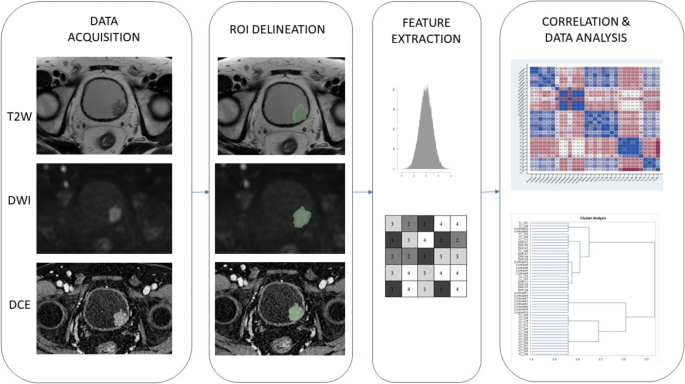


Development and Validation of a Machine Learning Algorithm for Clinical
  Wellness Visit Classification in Cats and Dogs
Computer Science Szlosek, Donald

Development and Validation of a Machine Learning Algorithm for Clinical Wellness Visit Classification in Cats and Dogs

arXiv Juni 2024 Tierarzt

Early disease detection in veterinary care relies on identifying subclinical abnormalities in asymptomatic animals during wellness visits. This study introduces an algorithm designed to distinguish between wellness and other veterinary visits.The purpose of this study is to validate the use of a visit classification algorithm compared to manual classification of veterinary visits by three board-certified veterinarians. Using a dataset of 11,105 clinical visits from 2012 to 2017 involving 655 animals (85.3% canines and 14.7% felines) across 544 U.S. veterinary establishments, the model was trained using a Gradient Boosting Machine model. Three validators were tasked with classifying 400 visits, including both wellness and other types of visits, selected randomly from the same database used for initial algorithm training, aiming to maintain consistency and relevance between the training and application phases; visit classifications were subsequently categorized into "wellness" or "other" based on majority consensus among validators to assess the algorithm's performance in identifying wellness visits. The algorithm demonstrated a specificity of 0.94 (95% CI: 0.91 to 0.96), implying its accuracy in distinguishing non-wellness visits. The algorithm had a sensitivity of 0.86 (95% CI: 0.80 to 0.92), indicating its ability to correctly identify wellness visits as compared to the annotations provided by veterinary experts. The balanced accuracy, calculated as 0.90 (95% CI: 0.87 to 0.93), further confirms the algorithm's overall effectiveness. The algorithm exhibits strong specificity and sensitivity, ensuring accurate identification of a high proportion of wellness visits. Overall, this algorithm holds promise for advancing research on preventive care's role in subclinical disease identification, but prospective studies are needed for validation. ;Comment: 21 pages, 2 figures, 4 tables

Interacting in veterinary English : intercultural aspects of ESP;Interaction en anglais vétérinaire : l'interculturel en langue de spécialité
CNRS - Centre national de... Crouzet-Conan, Muriel

Interacting in veterinary English : intercultural aspects of ESP;Interaction en anglais vétérinaire : l'interculturel en langue de spécialité

CCSD Dezember 2022 Tierarzt

This doctoral research falls in the area of languages for specific purposes (LSP) and aims to define and characterise a new LSP, veterinary English, from a comparative, intercultural perspective. It aims to cater to the needs of different groups of learners, from undergraduate students to practicing vets who interact with animal owners in English.The first part of the thesis circumscribes the domain of interest, as well as the community and genres concerned. I propose the hypothesis that a veterinary consultation is a cultural social act which requires that a veterinarian working in an intercultural context should have competence in a second culture. In particular, such vets should be aware of the vet's role in society and the place of the animal in the family, in order to respond to clients' expectations. They also need to develop sociopragmatic competence, including for instance the politeness norms which underpin interactional outcomes.I take an ethnographic approach which relies both on the tools of conversation analysis as applied in human medicine and on the contrastive approach favoured by comparative linguistics. My corpus involves filmed consultations in France and the UK, and analysis focuses on parallel sequences in French and British contexts. By closely investigating the language used to co-construct actions in the two communities, it is possible to isolate the cultural influences operating in each. This second section of the dissertation thus focuses on methodology, the concepts employed in analysis, the constitution of the corpus, and data preparation.In the third and final part, I bring together observations from these filmed interactions to analyse the influence of context, models of communication and culturally specific conversational norms. The final chapter re-examines these results in the light of the questions concerning language teaching which provided the initial impetus for this research project. It includes proposals for a veterinary English syllabus and teaching/learning activities to meet the particular needs of learners, particularly with respect to intercultural competences.We trust that this research responds to Van de Yeught's (2016) call for a "collective project" to describe different LSPs both in terms of its methodological approach, inspired by interventionist sociolinguistics, and with respect to the results presented. Future work might confirm the findings of this research using different forms of triangulation. ; Cette thèse s'inscrit dans le domaine des langues de spécialité (LSP) et cherche à définir et caractériser la LSP anglais vétérinaire, en adoptant une perspective comparatiste interculturelle avec pour objectif de mieux répondre aux besoins des différents publics d'apprenants, qu'ils soient étudiants en formation initiale ou praticiens amenés à interagir avec des clients en anglais. La première partie nous permet de circonscrire le domaine, la communauté et les genres concernés, et d'émettre l'hypothèse que la consultation vétérinaire est un acte social culturel, ce qui implique, pour le vétérinaire pratiquant en situation interculturelle, d'être compétent dans la culture de l'Autre : connaître la place du vétérinaire dans la société, de l'animal dans la famille, pour pouvoir répondre aux attentes du client ; avoir développé des compétences sociopragmatiques, telles que les normes de politesse auxquelles se référer dans les interactions finalisées. Notre recherche, d'approche ethnographique, convoque à la fois les outils de l'analyse conversationnelle tels que appliqués au domaine médical, et la démarche contrastive de la linguistique comparée : nous examinons des séquences fonctionnelles issues de deux corpus de consultations filmées en milieu naturel au Royaume-Uni et en France. C'est en étudiant au plus près la langue qui permet la co-construction de l'action par les interactants dans les deux communautés que nous pouvons repérer les influences culturelles dans l'une et dans l'autre. La deuxième partie présente ainsi la méthodologie, les concepts utilisés pour l'analyse, la constitution des corpus et le traitement des données. Dans la troisième partie, nous collectons les observables de nos interactions filmées et les analysons d'un point de vue contextuel, en référence au modèle de communication adopté par les deux communautés et aux normes conversationnelles particulières à chacune. Nous nous appuyons ensuite sur les résultats de notre analyse pour répondre aux questions didactiques qui ont motivé notre projet de recherche et formulons des propositions de programme et d'activités d'enseignement qui répondent aux besoins identifiés chez les apprenants, parmi lesquels nous soulignons le développement de compétences interculturelles. Ce travail constitue une contribution au « projet collectif » de description des LSP, initié par Michel Van der Yeught (2016), tant par l'approche retenue - inspirée d'une autre discipline, celle des sociolinguistes interventionnistes - que par les connaissances produites. Il serait intéressant de confirmer nos résultats par d'autres formes de triangulation.

Pet Owners and Antibiotics: Knowledge, Opinions, Expectations, and Communication Preferences
Antibiotics Scarborough, Ri

Pet Owners and Antibiotics: Knowledge, Opinions, Expectations, and Communication Preferences

MDPI Oktober 2021 Tierarzt

Despite the important role of antimicrobial use in companion animals in the global challenge presented by antimicrobial resistance (AMR), very few studies have quantified pet owner factors that can contribute to suboptimal veterinary antimicrobial use. We conducted an online survey of pet owners, asking about their experiences with veterinarians, their opinions on antibiotic use and knowledge of antibiotics, and their communication preferences regarding judicious prescribing. Just over half (54%) of the 558 pet owners had received antibiotics for their pet at their last non-routine veterinary consultation and most owners were happy (83%) with the antibiotic prescribing decision of their veterinarian. A quarter (25%) indicated that they had been surprised, disappointed or frustrated when a veterinarian had not given their pet antibiotics; 15% had explicitly requested them. Owners placed a higher priority on their pet receiving the most effective treatment than on treatment being cheap or convenient. Most respondents recognized the limitations of antibiotic therapy and the risks associated with antibiotic use, but 50% believed the risks were confined to the treated animal; only a minority was aware of inter-species transfer of bacteria. Pet owners indicated that they would find judicious prescribing messages focused on the direct risks of antibiotics to their pet more compelling than those about public health. Our findings suggest that veterinary communications about responsible antibiotic use should focus on pet owners’ priorities and address or bypass their gaps in understanding regarding antibiotic resistance.

Transfers and processes related to human and veterinary pharmaceutical residues and biocides from urban sludge and manure used as fertilizers;Transferts et processus associés aux résidus de médicaments humains et vétérinaires et aux biocides des boues urbaines et des lisiers utilisés comme fertilisants
Institut National des Sci... Etienne, Noémie

Transfers and processes related to human and veterinary pharmaceutical residues and biocides from urban sludge and manure used as fertilizers;Transferts et processus associés aux résidus de médicaments humains et vétérinaires et aux biocides des boues urbaines et des lisiers utilisés comme fertilisants

CCSD März 2024 Tierarzt

Urban sludge contains pharmaceutical residues and various biocides, which are partly treated in wastewater treatment plants. Liquid manure contains also veterinary pharmaceuticals and biocides used to clean livestock installations. Both sludge and manure are spread as agricultural fertilisers. Traces of human and veterinary pharmaceutical residues, as well as biocides, are also present in many rivers and aquifers, and in agricultural soils in France and around the world. The thesis is devoted to the evaluation of transfers of and processes (degradation, infiltration, adsorption, etc.) related to pharmaceutical residues and biocides from both urban sludge and liquid manure spread on fields as fertilizer for agriculture. It is part of the Telesphore project carried out on the SIPIBEL observatory. The main objective is to evaluate the possible contamination of soil and groundwater by pharmaceuticals and biocides due to organic waste products (OWPs) spread for fertilizing. The experimental part is based on three scales experiments: (i) controlled microcosm assays to characterise sorption onto soils and soil/OWP mixtures (ii) lab soil column assays under controlled conditions on soil columns to assess vertical transport and (iii) \textit{in situ} spreading campaigns on lysimeters, under both actual and augmented conditions of OWPs spreading. The sorption parameters obtained from the microcosm assays were used for HYDRUS-1D modelling of reactive transport in the soil columns. The contrasting behaviour of pharmaceutical and biocides residues at the different scales highlights the complexity of the processes involved in the fate of pharmaceutical and biocidal residues after spreading of OWPs. Overall, the results show that manure and sludge spread at agronomic rates do not lead to the accumulation of pharmaceutical and biocidal residues in the soil, and that the flux of compounds retained in the soil or transported to groundwater represent a small fraction of what is spread with the OWPs. ; Les boues urbaines contiennent des résidus pharmaceutiques et des biocides divers, partiellement traités dans les stations d’épuration. Le lisier contient des pharmaceutiques vétérinaires et des biocides utilisés pour le nettoyage des installations d’élevage. Les boues comme les lisiers sont épandus comme fertilisant pour l’agriculture. Des traces de résidus pharmaceutiques humains et vétérinaires, ainsi que des biocides sont ainsi présents dans de nombreuses rivières et aquifères, et dans les sols agricoles en France et dans le monde entier. La thèse est consacrée à l'évaluation des transferts et des processus associés (dégradation, infiltration, adsorption, etc.) liés aux résidus pharmaceutiques et aux biocides provenant à la fois des boues des stations d'épuration urbaines et des lisiers épandus sur les champs comme engrais pour l'agriculture. Elle fait partie du projet Telesphore réalisé sur l'observatoire SIPIBEL. L'objectif principal est d'évaluer la contamination possible par les produits pharmaceutiques et les biocides des sols et des eaux souterraines due à l'épandage de produits résiduaires organiques (PRO) comme fertilisants. La partie expérimentale est bâtie sur trois échelles d’étude (i) des essais en microcosme pour caractériser la sorption à des sols et des mélanges sol/PRO (ii) des essais en conditions contrôlées sur colonnes de sol pour évaluer les transferts verticaux et (iii) des campagnes in situ sur des lysimètres (Fig. 1) soit en condition réelle d’épandage, soit en taux d’application élevé de PRO. Les paramètres de sorption obtenus par les essais en microcosme sont utilisés pour la modélisation sur HYDRUS 1D du transfert réactif des essais sur colonnes de sol.

Demography, common disorders and mortality of Shih Tzu dogs under primary veterinary care in the UK
Life Sciences Dale, Fiona

Demography, common disorders and mortality of Shih Tzu dogs under primary veterinary care in the UK

BioMed Central Januar 2024 Tierarzt

Background Shih Tzus are a popular dog breed in the UK although there is relatively little reported information on their health. This study aimed to characterise the demography, common disorders and mortality of Shih Tzus under primary veterinary care during 2016 in the UK using de-identified clinical records from the VetCompass™ Programme. Results The study population of 336,865 dogs under veterinary care during 2016 included 11,082 Shih Tzus (3.3%). The median age was 4.1 years (IQR: 2.1–7.1, range: 0.3–20.4) and mean adult bodyweight was 7.9 kg (SD: 1.9 kg). Annual proportional births increased from 2.2% of all dog births in 2005 to 3.8% in 2013, dropping to 3.3% by 2016. From a random subset of 2,423 Shih Tzus that had information extracted on disorders diagnosed during 2016, the most prevalent fine-level precision disorders were periodontal disease ( n  = 229, prevalence 9.5%, 95% CI: 8.4–10.7), anal sac impaction (180, 7.4%, 95% CI: 6.5–8.5) and ear disorders (134, 5.5%, 95% CI: 4.7–6.5). The most prevalent grouped-level precision disorders were cutaneous ( n  = 402, prevalence: 16.6%, 95% CI: 15.2–18.1), dental (322, 13.3%, 95% CI: 12.0–14.7), and ophthalmological (289, 11.9%, 95% CI: 10.7–13.3). Males were more likely than females to be diagnosed with skin disorders ( P  = 0.007) and musculoskeletal disorders ( P  = 0.010) while females were more likely than males to be diagnosed with hernias ( P  = 0.005). The median age of death was 12.7 years (IQR 8.7–14.3, range 2.0–19.9) and did not differ statistically between males and females. The most common grouped causes of death were enteropathy (7.9%, 95% CI: 3.9–15.4), heart disease (7.9%, 95% CI: 3.9–15.4) and poor quality of life (7.9%, 95% CI: 3.9–15.4). Conclusions Periodontal disease, anal sac impaction and ear disorders were identified as common health issues. Shih Tzus had higher prevalence of anal sac impaction, umbilical hernias and eye problems than reported previously in dogs overall, suggesting potential predispositions. Shih Tzus appear to be relatively long-lived compared to previous reports of lifespan in dogs overall. The results can inform veterinarians and owners on priority disorders for monitoring to protect welfare. Oral hygiene was highlighted as a healthcare priority. The Shih Tzu is a popular small breed of dog in the UK. However, there is little information on common health conditions affecting this breed. This study aimed to describe the demography, common disorders, and causes of death of Shih Tzus in the UK in 2016 using the VetCompass™ Programme, which holds a database of anonymized clinical records of dogs attending primary-care veterinary practices in the UK. The study included 11,082 Shih Tzus (3.3%) from 336,865 dogs under veterinary care in the UK in VetCompass™ in 2016. The popularity of the Shih Tzu increased slightly from 2005 to 2013 but showed signs of decline towards 2016. The average age of Shih Tzus in the study was 4.1 years and the average adult bodyweight was 7.9 kg. The most common disorders affecting Shih Tzus in the study were periodontal disease (inflammation of the gums and tissue around the teeth, affecting 9.5% of Shih Tzus), anal sac impaction (7.4%) and ear disorders (5.5%). Male Shih Tzus were more likely than females to have skin and musculoskeletal disorders (conditions affecting bones, muscles and joints), while female Shih Tzus were more likely be diagnosed with hernias (when internal tissues push out through weakened muscle tissues). Shih Tzus had higher prevalence of anal sac impaction, umbilical hernias and eye problems than previously reported in dogs overall, suggesting potential predispositions. The average age at death of Shih Tzus was 12.7 years of age and the most common causes of death were enteropathy (gastrointestinal diseases causing signs such as diarrhoea and vomiting, 7.9%), heart disease (7.9%) and poor quality of life (7.9%). This study demonstrated the value of analysis of veterinary clinical records to increase our understanding of common health problems affecting dogs in the UK. The results can help both current and prospective Shih Tzu owners, and veterinarians, in prioritising preventative healthcare for Shih Tzus. For example, the most common disorder in Shih Tzus was periodontal disease, suggesting that increased preventative dental checkups and toothbrushing could improve welfare, especially if implemented from an early age.

A Questionnaire-Based Survey on the Long-Term Management of Canine Leishmaniosis by Veterinary Practitioners
Animals : an Open Access ... Pereira, Maria A.

A Questionnaire-Based Survey on the Long-Term Management of Canine Leishmaniosis by Veterinary Practitioners

MDPI März 2022 Tierarzt

SIMPLE SUMMARY: Canine Leishmaniosis is a chronic and potentially fatal disease, caused by Leishmania infantum, a zoonotic microorganism. In economically disadvantaged regions, costs associated with long-term patient monitoring may determine that some owners decline veterinary follow-up of their dogs, with potentially severe implications for animal welfare and public health. This online, questionnaire-based survey aimed to assess how Portuguese veterinary practitioners perform long-term patient management and recognize relapses. More than half of the respondents stated that most dog owners declare having financial restraints, which condition the use of diagnostic tests during long-term follow-up. Allopurinol ad aeternum or until disease remission and domperidone were the most prescribed treatment, and relapses were detected by the reappearance or worsening of clinical signs by most veterinary practitioners. The rate of relapse detection was higher in the most economically favored regions, probably because of a lesser constraint on the use of the appropriate diagnostic tests. This study confirms that owner financial restraints negatively influence veterinary follow-up and relapse recognition, potentially compromising clinical decision making and favoring the maintenance of Leishmania infantum infection endemic status in Portugal. ABSTRACT: Canine Leishmaniosis (CanL) is a chronic and potentially fatal disease. In economically disadvantaged regions, costs associated with long-term patient monitoring may determine that some owners decline veterinary follow-up of their dogs. This online, questionnaire-based survey aimed to assess how Portuguese veterinary practitioners perform long-term patient monitoring and recognize relapses. More than 50% of respondents reported that 50–100% of dog owners declared financial restraints. Hence, in these circumstances, most veterinary practitioners only performed clinical examination and serology. However, when owners did not declare financial restriction, other tests were additionally performed, such as renal and hepatic profiles, hemogram, serum protein electrophoresis and urine protein creatinine ratio. The mean number of exams performed when owners presented financial restraints was significantly lower than the number of exams performed without economic limitations. Most veterinary practitioners prescribed allopurinol ad aeternum or until disease remission and domperidone. CanL relapses were recognized by more than half of respondents “Always”, through the reappearance or worsening of clinical signs, whereas about a quarter detected an increase in anti-Leishmania antibody levels and identified abnormalities in the serum protein electrophoresis profile. The relapse rate was higher in the Lisbon Metropolitan Area and north, the most economically favored regions of Portugal. This study confirms that owner financial restraints negatively influence veterinary follow-up and relapse recognition, ultimately compromising clinical decision making and favoring the maintenance of Leishmania infantum infection endemicity.

Catchment-scale rapid transfer of livestock pharmaceuticals under Mediterranean climate
sciences : sciences de l'... Hachgenei, Nico

Catchment-scale rapid transfer of livestock pharmaceuticals under Mediterranean climate

CCSD;Elsevier Januar 2024 Tierarzt

International audience; Various pharmaceuticals are essential for livestock farming, but some are highly toxic to aquatic life if they reach surface water bodies. Mediterranean Climate is characterized by dry summers followed by intense autumn storms. We studied the effect of these climatic conditions on the risk of pharmaceutical residues transfer to streams at the catchment-scale. Pharmaceutical products routinely used in the study area, as well as their application frequency and season, were identified through interviews with farmers. As a proof a concept, three veterinary pharmaceuticals (Fenbendazole (FBZ), Mebendazole (MBZ) and Ivermectin (IVM)) were chosen as model chemicals based on their relatively high usage, their specificity to represent different types of livestock (swine, sheep and cattle), and their ability to be analyzed using the same analytical method. Stream water was analyzed during low flow periods and at high frequency (up to 2 h−1) during flood events.The selected veterinary pharmaceuticals were not detected during low flow, but FBZ and MBZ reached high concentrations for short periods during floods. Due to the event-driven nature of their transfer, a significant load of veterinary pharmaceuticals can reach the river and cause temporary but significant degradation of water quality (e.g. for FBZ, the water concentration reached up to 355 times the predicted no effect concentration (PNEC)). This indicates that special care should be taken to avoid keeping freshly treated livestock on pastures that may become hydrologically connected under wet conditions. In addition, it suggests that low-frequency monitoring is not sufficient to detect those high concentration levels that exist during very short periods.

Verifying the placement and length of feeding tubes in canine and feline neonates
Subjects = 05 Vetsuisse F... Furthner, Etienne

Verifying the placement and length of feeding tubes in canine and feline neonates

BioMed Central Dezember 2021 Tierarzt

Background: Tube feeding is a common procedure in neonatology. In humans, tube misplacement reportedly occurs in up to 59% of all cases and may lead to perforation in 1.1% of preterm intubated neonates. While numerous studies on optimal tube placement have been performed in human neonates, current recommendations on tube feeding in canine and feline neonatology are based, at best, on studies performed in adult animals. Herein, we aimed to test ultrasonography as a tool to verify tube placement in puppies and kittens and to compare different anatomical predictive markers used in human, canine and feline neonates. Results: The predictive tube length when held bent between the last rib and the mouth may induce trauma compared to when held straight. A strong positive linear correlation was observed between birthweight and gastric cardia localization. Ultrasonography findings were similar to coeliotomy findings. Stomach volume was less than 2 mL per 100 g in the less-than-one-day-old studied puppies (n = 25) and kittens (n = 28). Conclusions: A weight-based equation was calculated to help predict appropriate tube placement. Ultrasonography can be used to control gastric tube placement, and neonates less than one-day-old have a smaller stomach capacity. Further studies are required to evaluate whether more-than-one-day-old puppies follow the same linear correlation with their weight. Further in vivo studies are warranted to determine the gold standard procedure for tube feeding in neonatal puppies and kittens.

World Association for the Advancement of Veterinary Parasitology (W.A.A.V.P.) guideline for diagnosing anthelmintic resistance using the faecal egg count reduction test in ruminants, horses and swine
Subjects = 05 Vetsuisse F... Kaplan, Ray M

World Association for the Advancement of Veterinary Parasitology (W.A.A.V.P.) guideline for diagnosing anthelmintic resistance using the faecal egg count reduction test in ruminants, horses and swine

Elsevier April 2023 Tierarzt

The faecal egg count reduction test (FECRT) remains the method of choice for establishing the efficacy of anthelmintic compounds in the field, including the diagnosis of anthelmintic resistance. We present a guideline for improving the standardization and performance of the FECRT that has four sections. In the first section, we address the major issues relevant to experimental design, choice of faecal egg count (FEC) method, statistical analysis, and interpretation of the FECRT results. In the second section, we make a series of general recommendations that are applicable across all animals addressed in this guideline. In the third section, we provide separate guidance details for cattle, small ruminants (sheep and goats), horses and pigs to address the issues that are specific to the different animal types. Finally, we provide overviews of the specific details required to conduct an FECRT for each of the different host species. To address the issues of statistical power vs. practicality, we also provide two separate options for each animal species; (i) a version designed to detect small changes in efficacy that is intended for use in scientific studies, and (ii) a less resource-intensive version intended for routine use by veterinarians and livestock owners to detect larger changes in efficacy. Compared to the previous FECRT recommendations, four important differences are noted. First, it is now generally recommended to perform the FECRT based on pre- and post-treatment FEC of the same animals (paired study design), rather than on post-treatment FEC of both treated and untreated (control) animals (unpaired study design). Second, instead of requiring a minimum mean FEC (expressed in eggs per gram (EPG)) of the group to be tested, the new requirement is for a minimum total number of eggs to be counted under the microscope (cumulative number of eggs counted before the application of a conversion factor). Third, we provide flexibility in the required size of the treatment group by presenting three separate options that depend on the (expected) number of eggs counted. Finally, these guidelines address all major livestock species, and the thresholds for defining reduced efficacy are adapted and aligned to host species, anthelmintic drug and parasite species. In conclusion, these new guidelines provide improved methodology and standardization of the FECRT for all major livestock species.

Comprehensive analysis of retracted journal articles in the field of veterinary medicine and animal health
Medicine & Public Health Christopher, Mary M.

Comprehensive analysis of retracted journal articles in the field of veterinary medicine and animal health

BioMed Central Februar 2022 Tierarzt

Background Retractions are a key proxy for recognizing errors in research and publication and for reconciling misconduct in the scientific literature. The underlying factors associated with retractions can provide insight and guide policy for journal editors and authors within a discipline. The goal of this study was to systematically review and analyze retracted articles in veterinary medicine and animal health. A database search for retractions of articles with a veterinary/animal health topic, in a veterinary journal, or by veterinary institution-affiliated authors was conducted from first available records through February 2019 in MEDLINE/PubMed, Web of Science, Scopus, Retraction Watch, and Google Scholar. Annual frequency of retractions, journal and article characteristics, author affiliation and country, reasons for retraction, and retraction outcomes were recorded. Results Two-hundred-forty-two articles retracted between 1993 and 2019 were included in the study. Over this period, the estimated rate of retraction increased from 0.03/1000 to 1.07/1000 veterinary articles. Median time from publication to retraction was 478 days (range 0-3653 days). Retracted articles were published in 30 (12.3%) veterinary journals and 132 (81.5%) nonveterinary journals. Veterinary journals had disproportionately more retractions than nonveterinary journals ( P  = .0155). Authors/groups with ≥2 retractions accounted for 37.2% of retractions. Authors from Iran and China published 19.4 and 18.2% of retracted articles respectively. Authors were affiliated with a faculty of veterinary medicine in 59.1% of retracted articles. Of 242 retractions, 204 (84.3%) were research articles, of which 6.4% were veterinary clinical research. Publication misconduct (plagiarism, duplicate publication, compromised peer review) accounted for 75.6% of retractions, compared with errors (20.6%) and research misconduct (18.2%). Journals published by societies/institutions were less likely than those from commercial publishers to indicate a reason for retraction. Thirty-one percent of HTML articles and 14% of PDFs were available online but not marked as retracted. Conclusions The rate of retraction in the field of veterinary and animal health has increased by ~ 10-fold per 1000 articles since 1993, resulting primarily from increased publication misconduct, often by repeat offenders. Veterinary journals and society/institutional journals could benefit from improvement in the quality of retraction notices.

SARS-CoV-2 Infection in dogs and cats from Southern Germany and Northern Italy during the first wave of the COVID-19 pandemic
Subjects = 05 Vetsuisse F... Klaus, Julia

SARS-CoV-2 Infection in dogs and cats from Southern Germany and Northern Italy during the first wave of the COVID-19 pandemic

MDPI Publishing Juli 2021 Tierarzt

Severe acute respiratory syndrome coronavirus 2 (SARS-CoV-2) has affected millions of people globally since its first detection in late 2019. Besides humans, cats and, to some extent, dogs were shown to be susceptible to SARS-CoV-2, highlighting the need for surveillance in a One Health context. Seven veterinary clinics from regions with high incidences of coronavirus disease (COVID-19) were recruited during the early pandemic (March to July 2020) for the screening of patients. A total of 2257 oropharyngeal and nasal swab specimen from 877 dogs and 260 cats (including 18 animals from COVID-19-affected households and 92 animals with signs of respiratory disease) were analyzed for the presence of SARS-CoV-2 RNA using reverse transcriptase real-time polymerase chain reaction (RT-qPCR) targeting the viral envelope (E) and RNA dependent RNA polymerase (RdRp) genes. One oropharyngeal swab from an Italian cat, living in a COVID-19-affected household in Piedmont, tested positive in RT-qPCR (1/260; 0.38%, 95% CI: 0.01-2.1%), and SARS-CoV-2 infection of the animal was serologically confirmed six months later. One oropharyngeal swab from a dog was potentially positive (1/877; 0.1%, 95% CI: 0.002-0.63%), but the result was not confirmed in a reference laboratory. Analyses of convenience sera from 118 animals identified one dog (1/94; 1.1%; 95% CI: 0.02-5.7%) from Lombardy, but no cats (0/24), as positive for anti-SARS-CoV-2 receptor binding domain (RBD) antibodies and neutralizing activity. These findings support the hypothesis that the prevalence of SARS-CoV-2 infection in pet cat and dog populations, and hence, the risk of zoonotic transmission to veterinary staff, was low during the first wave of the pandemic, even in hotspot areas.

Dog behaviours in veterinary consultations: Part I. Effect of the owner's presence or absence
sciences : sciences du vi... Girault, C

Dog behaviours in veterinary consultations: Part I. Effect of the owner's presence or absence

HAL CCSD;elsevier Januar 2022 Tierarzt

International audience; Veterinary practices can be stressful places for dogs. Decreasing stress during veterinary consultations is therefore a major concern, since animal welfare matters both for owners and veterinarians. Stress can be expressed through behaviour modifications; monitoring dogs’ behaviour is thus one way to assess stress levels. We also know that the owner can affect dog behaviour in different ways. The aim of this study was therefore to assess the effect of the presence of owners on the behaviour of their dogs in veterinary consultations. We studied dogs-owner dyads at two standardised veterinary consultations, conducted at intervals of five to seven weeks; the owner was present for the first consultation and absent for the second (O/NoO group, n= 12), or vice versa (NoO/O group, n= 13). A consultation consisted in three phases: exploration, examination, greeting. Dog behaviours were compared between the two conditions using a video recording.

Training needs assessment of veterinary practitioners in Ethiopia
Life Sciences Alafiatayo, Ruth

Training needs assessment of veterinary practitioners in Ethiopia

Springer Januar 2022 Tierarzt

Pastoral and agro-pastoral farming are extensively practised in Ethiopia, and the main livestock kept are cattle, goats, sheep, poultry, and camels. The livestock sector is faced with complex challenges including limited availability of well-trained and skilled animal health professionals. The objective of this study was to identify and prioritise areas for training with the goal of providing evidence to guide strategies to improve the skills, delivery, and governance of veterinary services across Ethiopia. A cross-sectional survey was developed and administered electronically to veterinary professionals in Ethiopia using the Qualtrics platform. Data were collected on select parameters including demographics, diseases of economic significance, diagnosis, disease prevention, biosecurity, disease control, treatment, epidemiology, One Health, disease reporting, and the participants’ opinions about training. The survey data was downloaded in Microsoft Excel and descriptive statistics performed. A total of 234 veterinary professionals completed the survey. Most participants were male (89.7%) and aged between 26 and 35 years (81.2%). Of the total respondents, 56.4% worked in government and 8.5% in private practice. Most participants perceived training on laboratory diagnostic testing, disease prevention, antimicrobial resistance, antibiotic sensitivity testing, basic epidemiology, and clinical procedures, as most beneficial. In addition, most respondents would like to receive training on diseases affecting cattle, poultry, and small ruminants. The findings from this study provide baseline information on priority training areas for veterinary professionals and could potentially contribute to national efforts to develop and implement a continuing professional development programme in the veterinary domain, in view of improving veterinary service delivery.

Assessment of a Teaching Module for Cardiac Auscultation of Horses by Veterinary Students
Animals : an Open Access ... Wood, Alyse

Assessment of a Teaching Module for Cardiac Auscultation of Horses by Veterinary Students

MDPI April 2024 Tierarzt

SIMPLE SUMMARY: Veterinary students are required to determine an animal’s heart rate and diagnose heart murmurs and arrhythmias by the time of graduation. Accurate assessment of the heart sounds of horses is considered as a day one clinical competency. Limited opportunities exist in the veterinary curriculum to develop these competencies, especially during COVID-19 times. This research aimed to determine if a multimodal learning resource consisting of diagrams, heart sound recordings and visual representation of the sounds would assist in the development of veterinary students’ confidence and ability to recognize normal and abnormal heart sounds of horses. Students were invited to utilize the teaching resource and voluntarily complete surveys about their confidence in recognizing normal heart sounds as well as various murmurs and important arrhythmias of horses. The survey results were analyzed by qualitative and quantitative means. Over a two-year period, 231 fourth-year and 222 fifth-year veterinary students had access to the resource; 89 completed the initial survey and 57 completed a second survey after using the resource. Results confirmed that after access to the resource students’ understanding and perception of their auscultation abilities improved. ABSTRACT: Auscultation of heart sounds is an important veterinary skill requiring an understanding of anatomy, physiology, pathophysiology and pattern recognition. This cross-sectional study was developed to evaluate a targeted, audio-visual training resource for veterinary students to improve their understanding and auscultation of common heart conditions in horses. Fourth- and fifth-year 2021 and 2022 Bachelor of Veterinary Science students at the University of Queensland (UQ) were provided the learning resource and surveyed via online pre- and post-intervention surveys. Results were quantitatively analyzed using descriptive statistics and Mann–Whitney U tests. Open-ended survey questions were qualitatively analyzed by thematic analysis and Leximancer™ Version 4 program software analysis. Over the two-year period, 231 fourth-year and 222 fifth-year veterinary students had access to the resource; 89 completed the pre-intervention survey and 57 completed the post-intervention survey. Quantitative results showed the resource helped students prepare for practicals and their perception of competency and confidence when auscultating equine cardiac sounds improved (p < 0.05). Compared to fifth-year students, fourth-year students felt less competent at identifying murmurs and arrythmias prior to accessing the learning resource (p < 0.05). Fourth-year and fifth-year students’ familiarity with detection of murmurs improved after completing the learning resource (p < 0.001). Qualitative analysis demonstrated a limited number of opportunities to practice equine cardiac auscultation throughout the veterinary degree, especially during the COVID-19 pandemic, and that integrated audio-visual resources are an effective means of teaching auscultation.

Access to veterinary drugs in Sub-Saharan Africa: roadblocks and current solutions
sciences : sciences du vi... Jaime, Glória

Access to veterinary drugs in Sub-Saharan Africa: roadblocks and current solutions

HAL CCSD;Frontiers Media März 2022 Tierarzt

International audience; Background:Access to veterinary drugs for livestock has become a major issue over the last decade. Analysis has tended to focus on the demand for these products, while studies looking at the drivers behind their use generally focus on farmer behavior and interactions between veterinarians and farmers. However, the use of drugs also depends on structural factors that determine the functioning of the drug supply chain and farmers' access to the drugs. This article presents an overview of the factors that limit access to veterinary drugs in sub-Saharan Africa (SSA) as well as the international policy tools and arrangements that claim to improve it. Methods:We have conducted a scoping review of the scientific and grey literature as well as the publicly-available data from both the animal health industry and international organizations. We aimed to gather information on the veterinary drugs market in SSA as well as on the international norms, recommendations, guidelines, and initiatives that impact SSA farmers' access to these drugs. Findings:We highlight numerous barriers to veterinary drug access in SSA. The SSA market is highly dependent on imports, yet the region attracts little attention from the international companies capable of exporting to it. It suffers from a high level of fragmentation and weak distribution infrastructures and services, and is driven by the multiplication of private non-professional actors playing a growing role in the veterinary drug supply chain. The distribution system is increasingly dualized, with on the one hand the public sector (supported by development organizations) supplying small scale farmers in rural areas, but with limited and irregular means; and on the other side a private sector largely unregulated which supplies commercial and industrial farming systems. Different innovations have been developed at the international and regional levels to try to reduce barriers, such as homogenizing national legislations, donations, and vaccine banks. Alongside decades-old inter-state cooperation, many new forms of public-private partnerships and other hybrid forums continue to emerge, signaling the private sector's increasing influence in global governance. Conclusions:Policies on animal health would be bolstered by a better understanding of the drivers behind and the components of access to veterinary drugs in different regional and national contexts. Inequalities in drug access need to be addressed and a market-driven approach adopted in order to strengthen our understanding of what determines veterinary drug use at the farm level. Policies should balance the interests of the various stakeholders, being careful not to reinforce bias toward certain diseases deemed “interesting” and neglect others that could prove to be highly important for veterinary public health.

Demography, common disorders and mortality of Boxer dogs under primary veterinary care in the UK
Life Sciences O’Neill, Dan G.

Demography, common disorders and mortality of Boxer dogs under primary veterinary care in the UK

BioMed Central Juni 2023 Tierarzt

The Boxer is a medium-large sized, active dog with a short coat and a moderately flat-faced (brachycephalic) skull shape. Despite many decades of popularity in the UK, there is limited published evidence on the overall health profile of Boxers. White-coloured Boxers are thought to be at higher risk of deafness from birth and as a result, white Boxers have traditionally often been culled at birth by breeders. Using anonymised veterinary clinical records collected within the VetCompass Programme at the Royal Veterinary College (RVC), Boxers made up around 1% of all dogs in the UK in 2016, with an average adult bodyweight around 30 kg. The most common colours were brindle (22.82%), dark red (22.62%) and dark red multi-colour (20.92%), with 10.71% white Boxers. Across the 3,219 Boxers in the study, 73.97% had at least one disorder recorded during 2016. The average number of disorders per year did not differ statistically between female and male Boxers, or between white and non-white Boxers. The most common specific disorders in Boxers were ear infection (7.15%), gum mass (5.84%), eye ulcer (5.00%) and dental disease (4.63%). White and non-white dogs did not differ in their risk for any of the 34 most common specific disorders. Only two dogs in the study were recorded with deafness; one white and one non-white. The average lifespan of Boxers overall was 10.46 years. Lifespan did not differ statistically between female and male Boxers, or between white and non-white Boxers. This study identifies ongoing popularity for the Boxer in the UK, with around 10% of these Boxers being white. There was minimal evidence of health differences between male and female Boxers, or between white and non-white Boxers. Among the four most common disorders recorded in Boxers, two are typically common across all types of dogs (ear and dental disease) while two showed strong predisposition in the Boxer breed (gum mass and eye ulcer), suggesting the value of understanding breed-specific health patterns to prioritise health plans for each breed. The overall longevity of Boxer dogs was typical of other breeds of this body size. Background The Boxer is a popular dog breed with a distinctive appearance. However, the breed has been linked with several health conditions, some of which have been associated with its moderately brachycephalic conformation and its white colouration. Anonymised primary-care veterinary clinical records were explored to extract data on the demography, common disorders and mortality of Boxers in the UK in 2016. Results The study population of 336,865 dogs included 3,219 (0.96%) Boxers, of which 10.71% were recorded as white. The mean adult bodyweight was 30.43 kg (SD 5.73 kg). Annual disorder counts did not differ statistically between the sexes or between white and non-white Boxers. The most prevalent fine-level precision disorders were otitis externa ( n  = 230, 7.15%), epulis (188, 5.84%), corneal ulceration (161, 5.00%) and periodontal disease (149, 4.63%). Of the 34 most common fine-level disorders, none differed in prevalence between white and non-white dogs. The most prevalent disorder groups were skin disorder ( n  = 571, 17.74%), neoplasia (457, 14.20%) and ear disorder (335, 10.41%). White Boxers had higher prevalence than non-white Boxers for two disorder groups: dental disorder and brain disorder. The median longevity of 346 Boxers that died during the study was 10.46 years (IQR 9.00–11.98, range 2.76–18.00). Median longevity did not differ statistically between the sexes or between white and non-white Boxers. The most common grouped causes of death were death – unrecorded cause ( n  = 73, 21.10%), neoplasia (43, 12.43%) and brain disorder (33, 9.54%). Conclusions There was minimal evidence of substantial health differences between white and non-white Boxers. Among the four most common disorders recorded in Boxers, two were typically common across all types of dogs (otitis externa and periodontal disease) while two suggested strong predispositions for the Boxer breed (epulis and corneal ulceration), showing the value of eliciting breed-specific disorder patterns for insights for potential health reforms. The overall longevity of Boxer dogs was consistent with other breeds of similar body size.

The MARS PETCARE BIOBANK protocol: establishing a longitudinal study of health and disease in dogs and cats
BMC Veterinary Research Alexander, Janet E.

The MARS PETCARE BIOBANK protocol: establishing a longitudinal study of health and disease in dogs and cats

BioMed Central August 2023 Tierarzt

BACKGROUND: The veterinary care of cats and dogs is increasingly embracing innovations first applied to human health, including an increased emphasis on preventative care and precision medicine. Large scale human population biobanks have advanced research in these areas; however, few have been established in veterinary medicine. The MARS PETCARE BIOBANK™ (MPB) is a prospective study that aims to build a longitudinal bank of biological samples, with paired medical and lifestyle data, from 20,000 initially healthy cats and dogs (10,000 / species), recruited through veterinary hospitals over a ten-year period. Here, we describe the MPB protocol and discuss its potential as a platform to increase understanding of why and how diseases develop and how to advance personalised veterinary healthcare. METHODS: At regular intervals, extensive diet, health and lifestyle information, electronic medical records, clinicopathology and activity data are collected, genotypes, whole genome sequences and faecal metagenomes analysed, and blood, plasma, serum, and faecal samples stored for future research. DISCUSSION: Proposed areas for research include the early detection and progression of age-related disease, risk factors for common conditions, the influence of the microbiome on health and disease and, through genome wide association studies, the identification of candidate loci for disease associated genetic variants. Genomic data will be open access and research proposals for access to data and samples will be considered. Over the coming years, the MPB will provide the longitudinal data and systematically collected biological samples required to generate important insights into companion animal health, identifying biomarkers of disease, supporting earlier identification of risk, and enabling individually tailored interventions to manage disease. SUPPLEMENTARY INFORMATION: The online version contains supplementary material available at 10.1186/s12917-023-03691-4.

Predictive Modeling and Explainable AI for Veterinary Safety Profiles, Residue Assessment, and Health Outcomes Using Real-World Data and Physicochemical Properties
Computer Science Sholehrasa, Hossein

Predictive Modeling and Explainable AI for Veterinary Safety Profiles, Residue Assessment, and Health Outcomes Using Real-World Data and Physicochemical Properties

arXiv Oktober 2025 Tierarzt

The safe use of pharmaceuticals in food-producing animals is vital to protect animal welfare and human food safety. Adverse events (AEs) may signal unexpected pharmacokinetic or toxicokinetic effects, increasing the risk of violative residues in the food chain. This study introduces a predictive framework for classifying outcomes (Death vs. Recovery) using ~1.28 million reports (1987-2025 Q1) from the U.S. FDA's OpenFDA Center for Veterinary Medicine. A preprocessing pipeline merged relational tables and standardized AEs through VeDDRA ontologies. Data were normalized, missing values imputed, and high-cardinality features reduced; physicochemical drug properties were integrated to capture chemical-residue links. We evaluated supervised models, including Random Forest, CatBoost, XGBoost, ExcelFormer, and large language models (Gemma 3-27B, Phi 3-12B). Class imbalance was addressed, such as undersampling and oversampling, with a focus on prioritizing recall for fatal outcomes. Ensemble methods(Voting, Stacking) and CatBoost performed best, achieving precision, recall, and F1-scores of 0.95. Incorporating Average Uncertainty Margin (AUM)-based pseudo-labeling of uncertain cases improved minority-class detection, particularly in ExcelFormer and XGBoost. Interpretability via SHAP identified biologically plausible predictors, including lung, heart, and bronchial disorders, animal demographics, and drug physicochemical properties. These features were strongly linked to fatal outcomes. Overall, the framework shows that combining rigorous data engineering, advanced machine learning, and explainable AI enables accurate, interpretable predictions of veterinary safety outcomes. The approach supports FARAD's mission by enabling early detection of high-risk drug-event profiles, strengthening residue risk assessment, and informing regulatory and clinical decision-making.

Epidemiology of canine mammary tumours on the Canary Archipelago in Spain
Medicine & Public Health Rodríguez, José

Epidemiology of canine mammary tumours on the Canary Archipelago in Spain

BioMed Central Juli 2022 Tierarzt

Background Mammary gland tumours are the most frequently diagnosed tumours in the female dogs but just a few studies have analysed their epidemiology. Therefore, we set out to describe the epidemiology of canine mammary cancer in the Canary Archipelago, Spain. We analysed a pathology tumour registry (PTR) and identified 7362 samples obtained from 5240 female dogs resident on the Canary Archipelago during an 18-year period (2003–2020). Using a case–control study design, we compared mammary tumour affected dogs with the Canarian canine population registry in order to elucidate the breed associations for these tumours. Results The frequency of a diagnosis of mammary tumours relative to all tumour diagnoses in female dogs decreased during the study period from 62.7% to 48.9%. Contemporaneously, the proportion of dogs diagnosed with mammary tumours who were also neutered increased from 13.6% to 26.9%. There was a negative correlation ( R  = -0.84) between these changes. Additional findings were that: the proportion of female dogs diagnosed with multiple tumours increased by 23.5% and that the proportion of malignant tumours 89.2% diagnosed has remained stable through the period. Benign mammary tumours were diagnosed at younger ages (9.2 years old) than carcinomas (9.7 years old) and sarcomas (10.4 years old). Epithelial mammary tumours were diagnosed at younger ages in entire female dogs. Samoyed, Schnauzer, Poodle, German Pinscher and Cocker Spaniel were the breeds with the highest odds-ratios (OR) in comparison with the reference (crossbreeds) while Miniature Pinscher, American Staffordshire Terrier, English Pointer as well as some local breeds such as the Canary Warren Hound and the Majorero had the lowest ORs. Conclusions This study provides a description of the changing epidemiology of canine mammary cancer in the Canary Archipelago over the last two decades. We found high rates of CMT with a significant predominance of malignant tumours. Exact risk factors are uncertain, but a combination of environmental, regional socioeconomic affecting human and their pets, and animal management factors are likely to play a part. Specifically, neutering was negatively associated with the proportion of epithelial mammary gland tumours and breeds native to the region were at lower risk of mammary tumours. A deeper analysis of all these factors will facilitate a deeper understanding of the epidemiology of mammary gland tumours in both the canine and the human population.

The Decline and Fall of Materia Medica and the Rise of Pharmacology and Therapeutics in Veterinary Medicine
sciences : sciences du vi... Lees, Peter

The Decline and Fall of Materia Medica and the Rise of Pharmacology and Therapeutics in Veterinary Medicine

HAL CCSD;Frontiers Media Januar 2022 Tierarzt

International audience; Materia Medica is a Latin term, relating to the history of pharmacy. It describes the sources (vegetable, animal and mineral), nature, preparation, and properties of substances or mixtures of substances, which were used as remedies for the treatment of diseases. Bourgelat authored the first veterinary Materia Medica book. This review describes the evolution and ultimate downfall of Materia Medica concepts and practices. Its survival for more than two millennia reflected the impact of religion and dogmas on therapy. The consignment of Materia Medica to history was signified by publication of the first modern book of veterinary pharmacology and therapeutics by Meyer Jones in 1953. Previously, the dominance of Materia Medica was linked to an hippiatry culture, which was shared with farriers and quacks. The Pasteurian and pharmacological revolutions of the second half of the nineteenth century led to its gradual abandonment. This review explains why the existence of authentically active substances, such as opioid analgesics, cardiotonics and general anesthetics either were not used for those actions or were badly prescribed, in part because of historical precedence and in part from lack of pathophysiological knowledge to justify rational use. The modern concept of dosage, in particular inter-species differences, was not understood. There were also major dogmas, supporting false indications, such as failure to recognize pain as a symptom to be treated, whereas inflammation was only a disease symptom involving excess of activity of the blood system, which had to be vigorously addressed by bleeding and purging. This review covers a well-defined period, ranging from Bourgelat, who wrote the first book of Materia Medica for veterinary studies to the first edition of Meyer Jones textbook in 1953, which marked the end of Materia Medica and the beginning of pharmacology in veterinary medicine.

Effectiveness and profitability of preventive veterinary interventions in controlling infectious diseases of ruminant livestock in sub-Saharan Africa: a scoping review
BMC Veterinary Research Nuvey, Francis Sena

Effectiveness and profitability of preventive veterinary interventions in controlling infectious diseases of ruminant livestock in sub-Saharan Africa: a scoping review

BioMed Central September 2022 Tierarzt

Agriculture in general, and livestock production in particular, serve as a livelihood source for many people in sub-Saharan Africa (SSA). In many settings, lack of control of infectious diseases hampers livestock productivity, undermining the livelihood of rural populations. This scoping review sought to identify veterinary interventions previously evaluated as well as their relative effectiveness in controlling infectious livestock diseases. To be included, papers had to be written in English, German or French, and had to describe the effectiveness and/or profitability of preventive veterinary intervention(s) against anthrax, blackleg, bovine tuberculosis, brucellosis, contagious bovine pleuropneumonia, contagious caprine pleuropneumonia, foot-and-mouth disease, goat pox, lumpy skin disease, pasteurellosis, peste des petits ruminants, and/or sheep pox in any SSA country. Of the 2748 publications initially screened, 84 met our inclusion criteria and were analyzed. Most of the studies (n = 73, 87%) evaluated the effectiveness and/or profitability of vaccination, applied exclusively, applied jointly with, or compared to strategies like deworming, antimicrobial treatment, surveillance, feed supplementation, culling and dipping in reducing morbidity and/or mortality to livestock diseases. The effectiveness and/or profitability of antimicrobial treatment (n = 5), test and slaughter (n = 5), and use of lay animal health workers (n = 1) applied exclusively, were evaluated in the other studies. Vaccination was largely found to be both effective and with positive return on investment. Ineffective vaccination was mainly due to loss of vaccine potency under unfavorable field conditions like adverse weather events, cold chain failure, and mismatch of circulating pathogen strain and the vaccines in use. In summary, vaccination is the most effective and profitable means of controlling infectious livestock diseases in SSA. However, to achieve effective control of these diseases, its implementation must integrate pathogen surveillance, and optimal vaccine delivery tools, to overcome the reported field challenges. SUPPLEMENTARY INFORMATION: The online version contains supplementary material available at 10.1186/s12917-022-03428-9.

Aktuelle Veröffentlichungen

Respiratorische Medizin, Immuno-Allergologie und Dermatologie

25 wissenschaftliche Veröffentlichungen im Bereich Respiratorische Medizin, Immuno-Allergologie und Dermatologie , für einen schnellen Zugang zur entsprechenden Fachliteratur.

A novel inflammatory endotype diagnostic model based on cytokines in chronic rhinosinusitis with nasal polyps
The World Allergy Organiz... Chen, Mengyu

A novel inflammatory endotype diagnostic model based on cytokines in chronic rhinosinusitis with nasal polyps

World Allergy Organization Juli 2023 Respiratorische Medizin, Immuno-Allergologie und Dermatologie

BACKGROUND: Type 2 CRSwNP is characterized by severe symptoms, multiple comorbidities, longer recovery course and high recurrence rate. A simple and cost-effective diagnostic model for CRSwNP endotype integrating clinical characteristics and histopathological features is urgently needed. OBJECTIVE: To establish a clinical diagnostic model of inflammatory endotype in CRSwNP based on the clinical characteristics, pathological characteristics, and cytokines profile in the polyp tissue of patients. METHODS: A total of 244 participants with CRSwNP were enrolled at 2 different centers in China and Belgium from 2018 to 2020. IL-5 level of nasal polyp tissue was used as gold standard. Clinical characteristics were used to establish diagnostic models. The area under the receiver operating curve (AUC) was used to evaluate the diagnostic performance. The study was approved by the ethics board of the First Affiliated Hospital of Sun Yat-sen University ([2020] 302), and written informed consent was obtained from all subjects before inclusion. RESULTS: In total, 134 patients from China (training set) and 110 patients from Belgium (validation set) were included. The logistic regression (LR) model in predicting inflammatory endotype of CRSwNP showed the AUC of 83%, which was better than the diagnostic performance of machine learning models (AUC of 61.14%–82.42%), and single clinical variables. We developed a simplified scoring system based on LR model which shows similar diagnostic performance to the LR model (P = 0.6633). CONCLUSION: The LR model in this diagnostic study provided greater accuracy in prediction of inflammatory endotype of CRSwNP than those obtained from the machine learning model and single clinical variable. This indicates great potential for the use of diagnostic model to facilitate inflammatory endotype evaluation when tissue cytokines are unable to be measured.

Anaphylaxis management in a French pediatric emergency department: Lessons from the ANA‐PED study
Clinical and Translationa... Clark, Evangéline

Anaphylaxis management in a French pediatric emergency department: Lessons from the ANA‐PED study

John Wiley and Sons Inc. August 2023 Respiratorische Medizin, Immuno-Allergologie und Dermatologie

BACKGROUND: Anaphylaxis is a serious systemic hypersensitivity reaction that requires immediate recognition and prompt administration of epinephrine/adrenaline. The present study aimed to assess the appropriateness of epinephrine/adrenaline use in children identified as allergic by physicians in the emergency department (ED) at the time of the reaction, and to identify factors that are possibly associated with epinephrine/adrenaline administration, auto‐injector prescription, and further referral to an allergist. METHODS: We performed a retrospective cross‐sectional study at the pediatric ED of the University Hospital of Montpellier, France. We included all consecutive children who attended the ED between 2016 and 2020 with an allergy‐related diagnosis at discharge. RESULTS: We included 1056 allergy‐related visits, including 224 (21.2%) with a diagnosis of anaphylaxis at discharge; only 17.0% of them received an epinephrine/adrenaline injection, and 57.1% consulted an allergist after the acute episode. An auto‐injector was prescribed to 63 (28.1%) patients at discharge from the ED. Besides the severity of the clinical presentation, factors associated with a guidelines‐based management of the anaphylactic reaction and with an increased administration rate of epinephrine/adrenaline included presence of asthma symptoms and presence of extended skin reactions. CONCLUSIONS: Our study underlines persistent gaps in the management of pediatric anaphylaxis in ED, focusing on hereby identified levers. By disseminating current knowledge and guidelines on anaphylaxis and allergies, specialists could work together with emergency physicians to establish effective management algorithms and improve anaphylaxis management and care pathways for children experiencing allergic reactions, especially anaphylaxis. TRAIL REGISTRATION: Clinical Trials, number NCT05112367.

Electronic cigarettes in dermatology: a systematic review of the literature
Advances in Dermatology a... Rutecka, Paulina

Electronic cigarettes in dermatology: a systematic review of the literature

Termedia Publishing House Oktober 2024 Respiratorische Medizin, Immuno-Allergologie und Dermatologie

INTRODUCTION: Electronic cigarettes (e-cigarettes) have been gaining worldwide popularity for several years now, making vaping a major alternative to regular tobacco smoking. AIM: There is still a lack of data on the occurrence of dermatological diseases due to e-cigarettes, so the research was performed. METHODS: A systematic review of the literature was performed in Embase and Medline databases. The search included EMTREE and MESH approaches and was conducted according to the PRISMA guidelines. RESULTS: Electronic cigarettes were identified both as an initiating and aggravating factor in several dermatological diseases. Vaping resulted in impaired wound healing and thermal injuries in the healthy skin. CONCLUSIONS: Electronic cigarettes have been reported to contribute to the development of various skin diseases and be a source of thermal injury. Lack of data and poor compliance concerning reporting the side effects of vaping make this topic an important issue to monitor.

Resource utilization and cost assessment of a proactive penicillin allergy de-labeling program for low-risk inpatients
Allergy, Asthma, and Clin... Lanoue, Derek

Resource utilization and cost assessment of a proactive penicillin allergy de-labeling program for low-risk inpatients

BioMed Central Januar 2024 Respiratorische Medizin, Immuno-Allergologie und Dermatologie

BACKGROUND: Resource utilization and costs can impede proactive assessment and de-labeling of penicillin allergy among inpatients. METHODS: Our pilot intervention was a proactive penicillin allergy de-labeling program for new inpatients with penicillin allergy. Patients deemed appropriate for a challenge with a low-risk penicillin allergy history were administered 250 mg amoxicillin and monitored for 1 h. We performed an explorative economic evaluation using various healthcare professional wages. RESULTS: Over two separate 2-week periods between April 2021 and March 2022, we screened 126 new inpatients with a penicillin allergy. After exclusions, 55 were appropriate for formal assessment. 19 completed the oral challenge, and 12 were directly de-labeled, resulting in a number needed to screen of 4 and a number needed to assess of 1.8 to effectively de-label one patient. The assessor’s median time in the hospital per day de-labeling was 4h08 with a range of (0h05, 6h45). A single-site annual implementation would result in 715 penicillin allergy assessments with 403 patients de-labeled assuming 20,234 annual weekday admissions and an 8.9% penicillin allergy rate. Depending on the assessor used, the annual cost of administration would be between $21,476 ($53.29 per effectively de-labeled patient) for a pharmacy technician and $61,121 ($151.67 per effectively de-labeled patient) for a Nurse Practitioner or Physician Assistant. CONCLUSION: A proactive approach, including a direct oral challenge for low-risk in-patients with penicillin allergy, appears safe and feasible. Similar programs could be implemented at other institutions across Canada to increase access to allergy assessment. SUPPLEMENTARY INFORMATION: The online version contains supplementary material available at 10.1186/s13223-023-00864-6.

Association of interleukin-13 gene single nucleotide polymorphism rs1800925 with allergic asthma in Asian population: A meta-analysis
Asia Pacific Allergy Gaceja, Kenneth V.

Association of interleukin-13 gene single nucleotide polymorphism rs1800925 with allergic asthma in Asian population: A meta-analysis

Lippincott Williams & Wilkins Oktober 2023 Respiratorische Medizin, Immuno-Allergologie und Dermatologie

BACKGROUND: The interleukin-13 (IL-13) gene has been associated with allergic asthma pathogenesis due to its role in IgE synthesis. The IL-13 single nucleotide polymorphism (SNP) rs1800925 has been implicated in exacerbated allergic asthma symptoms in different ethnicities. OBJECTIVES: To determine the association of IL-13 SNP rs1800925 with allergic asthma symptoms in the Asian population METHODS: Major databases were searched for studies on the association of IL-13 rs1800925 with allergic asthma in various Asian populations published between 2010 and February 2022. The odds ratio with 95% CI was obtained from included studies, and the association was evaluated using different genetic models. Heterogeneity was explored by subgroup analyses and I(2) statistic evaluation. RESULTS: Eleven studies with a total of 2895 cases and 2914 controls were included in this meta-analysis. The majority of the cases exhibited CC genotype (n = 1897), followed by CT genotype (n = 852), and TT genotype (n = 146). IL-13 rs1800925 was significantly associated with increased allergic asthma risk in the Asian population under the recessive model (TT vs CT/CC: OR, 1.48; 95% CI, 1.14–1.93; P = 0.37; I(2) = 08%). Subgroup analyses by ethnicity showed an elevated risk of allergic asthma in West Asians (Iranian and Saudi Arabian) followed by East Asians (Chinese and Japanese) using the recessive model. Both age groups (adults and children) exhibited an increased risk of allergic asthma. CONCLUSION: This meta-analysis provides evidence that IL-13 SNP rs1800925 is a risk factor for allergic asthma in the Asian Population. It also suggests that rs1800925 is a risk factor present in both adult and children population.

The relationship between Fc epsilon receptor-1α and β (FCER1A and FCER1B) gene polymorphisms in patients with chronic urticaria using omalizumab
Advances in Dermatology a... Savas, Hulya

The relationship between Fc epsilon receptor-1α and β (FCER1A and FCER1B) gene polymorphisms in patients with chronic urticaria using omalizumab

Termedia Publishing House August 2024 Respiratorische Medizin, Immuno-Allergologie und Dermatologie

INTRODUCTION: Chronic urticaria requires well-defined treatment strategies in order to achieve a maximum treatment response and maintain the quality of life. Since 2014, omalizumab has been used in chronic urticaria. However, many studies showed that some patients are resistant to omalizumab. AIM: To determine the effects of single nucleotide changes in the FCER1A and FCER1B genes, which are thought to be related to resistance mechanisms, in our population of patients who have not responded to omalizumab treatment. MATERIAL AND METHODS: We included 100 patients with chronic urticaria who were treated with omalizumab and 50 healthy individuals. Frequently observed gene polymorphisms, FCER1A (rs2251746) and FCER1B (rs569108), were examined in peripheral blood samples. The regions of rs2251746 and rs569108 gene polymorphisms were amplified using fluorescently labelled probes through real-time polymerase chain reaction (PCR). The analysis was performed bioinformatically via the SNP genotype profiling program. RESULTS: There was no statistically significant relationship between FCER1A (rs2251746) and FCER1B (rs569108) gene polymorphisms in patients and their clinical, demographic characteristics, and the resistance to treatment (p > 0.05). In our study, the mean patient age was found to be higher in the CT group (44.71 ±12.5 years) compared to the TT group (37.34 ±11.5 years) only in the rs2251746 polymorphism (p < 0.05). CONCLUSIONS: In our study, there was no significant relationship between FCER1A and FCER1B gene polymorphisms and resistance to omalizumab therapy. Further, multicentre, large-scale studies are needed to support our results.

Correlations between IL-36 family cytokines in peripheral blood and subjective and objective assessment results in patients with allergic rhinitis
Allergy, Asthma, and Clin... Gu, Jia

Correlations between IL-36 family cytokines in peripheral blood and subjective and objective assessment results in patients with allergic rhinitis

BioMed Central August 2023 Respiratorische Medizin, Immuno-Allergologie und Dermatologie

BACKGROUND: Interleukin (IL)-36 family cytokines have received increasing attention, especially in the fields of inflammation and immunity research. However, whether IL-36 family cytokine levels are correlated with the results of the assessment of allergic rhinitis (AR) and affect the severity of AR remains unknown. Therefore, this study aimed to investigate the correlations between IL-36 family cytokine levels and subjective and objective assessment results and to further analyze the possible mechanisms of IL-36 family cytokines in the development of AR. METHODS: An enzyme-linked immunosorbent assay (ELISA) was used to detect the concentrations of the IL-36 family cytokines IL-36α, IL-36β, IL-36γ, IL-36Ra, and IL-38 in the peripheral blood of patients with AR. The condition of patients with AR was assessed by 22-item sino-nasal outcome test (SNOT-22) score, visual analogue scale (VAS) scores for disease severity, and serum inhalant allergen immunoglobulin E (IgE) detection. Correlations between IL-36 family cytokine levels and subjective and objective assessment results in patients with AR were analyzed. RESULTS: The concentration of IL-36α in the peripheral blood of patients with AR was the highest, and the concentration of IL-36β was the lowest. The concentration of IL-36α was higher in juvenile patients than in adult patients, and there was a difference in the IL-36Ra level between the perennial allergen group and the seasonal allergen group. There was a positive correlation between IL-36α level and IL-36γ level, IL-36γ level and IL-36Ra level, and IL-36Ra level and IL-38 level, and IL-36β level was positively correlated with IL-36Ra and IL-38 levels, respectively. IL-36α level was positively correlated with VAS score for nasal congestion symptom. IL-36β level was positively correlated with the total VAS score for ocular symptoms and VAS scores for ocular itching and eye pain symptoms. However, there was no correlation between the levels of all cytokines in IL-36 family and SNOT-22 score, the number of positive inhaled allergens, or the highest positive intensity of allergen specific immunoglobulin E (sIgE). CONCLUSION: Peripheral blood IL-36 family cytokines play an important role in AR, and the concentrations of IL-36α and IL-36β were related to the severity of symptoms in patients with AR.

Increased expression of psoriasin (S100A7) and interleukin 17 (IL-17) in lesional skin in lichen planopilaris
Advances in Dermatology a... Otlewska-Szpotowicz, Agnieszka

Increased expression of psoriasin (S100A7) and interleukin 17 (IL-17) in lesional skin in lichen planopilaris

Termedia Publishing House August 2024 Respiratorische Medizin, Immuno-Allergologie und Dermatologie

INTRODUCTION: Lichen planopilaris (LPP) is an inflammatory, primary scarring alopecia, however its pathogenesis is not completely elucidated. S100A7 is a multifunctional, antimicrobial protein with proinflammatory properties. Interleukin-17 (IL-17) is implicated in the development of various autoimmune skin diseases. AIM: To determine the tissue expression of S100A7, S100A4 and IL-17 in LPP. MATERIAL AND METHODS: The immunohistochemical analysis was performed on biopsy specimens obtained from individuals with histologically confirmed lichen planopilaris (n = 23), alopecia areata (AA) (n = 11), and healthy controls (n = 14). The expression was evaluated using Zeiss Axio Imager A2 light microscope. RESULTS: The number of cells showing S100A7 expression was significantly higher in LPP lesional skin compared to AA lesional skin (p = 0.0002) and normal skin of healthy controls (p < 0.0001). The number of cells showing IL-17 expression was significantly higher in LPP lesional skin compared to normal skin of healthy controls (p < 0.0001) and the number of cells showing IL-17 expression was significantly higher in AA lesional skin compared to normal skin of healthy controls (p < 0.0001). The number of cells showing IL-17 expression was not significantly different in LPP lesional skin and in AA lesional skin (p > 0.05). The number of cells showing S100A4 expression was not significantly different in LPP lesional skin, AA lesional skin and in normal skin of healthy controls. CONCLUSIONS: The results of our study suggest the possible role of S100A7 and IL-17 in the pathogenesis of LPP.

Molecular sensitization patterns to cat and dog allergens in Lithuanian children population
The World Allergy Organiz... Eidukaite, Audrone

Molecular sensitization patterns to cat and dog allergens in Lithuanian children population

World Allergy Organization Oktober 2023 Respiratorische Medizin, Immuno-Allergologie und Dermatologie

BACKGROUND: Over the last few decades, there was observed an increase of asthma and allergic rhinitis cases caused by allergy to pets. OBJECTIVE: This study aimed to analyze molecular sensitization patterns to dog and cat allergens in Lithuanian children who were experiencing allergy-like symptoms. MATERIALS AND METHODS: A total of 574 children (0–18 years) were tested for allergen-specific immunoglobulin E (sIgE) levels with ALEX(2) (ALEX(2®), Allergy Explorer Test System). Positive sera were further analyzed for sensitization to cat (Fel d 1, Fel d 2, Fel d 4, and Fel d 7) and dog (Can f 1, Can f 2, Can f 3, Can f 4, Can f 5, and Can f 6) allergen components. RESULTS: Two hundred forty-seven children tested positive (sIgE ≥0.3 kUA/L) to at least 1 dog or cat allergen component. There were 61.1% children sensitized to components from both sources, 29.2% – exclusively to cat, and 9.7% – to dog components. The major sensitizers were Fel d 1 (84.8%) and Can f 1 (59.4%). There were 42.9% patients sensitized to 3 or more different mammalian protein families and 40.4% – to 3 or more lipocalins. There were 5.7% of children sensitized both to Fel d 1 + Fel d 4 and Can f 1/2 + Can f 5, indicating the high risk of severe asthma. Monosensitization to Fel d 1 was the dominant pattern among Lithuanian children (26.3%). CONCLUSION: The majority of children were cat/dog-polysensitized, although sensitization only to cat allergens was most observed. Extensive molecular profiling can be an useful tool for accurate true sensitization diagnosis and prognosis of disease severity.

B-ultrasound or CT-guided 3D-printing individualized non-coplanar template brachytherapy for the treatment of locally uncontrolled recurrent head and neck squamous cell carcinoma
Advances in Dermatology a... Han, Pengbing

B-ultrasound or CT-guided 3D-printing individualized non-coplanar template brachytherapy for the treatment of locally uncontrolled recurrent head and neck squamous cell carcinoma

Termedia Publishing House Februar 2024 Respiratorische Medizin, Immuno-Allergologie und Dermatologie

INTRODUCTION: It is worth to explore a more effective treatment method to minimize the damage for patients during the treatment process. AIM: To explore the method, feasibility and efficacy of B-ultrasound or computed tomography (CT)-guided 3D printing individualized non-coplanar template brachytherapy in the treatment of locally uncontrolled recurrent head and neck squamous cell carcinoma. MATERIAL AND METHODS: Ten patients with locally uncontrolled recurrent head and neck squamous cell carcinoma who were treated in our department from August 2021 to February 2023 were collected and treated by 3D printing individualized non-coplanar template brachytherapy under the guidance of B-ultrasound or CT, using the 192Ir high-dose rate afterloading treatment machine of NUCLETRON Technologies GmbH. The radiation source was 192Ir, with a diameter of 0.5 mm, a length of 3.5 mm, a total dose of 10–24 Gy, 5–8 Gy/time, once a week. RESULTS: According to the efficacy evaluation criteria, CT scan was performed after 1-6 months, followed up for 24 months, including CR 40% (4/10), PR 50% (5/10), NC 10% (5/10), PD 0 (0). The total effective rate of CR + PR was 90% (9/10), the 6-month local control rate was 90%, the 12-month local control rate was 80%, the 18-month local control rate was 70%, and the 24-month local control rate was 70%. The overall survival rate at 24 months was 100%. CONCLUSIONS: Safe and effective interpolation is used to guide the 3D printing of a single non-coplanar template with B-ultrasound or CT in the radiotherapy of local and uncontrolled recurrent head and neck squamous cell carcinoma. According to the guidance of B-ultrasound or CT, the 3D printing individualized non-coplanar template has an obvious healing effect especially in the brachytherapy, and can also protect the functional organs well, with less side effects and fewer complications. Therefore, this method is the most effective for the treatment of locally uncontrolled recurrent head and neck squamous cell carcinoma.

Real-world outcomes of mepolizumab for the treatment of severe eosinophilic asthma in Canada: an observational study
Allergy, Asthma, and Clin... Chapman, Kenneth R.

Real-world outcomes of mepolizumab for the treatment of severe eosinophilic asthma in Canada: an observational study

BioMed Central Februar 2024 Respiratorische Medizin, Immuno-Allergologie und Dermatologie

BACKGROUND: Mepolizumab, the first widely available anti-interleukin 5 biologic, targets eosinophilic inflammation and has been shown in clinical trials to reduce exacerbations, oral corticosteroid dependence, and healthcare utilization in patients with severe asthma. The impact of mepolizumab in a real-world, publicly funded healthcare setting is unknown. The objective of this study was to describe the demographics and clinical characteristics of real-world patients receiving mepolizumab, and to compare asthma-related outcomes and associated asthma-related costs before and during mepolizumab use. METHODS: This retrospective, observational study in Ontario, Canada, included patients initiating mepolizumab between February 2016 and March 2019. Patients were identified using the mepolizumab patient support program and linked to the Institute for Clinical Evaluative Sciences database of publicly accessed healthcare. Patient outcomes were obtained for 12 months pre- and post-mepolizumab initiation and compared. RESULTS: A total of 275 patients were enrolled in the overall patient support program cohort (mean [standard deviation] age 57.6 [13.5] years, mean [standard deviation] of the median per-patient eosinophil count 540.4 [491.9] cells/μL). Mepolizumab was associated with reductions in asthma exacerbations (46.1%, P < 0.001) and in the number of asthma-related visits to general practitioners (40.2%, P < 0.001), specialists (27.2%, P < 0.001), and emergency departments (52.1%, P < 0.001). Associated costs were significantly lower post- versus pre-mepolizumab for asthma-related general practitioner and specialist visits, and for all-cause emergency department visits and hospital admissions. CONCLUSIONS: In a real-world population of Canadian patients with severe asthma with an eosinophilic phenotype, the use of mepolizumab within a patient support program reduced asthma exacerbations and decreased asthma-related healthcare resource utilization and associated costs. SUPPLEMENTARY INFORMATION: The online version contains supplementary material available at 10.1186/s13223-023-00863-7.

Hypoallergenic animals: A promise of hope for allergic patients?
Allergologie Select Hilger, Christiane

Hypoallergenic animals: A promise of hope for allergic patients?

Dustri-Verlag Dr. Karl Feistle März 2024 Respiratorische Medizin, Immuno-Allergologie und Dermatologie

Furry pets are beloved companion animals; horse riding is a popular leisure activity. So-called hypoallergenic animals have gained high interest as sensitization to animal dander and allergy to furry animals are widespread. Allergen immunotherapy to furry animals is still limited, and allergen avoidance in addition to symptomatic pharmaceutical treatment is often the only available option. Patients with an existing allergy to furry animals or with an atopic background are seeking for a hypoallergenic alternative. This review summarizes current knowledge and discusses future strategies.

CRUSE(®)—An innovative mobile application for patient monitoring and management in chronic spontaneous urticaria
Clinical and Translationa... Neisinger, Sophia

CRUSE(®)—An innovative mobile application for patient monitoring and management in chronic spontaneous urticaria

John Wiley and Sons Inc. Januar 2024 Respiratorische Medizin, Immuno-Allergologie und Dermatologie

BACKGROUND: Chronic spontaneous urticaria (CSU) is unpredictable and can severely impair patients' quality of life. Patients with CSU need a convenient, user‐friendly platform to complete patient‐reported outcome measures (PROMs) on their mobile devices. CRUSE(®), the Chronic Urticaria Self Evaluation app, aims to address this unmet need. METHODS: CRUSE(®) was developed by an international steering committee of urticaria specialists. Priorities for the app based on recent findings in CSU were defined to allow patients to track and record their symptoms and medication use over time and send photographs. The CRUSE(®) app collects patient data such as age, sex, disease onset, triggers, medication, and CSU characteristics that can be sent securely to physicians, providing real‐time insights. Additionally, CRUSE(®) contains PROMs to assess disease activity and control, which are individualised to patient profiles and clinical manifestations. RESULTS: CRUSE(®) was launched in Germany in March 2022 and is now available for free in 17 countries. It is adapted to the local language and displays a country‐specific list of available urticaria medications. English and Ukrainian versions are available worldwide. From July 2022 to June 2023, 25,710 observations were documented by 2540 users; 72.7% were females, with a mean age of 39.6 years. At baseline, 93.7% and 51.3% of users had wheals and angioedema, respectively. Second‐generation antihistamines were used in 74.0% of days. CONCLUSIONS: The initial data from CRUSE(®) show the wide use and utility of effectively tracking patients' disease activity and control, paving the way for personalised CSU management.

TNS1 and NRXN1 Genes Interacting With Early-Life Smoking Exposure in Asthma-Plus-Eczema Susceptibility
Allergy, Asthma & Immunol... Margaritte-Jeannin, Patricia

TNS1 and NRXN1 Genes Interacting With Early-Life Smoking Exposure in Asthma-Plus-Eczema Susceptibility

The Korean Academy of Asthma, Allergy and Clinical Immunology; The Korean Academy of Pediatric Allergy and Respiratory Disease September 2023 Respiratorische Medizin, Immuno-Allergologie und Dermatologie

PURPOSE: Numerous genes have been associated with allergic diseases (asthma, allergic rhinitis, and eczema), but they explain only part of their heritability. This is partly because most previous studies ignored complex mechanisms such as gene-environment (G-E) interactions and complex phenotypes such as co-morbidity. However, it was recently evidenced that the co-morbidity of asthma-plus-eczema appears as a sub-entity depending on specific genetic factors. Besides, evidence also suggest that gene-by-early life environmental tobacco smoke (ETS) exposure interactions play a role in asthma, but were never investigated for asthma-plus-eczema. To identify genetic variants interacting with ETS exposure that influence asthma-plus-eczema susceptibility. METHODS: To conduct a genome-wide interaction study (GWIS) of asthma-plus-eczema according to ETS exposure, we applied a 2-stage strategy with a first selection of single nucleotide polymorphisms (SNPs) from genome-wide association meta-analysis to be tested at a second stage by interaction meta-analysis. All meta-analyses were conducted across 4 studies including a total of 5,516 European-ancestry individuals, of whom 1,164 had both asthma and eczema. RESULTS: Two SNPs showed significant interactions with ETS exposure. They were located in 2 genes, NRXN1 (2p16) and TNS1 (2q35), never reported associated and/or interacting with ETS exposure for asthma, eczema or more generally for allergic diseases. TNS1 is a promising candidate gene because of its link to lung and skin diseases with possible interactive effect with tobacco smoke exposure. CONCLUSIONS: This first GWIS of asthma-plus-eczema with ETS exposure underlines the importance of studying sub-phenotypes such as co-morbidities as well as G-E interactions to detect new susceptibility genes.

Clinical benefits with 300 IR HDM SLIT tablet in Europeans with house dust mite allergic rhinitis: Post hoc analysis of a large phase 3 trial
The World Allergy Organiz... Pfaar, Oliver

Clinical benefits with 300 IR HDM SLIT tablet in Europeans with house dust mite allergic rhinitis: Post hoc analysis of a large phase 3 trial

World Allergy Organization Dezember 2023 Respiratorische Medizin, Immuno-Allergologie und Dermatologie

BACKGROUND: House dust mite (HDM)-induced allergic rhinitis (AR) is a major cause of allergic respiratory disease. The efficacy and safety of the 300 IR HDM sublingual immunotherapy (SLIT) tablet in patients with moderate-to-severe HDM-AR was confirmed in a large, international, phase 3 randomized controlled trials (RCTs). Here, we analyzed the results in the European population. METHODS: Data from 91 European centers that participated in the international, double-blind, RCT (EudraCT 2014-004223-46, NCT02443805) with the 300 IR HDM SLIT tablet versus placebo over 12 months were analyzed post hoc. The treatment effect in European adults and adolescents was notably assessed through the European Academy of Allergy and Clinical Immunology (EAACI)-recommended combined symptom and medication score (CSMS(0-6), pre-defined endpoint) and the total combined rhinitis score (TCRS(0-24), post hoc endpoint, also balanced) during the primary evaluation period (4 weeks at the end of treatment period) using analysis of covariance (ANCOVA). RESULTS: There were 818 patients who comprised the modified full analysis set in Europe. Over the primary period, the differences in CSMS(0-6) and TCRS(0-24) between the 300 IR and placebo groups were statistically significant (p < 0.0001): −0.32 (95%CI [-0.46; −0.17]) and −1.28 (95%CI [-1.63; −0.94]), respectively, with relative differences of −20.9% and −21.2%. All post hoc and the rhinoconjunctivitis quality of life endpoints were significantly improved with 300 IR versus placebo. The 300 IR HDM tablet was generally well tolerated. CONCLUSION: This RCT sub-analysis confirmed the 300 IR HDM SLIT tablet is an effective and safe treatment for European adults and adolescents with HDM-AR with clinically meaningful benefits from the patients' perspective. TRIAL REGISTRATION: NCT02443805. Registered on April 29, 2015./EudraCT 2014-004223-46. Registered on September 16, 2015.

Enhanced IL-37-IL-1R8 axis is negatively associated with inflammatory and clinical severity of chronic rhinosinusitis with nasal polyps
Asia Pacific Allergy Zhang, Jia

Enhanced IL-37-IL-1R8 axis is negatively associated with inflammatory and clinical severity of chronic rhinosinusitis with nasal polyps

Lippincott Williams & Wilkins Juni 2024 Respiratorische Medizin, Immuno-Allergologie und Dermatologie

BACKGROUND: The importance of IL-37 and downstream signal in the pathogenesis of chronic rhinosinusitis with nasal polyps (CRSwNP) demanding further investigation. OBJECTIVE: We sought to address the potential importance of the IL-37-IL-1R8 axis in regulating inflammatory response in patients with CRSwNP. METHODS: Nasal polyp (NP) tissues and control sinonasal tissues were obtained from adult CRSwNP, chronic rhinosinusitis without nasal polyps patients and healthy control subjects. The mRNA and protein levels of IL-37 and IL-1R8 in nasal tissues were examined by using quantitative PCR, immunohistochemical staining, and immunoblotting. In addition, the regulation of IL-1R8 expression was evaluated in human nasal epithelial cells (HNECs) in the presence of different stimuli. RESULTS: The mRNA and protein levels of IL-37 and IL-1R8 were significantly elevated in nasal polyps compared with that in control tissues. IL-37 and IL-1R8 were mainly distributed in the epithelial layer and lamina propria of tissues. IL-1R8 mRNA level in nasal polys was negatively associated with eosinophil and neutrophil infiltration, as well as endoscopic score and computed tomography score. Moreover, the mRNA expression of IL-1R8 in HNECs was significantly increased by toll-like receptor agonists, but significantly inhibited by proinflammatory cytokines, which can be rescued by using steroid (DEX). CONCLUSION: Our findings showed that enhanced IL-37-IL-1R8 axis in NP tissues was negatively associated with inflammatory and clinical severity of CRSwNP patients, which could be considered as a future therapeutic target in CRSwNP patients.

Infantile atopic dermatitis and maternal-infant bonding: a mixed methods study
Allergy, Asthma, and Clin... Batac, Ayel Luis R.

Infantile atopic dermatitis and maternal-infant bonding: a mixed methods study

BioMed Central November 2023 Respiratorische Medizin, Immuno-Allergologie und Dermatologie

BACKGROUND: Childhood atopic dermatitis can have a negative effect on caregivers’ quality of life and stress levels due to the burdensome nature of its treatment. Given that the condition often emerges in infancy, atopic dermatitis-related stress also carries the potential to negatively affect the developing mother-infant bond. While it is plausible that atopic dermatitis has a negative impact on maternal-infant bonding, these relationships have not been studied directly. In light of this gap, the current study investigated the association between infantile atopic dermatitis and the maternal-infant bond using a mixed-method design. METHODS: Mothers of infants (< 19 months) with atopic dermatitis were recruited from social media and medical clinics between October 2021 and May 2022. Mothers with infants unaffected by inflammatory skin conditions were also recruited to serve as a control group. Participants were asked to complete questionnaires related to their demographics, child’s health, and mother-infant bond. Multiple linear regression analyses were used to assess bonding quality among cases and controls. A subset of cases were also asked to participate in semi-structured interviews focused on infantile atopic dermatitis and the maternal-infant bond. RESULTS: The final sample consisted of 32 cases and 65 controls. Scores on the impaired bonding and risk of abuse subscales did not significantly differ between cases and controls. However, mothers of infants with atopic dermatitis did report lower levels of caregiving anxiety (b = − 1.47, p < 0.01) and pathological anger/rejection (b = − 1.74, p = 0.02) relative to controls. Qualitative findings suggest that the topical therapies required to manage atopic dermatitis may strengthen the bond between some mothers and infants. CONCLUSION: Findings suggest that atopic dermatitis does not have a negative impact on maternal-infant bonding and may actually improve bonds in some cases. In light of this finding, clinicians may leverage the potentially positive impact of atopic dermatitis-related caregiving on the maternal-infant bond to encourage caregivers to remain adherent to their child’s topical treatments. SUPPLEMENTARY INFORMATION: The online version contains supplementary material available at 10.1186/s13223-023-00857-5.

Childhood Asthma and Parental Antidepressant Use in a Nationwide Danish Cohort
Journal of Asthma and All... Cabrera Guerrero, Silvia

Childhood Asthma and Parental Antidepressant Use in a Nationwide Danish Cohort

Dove August 2023 Respiratorische Medizin, Immuno-Allergologie und Dermatologie

BACKGROUND: Paediatric asthma is associated with caregiver depression, which in turn is associated with poor asthma control. Although sociodemographic risk factors are associated with parental depression among children with asthma, the contribution of these factors to caregiver depression in free-to-access universal healthcare settings is unknown. METHODS: The association between childhood asthma and parental antidepressant use was investigated in a Danish nationwide cohort of children aged 2–17 years that redeemed inhaled corticosteroids in 2015. The odds of antidepressant use were estimated in comparison to control families that were matched 1:1 on the number of siblings, residence, income, and education. RESULTS: Among the families of 28,595 children with actively treated asthma, 12% of mothers and 6.2% of fathers were on antidepressant therapy, compared to 9.3% and 5.3% in controls (p<0.001). Paediatric asthma was associated with increased odds of parental antidepressant use (OR 1.29 (1.23–1.35)), even after adjusting for parental asthma. Poor asthma control, but not higher asthma severity, was associated with higher odds of antidepressant use (1.43 (1.31–1.56)). Compared with the controls, families with two or more children with asthma had higher OR (1.42 (1.29–1.56)) than those with a single child (OR 1.27 (1.21–1.34)). Low socioeconomic status was associated with parental antidepressant use. CONCLUSION: Caregiver depression in a Danish cohort is more prevalent among mothers than among fathers and is associated with poor asthma control in children. Antidepressant use among caregivers was associated with total family asthma burden and was independent of socioeconomic status.

Patient outcomes associated with subcutaneous C1INH prophylaxis for hereditary angioedema: a retrospective analysis
Allergy, Asthma, and Clin... Lumry, William

Patient outcomes associated with subcutaneous C1INH prophylaxis for hereditary angioedema: a retrospective analysis

BioMed Central Dezember 2023 Respiratorische Medizin, Immuno-Allergologie und Dermatologie

BACKGROUND: Real-world data on subcutaneous C1INH (C1INH[SC]) usage and patient-level impacts on hereditary angioedema (HAE)-related outcomes and quality of life (QoL) are both lacking and challenging to generate using conventional study methodologies. Using a hybrid study design involving patient interviews supplemented by retrospective medical chart data review, we conducted a real-world assessment of the impact of C1INH(SC) prophylaxis on HAE attack patterns, QoL, and on-demand medication use. METHODS: The study was conducted at seven US sites and included 36 adults with HAE who had been treated with C1INH(SC) long-term prophylaxis following ≥ 12 months of on-demand management only. Patients underwent 30-min interviews, facilitated and analyzed by a trained qualitative research specialist. Medical records were reviewed for 12 months before (pre-index) and after (post-index) initiation of C1INH(SC). Using interview data with descriptive terms converted to numerical values, we compared pre- versus post-index attack frequency, severity, and rescue medication usage. RESULTS: Mean (SD) annualized attack frequency per patient decreased 82.0%, from 38.8 (38.8) attacks/year pre-index to 7.0 (15.3) attacks/year (P < 0.001); the median number of attacks decreased by 97.0% (30 pre-index to 1 post-index). For 20 patients, the annualized attack rate after starting C1INH(SC) prophylaxis was ≤ 1 attack/year; 12 of these patients reported 0 attacks. Mean (SD) attack severity (scale: 0 = none/mild to 4 = very severe) decreased from 2.3 (0.7) pre-index to 0.9 (0.9) post-index (P < 0.001). Mean/median rescue medication use decreased by 77.2%/96.3%. Improved QoL was narratively described for many domains. CONCLUSIONS: These real-world findings indicate that long-term prophylaxis with C1INH(SC) markedly improves important factors that contribute to the goal of achieving total disease control and normalization of patients’ lives, including fewer and less severe attacks, less rescue medication usage, and improved QoL.

Comparative analysis of cysteine proteases reveals gene family evolution of the group 1 allergens in astigmatic mites
Clinical and Translationa... Shi, Ling

Comparative analysis of cysteine proteases reveals gene family evolution of the group 1 allergens in astigmatic mites

John Wiley and Sons Inc. Dezember 2023 Respiratorische Medizin, Immuno-Allergologie und Dermatologie

BACKGROUND: Astigmatic mites contain potent allergens that can trigger IgE‐mediated immune responses, leading to allergic diseases such as asthma, allergic rhinitis and atopic dermatitis. In house dust mites Dermatophagoides pteronyssinus and Dermatophagoides farinae, group 1 allergens (Der p 1 and Der f 1), characterized as papain‐like cysteine proteases, have been defined as the major allergens that have high prevalence and potency. Previous studies of mite group 1 allergens mainly focused on identification, comparison of sequence and structure, as well as the investigation of cross‐reactivity. To achieve a comprehensive view of mite group 1 allergens, we performed a comparative genomic analysis of all the cysteine proteases in six astigmatic mite species to elucidate the evolutionary relationships of group 1 allergens. METHODS: Based on the high‐quality and annotated genomes, all the cysteine proteases in six astigmatic mite species were identified by sequence homology search. The phylogenetic relationships, gene synteny and expression levels were revealed by bioinformatic tools. The allergenicity of recombinant cysteine proteases was evaluated by enzyme‐linked immunosorbent assay. RESULTS: Tandem duplication was revealed as the major feature of cysteine protease gene evolution in astigmatic mites. The high IgE‐binding capacity and the significant expression level of the cysteine protease DP_007902.01 suggested its potential as a novel group 1 allergen of D. pteronyssinus. In addition, gene decay events were identified in the skin‐burrowing parasitic mite Sarcoptes scabiei. CONCLUSION: This comprehensive analysis provided insights into the evolution of cysteine proteases, as well as the component‐resolved diagnosis of mite allergies.

Difficult‐to‐treat asthma patients from ethnic minority groups in central England are at an enhanced risk of house dust mite sensitisation
Clinical and Translationa... Mansur, Adel H.

Difficult‐to‐treat asthma patients from ethnic minority groups in central England are at an enhanced risk of house dust mite sensitisation

John Wiley and Sons Inc. Oktober 2023 Respiratorische Medizin, Immuno-Allergologie und Dermatologie

BACKGROUND: House dust mite (HDM) is the most common sensitising allergen in asthma. Ethnic minority groups (EMGs) in the UK are more likely to live in deprived conditionings with a greater exposure to HDM and other aero‐allergens. AIM: To compare the ethnicity‐based patterns of sensitisation to aero‐allergens and the impact of ethnicity on clinical outcomes in patients with difficult‐to‐treat asthma (DTA). METHODS: Data of patients with DTA were extracted from the registry of the Birmingham Regional Severe Asthma Service (BRSAS), which have a catchment population of 7.3million from Central England. Patients from White and EMG backgrounds were compared in terms of the prevalence of atopy, total serum immunoglobulin E (IgE), specific serum IgE (ssIgE) and asthma related clinical outcomes. Logistic regression analysis was conducted to explore ethnicity‐based risk factors for HDM sensitisation. RESULTS: A total of 1272 patients [White 1016 (79.9%), EMG 256 (20.1%) EMG] with a median age of 51 years (range 16–97) were included in the analysis. Patients from EMG were more likely (64%) to reside in the worst scale of index of multiple deprivation (IMD) than the White patients (25.5%), p < 0.0001. Positive HDM sensitisation was more prevalent in the EMG than in the White group [142/216 (66%) versus 375/842 (45%), p < 0.0001]. The median HDM ssIgE level was higher in the EMG than in the White group [3.0 KUA/L (IQR 0.06, 11.5) versus 0.1 (0.01, 3.0), p < 0.000001]. The odds ratio for positive sensitisation to HDM conveyed by the EMG status was 2.61 (95%CI, 1.8–3.8), p < 0.0001. Compared to the White group, the EMG had higher median total serum IgE [326 KU/L (115, 971) versus 114 (29.8, 434.8), p < 0.000001], higher blood eosinophil count (0.36 × 10(9)(0.18, 0.62) versus 0.23 (0.1,0.47), p < 0.000001), were marginally more atopic (79.2% vs. 75.6%, p = 0.098) and were less likely to being on maintenance oral corticosteroids (22% vs. 39.7%, p < 0.0001). CONCLUSION: In this DTA cohort, positive HDM sensitisation was greater amongst the EMG than the White patients. The EMG status was a significant risk factor for HDM sensitisation.

APAAACI clinical pathway on direct provocation testing for penicillin allergy delabeling
Asia Pacific Allergy Li, Philip Hei

APAAACI clinical pathway on direct provocation testing for penicillin allergy delabeling

Lippincott Williams & Wilkins Oktober 2023 Respiratorische Medizin, Immuno-Allergologie und Dermatologie

BACKGROUND: Allergy to penicillin is commonly reported in many countries and is an overwhelming global public health concern. Penicillin allergy labels can lead to the use of less effective antibiotics and can be associated with antimicrobial resistance. Appropriate assessment of suspected penicillin allergy (often including skin testing, followed by drug provocation testing [DPT] performed by allergists) can prevent the unnecessary restriction of penicillin or delabelling. Many countries in the Asia Pacific (AP) have very limited access to allergy services, and there are significant disparities in the methods of evaluating penicillin allergy. Therefore, a clinical pathway for the management of penicillin allergy is essential. OBJECTIVES: To develop a risk-stratified clinical pathway for delabeling penicillin allergy, taking into account the distinct epidemiology, patient/sensitization profiles, and disparities of allergy services or facilities within the AP. METHODS: A risk-stratified penicillin allergy delabeling clinical pathway was formulated by the Drug Allergy Committee of the Asia Pacific Association of Allergy, Asthma and Clinical Immunology. and members of the Penicillin Allergy Disparities survey in AP each representing one country/region of the AP. The clinical pathway was tested based on a database of anonymized patients who were sequentially referred for and completed penicillin allergy evaluation in Hong Kong. RESULTS: The clinical pathway was piloted employing a “hub-and-spoke” approach to foster multidisciplinary collaboration between allergists and nonallergists. A simulation run of the algorithm on a retrospective Hong Kong cohort of 439 patients was performed. Overall, 367 (84%) of patients were suitable for direct DPT and reduced the need for skin testing or specialist’s care for 357 (97%) skin test-negative individuals. Out of the skin test-negative patients, 345 (94%) patients had a negative DPT. CONCLUSIONS: This risk-stratification strategy for direct oral DPT can reduce the need for unnecessary skin testing in patients with low-risk penicillin allergy histories. The hub and spoke model of care may be considered for further piloting and validation in other AP populations that lack adequately trained allergists.

Lung Function and Asthma Clinical Control in N-ERD Patients, Three-Year Follow-Up in the Context of Real-World Evidence
Journal of Asthma and All... Pavón-Romero, Gandhi Fernando

Lung Function and Asthma Clinical Control in N-ERD Patients, Three-Year Follow-Up in the Context of Real-World Evidence

Dove September 2023 Respiratorische Medizin, Immuno-Allergologie und Dermatologie

PURPOSE: To describe the lung function and clinical control of asthma in patients with N-ERD during three years of medical follow-up using GINA guidelines. METHODS: We evaluated 75 N-ERD and 68 asthma patients (AG). Clinical control, lung function, and asthma treatment were evaluated according to GINA-2014. We compared all variables at baseline and one, two, and three years after treatment. RESULTS: At baseline, the N-ERD group had better basal lung function (LF) than the AG group (p<0.01), and the AG group used higher doses of inhaled corticosteroids than the N-ERD group (52.4% vs 30.5%, p=0.01) and short-term oral corticosteroid (OCS) use (52.4% vs 30.5%, p<0.01). Instead, N-ERD patients needed more use of leukotriene receptor antagonists (LTRA) (29.3% vs 5.9%, p<0.01). This group had better clinical control than the AG group (62.1% vs 34.1%, p<0.01). During the medical follow-up, the LF of the N-ERD group remained at normal values; however, these parameters improved in AG from one year (p<0.01). Likewise, there was a diminished use of high doses of ICS (52.4% vs 33%, p<0.05) and short-term OCS (67.6% vs 20.6%, p<0.01) in asthma patients. However, N-ERD patients still needed more use of LTRAs (p<0.02) during the study. In this context, one-third of N-ERD patients had to use a combination of two drugs to maintain this control. From the second year on, clinical control of asthma was similar in both groups (p>0.05). CONCLUSION: According to GINA guidelines, only one-third of patients with N-ERD can gradually achieve adequate lung function and good asthma control with a high ICS dosage. Only a very small portion of patients will require the continued use of a second medication as an LTRA to keep their asthma under control.

Initiation, response assessment, and switch of antibody therapies in patients with severe asthma – A survey among German specialists
The World Allergy Organiz... Suhling, Hendrik

Initiation, response assessment, and switch of antibody therapies in patients with severe asthma – A survey among German specialists

World Allergy Organization November 2023 Respiratorische Medizin, Immuno-Allergologie und Dermatologie

BACKGROUND: For therapy of severe asthma 5 monoclonal antibodies have been available in Germany up to November 2022, but no clear rules exist on choice of initial therapy, assessment of response, and switch. OBJECTIVE: To assess current practice on all aspects of biologic therapy by specialists in Germany. METHODS: A questionnaire was created by specialists for severe asthma, which was tested and modified by further experts. We invited 119 pulmonologists of the German Asthma Net (GAN) to complete the survey and used SoSci Survey and SPSS for data collection and analysis. RESULTS: Forty-seven pulmonologists took part in the survey with a median annual number of patients treated with biologics of 35, 55% worked in an outpatient practice, and 40% in a hospital. Exacerbations and oral steroid use were the most important factors for the decision to start a biologic therapy. Accordingly, these parameters were also the most relevant for assessment of response. Most participants considered type-2 inflammation biomarkers and comorbidities (foremost CRSwNP and AD) for choosing initial biologic. Asthma Control Test (ACT) was the most common instrument for assessing status of disease control. There was no consensus on thresholds for response of pulmonary function tests including FEV1, FVC, and RV. Eighty-five percent of participants distinguished between “responders”, “partial responders” and “non-responders”. Comorbidities played an important role for the decision to switch to another biologic, eg, when initial therapy had insufficient effectiveness on CRSwNP. CONCLUSION: This study provides a detailed insight into current opinions and practice of biologic use in severe asthma in Germany.

Characterization of Hum j 6, a Major Allergen From Humulus japonicus Pollen, the Primary Cause of Weed Pollinosis in East Asia
Allergy, Asthma & Immunol... Jeong, Kyoung Yong

Characterization of Hum j 6, a Major Allergen From Humulus japonicus Pollen, the Primary Cause of Weed Pollinosis in East Asia

The Korean Academy of Asthma, Allergy and Clinical Immunology; The Korean Academy of Pediatric Allergy and Respiratory Disease August 2023 Respiratorische Medizin, Immuno-Allergologie und Dermatologie

PURPOSE: Humulus japonicus (HJ) is one of the most important causes of weed pollinosis in East Asia. The 10 kDa protein with pI 10 in 2-dimensional gel has been recognized as the representative major allergen of HJ, but its major allergens have not been characterized. This study aimed to characterize the major allergen of HJ. METHODS: A major allergen in Japanese hop was detected by proteome analysis; it was purified to homogeneity and its sequence was obtained by transcriptome analysis. The recombinant proteins were produced in Escherichia coli and Pichia expression systems, and their immunoglobulin E (IgE) reactivities were compared to those of the natural counterpart. We also analyzed post-translational modifications such as glycosylation and phosphorylation. RESULTS: Pectin methylesterase inhibitor, Hum j 6, was found to be the major allergen of HJ, and in silico signal peptide prediction corresponds to a 15.1 kDa protein with a theoretical pI of 8.28. Natural Hum j 6 was recognized by IgE antibodies from 86.4% (19/22) of HJ pollinosis patients, whereas the recombinant proteins did not show strong IgE reactivity. No glycosylation was detected, while at least 15 phosphorylated amino acids, possibly causing the pI and molecular weight shift, were detected by tandem mass spectrometry analysis. CONCLUSIONS: Hum j 6 was identified as the representative major allergen of HJ and seems to be modified significantly after translation. These findings are useful for the development of component-resolved diagnosis and immunotherapy.

Aktuelle Veröffentlichungen

Vulkanologie

25 wissenschaftliche Veröffentlichungen im Bereich Vulkanologie, für einen schnellen Zugang zur entsprechenden Fachliteratur.

Spectroscopic investigations of a filament reconnecting with coronal loops during a two-ribbon solar flare
sciences : sciences de l'... Joshi, Reetika

Spectroscopic investigations of a filament reconnecting with coronal loops during a two-ribbon solar flare

CCSD;EDP Sciences Juni 2025 Vulkanologie

International audience; Context. In the standard 2D model of eruption, the eruption of a magnetic flux rope is associated with magnetic reconnection occurring beneath it. However, in 3D, additional reconnection geometries are possible, in particular the AR – RF , where external reconnection involving the overlying arcades ( A ) and erupting flux rope ( R ) turns into another arcade and a flare loop ( F ). This process results in the drifting of the legs of the erupting flux rope. Aims. We investigate spectroscopic signatures of such AR – RF reconnection occurring in an erupting filament reconnecting with coronal arcades during a weak B3.2-class two-ribbon flare. Methods. We examined the evolution of the erupting filament eruption using imaging observations by the Atmospheric Imaging Assembly (AIA) as well as both imaging and spectroscopic observations by the Interface Region Imaging Spectrograph (IRIS). Results. As the filament rises into the corona, it reconnects with the surrounding arcade of coronal loops with localized brightenings, resulting in the disappearance of the coronal loops and formation of a hot flux rope, showing a slipping motion of its footpoints that extends to the previous footpoints of the coronal loops ( AR – RF reconnection), as was predicted by the 3D extensions to the standard solar flare model. These brightenings are accompanied by the presence of strong blueshifts in both the IRIS Si IV and Mg II lines, up to ≈200 km s −1 . The lines are also extremely wide, with nonthermal widths above 100 km s −1 . Furthermore, a strongly non-Gaussian profile of the most blueshifted component is detected at the start of the AR – RF reconnection, indicating the presence of accelerated particles and magnetohydrodynamic turbulence, and associated with the appearance of hot plasma in the AIA 94 Å passband. Results. For the first time, an observation has been reported in which the IRIS slit successfully captures AR – RF reconnection between a filament and overlying arcades, resulting in strong blueshifts and very broad line profiles.

Modelling CO2 dispersion in the air during potential limnic eruption at the lake Pavin (France)
sciences : sciences de l'... Rafflin, Victoria

Modelling CO2 dispersion in the air during potential limnic eruption at the lake Pavin (France)

CCSD;Elsevier Februar 2024 Vulkanologie

International audience; Risk mitigation in long-dormant volcanic provinces is a challenge due to the absence of collective memory of past disasters as well as the scarcity, and subtlety, of unrest signals that can be monitored. In this study, the impact of a potential limnic eruption is assessed at the 92-m-deep lake Pavin (French Massif Central). The lake is hosted in a maar crater formed during the last eruptive event in metropolitan France (~7 ka) and contains dissolved CO2 in the deepest water layer, below 60 m. Carbon dioxide (CO2) emissions measured at the lake surface (0.44 km 2) reach up to 10.1 tons/day during the winter. Beyond this (limited) continuous degassing of the lake, the current CO2 budget in the monimolimnion layer (at a depth of 60 m to 92 m) was estimated at 1750 tons, of which about 450 tons are available for release in case of overturn of the lake. Scenarios for CO2 dispersion in the lower atmosphere were simulated with the DISGAS and TWODEE-2 models by varying (i) meteorological conditions, (ii) the amount of CO2 released, (iii) and the mechanisms of degassing during a potential limnic eruption. The simulations allowed identification and delimitation of areas potentially impacted by hazardous CO2 levels in the air down-valley from the lake and directly around the lake. The spatio-temporal evolution of the potential CO2 cloud raises issues regarding the impacts of such a hypothetical event in the close vicinity of the lake and, given the area is populated and highly visited, needs to be considered in future risk mitigation strategies.

Unravelling the pre-eruptive conditions of the rhyolitic Šumovit Greben lava dome from clinopyroxene-dominant glomeroporphyritic clots
sciences : sciences de l'... Molnár, Kata

Unravelling the pre-eruptive conditions of the rhyolitic Šumovit Greben lava dome from clinopyroxene-dominant glomeroporphyritic clots

CCSD;Springer Verlag Oktober 2023 Vulkanologie

International audience; Detailed analyses of mineral composition and whole-rock geochemical data helped to unravel the volcanic plumbing system beneath the rhyolitic Šumovit Greben lava dome, the westernmost member of the Kožuf-Voras volcanic system (N. Macedonia). It is characterized by high SiO 2 content (> 70 wt%) coupled with low MgO (< 1 wt%) and Sr (< 500 ppm) suggesting fractionation of clinopyroxene and plagioclase at depth forming a crystal mush and a crystal-poor rhyolitic lens by fractional crystallization and melt extraction on top of it. The crystal mush is composed of mainly clinopyroxene, biotite and plagioclase, whereas sanidine and plagioclase are the most abundant phenocrysts of the rhyolitic lens. The main dome forming event occurred at ca. 2.9 Ma, which sampled the crystal-poor rhyolitic lens. After a short quiescence time, an explosive eruption occurred depositing a massive lapilli tuff layer northwest of the lava dome, and an extrusion of a smallvolume lava flow on the northern side of the lava dome at ca. 2.8 Ma. This latter sampled also the crystal mush, as it contains abundant glomeroporphyritic clots of clinopyroxene ± plagioclase ± biotite. The clinopyroxene phenocrysts are chemically homogeneous, their crystallization temperature is ca. 900 °C representing the crystal mush, whereas the plagioclase and the sanidine crystallized at a lower temperature (ca. 790 °C) representing the rhyolitic lens. Noble gas isotopic composition of the clinopyroxene indicate no mantle-derived fluids (< 0.5%) having an R/R a of ca. 0.04 R a. The rejuvenation of the system probably occurred due to implementation of mafic magma at depth leading to a heat transfer and partial melting of the cumulate. This led to crystallization of Ba-rich rims of the sanidine and An-and Sr-rich rims of the plagioclase. The crystal mush zone beneath Šumovit Greben might be connected to the nearby, more mafic volcanic centers, and the eruption of Šumovit Greben could have been the start of the last cycle in the lifetime of the Kožuf-Voras volcanic system. Keywords Rhyolite • Clinopyroxene • Noble gases • Volcanic plumbing system • Sanidine Ar/Ar dating Communicated by Timothy L. Grove.

AEM imagery down to one kilometer depth: New constraints for geological and hydrogeological modeling in volcanic contexts
sciences : sciences de l'... Raingeard, Anne

AEM imagery down to one kilometer depth: New constraints for geological and hydrogeological modeling in volcanic contexts

CCSD September 2023 Vulkanologie

International audience; We present the integration of airborne magnetic data and five different airborne electromagnetics data sets spaning from 3 000 NIA up to 1 000 000 NIA magnetic moments (three different AEM systems were used) in La Reunion volcanic island. Subsequently, a 3D geological model of the first kilometer beneath the Plaine des Fougeres was built, in order to constrain 3D hydrogeological modeling. This approach allowed for the correlation of different datasets, providing a comprehensive image of the subsurface and enabling a greater hydrogeological understanding. It was used to position the route of a deep water drainage gallery and has great potential for applications in other areas.

Volcanic air pollution and human health: recent advances and future directions
CNRS - Centre national de... Stewart, Carol

Volcanic air pollution and human health: recent advances and future directions

HAL CCSD;Springer Verlag Januar 2022 Vulkanologie

co-auteur étranger;International audience; Volcanic air pollution from both explosive and effusive activity can affect large populations as far as thousands of kilometers away from the source, for days to decades or even centuries. Here, we summarize key advances and prospects in the assessment of health hazards, effects, risk, and management. Recent advances include standardized ash assessment methods to characterize the multiple physicochemical characteristics that might influence toxicity; the rise of community-based air quality monitoring networks using low-cost gas and particulate sensors; the development of forecasting methods for ground-level concentrations and associated public advisories; the development of risk and impact assessment methods to explore health consequences of future eruptions; and the development of evidence-based, locally specific measures for health protection. However, it remains problematic that the health effects of many major and sometimes long-duration eruptions near large populations have gone completely unmonitored. Similarly, effects of prolonged degassing on exposed populations have received very little attention relative to explosive eruptions. Furthermore, very few studies have longitudinally followed populations chronically exposed to volcanic emissions; thus, knowledge gaps remain about whether chronic exposures can trigger development of potentially fatal diseases. Instigating such studies will be facilitated by continued co-development of standardized protocols, supporting local study teams and procuring equipment, funding, and ethical permissions. Relationship building between visiting researchers and host country academic, observatory, and agency partners is vital and can, in turn, support the effective communication of health impacts of volcanic air pollution to populations, health practitioners, and emergency managers.

Constraints on the production of phosphine by Venusian volcanoes
sciences : astrophysique Bains, William

Constraints on the production of phosphine by Venusian volcanoes

arXiv November 2021 Vulkanologie

The initial reports of the presence of phosphine in the cloud decks of Venus has led to the suggestion that volcanism was the source of phosphine, through volcanic phosphides ejected into the clouds. Here we examine the idea that mantle plume volcanism, bringing material from the deep mantle to the surface, could generate observed amounts of phosphine through interaction of explosively erupted phosphide with sulfuric acid clouds. Direct eruption of deep mantle phosphide is unphysical, but shallower material could contain traces of phosphide, and could be erupted to the surface. Explosive eruption that efficiently transported material to the clouds would require ocean:magma interactions or subduction of hydrated oceanic crust, neither of which occur on modern Venus. The transport of erupted material to altitudes coinciding with the observations of phosphine is consequently very inefficient. Using the model proposed by Truong and Lunine as a base case, we estimate that an eruption volume of at least 21,600 km3/year would be required to explain the presence of 1 ppb phosphine in the clouds. This is greater than any historical terrestrial eruption rate, and would have several detectable consequences for remote and in situ observations to confirm. More realistic lithospheric mineralogy, volcano mechanics or atmospheric photochemistry require even more volcanism. ;Comment: The paper expands on and confirms the results of Bains et al. 2021 arXiv:2009.06499 and provides further constrains on the model of the production of phosphine on Venus proposed by Truong and Lunine https://www.pnas.org/content/118/29/e2021689118 ; v2 is published in Universe

Dendritic ridges in Antoniadi basin, Mars: Fluvial or volcanic landforms?
sciences : sciences de l'... Mangold, N.

Dendritic ridges in Antoniadi basin, Mars: Fluvial or volcanic landforms?

CCSD;Elsevier Januar 2023 Vulkanologie

International audience; Antoniadi basin displays dark-toned dendritic ridges previously interpreted as inverted fluvial channels. Detailed observations of these dark-toned ridges as well as the geological units in the central region of Antoniadi basin are provided emphasizing images from the Colour and Stereo Surface Imaging System (CaSSIS), the High Resolution Stereo Camera (HRSC) and the High Resolution Imaging Science Experiment (HiRISE) instruments. Results show that the dark-toned ridges are part of the most recent geological unit as they overlie, and thus postdate all plains of the central Antoniadi basin, which is Early Amazonian based on its crater size-frequency distribution. Our observations of the dark-toned ridges are not consistent with inverted fluvial channels: they do not widen in the expected downstream direction, they display a rubbly texture and lack layering at high resolution, and have lobes with local levees in place of channel heads. In addition, the branched ridges are more mafic in composition and display a relatively higher thermal inertia than their surroundings. This suite of characteristics is better explained by volcanic flows developed as distributary channels rather than fluvial tributary channels. The occurrence of dikes in the east and west of the studied region supports that these flows were formed by lava, perhaps a'a like flows as suggested by the rubbly texture, but with an unusually high degree of digitation. Alternatively, such a geometry could be explained by the emplacement of the lava along pre-existing fluvial valleys, but neither the underlying topography, nor two nearby older craters, exhibit signs of fluvial erosion.

Water budget of tropical volcanic lakes in center‐north Cameroon : reconciling the stable isotope and chloride mass balance
CNRS - Centre national de... Abba, Souleyman

Water budget of tropical volcanic lakes in center‐north Cameroon : reconciling the stable isotope and chloride mass balance

HAL CCSD;Wiley Juni 2023 Vulkanologie

The Cameroon volcanic line (CVL) hosts numerous volcanic lakes whose internal processes and hydrological functioning remain poorly documented. A detailed understanding of these hydro-systems is however essential, both for the consideration of these lakes as sentinels of the regional hydro-climatic changes and for the calibration of palaeoenvironmental proxies. Here, we present a hydrological and geochemical investigation of five of these lakes (Mbalang, Tabere, Tizon, Gegouba and Baledjam) around Ngaoundere on the Adamawa Plateau, based on repeated sampling of water profiles and monthly monitoring of rain and lake water samples over two seasonal cycles. We show that each of these throughflow lakes bears a distinct geochemicaland isotopic signature, despite quite similar morphometric characteristics and a common climatic regime, due to varying contribution of the watersheds to the watermass balance and different partitioning between evaporation (E) and outflow (Inflow minus E). We use these differences as a benchmark for a sensitivity analysis of the classical budget equations of conservative tracers. The results demonstrate that to reconcile chloride and stable isotope data with the standard single-box steady state model would require unusual values of the physical parameters of Craig and Gordon's equation such as the n.θ term that would have to be significantly lower than its usual value (n.θ = 0.5). We also show that the data can be simulated more easily by including the inflow from the watershed while assuming that transpiration exceeds evaporation for this compartment. Using this conceptualization of the throughflow lakes, we were able to constrain the different fluxes. Transpiration from the watershed and evaporation from the lake are on the same order of magnitude, or slightly in favour of transpiration. While providing evaporation and transpiration rates which are in general in the right order of magnitude, the system of equations remains underdetermined at this stage. Only direct measurements of the isotopic composition of the atmosphere, possible by laser mass spectrometry, would allow to reduce the range of under-determination of this problem.

Revisiting the Youngest Toba Tuff Super-Eruption: A high-resolution cryptotephra perspective from the Andaman Sea
sciences : sciences de l'... Del Manzo, Giulia

Revisiting the Youngest Toba Tuff Super-Eruption: A high-resolution cryptotephra perspective from the Andaman Sea

CCSD;Elsevier Dezember 2025 Vulkanologie

International audience; Around 74,000 years ago, the largest known volcanic eruption of the Quaternary occurred at Toba volcano, in Sumatra, Indonesia: the Youngest Toba Tuff super-eruption (YTT). Its widespread ash deposits have long been used as chronostratigraphic markers in paleoenvironmental and archaeological studies. However, new evidence challenges the conventional view of the YTT as a single, short-lived cataclysmic event. Analysis of volcanic deposits from marine core BAR94–25, drilled off the northern coast of Sumatra, reveals that volcanic activity at Toba continued for a long period of at least ∼50 kyr (∼101 to ∼49 ka). Using high-resolution cryptotephra stratigraphy, textural observations, and in-situ geochemical analyses (EPMA, LA-ICP-MS), three distinct Volcanic Activity Phases (VAP1–VAP3) were identified: (i) VAP1 (∼101 to ∼79 ka) representing pre-YTT activity, (ii) VAP2 (∼75 to ∼65 ka) corresponding to the YTT phase, including multiple eruptions over ∼10 kyr (YTTs), and (iii) VAP3 (64 to ∼49 ka) marking post-YTT explosive activity associated with caldera resurgence. Each phase produced highly evolved rhyolitic magmas characteristic of Toba, with distinct geochemical signatures (e.g. U/Th, Hf/Ta, Zr/Nb) indicating slight variations in late-stage differentiation from a common magmatic source. The YTT eruptions were fed by at least four compositionally distinct magma reservoirs, identified through Ba/Y and Sr/Y ratios of glass compositions, which were erupted simultaneously but in varying proportions throughout VAP2, rather than during a single event. This study highlights the need to reassess tephrostratigraphic correlations and the dating of sedimentary archives that rely on the traditional ∼74 ka YTT isochron.

Routine Processing and Automatic Detection of Volcanic Ground Deformation Using Sentinel-1 InSAR Data: Insights from African Volcanoes
sciences : sciences de l'... Albino, Fabien

Routine Processing and Automatic Detection of Volcanic Ground Deformation Using Sentinel-1 InSAR Data: Insights from African Volcanoes

CCSD;MDPI Januar 2022 Vulkanologie

International audience; Since the launch of Sentinel-1 mission, automated processing systems have been developed for near real-time monitoring of ground deformation signals. Here, we perform a regional analysis of 5 years over 64 volcanic centres located along the East African Rift System (EARS). We show that the correction of atmospheric signals for the arid and low-elevation EARS volcanoes is less important than for other volcanic environments. We find that the amplitude of the cumulative displacements exceeds three times the temporal noise of the time series (3σ) for 16 of the 64 volcanoes, which includes previously reported deformation signals, and two new ones at Paka and Silali volcanoes. From a 5-year times series, uncertainties in rates of deformation are ∼0.1 cm/yr, whereas uncertainties associated with the choice of reference pixel are typically 0.3–0.6 cm/yr. We fit the time series using simple functional forms and classify seven of the volcano time series as ‘linear’, six as ‘sigmoidal’ and three as ‘hybrid’, enabling us to discriminate between steady deformation and short-term pulses of deformation. This study provides a framework for routine volcano monitoring using InSAR on a continental scale. Here, we focus on Sentinel-1 data from the EARS, but the framework could be expanded to include other satellite systems or global coverage.

A Framework for Real-Time Volcano-Seismic Event Recognition Based on Multi-Station Seismograms and Semantic Segmentation Models
Computer Science Espinosa-Curilem, Camilo

A Framework for Real-Time Volcano-Seismic Event Recognition Based on Multi-Station Seismograms and Semantic Segmentation Models

arXiv Oktober 2024 Vulkanologie

In volcano monitoring, effective recognition of seismic events is essential for understanding volcanic activity and raising timely warning alerts. Traditional methods rely on manual analysis, which can be subjective and labor-intensive. Furthermore, current automatic approaches often tackle detection and classification separately, mostly rely on single station information and generally require tailored preprocessing and representations to perform predictions. These limitations often hinder their application to real-time monitoring and utilization across different volcano conditions. This study introduces a novel approach that utilizes Semantic Segmentation models to automate seismic event recognition by applying a straight forward transformation of multi-channel 1D signals into 2D representations, enabling their use as images. Our framework employs a data-driven, end-to-end design that integrates multi-station seismic data with minimal preprocessing, performing both detection and classification simultaneously for five seismic event classes. We evaluated four state-of-the-art segmentation models (UNet, UNet++, DeepLabV3+ and SwinUNet) on approximately 25.000 seismic events recorded at four different Chilean volcanoes: Nevados del Chillán Volcanic Complex, Laguna del Maule, Villarrica and Puyehue-Cordón Caulle. Among these models, the UNet architecture was identified as the most effective model, achieving mean F1 and Intersection over Union (IoU) scores of up to 0.91 and 0.88, respectively, and demonstrating superior noise robustness and model flexibility to unseen volcano datasets. ;10 pages, 9 figures. This is a pre-print, it is currently under review for publication

Extremely diverse coronal jets accompanying an erupting filament captured by Solar Orbiter
sciences : astrophysique Tan, Song

Extremely diverse coronal jets accompanying an erupting filament captured by Solar Orbiter

arXiv September 2025 Vulkanologie

Solar jets are collimated plasma ejections driven by magnetic reconnection, which play a critical role in the energy release and mass transport in the solar atmosphere. Using Solar Orbiter's Extreme Ultraviolet Imager (EUI) with its unprecedented spatiotemporal resolution, we report the discovery of nine transient coronal jets associated with a filament eruption on September 30, 2024. These jets, with a median lifetime of only 22 seconds, have significantly shorter timescales than previously observed coronal jets. They exhibit diverse morphologies and properties, evolving through three distinct phases of the filament eruption: initiation, rise, and peak. The spatial and temporal distribution of the jets suggests they are driven by dynamic magnetic reconnection between the erupting filament and overlying magnetic fields. These jets represent a distinct class of phenomena different from traditional mini-filament-driven jets, being directly associated with large-scale filament eruption processes. This study reveals a previously unrecognised class of highly transient jets, highlighting the complexity of reconnection-driven processes during filament eruptions and underscoring the importance of high-resolution observations in uncovering fundamental plasma dynamics in the solar atmosphere. ;Accepted for publication in A&A

Scientific response to the 2021–2022 seismic swarm in the Monts Dore volcanic province (France): structural insights from punctual surveys (1/2)
sciences : sciences de l'... Gailler, Lydie

Scientific response to the 2021–2022 seismic swarm in the Monts Dore volcanic province (France): structural insights from punctual surveys (1/2)

CCSD;Académie des sciences (Paris) Mai 2025 Vulkanologie

International audience; Long-dormant volcanic provinces remain excellent proxies in studying active edifices. The Monts Dore volcanic province (French Massif Central) has been recently the site of a unique seismic episode. Geophysical surveys were conducted at different horizontal and vertical spatial scales. Magnetic anomalies highlight mechanical heterogeneities consistent with the regional tectonic context. Low-conductive structures imaged suggest the presence of fluid rising along main paths at various depths. Although we cannot strictly exclude a purely tectonic explanation, our data seem to support the origin of seismicity as being linked to the injection of fluids at depth controlled by internal structural constraints.

Tholeiitic to calc-alkaline and alkaline volcanisms in an extensional arc setting of a Tethyan ophiolite: insights from small-scale compositional and temporal transitions from the Dali sector (Armenia)
sciences : sciences de l'... Seyler, Monique

Tholeiitic to calc-alkaline and alkaline volcanisms in an extensional arc setting of a Tethyan ophiolite: insights from small-scale compositional and temporal transitions from the Dali sector (Armenia)

CCSD;Elsevier Januar 2023 Vulkanologie

International audience; New field and petrographic observations, combined with whole rock and mineral geochemical analyses are applied on volcanic rocks present in the Dali sector, east of Lake Sevan (Armenia). A small-scale sampling of the volcanic sequence allows us to identify, for the first time in Armenian ophiolites, two groups of lavas (groups B and C1) stratigraphically and geochemically intermediate between previously recognized arc tholeiite (group A) and OIB-like (group C2) basalts. Their age is constrained by two distinct intercalated radiolarite sequences, which were dated as Tithonian – Valanginian. Group B lavas are low-K tholeiitic basalts and basaltic andesites derived from an enriched mantle source (LaN/YbN 1.8–6.1; SmN/YbN 1.3–2.4; Nb/Yb 2.0–6.7). The composition of their clinopyroxenes ranges from Ti-poor augite to Ti-rich diopside augite in correlation with higher La/Yb and Nb/Yb ratios in bulk rocks. Group C1 lavas are basaltic andesites containing Ti and Na-rich amphiboles (kaersutites, hastingsites) as major mineral phases. Three analyzed diopside-amphibole-porphyritic samples are alkaline trachybasalts (LaN/YbN 20–21; Nb/Yb 16–18). Both the group B and C1 lavas exhibit variable, although moderate, enrichments in Th/Yb for given Nb/Yb ratios and Nb negative anomalies in normalized multi-elements patterns (Nb/La 0.53–1.02), which are not correlated with the degree of enrichment of their mantle sources. Our results suggest that transitional and OIB-like volcanic lavas were generated by low- (group B) and very low- (groups C1–C2) melting of a heterogeneous mantle source in an oceanic arc–back-arc system in extension, possibly in relation with slab break-off.

Reply to comment on “Long or short silicic magma residence time beneath Hekla volcano, Iceland?” by Sigmarsson O, Bergþórsdóttir I A, Devidal J-L, Larsen G, Gannoun A
sciences : sciences de l'... Sigmarsson, Olgeir

Reply to comment on “Long or short silicic magma residence time beneath Hekla volcano, Iceland?” by Sigmarsson O, Bergþórsdóttir I A, Devidal J-L, Larsen G, Gannoun A

CCSD;Springer Verlag Oktober 2023 Vulkanologie

International audience; We would like to thank Geist et al. (2023) for the opportunity to further discuss the arguments presented in our paper “Long or short silicic magma residence time beneath Hekla volcano, Iceland?” (Sigmarsson et al. 2022). The disagreement centres around the origin of the silicic magmas at Hekla, namely whether it is by (i) fractional crystallisation and a long crustal residence time before eruption or (ii) partial melting of altered basaltic crust and short transfer time to the surface. We disagree with the arguments presented by Geist et al. (2023) against the model for the origin of dacite at Hekla from dehydration melting of amphibolite, a model that still explains most if not all results obtained so far on the Hekla magma suite

Detecting Venus' volcanic gas plumes with VenSpec-H
sciences : sciences de l'... Robert, Séverine

Detecting Venus' volcanic gas plumes with VenSpec-H

CCSD September 2021 Vulkanologie

International audience; The VenSpec-H instrument is part of the EnVision payload which is currently being evaluated by ESA for mission selection. EnVision is a medium class mission to determine the nature and current state of geological activity on Venus, and its relationship with the atmosphere, to understand how Venus and Earth could have evolved so differently. VenSpec-H is part of the VenSpec suite [1], including also an IR mapper and a UV spectrometer [2] suite. The science objectives of this suite are to search for temporal variations in surface temperatures and tropospheric concentrations of volcanically emitted gases, indicative of volcanic eruptions; and study surface-atmosphere interactions and weathering by mapping surface emissivity and tropospheric gas abundances. Recent and perhaps ongoing volcanic activity has been inferred in data from both Venus Express and

Sangay volcano (Ecuador): the opening of two new vents, a drumbeat seismic sequence and a new lava flow in late 2021
CNRS - Centre national de... Hidalgo, Silvana

Sangay volcano (Ecuador): the opening of two new vents, a drumbeat seismic sequence and a new lava flow in late 2021

HAL CCSD;Presses Universitaires de Strasbourg August 2022 Vulkanologie

International audience; On 2 December, 2021 we recorded a sequence of drumbeat seismic events at Sangay volcano. This sequence lasted several hours and resulted in two explosive emissions whose eruptive columns reached 9 km above crater. Unexpectedly, these explosions did not produce any ash fallout in the inhabited areas around the volcano. This drumbeat sequence was produced after a series of morphological changes, including the opening of two new vents (W and N) and a landslide. These occurred during an enhanced period of ground deformation and degassing. Further analysis of satellite images allowed us to determine that this sequence was associated with the widening of the recently open vent to the north of the main crater and the extrusion of a new lava flow. Timely communication of this event to the authorities and the population was ensured by the IG-EPN by following internal protocols. The corresponding short reports reached more than 300,000 people. RESUMEN El 2 de diciembre de 2021, registramos una secuencia de eventos sísmicos tipo drumbeat en el volcán Sangay. Esta secuencia duró varias horas y dio lugar a dos emisiones explosivas cuyas columnas eruptivas alcanzaron 9 km sobre el nivel del cráter. Inesperadamente, estas explosiones no produjeron caída de ceniza en las poblaciones aledañas al volcán. Esta secuencia de drumbeat se produjo después de una serie de cambios morfológicos que incluyen la apertura de dos nuevos cráteres (W y N) y un deslizamiento. Éstos ocurrieron durante un período de mayor deformación y desgasificación. El posterior análisis de imágenes satelitales permitió determinar que esta secuencia estuvo asociada al ensanchamiento del cráter recientemente abierto al norte del cráter principal y a la extrusión de un nuevo flujo de lava. El IG-EPN se encargó de comunicar oportunamente este evento a las autoridades y a la población siguiendo los protocolos internos. Los correspondientes informes llegaron a más de 300.000 personas.

Origin of Basaltic Subplinian Eruption at Shishaldin Volcano (Alaska): A Vigorously Degassing Magma Reservoir Hosting Small Bubbles
sciences : sciences de l'... Vergniolle, S.

Origin of Basaltic Subplinian Eruption at Shishaldin Volcano (Alaska): A Vigorously Degassing Magma Reservoir Hosting Small Bubbles

CCSD Januar 2024 Vulkanologie

International audience; The 1999 basaltic eruption of Shishaldin volcano (Alaska) displayed a transition between Subplinian and Strombolian activity. Strombolian bubbles indicate the presence of a periodically unstable foam at the top of magma reservoir. In contrast, a long foam, whose rupture led to the eruptive column, was also able to collect in the conduit. Laboratory experiments show that long foams can be produced in a conduit by the spreading of a stable foam accumulated at the top of the reservoir. The existence of a Taylor bubble at the onset of the Subplinian phase, also reproduced by my laboratory experiments, suggests that the foam in the reservoir was just at the transition between stable and unstable. This constrains the bubble diameter prior to the Subplinian phase to be 0.034-0.038 mm when using the foam dimensionless analysis and the underlying gas flux (0.52-0.80 m<sup>3</sup>/s). The increase in bubble diameter and potentially gas flux prior to the Strombolian activity, 0.81-1.4 m<sup>3</sup>/s, is sufficient to explain the foam in transition to be unstable. The radius of the magma reservoir is small, 200-210 m, as expected. The bubble diameter is the smallest of those estimated for classical basaltic eruptions (Etna, Kı̄lauea, Erta 'Ale), while the gas flux is among the largest. A dilute suspension of small and isolated bubbles cannot explain the large gas flux at Shishaldin. This implies numerous bubbles with a gas volume fraction ≥0.63−2%, a regime for which the bubbles form bubble clusters. The diameter of these bubble clusters, 3.0-5.4 mm, is sufficient to explain large gas fluxes.

Constraining Ongoing Volcanic Outgassing Rates and Interior Compositions
  of Extrasolar Planets with Mass Measurements of Plasma Tori
sciences : astrophysique Boehm, V. Abby

Constraining Ongoing Volcanic Outgassing Rates and Interior Compositions of Extrasolar Planets with Mass Measurements of Plasma Tori

arXiv Juni 2025 Vulkanologie

We present a novel method of constraining volcanic activity on extrasolar terrestrial worlds via characterization of circumstellar plasma tori. Our work generalizes the physics of the Io plasma torus to propose a hypothetical circumstellar plasma torus generated by exoplanetary volcanism. The quasi-steady torus mass is determined by a balance between material injection and ejection rates from volcanic activity and corotating magnetospheric convection, respectively. By estimating the Alfv\'en surfaces of planet-hosting stars, we calculate the torus mass-removal timescale for a number of exoplanets with properties amenable to plasma torus construction. Assuming a uniform toroidal geometry comparable to Io's "warm" torus, we calculate quasi-steady torus masses inferable from the optical depth of atomic spectral features in torus-contaminated stellar spectra. The calculated quasi-steady masses can be used to constrain the volcanic outgassing rates of each species detected in the torus, providing quantitative estimates of bulk volcanic activity and interior composition with minimal assumptions. Such insight into the interior state of an exoplanet is otherwise accessible only after destruction via tidal forces. We demonstrate the feasibility of our method by showcasing known exoplanets which are susceptible to tidal heating and could generate readily-detectable tori with realistic outgassing rates of order 1 ton s$^{-1}$, comparable to the Io plasma torus mass injection rate. This methodology may be applied to stellar spectra measured with ultraviolet instruments with sufficient resolution to detect atomic lines and sensitivity to recover the ultraviolet continuum of GKM dwarf stars. This further motivates the need for ultraviolet instrumentation above Earth's atmosphere. ;Comment: 28 pages, 9 figures, 2 tables. Accepted for publication in The Astrophysical Journal Letters

The Recurrent Nova TCrB: A Method for Predicting the Next Eruptive Event in Nova Cycles
sciences : astrophysique Sello, Stefano

The Recurrent Nova TCrB: A Method for Predicting the Next Eruptive Event in Nova Cycles

arXiv Juli 2026 Vulkanologie

The symbiotic recurrent nova (SyRNe) TCrB (T-Coronae Borealis) is perhaps the most famous example of the group of known four symbiotic nova systems, for which at least two previous nova eruptions are known and accurately recorded: in 1866 and 1946. B.E. Schaefer (2023) has identified the dates of two other previous eruptive events: in 1787 and 1217. Its peak magnitude V was found to be 2.50+-0.10, making it the brightest of its class. In its quiescent phase, TCrB is the brightest of all known novae, with a mean magnitude of 9.8. Careful studies, especially photometric ones, have led to different predictions for the next nova eruption, taking into account the recurrence times extrapolated from previous eruptions, which an average value about 80 years. Schaefer, in particular, has produced various forecasts, including one made in 2023 based on B and V light curves for the period: 1842-2022, which predicts the next nova eruption should occur in 2025.5+-1.3 and is therefore still valid today. Using the Schaefer's remarkable work in accurately determining the key physical parameters that drive the dynamics of the TCrB symbiotic system, we propose here a new semi-empirical method to derive the variations in the nova recurrence time, Trec, and thus obtain a forecast estimate for the next eruption for the date: 26-Feb-2027, which is currently compatible and consistent with the observed behavior and would also justify the supposed "delay" for the next event of this nova as commented by various authors. ;8 pages, 2 figures

Climatic and landscape evolution of the Azores over the past million years;Évolution climatique et du paysage des îles Açores au cours du dernier million d’années
sciences : sciences de l'... Hevia-Cruz, Francisco

Climatic and landscape evolution of the Azores over the past million years;Évolution climatique et du paysage des îles Açores au cours du dernier million d’années

CCSD Dezember 2023 Vulkanologie

Cette thèse est sous embargo jusqu’au 04/02/2025.; Landscape evolution on volcanic islands is driven by complex interactions between volcano growth and destruction by a variety of processes (explosive eruptions, landslides, riverine erosion, weathering). Major climate changes, may impact the dynamics of degradation processes at different spatial and temporal scales. For example, extreme rain can produce an immediate hydrological response causing important destruction. Changes in weathering rates, sensitive to precipitation and temperature, can trigger changes in soil fertility but also modify global carbon cycling. The Azores volcanic islands provide an ideal setting to study these interactions, with both scientific and societal significance, especially in the context of ongoing global warming. Located in the Central North Atlantic, they are under the influence of major climatic drivers. Most of them had pulses of volcanic activity over the past 1 Myr, a period characterized by high-amplitude glacial-interglacial transitions with major climatic changes. While global climatic variations have been relatively well-studied for this period, reconstructing the atmospheric paleoclimate and its effects at local/regional scales remains challenging. Paleosols (PSs) are fossil soils formed by weathering at surface, and later incorporated into the geological record. Their geochemistry provides valuable insights into past environmental conditions, while the geochronology of volcanic products “bracketing” PSs allows their temporal constraint. In this work, we reconstructed mean annual precipitations (MAP) and air temperature (MAAT) over the last 1 Myr in the Azores region through a combined geochemical-geochronological study of PSs. Two proxies based on PSs’ major element were used: the weathering index (CIA-K) and the Clayeyness, both validated in other volcanic settings. The precise dating of volcanic units by either unspiked K-Ar on lava flow groundmass separates or 40Ar/39Ar on single K-feldspar of trachytic fallout evidence “pulses” of soil-formation within only a few kyr. This occurred especially after glacial terminations (MIS 21, 19, 11, 9e, 5e and 1), under wet and warm conditions. Fast paleoenvironmental changes were recorded in PSs’ geochemistry, and MAAT reconstructions (12–28 °C) agree with previously published Sea Surface Temperatures, pointing to a tight ocean-atmosphere teleconnection. Those “pulses” suggest sustained weakening phases for the Azores High, allowing humid air currents (Westerlies) to reach further to the south. Our data also show contrasted rates of vertical soil development (3-180 mm/kyr). Weathering was favored by the structure and texture of parental materials, as PSs formed under lower MAP in pyroclastic deposits than in lava flows (~500 and ~800 mm/yr thresholds). This highlights the influence of fragmentation on weathering’s kinetics due to higher specific surface area. Enhanced weathering at surface and along geological discontinuities may have promoted mechanical weakening, favoring erosion and landslides. Notably, high MAPs (up to 1500 mm/yr) obtained around the Eemian interglacial stage are coincident in time with the initiation of a large slide complex on the southern flank of Pico. Intense precipitation may have led to increased water infiltration favoring enhanced hydromagmatic interactions. Drastic increase in pore pressure may then have triggered the initiation of the flank movement along listric faults that are still active. Current conditions in the Azores are wetter and slightly warmer than during the last Myr. Increased infiltration along faults could partly control subsequent movement and yield to detachment of the outer flank of Pico, with potentially dramatic consequences. More generally, present temperature and humidity increase on volcanic islands points to intense weathering, resulting in fast landscape evolution, increased lixiviation and elementary export and high atmospheric CO2 uptaking, with local, regional and global impacts. ; L'évolution des îles volcaniques résulte d'interactions complexes entre croissance des volcans et processus de destruction (éruptions explosives, glissements de terrain, érosion fluviale, altération). Les changements climatiques peuvent influencer ces processus sur des échelles variées. A l’échelle événementielle, des précipitations intenses peuvent engendrer des épisodes érosifs extrêmes. Sur le long-terme, des variations des taux d'altération, sensibles aux précipitations et à la température, peuvent impacter la fertilité des sols et le cycle global du carbone. Les îles volcaniques des Açores offrent un cadre idéal pour étudier ces interactions, avec une grande importance scientifique et sociétal, en particulier dans le contexte actuel du réchauffement climatique. Au centre de l'Atlantique Nord, elles sont influencées par des facteurs climatiques majeurs. Ces îles ont eu des pulses d'activité volcanique au cours du dernier million d'années (Ma), une période marquée par d’importants changements climatiques liés aux cycles glaciaires-interglaciaires. Si les variations des conditions globales ont été bien documentées sur cette période, la reconstruction paléoclimatique aux échelles locales/régionales reste un défi. Les paléosols (PSs) sont des anciens sols inclus dans le registre géologique. Leur géochimie fournit des informations précieuses sur les conditions paléoenvironnementales, et la géochronologie des produits volcaniques les encadrant permet leur contrainte temporelle. Dans ce travail, nous avons reconstruit les conditions moyennes annuelles de précipitation (MAP) et de température de l’air (MAAT) aux Açores au cours du dernier Ma. Deux proxies basés sur la composition en éléments majeurs des PSs ont été utilisés: l’indice d'altération CIA-K et l’argilosité, tous deux validés dans d'autres milieux volcaniques. La datation précise des unités volcaniques par K-Ar sur mésostase séparée (laves) et par 40Ar/39Ar sur monocristaux de feldspath potassique (dépôts pyroclastiques), révèle des «pulses» d‘altération sur quelques milliers d’années, notamment après les terminaisons glaciaires (MIS 21, 19, 11, 9e, 5e et 1). La géochimie des PSs montre des changements environnementaux rapides et des MAATs (12–28 °C) en accord avec les données de température marine de surface établies à partir d’archives océaniques. Cette concordance indique une étroite relation océan-atmosphère. Ces «pulses» suggèrent en outre des phases d'affaiblissement de l'anticyclone des Açores, permettant aux courants d'air humides d'atteindre des secteurs plus au sud. Les taux moyens de formation des sols (3-180 mm/kyr) ont été influencés par la structure et la texture du substrat rocheux. Des PSs se sont formés lors de MAPs plus faibles dans les dépôts pyroclastiques que dans les coulées de lave (seuils de ~500 et ~800 mm/an). Cette différence supporte une cinétique favorisée par la fragmentation et une surface spécifique élevée. L’altération accrue en surface et le long des discontinuités géologiques de sub-surface peut avoir favorisé l'érosion par glissements de terrain. Des MAPs élevées (jusqu'à 1500 mm/an) sont notamment obtenues autour du stade interglaciaire de l’Eemien, qui coïncide avec l’initiation d’un glissement complexe sur le flanc Sud de Pico. Des MAPs intenses ont pu accélérer l’infiltration des eaux et favoriser les interactions hydromagmatiques. L’augmentation associée de pression interstitielle a ainsi pu déclencher la mise en mouvement du flanc le long de failles listriques toujours actives. Les conditions actuelles aux Açores sont plus humides et légèrement plus chaudes qu’au cours du dernier Ma, ce que pourrait favoriser le détachement du flanc externe de Pico, avec des conséquences potentiellement drastiques. Plus généralement, l’altération accrue favorise l’évolution rapide du paysage sur de telles îles et engendre des flux élémentaires et une absorption de CO2 atmosphérique croissantes, ce qui a impacts locaux, régionaux et globaux.

Halogen chemistry in volcanic plumes: a 1D framework based on MOCAGE 1D (version R1.18.1) preparing 3D global chemistry modelling
CNRS - Centre national de... Marécal, Virginie

Halogen chemistry in volcanic plumes: a 1D framework based on MOCAGE 1D (version R1.18.1) preparing 3D global chemistry modelling

HAL CCSD;European Geosciences Union Mai 2023 Vulkanologie

International audience; HBr emissions from volcanoes lead rapidly to the formation of BrO within volcanic plumes and have an impact on tropospheric chemistry, at least at the local and regional scales. The motivation of this paper is to prepare a framework for further 3D modelling of volcanic halogen emissions in order to determine their fate within the volcanic plume and then in the atmosphere at the regional and global scales. The main aim is to evaluate the ability of the model to produce a realistic partitioning of bromine species within a grid box size typical of MOCAGE (Model Of atmospheric Chemistry At larGE scale) 3D (0.5∘ × 0.5∘). This work is based on a 1D single-column configuration of the global chemistry-transport model MOCAGE that has low enough computational cost to allow us to perform a large set of sensitivity simulations. This paper uses the emissions from the Mount Etna eruption on 10 May 2008. Several reactions are added to MOCAGE to represent the volcanic plume halogen chemistry. A simple plume parameterisation is also implemented and tested. The use of this parameterisation tends to only slightly limit the efficiency of BrO net production. Both simulations with and without the parameterisation give results for the partitioning of the bromine species, of ozone depletion and of theratio that are consistent with previous studies.A series of test experiments were performed to evaluate the sensitivity of the results to the composition of the emissions (primary sulfate aerosols, Br radical and NO) and to the effective radius assumed for the volcanic sulfate aerosols. Simulations show that the plume chemistry is sensitive to all these parameters. We also find that the maximum altitude of the eruption changes the BrO production, which is linked to the vertical variability of the concentrations of oxidants in the background air. These sensitivity tests display changes in the bromine chemistry cycles that are generally at least as important as the plume parameterisation. Overall, the version of the MOCAGE chemistry developed for this study is suitable to produce the expected halogen chemistry in volcanic plumes during daytime and night-time.

Climatic and landscape evolution of the Azores over the past million years;Évolution climatique et du paysage des îles Açores au cours du dernier million d’années
sciences : sciences de l'... Hevia-Cruz, Francisco

Climatic and landscape evolution of the Azores over the past million years;Évolution climatique et du paysage des îles Açores au cours du dernier million d’années

CCSD Dezember 2023 Vulkanologie

Cette thèse est sous embargo jusqu’au 04/02/2025.; Landscape evolution on volcanic islands is driven by complex interactions between volcano growth and destruction by a variety of processes (explosive eruptions, landslides, riverine erosion, weathering). Major climate changes, may impact the dynamics of degradation processes at different spatial and temporal scales. For example, extreme rain can produce an immediate hydrological response causing important destruction. Changes in weathering rates, sensitive to precipitation and temperature, can trigger changes in soil fertility but also modify global carbon cycling.The Azores volcanic islands provide an ideal setting to study these interactions, with both scientific and societal significance, especially in the context of ongoing global warming. Located in the Central North Atlantic, they are under the influence of major climatic drivers. Most of them had pulses of volcanic activity over the past 1 Myr, a period characterized by high-amplitude glacial-interglacial transitions with major climatic changes. While global climatic variations have been relatively well-studied for this period, reconstructing the atmospheric paleoclimate and its effects at local/regional scales remains challenging. Paleosols (PSs) are fossil soils formed by weathering at surface, and later incorporated into the geological record. Their geochemistry provides valuable insights into past environmental conditions, while the geochronology of volcanic products “bracketing” PSs allows their temporal constraint.In this work, we reconstructed mean annual precipitations (MAP) and air temperature (MAAT) over the last 1 Myr in the Azores region through a combined geochemical-geochronological study of PSs. Two proxies based on PSs’ major element were used: the weathering index (CIA-K) and the Clayeyness, both validated in other volcanic settings. The precise dating of volcanic units by either unspiked K-Ar on lava flow groundmass separates or ⁴⁰Ar/³⁹Ar on single K-feldspar of trachytic fallout evidence “pulses” of soil-formation within only a few kyr. This occurred especially after glacial terminations (MIS 21, 19, 11, 9e, 5e and 1), under wet and warm conditions. Fast paleoenvironmental changes were recorded in PSs’ geochemistry, and MAAT reconstructions (12-28 ᵒC) agree with previously published Sea Surface Temperatures, pointing to a tight ocean-atmosphere teleconnection. Those “pulses” suggest sustained weakening phases for the Azores High, allowing humid air currents (Westerlies) to reach further to the south.Our data also show contrasted rates of vertical soil development (3-180 mm/kyr). Weathering was favored by the structure and texture of parental materials, as PSs formed under lower MAP in pyroclastic deposits than in lava flows (~500 and ~800 mm/yr thresholds). This highlights the influence of fragmentation on weathering’s kinetics due to higher specific surface area. Enhanced weathering at surface and along geological discontinuities may have promoted mechanical weakening, favoring erosion and landslides. Notably, high MAPs (up to 1500 mm/yr) obtained around the Eemian interglacial stage are coincident in time with the initiation of a large slide complex on the southern flank of Pico. Intense precipitation may have led to increased water infiltration favoring enhanced hydromagmatic interactions. Drastic increase in pore pressure may then have triggered the initiation of the flank movement along listric faults that are still active. Current conditions in the Azores are wetter and slightly warmer than during the last Myr. Increased infiltration along faults could partly control subsequent movement and yield to detachment of the outer flank of Pico, with potentially dramatic consequences.More generally, present temperature and humidity increase on volcanic islands points to intense weathering, resulting in fast landscape evolution, increased lixiviation and elementary export and high atmospheric CO₂ uptaking, with local, regional and global impacts. ; L'évolution des îles volcaniques résulte d'interactions complexes entre croissance des volcans et processus de destruction (éruptions explosives, glissements de terrain, érosion fluviale, altération). Les changements climatiques peuvent influencer ces processus sur des échelles variées. A l’échelle événementielle, des précipitations intenses peuvent engendrer des épisodes érosifs extrêmes. Sur le long-terme, des variations des taux d'altération, sensibles aux précipitations et à la température, peuvent impacter la fertilité des sols et le cycle global du carbone.Les îles volcaniques des Açores offrent un cadre idéal pour étudier ces interactions, avec une grande importance scientifique et sociétal, en particulier dans le contexte actuel du réchauffement climatique. Au centre de l'Atlantique Nord, elles sont influencées par des facteurs climatiques majeurs. Ces îles ont eu des pulses d'activité volcanique au cours du dernier million d'années (Ma), une période marquée par d’importants changements climatiques liés aux cycles glaciaires-interglaciaires. Si les variations des conditions globales ont été bien documentées sur cette période, la reconstruction paléoclimatique aux échelles locales/régionales reste un défi. Les paléosols (PSs) sont des anciens sols inclus dans le registre géologique. Leur géochimie fournit des informations précieuses sur les conditions paléo-environnementales, et la géochronologie des produits volcaniques les encadrant permet leur contrainte temporelle.Dans ce travail, nous avons reconstruit les conditions moyennes annuelles de précipitation (MAP) et de température de l’air (MAAT) aux Açores au cours du dernier Ma. Deux proxies basés sur la composition en éléments majeurs des PSs ont été utilisés : l’indice d'altération CIA-K et l’argilosité, tous deux validés dans d'autres milieux volcaniques. La datation précise des unités volcaniques par K-Ar sur mésostase séparée (laves) et par ⁴⁰Ar/³⁹Ar sur monocristaux de feldspath potassique (dépôts pyroclastiques), révèle des «pulses» d‘altération sur quelques milliers d’années, notamment après les terminaisons glaciaires (MIS 21, 19, 11, 9e, 5e et 1). La géochimie des PSs montre des changements environnementaux rapides et des MAATs (12-28 ᵒC) en accord avec les données de température marine de surface établies à partir d’archives océaniques. Cette concordance indique une étroite relation océan-atmosphère. Ces «pulses» suggèrent en outre des phases d'affaiblissement de l'anticyclone des Açores, permettant aux courants d'air humides d'atteindre des secteurs plus au sud.Les taux moyens de formation des sols (3-180 mm/kyr) ont été influencés par la structure et la texture du substrat rocheux. Des PSs se sont formés lors de MAPs plus faibles dans les dépôts pyroclastiques que dans les coulées de lave (seuils de ~500 et ~800 mm/an). Cette différence supporte une cinétique favorisée par la fragmentation et une surface spécifique élevée. L’altération accrue en surface et le long des discontinuités géologiques de sub-surface peut avoir favorisé l'érosion par glissements de terrain. Des MAPs élevées (jusqu'à 1500 mm/an) sont notamment obtenues autour du stade interglaciaire de l’Eemien, qui coïncide avec l’initiation d’un glissement complexe sur le flanc Sud de Pico. Des MAPs intenses ont pu accélérer l’infiltration des eaux et favoriser les interactions hydromagmatiques. L’augmentation associée de pression interstitielle a ainsi pu déclencher la mise en mouvement du flanc le long de failles listriques toujours actives. Les conditions actuelles aux Açores sont plus humides et légèrement plus chaudes qu’au cours du dernier Ma, ce que pourrait favoriser le détachement du flanc externe de Pico, avec des conséquences potentiellement drastiques.Plus généralement, l’altération accrue favorise l’évolution rapide du paysage sur de telles îles et engendre des flux élémentaires et une absorption de CO₂ atmosphérique croissantes, ce qui a impacts locaux, régionaux et globaux.

Volcanic SO2 layer height by TROPOMI/S5P: evaluation against IASI/MetOp and CALIOP/CALIPSO observations
sciences : sciences de l'... Koukouli, Maria-Elissavet

Volcanic SO2 layer height by TROPOMI/S5P: evaluation against IASI/MetOp and CALIOP/CALIPSO observations

CCSD;European Geosciences Union April 2022 Vulkanologie

International audience; Volcanic eruptions eject large amounts of ash and trace gases such as sulfur dioxide (SO 2 ) into the atmosphere. A significant difficulty in mitigating the impact of volcanic SO 2 clouds on air traffic safety is that these gas emissions can be rapidly transported over long distances. The use of space-borne instruments enables the global monitoring of volcanic SO 2 emissions in an economical and risk-free manner. Within the European Space Agency (ESA) Sentinel-5p+ Innovation project, the S5P SO 2 layer height (S5P+I: SO2LH) activities led to the improvements of the retrieval algorithm and generation of the corresponding near real-time S5P SO 2 LH products. These are currently operationally provided, in near real-time, by the German Aerospace Center (DLR) within the framework of the Innovative Products for Analyses of Atmospheric Composition (INPULS) project. The main aim of this paper is to present its extensive verification, accomplished within the S5P+I: SO2LH project, over major recent volcanic eruptions, against collocated space-borne measurements from the IASI/Metop and CALIOP/CALIPSO instruments as well as assess its impact on the forecasts provided by the Copernicus Atmospheric Monitoring Service (CAMS). The mean difference between S5P and IASI observations for the Raikoke 2019, the Nishinoshima 2020 and the La Soufrière-St Vincent 2021 eruptive periods is ∼ 0.5 ± 3 km, while for the Taal 2020 eruption, a larger difference was found, between 3 ± 3 km and 4 ± 3 km. The comparison of the daily mean SO 2 LH further demonstrates the capabilities of this near real-time product, with slopes between 0.8 and 1 and correlation coefficients ranging between 0.6 and 0.8. Comparisons between the S5P SO 2 LH and the CALIOP/CALIPSO ash plumes revealed an expected bias at -2.5 ± 2 km, considering that the injected SO 2 and ash plume locations do not always coincide over an eruption. Furthermore, the CAMS assimilation of the S5P SO 2 LH product led to much improved model output against the non-assimilated IASI LH, with a mean difference of 1.5 ± 2 km, compared to the original CAMS analysis, and improved the geographical spread of the Raikoke volcanic plume following the eruptive days.

Two Phases of Particle Acceleration of a Solar Flare Associated with in
  situ Energetic Particles
sciences : astrophysique Wang, Meiqi

Two Phases of Particle Acceleration of a Solar Flare Associated with in situ Energetic Particles

arXiv März 2025 Vulkanologie

How impulsive solar energetic particle (SEP) events are produced by magnetic-reconnection-driven processes during solar flares remains an outstanding question. Here we report a short-duration SEP event associated with an X-class eruptive flare on July 03, 2021, using a combination of remote sensing observations and in situ measurements. The in situ SEPs were recorded by multiple spacecraft including the Parker Solar Probe. The hard X-ray (HXR) light curve exhibits two impulsive periods. The first period is characterized by a single peak with a rapid rise and decay, while the second period features a more gradual HXR light curve with a harder spectrum. Such observation is consistent with in situ measurements: the energetic electrons were first released during the early impulsive phase when the eruption was initiated. The more energetic in situ electrons were released several minutes later during the second period of the impulsive phase when the eruption was well underway. This second period of energetic electron acceleration also coincides with the release of in situ energetic protons and the onset of an interplanetary type III radio burst. We conclude that these multi-messenger observations favor a two-phase particle acceleration scenario: the first, less energetic electron population was produced during the initial reconnection that triggers the flare eruption, and the second, more energetic electron population was accelerated in the above-the-looptop region below a well-developed, large-scale reconnection current sheet induced by the eruption.

Aktuelle Veröffentlichungen

Klimawissenschaft

25 wissenschaftliche Veröffentlichungen im Bereich Klimawissenschaft, für einen schnellen Zugang zur entsprechenden Fachliteratur.

Feasibility of glioblastoma tissue response mapping with physiologic BOLD imaging using precise oxygen and carbon dioxide challenge
Subjects = 04 Faculty of ... Stumpo, Vittorio

Feasibility of glioblastoma tissue response mapping with physiologic BOLD imaging using precise oxygen and carbon dioxide challenge

Springer Februar 2022 Klimawissenschaft

Objectives: Innovative physiologic MRI development focuses on depiction of heterogenous vascular and metabolic features in glioblastoma. For this feasibility study, we employed blood oxygenation level-dependent (BOLD) MRI with standardized and precise carbon dioxide (CO2) and oxygen (O2) modulation to investigate specific tumor tissue response patterns in patients with newly diagnosed glioblastoma. Materials and methods: Seven newly diagnosed untreated patients with suspected glioblastoma were prospectively included to undergo a BOLD study with combined CO2 and O2 standardized protocol. %BOLD signal change/mmHg during hypercapnic, hypoxic, and hyperoxic stimulus was calculated in the whole brain, tumor lesion and segmented volumes of interest (VOI) [contrast-enhancing (CE) - tumor, necrosis and edema] to analyze their tissue response patterns. Results: Quantification of BOLD signal change after gas challenges can be used to identify specific responses to standardized stimuli in glioblastoma patients. Integration of this approach with automatic VOI segmentation grants improved characterization of tumor subzones and edema. Magnitude of BOLD signal change during the 3 stimuli can be visualized at voxel precision through color-coded maps overlayed onto whole brain and identified VOIs. Conclusions: Our preliminary investigation shows good feasibility of BOLD with standardized and precise CO2 and O2 modulation as an emerging physiologic imaging technique to detail specific glioblastoma characteristics. The unique tissue response patterns generated can be further investigated to better detail glioblastoma lesions and gauge treatment response. Keywords: BOLD; Carbon dioxide; Cerebrovascular reactivity; Glioblastoma; Hypercapnia; Hyperoxia; Hypoxia; Oxygen.

Using silvopastoral systems for the mitigation of greenhouse gas emissions from livestock in the Colombian Amazon
Life Sciences Mavisoy, Henry

Using silvopastoral systems for the mitigation of greenhouse gas emissions from livestock in the Colombian Amazon

Springer Oktober 2023 Klimawissenschaft

Silvopastoral systems (SPS) are strategic in neutralizing greenhouse gases (GHG) emissions in livestock production systems, particularly in the tropics. This research assessed the mitigation potential of SPS on the carbon footprint (CFP) neutralizing in one integrated livestock farm of cow-calf and pig production system in the Colombian Amazon. Annual carbon accumulation rate (ACAR) in MgCO_2e ha^−1y^−1, was evaluated on living above-ground biomass including trees and shrubs > 2 cm DBH and pasture, and leaf litter and below-ground biomass including coarse and fine roots, soil organic carbon 0–10 cm deep, and total ACAR adding up all components in live fences (LF), scattered trees (ST), fallows (FW), fodder bank (FB) and pastures (PT). The GHG emissions in MgCO_2e ha^−1y^−1 were accounted in CO_2 from liming, urea, fuel, electricity, and supplementation, CH_4 from enteric methane, manure, and organic fertilization and N_2O from urine and manure. The C balance was obtained from the differences between ACAR of SPS on farm and the CFP per surface. Mean total ACAR expressed in MgC ha^−1y^−1 were 9.0 ± 4.6 in FW, 7.0 ± 1.2 in LF, 5.5 ± 0.8 in ST, 4.2 ± 0.2 in FB and 2.9 ± 0.1 in PT. Mean CFP was 3.7 MgCO_2e ha^−1y^−1, 5.3 MgCO_2e Live Weight ha^−1y^−1, and 23.6 MgCO_2e Live Weight Gain y^−1. The CFP (area) can be neutralized with total ACAR value of 2.1 ha^−1 for LF, 1.6 ha^−1 for FW, 2.6 ha^−1 for ST, 3.5 ha^−1 for FB and 5.1 ha^−1 for PT. The S ilvopastoral systems have a higher potential for neutralizing GHG emissions than pasture-based scenario when considering the ACAR in above-ground biomass.

Puffy Venuses: the Mass-Radius Impact of Carbon-Rich Atmospheres on Lava
  Worlds
sciences : astrophysique Peng, Bo

Puffy Venuses: the Mass-Radius Impact of Carbon-Rich Atmospheres on Lava Worlds

arXiv Mai 2024 Klimawissenschaft

The recent advancements in exoplanet observations enable the potential detection of exo-Venuses, rocky planets with carbon-rich atmospheres. How extended these atmospheres can be, given high carbon abundances, has not been studied. To answer this, we present a model for a theoretical class of exoplanets - puffy Venuses - characterized by thick, carbon-dominated atmospheres in equilibrium with global magma oceans. Our model accounts for carbon and hydrogen partition between the atmosphere and the magma ocean, as well as the C-H-O equilibrium chemistry throughout a semi-grey, radiative-convective atmosphere. We find that radius inflation by puffy Venus atmospheres is significant on small and irradiated planets: carbon content of 1200 ppm (or that of ordinary chondrites) can generate an atmosphere of ~0.16 - 0.3 $R_{\oplus}$ for an Earth-mass planet with equilibrium temperatures of 1500 to 2000 K. We identify TOI-561 b as an especially promising puffy Venus candidate, whose under-density could be attributed to a thick C-rich atmosphere. We also advocate for a puffy Venus interpretation of 55 Cancri e, where recent JWST observation indicates the presence of a CO/CO2 atmosphere. Puffy Venuses may thus constitute a testable alternative interpretation for the interior structure of underdense low-mass exoplanets. ;Comment: Accepted by ApJ on Aug. 12th, 2024

What is the carbon footprint of one hour of video streaming?;Quelle est l'empreinte carbone d'une heure de streaming video ?
INRIA - Institut National... Moulierac, Joanna

What is the carbon footprint of one hour of video streaming?;Quelle est l'empreinte carbone d'une heure de streaming video ?

CCSD April 2023 Klimawissenschaft

Video streaming traffic dominates the Internet traffic. In such a context, assessing the carbon footprint of video streaming has received recently a significant attention with a number of models proposed to associate a CO$_2$ cost to one hour of streaming. The topic is even becoming sensitive, as highlighted by the recent debate between the SHIFT project in France and the International Energy Agency (IEA) experts.Our objective in this work is to compare the modeling assumptions and computation methods used by a number of recent works to inform the debate. Indeed, initial results can be at odds, with up one order of magnitude difference in the results. We focus on five different models. Our contributions are: (i) we relate the difference in the results primarily to the perimeter of the study, e.g. including grey energy (production cost) or not, (ii) we demonstrate that some of the assumptions, while necessary, are difficult to estimate due to a lack of public data and (iii) we question some of the modeling assumptions made using a real deployment of a streaming server in a controlled environment with up to 2000 clients and (iv) we propose a technique to reconcile the models and obtain a CO2 estimate in between 60 and 400 grams when considering the average worldwide electricity efficiency. ; Le trafic de streaming vidéo domine le trafic Internet. Dans ce contexte, l'évaluation de l'empreinte carbone du streaming vidéo a récemment fait l'objet d'une attention particulière, un certain nombre de modèles ayant été proposés pour associer un coût en CO2 à une heure de streaming. Le sujet devient même sensible, comme le montre le récent débat entre le projet SHIFT en France et les experts de l'Agence internationale de l'énergie (IEA).Notre objectif dans ce travail est de comparer les hypothèses de modélisation et les méthodes de calcul utilisées par un certain nombre de travaux récents afin d'éclairer le débat. En effet, les premiers résultats peuvent être contradictoires. Nous nous concentrons sur cinq modèles différents. Nos contributions sont les suivantes : (i) nous établissons un lien entre la différence des résultats et le périmètre de l'étude, par exemple l'inclusion ou non de l'énergie grise (coût de production), (ii) nous démontrons que certaines des hypothèses, bien que nécessaires, sont difficiles à estimer en raison d'un manque de données publiques, (iii) nous remettons en question certaines des hypothèses de modélisation faites en utilisant un déploiement réel d'un serveur de streaming dans un environnement contrôlé avec jusqu'à 2000 clients et (iv) nous proposons une technique pour unifier les modèles et obtenir une estimation de CO2 entre 60 et 400 grammes en considérant l'efficacité moyenne de l'électricité dans le monde entier.

Assessing the impact of variable nannoplankton productivity on oceanic carbon cycle dynamics during the Paleogene;Estimation de l'impact de la variabilité de la productivité du nannoplancton calcaire sur la dynamique du cycle du carbone océanique au cours du Paléogène
sciences : sciences de l'... Pige, Nicolas

Assessing the impact of variable nannoplankton productivity on oceanic carbon cycle dynamics during the Paleogene;Estimation de l'impact de la variabilité de la productivité du nannoplancton calcaire sur la dynamique du cycle du carbone océanique au cours du Paléogène

CCSD Juni 2024 Klimawissenschaft

Human activities largely impact on the climate due to the massive release of CO2 into the atmosphere. The consequences of such climate upheavals for ocean organisms and the carbon cycle are still poorly understood. Similar warming events, known as hyperthermals, have already occurred during the early Paleogene (66-23 Ma), which can be considered as ancient analogues of modern climate change and can provide essential insights into the biogeochemical consequences of anthropogenic CO2 emissions. The main objective of my thesis was to better identify and quantify the response of calcareous nannoplankton to environmental upheavals occurring during the Paleocene-Eocene transition, as well as to better understand the biogeochemical feedbacks exerted by nannoplankton on carbon cycle dynamics. To meet these objectives, I reconstructed and compared high-resolution calcareous nannofossil fluxes and carbonate microfossil fragmentation, which represents an indirect estimate of seafloor calcium carbonate saturation across an interval lasting ~4 Ma (57.5-53.5 Ma) recorded in sediments cored at ODP Site 1209 at Shatsky Rise (North Pacific Ocean) and spanning at least 10 hyperthermal events. The comparison between calcareous nannofossil fluxes and proxies of seafloor calcium carbonate saturation revealed a partial coupling between these two parameters, and only at the onset of some hyperthermal events. This calls into question our standard view of these events, which places deep-sea chemistry as the sole factor controlling calcium carbonate accumulation on the seafloor. On the contrary, the results obtained indicate a strong inverse coupling between variations in calcareous nannofossil fluxes and the temperature of intermediate waters during hyperthermals. The analysis of multiple micropaleontological and geochemical proxies suggests that this coupling can be explained by the influence of temperature on the surface productivity and by the strong thermo-dependence of microbial remineralization of organic matter in the mesopelagic zone, which in turn has modulated the intensity of supralysoclinal dissolution and the transfer efficiency of inorganic and organic carbon to the seafloor. These results therefore show that estimating the CO2 released during these events based on CaCO3 records requires a careful consideration of changes in surface productivity, organic matter remineralization and supralysoclinal carbonate dissolution in the mesopelagic zone. It is also crucial to consider these temperature-dependent parameters on longer time periods of significant warming and cooling in order to appreciate their effect on oceanic carbon burial. A major weakening of the carbon pump induced by the current global warming is very likely to occur in the near future, decreasing the capacity of the oceans to absorb atmospheric CO2. ; L’une des conséquences majeures des activités humaines sur le climat est l’augmentation importante des températures liée aux rejets massifs de CO2 dans l’atmosphère. Les conséquences d’un tel bouleversement climatique sur les organismes océaniques et sur le cycle du carbone sont encore mal contraintes. Des évènements analogues de réchauffements climatiques, dit évènements hyperthermiques, ont déjà eu lieu au début du Paléogène (66-23 Ma) et peuvent nous fournir des informations essentielles sur les conséquences biogéochimiques des émissions de CO2 anthropique. L'objectif principal de mon travail de thèse a été de mieux comprendre et de quantifier la réponse du nannoplancton calcaire aux bouleversements environnementaux survenus au cours de la transition Paléocène-Éocène, ainsi de tenter de mieux cerner les rétroactions biogéochimiques exercées par le nannoplancton sur la dynamique du cycle du carbone. Pour remplir cet objectif, j’ai reconstruit et comparé les flux de nannofossiles calcaires et la saturation en carbonate de calcium dans les fonds océaniques à haute résolution pour un intervalle de ~4 Ma (57,5-53,5 Ma) enregistré par les sédiments forés au Site ODP 1209 sur le Plateau Chatsky (océan Pacifique nord) comprenant au moins 10 évènements hyperthermiques.Cette comparaison a révélé un couplage partiel entre ces deux paramètres, et ceci pour seulement quelques évènements hyperthermiques, remettant en question le modèle standard de ces évènements qui place la chimie des eaux profondes comme l’unique facteur de contrôle de l’accumulation du carbonate de calcium sur le plancher océanique. Au contraire, les résultats obtenus indiquent un fort couplage inverse entre les flux massiques de nannofossiles calcaires et la température des eaux intermédiaires lors des hyperthermiques. L’analyse de plusieurs traceurs micropaléontologiques et géochimiques suggère que ce couplage est explicable par la forte thermo-dépendance de la reminéralisation microbienne de la matière organique dans la zone mésopélagique qui, en retour, a modulé l’intensité de la dissolution supralysoclinale et le transfert du carbone inorganique et carbone organique vers le plancher océanique. Bien que la productivité de surface semble moins influencer l’accumulation du carbonate de calcium, celle-ci a indubitablement varié aux cours des évènements en raison d’une plus forte stratification de la colonne d’eau induisant des périodes de sévère oligotrophie. Il est donc nécessaire de considérer dans les modèles d’évènements hyperthermiques les variations de productivité de surface, la reminéralisation de la matière organique et la dissolution du carbonate dans la zone mésopélagique afin de corriger nos estimations de la quantité de CO2 émise lors de ces évènements. Ces paramètres dépendants de la température doivent être également plus systématiquement considérés dans les modèles numériques afin de mieux comprendre leur impact sur le cycle du carbone océanique à des échelles de temps plus longues lors de périodes de réchauffements et refroidissement importants. Un affaiblissement important de la pompe à carbone induite par le réchauffement est très susceptible de se produire dans un avenir proche, détériorant la capacité des océans à absorber le CO2 atmosphérique.

Interactions between the climate and the carbon cycle at centennial-to-orbital timescales over the past 2 million years;Interactions entre le climat et le cycle du carbone à des échelles de temps centennales à orbitales au cours des 2 derniers millions d'années
sciences : sciences de l'... Legrain, Etienne

Interactions between the climate and the carbon cycle at centennial-to-orbital timescales over the past 2 million years;Interactions entre le climat et le cycle du carbone à des échelles de temps centennales à orbitales au cours des 2 derniers millions d'années

CCSD Oktober 2023 Klimawissenschaft

Short- and long-term future climate projections strongly depend on our understanding of the processes related to changes in the carbon cycle and how the latter interacts with climate for the centuries to millennia to come. Past climates offer a diversity of climatic conditions that provide the necessary hindsight to explore these interactions at different time scales. My PhD work combines experimental analyses performed on Antarctic ice together with a surface temperature synthesis and conceptual modelling to investigate the impact of carbon cycle changes on the Earth’s climate at centennial-to-orbital timescales. My results provide new insights:(i) At orbital scale: The causes of the Mid-Pleistocene-Transition (MPT, ~1.2 – 0.6 Ma), during which the glacial-interglacial periodicity changed from ~40 to ~100 ka cycles are widely debated. Based on a new conceptual model of global ice volume, I demonstrate that the orbital forcing played a key role in triggering the MPT. In addition, I show that an additional gradual forcing within the Earth’s internal system is required to fully simulate the MPT. These results support the hypothesis that a long-term decrease in atmospheric CO2 concentrations throughout the Pleistocene triggered the MPT.(ii) At multi-millennial scale: Having a comprehensive picture of the climate during warm periods require combining climate reconstruction from various archives across the globe. Here, I present the first surface temperature data synthesis at global scale across the interglacial Marine Isotope Stage 7 (MIS 7, ~245-190 ka). My results show that (i) the intensities of the two MIS 7 warm phases are similar in magnitude apart in the southern high latitudes, (ii) the high-latitudes climatic changes are correlated with variations in the atmospheric CO2 concentrations and (iii) the surface temperature changes are correlated with the obliquity variations during this period, underlying similarities between MIS 7 and pre-MPT interglacials.(iii) At multi-centennial scale. Glacial-interglacial transitions (also referred to as terminations) are the largest global warming periods of the past 2 Ma. The interactions at play between the carbon cycle and the climate during these intervals remains not well constrained. Based on new and published records of δ15N of N2 and atmospheric CO2 concentrations measured on the air trapped in the EPICA Dome C ice core, I evidence a multi-centennial scale lag of the atmospheric CO2 concentrations decrease over the Antarctic climate cooling at the end of four of the past five terminations. This delay, similar to the one observed during the millennial-scale variability of the last glacial period, suggests that terminations are ultimately ended by millennial-scale events. The analysis of the sequence of events at the end of termination also suggests the enhancement of a mid-to-low latitude carbon sink that may constrain the exact timing of the atmospheric CO2 decrease.(iv) At centennial scale. Increases of atmospheric CO2 concentrations at a rate superior to 1.5 ppm/century have been identified in high-resolution Antarctic ice core records over the past 500 ka. Combining a new atmospheric CO2 record spanning the 260-190 ka period with published ones, I find that 18 of the 20 identified centennial-scale events occur in an orbital context of high obliquity. New simulations performed with the Earth System Model LOVECLIM support the hypothesis that the occurrence of centennial-scale carbon cycle variations is tight to the obliquity context and also point toward the continental biosphere as the obliquity-dependent source of carbon during these rapid events.Overall, my results evidence two main characteristics of the Pleistocene climate: (i) the pervasive role of the orbital forcing in the climate-carbon cycle interactions regardless of the timescale considered, and (ii) a close interplay between the processes acting at different timescales on the carbon cycle-climate interactions. ; Les projections climatiques futures dépendent de notre compréhension des processus liés aux changements dans le cycle du carbone et de la manière dont ce dernier interagira avec le climat pour les siècles et les millénaires à venir. Cette thèse combine des analyses expérimentales réalisées sur de la glace Antarctique avec une synthèse des températures de surface et de la modélisation conceptuelle, permettant ainsi d’étudier l'impact des changements dans le cycle du carbone sur le climat à des échelles temporelles centennales à orbitales. Mes résultats apportent de nouvelles perspectives :(i) À l'échelle orbitale : Les causes de la Transition du Pléistocène Moyen (MPT, ~1,2 - 0,6 Ma) font l'objet d'un large débat. Basé sur un nouveau modèle conceptuel du volume global de glace, je démontre que le forçage orbital a joué un rôle clé dans le déclenchement de la MPT, combiné à un changement graduel au sein du système interne terrestre. Ces résultats soutiennent l'hypothèse qu'une diminution sur le long terme des concentrations atmosphériques de CO2 durant le Pléistocène a déclenché la MPT.(ii) À l'échelle pluri-milléniale : Obtenir une représentation complète du climat pendant les périodes chaudes nécessite de se baser sur différentes archives sur toute la surface terrestre. Ici, je présente la première synthèse de données de température de surface à l'échelle mondiale pendant le stade marin isotopique 7 (MIS 7, ~ 245-190 ka). Mes résultats montrent que (i) les intensités des deux phases chaudes du MIS 7 sont similaires sauf dans les hautes latitudes australes, (ii) les changements climatiques dans les hautes latitudes sont corrélés avec les variations des concentrations atmosphériques de CO2 et (iii) les variations de température de surface sont corrélées avec les variations de l'obliquité pendant cette période, mettant en évidence des similitudes entre le MIS 7 et les interglaciaires pré-MPT.(iii) À l'échelle pluri-centennale : Les transitions glaciaire-interglaciaire (terminaisons) sont les périodes de réchauffement global les plus importantes des 2 derniers millions d'années. Les interactions en jeu entre le cycle du carbone et le climat pendant ces intervalles restent mal contraints. Sur la base de nouvelles et anciennes mesures des concentrations de δ15N de N2 et de CO2 atmosphérique issues de la carotte EPICA Dome C, je mets en évidence un retard à l'échelle pluri-centennale de la diminution des concentrations de CO2 atmosphérique par rapport au refroidissement climatique Antarctique à la fin de quatre des cinq dernières terminaisons. Ce décalage, similaire à celui observé pendant la variabilité à l'échelle millénaire de la dernière période glaciaire, suggère que les terminaisons sont achevées par des événements milléniaux. L'analyse de la séquence d'événements à la fin de la terminaison suggère également que le renforcement d'un puits de carbone situés aux basses et moyennes latitudes pourrait avoir déterminé le moment exact de la diminution des concentrations de CO2.(iv) À l'échelle centennale : Plusieurs augmentations abruptes des concentrations atmosphériques de CO2 ont été identifiées par des mesures de l’air inclus dans la glace de l'Antarctique. En combinant un nouvel enregistrement des concentrations de CO2 atmosphérique sur la période 260-190 ka avec des enregistrements publiés, je constate que 18 des 20 événements centennaux identifiés se produisent dans un contexte d'obliquité élevée. De nouvelles simulations réalisées avec le modèle du système terrestre LOVECLIM confirment cette influence de l’obliquité et pointent vers la biosphère continentale comme source de carbone modulée par l'obliquité lors de ces événements rapides.Dans l'ensemble, mes résultats soulignent deux caractéristiques du climat du Pléistocène : (i) le rôle prédominant du forçage orbital dans les interactions entre le climat et le cycle du carbone, et (ii) une interaction forte entre les processus agissant à différentes échelles temporelles.

Physical and Chemical Activation of Graphene-Derived Porous Nanomaterials for Post-Combustion Carbon Dioxide Capture
Chemical Sciences Firdaus, Rabita Mohd

Physical and Chemical Activation of Graphene-Derived Porous Nanomaterials for Post-Combustion Carbon Dioxide Capture

HAL CCSD;MDPI September 2021 Klimawissenschaft

International audience; Activation is commonly used to improve the surface and porosity of different kinds of carbon nanomaterials: activated carbon, carbon nanotubes, graphene, and carbon black. In this study, both physical and chemical activations are applied to graphene oxide by using CO2 and KOH-based approaches, respectively. The structural and the chemical properties of the prepared activated graphene are deeply characterized by means of scanning electron microscopy, Raman spectroscopy, Fourier transform infrared spectroscopy, X-ray photoelectron spectrometry and nitrogen adsorption. Temperature activation is shown to be a key parameter leading to enhanced CO2 adsorption capacity of the graphene oxide-based materials. The specific surface area is increased from 219.3 m2 g−1 for starting graphene oxide to 762.5 and 1060.5 m2 g−1 after physical and chemical activation, respectively. The performance of CO2 adsorption is gradually enhanced with the activation temperature for both approaches: for the best performances of a factor of 6.5 and 9 for physical and chemical activation, respectively. The measured CO2 capacities are of 27.2 mg g−1 and 38.9 mg g−1 for the physically and chemically activated graphene, respectively, at 25 °C and 1 bar.

Potassium supply modulates Eucalyptus leaf water-status under PEG-induced osmotic stress: integrating leaf gas exchange, carbon and nitrogen isotopic composition and plant growth
sciences : sciences de l'... de Souza Mateus, Nikolas

Potassium supply modulates Eucalyptus leaf water-status under PEG-induced osmotic stress: integrating leaf gas exchange, carbon and nitrogen isotopic composition and plant growth

HAL CCSD;Oxford University Press (OUP) Januar 2022 Klimawissenschaft

International audience; The objective of this study was to quantify the effect of potassium (K) supply on osmotic adjustment and drought avoidance mechanisms of Eucalyptus seedlings growing under short-term water stress. The effects of K supply on plant growth, nutritional status, leaf gas exchange parameters, leaf water potential (Psi(w)), leaf area (LA), stomatal density (SD), leaf carbon (C) and nitrogen (N) isotopic compositions (delta C-13 and delta N-15 parts per thousand) and leaf C/N ratio under polyethylene glycol (PEG)-induced water deficit were measured. Under both control (non-PEG) and osmotic stress (+PEG) conditions, K supply increased plant growth, boosting dry matter yield with decreased C/N leaf ratio and delta N-15 parts per thousand values. The +PEG significantly reduced LA, plant growth, dry matter yield, Psi(w), number of stomata per plant and leaf gas exchange, relative to non-PEG condition. Potassium supply alleviated osmotic-induced alterations in Eucalyptus seedlings by better regulating leaf development as well as SD, thus improving the rate of leaf gas exchange parameters, mesophyll conductance to CO2 (lower delta C-13 parts per thousand values) and water use efficiency (WUE). Consequently, K-supplied plants under drought better acclimated to osmotic stress than K-deficient plants, which in turn induced lower CO2 assimilation and dry matter yield, as well as higher leaf delta C-13 parts per thousand and delta N-15 parts per thousand values. In conclusion, management practices should seek to optimize K-nutrition to improve WUE, photosynthesis-related parameters and plant growth under water deficit conditions.

The 1949 Atlas of French peat deposits, a starting point for a National Inventory of peatlands
CNRS - Centre national de... Pinault, Lise

The 1949 Atlas of French peat deposits, a starting point for a National Inventory of peatlands

HAL CCSD;Wiley Mai 2023 Klimawissenschaft

International audience; Fifty per cent of European peatlands are in a damaged state. While intact peatlands are natural carbon sinks, degraded sites release important amounts of greenhouse gases into the atmosphere, contributing to global warming. Restoration of the hydrological functionality of peatlands has proved to be an efficient tool to avoid these emissions. In France, Tuffnell and Bignon's ministerial report (2019) emphasized the need for peatlands 'integration into the National Low Carbon Strategy, targeting carbon neutrality by 2050. However, current knowledge regarding French peatlands' distribution and carbon stocks is insufficient and does not allow decision makers and managers to prioritize areas for restoration. The most complete database to date is the 1949 Atlas, an inventory of exploitable peat deposits that was conducted during WWII for peat exploitation as fuel. Until its digitalization, the latter database was archived and never used in a scientific study. It provides detailed information about peatland surfaces, peat thicknesses and carbon contents at that time. We estimated peat carbon stocks from French peatlands to be 111 Mt C in 1949 for 63,290 ha identified as peaty sites, the equivalent of 3% of the organic carbon contained in the upper 30 centimetres of French soils. 34% of this stock was held in Lower Normandy (37.7 Mt C) and 12% in the Picardy's region (13.0 Mt C), in large lowland peatlands. However, not all peatlands were prospected in the 1949 inventory and the characteristics of the prospected peatlands may have changed with anthropic disturbances of the last decades, such as draining or climate change. These first results highlight the need for a recent inventory of French peatlands and carbon stocks based on local data aggregation. Data from the 1949 Atlas could help constituting this new inventory but should be validated before being used to describe the present.

Characterization of the benthic biogeochemical dynamics after flood events in the Rhône River prodelta: A data-model approach
CNRS - Centre national de... Ferreira, Eva

Characterization of the benthic biogeochemical dynamics after flood events in the Rhône River prodelta: A data-model approach

HAL CCSD;European Geosciences Union September 2023 Klimawissenschaft

At the land-sea interface, the benthic carbon cycle is strongly influenced by the export of terrigenous particulate material across the river-ocean continuum. Episodic flood events delivering massive sedimentary materials can occur, but their short-term impact on carbon cycling is poorly understood. In this paper, we use a coupled data-model approach to estimate the temporal variations of sediment-water fluxes, biogeochemical pathways and their reaction rates during these abrupt phenomena. We studied one episodic depositional event in the vicinity of the Rhône River mouth (NW Mediterranean Sea) during the fall-winter of 2021–2022. The distribution of dissolved inorganic carbon (DIC), sulfate (SO42−) and methane (CH4) were measured in sediment porewater collected every 2 weeks before and after the deposition of a 25 cm sediment layer during the main winter flood event. Significant changes in the distribution of DIC, SO42− and CH4, concentrations were observed in the sediment porewaters. The use of an early diagenetic model (FESDIA) to calculate biogeochemical reaction rates and fluxes revealed that this type of flooding event can increase the total organic carbon mineralization rate in the sediment by 75 % a few days after deposition, essentially by increasing the sulfate reduction contribution to total mineralization relative to non-flood depositional period. It predicts a short-term decrease of the DIC flux out of the sediment from 100 to 55 mmol m−2 d−1 after the deposition of the new sediment layer with a longer-term increase by 4 %, therefore implying an initial internal storage of DIC in the newly deposited layer and a slow release over relaxation of the system. Furthermore, examination of the stoichiometric ratios of DIC and SO42− as well as model output over this five-months window shows a decoupling between the two modes of sulfate reduction following the deposition – organoclastic sulfate reduction (OSR) intensified in the newly deposited layer below the sediment surface, whereas anaerobic oxidation of methane (AOM) intensified at depth below the former buried surface. This depth-wise bifurcation of both pathways of sulfate reduction in the sediment column is clearly related to the deepening of the sulfate-methane transition zone (SMTZ) by 25 cm after the flood deposition. Our findings highlight the significance of short-term transient biogeochemical processes at the seafloor and provide new insights on the benthic carbon cycle in the coastal ocean.

Spatio‐Temporal Variations in Carbon Isotope Discrimination Predicted by the JULES Land Surface Model
Wiley-Blackwell Online Open Palmer, Lewis

Spatio‐Temporal Variations in Carbon Isotope Discrimination Predicted by the JULES Land Surface Model

John Wiley and Sons Inc. Dezember 2022 Klimawissenschaft

Stable carbon isotopes in plants can help evaluate and improve the representation of carbon and water cycles in land‐surface models, increasing confidence in projections of vegetation response to climate change. Here, we evaluated the predictive skills of the Joint UK Land Environmental Simulator (JULES) to capture spatio‐temporal variations in carbon isotope discrimination (Δ(13)C) reconstructed by tree rings at 12 sites in the United Kingdom over the period 1979–2016. Modeled and measured Δ(13)C time series were compared at each site and their relationships with local climate investigated. Modeled Δ(13)C time series were significantly correlated (p < 0.05) with tree‐ring Δ(13)C at eight sites, but JULES underestimated mean Δ(13)C values at all sites, by up to 2.6‰. Differences in mean Δ(13)C may result from post‐photosynthetic isotopic fractionations that were not considered in JULES. Inter‐annual variability in Δ(13)C was also underestimated by JULES at all sites. While modeled Δ(13)C typically increased over time across the UK, tree‐ring Δ(13)C values increased only at five sites located in the northern regions but decreased at the southern‐most sites. Considering all sites together, JULES captured the overall influence of environmental drivers on Δ(13)C but failed to capture the direction of change in Δ(13)C caused by air temperature, atmospheric CO(2) and vapor pressure deficit at some sites. Results indicate that the representation of carbon‐water coupling in JULES could be improved to reproduce both the trend and magnitude of interannual variability in isotopic records, the influence of local climate on Δ(13)C, and to reduce uncertainties in predicting vegetation‐environment interactions.

Experimental insights into the deep organic carbon cycle during subduction;Apports expérimentaux sur le cycle profond du carbone organique lors de la subduction
sciences : sciences de l'... Besognet, Laurie

Experimental insights into the deep organic carbon cycle during subduction;Apports expérimentaux sur le cycle profond du carbone organique lors de la subduction

CCSD März 2025 Klimawissenschaft

Recent thermodynamic and experimental studies have suggested that organic compounds may represent a significant carbon fraction in subduction zones. Beyond these analogical studies, the observation of solid organic compounds associated with high-pressure-high-temperature minerals, inherited from oceanic hydrothermal circulation or neo-formed during the destabilization of solid carbonates during subduction, attests to the existence of a deep organic carbon cycle in subduction zones. To further our understanding of carbon dynamics during subduction, we carried out piston-cylinder and multi-anvil press experiments involving natural serpentine (antigorite) associated with synthetic polycyclic aromatic hydrocarbons or solid carbonates (calcite, ankerite). A wide range of pressures (3-7 GPa) and temperatures (500-1000°C) were explored, as well as different redox conditions imposed in situ by silicon metal or via the use of double capsules. The aim of these experiments was to characterize the interactions between oxidized solid carbonates, reduced organic carbon and ferrous iron-bearing mineral phases (which have a strong reducing power in these environments) during two key reactions in subduction zones: the dehydration of antigorite and chlorite. The composition and structure of the produced organic phases were characterized at the micro- and nanometric scales using high-resolution spectroscopy and imaging techniques (SEM-EDS, Raman, ToF-SIMS, Orbi-SIMS). The results reveal that redox conditions play a critical role in the formation and stability of solid organic phases. These conditions therefore have a significant influence on the mobility and fate of carbon in subduction zones, offering new perspectives for constraining the deep carbon cycle. ; De récentes études thermodynamiques et expérimentales ont suggéré que les composés organiques pouvaient représenter une fraction importante du carbone dans les zones de subduction. Au-delà de ces études analogiques, l'observation de composés organiques solides associés aux minéraux de haute pression-haute température, hérités de la circulation hydrothermale océanique ou néoformés lors de la déstabilisation des carbonates pendant la subduction, atteste de l'existence d'un cycle du carbone organique profond en zones de subduction. Pour progresser dans notre compréhension de la dynamique du carbone au cours de la subduction, nous avons réalisé des expériences en piston cylindre et presse multi-enclumes mettant en jeu de la serpentine naturelle (antigorite) associée à des hydrocarbures polycycliques aromatiques synthétiques ou à des carbonates solides (calcite, ankérite). Une large gamme de pression (3-7 GPa) et de température (500-1000°C) a été explorée ainsi que différentes conditions d'oxydoréduction imposées in situ par du silicium métal ou via l'utilisation de double capsules. Ces expériences visaient à caractériser les interactions entre les carbonates solides oxydés, le carbone organique réduit et les phases minérales porteuses de fer ferreux (qui ont un fort pouvoir réducteur dans ces environnements) au cours de deux réactions clés dans les zones de subduction : la déshydratation de l'antigorite et de la chlorite. La composition et la structure des phases organiques dans les produits expérimentaux ont été caractérisées à l'échelle micro- et nanométrique via des techniques de spectroscopie et d'imagerie à haute résolution (SEM-EDS, Raman, TOF-SIMS, Orbi-SIMS). Les résultats révèlent que les conditions d'oxydoréduction jouent un rôle déterminant dans la formation et la stabilité des phases organiques solides. Ces conditions influencent donc de manière significative la mobilité et le devenir du carbone dans les zones de subduction, offrant ainsi de nouvelles perspectives pour contraindre le cycle du carbone profond.

Integrated e-Methanol and Drop-in Fuels Hydrothermal Liquefaction Platform—Techno-Economic and GHG Emissions Assessment for Grid-Connected Plants under Flexible BECCU(S) Operation
ACS AuthorChoice Lozano Sanchez, Eliana

Integrated e-Methanol and Drop-in Fuels Hydrothermal Liquefaction Platform—Techno-Economic and GHG Emissions Assessment for Grid-Connected Plants under Flexible BECCU(S) Operation

American Chemical Society April 2024 Klimawissenschaft

[Image: see text] This study examines the combined production of drop-in fuels and methanol using hydrothermal liquefaction (HTL) as a technological basis in the context of bioenergy and power-to-X (PtX) applications. Given the increasing need for flexibility in a system dominated by fluctuating renewable power, we evaluated flexible methanol operation as a strategy to harness global greenhouse gas (GHG) emissions in a grid-connected HTL setup. In this operation, the biogenic CO(2) destination is alternated between methanol synthesis bioenergy with carbon capture and utilization and combined underground storage depending on the hourly electricity price and grid carbon intensity. The results indicate that the strategy has potential to maintain the average fuel carbon intensity within the 65% GHG reduction threshold set by the renewable energy directive III at a minimum methanol price of 870 EUR/t. This approach could facilitate implementation as it does not require dedicated renewable power generation and hydrogen storage, potentially decreasing costs compared to semi-islands and off-grid PtX systems.

Reducing carbon footprint of inhalers: analysis of climate and clinical implications of different scenarios in five European countries
BMJ Open Respiratory Rese... Pernigotti, Daniele

Reducing carbon footprint of inhalers: analysis of climate and clinical implications of different scenarios in five European countries

BMJ Publishing Group Dezember 2021 Klimawissenschaft

BACKGROUND: Inhaled therapies are key components of asthma and chronic obstructive pulmonary disease (COPD) treatments. Although the use of pressurised metered-dose inhalers (pMDIs) accounts for <0.1% of global greenhouse gas emissions, their contribution to global warming has been debated and efforts are underway to reduce the carbon footprint of pMDIs. Our aim was to establish the extent to which different scenarios led to reductions in greenhouse gas emissions associated with inhaler use, and their clinical implications. METHODS: We conducted a series of scenario analyses using asthma and COPD inhaler usage data from 2019 to model carbon dioxide equivalent (CO(2)e) emissions reductions over a 10-year period (2020–2030) in the UK, Italy, France, Germany and Spain: switching propellant-driven pMDIs for propellant-free dry-powder inhalers (DPIs)/soft mist inhalers (SMIs); transitioning to low global warming potential (GWP) propellant (hydrofluoroalkane (HFA)-152a) pMDIs; reducing short-acting β(2)-agonist (SABA) use; and inhaler recycling. RESULTS: Transition to low-GWP pMDIs and forced switching to DPI/SMIs (excluding SABA inhalers) would reduce annual CO(2)e emissions by 68%–84% and 64%–71%, respectively, but with different clinical implications. Emission reductions would be greatest (82%–89%) with transition of both maintenance and SABA inhalers to low-GWP propellant. Only minimising SABA inhaler use would reduce CO(2)e emissions by 17%–48%. Although significant greenhouse gas emission reductions would be achieved with high rates of end-of-life recycling (81%–87% of the inhalers), transition to a low-GWP propellant would still result in greater reductions. CONCLUSIONS: While the absolute contribution of pMDIs to global warming is very small, substantial reductions in the carbon footprint of pMDIs can be achieved with transition to low-GWP propellant (HFA-152a) inhalers. This approach outperforms the substitution of pMDIs with DPI/SMIs while preserving patient access and choice, which are essential for optimising treatment and outcomes. These findings require confirmation in independent studies.

Climate targets, carbon dioxide removal and the potential role of Ocean Alkalinity Enhancement
CNRS - Centre national de... Oschlies, Andreas

Climate targets, carbon dioxide removal and the potential role of Ocean Alkalinity Enhancement

CCSD;Copernicus Publication Januar 2023 Klimawissenschaft

International audience; The Paris Agreement to limit global warming to well below 2 °C requires ambitious emission reduction and the balancing of remaining emissions through carbon sinks, i.e. the deployment of carbon dioxide removal (CDR). While ambitious climate protection scenarios until now consider primarily land-based CDR methods, there is growing concern about their potential to deliver sufficient CDR, and marine CDR options receive more and more interest. Based on idealized theoretical studies, Ocean Alkalinity Enhancement (OAE) appears as a promising marine CDR method. However, the knowledge base is insufficient for a robust assessment of its practical feasibility, of its side effects, social and governance aspects as well as monitoring, reporting and verification issues. A number of research efforts aim to improve this in a timely manner. We provide an overview on the current situation of developing OAE as marine CDR method, and describe the history that has led to the creation of the OAE research Best Practices Guide.

Changes in perspective needed to forge ‘no‐regret’ forest‐based climate change mitigation strategies
Wiley-Blackwell Online Open Erb, Karl‐Heinz

Changes in perspective needed to forge ‘no‐regret’ forest‐based climate change mitigation strategies

John Wiley and Sons Inc. Januar 2022 Klimawissenschaft

Forest‐based mitigation strategies will play a pivotal role in achieving the rapid and deep net‐emission reductions required to prevent catastrophic climate change. However, large disagreement prevails on how to forge forest‐based mitigation strategies, in particular in regions where forests are currently growing in area and carbon density. Two opposing viewpoints prevail in the current discourse: (1) A widespread viewpoint, specifically in countries in the Global North, favours enhanced wood use, including bioenergy, for substitution of emissions‐intensive products and processes. (2) Others instead focus on the biophysical, resource‐efficiency and time‐response advantages of forest conservation and restoration for carbon sequestration and biodiversity conservation, whilst often not explicitly specifying how much wood extraction can still safeguard these ecological benefits. We here argue for a new perspective in sustainable forest research that aims at forging “no‐regret” forest‐based climate change mitigation strategies. Based on the consideration of forest growth dynamics and the opportunity carbon cost associated with wood use, we suggest that, instead of taking (hypothetical) wood‐for‐fossil substitution as starting point in assessments of carbon implications of wood products and services, analyses should take the potential and desired carbon sequestration of forests as starting point and quantify sustainable yield potentials compatible with those carbon sequestration potentials. Such an approach explicitly addresses the possible benefits provided by forests as carbon sinks, brings research on the permanence and vulnerability of C‐stocks in forests, of substitution effects, as well as explorations of demand‐side strategies to the forefront of research and, in particular, aligns better with the urgency to find viable climate solutions.

Effect of decomposition products produced in the presence or absence of epigeic earthworms and minerals on soil carbon stabilization
CNRS - Centre national de... Barthod, J.

Effect of decomposition products produced in the presence or absence of epigeic earthworms and minerals on soil carbon stabilization

HAL CCSD;Elsevier September 2021 Klimawissenschaft

International audience; Microbial use efficiency is thought to greatly influence organic carbon storage in soils through the formation of decomposition products and their stabilization as organo-mineral complexes. Earthworm activity may play a significant role in these processes. Of the three ecological earthworm groups only two (endogeic and anecic species) are thought to be involved in soil organic carbon (SOC) stabilization as they are living in mineral soil. The aim of this study was to investigate the role of decomposition products produced, with and without minerals, by epigeic earthworms living at the litter-soil interphase for carbon stabilization. We investigated the impact of eight different types of decomposition products on CO2 emissions, microbial biomass, watersoluble C, mineral N and SOC pool allocation of an arenic cambisol during 79 days under laboratory conditions. Our results indicated that the nature of decomposition products affected their impact on SOC mineralization and soil physico-chemical parameters. In general, the presence of epigeic earthworms during OM decomposition decreased CO2 emissions after soil addition of decomposition products and increased microbial carbon use efficiency when compared to those produced without earthworms. Mineral-containing decomposition products increased CO2 emissions after their addition to soil when compared to their mineral free counterparts. They also changed carbon allocation to physico-chemically protected pools, decreasing the contribution of particulate organic matter when compared to mineral free decomposition products. Extrapolation of the data showed that these short-term effects were not necessarily long-term in nature, but they also indicated that microbial products produced in the presence of epigeic earthworms and minerals may increase SOC sequestration in the amended soil. We therefore conclude that the nature of decomposition products is crucial for their fate in soil and that in contrast to the general paradigm, epigeic earthworms could have an important role to play in SOC sequestration through the formation of material susceptible to be protected, when incorporated into mineral soil.

Enabling soil carbon farming: presentation of a robust, affordable, and scalable method for soil carbon stock assessment
Life Sciences van der Voort, Tessa Sophia

Enabling soil carbon farming: presentation of a robust, affordable, and scalable method for soil carbon stock assessment

Springer Februar 2023 Klimawissenschaft

The main hurdle in instrumentalizing agricultural soils to sequester atmospheric carbon is the development of methods to measure soil carbon stocks which are robust, scalable, and widely applicable. Our objective is to develop an approach that can help overcome these hurdles. In this paper, we present the Wageningen Soil Carbon STOck pRotocol (SoilCASTOR). SoilCASTOR uses a novel approach fusing satellite data, direct proximal sensing-based soil measurements, and machine learning to yield soil carbon stock estimates. The method has been tested and applied in the USA on fields with agricultural land use. Results show that the estimates are precise and repeatable and that the approach could be rapidly scalable. The precision of farm C stocks is below 5% enabling detection of soil organic carbon changes desired for the 4 per 1000 initiative. The assessment can be done robustly with as few as 0.5 sample per hectare for farms varying from 20 to 150 hectares. These findings could enable the structural implementation of carbon farming.

Sustainability in surgical practice: a collaborative call toward environmental sustainability in operating rooms
Medicine & Public Health Johnson, Shaneeta M.

Sustainability in surgical practice: a collaborative call toward environmental sustainability in operating rooms

Springer Juli 2024 Klimawissenschaft

Background The healthcare system plays a pivotal role in environmental sustainability, and the operating room (OR) significantly contributes to its overall carbon footprint. In response to this critical challenge, leading medical societies, government bodies, regulatory agencies, and industry stakeholders are taking measures to address healthcare sustainability and its impact on climate change. Healthcare now represents almost 20% of the US national economy and 8.5% of US carbon emissions. Internationally, healthcare represents 5% of global carbon emissions. US Healthcare is an outlier in both per capita cost, and per capita greenhouse gas emission, with almost twice per capita emissions compared to every other country in the world. Methods The Society of American Gastrointestinal and Endoscopic Surgeons (SAGES) and the European Association for Endoscopic Surgery (EAES) established the Sustainability in Surgical Practice joint task force in 2023. This collaborative effort aims to actively promote education, mitigation, and innovation, steering surgical practices toward a more sustainable future. Results Several key initiatives have included a survey of members' knowledge and awareness, a scoping review of terminology, metrics, and initiatives, and deep engagement of key stakeholders. Discussion This position paper serves as a Call to Action, proposing a series of actions to catalyze and accelerate the surgical sustainability leadership needed to respond effectively to climate change, and to lead the societal transformation towards health that our times demand.

Method to measure tree-ring width, density, elemental composition, and stable carbon and oxygen isotopes using one sample
Life Sciences Xu, Chenxi

Method to measure tree-ring width, density, elemental composition, and stable carbon and oxygen isotopes using one sample

Springer März 2024 Klimawissenschaft

Tree-ring width (RW), density, elemental composition, and stable carbon and oxygen isotope (δ^13C, δ^18O) are widely used as proxies to assess climate change, ecology, and environmental pollution; however, a specific pretreatment has been needed for each proxy. Here, we developed a method by which each proxy can be measured in the same sample. First, the sample is polished for ring width measurement. After obtaining the ring width data, the sample is cut to form a 1-mm-thick wood plate. The sample is then mounted in a vertical sample holder, and gradually scanned by an X-ray beam. Simultaneously, the count rates of the fluorescent photons of elements (for chemical characterization) and a radiographic grayscale image (for wood density) are obtained, i.e. the density and the element content are obtained. Then, cellulose is isolated from the 1-mm wood plate by removal of lignin, and hemicellulose. After producing this cellulose plate, cellulose subsamples are separated by knife under the microscope for inter-annual and intra-annual stable carbon and oxygen isotope (δ^13C, δ^18O) analysis. Based on this method, RW, density, elemental composition, δ^13C, and δ^18O can be measured from the same sample, which reduces sample amount and treatment time, and is helpful for multi-proxy comparison and combination research.

The HCI GenAI CO2ST Calculator: A Tool for Calculating the Carbon
  Footprint of Generative AI Use in Human-Computer Interaction Research
Computer Science Inie, Nanna

The HCI GenAI CO2ST Calculator: A Tool for Calculating the Carbon Footprint of Generative AI Use in Human-Computer Interaction Research

arXiv April 2025 Klimawissenschaft

Increased usage of generative AI (GenAI) in Human-Computer Interaction (HCI) research induces a climate impact from carbon emissions due to energy consumption of the hardware used to develop and run GenAI models and systems. The exact energy usage and and subsequent carbon emissions are difficult to estimate in HCI research because HCI researchers most often use cloud-based services where the hardware and its energy consumption are hidden from plain view. The HCI GenAI CO2ST Calculator is a tool designed specifically for the HCI research pipeline, to help researchers estimate the energy consumption and carbon footprint of using generative AI in their research, either a priori (allowing for mitigation strategies or experimental redesign) or post hoc (allowing for transparent documentation of carbon footprint in written reports of the research).

Predicting the response of the oceanic carbon cycle to climate change : eco-evolutionary modeling of the microbial loop and the role of viruses;Prédiction de la réaction du cycle du carbone océanique au changement climatique : modélisation éco-évolutive de la boucle microbienne et rôle des virus
CNRS - Centre national de... Cherabier, Philippe

Predicting the response of the oceanic carbon cycle to climate change : eco-evolutionary modeling of the microbial loop and the role of viruses;Prédiction de la réaction du cycle du carbone océanique au changement climatique : modélisation éco-évolutive de la boucle microbienne et rôle des virus

CCSD Juni 2022 Klimawissenschaft

Human activities are affecting ocean health dramatically. Climate change caused by anthropogenic greenhouse gas emission results in sea-surface warming, polar ice caps melting, ocean acidification, and changes in circulation and mixing regimes leading to stratification. All life forms in the ocean are impacted, primarily microorganisms which dominate ocean biodiversity and play a major role in global ecosystem function. Microbial communities have a capacity for rapid adaptation because of their large population sizes and short generation times, potentially altering the global cycles of carbon and nutrients in response to climate change, but these feedbacks are largely unresolved. In this thesis, we focus on heterotrophic bacteria and their ability to remineralize dissolved organic matter into inorganic nutrients. This `microbial loop' fuels a carbon recycling pathway, but its response to climate change is still poorly understood. Through eco-evolutionary modeling, we resolve the potential feedback loop resulting from bacterial adaptation in different oceanic regions, both at the surface and deep in the water column. We find that bacterial adaptation tends to mitigate the negative effect climate change has on dissolved organic matter regeneration, with varying degrees depending on the biogeographical region. In order to generate predictions of our model at the global scale, we develop a novel framework for integrating eco-evolutionary processes with Earth system models. We find that bacterial adaptation in the microbial loop adds uncertainty to global ocean ecosystem forecasts, and call for further eco-evolutionary studies at this scale. Finally, we extend our eco-evolutionary modeling framework to address the effect of bacteriophages – arguably a major demographic factor of bacterial populations. We present preliminary analyses of bacteriophages’ influence on the carbon cycle and how they may alter the speed and dynamics of bacterial adaptation to changing environments. Overall, this thesis emphasizes two current `blind spots' of Earth system models: an explicit representation of the microbial loop and the integration of eco-evolutionary processes that are mediated by ocean microorganisms. ; Les activités humaines ont un impact considérable sur la santé des océans. Le changement climatique causé par les émissions anthropiques de gaz à effet de serre entraîne un réchauffement de la surface de la mer, la fonte des calottes polaires, l'acidification des océans et des changements dans les régimes de circulation et de mélange conduisant à une stratification de la colonne d'eau. Toutes les formes de vie dans l'océan sont touchées, principalement les micro-organismes qui dominent la biodiversité des océans et jouent un rôle majeur dans la fonction des écosystèmes marins. Les communautés microbiennes ont une capacité d'adaptation rapide en raison de la taille importante de leurs populations et de la brièveté de leur temps de génération, ce qui peut potentiellement modifier les cycles globaux du carbone et des nutriments en réponse au changement climatique, mais ces rétroactions sont encore peu comprises. Dans cette thèse, nous nous concentrons sur les bactéries hétérotrophes et leur capacité à reminéraliser la matière organique dissoute en nutriments inorganiques. Cette "boucle microbienne" alimente une voie de recyclage du carbone, mais sa réponse au changement climatique est encore mal déterminée. Grâce à une modélisation éco-évolutive, nous quantifions la boucle de rétroaction potentielle résultant de l'adaptation bactérienne dans différentes régions océaniques, tant à la surface qu'en profondeur dans la colonne d'eau. Nous constatons que l'adaptation bactérienne tend à atténuer l'effet négatif du changement climatique sur la régénération de la matière organique dissoute, avec des degrés variables selon la région biogéographique. Afin de tester les prédictions de notre modèle dans un contexte global, nous développons un nouveau cadre pour intégrer les processus éco-évolutifs aux modèles de circulation océanique. Nous constatons que l'adaptation bactérienne dans la boucle microbienne peut ajouter de l'incertitude à nos prévisions, et appelons à de nouvelles études éco-évolutives à cette échelle. Enfin, nous incluons les bactériophages dans notre modèle et étudions à la fois leur influence biogéochimique sur le cycle du carbone et la façon dont ils pourraient influencer la vitesse d'adaptation des bactéries aux environnements changeants. Dans son ensemble, cette thèse met l'accent sur deux "angles morts" actuels des modèles du système terrestre : une représentation explicite de la boucle microbienne et l'intégration des processus éco-évolutifs dans l’analyse de sa dynamique en réponse aux changements globaux.

Pedogenesis and carbon sequestration in transformed agricultural soils of Sicily
Subjects = 07 Faculty of ... Egli, Markus

Pedogenesis and carbon sequestration in transformed agricultural soils of Sicily

Elsevier November 2021 Klimawissenschaft

The increasing atmospheric CO2 concentration is a consequence of human activities leading to severe environmental deteriorations. Techniques are thus needed to sequester and reduce atmospheric carbon. One of the proposed techniques is the transformation or construction of new soils into which more organic carbon can be sequestered and CO2 be consumed by increased weathering. By using a chronosequence of new and transformed soils on crushed limestone (0–48 years) in a Mediterranean area (Sicily), we tried to quantify the amount of organic carbon that could be additionally sequestered and to derive the corresponding rates. A further aim was to trace chemical weathering and related CO2 consumption and the evolution of macropores that are relevant for water infiltration and plant nutrition. Owing to the irrigation of the table grape cultivation, the transformed soils developed fast. After about 48 years, the organic C stocks were near 12 kg m−2. The average org. C sequestration rates varied between 68 and 288 g m−2 yr−1. The C accumulation rates in the transformed soils are very high at the beginning and tend to decrease over (modelled) longer time scales. Over these 48 years, a substantial amount of carbonate was leached and reprecipitated as secondary carbonates. The proportion of secondary carbonates on the total inorganic carbon was up to 50%. Main mineralogical changes included the formation of interstratified clay minerals, the decrease of mica and increase of chloritic components as well as goethite. The atmospheric CO2 consumption due to silicate weathering was in the range of about 44–72 g C m−2 yr−1. Due to the high variability, the contribution of chemical weathering to CO2 consumption represents only an estimate. When summing up organic C sequestration and CO2 consumption by silicate weathering, rates in the order of 110–360 g C m−2 yr−1 are obtained. These are very high values. We estimated that high sequestration and CO2 consumption rates are maintained for about 50–100 years after soil transformation. The macropore volume decreased over the observed time span to half (from roughly 10 to 5 %). The transformation of soils may even amend their characteristics and increase agricultural production. Due to the relatively sandy character, enough macropores were present and no substantial compaction of the soils occurred. However, great caution has to be taken as such measures can trigger deterioration of both soil ecosystem services and soil quality.

Improved implicit diffusion model with knowledge distillation to
  estimate the spatial distribution density of carbon stock in remote sensing
  imagery
Computer Science Yu, Zhenyu

Improved implicit diffusion model with knowledge distillation to estimate the spatial distribution density of carbon stock in remote sensing imagery

arXiv November 2024 Klimawissenschaft

The forest serves as the most significant terrestrial carbon stock mechanism, effectively reducing atmospheric CO2 concentrations and mitigating climate change. Remote sensing provides high data accuracy and enables large-scale observations. Optical images facilitate long-term monitoring, which is crucial for future carbon stock estimation studies. This study focuses on Huize County, Qujing City, Yunnan Province, China, utilizing GF-1 WFV satellite imagery. The KD-VGG and KD-UNet modules were introduced for initial feature extraction, and the improved implicit diffusion model (IIDM) was proposed. The results showed: (1) The VGG module improved initial feature extraction, improving accuracy, and reducing inference time with optimized model parameters. (2) The Cross-attention + MLPs module enabled effective feature fusion, establishing critical relationships between global and local features, achieving high-accuracy estimation. (3) The IIDM model, a novel contribution, demonstrated the highest estimation accuracy with an RMSE of 12.17%, significantly improving by 41.69% to 42.33% compared to the regression model. In carbon stock estimation, the generative model excelled in extracting deeper features, significantly outperforming other models, demonstrating the feasibility of AI-generated content in quantitative remote sensing. The 16-meter resolution estimates provide a robust basis for tailoring forest carbon sink regulations, enhancing regional carbon stock management.

Cascaded Transfer: Learning Many Tasks under Budget Constraints
Computer Science Campagne, Eloi

Cascaded Transfer: Learning Many Tasks under Budget Constraints

arXiv Januar 2026 Klimawissenschaft

In distributed applications, such as energy demand forecasting at the substation level or federated learning, a large number of related tasks must be learned by different models, while the exact task relationships are unknown. We propose the novel Cascaded Transfer Learning (CTL) paradigm in which model parameters cascade hierarchically through tasks organized as a rooted tree, respecting a global training budget. Starting from a source task, the tree specifies the order in which tasks are learned and refined, with the budget allocated along its branches. We design cascade mechanisms based on spanning trees that connect all tasks by minimizing an objective combining pairwise task distances and the available training budget, which yield geometry-aware and depth-bounded transfer graphs. We theoretically characterize how transfer errors accumulate and attenuate along cascade paths: errors introduced at any upstream node are contracted by every downstream refinement, and balanced tree topologies bound this accumulation. Experiments on synthetic and real many-task settings, time-series forecasting and image classification, show that CTL enables more accurate and cost-effective adaptation across large task collections than alternative approaches, with the largest gains at the tightest budgets.

Aktuelle Veröffentlichungen

Antibiotikaresistenz

25 wissenschaftliche Veröffentlichungen im Bereich Antibiotikaresistenz, für einen schnellen Zugang zur entsprechenden Fachliteratur.

De novo assembly-based transcriptome analysis of resistant and susceptible potato varieties to Phytophthora  infestans
Life Sciences Mahfouze, Heba A.

De novo assembly-based transcriptome analysis of resistant and susceptible potato varieties to Phytophthora infestans

Springer April 2024 Antibiotikaresistenz

An effective tool for discovering differentially expressed genes (DEGs) related to late blight (LB) resistance is the transcriptome sequencing of potatoes. The aim of this study was to compare transcriptome expression analysis in incompatible and compatible interactions via high-throughput sequencing. Furthermore, we performed a bioinformatics analysis to screen a large number of specific transcription factors (TFs) and DEGs linked to Phytophthora infestans infection. Two locally cultivated potato varieties were chosen from evaluation assays conducted in two consecutive seasons and based on the disease severity (DS) values. These varieties were the highly resistant Jelly (HR) to P. infestans and the moderately susceptible Annabelle (MS). Ribonucleic acid-sequencing (RNA-seq) was achieved for the two varieties with their controls through the BGISEQ-500 sequencing platform. The RNA-seq analysis identified P. infestans -responsive genes and their expression in potatoes. The mechanism of the response of these cultivars to the P. infestans pathogen by TFs and DEG genes, which play an important role in defense response, was investigated. The Gene Ontology (GO) analysis classified 46,248 unigenes in the HR and 26,921 unigenes in MS into the following three categories: biological process, cellular component, and molecular functions. More genes were responsible for the cellular component category, biological process, and molecular functions in HR compared to MS. Moreover, Kyoto Encyclopedia of Genes and Genomes (KEGG) analysis showed that the significantly enriched DEGs were included in the plant–pathogen interaction, biosynthesis of secondary metabolites, and ribosome. In addition, 1874 transcription factor genes belonging to 85 families were indicated in the DEGs, of which MYB and AP2-EREBP genes were the most abundant. Besides, multiple genes related to LB resistance showed differential expression during infection. It also sheds light on the molecular mechanisms behind potato resistance to P. infestans infection.

Prophylactic antibiotic use during labor and delivery in China: a nationwide, multicenter, hospital-based, cross-sectional study
Medicine & Public Health Lian, Qiguo

Prophylactic antibiotic use during labor and delivery in China: a nationwide, multicenter, hospital-based, cross-sectional study

BioMed Central November 2022 Antibiotikaresistenz

Background Prophylactic antibiotic use during delivery is common in routine obstetric practice to prevent infection globally, especially in low- and middle-income countries. In China, however, little is currently known about the national estimates for prophylactic antibiotic use during delivery. Therefore, we aimed to describe the prevalence of prophylactic antibiotic use and guideline adherence using national data in China. Methods This cross-sectional study analyzed a national dataset from the China Labor and Delivery Survey in 2015–2016. The primary outcomes were prophylactic antibiotic use and clinician adherence to WHO recommendations for the prevention and treatment of maternal peripartum infections. We estimated the weighted prevalence of the outcomes with Taylor series linearization and investigated the associated factors of the outcomes with logistic regression. Results Of the 72,519 deliveries, the prevalence of antibiotic prophylaxis was 52.0%, varying from 92.8% in Shanxi to 17.3% in Hainan. The prevalence of clinician adherence to the WHO guideline was 79.9%, ranging from 93.4% in Shandong to 50.0% in Shanxi. Prophylactic antibiotic use was associated with cesarean delivery (AOR, 55.77; 95%CI, 25.74–120.86), operative vaginal delivery (AOR, 4.00; 95%CI, 1.64–9.78), preterm (AOR, 1.96; 95%CI, 1.60–2.41), premature rupture of membranes (PROM) (AOR, 2.80; 95%CI, 1.87–4.18), and meconium-stained amniotic fluid (AOR, 1.91; 95%CI, 1.30–2.81) in all deliveries and also episiotomy (AOR, 1.48; 95%CI, 1.02–2.16) in vaginal deliveries. Clinician adherence was positively associated with cesarean delivery (AOR, 5.72; 95%CI, 2.74–11.93) while negatively associated with operative vaginal delivery (AOR, 0.26; 95%CI, 0.11–0.61), PROM (AOR, 0.50; 95%CI, 0.35–0.70), and meconium-stained amniotic fluid (AOR, 0.66; 95%CI, 0.48–0.91) in all deliveries. In vaginal deliveries, clinician adherence was negatively associated with episiotomy (AOR, 0.67; 95%CI, 0.46–0.96) and severe perineal trauma (AOR, 0.09; 95%CI, 0.02–0.44). Besides, clinicians in general hospitals prescribed prophylactic antibiotics more likely (AOR, 2.79; 95%CI, 1.50–5.19) and had a lower adherence (AOR, 0.38; 95%CI, 0.20–0.71) than their peers in maternity hospitals. Conclusions We observed that about half of all deliveries in China received antibiotics for prophylaxis, and most deliveries were prescribed according to the WHO guideline. Furthermore, the two prevalence rates for prophylactic antibiotic use and clinician adherence varied widely across provinces of China.

Reversible insulin resistance in muscle and fat unrelated to the metabolic syndrome in patients with acromegaly
EBioMedicine Arlien-Søborg, Mai C.

Reversible insulin resistance in muscle and fat unrelated to the metabolic syndrome in patients with acromegaly

Elsevier Dezember 2021 Antibiotikaresistenz

BACKGROUND: Patients with active acromegaly exhibit insulin resistance despite a lean phenotype whereas controlled disease improves insulin sensitivity and increases fat mass. The mechanisms underlying this paradox remain elusive, but growth hormone (GH)-induced lipolysis plays a central role. The aim of the study was to investigative the molecular mechanisms of insulin resistance dissociated from obesity in patients with acromegaly. METHODS: In a prospective study, twenty-one patients with newly diagnosed acromegaly were studied at diagnosis and after disease control obtained by either surgery alone (n=10) or somatostatin analogue (SA) treatment (n=11) with assessment of body composition (DXA scan), whole body and tissue-specific insulin sensitivity and GH and insulin signalling in adipose tissue and skeletal muscle. FINDINGS: Disease control of acromegaly significantly reduced lean body mass (p<0.001) and increased fat mass (p<0.001). At diagnosis, GH signalling (pSTAT5) was constitutively activated in fat and enhanced expression of GH-regulated genes (CISH and IGF-I) were detected in muscle and fat. Insulin sensitivity in skeletal muscle, liver and adipose tissue increased after disease control regardless of treatment modality. This was associated with enhanced insulin signalling in both muscle and fat including downregulation of phosphatase and tensin homolog (PTEN) together with reduced signalling of GH and lipolytic activators in fat. INTERPRETATION: In conclusion, the study support that uncontrolled lipolysis is a major feature of insulin resistance in active acromegaly, and is characterized by upregulation of PTEN and suppression of insulin signalling in both muscle and fat. FUNDING: This work was supported by a grant from the Independent Research Fund, Denmark (7016-00303A) and from the Alfred Benzon Foundation, Denmark.

Macrophages as a Therapeutic Target in Metastatic Prostate Cancer: A Way to Overcome Immunotherapy Resistance?
Cancers Martori, Clara

Macrophages as a Therapeutic Target in Metastatic Prostate Cancer: A Way to Overcome Immunotherapy Resistance?

MDPI Januar 2022 Antibiotikaresistenz

SIMPLE SUMMARY: In recent years, therapeutic options for patients with metastatic prostate cancer have improved significantly. However, the efficacy of current immunotherapy strategies in metastatic prostate cancer patients is limited. The prostate cancer tumor microenvironment, which includes immunosupressive cells such as tumor-associated macrophages, has been proposed as a major barrier to the effectiveness of immunotherapy. Thus, macrophages have emerged as a promising target to directly reduce tumor progression and overcome immunotherapy resistance. In this review we will summarize the current status of therapies targeting macrophages as well as their potential to increase immunotherapy efficacy in metastatic prostate cancer. ABSTRACT: Prostate cancer (PC) is the most common malignancy and the fifth cause of cancer death in men. The treatment for localized or locally advanced stages offers a high probability of cure. Even though the therapeutic landscape has significantly improved over the last decade, metastatic PC (mPC) still has a poor prognosis mainly due to the development of therapy resistance. In this context, the use of immunotherapy alone or in combination with other drugs has been explored in recent years. However, T-cell directed immune checkpoint inhibitors (ICIs) have shown limited activity with inconclusive results in mPC patients, most likely due to the highly immunosuppressive PC tumor microenvironment (TME). In this scenario, targeting macrophages, a highly abundant immunosuppressive cell type in the TME, could offer a new therapeutic strategy to improve immunotherapy efficacy. In this review, we summarize the growing field of macrophage-directed immunotherapies and discuss how these could be applied in the treatment of mPC, focusing on their combination with ICIs.

A Critical Review of Short Antimicrobial Peptides from Scorpion Venoms, Their Physicochemical Attributes, and Potential for the Development of New Drugs
Life Sciences Fong-Coronado, Pedro Alejandro

A Critical Review of Short Antimicrobial Peptides from Scorpion Venoms, Their Physicochemical Attributes, and Potential for the Development of New Drugs

Springer Juli 2024 Antibiotikaresistenz

Scorpion venoms have proven to be excellent sources of antimicrobial agents. However, although many of them have been functionally characterized, they remain underutilized as pharmacological agents, despite their evident therapeutic potential. In this review, we discuss the physicochemical properties of short scorpion venom antimicrobial peptides (ssAMPs). Being generally short (13–25 aa) and amidated, their proven antimicrobial activity is generally explained by parameters such as their net charge, the hydrophobic moment, or the degree of helicity. However, for a complete understanding of their biological activities, also considering the properties of the target membranes is of great relevance. Here, with an extensive analysis of the physicochemical, structural, and thermodynamic parameters associated with these biomolecules, we propose a theoretical framework for the rational design of new antimicrobial drugs. Through a comparison of these physicochemical properties with the bioactivity of ssAMPs in pathogenic bacteria such as Staphylococcus aureus or Acinetobacter baumannii , it is evident that in addition to the net charge, the hydrophobic moment, electrostatic energy, or intrinsic flexibility are determining parameters to understand their performance. Although the correlation between these parameters is very complex, the consensus of our analysis suggests that there is a delicate balance between them and that modifying one affects the rest. Understanding the contribution of lipid composition to their bioactivities is also underestimated, which suggests that for each peptide, there is a physiological context to consider for the rational design of new drugs. Graphical Abstract


Genetic characterisation of the Theileria annulata cytochrome b locus and its impact on buparvaquone resistance in bovine
PMC full-text journals Ali, Qasim

Genetic characterisation of the Theileria annulata cytochrome b locus and its impact on buparvaquone resistance in bovine

Elsevier August 2022 Antibiotikaresistenz

Control of tropical theileriosis, caused by the apicomplexan Theileria annulata, depends on the use of a single drug, buparvaquone, the efficacy of which is compromised by the emergence of resistance. The present study was undertaken to improve understanding of the role of mutations conferring buparvaquone resistance in T. annulata, and the effects of selection pressures on their emergence and spread. First, we investigated genetic characteristics of the cytochrome b locus associated with buparvaquone resistance in 10 susceptible and 7 resistant T. annulata isolates. The 129G (GGC) mutation was found in the Q(01) binding pocket and 253S (TCT) and 262S (TCA) mutations were identified within the Q(02) binding pocket. Next, we examined field isolates and identified cytochrome b mutations 129G (GGC), 253S (TCT) and 262S (TCA) in 21/75 buffalo-derived and 19/119 cattle-derived T. annulata isolates, providing evidence of positive selection pressure. Both hard and soft selective sweeps were identified, with striking differences between isolates. For example, 19 buffalo-derived and 7 cattle-derived isolates contained 129G (GGC) and 253S (TCT) resistance haplotypes at a high frequency, implying the emergence of resistance by a single mutation. Two buffalo-derived and 12 cattle-derived isolates contained equally high frequencies of 129G (GGC), 253S (TCT), 129G (GGC)/253S (TCT) and 262S (TCA) resistance haplotypes, implying the emergence of resistance by pre-existing or recurrent mutations. Phylogenetic analysis further revealed that 9 and 21 unique haplotypes in buffalo and cattle-derived isolates were present in a single lineage, suggesting a single origin. We propose that animal migration between farms is an important factor in the spread of buparvaquone resistance in endemic regions of Pakistan. The overall outcomes will be useful in understanding how drug resistance emerges and spreads, and this information will help design strategies to optimise the use and lifespan of the single most drug use to control tropical theileriosis.

Characterization of Josephson Junction Aging and Annealing Under Different Environments
sciences : physique quant... Budoyo, Rangga P.

Characterization of Josephson Junction Aging and Annealing Under Different Environments

arXiv Februar 2026 Antibiotikaresistenz

Understanding the aging behavior of Josephson junctions and the effect of annealing on junction resistances is important in building large-scale superconducting quantum processors. Here we study the effects of aging of Josephson junctions under different storage conditions from immediately after fabrication up to 2 to 3 months. We find that the aging curve follows a logarithmic curve, with the aging amplitude mainly determined by fabrication conditions and the aging speed determined by storage conditions. Junctions stored at ambient laboratory conditions aged faster compared to junctions stored in a nitrogen atmosphere or vacuum, with the aging speed appreciably changes when the storage condition changed. We also compared the effect of thermal annealing under nitrogen environment with annealing under ambient conditions up to 250$^\circ$ C. We find that under nitrogen environment, the resistances decreased at all temperatures tested, while under ambient environment the resistances increased at 200$^\circ$ C and decreased at 250$^\circ$ C instead. We were unable to decrease the resistance below the initial-time resistance, suggesting a lower limit on the range of resistance tuning. ;9 pages, 4 figures

Sequence-structure-function characterization of the emerging tetracycline destructase family of antibiotic resistance enzymes
Life Sciences Blake, Kevin S.

Sequence-structure-function characterization of the emerging tetracycline destructase family of antibiotic resistance enzymes

Nature März 2024 Antibiotikaresistenz

Deep investigation of the sequence-structure-function landscape of the tetracycline destructase family of antibiotic resistance enzymes identifies new enzymes, and amino acid spositions essential to activity. Tetracycline destructases (TDases) are flavin monooxygenases which can confer resistance to all generations of tetracycline antibiotics. The recent increase in the number and diversity of reported TDase sequences enables a deep investigation of the TDase sequence-structure-function landscape. Here, we evaluate the sequence determinants of TDase function through two complementary approaches: (1) constructing profile hidden Markov models to predict new TDases, and (2) using multiple sequence alignments to identify conserved positions important to protein function. Using the HMM-based approach we screened 50 high-scoring candidate sequences in Escherichia coli , leading to the discovery of 13 new TDases. The X-ray crystal structures of two new enzymes from Legionella species were determined, and the ability of anhydrotetracycline to inhibit their tetracycline-inactivating activity was confirmed. Using the MSA-based approach we identified 31 amino acid positions 100% conserved across all known TDase sequences. The roles of these positions were analyzed by alanine-scanning mutagenesis in two TDases, to study the impact on cell and in vitro activity, structure, and stability. These results expand the diversity of TDase sequences and provide valuable insights into the roles of important residues in TDases, and flavin monooxygenases more broadly.


Altered PBP4 and GdpP functions synergistically mediate MRSA-like high-level, broad-spectrum β-lactam resistance in
Staphylococcus aureus
biorxiv Lai, Li-Yin

Altered PBP4 and GdpP functions synergistically mediate MRSA-like high-level, broad-spectrum β-lactam resistance in Staphylococcus aureus

Cold Spring Harbor Laboratory Oktober 2023 Antibiotikaresistenz

Infections caused by Staphylococcus aureus are a leading cause of mortality worldwide. S. aureus infections caused by Methicillin-Resistant Staphylococcus aureus (MRSA) are particularly difficult to treat due to their resistance to Next Generation β-lactams (NGB) such as Methicillin, Nafcillin, Oxacillin etc. Resistance to NGBs, which is alternatively known as broad-spectrum β- lactam resistance is classically mediated by PBP2a, a Penicillin-Binding Protein encoded by mecA (or mecC ) in MRSA. Thus, presence of mec genes among S. aureus serves as the predictor of resistance to NGBs and facilitates determination of the proper therapeutic strategy for a staphylococcal infection. Although far less appreciated, mecA deficient S. aureus strains can also exhibit NGB resistance. These strains, which are collectively termed as Methicillin-Resistant Lacking mec (MRLM) are currently being identified in increasing numbers among natural resistant isolates of S. aureus . The mechanism/s through which MRLMs produce resistance to NGBs remains unknown. In this study, we demonstrate that mutations that alter PBP4 and GdpP functions, which are often present among MRLMs can synergistically mediate resistance to NGBs. Furthermore, our results unravel that this novel mechanism potentially enables MRLMs to produce resistance towards NGBs at levels comparable to that of MRSAs. Our study, provides a fresh new perspective about alternative mechanisms of NGBs resistance, challenging our current overall understanding of high-level, broad-spectrum β-lactam resistance in S. aureus . It thus suggests reconsideration of the current approach towards diagnosis and treatment of β-lactam resistant S. aureus infections.

Genomic Mechanisms Influencing Outcome in Chronic Myeloid Leukemia
Cancers Fernandes, Adelina

Genomic Mechanisms Influencing Outcome in Chronic Myeloid Leukemia

MDPI Januar 2022 Antibiotikaresistenz

SIMPLE SUMMARY: Chronic myeloid leukemia (CML) is a blood cancer currently well managed with drugs that inhibit the protein responsible for the disease. However, some patients are resistant to these drugs and can progress to fatal phases of CML. This review focuses explicitly on genomic mechanisms that contribute to drug resistance in CML. The ability to predict how patients will respond to treatment at the early stages of the disease is important for selecting optimal therapy and administering more potent drugs before the disease progresses. Currently, only mutations that affect drug binding are included in routine monitoring in drug-resistant patients. This review illustrates other genomic mutations and sequence rearrangements that may impact treatment response and contribute to drug resistance and disease progression. We highlight the potential future role of expanded genomic testing for managing patients with CML. ABSTRACT: Chronic myeloid leukemia (CML) represents the disease prototype of genetically based diagnosis and management. Tyrosine kinase inhibitors (TKIs), that target the causal BCR::ABL1 fusion protein, exemplify the success of molecularly based therapy. Most patients now have long-term survival; however, TKI resistance is a persistent clinical problem. TKIs are effective in the BCR::ABL1-driven chronic phase of CML but are relatively ineffective for clinically defined advanced phases. Genomic investigation of drug resistance using next-generation sequencing for CML has lagged behind other hematological malignancies. However, emerging data show that genomic abnormalities are likely associated with suboptimal response and drug resistance. This has already been supported by the presence of BCR::ABL1 kinase domain mutations in drug resistance, which led to the development of more potent TKIs. Next-generation sequencing studies are revealing additional mutations associated with resistance. In this review, we discuss the initiating chromosomal translocation that may not always be a straightforward reciprocal event between chromosomes 9 and 22 but can sometimes be accompanied by sequence deletion, inversion, and rearrangement. These events may biologically reflect a more genomically unstable disease prone to acquire mutations. We also discuss the future role of cancer-related gene mutation analysis for risk stratification in CML.

Recent Advances in Metal Complexes for Antimicrobial Photodynamic Therapy
Wiley-Blackwell Online Open Rees, Thomas W.

Recent Advances in Metal Complexes for Antimicrobial Photodynamic Therapy

John Wiley and Sons Inc. Juli 2023 Antibiotikaresistenz

Antimicrobial resistance (AMR) is a growing global problem with more than 1 million deaths due to AMR infection in 2019 alone. New and innovative therapeutics are required to overcome this challenge. Antimicrobial photodynamic therapy (aPDT) is a rapidly growing area of research poised to provide much needed help in the fight against AMR. aPDT works by administering a photosensitizer (PS) that is activated only when irradiated with light, allowing high spatiotemporal control and selectivity. The PS typically generates reactive oxygen species (ROS), which can damage a variety of key biological targets, potentially circumventing existing resistance mechanisms. Metal complexes are well known to display excellent optoelectronic properties, and recent focus has begun to shift towards their application in tackling microbial infections. Herein, we review the last five years of progress in the emerging field of small‐molecule metal complex PSs for aPDT.

Progestin Resistance and Corresponding Management of Abnormal Endometrial Hyperplasia and Endometrial Carcinoma
Cancers Lv, Mu

Progestin Resistance and Corresponding Management of Abnormal Endometrial Hyperplasia and Endometrial Carcinoma

MDPI Dezember 2022 Antibiotikaresistenz

SIMPLE SUMMARY: Patients with endometrial hyperplasia (EH) and endometrial cancer (EC) often fail conservative treatment due to progestin resistance. This article reviews the therapeutic role of progestin in EH and EC as well as the mechanisms of progestin resistance, and systematically expounds potential therapeutic approaches to overcome progestin resistance, thus providing theoretical support for effective treatment strategies. ABSTRACT: With a younger tendency in morbidity age, endometrial cancer (EC) incidence has grown year after year. Worse, even more commonly occurring is endometrial hyperplasia (EH), which is a precancerous endometrial proliferation. For young women with early EC and EH who want to preserve fertility, progestin therapy has been utilized as a routine fertility-preserving treatment approach. Nevertheless, progestin medication failure in some patients is mostly due to progestin resistance and side effects. In order to further analyze the potential mechanisms of progestin resistance in EH and EC, to provide theoretical support for effective therapeutic strategies, and to lay the groundwork for searching novel treatment approaches, this article reviews the current therapeutic effects of progestin in EH and EC, as well as the mechanisms and molecular biomarkers of progestin resistance, and systematically expounds on the potential therapeutic methods to overcome progestin resistance.

A comparison of various insulin resistance indices and the possibility of hypertension in military adults: CHIEF study
Medicine & Public Health Huang, Wei-Che

A comparison of various insulin resistance indices and the possibility of hypertension in military adults: CHIEF study

BioMed Central April 2024 Antibiotikaresistenz

Background Insulin resistance is associated with the development of hypertension, whereas there were rare studies comparing various non-insulin based insulin resistance (NI-IR) indices for the possibility of hypertension among young and middle-aged adults. Methods This cross-sectional study included a total of 4,080 military personnel, aged 18–50 years, without antihypertensive medications therapy in 2014. All subjects received annual health examinations for blood pressure (BP) measurements. Stage I isolated diastolic hypertension (IDH) and isolated systolic hypertension (ISH) and combined hypertension were respectively defined as systolic BP (SBP) < 130 mmHg/diastolic BP (DBP) 80–89 mmHg, SBP 130–139 mmHg/DBP < 80 mmHg, and SBP 130–139 mmHg/DBP 80–89 mmHg. The cut-off values of stage II hypertension for SBP and DBP were 140–159 mmHg and 90–99 mmHg, respectively. Four NI-IR indices included the serum triglycerides (TG) to high-density lipoprotein cholesterol (HDL-C) ratio, TyG index, Metabolic Score for IR (METS-IR) and ZJU index which were defined according to their specific formula. Multiple logistic regression analysis with adjustments for age, sex, anthropometrics, substance use, kidney function, serum uric acid, atherogenic cholesterols and physical activity was performed to determine the associations. Results There were 1,024 subjects with hypertension (25.1%) in which 739 were stage I hypertension, and 285 were stage II hypertension. For total hypertension, there were an association with TyG and METS-IR indices [odds ratios (ORs) and 95% confidence intervals: 1.432 (1.215–1.688) and 1.553 (1.040–2.321), respectively]. For hypertension subtypes, TyG index was positively associated with overall, stage I, and stage II ISH [ORs: 1.447 (1.149–1.823), 1.317 (1.029–1.687), and 2.011 (1.351–2.994), respectively], while TG/HDL-C, METS-IR and ZJU indices were merely associated with stage II ISH [ORs: 1.053 (1.006–1.103), 3.001 (1.171–7.696) and 1.009 (1.000-1.017), respectively]. In addition, TyG and METS-IR indices were positively associated with stage II IDH [ORs: 1.813 (1.207–2.721) and 2.85 (1.080–7.520), respectively], and TyG index was also associated with combined hypertension [OR: 1.425 (1.007–1.833)]. Conclusion Among young and middle-aged adults, insulin resistance assessed by the four NI-IR indices was positively associated with stage II ISH, while only TyG index had a significant association for both stage II IDH and combined hypertension.

Stability of the Darwinian Dynamics: Effect of Intraspecific Competition and Human Intervention
Oncology Satouri, Mohammadreza

Stability of the Darwinian Dynamics: Effect of Intraspecific Competition and Human Intervention

Springer September 2025 Antibiotikaresistenz

We analyze the stability of a game-theoretic model of a polymorphic eco-evolutionary system in the presence of human intervention. The goal is to understand how the intensity of this human intervention and competition within the system impact its stability, with cancer treatment as a case study. In this case study, the physician applies anti-cancer treatment, while cancer, consisting of treatment-sensitive and treatment-resistant cancer cells, responds by evolving more or less treatment-induced resistance, according to Darwinian evolution. We analyze how the existence and stability of the cancer eco-evolutionary equilibria depend on the treatment dose and rate of competition between cancer cells of the two different types. We also identify initial conditions for which the resistance grows unbounded. In addition, we adopt the level-set method to find viscosity solutions of the corresponding Hamilton–Jacobi equation to estimate the basins of attraction of the found eco-evolutionary equilibria and simulate typical eco-evolutionary dynamics of cancer within and outside these estimated basins. While we illustrate our results on the cancer treatment case study, they can be generalized to any situation where a human aims at containing, eradicating, or saving Darwinian systems, such as in managing antimicrobial resistance, fisheries management, and pest management. The obtained results help our understanding of the impact of human interventions and intraspecific competition on the possibility of containing, eradicating, or saving evolving species. This will help us with our ability to control such systems.

Perioperative treatments and endophthalmitis after cataract surgery in France: the national population-based ICCARE study
Epidemiology Mortemousque, Geoffroy

Perioperative treatments and endophthalmitis after cataract surgery in France: the national population-based ICCARE study

Nature März 2026 Antibiotikaresistenz

Cataracts surgeries are the most common ophthalmic procedure worldwide. Despite established guidelines, perioperative topical treatment practices remain heterogeneous. Clarifying real-world prescribing patterns and their association with post-operative endophthalmitis (POE) is essential to optimize postoperative care and patient safety. The aim of this study was to describe perioperative topical treatments, estimate the POE incidence, and identify associated risk factors in France. We conducted a retrospective, population-based cohort study using real-world data from the Système National des Données de Santé (SNDS), the French national health Insurance database. The study included all subjects aged 40 years or older who underwent cataract surgery in France between January 1 and December 31, 2019. The primary outcome was the 42-day postoperative incidence of POE, identified by two ICD-10 diagnostic codes. Secondary outcomes included patterns of perioperative topical drug use and risk factors associated with POE. Associated risk factors were identified using logistic regression. This study included 543,530 patients (815,621 procedures) with a mean age of 73.3 ± 9.0 years, 57.6% of women. Most patients (98.8%) had at least one topical treatment: 97.8% treated with topical antibiotics, 97.0% with steroidal anti-inflammatory eye drops, 90.6% with non-steroidal anti-inflammatory eye drops. The incidence of POE was estimated at 6.4/10,000 patients ( n  = 347). Male sex and a higher Charlson comorbidity index and cataract surgery in a healthcare facility with < 90% of intraoperative intracameral antibiotics were associated with an increased risk of POE, and topical antibiotics provided no additional benefit. This study conducted in France highlights that cataract surgery is commonly associated with a perioperative treatment involving three different types of eye drops. Although topical antibiotics were commonly administered (97.8%), we found no statistically significant additional benefit beyond intracameral antibiotic prophylaxis in preventing POE.

Polymorphism analysis of drug resistance markers in Plasmodium falciparum isolates from Benin
sciences : sciences du vi... l'Episcopia, Mariangela

Polymorphism analysis of drug resistance markers in Plasmodium falciparum isolates from Benin

HAL CCSD;Elsevier September 2023 Antibiotikaresistenz

International audience; Like most countries in sub-Saharan African countries, Benin continues to bear a heavy malaria burden. In 2014, the National Malaria Control Programme (NMCP) changed its treatment policy, and recommended the use of artemisinin-based combination therapy (ACT) as first-line treatment for uncomplicated Plasmodium falciparum cases. The study presented here was conducted to investigate the impact of current antimalarial drug resistance on the country. Molecular surveillance targeting the Pfcrt, Pfmdr1, Pfkelch13, dhfr, and dhps genes was carried out on samples from patients positive for P. falciparum malaria by microscopy, LAMP and PCR diagnostic test. Molecular analysis was performed using targeted amplicon deep sequencing (TADS). In addition, the frequency of parasites with dual deletion of the histidine-rich protein 2 and 3 genes (pfhrp2 and pfhrp3), known to be responsible of the performance of HRP-based malaria rapid diagnostic tests (HRP-RDT), was estimated. Fifty-three falciparum samples collected at the Saint Jean de Dieu hospital in Tanguiéta, Benin, were tested. No Pfkelch13 validated or candidate artemisinin partial resistant variants were identified. A marked prevalence of Asn51Ile (N51I), Cys59Arg (C59R), and Ser108Asn (S108N) mutant alleles was found in the dhfr gene, representing the most frequent genotype (64%). Five-point mutations were detected in dhps, Ile431Val (I431V), Ser436Ala (S436A), Ala437Gly (A437G), Ala581Gly (A581G), Ala613Ser (A613S) of which the third was the most common (92%). No mutation was identified in dhps Lys540Glu (K540E). The quintuple mutant genotype resulting from the combination of the dhfr triple mutant (51I/59R/108N) with the dhps double mutant 436A/437G was detected at a frequency of 30%. Low levels of mutations in Pfcrt and no mutation at codon 86 in the Pfmdr1 DNA fragment were observed, whereas a high level of Tyr184Phe (Y184F) polymorphism in the Pfmdr1 gene was found. These results could be indicative, over a decade after the implementation of ACT therapy, of the return of chloroquine-sensitive but artemether-lumefantrine resistant falciparum genotypes in Benin. There was no evidence of HRP2 and HRP3 deletions. Data from the present study support the need for routine monitoring of molecular markers of antimalarial drug resistance as part of surveillance activities aimed to make informed treatment policy decisions at the national level.

Induction of DNMT1-dependent demethylation of SHP-1 by the natural flavonoid compound Baicalein overcame Imatinib-resistance in CML CD34^+ cells
Life Sciences Xu, Xuefen

Induction of DNMT1-dependent demethylation of SHP-1 by the natural flavonoid compound Baicalein overcame Imatinib-resistance in CML CD34^+ cells

BioMed Central März 2023 Antibiotikaresistenz

Background The most significant cause of treatment failure in chronic myeloid leukemia (CML) is a persistent population of minimal residual cells. Emerging evidences showed that methylation of SHP-1 contributed to Imatinib (IM) resistance. Baicalein was reported to have an effect on reversal of chemotherapeutic agents resistance. However, the molecular mechanism of Baicalein on JAK2/STAT5 signaling inhibition against drug resistance in bone marrow (BM) microenvironment that had not been clearly revealed. Methods We co-cultured hBMSCs and CML CD34^+ cells as a model of SFM-DR. Further researches were performed to clarify the reverse mechanisms of Baicalein on SFM-DR model and engraftment model. The apoptosis, cytotoxicity, proliferation, GM-CSF secretion, JAK2/STAT5 activity, the expression of SHP-1 and DNMT1 were analyzed. To validate the role of SHP-1 on the reversal effect of Baicalein, the SHP-1 gene was over-expressed by pCMV6-entry shp-1 and silenced by SHP-1 shRNA, respectively. Meanwhile, the DNMT1 inhibitor decitabine was used. The methylation extent of SHP-1 was evaluated using MSP and BSP. The molecular docking was replenished to further explore the binding possibility of Baicalein and DNMT1. Results BCR/ABL-independent activation of JAK2/STAT5 signaling was involved in IM resistance in CML CD34^+ subpopulation. Baicalein significantly reversed BM microenvironment-induced IM resistance not through reducing GM-CSF secretion, but interfering DNMT1 expression and activity. Baicalein induced DNMT1-mediated demethylation of the SHP-1 promoter region, and subsequently activated SHP-1 re-expression, which resulted in an inhibition of JAK2/STAT5 signaling in resistant CML CD34^+ cells. Molecular docking model indicated that DNMT1 and Baicalein had binding pockets in 3D structures, which further supported Baicalein might be a small-molecule inhibitor targeting DNMT1. Conclusions The mechanism of Baicalein on improving the sensitivity of CD34^+ cells to IM might be correlated with SHP-1 demethylation by inhibition of DNMT1 expression. These findings suggested that Baicalein could be a promising candidate by targeting DNMT1 to eradicate minimal residual disease in CML patients. Video Abstract

Prediction of resistance, virulence, and host-by-pathogen interactions using dual-genome prediction models
Life Sciences Hudson, Owen

Prediction of resistance, virulence, and host-by-pathogen interactions using dual-genome prediction models

Springer August 2024 Antibiotikaresistenz

Key message Integrating disease screening data and genomic data for host and pathogen populations into prediction models provides breeders and pathologists with a unified framework to develop disease resistance. Abstract Developing disease resistance in crops typically consists of exposing breeding populations to a virulent strain of the pathogen that is causing disease. While including a diverse set of pathogens in the experiments would be desirable for developing broad and durable disease resistance, it is logistically complex and uncommon, and limits our capacity to implement dual (host-by-pathogen)-genome prediction models. Data from an alternative disease screening system that challenges a diverse sweet corn population with a diverse set of pathogen isolates are provided to demonstrate the changes in genetic parameter estimates that result from using genomic data to provide connectivity across sparsely tested experimental treatments. An inflation in genetic variance estimates was observed when among isolate relatedness estimates were included in prediction models, which was moderated when host-by-pathogen interaction effects were incorporated into models. The complete model that included genomic similarity matrices for host, pathogen, and interaction effects indicated that the proportion of phenotypic variation in lesion size that is attributable to host, pathogen, and interaction effects was similar. Estimates of the stability of lesion size predictions for host varieties inoculated with different isolates and the stability of isolates used to inoculate different hosts were also similar. In this pathosystem, genetic parameter estimates indicate that host, pathogen, and host-by-pathogen interaction predictions may be used to identify crop varieties that are resistant to specific virulence mechanisms and to guide the deployment of these sources of resistance into pathogen populations where they will be more effective.

Mapping the determinants of catalysis and substrate specificity of the antibiotic resistance enzyme CTX-M β-lactamase
Life Sciences Judge, Allison

Mapping the determinants of catalysis and substrate specificity of the antibiotic resistance enzyme CTX-M β-lactamase

Nature Januar 2023 Antibiotikaresistenz

Structural analysis, antibiotic selection, and deep sequencing of CTX-M-14 mutants identify residues required for β-lactamase activity. CTX-M β-lactamases are prevalent antibiotic resistance enzymes and are notable for their ability to rapidly hydrolyze the extended-spectrum cephalosporin, cefotaxime. We hypothesized that the active site sequence requirements of CTX-M-mediated hydrolysis differ between classes of β-lactam antibiotics. Accordingly, we use codon randomization, antibiotic selection, and deep sequencing to determine the CTX-M active-site residues required for hydrolysis of cefotaxime and the penicillin, ampicillin. The study reveals positions required for hydrolysis of all β-lactams, as well as residues controlling substrate specificity. Further, CTX-M enzymes poorly hydrolyze the extended-spectrum cephalosporin, ceftazidime. We further show that the sequence requirements for ceftazidime hydrolysis follow those of cefotaxime, with the exception that key active-site omega loop residues are not required, and may be detrimental, for ceftazidime hydrolysis. These results provide insights into cephalosporin hydrolysis and demonstrate that changes to the active-site omega loop are likely required for the evolution of CTX-M-mediated ceftazidime resistance.

Histological characterization of wild cucumber resistance to Meloidogyne species
Life Sciences Ramatsitsi, Ndivhuwo

Histological characterization of wild cucumber resistance to Meloidogyne species

Springer März 2023 Antibiotikaresistenz

Using nematode resistant varieties is one of effective and environmental sound strategies being adopted in the management of economically important Meloidogyne species. Wild cucumber ( Cucumis africanus ) has been reported to possess resistance to Meloidogyne species. Two mechanism of nematode resistance, pre- and post-penetration resistance, had been identified, with post-penetration mechanism being used in plant breeding programs and crop rotation systems. The objective of this study was to determine the mechanism of nematode resistance in C . africanus to M. incognita and M. javanica . 6 weeks old C . africanus seedlings were separately inoculated with 100 s-stage juveniles (J2) of M. incognita and M. javanica. For 30 days, five seedlings were harvested from both M. incognita and M. javanica experiments every other day. Seedlings’ roots were examined for necrotic spots, rootlet interferences, giant cells and root gall numbers as indicators of successful or unsuccessful nematode penetration. Harvesting times were highly significant ( P  ≤ 0.01) on necrotic spot, rootlet interference and root gall numbers in both C. africanus—M. incognita and— M . javanica relations, but were not significant for giant cell number in C. africanus—M. incognita . The results suggested that C . africanus have post-penetration nematode resistance to both Meloidogyne species.

Competitive displacement and acaricide resistance of two Rhipicephalus (Boophilus) species collected on commercial farms in South Africa
Life Sciences van Dalen, Ellie M. S. P.

Competitive displacement and acaricide resistance of two Rhipicephalus (Boophilus) species collected on commercial farms in South Africa

Springer Dezember 2023 Antibiotikaresistenz

Rhipicephalus ( Boophilus ) microplus , an invasive species to Africa, and the endemic R. ( B. ) decoloratus are of high economic importance in the cattle industry. Invasion of the alien species in South Africa has mostly been reported for traditional communal grazing areas where it seemed to be rapid and, in some cases, even replaced the native species. The alien species is also assumed to already be resistant to acaricides upon invasion. The presence of R. ( B. ) microplus on commercial farms was therefore investigated and resistance screening of both species to field concentrations of cypermethrin, amitraz, and chlorfenvinphos was determined by means of the larval immersion test. Results showed that only 3.7% (of 383) tick collections submitted were R. ( B. ) microplus populations. A further 1.6% (of 383) showed co-existence of the two species. Comparing the level of resistance to the acaricides between the two species indicated a mean phenotypic resistance of 66.2 and 26.5% of R. ( B. ) decoloratus populations to cypermethrin and amitraz, respectively. This was significantly lower for R. ( B. ) microplus , with 23.0 and 4.1% of its populations resistant to cypermethrin and amitraz, respectively. Closed commercial farming areas seemed to have a preventative advantage for the invasion of R. ( B. ) microplus and displacement of R. ( B. ) decoloratus by R. ( B. ) microplus . Regular monitoring of these two species may be of high importance to prevent unnecessary financial losses due to insufficient control and increased awareness of the threat of Asiatic babesiosis vectored by R. ( B. ) microplus.

Design, synthesis, antimicrobial activity and molecular docking study of cationic bis‐benzimidazole‐silver(I) complexes
CNRS - Centre national de... Üstün, Elvan

Design, synthesis, antimicrobial activity and molecular docking study of cationic bis‐benzimidazole‐silver(I) complexes

CCSD;Wiley-VCH Verlag Januar 2023 Antibiotikaresistenz

International audience; Two series of bis(1-alkylbenzimidazole)silver(I) nitrate and bis(1-alkyl-5,6-dimethylbenzimidazole)silver(I) nitrate complexes, in which the alkyl substituent is either an allyl, a 2-methylallyl, an isopropyl or a 3-methyloxetan-3-yl-methyl chain, were synthesized and fully characterized. The eight N-coordinated silver(I) complexes were screened for both antimicrobial activities against Gram-negative (Escherichia coli, Pseudomonas aeruginosa, Klebsiella pneumoniae, and Acinetobacter baumannii) and Gram-positive (Staphylococcus aureus, Staphylococcus aureus MRSA, and Enterococcus faecalis) bacteria and antifungal activities against Candida albicans and Candida glabrata strains. Moderate minimal inhibitory concentrations (MIC) of 0.087 μmol/mL were found when the Gram-negative and Gram-positive bacteria were treated with the silver complexes. Nevertheless, MIC values of 0.011 μmol/mL, twice lower than for the well-known fluconazole, against the two fungi were measured. In addition, molecular docking was carried out with the structure of Escherichia coli DNA gyrase and CYP51 from the pathogen Candida glabrata with the eight organometallic complexes, and molecular reactivity descriptors were calculated with the density functional theory-based calculation methods.

WNT Signalling Promotes NF-κB Activation and Drug Resistance in KRAS-Mutant Colorectal Cancer
biorxiv Cong, Bojie

WNT Signalling Promotes NF-κB Activation and Drug Resistance in KRAS-Mutant Colorectal Cancer

Cold Spring Harbor Laboratory Dezember 2023 Antibiotikaresistenz

Approximately 40% of colorectal cancer (CRC) cases are characterized by KRAS mutations, rendering them insensitive to most CRC therapies. While the reasons for this resistance remain incompletely understood, one key aspect is genetic complexity: in CRC, oncogenic KRAS is most commonly paired with mutations that alter WNT and P53 activities (“RAP”). Here, we demonstrate that elevated WNT activity upregulates canonical (NF-κB) signalling in both Drosophila and human RAS mutant tumours. This upregulation required Toll-1 and Toll-9 and resulted in reduced efficacy of RAS pathway targeted drugs such as the MEK inhibitor trametinib. Inhibiting WNT activity pharmacologically significantly suppressed trametinib resistance in RAP tumours and more genetically complex RAP-containing ‘patient avatar’ models. WNT/MEK drug inhibitor combinations were further improved by targeting brm, shg, ago, rhoGAPp190 and upf1, highlighting these genes as candidate biomarkers for patients sensitive to this duel approach. These findings shed light on how genetic complexity impacts drug resistance and proposes a therapeutic strategy to reverse this resistance.

Mitochondrial Plasticity Promotes Resistance to Sorafenib and Vulnerability to STAT3 Inhibition in Human Hepatocellular Carcinoma
Cancers Pandit, Shusil K.

Mitochondrial Plasticity Promotes Resistance to Sorafenib and Vulnerability to STAT3 Inhibition in Human Hepatocellular Carcinoma

MDPI November 2021 Antibiotikaresistenz

SIMPLE SUMMARY: Enhanced expression of mitochondrial ribosomal proteins and marked reprogramming of the mitochondrial network are associated with sorafenib resistance in human cell lines and hepatocarcinoma patients, providing novel actionable targets for increasing therapeutic efficacy. ABSTRACT: The multi-kinase inhibitor sorafenib is a primary treatment modality for advanced-stage hepatocellular carcinoma (HCC). However, the therapeutic benefits are short-lived due to innate and acquired resistance. Here, we examined how HCC cells respond to sorafenib and adapt to continuous and prolonged exposure to the drug. Sorafenib-adapted HCC cells show a profound reprogramming of mitochondria function and marked activation of genes required for mitochondrial protein translation and biogenesis. Mitochondrial ribosomal proteins and components of translation and import machinery are increased in sorafenib-resistant cells and sorafenib-refractory HCC patients show similar alterations. Sorafenib-adapted cells also exhibited increased serine 727 phosphorylated (pSer727) STAT3, the prevalent form in mitochondria, suggesting that STAT3 might be an actionable target to counteract resistance. Consistently, a small-molecule STAT3 inhibitor reduces pSer727, reverts mitochondrial alterations, and enhances the response to sorafenib in resistant cells. These results sustain the importance of mitochondria plasticity in response to sorafenib and identify a clinically actionable strategy for improving the treatment efficacy in HCC patients.

Investigating structural subdivisions of the anterior cingulate cortex in schizophrenia, with implications for treatment resistance and glutamatergic levels
Journal of Psychiatry & N... Ochi, Ryo

Investigating structural subdivisions of the anterior cingulate cortex in schizophrenia, with implications for treatment resistance and glutamatergic levels

CMA Impact Inc. Januar 2022 Antibiotikaresistenz

BACKGROUND: Abnormalities in the anterior cingulate cortex (ACC) are thought to play an important role in the pathophysiology of schizophrenia. Given regional variations in ACC structure, the present study aimed to examine ACC structural subdivisions and their relationships to treatment resistance and glutamatergic levels in schizophrenia. METHODS: This study included 100 patients with schizophrenia and 52 healthy controls from 2 cohorts. We applied non-negative matrix factorization to identify accurate and stable spatial components of ACC structure. Between groups, we compared ACC structural indices in each spatial component based on treatment resistance or response and tested relationships with ACC glutamate + glutamine levels. RESULTS: We detected reductions in cortical thickness and increases in mean diffusivity in the spatial components on the surface of the cingulate sulcus, especially in patients with treatment-resistant and clozapine-resistant schizophrenia. Notably, mean diffusivity in these components was higher in patients who did not respond to clozapine compared to those who did. Furthermore, these ACC structural alterations were related to elevated ACC glutamate + glutamine levels but not related to symptomatology or antipsychotic dose. LIMITATIONS: Sample sizes, cross-sectional findings and mixed antipsychotic status were limitations of this study. CONCLUSION: This study identified reproducible abnormalities in ACC structures in patients with treatment-resistant and clozapine-resistant schizophrenia. Given that these spatial components play a role in inhibitory control, the present study strengthens the notion that glutamate-related disinhibition is a common biological feature of treatment resistance in schizophrenia.

Aktuelle Veröffentlichungen

Langlebigkeit und Altern

25 wissenschaftliche Veröffentlichungen im Bereich Langlebigkeit und Altern, für einen schnellen Zugang zur entsprechenden Fachliteratur.

Ageing and Quenching through the ageing diagram II: physical
  characterization of galaxies
sciences : astrophysique Corcho-Caballero, Pablo

Ageing and Quenching through the ageing diagram II: physical characterization of galaxies

arXiv Juli 2023 Langlebigkeit und Altern

The connection between quenching mechanisms, which rapidly turn star-forming systems into quiescent, and the properties of the galaxy population remains difficult to discern. In this work we investigate the physical properties of MaNGA and SAMI galaxies at different stages of their star formation history. Specifically, we compare galaxies with signatures of recent quenching (Quenched) -- $\rm H(\alpha)$ in absorption and low $D_n(4000)$ -- with the rest of the low star-forming and active population (Retired and Ageing, respectively). The analysis is performed in terms of characteristics such as the total stellar mass, half-light radius, velocity-to-dispersion ratio, metallicity, and environment. We find that the Ageing population comprises a heterogeneous mixture of galaxies, preferentially late-type systems, with diverse physical properties. Retired galaxies, formerly Ageing or Quenched systems, are dominated by early-type high-mass galaxies found both at low and dense environments. Most importantly, we find that recently quenched galaxies are consistent with a population of compact low-mass satellite systems, with higher metallicities than their Ageing analogues. We argue that this is compatible with being quenched after undergoing a star-burst phase induced by environmental processes (e.g. ram pressure). However, we also detect a non-negligible fraction of field central galaxies likely quenched by internal processes. This study highlights that, in order to constrain the mechanisms driving galaxy evolution, it is crucial to distinguish between old (Retired) and recently quenched galaxies, thus requiring at least two estimates of the specific star formation rate over different timescales. ;Comment: Accepted for publication in MNRAS

Disparities in outpatient and inpatient utilization by rural-urban areas among older Mongolians based on a modified WHO-SAGE instrument
BMC Health Services Research Yiengprugsawan, Vasoontara Sbirakos

Disparities in outpatient and inpatient utilization by rural-urban areas among older Mongolians based on a modified WHO-SAGE instrument

BioMed Central Oktober 2021 Langlebigkeit und Altern

BACKGROUND: Mongolia has made significant progress towards achieving Universal Health Coverage (UHC), but there are still challenges ahead with population ageing and non-communicable diseases (NCDs). The purpose of this study was to investigate patterns and determinants of outpatient and inpatient health service use amongst older people in Mongolia. METHODS: Data were collected using a questionnaire developed for the World Health Organization’s Study on global AGEing and adult health (WHO SAGE). There were 478 participants from rural areas and 497 participants from Ulaanbaatar (further divided into 255 ger/yurt district and 242 apartment district residents). Multivariable logistic regression analyses were used to investigate determinants of outpatient and inpatient health service use with reported adjusted Odds Ratios (AORs) and 95 % Confidence Intervals (CIs). RESULTS: Participants were aged 60 to 93 years. About 55 % of respondents used outpatient services in the past 12 months and 51 % used inpatient services in the past three years. Hypertension was the most common reason for health service use. Rural residents had longer travel times and were more likely to incur out-of-pocket expenditure (OOP). Multivariable logistic regression revealed that women were more likely to use outpatient services (AOR 1.88; 1.34-2.63). Compared to apartment residents in urban areas, ger residents in urban areas were less likely to use outpatient services (AOR 0.54; 0.36-0.83). There was no statistically significant differences in inpatient service by location. Increasing numbers of chronic conditions (1 and 2+ compared to none) were associated with both outpatient (AORs 2.59 and 2.78) and inpatient (AORs 1.97 and 3.01) service use. CONCLUSIONS: This study highlights the needs to address disparities in outpatient service use for rural and urban ger populations. Compared with other WHO-SAGE countries, older Mongolians have relatively higher use of inpatient health care services. With a high prevalence of hypertension and an ageing population, efforts to achieve UHC would benefit from reorienting care services towards prevention and primary care management of NCDs to reduce the costs from hospital-based care. SUPPLEMENTARY INFORMATION: The online version contains supplementary material available at 10.1186/s12913-021-07156-y.

Understanding the role of impurities in the precipitation kinetics in Al-Sc-Zr alloys;Comprendre le rôle des impuretés dans la cinétique de précipitation dans les alliages Al-Sc-Zr
Institut National des Sci... Techeres, Alexandru

Understanding the role of impurities in the precipitation kinetics in Al-Sc-Zr alloys;Comprendre le rôle des impuretés dans la cinétique de précipitation dans les alliages Al-Sc-Zr

CCSD Oktober 2024 Langlebigkeit und Altern

The formation of L12 Al3Sc and Al3Zr leads to improvements of mechanical properties through formation of precipitates during artificial ageing. However, the scarcity and cost of Sc have always been a challenge towards adoption on an industrial scale. Nonetheless, new mineral deposits discovered in Australia, together with novel processing methods create the expectation that the price of Sc will become more accessible. In the context of a circular economy, recycling is the norm. However, this introduces impurities in the recycled material which originate from the imperfect sorting of scraps. The precipitation kinetics of Al3Sc in high purity, controlled composition Al alloys is well understood. However, the precipitation process in the presence of impurities such as Fe and Si has not been studied. Therefore, the problematic of the current thesis focuses of the effect of impurities on the precipitation kinetics in Al-Sc-Zr during artificial ageing at various temperatures. Previous reports in the literature indicate an accelerating effect of Si and there are limited reports on the effect of Fe. Using a combinatorial method, in this work we investigate the effect of Si on the precipitation kinetics via samples with a macroscopic composition gradient (also called diffusion couples). Additionally, two sets of samples are investigated with different Fe concentration to comparatively study the effect of Fe. The precipitation kinetics is observed indirectly via small angle x-ray scattering (SAXS) and hardness measurements across the samples with macroscopic composition gradient. Furthermore, advanced characterisation techniques such as Scanning Electron Microscopy, Transmission Electron Microscopy and Atom Probe Tomography are employed to analyse conditions determined as critical during the ageing. A strong acceleration effect was observed, with increased Si, agreeing with previous reports. However, a saturation effect was identified, which seems to depend on the ageing temperature. This is discussed as a function of Si-vacancy interaction in the precipitation of Al3Sc. Modelling in a Kampmann-Wagner Numerical framework was performed assuming various numbers of heterogenous nucleation sites. It was identified via TEM and APT that the presence of Si leads to smaller mean radius and larger volume fraction of precipitates, which promote larger increments of the mechanical properties. Furthermore, it was observed that Si replaces Al in the structure of the precipitates and that the concentration of Si in the precipitates increases with the concentration in the solid solution. Finally, it was observed that Fe can replace Al in the precipitates too. Moreover, in the presence of Fe, Si is found in higher concentrations inside the precipitate than when Fe is virtually absent. Analytical strengthening calculations seem to predict well the hardening in a Fe-free alloy but poorly in the Fe-rich one. ; La formation de L12 Al3Sc et Al3Zr conduit à des améliorations des propriétés mécaniques par la formation de précipités lors du vieillissement artificiel. Nouveaux gisements minéraux découverts en Australie, ainsi que de nouvelles méthodes de traitement, laissent espérer que le prix du Sc deviendra plus accessible. La cinétique de précipitation de l'Al3Sc dans les alliages d'aluminium de haute pureté et de composition contrôlée est bien connue. Cependant, le processus de précipitation en présence d'impuretés telles que Fe et Si n'a pas été étudié. Par conséquent, la problématique de la thèse actuelle se concentre sur l'effet des impuretés sur la cinétique de précipitation dans Al-Sc-Zr lors du vieillissement artificiel à différentes températures. Les rapports précédents dans la littérature indiquent un effet accélérateur du Si et il existe peu de rapports sur l'effet du Fe. En utilisant une méthode combinatoire, dans ce travail, nous étudions l'effet du Si sur la cinétique de précipitation via des échantillons avec un gradient de composition macroscopique (également appelés couples de diffusion). De plus, deux ensembles d'échantillons sont étudiés avec une concentration différente en Fe pour étudier comparativement l'effet du Fe. La cinétique de précipitation est observée indirectement via la diffusion des rayons X aux petits angles (SAXS) et des mesures de dureté sur les échantillons avec un gradient de composition macroscopique. De plus, des techniques de caractérisation avancées telles que la microscopie électronique à balayage, la microscopie électronique à transmission et la tomographie par sonde atomique sont utilisées pour analyser les conditions déterminées comme critiques pendant le vieillissement. Un fort effet d'accélération a été observé, avec une augmentation du Si, en accord avec les rapports précédents. Cependant, un effet de saturation a été identifié, qui semble dépendre de la température de vieillissement. Ceci est discuté en fonction de l'interaction Si-lacune dans la précipitation de Al3Sc. Une modélisation dans un cadre numérique de Kampmann-Wagner a été réalisée en supposant différents nombres de sites de nucléation hétérogènes. Il a été identifié par microscopie électronique en transmission (MET) et par spectroscopie ionique atomique (APT) que la présence de Si conduit à un rayon moyen plus petit et à une fraction volumique plus grande des précipités, ce qui favorise des augmentations plus importantes des propriétés mécaniques. De plus, il a été observé que le Si remplace l'Al dans la structure des précipités et que la concentration de Si dans les précipités augmente avec la concentration dans la solution solide. Enfin, il a été observé que le Fe peut également remplacer l'Al dans les précipités. De plus, en présence de Fe, le Si se trouve en concentrations plus élevées à l'intérieur du précipité que lorsque le Fe est pratiquement absent.

Chronic health conditions and mortality among older adults with complex care needs in Aotearoa New Zealand
Medicine & Public Health Abey-Nesbit, Rebecca

Chronic health conditions and mortality among older adults with complex care needs in Aotearoa New Zealand

BioMed Central Mai 2023 Langlebigkeit und Altern

Background Older people have more comorbidities than younger groups and multimorbidity will increase. Often chronic conditions affect quality of life, functional ability and social participation. Our study aim was to quantify the prevalence of chronic conditions over a three-year period and their association with mortality after accounting for demographics. Methods We conducted a retrospective cohort study using routinely collected health data including community-dwelling older adults in New Zealand who had an interRAI Home Care assessment between 1 January 2017 and 31 December 2017. Descriptive statistics and differences between variables of interest among ethnic groups were reported. Cumulative density plots of mortality were developed. Logistic regression models adjusted for age and sex to estimate mortality were created independently for each combination of ethnicity and disease diagnosis. Results The study cohort consisted of 31,704 people with a mean (SD) age of 82.3 years (8.0), and of whom 18,997 (59.9%) were female. Participants were followed for a median 1.1 (range 0 to 3) years. By the end of the follow-up period 15,678 (49.5%) people had died. Nearly 62% of Māori and Pacific older adults and 57% of other ethnicities had cognitive impairment. Diabetes the next most prevalent amongst Māori and Pacific peoples, and coronary heart disease amongst Non-Māori/Non-Pacific individuals. Of the 5,184 (16.3%) who had congestive heart failure (CHF), 3,450 (66.6%) died. This was the highest mortality rate of any of the diseases. There was a decrease in mortality rate with age for both sexes and all ethnicities for those with cancer. Conclusions Cognitive impairment was the most common condition in community dwelling older adults who had an interRAI assessment. Cardiovascular disease (CVD) has the highest mortality risk for all ethnic groups, and in non-Māori/non-Pacific group of advanced age, risk of mortality with cognitive impairment is as high as CVD risk. We observed an inverse for cancer mortality risk with age. Important differences between ethnic groups are reported.

Accumulation of Hydrogen Peroxide in Flag Leaves Induces Effective Regeneration of Triticale During Rehydration After Water Stress
Life Sciences Ostrowska, Agnieszka

Accumulation of Hydrogen Peroxide in Flag Leaves Induces Effective Regeneration of Triticale During Rehydration After Water Stress

Springer Mai 2024 Langlebigkeit und Altern

A key element in the effective recovery of plants after drought is slowing down of their senescence accelerated during the drought. Therefore, in this paper the relationships between hydrogen peroxide content and effective recovery during rehydration after water stress were analyzed. The study focused on two DH lines of winter triticale with different regeneration potential, as shown by different numbers of lateral stems with ears, grown during rehydration after water stress. During rehydration, the GZDH27 line grows two to three lateral stems with ears, whereas the GZDH88 line grows a single lateral stem with ear. The two DH lines of winter triticale showed comparable responses to the drought stress but their responses to rehydration after the drought stress were clearly different. Results revealed, that the increased accumulation of hydrogen peroxide, which was induced during the drought, can be maintained during rehydration, thus stimulating plant senescence. In the line GZDH88, rehydration did not slow down drought-induced senescence. This was manifested by higher levels of hydrogen peroxide, accompanied by lower levels of chlorophyll in the flag leaves of GZDH88 plants, as the result of which only one lateral stem was formed during rehydration. However, development of one lateral stems during rehydration in the GZDH88 line allowed for smaller yield loss than in the GZDH77 line, that developed of three lateral stems during rehydration. The efficient production of carbohydrates and their effective allocation into the ears of the lateral stems required considerable energy expenditure in the GZDH27 line. Our results indicate that growing three lateral stems with ears during rehydration does not guarantee limitation of grain yield loss. However, to reach the final conclusion, it is important to evaluate a greater number of triticale genotypes under drought stress and rehydration during various stages of a plants development.

PKCeta Promotes Stress-Induced Autophagy and Senescence in Breast Cancer Cells, Presenting a Target for Therapy
Pharmaceutics Rotem-Dai, Noa

PKCeta Promotes Stress-Induced Autophagy and Senescence in Breast Cancer Cells, Presenting a Target for Therapy

MDPI August 2022 Langlebigkeit und Altern

The emergence of chemoresistance in neoplastic cells is one of the major obstacles in cancer therapy. Autophagy was recently reported as one of the mechanisms that promote chemoresistance in cancer cells by protecting against apoptosis and driving senescence. Thus, understanding the role of autophagy and its underlying signaling pathways is crucial for the development of new therapeutic strategies to overcome chemoresistance. We have previously reported that PKCη is a stress-induced kinase that confers resistance in breast cancer cells against chemotherapy by inducing senescence. Here, we show that PKCη promotes autophagy induced by ER and oxidative stress and facilitates the transition from autophagy to senescence. We demonstrate that PKCη knockdown reduces both the autophagic flux and markers of senescence. Additionally, using autophagy inhibitors such as chloroquine and 3-methyladenine, we show that PKCη and autophagy are required for establishing senescence in MCF-7 in response to oxidative stress. Different drugs used in the clinic are known to induce autophagy and senescence in breast cancer cells. Our study proposes PKCη as a target for therapeutic intervention, acting in synergy with autophagy-inducing drugs to overcome resistance and enhance cell death in breast cancer.

The multifaceted role of the SASP in atherosclerosis: from mechanisms to therapeutic opportunities
Life Sciences Sun, Yu

The multifaceted role of the SASP in atherosclerosis: from mechanisms to therapeutic opportunities

BioMed Central Mai 2022 Langlebigkeit und Altern

Background The global population of older individuals is growing, and ageing is a key risk factor for atherosclerotic cardiovascular diseases. Abnormal accumulation of senescent cells can cause potentially deleterious effects on the organism with age. As a vital marker of cellular senescence, the senescence-associated secretory phenotype (SASP) is a novel mechanism to link cellular senescence with atherosclerosis. Main body In this review, we concretely describe the characteristics of the SASP and its regulation mechanisms. Importantly, we provide novel perspectives on how the SASP can promote atherosclerosis. The SASP from different types of senescent cells have vital roles in atherosclerosis progression. As a significant mediator of the harmful effects of senescent cells, it can play a pro-atherogenic role by producing inflammation and immune dysfunction. Furthermore, the SASP can deliver senescence signals to the surrounding vascular cells, gradually contributing to the development of atherosclerosis. Finally, we focus on a variety of novel therapeutic strategies aimed to reduce the burden of atherosclerosis in elderly individuals by targeting senescent cells and inhibiting the regulatory mechanisms of the SASP. Conclusion This review systematically summarizes the multiple roles of the SASP in atherosclerosis and can contribute to the exploration of new therapeutic opportunities.

Mesenchymal Stem Cell Senescence during Aging:From Mechanisms to Rejuvenation Strategies
Aging and Disease Jiang, Xinchen

Mesenchymal Stem Cell Senescence during Aging:From Mechanisms to Rejuvenation Strategies

JKL International LLC Oktober 2023 Langlebigkeit und Altern

In cell transplantation therapy, mesenchymal stem cells(MSCs)are ideal seed cells due to their easy acquisition and cultivation, strong regenerative capacity, multi-directional differentiation abilities, and immunomodulatory effects. Autologous MSCs are better applicable compared with allogeneic MSCs in clinical practice. The elderly are the main population for cell transplantation therapy, but as donor aging, MSCs in the tissue show aging-related changes. When the number of generations of in vitro expansion is increased, MSCs will also exhibit replicative senescence. The quantity and quality of MSCs decline during aging, which limits the efficacy of autologous MSCs transplantation therapy. In this review, we examine the changes in MSC senescence as a result of aging, discuss the progress of research on mechanisms and signalling pathways of MSC senescence, and discuss possible rejuvenation strategies of aged MSCs to combat senescence and enhance the health and therapeutic potential of MSCs.

Circadian-driven tissue specificity is constrained under caloric restricted feeding conditions
Life Sciences Chen, Renrui

Circadian-driven tissue specificity is constrained under caloric restricted feeding conditions

Nature Juni 2024 Langlebigkeit und Altern

A multi-omics study on circadian rhythms in mice suggests that ~35% of tissue-specific genes may be influenced by circadian regulation, and these genes are linked to aging and longevity. Tissue specificity is a fundamental property of an organ that affects numerous biological processes, including aging and longevity, and is regulated by the circadian clock. However, the distinction between circadian-affected tissue specificity and other tissue specificities remains poorly understood. Here, using multi-omics data on circadian rhythms in mice, we discovered that approximately 35% of tissue-specific genes are directly affected by circadian regulation. These circadian-affected tissue-specific genes have higher expression levels and are associated with metabolism in hepatocytes. They also exhibit specific features in long-reads sequencing data. Notably, these genes are associated with aging and longevity at both the gene level and at the network module level. The expression of these genes oscillates in response to caloric restricted feeding regimens, which have been demonstrated to promote longevity. In addition, aging and longevity genes are disrupted in various circadian disorders. Our study indicates that the modulation of circadian-affected tissue specificity is essential for understanding the circadian mechanisms that regulate aging and longevity at the genomic level.

Pregnane X receptor agonist nomilin extends lifespan and healthspan in preclinical models through detoxification functions
Longevity Shengjie Fan

Pregnane X receptor agonist nomilin extends lifespan and healthspan in preclinical models through detoxification functions

Springer Science and Business Media LLC Juni 2023 Langlebigkeit und Altern

Abstract Citrus fruit has long been considered a healthy food, but its role and detailed mechanism in lifespan extension are not clear. Here, by using the nematode C. elegans , we identified that nomilin, a bitter-taste limoloid that is enriched in citrus, significantly extended the animals’ lifespan, healthspan, and toxin resistance. Further analyses indicate that this ageing inhibiting activity depended on the insulin-like pathway DAF-2/DAF-16 and nuclear hormone receptors NHR-8/DAF-12. Moreover, the human pregnane X receptor (hPXR) was identified as the mammalian counterpart of NHR-8/DAF-12 and X-ray crystallography showed that nomilin directly binds with hPXR. The hPXR mutations that prevented nomilin binding blocked the activity of nomilin both in mammalian cells and in C. elegans . Finally, dietary nomilin supplementation improved healthspan and lifespan in D-galactose- and doxorubicin-induced senescent mice as well as in male senescence accelerated mice prone 8 (SAMP8) mice, and induced a longevity gene signature similar to that of most longevity interventions in the liver of bile-duct-ligation male mice. Taken together, we identified that nomilin may extend lifespan and healthspan in animals via the activation of PXR mediated detoxification functions.

Analysis of Physiological and Transcriptomic Differences between a Premature Senescence Mutant (GSm) and Its Wild-Type in Common Wheat (Triticum aestivum L.)
Biology Lu, Juan

Analysis of Physiological and Transcriptomic Differences between a Premature Senescence Mutant (GSm) and Its Wild-Type in Common Wheat (Triticum aestivum L.)

MDPI Juni 2022 Langlebigkeit und Altern

SIMPLE SUMMARY: Early leaf senescence is an important agronomic trait that affects crop yield and quality. To understand the molecular mechanism of early leaf senescence, a wheat (Triticum aestivum L.) premature leaf senescence mutant (GSm) and its wild type were employed in this study. We compared the physiological characteristics and transcriptome of wheat leaves between the wild type (WT) and the mutant at two-time points. Physiological characteristics and differentially expressed gene (DEG) analysis revealed many genes and metabolic pathways that were closely related to senescence. These results will not only support further gene cloning and functional analysis of GSm, but also facilitate the study of leaf senescence in wheat. ABSTRACT: Premature leaf senescence has a profound influence on crop yield and quality. Here, a stable premature senescence mutant (GSm) was obtained from the common wheat (Triticum aestivum L.) cultivar Chang 6878 by mutagenesis with ethyl methanesulfonate. The differences between the GSm mutant and its wild-type (WT) were analyzed in terms of yield characteristics, photosynthetic fluorescence indices, and senescence-related physiological parameters. RNA sequencing was used to reveal gene expression differences between GSm and WT. The results showed that the yield of GSm was considerably lower than that of WT. The net photosynthetic rate, transpiration rate, maximum quantum yield, non-photochemical quenching coefficient, photosynthetic electron transport rate, soluble protein, peroxidase activity, and catalase activity all remarkably decreased in flag leaves of GSm, whereas malondialdehyde content distinctively increased compared with those of WT. The analysis of differentially expressed genes indicated blockade of chlorophyll and carotenoid biosynthesis, accelerated degradation of chlorophyll, and diminished photosynthetic capacity in mutant leaves; brassinolide might facilitate chlorophyll breakdown and consequently accelerate leaf senescence. NAC genes positively regulated the senescence process. Compared with NAC genes, expression of WRKY and MYB genes was induced earlier in the mutant possibly due to increased levels of reactive oxygen species and plant hormones (e.g., brassinolide, salicylic acid, and jasmonic acid), thereby accelerating leaf senescence. Furthermore, the antioxidant system played a role in minimizing oxidative damage in the mutant. These results provides novel insight into the molecular mechanisms of premature leaf senescence in crops.

Temperature effects on the hormetic response of Myzus persicae after sublethal exposure to insecticides
Life Sciences Silva, Ana Paula Nascimento

Temperature effects on the hormetic response of Myzus persicae after sublethal exposure to insecticides

BioMed Central Januar 2024 Langlebigkeit und Altern

Studies on insecticide-induced stimulatory effects in pest insects have become of utmost importance due to their potential implications in pest management. Temperature influences the physiology and biology of ectothermic organisms like pest insects. It can also affect the toxicity and relative efficacy of insecticides that are used in agricultural fields. However, the impact of temperature on the insect stimulatory responses after exposure to mild insecticide-induced stresses has frequently been overlooked. Here, we investigated how different temperature levels (15; 20; 25; 28 °C) can modulate the toxicity of two synthetic insecticides chlorpyrifos (organophosphate) and deltamethrin pyrethroid); and subsequently how temperature impacts the survival and reproduction of the green peach aphid Myzus persicae exposed to sublethal concentrations of the two insecticides. Our findings indicated temperature-dependent effects of the two chemicals on mortality, longevity, and the number of nymphs produced by the aphids after lethal and sublethal exposures. In fact, besides the high toxicity induced by temperature at lower concentrations, the change’s magnitude and occurrence of stimulatory responses varied between temperatures and depended on the sublethal concentrations faced by the aphid females. Temperature increase from 15 to 28 °C increased chlorpyrifos and deltamethrin toxicity 4 and fivefold. Sublethal exposure of aphids extended the longevities for individuals treated with chlorpyrifos at 15 (all sublethal concentrations) and 25 °C (LC_15 and LC_20) and with deltamethrin at 20 (LC_1) and 28 °C (LC_20). Additionally, the total number of nymphs produced during the females' lifespan was increased after sublethal exposure to chlorpyrifos at 15 °C (LC_1, LC_5, and LC_20) and at 20 °C (LC_10) and to deltamethrin at 20 °C (LC_1), 25 °C (LC_5 and LC_10) and 28 °C (LC_1, LC_5, and LC_20). Our results reinforce the importance of a shift from studies focusing on the stimulatory effects of single stresses to studies investigating the effects of stressors’ combinations on insect hormetic response.

An age-old problem or an old-age problem? A UK survey of attitudes, historical use and recommendations by healthcare professionals to use healthcare apps
Medicine & Public Health Chowdhury, Sulayman Z.

An age-old problem or an old-age problem? A UK survey of attitudes, historical use and recommendations by healthcare professionals to use healthcare apps

BioMed Central Februar 2023 Langlebigkeit und Altern

Background The coronavirus pandemic has exacerbated barriers to accessing face-to-face care. Consequently, the potential for digital health technologies (DHTs) to address unmet needs has gained traction. DHTs may circumvent several barriers to healthy independent living, resulting in both socioeconomic and clinical benefits. However, previous studies have demonstrated these benefits may be disproportionately realised among younger populations while excluding older people. Methods We performed a prospective survey using the One Poll market research platform among 2000 adults from the United Kingdom. To mitigate against self-selection bias, participants were not informed of the topic of the survey until they had completed recruitment. We compared willingness to use and historical use of health-apps, in addition to recommendations to use health-apps from healthcare professionals; comparing outcomes across all age groups, including a reference group ( n  = 222) of those aged 18-24. Outcomes were analysed using multivariate logistic regression and reported as odds ratios (OR) with respondent age, ethnicity, gender, and location as covariates. Results Willingness to use health-apps decreased significantly with age, reaching a minimum (OR = 0.39) among those aged 65 and over compared to the reference group of 18-24 year olds. Despite this, more than 52% of those aged 65 and over were willing to use health-apps. Functions and features most cited as useful by older populations included symptom self-monitoring and surgery recovery assistance. The likelihood of never having used a health-app also increased consistently with age, reaching a maximum among those aged 65 and over (OR = 18.3). Finally, the likelihood of being recommended health-apps by a healthcare professional decreased significantly with age, (OR = 0.09) for those aged 65 and over. In absolute terms, 33.8% of those aged 18-24, and 3.9% of those aged 65 and over were recommended health-apps by their healthcare professionals. Conclusion Although absolute utilisation of health-apps decreases with age, the findings of this study suggest that the gap between those willing to use health-apps, and those being recommended health-apps by healthcare professionals increases with age. Given the increasing availability of evidence-based health-apps designed for older populations, this may result in entirely avoidable unmet needs, suggesting that more should be done by healthcare professionals to recommend health-apps to older persons who are generally positive about their use. This may result in considerable improvements in healthy and independent ageing.

ABSCISIC ACID INSENSITIVE 4 coordinates eoplast formation to ensure acquisition of seed longevity during maturation in Medicago truncatula
CNRS - Centre national de... Zinsmeister, Julia

ABSCISIC ACID INSENSITIVE 4 coordinates eoplast formation to ensure acquisition of seed longevity during maturation in Medicago truncatula

HAL CCSD;Wiley Dezember 2022 Langlebigkeit und Altern

International audience; Seed longevity, the capacity to remain alive during dry storage, is pivotal to germination performance and essential to preserve genetic diversity. It is acquired during late maturation concomitantly with the seed degreening and de-differentiation of chloroplasts into colorless, non-photosynthetic plastids called eoplasts. Since chlorophyll retention leads to poor seed performance upon sowing, these processes are important for seed vigor. However, how they are regulated and connected to the acquisition of seed longevity remains poorly understood. Here, we show that such a role is provided by ABSCISIC ACID INSENSITIVE 4 in the legume Medicago truncatula. Mature seeds of Mtabi4 mutants contained more chlorophyll than wild-type seeds and exhibited a 75% reduction in longevity and reduced dormancy. MtABI4 was necessary to stimulate eoplast formation as evidenced by the significant delay in the dismantlement of photosystem II during maturation of mutant seeds. Mtabi4 seeds also exhibited transcriptional deregulation of genes associated with retrograde signaling and transcriptional control of plastid encoded genes. Longevity was restored when Mtabi4 seeds developed in darkness, suggesting that shutdown of photosynthesis during maturation rather than chlorophyll degradation per se is a requisite for the acquisition of longevity. Indeed, shelf life of stay green mutant seeds that retained chlorophyll was not affected. Thus, ABI4 plays a role in coordinating the dismantlement of chloroplasts during seed development to avoid damage and compromise seed longevity acquisition. Analysis of Mtabi4 Mtabi5 double mutants showed synergistic effects on chlorophyll retention and longevity, suggesting that they act via parallel pathways.

Inhibition of mTOR prevents glucotoxicity-mediated increase of SA-beta-gal, p16^INK4a, and insulin hypersecretion, without restoring electrical features of mouse pancreatic islets
Life Sciences Guzmán, Tereso J.

Inhibition of mTOR prevents glucotoxicity-mediated increase of SA-beta-gal, p16^INK4a, and insulin hypersecretion, without restoring electrical features of mouse pancreatic islets

Springer Mai 2024 Langlebigkeit und Altern

An over-activation of the mechanistic target of rapamycin (mTOR) pathway promotes senescence and age-related diseases like type 2 diabetes. Besides, the regenerative potential of pancreatic islets deteriorates with aging. Nevertheless, the role of mTOR on senescence promoted by metabolic stress in islet cells as well as its relevance for electrophysiological aspects is not yet known. Here, we investigated whether parameters suggested to be indicative for senescence are induced in vitro in mouse islet cells by glucotoxicity and if mTOR inhibition plays a protective role against this. Islet cells exhibit a significant increase (~ 76%) in senescence-associated beta-galactosidase (SA-beta-gal) activity after exposure to glucotoxicity for 72 h. Glucotoxicity does not markedly influence p16^INK4a protein within 72 h, but p16^INK4a levels increase significantly after a 7-days incubation period. mTOR inhibition with a low rapamycin concentration (1 nM) entirely prevents the glucotoxicity-mediated increase of SA-beta-gal and p16^INK4a. At the functional level, reactive oxygen species, calcium homeostasis, and electrical activity are disturbed by glucotoxicity, and rapamycin fails to prevent this. In contrast, rapamycin significantly attenuates the insulin hypersecretion promoted by glucotoxicity by modifying the mRNA levels of Vamp2 and Snap25 genes, related to insulin exocytosis. Our data indicate an influence of glucotoxicity on pancreatic islet-cell senescence and a reduction of the senescence markers by mTOR inhibition, which is relevant to preserve the regenerative potential of the islets. Decreasing the influence of mTOR on islet cells exposed to glucotoxicity attenuates insulin hypersecretion, but is not sufficient to prevent electrophysiological disturbances, indicating the involvement of mTOR-independent mechanisms.

Using genetics and proteomics data to identify proteins causally related to COVID-19, healthspan and lifespan: a Mendelian randomization study
Aging (Albany NY Zhao, Jie V.

Using genetics and proteomics data to identify proteins causally related to COVID-19, healthspan and lifespan: a Mendelian randomization study

Impact Journals April 2024 Langlebigkeit und Altern

Background: COVID-19 pandemic poses a heavy burden on public health and accounts for substantial mortality and morbidity. Proteins are building blocks of life, but specific proteins causally related to COVID-19, healthspan and lifespan have not been systematically examined. Methods: We conducted a Mendelian randomization study to assess the effects of 1,361 plasma proteins on COVID-19, healthspan and lifespan, using large GWAS of severe COVID-19 (up to 13,769 cases and 1,072,442 controls), COVID-19 hospitalization (32,519 cases and 2,062,805 controls) and SARS-COV2 infection (122,616 cases and 2,475,240 controls), healthspan (n = 300,477) and parental lifespan (~0.8 million of European ancestry). Results: We identified 35, 43, and 63 proteins for severe COVID, COVID-19 hospitalization, and SARS-COV2 infection, and 4, 32, and 19 proteins for healthspan, father’s attained age, and mother’s attained age. In addition to some proteins reported previously, such as SFTPD related to severe COVID-19, we identified novel proteins involved in inflammation and immunity (such as ICAM-2 and ICAM-5 which affect COVID-19 risk, CXCL9, HLA-DRA and LILRB4 for healthspan and lifespan), apoptosis (such as FGFR2 and ERBB4 which affect COVID-19 risk and FOXO3 which affect lifespan) and metabolism (such as PCSK9 which lowers lifespan). We found 2, 2 and 3 proteins shared between COVID-19 and healthspan/lifespan, such as CXADR and LEFTY2, shared between severe COVID-19 and healthspan/lifespan. Three proteins affecting COVID-19 and seven proteins affecting healthspan/lifespan are targeted by existing drugs. Conclusions: Our study provided novel insights into protein targets affecting COVID-19, healthspan and lifespan, with implications for developing new treatment and drug repurposing.

Gene expression signatures of human senescent corneal and conjunctival epithelial cells
Aging (Albany NY Kitazawa, Koji

Gene expression signatures of human senescent corneal and conjunctival epithelial cells

Impact Journals September 2023 Langlebigkeit und Altern

Purpose: This study aimed to investigate the senescent phenotypes of human corneal and conjunctival epithelial cells. Methods: We examined cell morphology, senescence-associated β-galactosidase (SA-β-gal) activity, cell proliferation, and expression of senescence markers (p16 and p21). RNA sequencing analysis was conducted to compare gene expression profiles between senescent and non-senescent cells. Finally, the potential involvement of senescent cells in the pathogenesis of ocular surface diseases was investigated. Results: X-irradiated corneal and conjunctival epithelial cells exhibited typical senescence phenotypes, i.e., flattened morphologies, increased SA-β-gal activity, decreased cell proliferation, and increased expression of senescence markers, p16 and p21. RNA-seq analysis revealed substantial differences in gene expression profiles between senescent corneal (SCo) and conjunctival epithelial cells (SCj). Moreover, SCj were detected in pathological conjunctival tissues associated with limbal stem cell deficiency (LSCD) due to Stevens-Johnson syndrome or chemical burns, potentially being involved in abnormal differentiation. Conclusion: This study highlights the cellular and molecular characteristics of senescent ocular surface cells, particularly in SCj that show abnormal keratin expression, and their potential roles in severe ocular surface diseases and pathology.

Patient-Derived Explants as a Precision Medicine Patient-Proximal Testing Platform Informing Cancer Management
PMC full-text journals Templeton, Abby R.

Patient-Derived Explants as a Precision Medicine Patient-Proximal Testing Platform Informing Cancer Management

Frontiers Media S.A. Dezember 2021 Langlebigkeit und Altern

Precision medicine approaches that inform clinical management of individuals with cancer are progressively advancing. Patient-derived explants (PDEs) provide a patient-proximal ex vivo platform that can be used to assess sensitivity to standard of care (SOC) therapies and novel agents. PDEs have several advantages as a patient-proximal model compared to current preclinical models, as they maintain the phenotype and microenvironment of the individual tumor. However, the longevity of PDEs is not compatible with the timeframe required to incorporate candidate therapeutic options identified by whole exome sequencing (WES) of the patient’s tumor. This review investigates how PDE longevity varies across tumor streams and how this is influenced by tissue preparation. Improving longevity of PDEs will enable individualized therapeutics testing, and thus contribute to improving outcomes for people with cancer.

Directional selection coupled with kin selection favors the establishment of senescence
Life Sciences Szilágyi, András

Directional selection coupled with kin selection favors the establishment of senescence

BioMed Central Oktober 2023 Langlebigkeit und Altern

Background Conventional wisdom in evolutionary theory considers aging as a non-selected byproduct of natural selection. Based on this, conviction aging was regarded as an inevitable phenomenon. It was also thought that in the wild organisms tend to die from diseases, predation and other accidents before they could reach the time when senescence takes its course. Evidence has accumulated, however, that aging is not inevitable and there are organisms that show negative aging even. Furthermore, old age does play a role in the deaths of many different organisms in the wild also. The hypothesis of programmed aging posits that a limited lifespan can evolve as an adaptation (i.e., positively selected for) in its own right, partly because it can enhance evolvability by eliminating “outdated” genotypes. A major shortcoming of this idea is that non-aging sexual individuals that fail to pay the demographic cost of aging would be able to steal good genes by recombination from aging ones. Results Here, we show by a spatially explicit, individual-based simulation model that aging can positively be selected for if a sufficient degree of kin selection complements directional selection. Under such conditions, senescence enhances evolvability because the rate of aging and the rate of recombination play complementary roles. The selected aging rate is highest at zero recombination (clonal reproduction). In our model, increasing extrinsic mortality favors evolved aging by making up free space, thereby decreasing competition and increasing drift, even when selection is stabilizing and the level of aging is set by mutation-selection balance. Importantly, higher extrinsic mortality is not a substitute for evolved aging under directional selection either. Reduction of relatedness decreases the evolved level of aging; chance relatedness favors non-aging genotypes. The applicability of our results depends on empirical values of directional and kin selection in the wild. Conclusions We found that aging can positively be selected for in a spatially explicit population model when sufficiently strong directional and kin selection prevail, even if reproduction is sexual. The view that there is a conceptual link between giving up clonal reproduction and evolving an aging genotype is supported by computational results.

Relationship between an ageing measure and chronic obstructive pulmonary disease, lung function: a cross-sectional study of NHANES, 2007–2010
BMJ Open Ruan, Zhishen

Relationship between an ageing measure and chronic obstructive pulmonary disease, lung function: a cross-sectional study of NHANES, 2007–2010

BMJ Publishing Group November 2023 Langlebigkeit und Altern

OBJECTIVES: Chronic obstructive pulmonary disease (COPD) is a disease associated with ageing. However, actual age does not accurately reflect the degree of biological ageing. Phenotypic age (PhenoAge) is a new indicator of biological ageing, and phenotypic age minus actual age is known as phenotypic age acceleration (PhenoAgeAccel). This research aimed to analyse the relationship between PhenoAgeAccel and lung function and COPD. DESIGN: A cross-sectional study. PARTICIPANTS: Data for the study were obtained from the National Health and Nutrition Examination Survey (NHANES) 2007–2010. We defined people with forced expiratory volume in 1 s/forced vital capacity <0.70 after inhaled bronchodilators as COPD and the rest of the population as non-COPD. Adults aged 40 years or older were enrolled in the study. PRIMARY AND SECONDARY OUTCOME MEASURES: Linear and logistic regression were used to investigate the relationship between PhenoAgeAccel, lung function and COPD. Subgroup analysis was performed by gender, age, ethnicity and smoking index COPD. In addition, we analysed the relationship between the smoking index, respiratory symptoms and PhenoAgeAccel. Multiple models were used to reduce confounding bias. RESULTS: 5397 participants were included in our study, of which 1042 had COPD. Compared with PhenoAgeAccel Quartile1, Quartile 4 had a 52% higher probability of COPD; elevated PhenoAgeAccel was also significantly associated with reduced lung function. Further subgroup analysis showed that high levels of PhenoAgeAccel had a more significant effect on lung function in COPD, older adults and whites (P for interaction <0.05). Respiratory symptoms and a high smoking index were related to higher indicators of ageing. CONCLUSIONS: Our study found that accelerated ageing is associated with the development of COPD and impaired lung function. Smoking cessation and anti-ageing therapy have potential significance in COPD.

Polyandrous females but not monogamous females vary in reproductive ageing patterns in the bean bug Riptortus pedestris
Life Sciences Park, Yi Hang

Polyandrous females but not monogamous females vary in reproductive ageing patterns in the bean bug Riptortus pedestris

BioMed Central Oktober 2022 Langlebigkeit und Altern

Background In general, reproductive performance exhibits nonlinear changes with age. Specifically, reproductive performance increases early in life, reaches a peak, and then declines later in life. Reproductive ageing patterns can also differ among individuals if they are influenced by individual-specific strategies of resource allocation between early-life reproduction and maintenance. In addition, the social environment, such as the number of available mates, can influence individual-specific resource allocation strategies and consequently alter the extent of individual differences in reproductive ageing patterns. That is, females that interact with more partners are expected to vary their copulation frequency, adopt a more flexible reproductive strategy and exhibit greater individual differences in reproductive ageing patterns. Methods In this study, we evaluated the effect of mating with multiple males on both group- and individual-level reproductive ageing patterns in females of the bean bug Riptortus pedestris by ensuring that females experienced monogamous (one female with one male) or polyandrous conditions (one female with two males). Results We found that group-level reproductive ageing patterns did not differ between monogamy-treatment and polyandry-treatment females. However, polyandry-treatment females exhibited among-individual variation in reproductive ageing patterns, while monogamy-treatment females did not. Conclusion Our findings provide the first empirical evidence regarding the influence of the social environment on individual variation in reproductive ageing patterns. We further suggest that the number of potential mates influences group- and individual-level reproductive ageing patterns, depending on which sex controls mating. We encourage future studies to consider interactions between species-specific mating systems and the social environment when evaluating group- and individual-level reproductive ageing patterns.

Metformin protects lens epithelial cells against senescence in a naturally aged mouse model
Cell Biology Chen, Mengmeng

Metformin protects lens epithelial cells against senescence in a naturally aged mouse model

Nature Januar 2022 Langlebigkeit und Altern

The senescence of lens epithelial cells (LECs) is a major factor leading to age-related cataract (ARC). ARC results in visual impairment and severe vision loss in elderly patients. However, the specific mechanism of ARC remains unclear, and there are no effective therapeutic agents to halt the formation of ARC. This study aimed to assess the underlying mechanism of the formation of ARC and investigate the potential anti-ageing effect of metformin (MET) on ARC. Male C57BL/6 mice were divided into three groups: the control group having young mice (3 months old, n  = 40), the naturally aged group (aged 20 months, n  = 60) and the MET group (MET, 20 months, n  = 60). Mice in the control and the naturally aged groups were fed a standard purified mouse diet ad libitum and water, whereas those in the MET group were fed chows supplemented with 0.1% MET for 10 months. The transparency of the lens and age-associated proteins p21 and p53 were analysed in the LECs of these three groups. Furthermore, we determined the expressions of the adenosine monophosphate (AMP)-activated protein kinase (AMPK) pathway and the effect of MET on this pathway in LECs during the ageing process of ARC. In addition, the relationship between autophagy and the senescence of LECs and the role of MET in the autophagy of LECs during the ageing process of ARC were examined. Our results indicated that age-related inactivation of the AMPK pathway and impairment of autophagy might contribute to the senescence of LECs and the occurrence of ARC. More importantly, these results demonstrated that MET effectively alleviated the senescence of LECs and the formation of ARC probably via inactivation of the AMPK pathway and augmentation of autophagy. These findings revealed that MET can be exploited as a potentially useful drug for ARC prevention. Our study will help in enlightening the development of innovative strategies for the clinical treatment of ARC.

The microbiota–gut–brain axis: pathways to better brain health. Perspectives on what we know, what we need to investigate and how to put knowledge into practice
Biomedicine, general Chakrabarti, Anirikh

The microbiota–gut–brain axis: pathways to better brain health. Perspectives on what we know, what we need to investigate and how to put knowledge into practice

Springer Januar 2022 Langlebigkeit und Altern

The gut and brain link via various metabolic and signalling pathways, each with the potential to influence mental, brain and cognitive health. Over the past decade, the involvement of the gut microbiota in gut–brain communication has become the focus of increased scientific interest, establishing the microbiota–gut–brain axis as a field of research. There is a growing number of association studies exploring the gut microbiota’s possible role in memory, learning, anxiety, stress, neurodevelopmental and neurodegenerative disorders. Consequently, attention is now turning to how the microbiota can become the target of nutritional and therapeutic strategies for improved brain health and well-being. However, while such strategies that target the gut microbiota to influence brain health and function are currently under development with varying levels of success, still very little is yet known about the triggers and mechanisms underlying the gut microbiota’s apparent influence on cognitive or brain function and most evidence comes from pre-clinical studies rather than well controlled clinical trials/investigations. Filling the knowledge gaps requires establishing a standardised methodology for human studies, including strong guidance for specific focus areas of the microbiota–gut–brain axis, the need for more extensive biological sample analyses, and identification of relevant biomarkers. Other urgent requirements are new advanced models for in vitro and in vivo studies of relevant mechanisms, and a greater focus on omics technologies with supporting bioinformatics resources (training, tools) to efficiently translate study findings, as well as the identification of relevant targets in study populations. The key to building a validated evidence base rely on increasing knowledge sharing and multi-disciplinary collaborations, along with continued public–private funding support. This will allow microbiota–gut–brain axis research to move to its next phase so we can identify realistic opportunities to modulate the microbiota for better brain health.

Expression and prognosis of cellular senescence genes in head and neck squamous cell carcinoma
Oncology Feng, Chen

Expression and prognosis of cellular senescence genes in head and neck squamous cell carcinoma

Springer Januar 2025 Langlebigkeit und Altern

Background Cellular senescence refers to cells entering a relatively stable state of cell cycle arrest, which is a barrier that tumor cells must cross to achieve immortalization and plays an extremely important role in preventing the occurrence and development of tumors. In recent years, numerous studies have shown that inducing tumor cells to enter a senescent state has become a feasible tumor control strategy. At present, cellular senescence has become a research hotspot in tumor prevention and treatment, as well as in cell biology. However, the expression and prognostic values of cellular senescence genes in head and neck squamous cell carcinoma (HNSC) remain unclear. Material/Methods We analyzed the expression patterns and prognostic values of cellular senescence genes in HNSC from TCGA and GEO. The TCGA-HNSC data were used as the training group and were divided into high- and low-risk groups, and the GEO database was used as the test group. Analyses included survival analysis, ROC curve analysis, risk curve analysis, independent prognostic analysis and model validation for clinical grouping. We used the HPA database for protein-level validation of the genes. Results We identified 5 cellular senescence genes associated with HNSC, namely, BTG3, EHF, EZH2, TACC3 and TXN. These cellular senescence genes were analyzed in the training and test groups and were found to be significantly associated with the prognosis of HNSC patients. Conclusions The tumor immune microenvironment of HNSC appears to have correlations with certain cellular senescence-related features. Genes associated with cellular senescence, such as BTG3, EHF, EZH2, TACC3, and TXN, show promise as potential diagnostic and prognostic biomarkers for HNSC.

LncRNA LYPLAL1-AS1 rejuvenates human adipose-derived mesenchymal stem cell senescence via transcriptional MIRLET7B inactivation
Life Sciences Yang, Yanlei

LncRNA LYPLAL1-AS1 rejuvenates human adipose-derived mesenchymal stem cell senescence via transcriptional MIRLET7B inactivation

BioMed Central April 2022 Langlebigkeit und Altern

Background Mesenchymal stem cell (MSC) senescence is a phenotype of aging. Long noncoding RNAs (lncRNAs) are emerging as potential key regulators of senescence. However, the role of lncRNAs in MSC senescence remains largely unknown. Results We performed transcriptome analysis in senescent human adipose-derived MSCs (hADSCs) and identified that the lncRNA LYPLAL1 antisense RNA1 (LYPLAL1-AS1) was significantly downregulated in senescent hADSCs. LYPLAL1-AS1 expression in peripheral blood was lower in middle-aged healthy donors than in young adult donors, and correlated negatively with age. Knockdown of LYPLAL1-AS1 accelerated hADSC senescence, while LYPLAL1-AS1 overexpression attenuated it. Chromatin isolation by RNA purification (ChIRP) sequencing indicated that LYPLAL1-AS1 bound to the MIRLET7B promoter region and suppressed its transcription activity, as demonstrated by dual-luciferase assay. miR-let-7b, the transcript of MIRLET7B, was upregulated during hADSC senescence and was regulated by LYPLAL1-AS1. Furthermore, miR-let-7b mimics promoted hADSC senescence, while the inhibitors repressed it. Finally, LYPLAL1-AS1 overexpression reversed miR-let-7b-induced hADSC senescence. Conclusions Our data demonstrate that LYPLAL1-AS1 rejuvenates hADSCs through the transcriptional inhibition of MIRLET7B . Our work provides new insights into the mechanism of MSC senescence and indicates lncRNA LYPLAL1-AS1 and miR-let-7b as potential therapeutic targets in aging.